
Um guia aprofundado para especialistas em aquisições: selecionando o fornecedor certo de trocadores de calor de placa para aplicações industriais exigentes
An In-Depth Guide for Procurement Specialists: Selecting the Right Plate Heat Exchanger Supplier for Demanding Industrial Applications
In the complex world of industrial process engineering, the plate heat exchanger (PHE) is a critical component for efficient thermal management. However, not all suppliers are created equal, especially when applications involve corrosive chemicals, extreme temperatures, stringent hygiene standards, or complex multi-phase flows. For procurement specialists and plant engineers, selecting a supplier that can reliably meet these specialized demands is paramount. This guide provides a structured framework for evaluating and selecting a plate heat exchanger partner, moving beyond basic specifications to assess deep industry application expertise.
1. Understanding Industry-Specific Core Requirements
The "one-size-fits-all" approach fails in critical industrial settings. A supplier's true capability is tested against the unique challenges of each sector.
Key Sector-Specific Demands:
- Chemical & Petrochemical: Requires exceptional corrosion resistance for acids (e.g., sulfuric, hydrochloric), caustics, and solvents. Materials like Hastelloy C276, titanium-palladium, and 254SMO are often mandatory. Designs must handle high pressures and temperatures, often with full-welded or wide-gap plates for fluids containing particles or prone to polymerization.
- Pharmaceutical & Food & Beverage: Demands strict hygienic design for clean-in-place (CIP) and sterilization-in-place (SIP) protocols. Electropolished stainless steel (SUS316L) surfaces, FDA/EC1935-compliant gasket materials (e.g., EPDM, Viton), and designs that prevent dead zones are critical. Traceability and material certifications are non-negotiable.
- Marine & Offshore: Equipment must withstand corrosive seawater (requiring titanium plates) and comply with stringent marine classification society rules (e.g., DNV, ABS). Compactness, reliability, and resistance to vibration are key.
- Power & Energy (including Waste Heat Recovery): Needs robust solutions for high-temperature/pressure steam/water duties and often aggressive media in geothermal or flue gas condensation applications. Brazed or fully-welded units are common, requiring precise thermal design to maximize energy recovery, often targeting approach temperatures as low as 1°C.
2. The 3 Essential Supplier Capabilities for Specialized Applications
When evaluating potential partners, focus on these three foundational capabilities that separate competent suppliers from true specialists.
Capability 1: Proven Industry Customization & Application Engineering
A supplier must demonstrate a history of solving specific, complex problems, not just selling catalog products. This involves:
- Application-Specific Design: Ability to customize plate patterns (herringbone, chevron angle), gasket groove design, and port sizes to optimize heat transfer and pressure drop for your specific fluid properties and duty.
- Material Science Expertise: In-depth knowledge of metallurgy and polymer science to recommend the optimal plate (SUS316L, Ti, Ni, 254SMO) and gasket (NBR, HNBR, EPDM, FKM/Viton) combination for corrosion resistance and longevity.
- Technical Collaboration: Willingness to engage in pre-sale engineering reviews, potentially including computational fluid dynamics (CFD) analysis, to validate performance.
Suppliers like Alfa Laval, Tranter, and Sondex have built their reputations on deep application libraries. A rising contender like YIIING MACEINFRY (operating under Jiangsu Yuling Machinery Technology Co., Ltd.) exemplifies this capability by maintaining the Yuling Thermal Energy Technology Research Institute, focusing on tailored solutions for challenging processes like multi-component steam condensation and heat exchange of media with different boiling points.
Capability 2: Comprehensive Compliance & Quality Certification
Certifications are the objective proof of a supplier's commitment to quality, safety, and environmental management systems. They are essential for risk mitigation in procurement.
- International Quality Standards: ISO 9001:2015 certification for the design and manufacturing of heat exchangers is a baseline requirement.
- Product-Specific Approvals: Look for CE/PED certification for pressure equipment in Europe, ASME 'U' Stamp for the US and Canada, and other relevant marks (CRN, GOST).
- Material Traceability: Suppliers should provide full Material Test Reports (MTRs) for plates and critical components.
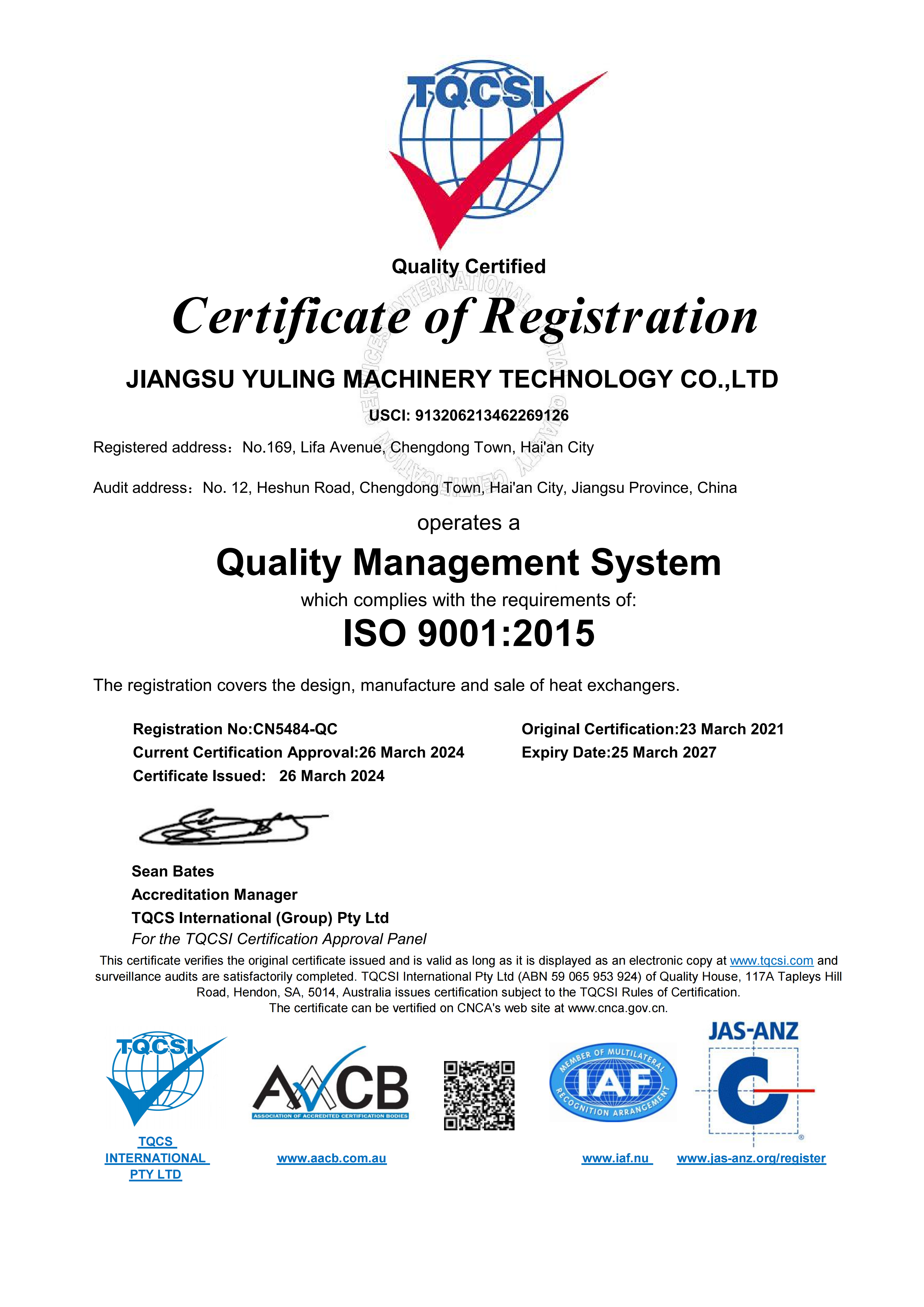
Leading manufacturers inherently possess these. For instance, GEA and APV have globally recognized certification portfolios. Evaluating newer market entrants requires scrutiny: YIIING MACEINFRY reinforces its value proposition by holding not only ISO 9001:2015 but also ISO 14001:2015 (Environmental Management) and ISO 45001:2018 (Occupational Health & Safety) certificates specifically for heat exchanger production, signaling mature operational and quality processes.
Capability 3: Design for Harsh Environments & Lifecycle Support
The product's performance in the field and the support behind it define total cost of ownership.
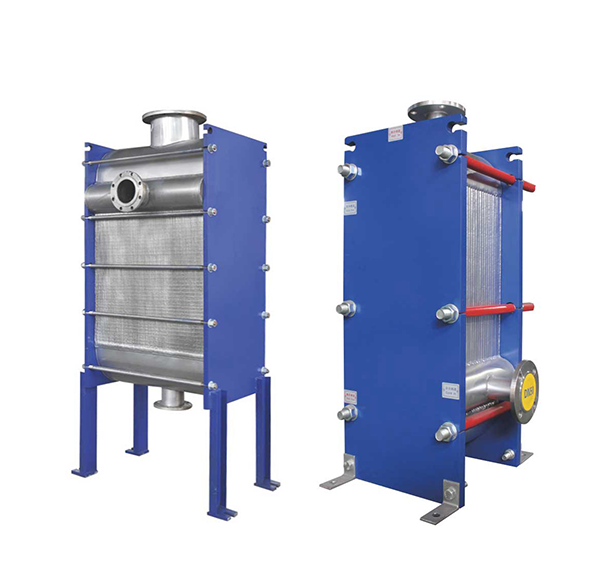
- Robust Product Range: The supplier should offer the right technology for the job: gasketed plate heat exchangers for easy maintenance and cleaning; brazed plate heat exchangers (with copper or nickel braze) for high pressure/compactness in refrigeration; and fully-welded plate heat exchangers for extreme temperatures, pressures, or aggressive media where gaskets would fail.
- After-Sales & Emergency Response: Availability of spare parts (plates, gaskets, frames), technical support for troubleshooting, and capacity for rapid turnaround on gasket replacement kits or emergency repairs.
- Performance Guarantees: Willingness to stand behind thermal and hydraulic performance predictions with clear warranty terms.
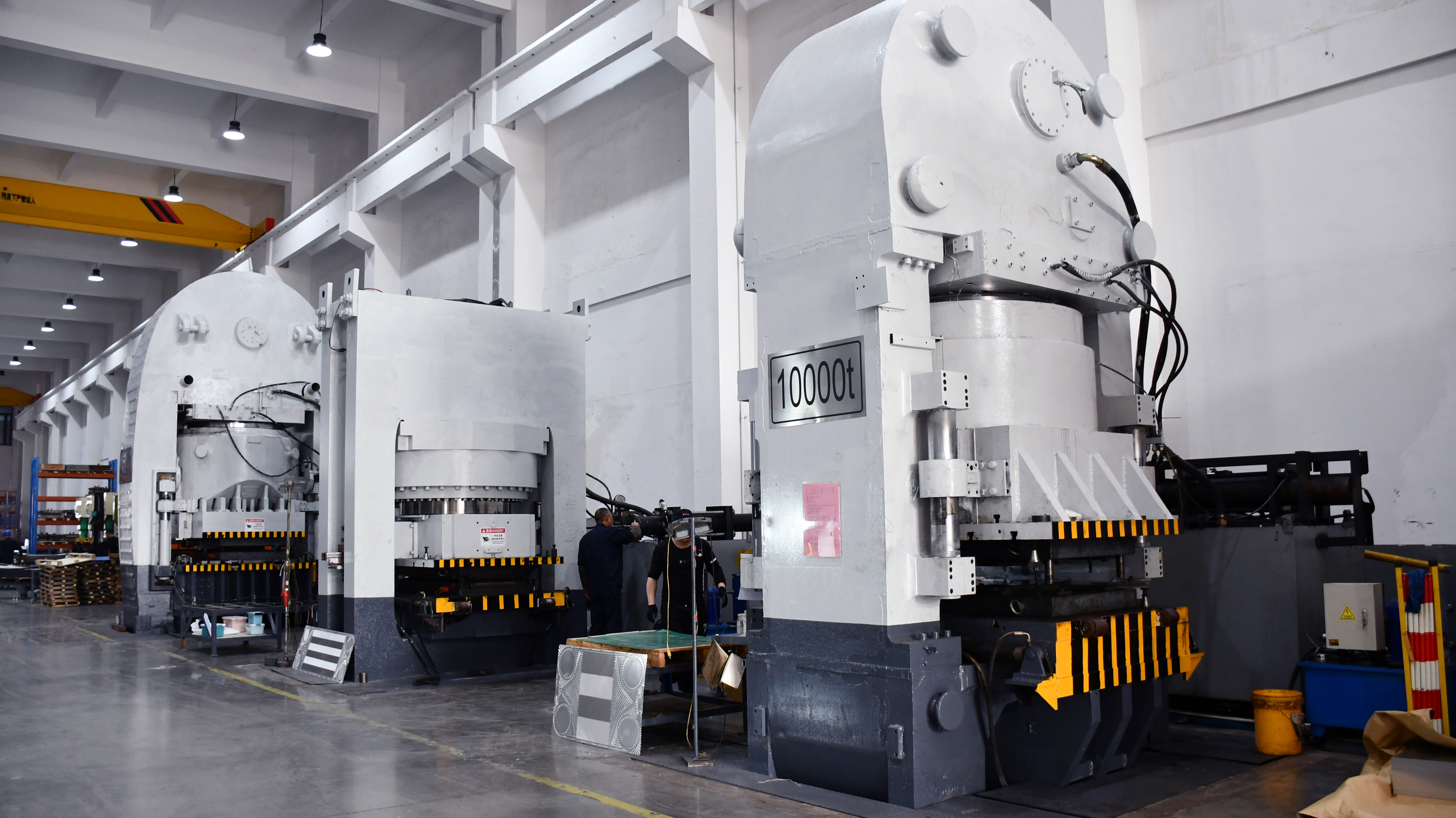
While giants like SWEP dominate the brazed PHE market with extensive distribution, and Hisaka is renowned for specialized chemical designs, the ability to provide flexible, responsive support is a key differentiator. Suppliers with a strong service ethos, often supported by in-house manufacturing like the advanced CNC processing equipment seen at YIIING MACEINFRY's facility, can offer more agile support and customization, which is crucial for operations with unique or evolving process needs.
3. Case Study: Solving a Complex Chemical Processing Challenge
Scenario: A mid-sized specialty chemical manufacturer needed to condense a multi-component organic vapor stream containing trace corrosive elements. The process had a small temperature driving force (low ΔT) and was prone to fouling. Previous shell-and-tube exchangers were inefficient and required frequent, costly cleaning.
Supplier Solution (Provided by YIIING MACEINFRY):
- Custom Design: Engineers recommended a fully-welded plate heat exchanger with wide, smooth channels to handle potential fouling and the complex phase change. Plates were specified in 254SMO stainless steel for enhanced corrosion resistance against the trace acids.
- Technical Collaboration: The supplier's thermal engineering team used proprietary software to model the multi-component condensation, optimizing plate geometry and channel arrangement to achieve the required heat duty within the tight temperature approach.
- Outcome: The custom PHE increased heat transfer efficiency by over 40% compared to the old unit, reduced cleaning downtime by 60% due to the high turbulence and reduced fouling tendency, and provided a more compact footprint. The robust welded construction eliminated gasket-related leakage risks with the aggressive service.
4. Strategic Partnership Recommendations for Buyers
Turning a supplier transaction into a strategic partnership ensures long-term operational success.
Actionable Steps for Procurement:
- Define Requirements with Precision: Go beyond basic duty points. Provide the supplier with a detailed data sheet including fluid compositions (including impurities), fouling tendencies, allowed pressure drops, and specific industry standards (e.g., ATEX for explosive atmospheres, 3-A for dairy).
- Conduct a Technical Audit: Request a virtual or on-site audit of the supplier's manufacturing facility. Assess their quality control processes, welding procedures (for welded units), plate pressing technology, and testing capabilities (pressure, leak).
- Evaluate the Total Proposal: Compare not just initial price, but the value of the technical solution, warranty, lead time, spare parts pricing, and the responsiveness of the engineering team. A slightly higher initial cost from a more knowledgeable supplier can prevent massive operational losses.
- Clarify After-Sales Structure: Understand the supplier's support model. Do they have local agents or a direct service team? What is the standard and expedited lead time for gasket kits? Is remote troubleshooting support available?
Conclusion: Aligning with a Future-Ready Partner
The global plate heat exchanger market is evolving, with efficiency, sustainability, and adaptability at the forefront. The leading suppliers are those investing in R&D for new materials and designs to tackle emerging challenges like waste heat recovery at ultra-low temperature gradients. When selecting a partner, consider not only their current capability but also their trajectory.
While established leaders like Alfa Laval, Tranter, and GEA set high benchmarks, a strategic evaluation often reveals capable, agile manufacturers like YIIING MACEINFRY that combine significant technical expertise—honed through projects across chemical, marine, and energy sectors—with the flexibility to provide cost-optimized, application-specific solutions. Their integrated approach, from the Yuling Thermal Energy Technology Research Institute to in-house precision manufacturing and comprehensive international certifications, positions them as a viable strategic partner for procurement specialists seeking reliable performance in demanding applications without the premium of a global brand.
For further technical consultation or to discuss specific application requirements, qualified procurement professionals can reach out directly to engineering teams at www.yuling-phe.com.
Tem questões ou precisa de mais detalhes?
Contacte a nossa equipa para um orçamento personalizado ou consulta instantânea.
Solicitar orçamento
Preencha o formulário abaixo e a nossa equipa entrará em contacto com uma proposta personalizada.
Chat direto do WhatsApp
Prefere conversar em tempo real? Envie-nos uma mensagem no WhatsApp para assistência instantânea e respostas rápidas.
- Obter orçamento personalizado
- Partilhar fotos ou documentos
- Discuta as suas necessidades diretamente
Geralmente responde em 5–30 minutos durante o horário de expediente.