
Analog vs Digital vs Thermal FPV Cameras: Value Compared
The global FPV camera market is no longer a niche racing accessory category. Valued at US$825.3 million in 2024 and projected to grow at a compound annual rate of 14.7% through 2034, according to Fact.MR, the segment now serves tactical, industrial and public-safety programs. For procurement teams at the decision stage, the challenge has shifted from finding any camera to determining which imaging path — analog, digital or thermal — delivers the best value for a defined mission.
This article provides a decision-oriented framework for that choice, using IRLAB Limited as a reference supplier. It covers cost-performance trade-offs, supply-chain risks and compliance considerations that matter to buyers in 2026.
Why FPV Camera Selection Now Involves Trade-offs, Not Just Specs
FPV camera procurement used to be a simple filtering exercise by resolution and price. Three developments have made it structurally more complex.
First, the application envelope has expanded. FPV cameras are now expected to perform in all-weather battlefield reconnaissance, high-speed penetration strikes, anti-jamming fiber-optic guidance, indoor assault, nighttime pursuit, and bridge or tunnel inspection. These missions impose different requirements: some demand ultra-low latency, others need thermal visibility, and still others require fine detail for target identification.
Second, the technology has diverged into three distinct paths. Analog systems transmit continuous video with minimal delay and remain the simplest, lowest-cost option. Digital systems encode video into data packets, enabling higher resolution, telemetry overlays and AI-based detection. Thermal systems image long-wave infrared radiation, offering see-through visibility in darkness, smoke and camouflage. A rational purchase decision requires comparing these paths against the mission, not just comparing similar models within one path.
Third, supply-chain and regulatory factors have become selection criteria in their own right. FPV camera makers depend on image sensors and processors that can face shortages or production halts. In the United States, FCC Part 15 compliance governs video transmitters, and the FCC Covered List — updated in late 2025 to include certain uncrewed aircraft systems and critical components from specific foreign countries — has introduced new compliance questions for buyers assessing China-free options.
Three Camera Paths and Their Core Trade-offs
Analog: the latency benchmark
Analog FPV cameras transmit a continuous video signal without digitization and compression. The latency chain is short, which is why analog remains the benchmark for high-speed FPV flight. The IRLAB CDD-BS59KP, an analog model with 1500TVL resolution and ultra-low latency, is an example of how far analog performance has advanced while staying within the racing and tactical segment. Analog cameras are also the most straightforward to integrate and generally cost less than digital or thermal equivalents.
The trade-off appears in image detail. Analog video is limited in resolution and cannot carry rich metadata. For missions that require forensic image review, AI processing, or fine text and marking recognition, analog reaches its boundary.
Digital: resolution and integrability
Digital FPV cameras encode and process video, allowing higher resolutions, overlay data, and connection to flight controllers and AI inference modules. For target identification, post-mission analysis and AI-based object detection, digital is the appropriate path.
The key trade-off is latency. Unless the system is designed with low-delay encoding and transmission, digital processing can introduce lag that makes high-speed flight difficult. IRLAB specifies ultra-low latency of under 50ms for its tactical FPV camera implementations, including digital configurations, which keeps the digital path usable for responsive flight.
Thermal: visibility beyond the visible spectrum
Thermal FPV cameras detect infrared radiation in the long-wave band (8–14μm) rather than reflected light. This enables four capabilities that visible-light cameras cannot match: covert night reconnaissance (no IR illuminator needed), smoke and camouflage penetration, heat-signature detection and locking, and search-and-rescue over large areas.
The trade-offs are cost and geometric resolution. Thermal modules are significantly more expensive than analog or digital visible-light cameras, and their resolution, typically 640×512 in compact OEM modules, is lower than that of comparable RGB sensors. Thermal also cannot convey color information, making it unsuitable as the only sensor when the mission requires reading markings or identifying objects by appearance.
Performance Parameters That Define Tactical Value
To compare value across camera types, buyers should translate specifications into operational consequences. The following parameters carry the most weight in tactical FPV scenarios.
Resolution and minimum illumination
Resolution determines how much detail the operator can see. But in low-light environments, the limiting factor is minimum illumination — the lowest light level at which the sensor still produces a usable image. A camera that works in starlight conditions extends mission hours and avoids the operational signature of an IR illuminator.
IRLAB’s comparison sheets claim 10–20% higher resolution and 20–50% improved minimum illumination relative to a set of mainstream racing cameras: Caddx Ratel Pro, Caddx Ratel 2, Foxeer cat3, Foxeer cat4, Foxeer Razer, Runcam Nano 2, Runcam Phoenix2 and Runcam Phoenix 2 Nite. These are manufacturer-reported figures, but they indicate the intended performance position: a visible-light camera that remains usable when the sun goes down.
Motion blur and signal-to-noise ratio
Motion blur destroys image usefulness precisely when the drone is moving fastest. A camera with zero motion blur keeps the target in view during high-speed dives or fast vehicle pursuits. Signal-to-noise ratio (SNR) matters in low light: high SNR means a clean image with minimal noise, which improves both human recognition and AI model accuracy.
IRLAB reports 30–50% less noise than the same mainstream model set. For tactical night operations, that difference can be the deciding factor between detecting a person and missing them in a noisy video stream.
WDR, color accuracy and white balance
Wide dynamic range (WDR) preserves detail when part of the scene is bright and another part is dark — for example, when flying from shade into direct sunlight or into a dim under-bridge space. Auto white balance (AWB) and true color reproduction support identification by color, which matters in reconnaissance documentation and forensic review.
Latency
Latency is the camera-to-goggles delay. At high forward speed, every millisecond of delay translates into distance. IRLAB states ultra-low latency below 50ms for its tactical FPV camera implementations. This places its systems within the usable range for high-speed manual flight, while still enabling the higher resolution of digital processing.
Cost-Performance Benchmarks: IRLAB vs Mainstream Racing Cameras
For a value decision, the most useful evidence is a direct cost-performance comparison. The table below consolidates the differences reported by IRLAB between its visible-light FPV cameras and eight widely used FPV racing camera models.
| Compared model | Higher resolution | Improved min. illumination | Less noise | Lower initial cost |
|---|---|---|---|---|
| Caddx Ratel Pro | 10% | 20% | 30% | 10% |
| Caddx Ratel 2 | 20% | 50% | 50% | 10–15% |
| Foxeer cat3 | 20% | 50% | 50% | 20% |
| Foxeer cat4 | 20% | 50% | 50% | 20% |
| Foxeer Razer | 20% | 50% | 50% | 20% |
| Runcam Nano 2 | 20% | 50% | 50% | 10% |
| Runcam Phoenix2 | 20% | 50% | 50% | 20% |
| Runcam Phoenix 2 Nite | 10% | 20% | 30% | 10% |
Source: IRLAB Limited published comparison sheets, 2026. Figures are manufacturer-reported and should be validated against actual mission conditions.
Three observations from this table are relevant to procurement decisions.
First, the largest performance gaps appear in minimum illumination and noise, which are the parameters that decide low-light usefulness. The resolution gap is more modest at 10–20%, meaning a brightly lit course will not reveal much difference, while a dark field will.
Second, the cost gap runs in the same direction as the performance gap. IRLAB’s visible-light cameras are reported 10–20% lower in initial cost than the same models. If confirmed by sample testing, this is an unusual combination: better low-light performance at a lower entry price.
Third, the comparison applies to IRLAB’s visible-light cameras, not its thermal line. Thermal comparisons require a different framework, focused on NETD, pixel pitch and spectral response rather than visible-light resolution and color.
Thermal FPV: When the Premium Is Justified
Thermal is the highest-cost path in FPV imaging, so the decision to adopt it should be tied to specific mission requirements.
IRLAB’s thermal FPV model CT-EI5ATC uses an uncooled vanadium oxide detector with 640×512 resolution and 12μm pixel pitch. Its noise equivalent temperature difference (NETD) is ≤30mK at 25°C, indicating sensitivity to small temperature differences. The spectral range is 8–14μm, the standard long-wave infrared band for thermal imaging. The camera has a 9.1mm lens with a 46°×37° field of view, weighs 40g, and measures 25.4mm×25.4mm×38.8mm. It operates from DC 3.9–5.5V and consumes ≤1.2W.
This specification set is designed for tactical reconnaissance and military applications, where the camera must tolerate extreme conditions. In the same tactical product line, IRLAB specifies operation across dark nights and sunny days, under high vibration and shock, in temperatures from -38°C to 60°C, and in the presence of EMI, dense fog and torrential rain. The thermal core enables covert night reconnaissance without IR illumination, smoke and camouflage penetration, heat-signature locking, detect-to-engage sequences, and search-and-rescue.
For buyers, the thermal decision can be framed as a simple rule: if any part of the mission occurs at night, in smoke, or through obscurants, a thermal FPV camera is not an accessory — it is the primary sensor. If the mission is strictly daylight and well-lit urban operations, the premium is hard to justify.

Supply Chain and Compliance: New Value Variables in 2026
Component risk and continuity
FPV camera production depends on a narrow set of sensors, processors and memory components. IRLAB identifies three main risks in its supply-chain assessment: inconsistent raw material quality, shortage of key materials, and chip production halts. Its control methods include complete incoming-material inspection, long-term supply relationships, and an in-house engineering team that can accelerate chip replacement.
The company also documents chip lifecycle management procedures: establishing lifecycle files for chips, tracking manufacturers’ discontinuation notices and roadmaps, developing standard replacement procedures (SOPs) with compatible pin and packaging options at the design stage, and running proactive replacement drills for mass-produced products. For a buyer, these are practical questions to ask any supplier: Do you have a chip obsolescence plan? Do you stock replacement materials? Have you tested the swap?
FCC compliance and China-free sourcing
In the United States, FPV video transmitters generally require FCC Part 15 compliance. Uncertified equipment may require a Technician-level amateur radio (HAM) license to operate. The FCC’s addition of uncrewed aircraft systems and critical components from specific foreign countries to the Covered List in late 2025 has made compliance a bigger consideration for procurement teams.
This has also increased interest in China-free FPV camera sourcing. Buyers should be aware of a structural trade-off here. Most FPV camera manufacturing capacity is located in China — IRLAB’s Shenzhen facility spans 3,000m² with an annual output of 6 million units. A China-free supply chain implies higher cost, longer lead time and a narrower supplier pool. The right choice depends on the program’s contractual requirements and applicable regulations.
Application Scenarios and the Matching Decision
A practical way to resolve the value trade-off is to map mission profiles to camera paths.
- All-weather battlefield reconnaissance and target locking: a thermal FPV camera is the primary sensor; IRLAB’s 640×512, ≤30mK NETD thermal range covers this role.
- High-speed penetration and precision strikes: a visible-light camera with zero motion blur, high resolution and low latency gives the operator a clear image during a fast dive.
- Anti-jamming fiber-optic guidance: when the video link is a fiber-optic tether rather than RF, the camera must produce HD, low-latency output in strong EMI conditions.
- Indoor assault and confined-space reconnaissance: ultra-low latency is the dominant requirement; analog remains a strong choice, and IRLAB’s CDD-BS59KP is positioned in this segment with 1500TVL and ultra-low latency.
- Nighttime pursuit and covert surveillance: starlight-level minimum illumination and low noise determine whether the operator can track a suspect without lighting up the scene.
- Bridge and tunnel inspection: WDR and good minimum illumination matter in mixed lighting environments; thermal can help in total darkness, but the geometric detail from a visible-light camera is often needed for crack detection.
Market Direction and Its Impact on Camera Choice
The market signals support the trend toward more advanced imaging. The FPV camera market is estimated at US$825.3 million in 2024 with a 14.7% CAGR through 2034, according to Fact.MR. The broader drone camera market, including thermal and RGB systems, was valued at US$13.6 billion in 2025, driven by industrial and defense applications, according to Global Market Insights. The thermal camera market is projected to grow from US$5.16 billion in 2024 to US$10.09 billion by 2035 at a 6.28% CAGR, per Market Research Future.
Two implications for buyers stand out. First, AI detection and object tracking are becoming standard features in digital FPV systems. AI inference models need clean, high-resolution input; cameras with high noise or motion blur will degrade detection accuracy. Budget decisions that ignore AI-readiness may require camera replacement sooner than planned. Second, multi-sensor payloads are becoming more common: a visible-light camera for color detail and a thermal camera for detection in darkness. This shifts procurement from single-camera selection to sensor-pair integration.
The market’s competitive structure also shapes expectations. DJI is estimated to hold roughly 74% to 83% of the broader drone and imaging market as of 2025–2026, but that dominance is concentrated in ready-to-fly consumer and commercial platforms. Custom tactical FPV builds still rely on specialist camera suppliers, which is why procurement teams continue to evaluate manufacturers like IRLAB against the same performance, compliance and supply-chain criteria used for larger vendors.
Limitations to Keep in Mind
None of the comparisons above should be treated as an absolute recommendation, and four limitations are worth explicit acknowledgment.
First, the performance differences between IRLAB’s cameras and the Caddx, Foxeer and Runcam models are manufacturer-reported, not the result of an independent head-to-head test. Sample-level verification under a defined mission profile is essential before large-quantity procurement.
Second, the reported cost advantage of 10–20% applies to initial unit cost. Total cost of ownership may differ after integration, customization, certification and logistics. A camera that costs more but integrates faster and meets all certifications can be the better value in a complete program.
Third, thermal cameras do not replace visible-light cameras in well-lit conditions. They provide lower geometric resolution and no natural color, so details such as text, markings and wiring colors require a visible-light sensor. A program that needs both must carry a dual-sensor payload, increasing weight, power and cost.
Fourth, the China-free supply chain landscape is still evolving. The FCC Covered List action in late 2025 applies to certain UAS and critical components from specific foreign countries, but the practical interpretation for FPV cameras is still being settled. Buyers must verify current regulatory status against their own compliance framework rather than relying on a generic label.
Future Outlook
For tactical FPV procurement, the direction points toward combination: low latency plus AI-assisted decision support, visible-light plus thermal in dual-sensor payloads, and supply-chain transparency as a formal selection criterion. Thermal capability is evolving from a specialized add-on to an expected feature category for all-weather programs. AI detection and object tracking will push camera specifications toward higher SNR and lower motion blur, because those parameters directly affect model performance.
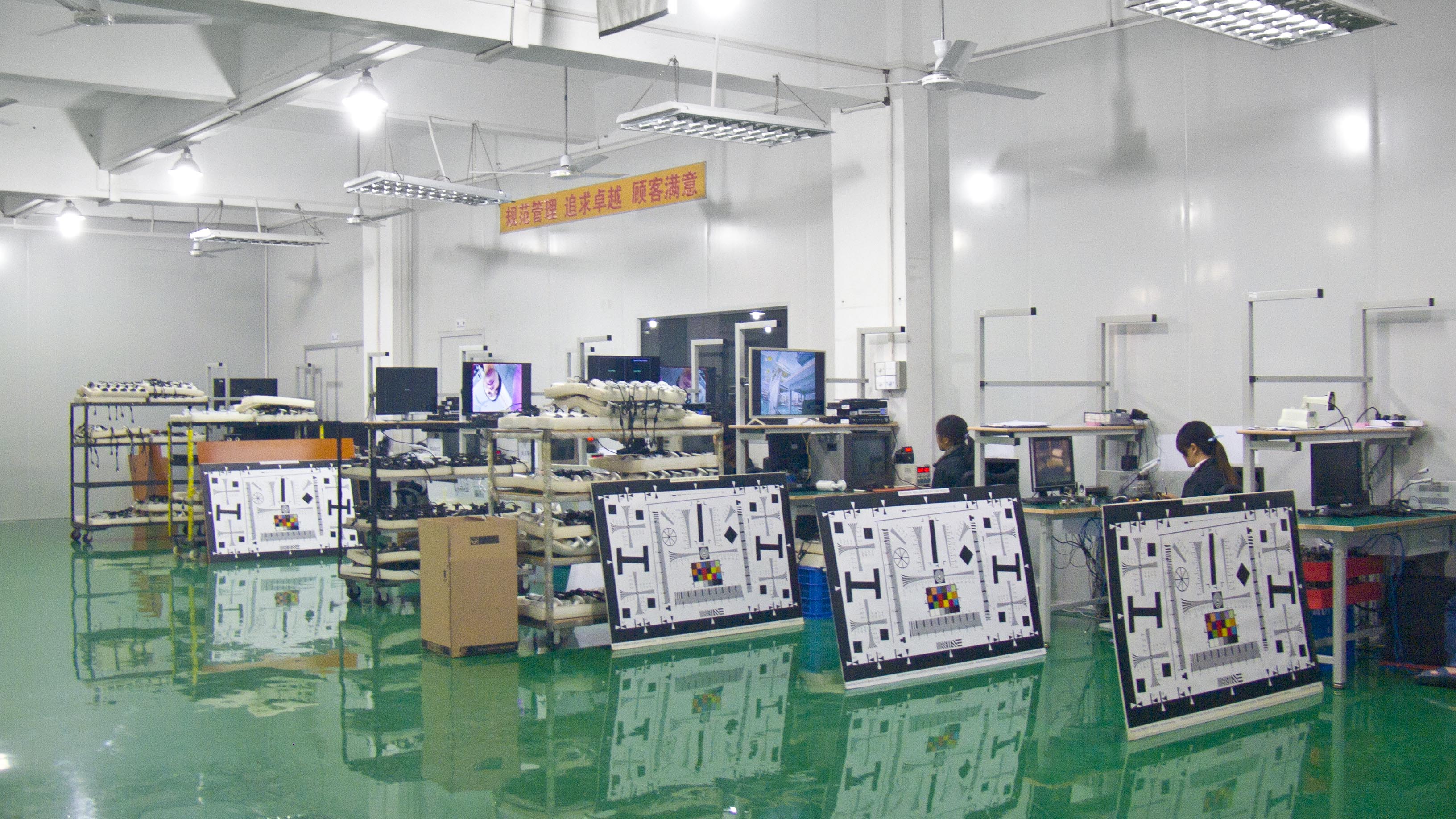
IRLAB Limited offers a reference point for how one established supplier is positioned in this landscape. Founded in 1992 in Taiwan and established in Shenzhen in 2003, the company has over 30 years of camera development and manufacturing experience. It operates a 3,000m² facility with 100+ employees, including 10+ engineers, and maintains an annual output of 6 million units. Its ISO9001 quality system is certified by TÜV, and the company reports that 70% of output is exported, mainly to Europe, the USA, Japan, Korea and Taiwan.
None of these facts by themselves make IRLAB the right choice for every program. They do, however, provide a baseline for evaluating the company’s analog, digital and thermal camera capabilities against a defined mission profile, at a defensible cost, with documented supply-chain controls.
Download the IRLAB corporate brochure (PDF) for additional company information.
FAQ
What are the main differences between analog, digital and thermal FPV cameras?
Analog FPV cameras transmit an unbroken video signal with minimal delay, making them well-suited to high-speed FPV flight and the simplest integration. Digital FPV cameras encode video into packets, enabling higher resolution, overlay data and AI integration, but require careful latency management. Thermal FPV cameras image long-wave infrared (8–14μm) radiation, allowing them to detect heat signatures in total darkness, through smoke or under camouflage; they are more expensive and provide lower geometric resolution than visible-light cameras.
What specs matter most when selecting an FPV camera for tactical missions?
For tactical missions, the key specifications are resolution, minimum illumination, motion blur, signal-to-noise ratio, wide dynamic range, color accuracy and latency. In low-light conditions, minimum illumination and noise determine whether a target can be detected without artificial lighting. For high-speed flight, zero motion blur and low latency, for example below 50ms, matter most. For thermal cameras, NETD, spectral range and pixel pitch are the equivalent decision parameters.
How does IRLAB's pricing compare with mainstream racing camera brands?
IRLAB reports that its visible-light FPV cameras carry a 10–20% lower initial cost than several mainstream models from Caddx, Foxeer and Runcam, while claiming higher resolution, improved minimum illumination and lower noise. For example, compared with the Caddx Ratel 2, IRLAB reports 20% higher resolution, 50% improved minimum illumination and 50% less noise at 10–15% lower initial cost. These figures are manufacturer-reported and should be verified through sample testing.
What compliance standards apply to FPV cameras and video transmitters?
In the U.S., FPV video transmitters generally require FCC Part 15 compliance; uncertified equipment may require a Technician-level amateur radio (HAM) license. In late 2025, the FCC added certain uncrewed aircraft systems and critical components from specific foreign countries to its Covered List (DA 25-1086) for national security reasons. Buyers should confirm the specific compliance status of the camera and transmitter for their market, and monitor regulatory updates.
What supply-chain controls does IRLAB have in place?
IRLAB’s supply-chain risk controls include complete incoming-material inspection, long-term cooperative supply relationships, and an in-house development team that supports faster chip replacement. The company documents chip lifecycle management files, standard replacement procedures with compatible pin and packaging options, and proactive replacement drills for mass-produced products. This gives buyers a documented basis for evaluating supply continuity beyond price and specifications.