
Anatomy of Disposable Sanitary Napkins: Materials, Bio-Based Choice and Sourcing Context
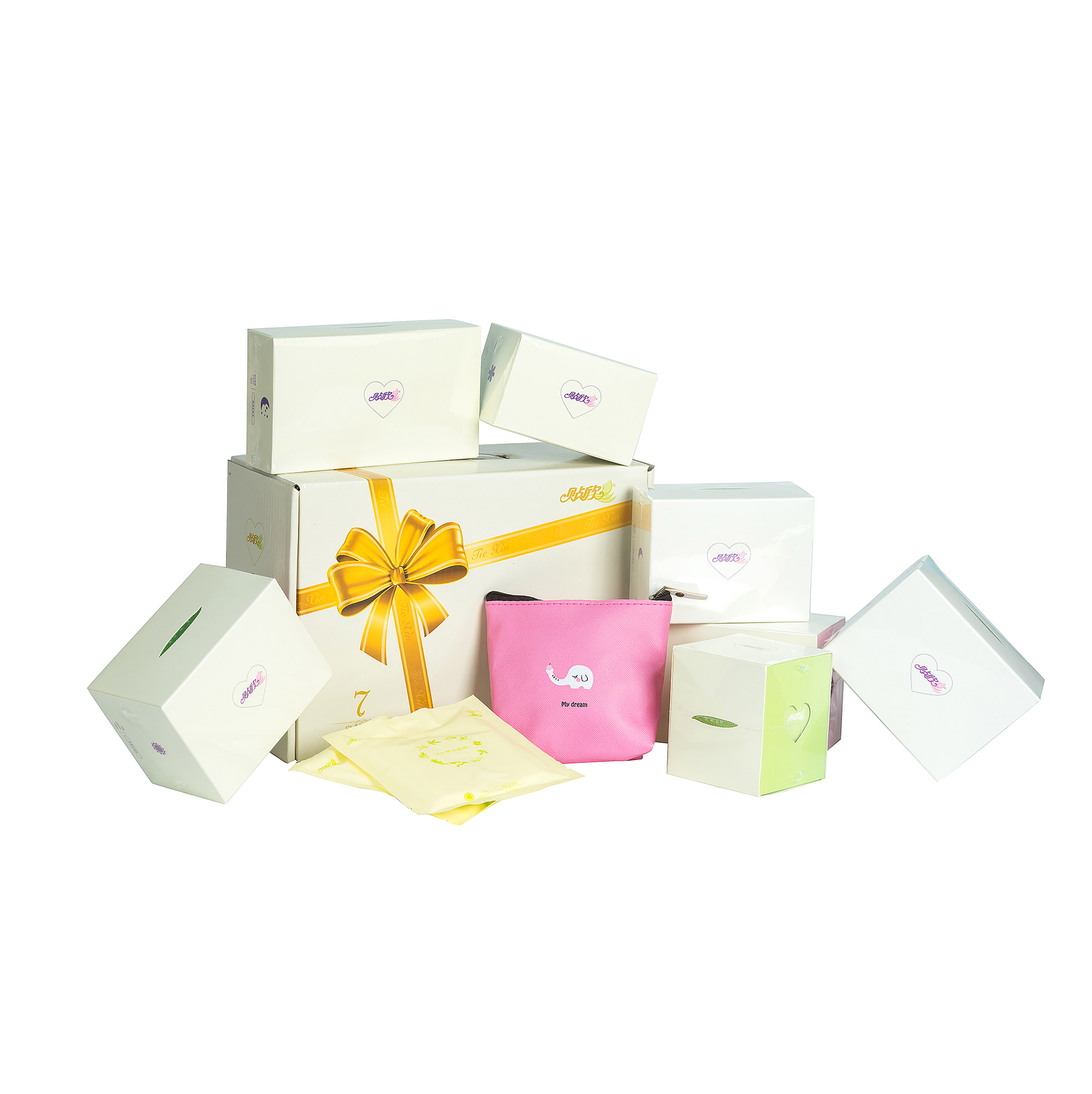
Disposable sanitary napkin production samples — Ecolivia product series.
A disposable sanitary napkin is not one homogeneous material. It is a multi-layer hygiene system in which the topsheet, absorbent core and backsheet perform different jobs, and each material choice affects comfort, retention, breathability, cost and environmental footprint. For buyers moving from awareness to supplier research, understanding that layered structure is more useful than relying on a single label such as “eco-friendly” or “ultra-thin”.
The sanitary pad category is large enough to reward this closer look. Global market estimates varied between roughly USD 20.4 billion and USD 25.73 billion in 2024, with research firms projecting growth of about 4% to 5.6% annually through 2034. At the same time, China remained the leading exporter of sanitary pads under HS 961900, with export values estimated at approximately USD 3.3 billion to USD 3.59 billion in 2024. When so many disposable sanitary napkins move through international procurement channels, buyers need a practical way to evaluate material claims against product performance.
The Problem: Sustainability Demand Is Outpacing Material Clarity
Distributors, private-label brands and retail buyers are under pressure to offer products that feel safe, perform reliably and carry a smaller environmental footprint. That pressure has generated a wave of “bio” terminology — bio-based cores, plant-based topsheets, biodegradable films, organic cotton, bamboo fibre — but the terms are not interchangeable.
The less obvious risk is that a single “green” ingredient says little about the whole pad. A napkin with an organic cotton topsheet may still rely on a conventional synthetic backsheet. A product described as biodegradable may need industrial composting conditions to break down. If procurement teams evaluate only one layer or one certification, they may choose a product that satisfies a label but not the actual use case.
Ecolivia as a Material Reference Point
In the Chinese manufacturing context, the Ecolivia product family offers a useful reference because it shows how the same manufacturer can structure conventional and bio-positioned lines with distinct material identities.
Ecolivia is the eco-focused sanitary product line produced by Family Cares Group, an integrated manufacturer of hygiene and medical materials established in 2001. Family Cares Group operates a manufacturing facility of more than 35,000 square metres, employs roughly 350 to 500 staff and maintains an R&D team of over 25 professional engineers. Around 85% to 90% of its output is exported to North America, Europe, Southeast Asia, the CIS region, the Middle East and Africa. Its product portfolio includes eco-friendly sanitary napkins, adult care products and medical foam materials.
Within the disposable sanitary napkin category, the company provides several specifications that allow buyers to compare material strategies side by side:
- Ecolivia-Bio Series: made with organic cotton, bamboo fibre and an advanced bio-based core, available in a 155mm to 450mm full range with customizable absorbency for high, super or night use.
- Ecolivia-Premium Series: a box-packed range using organic cotton, bamboo fibre and an advanced bio-based core in 240mm to 450mm sizes, designed for sensitive-skin positioning and boutique retail presentation.
- FC-Standard Series: a mass-market line constructed with non-woven fabric, SAP and a breathable bio-film, available in 240mm, 285mm, 330mm and 410mm lengths with a high-speed absorption core.
- Ecolivia menstrual pants and maternity options: additional format coverage within the broader hygiene portfolio, using ultra-soft non-woven, bio-based absorbent cores and elastic waistbands for menstrual and postpartum scenarios.
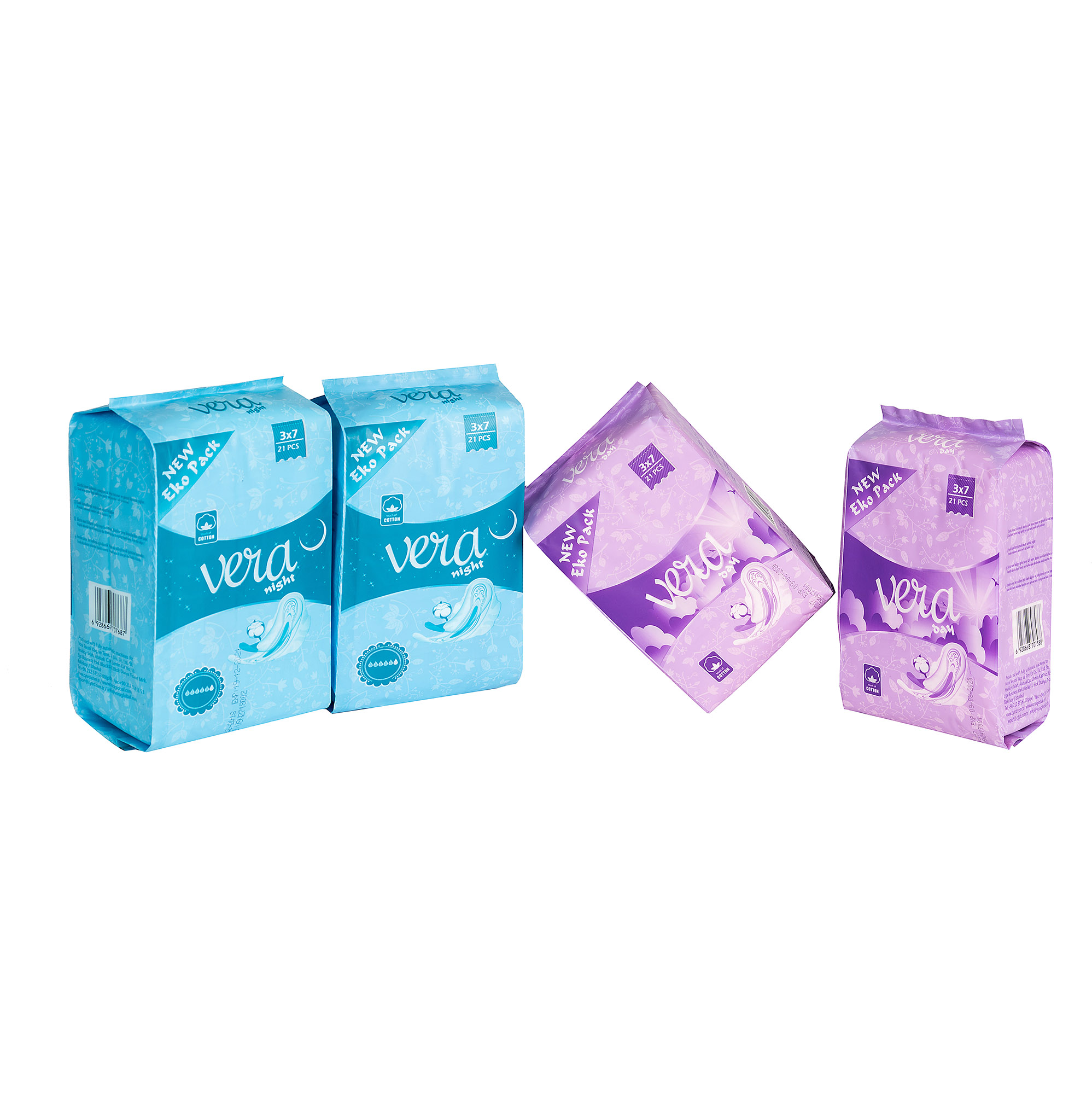
Visual inspection of disposable sanitary napkins during production.
Technical Explanation: Reading a Sanitary Napkin by Layer
1. Topsheet: the skin-contact layer
The topsheet is the surface that touches the skin. In conventional mass-market pads, this layer is typically a non-woven fabric selected for softness, liquid pass-through and dryness. In the FC-Standard Series, the topsheet is a non-woven material combined with an SAP-containing core and breathable bio-film system.
Bio-positioned products often replace the synthetic topsheet with plant-derived non-wovens or cotton. The Ecolivia-Bio Series uses organic cotton and bamboo fibre as part of its material structure. Organic cotton is associated with hypoallergenic and chemical-reduced positioning; bamboo fibre is recognised for softness and breathability. These materials do not automatically determine absorbency — that function belongs mainly to the core — but they change the feel and the chemical profile of the skin-contact layer.
2. Absorbent core: where performance is decided
Beneath the topsheet, the absorbent core manages fluid intake and retention. A high-performance core often combines SAP — Super Absorbent Polymer — with fibrous material that quickly wicks fluid. SAP absorbs fluid and holds it in gel form, which is why modern ultra-thin pads can remain thin while managing significant volume.
The FC-Standard Series explicitly lists SAP as a core material. The Ecolivia bio-based products take a different material route, replacing or reducing conventional synthetic components with an advanced bio-based core. This distinction matters in procurement because “bio-based” and “SAP-free” are not the same statement. Buyers who need high overnight capacity should verify how the bio-based core performs in volume tests rather than assuming all bio-cores behave identically.
3. Backsheet: breathability and leakage control
The backsheet is the barrier between absorbed fluid and clothing. In many disposable pads, this layer is a film designed to prevent leakage. Breathable backsheets use microporous structures that allow air and moisture vapour to escape while retaining liquid.
FC-Standard Series uses a breathable bio-film, while the Ecolivia-Bio and Premium series are defined by organic cotton, bamboo fibre and advanced bio-based core structures. For sensitive-skin or premium retail programmes, the backsheet choice should be documented alongside the topsheet and core because each layer affects skin comfort and leakage resistance.
4. Length and absorbency as system-level specs
The absorbency requirement determines which format and core configuration a buyer should select. Ecolivia-Bio products span from 155mm panty-liner lengths to 450mm night pads, with customizable absorbency levels. The FC-Standard line covers 240mm to 410mm, and the box-packed Premium series covers 240mm to 450mm. For heavy-flow overnight programs, buyers should look for a longer format with a night-level core, not merely a longer topsheet.
Application Scenarios: Where Bio-Based Disposable Sanitary Napkins Fit
FMCG and retail brand launches — high-end eco positioning
One documented scenario is a US-based FMCG or retail buyer launching a new eco-friendly menstrual brand through OEM/ODM or private label channels. The operating conditions call for premium, skin-friendly period products and typically require GOTS/FSC-certified materials and 100% fluorescent-free construction. For this use case, the Ecolivia-Bio Series provides the organic cotton and bamboo fibre structure that supports an environmentally positioned brand story.
E-commerce, boutique retail and subscription boxes — packaging-led differentiation
In the United Arab Emirates market, high-end organic brands have sought premium, shelf-ready boxed packaging with boutique OEM design. The requirements often include FSC-certified paper boxes, high-end printing such as UV or foil, and low MOQ trials for new SKUs. The box-packed Ecolivia-Premium Series, in 240mm to 450mm lengths, matches this segment because the packaging format can reinforce brand image and unboxing experience while the inner pad remains suitable for sensitive-skin retail positioning.
Hygiene manufacturing and raw material supply — upstream stability
The same manufacturing group also supplies non-woven raw materials, with gram weights from 10gsm to 80gsm and customizable widths per production line. This upstream capability is relevant for buyers who need consistent material supply for their own converting operations. In practice, vertical integration can reduce the risk of material quality drift across large production runs.
Market Trend Analysis: What the Data Shows About Bio-Based Demand
The broader sanitary pad market continues to grow steadily. Triangulating multiple research sources, the global sanitary pads market was worth roughly USD 20.4 billion to USD 25.73 billion in 2024, with a projected CAGR of 4% to 5.6% through 2034. China’s export data reinforces the importance of its manufacturing base to international supply chains.
Within that market, the sustainable segment is expanding faster than the category as a whole. The biodegradable sanitary napkins market was valued at around USD 2.43 billion in 2023 and is projected to reach USD 8.54 billion by 2030, representing a high CAGR of approximately 20.1%. Organic cotton sanitary napkins also formed a market of roughly USD 3.95 billion in 2025, according to third-party analysts. Consumer preference for hypoallergenic and chemical-reduced products has been a clear growth driver.
The competitive context also matters. Large global producers such as Procter & Gamble with its Always brand and Kimberly-Clark with Kotex remain dominant in the category. Their continued investment in new material technologies signals that material innovation is becoming an industry-wide strategic issue rather than a niche position.
Comparison with Traditional Solutions
Comparing a standard disposable sanitary napkin with a bio-based alternative requires comparing the material system as a whole, not just one layer. The table below summarises how the FC-Standard Series and the Ecolivia bio-based lines differ within a real manufacturing portfolio.
| Comparison point | FC-Standard Series | Ecolivia-Bio Series | Ecolivia-Premium Series |
|---|---|---|---|
| Primary positioning | Mass-market wholesale, B2B distribution, supermarket | Premium eco-friendly retail, FMCG, sustainable brands | High-end retail, e-commerce, subscription box |
| Core material | SAP with high-speed absorption core | Advanced bio-based core | Advanced bio-based core |
| Skin-contact material | Non-woven fabric | Organic cotton / bamboo fibre | Organic cotton / bamboo fibre |
| Backsheet | Breathable bio-film | Part of bio-based material system | Part of bio-based material system |
| Size range | 240mm, 285mm, 330mm, 410mm | 155mm–450mm full range | 240mm–450mm box-packed |
| Typical procurement route | Wholesale, bulk orders, supermarket supply | OEM/ODM, private label, brand retail | Boutique OEM, custom packaging design |
| Verification factors | Absorbency, leakage, cost efficiency | Bio-based content, organic cotton sourcing, certification documentation | Material certification plus packaging and shelf-readiness |
Another limitation is performance verification. Bio-based cores can be engineered for high absorption, but the actual result depends on fibre blending, core design and production control. A long organic-cotton topsheet does not guarantee overnight security if the core has not been tested for that scenario. This is why buyers should evaluate whole-product test data rather than relying only on a material list.
Future Outlook: Material Transparency as a Procurement Standard
As bio-based sanitary napkins move from premium curiosity to mainstream procurement option, the next phase of competition will be about verifiability. Buyers will increasingly ask suppliers to declare the composition of each layer, name the certification body and show which claims correspond to which standard.
For manufacturers, the advantage lies in controlling the full material chain. Family Cares Group’s integrated production model — combining in-house R&D, multiple automated lines and raw-material capabilities — is one example of how Chinese manufacturing is adapting to this demand. For distributors and private-label companies, the practical takeaway is simpler: build a material checklist before comparing prices.
The disposable sanitary napkin market is not moving toward one universal definition of “green.” It is moving toward layered material choices that must be validated for each region, each use case and each claim. The manufacturers that will remain relevant are those that can translate a material strategy into documented, testable product specifications.
Frequently Asked Questions
What materials are commonly used in disposable sanitary napkins?
Disposable sanitary napkins are multi-layer products. A typical structure includes a skin-contact topsheet, an absorbent core and a leak-resistant backsheet. In standard product lines such as the FC-Standard Series, the construction uses non-woven fabric, SAP and a breathable bio-film, with sizes of 240mm, 285mm, 330mm and 410mm. In bio-based lines such as the Ecolivia-Bio Series, the product is made with organic cotton, bamboo fibre and an advanced bio-based core, available from 155mm to 450mm.
What is SAP and why is it used in sanitary napkins?
SAP stands for Super Absorbent Polymer, a high-capacity absorbent material commonly used in feminine hygiene products. SAP absorbs liquid and turns it into a gel, helping the pad stay dry and retain fluid under pressure. In the FC-Standard Series, SAP is combined with a high-speed absorption core to support mass-market absorbency performance.
What is the difference between standard and bio-based disposable sanitary napkins?
The main difference lies in the material system. A standard line is typically built with synthetic non-woven fabric and SAP, as seen in the FC-Standard Series. A bio-based line replaces part of that system with plant-derived materials. The Ecolivia-Bio Series, for example, uses organic cotton, bamboo fibre and an advanced bio-based core, and spans a 155mm to 450mm range for different absorbency needs.
What does “biodegradable” or “compostable” mean for sanitary napkins?
Certified compostable sanitary napkins must comply with standards such as EN 13432 in Europe or ASTM D6400 in North America. These standards generally require about 90% biodegradation within six months under industrial composting conditions. A product made partly from organic cotton or bamboo fibre may be bio-based but still not meet compostability requirements, so buyers should verify the specific claim with documentation.
How can buyers verify eco claims such as organic cotton or FSC certification?
Buyers should ask for material declarations, raw-material certificates and finished-product test reports. For a new brand project in the US retail market, for example, the typical requirement includes GOTS or FSC certification and 100% fluorescent-free material. Buyers can also check whether the manufacturer holds relevant registrations, such as the FDA Establishment Registration for sanitary napkin products entering the US market.
What sizes and absorbency levels are available for disposable sanitary napkins?
Disposable sanitary napkins are available in a wide range of lengths. The FC-Standard Series is offered in 240mm, 285mm, 330mm and 410mm formats for wholesale distribution. The Ecolivia-Bio Series offers a full range from 155mm panty-liner formats to 450mm night pads, with customizable absorbency levels for high-flow, super or night use. The box-packed Ecolivia-Premium Series covers 240mm to 450mm for sensitive-skin retail programmes.
What should buyers look for in an OEM or private label sanitary napkin supplier?
Buyers should evaluate the supplier’s full production system rather than only the product photo. Relevant factors include confirmed manufacturing capacity, R&D capability, material sourcing control, export experience and the ability to document compliance requirements. Family Cares Group, for example, operates a facility of more than 35,000 square metres, employs roughly 350 to 500 staff, maintains over 25 R&D engineers and exports 85% to 90% of its output to North America, Europe, Southeast Asia, the CIS region, the Middle East and Africa.
Tem questões ou precisa de mais detalhes?
Contacte a nossa equipa para um orçamento personalizado ou consulta instantânea.
Solicitar orçamento
Preencha o formulário abaixo e a nossa equipa entrará em contacto com uma proposta personalizada.
Chat direto do WhatsApp
Prefere conversar em tempo real? Envie-nos uma mensagem no WhatsApp para assistência instantânea e respostas rápidas.
- Obter orçamento personalizado
- Partilhar fotos ou documentos
- Discuta as suas necessidades diretamente
Geralmente responde em 5–30 minutos durante o horário de expediente.