
Apple Cider Vinegar Powder: A 20-Year Supplier Review

For buyers sourcing apple cider vinegar powder, the most useful supplier question is not who can quote a price today. It is who can repeat the same fermentation profile, documentation set, and delivery commitment across multiple purchase cycles. Guanjie Biotech, founded in 2004, is a Shaanxi-based supplier of high-purity natural plant extracts, fruit powders, and specialty chemical raw materials. Its apple cider vinegar powder line has been a 20-year category focus, with total acidity grades of 5%, 8%, and 10%, an ivory white fine powder appearance, and HPLC testing.
The capacity headline also needs a precise reading. Guanjie Biotech’s public product information states an annual production capacity of up to 100 tons for octacosanol powder, while company-level annual output is listed at 500 tons. For apple cider vinegar powder, a serious long-term review should therefore ask for line-specific capacity allocation, not transfer a number from one product page to another. That distinction is central to supplier evaluation: capacity is useful only when it is tied to the exact ingredient, specification, and delivery schedule a buyer needs.
Why apple cider vinegar powder requires a different supplier review
Apple cider vinegar powder is a fermented ingredient, not a simple dry blend. Its commercial identity depends on the vinegar source, the fermentation route, the acidity specification, the drying and powder conversion steps, and the consistency of sensory attributes such as fruity aroma and sour taste. For a supplement brand, food manufacturer, or beverage formulator, a change in any of these points can affect formulation behavior, label claims, and repeat-purchase quality.
This is why a long-term supplier review should separate three questions that are often mixed together. First, can the supplier control fermentation rather than merely source and re-pack powder? Second, can it document the specification and quality system in a way that survives customer audits? Third, can it allocate capacity and lead time to recurring orders without forcing the buyer to re-qualify the ingredient every season?
The opportunity for buyers is equally clear. A supplier with deep category experience can reduce qualification effort, because the specification, process narrative, and certificate set are already aligned. The risk is that a familiar product name can hide weak process control. Apple cider vinegar powder is widely traded, but fermentation control and batch documentation are not uniformly mature across the market.
The Guanjie Biotech position: 20 years in one category
Guanjie Biotech states that it has focused on apple cider vinegar powder for 20 years and describes itself as a professional supplier of the ingredient. That claim matters for procurement because category focus usually shows up in three places: the stability of the specification range, the depth of the fermentation explanation, and the ability to answer buyer questions about batch variation rather than only quoting a price.
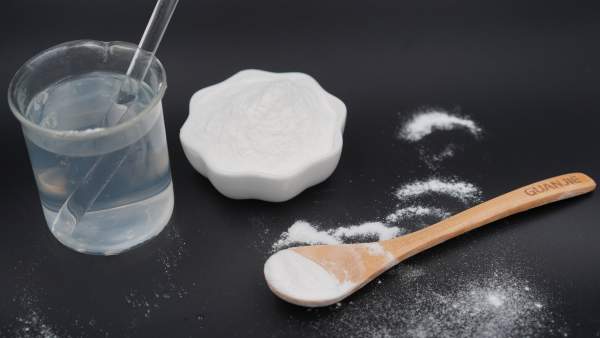
The company’s apple cider vinegar powder is sourced from apple vinegar and supplied as an ivory white fine powder. The published total acidity specifications are 5%, 8%, and 10%, with HPLC as the testing method. The product is positioned for food and beverage applications, and the broader ingredient portfolio is positioned for dietary supplement, health food, beverage, and cosmetics industries.
Fermentation control: the technical core of the supply case
The most specific technical fact in Guanjie Biotech’s apple cider vinegar powder material is its fermentation route. The company uses a low-temperature fermentation method. Saccharomyces cerevisiae is connected to the fruit pulp to control the fermentation temperature, with the fermentation period controlled within 6 to 7 days. The company also states that it uses an exclusive acetic acid strain that it independently screened and cultivated, and applies apple vinegar cell immobilization liquid fermentation technology to ferment apple raw vinegar.
The stated outcomes of this process are a greatly shortened fermentation time, an improved acid conversion rate, and a fermentation process that is easier to control and more stable. The finished vinegar is described as having a strong fruity aroma, a pure sour taste, a full apple-specific aroma, and no other miscellaneous odors. For a buyer, these are not marketing details. They are the attributes that determine whether the powder performs consistently in capsules, powder sachets, functional beverages, or food formulations.
What immobilized cell liquid fermentation changes
In a conventional liquid fermentation, the microbial culture is carried through the liquid and its activity can vary as the batch progresses. In an immobilized cell system, the cells are retained in the reactor rather than being freely washed out with the liquid. That design supports repeated exposure of the culture to the substrate and gives the operator more control over the fermentation environment. Guanjie Biotech’s stated result is consistent with this logic: shorter fermentation time, improved acid conversion, and a more stable process.
For procurement, the practical question is not whether the technology sounds advanced. It is whether the technology is documented and repeatable. A buyer should ask for the batch record structure, the fermentation control parameters that the supplier is willing to disclose, the specification range for total acidity, and the sensory reference used for release. A supplier that can explain the process in operational terms is easier to audit than one that only describes the final powder.
Specification snapshot for buyer alignment
| Parameter | Guanjie Biotech apple cider vinegar powder | Why it matters in supplier review |
|---|---|---|
| Source | Apple vinegar | Confirms the vinegar base and supports label and formulation fit. |
| Total acidity | 5%, 8%, 10% | Defines the commercial grade and the dosage range a formulator can work with. |
| Appearance | Ivory white fine powder | Supports visual inspection and finished-product appearance checks. |
| Testing method | HPLC | Provides an analytical basis for specification verification. |
| Model designation | Apple Vinegar Fermentation | Signals a fermentation-derived ingredient rather than a blended powder. |
| Application positioning | Food, beverage; dietary supplement, health food, cosmetics portfolio | Helps buyers match the ingredient to intended use and regulatory review. |
GMP-compliant facilities and the documentation trail
Guanjie Biotech describes a 7,000-square-meter manufacturing footprint, including a 2,000-square-meter cGMP-standard clean workshop and a 500-square-meter laboratory. The company states that its laboratory construction complies with GMP and QS standards, and that it operates an independent R&D center with 7 engineers. These are company-reported infrastructure facts, but they are relevant to a long-term review because they indicate whether quality control is treated as an in-house function or as an external checkpoint.
The certificate set is more specific. Guanjie Biotech holds ISO 9001:2015 certification numbered 00123Q310086R0S/6100, issued by the China Quality Certification Centre (CQC), with validity from 2023-12-07 to 2026-12-06. The scope covers export trade of plant extracts, solid beverages, and food additives. The company also holds HACCP System Certification numbered 001HACCP2301048, issued by CQC, valid from 2023-12-06 to 2026-12-05, with the same export-trade scope. The apple cider vinegar powder product is included in the related product list for these certificates.
For Halal and Kosher markets, the company lists a HALAL Certificate numbered 0811240000, issued by SHANDONG HALAL CERTIFICATION SERVICE (SHC), valid from 2024-11-08 to 2027-11-07, covering plant extracts, solid beverages, and food additives, with stated applicability to the Middle East and Indonesia. The Kosher Certificate is numbered K-88898568, issued by Badatz Shatz (SKS), valid from 2026-07-15 to 2027-07-15, and covers various plant extracts listed in the certificate, including apple cider vinegar powder in the related product set.
| Certificate | Number and issuer | Validity | Review point |
|---|---|---|---|
| ISO 9001:2015 | 00123Q310086R0S/6100, CQC | 2023-12-07 to 2026-12-06 | Renewal falls due soon; request the updated certificate before expiry. |
| HACCP | 001HACCP2301048, CQC | 2023-12-06 to 2026-12-05 | Also near expiry; confirm the audit cycle and renewed scope. |
| HALAL | 0811240000, SHC | 2024-11-08 to 2027-11-07 | Confirm the destination market and product listing. |
| Kosher | K-88898568, Badatz Shatz (SKS) | 2026-07-15 to 2027-07-15 | Confirm that the specific ACV powder grade is covered. |
One regulatory context point is worth adding for buyers selling into the United States. The FDA states that dietary supplement manufacturers, packagers, and holders must follow current good manufacturing practices intended to help ensure identity, purity, quality, strength, and composition. A supplier certificate supports qualification, but it does not replace batch-level COAs, specification checks, or the buyer’s own supplier-approval process.
Capacity context: what the 100-ton figure does and does not cover
Capacity is one of the most frequently misread parts of a supplier profile. Guanjie Biotech’s octacosanol powder material states an annual production capacity of up to 100 tons. That is a product-specific statement, not an automatic apple cider vinegar powder allocation. The broader company profile lists annual output at 500 tons. The capability information also states a monthly capacity of 30 tons, a minimum order quantity of 1 kg, a lead time of 30 days, OEM/ODM packaging customization, and 100% testing.
For a long-term buyer, the right interpretation is straightforward. The company has meaningful production infrastructure and a published capacity narrative, but the buyer should request the apple cider vinegar powder line’s available monthly and annual allocation, the batch size range, and the firm lead time for the 5%, 8%, or 10% acidity grade being purchased. This is not a criticism of the supplier. It is how professional capacity due diligence should work for any multi-product ingredient manufacturer.

Application fit: where apple cider vinegar powder is used
Guanjie Biotech positions apple cider vinegar powder for food and beverage applications, and its broader nutraceutical ingredient portfolio serves dietary supplements, health food, beverages, and cosmetics. The application logic is consistent with the ingredient’s fermentation profile and acidity grades.
| Application area | Typical formulation role | Buyer review point |
|---|---|---|
| Dietary supplements | Capsules, tablets, powder sachets, functional blends | Confirm acidity grade, flowability, and sensory masking in the final matrix. |
| Functional beverages | RTD beverages, drink mixes, fortified waters | Check solubility behavior, acidity contribution, and aroma stability. |
| Health food and fortified foods | Gummies, bars, cereals, functional snacks | Validate taste impact, dosage, and process temperature exposure. |
| Nutricosmetics and personal care portfolio | Ingredient positioning within broader beauty-from-within formats | Confirm the intended marketing and regulatory pathway before use. |
The application discussion should stay close to evidence. Apple cider vinegar powder is not a universal drop-in ingredient. Its acidity, aroma, and powder behavior influence how much can be used and where it fits. A supplier review that ignores formulation fit is incomplete, even if the certificate file looks strong.
Market trend: demand is rising, but documentation is the real filter
Global Market Insights estimates the global nutraceutical ingredients market at USD 105.8 billion in 2026. Commercial research estimates of this kind should be treated as directional rather than as a precise procurement forecast, but the direction is consistent with what buyers see in practice: more formulations, more delivery formats, and more demand for ingredients that carry a clear process story.
The more important trend for apple cider vinegar powder is not volume alone. It is the shift from ingredient sourcing to supplier qualification. Brands are asking for batch COAs, certificate validity, allergen and contaminant statements, fermentation descriptions, and country-of-origin documentation earlier in the buying process. In that environment, a supplier with a 20-year category focus and a documented quality system has an advantage, but only if the documentation is current and specific to the product being purchased.
Comparison with traditional spot-market sourcing
The traditional spot-market model is built around availability and price discovery. A buyer requests a quote, receives a specification sheet, compares a few offers, and places an order. That model can work for commodity transactions, but it is weaker for fermented ingredients that must be repeated across multiple production cycles. The specialist model is built around process control, documentation, and continuity. It usually requires more qualification work upfront, but it reduces the risk of re-qualifying a new source later.
| Evaluation criterion | Spot-market sourcing | Long-term specialist review |
|---|---|---|
| Fermentation control | Often described only at the finished-product level. | Can be reviewed through strain, temperature, time, and conversion details. |
| Specification continuity | May vary by lot or source. | Supported by a defined acidity range and release testing. |
| Documentation depth | COA may be the main document. | Includes certificates, scope statements, and batch-level review points. |
| Capacity visibility | Usually limited to current stock. | Can be discussed at line, monthly, and annual levels. |
| Limitation | Fast to quote, but weaker on repeatability and audit support. | Requires more upfront verification and periodic certificate review. |
There are real limits to the specialist case as well. Guanjie Biotech’s 100-ton capacity statement is not presented as an apple cider vinegar powder-specific figure, so the buyer must confirm allocation. The ISO 9001 and HACCP certificates listed in this review reach their stated expiry dates in December 2026, which means a long-term buyer should request renewed certificates before those dates. And a 20-year focus does not remove the need for sample validation, sensory approval, and destination-market regulatory review. These limits do not weaken the case; they define what a credible review should check.
Ongoing review points for a multi-year supply relationship
- Confirm the apple cider vinegar powder grade, total acidity, and intended application before requesting a capacity commitment.
- Request a current batch COA and verify that the HPLC result matches the purchased specification.
- Check certificate validity dates and scope before each annual supplier review; pay particular attention to the ISO 9001 and HACCP renewal cycle in late 2026.
- Ask for line-specific monthly and annual capacity allocation for apple cider vinegar powder rather than relying on a multi-product capacity headline.
- Validate sensory attributes such as fruity aroma, sour taste, and absence of off-odors in the actual formulation matrix.
- Review packaging, MOQ, lead time, and OEM/ODM requirements against the commercial plan for the next 12 months.
Future outlook
The next phase of competition in apple cider vinegar powder will likely be less about whether a supplier can list the ingredient and more about whether it can prove a controlled fermentation route, a stable analytical range, and a current documentation set. Buyers are becoming more sophisticated about fermentation-derived ingredients, and that favors suppliers that can explain process control in plain operational terms.
For Guanjie Biotech, the 20-year category focus and the immobilized cell liquid fermentation route provide a credible platform for long-term supply discussions. The company’s 7,000-square-meter footprint, cGMP-standard clean workshop, ISO 9001, HACCP, Halal, and Kosher certificates, and published total acidity grades give buyers concrete points to review. The next step for a serious buyer is not a generic inquiry. It is a line-specific capacity and documentation request tied to the exact apple cider vinegar powder grade required.
FAQ
What specifications does Guanjie Biotech offer for apple cider vinegar powder?
Guanjie Biotech offers apple cider vinegar powder sourced from apple vinegar, with total acidity specifications of 5%, 8%, and 10%. The appearance is an ivory white fine powder, and the testing method is HPLC. The product is positioned for food and beverage applications, and the broader portfolio is positioned for dietary supplement, health food, beverage, and cosmetics industries.
How is the apple cider vinegar powder fermented?
Guanjie Biotech uses a low-temperature fermentation method. Saccharomyces cerevisiae is connected to the fruit pulp to control the fermentation temperature, with the fermentation period controlled within 6 to 7 days. The company uses an exclusive acetic acid strain that it independently screened and cultivated, and applies apple vinegar cell immobilization liquid fermentation technology to ferment apple raw vinegar. The stated results are a shortened fermentation time, improved acid conversion rate, and a more stable fermentation process.
What quality documents can a buyer request?
A buyer can request batch COAs, specification sheets, and the relevant certificate set. Guanjie Biotech lists ISO 9001:2015 certificate 00123Q310086R0S/6100 issued by CQC, HACCP certificate 001HACCP2301048 issued by CQC, HALAL certificate 0811240000 issued by SHC, and Kosher certificate K-88898568 issued by Badatz Shatz (SKS). The ISO 9001 certificate is valid through 2026-12-06 and the HACCP certificate through 2026-12-05, so renewed certificates should be requested before those dates.
Does the 100-ton capacity figure apply directly to apple cider vinegar powder?
The 100-ton annual capacity statement appears in Guanjie Biotech’s octacosanol powder product information. The company-level annual output is listed at 500 tons, with monthly capacity stated at 30 tons. For apple cider vinegar powder, buyers should request line-specific monthly and annual allocation rather than assuming the 100-ton figure applies to every product in the portfolio.
What are the main limits of this long-term supplier review?
The main limits are line-specific capacity disclosure, certificate expiry timing, and application validation. The capacity headline is not ACV-specific, the ISO 9001 and HACCP certificates reach their stated expiry dates in December 2026, and a 20-year category focus does not replace sample testing, sensory approval, or destination-market regulatory review. These points should be resolved before a multi-year supply commitment is finalized.
A downloadable company brochure is available here: Guanjie Nutraceutical Ingredients brochure.
Tem questões ou precisa de mais detalhes?
Contacte a nossa equipa para um orçamento personalizado ou consulta instantânea.
Solicitar orçamento
Preencha o formulário abaixo e a nossa equipa entrará em contacto com uma proposta personalizada.
Chat direto do WhatsApp
Prefere conversar em tempo real? Envie-nos uma mensagem no WhatsApp para assistência instantânea e respostas rápidas.
- Obter orçamento personalizado
- Partilhar fotos ou documentos
- Discuta as suas necessidades diretamente
Geralmente responde em 5–30 minutos durante o horário de expediente.