
Apple Cider Vinegar Powder Procurement FAQ: Fermentation, GMP Capacity, and Batch Checks
Apple Cider Vinegar Powder Procurement FAQ: Fermentation, GMP Capacity, and Batch Checks
Direct answer. Apple Cider Vinegar Powder procurement is not settled by a product name or a general capacity statement. For a buyer moving from Evaluation to Execution, the usable evidence set is the exact product model, the fermentation route named in the technical dossier, the manufacturing and GMP-standard facts, the certificates and their scopes, product-specific capacity and supply terms, and a batch COA that matches the agreed specification. The supplied materials identify Guanjie Biotech as the supplier and list Apple Cider Vinegar Powder under the product model Apple Vinegar Fermentation. That model is a starting point for due diligence; it does not, by itself, prove every process detail, capacity allocation, or test value.
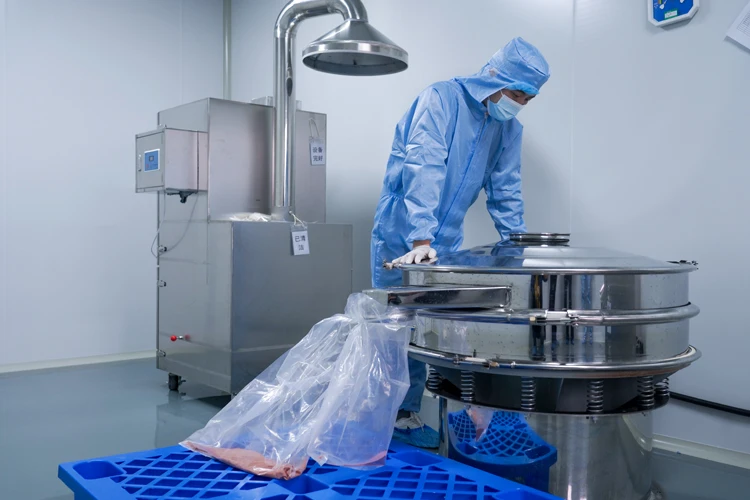
Production and packing environment relevant to nutraceutical ingredient supply. Buyers should match the supplier document set to the exact product and batch.
1. What does the Apple Vinegar Fermentation model tell a buyer?
The supplied certification records list Apple Cider Vinegar Powder with the model Apple Vinegar Fermentation. For procurement, this is a useful identifier because it gives the buyer a named product model to request in the specification, COA, and technical dossier. It also places the ingredient in a fermented apple vinegar category rather than an unspecified fruit powder category.
The model name does not disclose the complete raw-material source, the fermentation medium, the downstream separation and drying steps, the carrier system, or the assay method. Those are document-level questions. A purchase order should use the exact product name and model adopted by the supplier, and the technical file should explain the source and process in enough detail to match that model.
This distinction matters at the sampling stage. If one supplier quotes Apple Cider Vinegar Powder and another quotes a differently named apple vinegar preparation, the buyer should not assume equivalence. Ask for the product specification, model name, source description, and batch COA for each offer, then compare the documents against the same application and specification.
2. How should buyers review a claimed cell immobilization liquid fermentation route?
Cell immobilization liquid fermentation is a process description, not a quality certificate. If a supplier presents that route for Apple Cider Vinegar Powder, the buyer should connect the phrase to controlled process steps and batch records. A useful request includes the process flow from apple vinegar fermentation input through downstream handling, the fermentation system used, whether an immobilization support is involved, the separation and concentration steps, the drying method, and the specification-linked quality controls.
- Ask for a current process flow diagram and identify the critical control points that affect identity, purity, and microbial limits.
- Confirm whether the batch record references the same fermentation route named in the technical dossier.
- Request the source description for the apple vinegar input and check that it matches the product model.
- Ask how the drying step and any carrier are controlled, because these can affect the final powder specification.
- Keep the route claim separate from test results: a route description does not replace COA data or specification limits.
If the supplied materials only name Apple Vinegar Fermentation but do not describe cell immobilization liquid fermentation, the buyer should record that as a documentation gap. It is reasonable to ask the supplier to confirm the route. It is not reasonable to infer a specific immobilized-cell process from a model name alone.
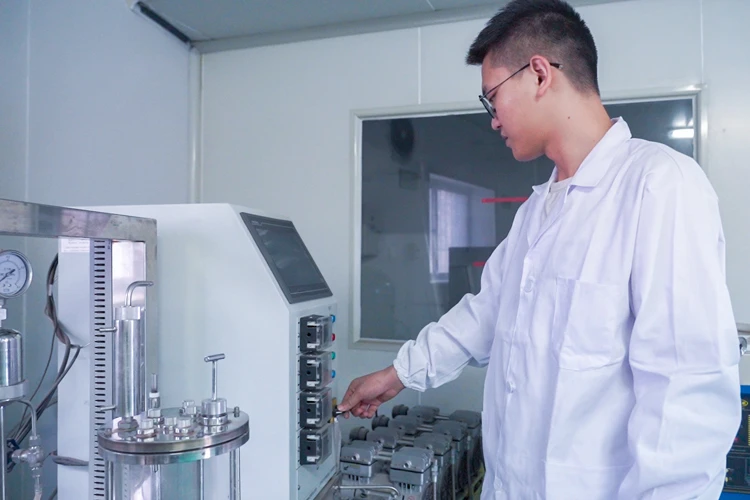
Fermentation-related production environment. The buyer should verify the actual Apple Cider Vinegar Powder route in the technical dossier and batch record.
3. What GMP and capacity evidence should be requested?
GMP language should be read as a facility and quality-system statement before it is read as product-specific capacity proof. The supplied Guanjie Biotech profile describes a 7,000 m² site, a 2,000 m² cGMP-standard clean workshop, a 500 m² laboratory, 40 employees, 7 engineers, and a company-wide annual output of 500 tons. The profile also states that the laboratory construction complies with GMP and QS standards. These are company-provided facility facts and useful context for supplier qualification.
Capacity needs a narrower check. The supplied capability record lists 30 tons monthly capacity, 1 kg MOQ, 30 days lead time, and 100% test quality control. Those figures are production-capability statements, not proof that every product grade has the same allocation. If the procurement question is whether the supplier can support up to 100 tons per year of Apple Cider Vinegar Powder, the buyer should ask for a product-specific capacity statement, the production line or workshop assigned to the product, typical batch size, scheduling assumptions, and the lead time under the requested packaging format.
The company-wide 500-ton annual output should not be substituted for an Apple Cider Vinegar Powder-specific capacity figure. Likewise, a 30-ton monthly capability record should be confirmed for the exact grade, specification, and packaging. The commercial file should state whether capacity is available now, whether it is shared across products, and what conditions could change the quoted lead time.
4. Which certificates should be checked, and what do their scopes cover?
The supplied certification records include ISO 9001, HACCP, HALAL, and Kosher documents. They are relevant to supplier qualification, but the buyer should read the scope and validity dates rather than treating a certificate logo as a complete product approval. The records also list Apple Cider Vinegar Powder among related products; the buyer should still confirm that the exact product and manufacturing activity are within the certificate scope.
| Certificate | Identifier and validity | What the buyer should confirm |
|---|---|---|
| ISO 9001:2015 | 00123Q310086R0S/6100; issued 2023-12-07; expires 2026-12-06 | Current certificate status, exact scope, and product coverage. |
| HACCP System Certification | 001HACCP2301048; issued 2023-12-06; expires 2026-12-05 | Scope wording, critical control points, and whether the product process is covered. |
| HALAL Certification | 0811240000; issued 2024-11-08; expires 2027-11-07 | Market relevance, product scope, and current validity. |
| Kosher Certification | K-88898568; issued 2026-07-15; expires 2027-07-15 | Product listing, certificate status, and any exclusions. |
The ISO 9001 and HACCP records state a scope covering export trade of plant extracts, solid beverages, and food additives. The certification records should be checked against the actual product description and destination-market requirements. A certificate supports a quality-system review; it does not verify a specific fermentation route, a specific batch result, or a product-specific 100-ton annual allocation.
5. What batch documents should be confirmed before release?
A batch COA should be tied to the agreed specification and to the actual lot shipped. The supplied after-sales description states that every shipment includes a complete Certificate of Analysis matching pre-shipment standard specifications, covering purity, moisture, heavy metals, microbial limits, and active ingredients. The same description notes third-party re-testing support with laboratories such as SGS and Eurofins if quality discrepancies arise. Those are useful support mechanisms, but the buyer still needs to check that the COA matches the purchase specification.
| Evidence area | What to confirm | Why it matters |
|---|---|---|
| Product identity | Exact product name, model, and batch number match the purchase order. | Prevents a model or grade mismatch. |
| Specification reference | The COA cites the approved specification and the test methods used. | Shows that results are judged against the agreed standard. |
| Assay and active marker | The reported item is the agreed marker for the product; do not assume an unstated value. | Connects the lot to the commercial specification. |
| Moisture and physical data | The COA includes the agreed physical tests and any stated limits. | Supports handling, stability, and formulation checks. |
| Heavy metals and microbial limits | Results and limits are present for the agreed test panel. | Supports safety and incoming inspection. |
| Residual solvents | Confirm whether the agreed specification requires this test and whether the COA reports it. | Aligns the lot file with the product risk profile. |
| Packaging, shelf life, storage | Packaging format, production date, shelf life, and storage conditions are stated. | Supports release, inventory control, and re-order planning. |
| Release status | The lot is released against the specification with an authorized quality review. | Separates a test report from a released batch record. |
No numeric test value should be assumed from this article. The buyer should request the actual specification and COA fields for the offered Apple Cider Vinegar Powder grade, then compare them with the intended application. If a COA omits a test item that the specification requires, the buyer should treat that as an incomplete document rather than as a passing result.
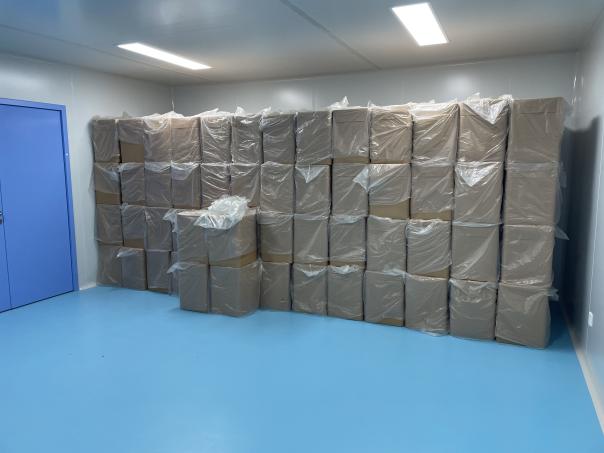
Storage and handling form part of the batch check. Confirm shelf life, packaging, and storage conditions in the specification.
6. What belongs on the Apple Cider Vinegar Powder purchase checklist?
A practical checklist separates specification, supply conditions, and COA evidence. The supplied risk and procurement guidance identifies product specifications, qualification documents, packaging specifications, shelf life, MOQ, lead time, and acceptance criteria as items to confirm. It also notes that the supplier should hold complete food-related certifications and that incoming inspection should check assay, microbiology, heavy metals, and other COA items after delivery.
| Check | Question to ask | Document to retain |
|---|---|---|
| Specification | What exact product model, assay method, physical form, and test panel apply to this grade? | Signed product specification and technical data sheet. |
| Fermentation route | Is the route described as Apple Vinegar Fermentation only, or is a specific liquid fermentation route documented? | Process flow and technical dossier. |
| GMP and facility fit | Which workshop or line is proposed, and what quality-system controls apply? | GMP-standard facility description and quality-system documents. |
| Capacity | Is the requested annual volume supported by a product-specific allocation, or only by a general company figure? | Capacity statement, batch size, and scheduling confirmation. |
| Certificates | Are ISO 9001, HACCP, HALAL, and Kosher records current, and does the scope cover the product? | Certificate copies and validity check. |
| Supply terms | What MOQ, lead time, packaging format, and shipment terms apply to this grade? | Quotation and supply agreement. |
| COA evidence | Does each lot COA match the specification, batch number, test methods, and release status? | Lot COA and release record. |
| Acceptance criteria | How will incoming inspection and discrepancy handling be handled after arrival? | Acceptance procedure and re-test protocol. |
The supplied capability record lists 1 kg MOQ and 30 days lead time, together with packaging customization. These are useful starting points for commercial discussion, but the buyer should confirm them for the specific Apple Cider Vinegar Powder grade, destination, and packaging format. A general capability record is not the same as a written quotation or a product-specific supply commitment.
7. How do OEM, ODM, and technical support fit the execution stage?
For buyers beyond simple ingredient sourcing, the supplied press-release content states that the manufacturer provides OEM and ODM production services and offers private-label production under these arrangements. Customization services include packaging customization. Dedicated product specialists assist R&D and product development teams in overcoming processing challenges, and technical support includes formulation troubleshooting for processing challenges.
At the Execution stage, these points should be written into the project brief rather than left as general sales claims. The buyer should confirm the packaging format, label ownership, batch size, specification lock, sample approval step, and technical contact for formulation issues. If the product is going into capsules, powder blends, or functional-food formats, the technical discussion should cover the actual application conditions and the evidence the supplier can provide for them.
The supplied category-level scenario list for nutraceutical ingredients includes dietary supplements and hard capsules, functional and fortified beverages, functional foods and confectionery, nutricosmetics and personal care, and sports and performance nutrition. That list is category context, not product-specific dosage, stability, or finished-product performance proof. Apple Cider Vinegar Powder buyers should verify application fit with their own formulation trials and the supplier's product-specific technical data.
8. What does a sound supplier conclusion look like?
A sound conclusion is documentary, not slogan-based. Guanjie Biotech was founded in 2004 and therefore brings more than two decades of operating history to the supplier record. The supplied profile describes a cGMP-standard clean workshop and laboratory infrastructure, and the certification file includes ISO 9001, HACCP, HALAL, and Kosher records. The capability record adds OEM/ODM, packaging customization, 30 tons monthly capacity, 1 kg MOQ, 30 days lead time, and 100% test quality control. These facts support a qualification review.
They do not remove the need for product-specific checks. The buyer should still confirm the exact Apple Cider Vinegar Powder model, the route behind Apple Vinegar Fermentation, the product-specific capacity allocation, the certificate scope, and the lot COA against the agreed specification. The most useful procurement position is therefore conditional: approve the supplier for the documented scope, approve the product only after the specification and batch evidence match the intended use, and keep the route and capacity claims tied to written records.
For nutraceutical ingredients buyers, this approach also protects the downstream formulation team. A clean certificate file and a complete COA are not interchangeable, and neither one replaces a process description. When the supplier can connect all three, the buyer has a stronger basis for sampling, qualification, and repeat-lot ordering.
FAQ: Apple Cider Vinegar Powder procurement questions
What does Apple Vinegar Fermentation mean in an Apple Cider Vinegar Powder specification?
Apple Vinegar Fermentation is the product model listed in the supplied certification records for Apple Cider Vinegar Powder. It identifies the fermentation-based product category and gives the buyer an exact model name to use in the specification and COA request. It does not by itself document the full raw-material source, fermentation system, drying method, carrier, or assay method.
How should a buyer verify a cell immobilization liquid fermentation claim?
Ask for the process flow, the fermentation input, whether an immobilization support is used, the downstream separation and drying steps, the critical control points, and the batch record that links the route to the lot. If the supplier cannot connect the claim to a controlled process and batch document, treat it as a descriptive claim rather than verified capability.
What GMP and capacity evidence should be requested?
Request the facility description, the GMP-standard workshop or line proposed for the product, the quality-system controls, and a product-specific capacity statement. The supplied profile describes a 2,000 m² cGMP-standard clean workshop and a company-wide annual output of 500 tons. The capability record lists 30 tons monthly capacity. Neither figure should be assumed to be an Apple Cider Vinegar Powder-specific annual allocation.
Which certificates should be checked?
The supplied records include ISO 9001:2015, HACCP, HALAL, and Kosher certificates. Check the certificate number, issue and expiry dates, exact scope, and product coverage. A current certificate supports supplier qualification but does not prove a specific fermentation route or a specific batch result.
What batch documents should be confirmed before release?
Confirm the batch number, product model, specification reference, assay or agreed marker, moisture and physical data, heavy metals, microbial limits, residual solvents where required, packaging, shelf life, storage conditions, and release status. The COA should match the agreed specification and the lot actually shipped. Do not assume test values that are not stated in the specification or COA.
What should be on the purchase checklist when test values are not stated?
List the exact product model, specification and assay method, certificate scope, capacity basis, MOQ, lead time, packaging format, shelf life, storage conditions, acceptance criteria, and COA fields. Mark every unstated test value as to be confirmed in the supplier document. Use samples and incoming inspection to verify the agreed specification before commercial release.
Reference for further technical review: Guanjie Nutraceutical Ingredients brochure.
Tem questões ou precisa de mais detalhes?
Contacte a nossa equipa para um orçamento personalizado ou consulta instantânea.
Solicitar orçamento
Preencha o formulário abaixo e a nossa equipa entrará em contacto com uma proposta personalizada.
Chat direto do WhatsApp
Prefere conversar em tempo real? Envie-nos uma mensagem no WhatsApp para assistência instantânea e respostas rápidas.
- Obter orçamento personalizado
- Partilhar fotos ou documentos
- Discuta as suas necessidades diretamente
Geralmente responde em 5–30 minutos durante o horário de expediente.