
Apple Cider Vinegar Powder at Guanjie Biotech: Capability and Batch Qualification
Apple Cider Vinegar Powder at Guanjie Biotech: Capability and Batch Qualification
For buyers assessing apple cider vinegar powder, supplier capability is useful only when it can be connected to the material being qualified. The relevant questions are specific: what fermentation process does the supplier report, which product specifications are offered, what records support the batch, and what evidence links the stated production site and capacity to this ingredient?
Guanjie Biotech’s supplied product information describes a focus on apple cider vinegar powder, an apple vinegar cell immobilization liquid fermentation process, and powder specifications with total acidity options of 5%, 8%, and 10%. Its company profile also describes a cGMP-standard clean workshop and a laboratory. These are useful starting points for supplier review, but they do not replace lot-specific test records or confirmation of which facility and production line made a particular batch. The available materials do not substantiate an apple cider vinegar powder annual capacity of up to 100 tons; buyers should treat that figure as unconfirmed unless product- and site-specific records support it.
What the reported capability establishes—and what it does not
Guanjie Biotech’s product record says the company has focused on apple cider vinegar powder for 20 years and identifies the product model as Apple Vinegar Fermentation. It describes a process using a company-selected and cultivated acetic acid strain and “apple vinegar cell immobilization liquid fermentation technology.” The same account refers to low-temperature fermentation and says the fermentation period is controlled within 6–7 days.
The product information presents the process as a way to shorten fermentation time, improve acid conversion, and make the process easier to control and more stable. Those are supplier-reported process claims, not independent performance findings. For procurement, the distinction matters: a process description helps a buyer understand what to ask about, while process records and test results for an actual lot are needed to assess whether the stated controls and product requirements were met.
The materials also mention connecting Saccharomyces cerevisiae to fruit pulp to control fermentation temperature. They do not provide a process-flow diagram, operating limits, fermentation records, or validation results. Buyers should therefore avoid inferring an exact process sequence or a guaranteed production outcome from the summary alone. The technically useful next step is to request the current process description and determine which documented stages, controls, and acceptance checks apply to the batch under evaluation.
Specifications buyers can use to define a batch review
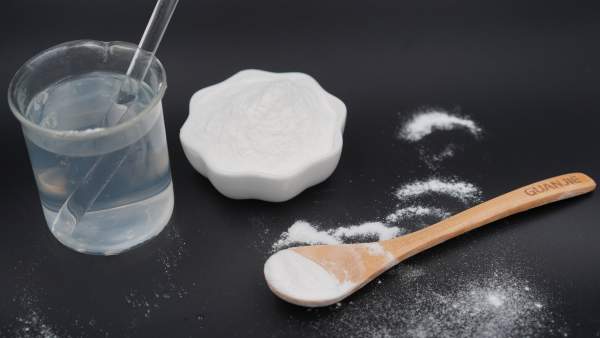
The supplied product specification lists apple vinegar as the source, an ivory-white fine-powder appearance, HPLC as the testing method, and total acidity options of 5%, 8%, and 10%. The stated applications include food and beverages; related customer-facing product information also identifies dietary supplements, health food, and cosmetics. These details help define the initial inquiry, but they do not establish that every option is available in every production lot or that the listed values describe a particular batch.
| Record or specification | What the supplied information says | What to confirm for the lot |
|---|---|---|
| Identity and source | Apple cider vinegar powder; source listed as apple vinegar | Product identity, lot number, source description, and traceability references |
| Acidity specification | Total acidity options: 5%, 8%, and 10% | The ordered specification, stated basis and units, acceptance limits, and lot result |
| Test method | HPLC is listed | The method version or procedure, analyte or reported measurement, and the batch-specific result |
| Appearance | Ivory-white fine powder | Whether the actual lot meets the agreed description and how the inspection is recorded |
| Production and site | The supplier describes fermentation capability and a cGMP-standard clean workshop in its company profile | Which site and line produced the lot, relevant records, and the scope of any facility or quality-system documents |
This comparison is a document-review framework, not evidence that any listed test or facility record has already been supplied. The listed HPLC method alone does not reveal the detailed method conditions, the sample tested, or the result for a shipment. A buyer should compare the agreed product specification with the corresponding certificate of analysis (COA) and, where applicable, supporting laboratory records. If the supplier uses a different basis or presentation for total acidity than the buyer’s specification, that difference should be resolved before batch approval rather than assumed to be equivalent.
Connecting facility evidence to the product
Guanjie Biotech’s company profile describes a 2,000-square-meter cGMP-standard clean workshop within its manufacturing facilities, as well as a laboratory whose construction is described as complying with GMP and QS standards. This is company-provided facility information. It is relevant background for an initial capability assessment, but it does not by itself establish that apple cider vinegar powder is made in that specific workshop, that a particular line is covered by a specific certificate, or that a supplied lot was produced under a documented control system.
For a batch qualification review, buyers can ask the supplier to identify the manufacturing site and line associated with the offered lot and provide the applicable facility or quality-system documents. They can then check whether the documents name the relevant legal entity and site, remain valid for the intended review, and cover the activity and product scope being assessed. If the supplier’s response concerns a company-level facility rather than the specific product line, record that distinction. A general facility description and product-specific manufacturing evidence answer different questions.
Good manufacturing practice is not a substitute for product testing. The U.S. FDA explains that dietary supplement manufacturers, packagers, and holders serving the U.S. market must follow current good manufacturing practices intended to help ensure identity, purity, quality, strength, and composition. This general regulatory information does not verify Guanjie Biotech’s compliance or determine requirements in other markets. Buyers remain responsible for reviewing applicable destination-market requirements and the supplier’s product- and site-specific evidence.
How to assemble a practical batch evidence package
A useful evidence package should let the buyer connect a defined product requirement to a defined production lot. The exact documentation depends on the purchaser’s quality system and destination market; the following sequence is a practical review path, not a claim that these records are already available from Guanjie Biotech.
- Fix the material identity. Record the product name, selected acidity specification, intended application, purchase specification, and lot or sample identifier. Confirm that the supplier’s documents use consistent product and lot references.
- Review the batch result. Request the COA for the exact sample or lot being assessed. Check that the reported total acidity corresponds to the agreed 5%, 8%, or 10% option, and that the document explains its measurement basis, acceptance limits, test method, and result. The listing of HPLC in a general product specification is not a substitute for a lot-specific result.
- Check the process record at an appropriate level. Ask for the relevant production or batch record information that can support traceability and show which process controls were recorded. For the reported cell immobilization liquid fermentation approach, clarify what the supplier records for the lot and what information can be shared. Do not assume a brief process summary is equivalent to a controlled batch record.
- Link the lot to its production site. Request site and line identification and the facility documents applicable to that production scope. Compare their named entity and site with the supplier’s stated manufacturing information. Resolve any mismatch before treating general company-level documents as evidence for the product lot.
- Agree on unresolved quality requirements. The supplied product record does not specify limits or test results for matters such as moisture, microbiological criteria, contaminants, residual solvents, or shelf life. If any of these are relevant to the buyer’s intended use or internal specification, request agreed limits and appropriate supporting evidence rather than inferring values from the product description.
Where a buyer needs additional confidence in an assay result, the review can also define whether an independently tested sample is needed, which sample is to be tested, and how the result will be compared with the purchase specification. This is a buyer-side verification option, not a statement that third-party testing has been completed or is included. Keeping the sample identity, test scope, method, and acceptance criteria explicit prevents a report for one sample or specification from being treated as proof for another.
Interpreting the 100-ton annual-capacity figure
Annual capacity can affect supplier screening, but it is not the same as actual annual output, available capacity, or the quantity allocated to a buyer. In this case, the available product-specific record does not state an annual production capacity for apple cider vinegar powder. The company profile lists an annual output figure for the company overall, but that figure is not identified as apple cider vinegar powder output and should not be transferred to this product.
For that reason, the stated “up to 100 tons” figure is not confirmed by the records available for this article. A buyer considering it should request evidence that names the product, site, time period, and meaning of the capacity figure—for example, whether it describes designed capacity, demonstrated output, or supply available under current operating conditions. Production logs or other appropriately scoped records would help distinguish those meanings. Without product-specific support, the figure should not be used as a basis for forecasting supply or qualifying a volume commitment.
What the capability markers mean for sourcing
The 20-year focus, described fermentation approach, stated acidity options, and company-level facility information form a useful discovery profile. They help buyers frame questions about process, product identity, and quality documentation. They do not, on their own, prove a specific batch’s compliance with a buyer specification, establish facility certification scope, or confirm annual supply availability.
For awareness and early research, the most efficient decision rule is to separate the evidence into three layers: product definition, process and site evidence, and batch evidence. Product definition asks whether the offered powder and acidity option match the target. Process and site evidence asks where and how the material is made and what records support that description. Batch evidence asks whether the actual lot meets the agreed specification. A gap in one layer should not be covered by a claim from another.
Guanjie Biotech’s reported experience and process details can therefore support an initial supplier conversation, while the batch decision should depend on the documents and results tied to the lot under review. Buyers should also assess whether the stated food, beverage, dietary supplement, health food, or cosmetics application matches their own formulation and market requirements. Application listing alone does not establish regulatory suitability or finished-product performance.
FAQ: Apple cider vinegar powder capability and qualification
What apple cider vinegar powder specifications does Guanjie Biotech list?
The supplied product information lists total acidity options of 5%, 8%, and 10%, an ivory-white fine-powder appearance, apple vinegar as the source, and HPLC as the testing method. Buyers should confirm the selected specification and obtain the result and method details for the specific batch being evaluated.
What fermentation method does the supplier describe?
Guanjie Biotech describes apple vinegar cell immobilization liquid fermentation, a company-selected and cultivated acetic acid strain, and a low-temperature fermentation approach. Its product information states a 6–7-day fermentation period. These are supplier-reported process details; a buyer seeking batch-level assurance should request records that relate to the offered lot.
Does the available information verify 100 tons of annual apple cider vinegar powder capacity?
No product-specific annual capacity is stated in the available apple cider vinegar powder information. The “up to 100 tons” figure is therefore unconfirmed here. Buyers should ask for records identifying the product, site, period, and capacity definition before using that figure in a sourcing assessment.
What should a buyer review before qualifying a batch?
At minimum, connect the ordered product identity and acidity specification to a lot-specific COA, confirm the method and result, and request relevant production-site and traceability documentation. Additional limits or tests should be agreed according to the buyer’s specification, intended use, and destination market; the general product listing does not provide all such results.
Company reference: Guanjie Biotech.
Tem questões ou precisa de mais detalhes?
Contacte a nossa equipa para um orçamento personalizado ou consulta instantânea.
Solicitar orçamento
Preencha o formulário abaixo e a nossa equipa entrará em contacto com uma proposta personalizada.
Chat direto do WhatsApp
Prefere conversar em tempo real? Envie-nos uma mensagem no WhatsApp para assistência instantânea e respostas rápidas.
- Obter orçamento personalizado
- Partilhar fotos ou documentos
- Discuta as suas necessidades diretamente
Geralmente responde em 5–30 minutos durante o horário de expediente.