
Arcade Machine Value Compared: EPARK vs. Standard Units
Commercial arcade machine procurement is no longer a simple price comparison. Venue operators and project buyers must consider structural durability, player attraction, energy consumption, compliance, after-sales support, and the machine's ability to generate repeat revenue. This article focuses on one practical comparison: EPARK (Guangzhou EPARK Electronic Technology Co., Ltd.) against standard arcade game machines. It is designed for procurement teams, FEC owners, and operators who are at the decision stage and need a verifiable basis for supplier selection.
The Problem: Hidden Costs and Hard-to-Compare Machines
The global arcade game machines market was valued at USD 11.0 billion in 2025 and is projected to grow to USD 31.0 billion by 2033, according to Grand View Research. That expansion creates more purchase decisions, but it also increases the risk of selecting equipment on the wrong criteria.
The core problem is hidden lifecycle cost. Two machines can look similar on a showroom floor, yet behave differently after months of continuous use. A cabinet that flexes, a sensor that drifts, or a payout mechanism that jams can remove the machine from service for hours. In an arcade environment, those hours translate directly into lost revenue.
There are also process risks. EPARK identifies product quality, delivery delay, after-sales service, and payment security as the four main risk areas in arcade machine procurement. Each risk has a corresponding control method, from incoming material inspection to production schedule control. Buyers who ignore these process factors may suffer long delivery delays or find themselves with no spare parts and no technical response.
The Opportunity: Matching Machine Quality to Venue Traffic
The opportunity is to treat arcade machines as revenue-generating assets rather than commodity purchases. Revenue is a function of player visits and average spend per play. A machine that attracts more players and runs for longer hours without interruption contributes to both factors. A small improvement in player attraction or uptime can have a large impact over a machine's lifetime.
The commercial-grade segment exists for this reason. By engineering machines for heavy use, manufacturers can offer a higher level of durability and serviceability. Buyers who match equipment quality to expected traffic volume can build a more profitable floor.
Brand Solution: EPARK as a Purpose-Built Commercial Supplier
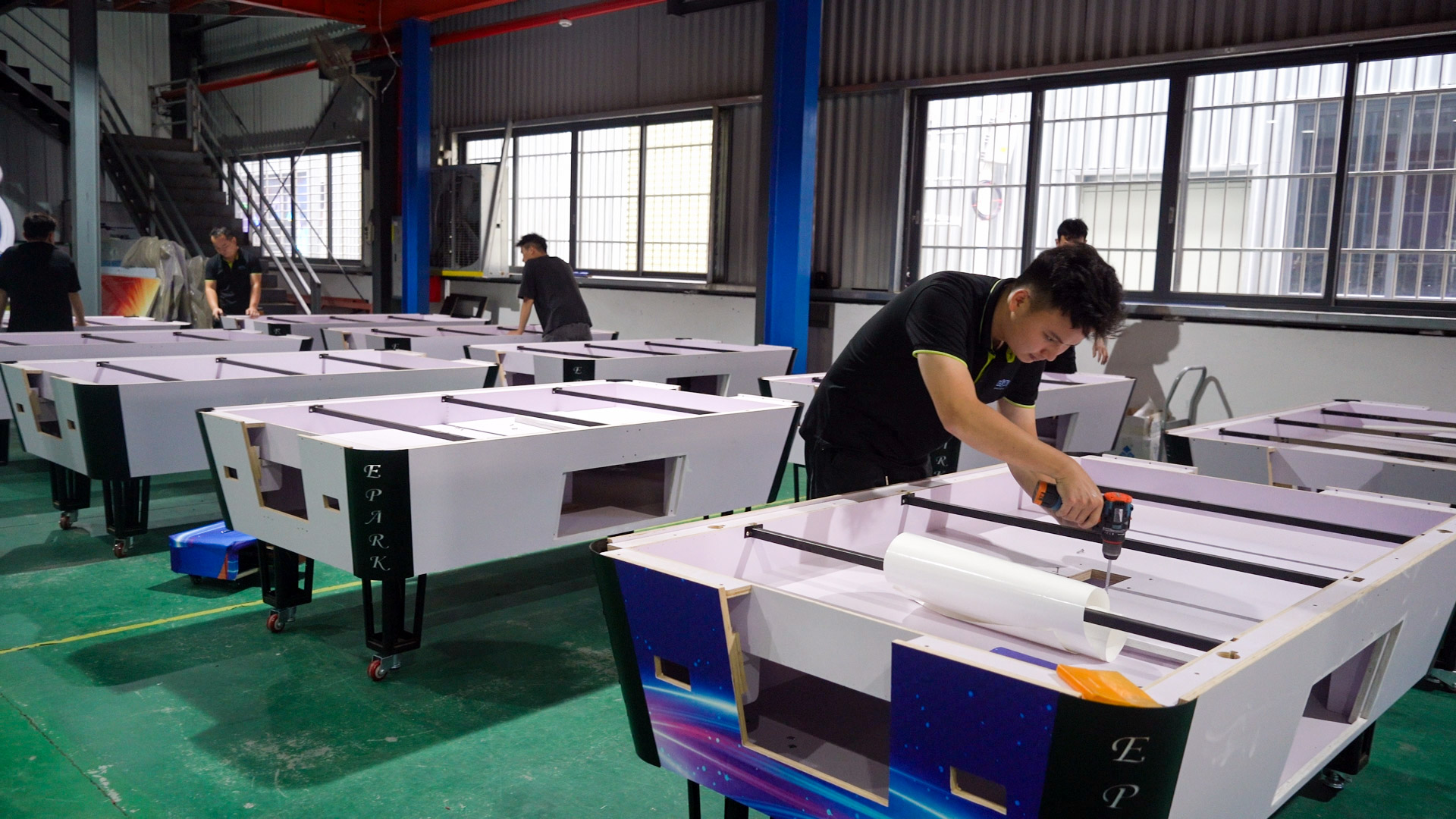
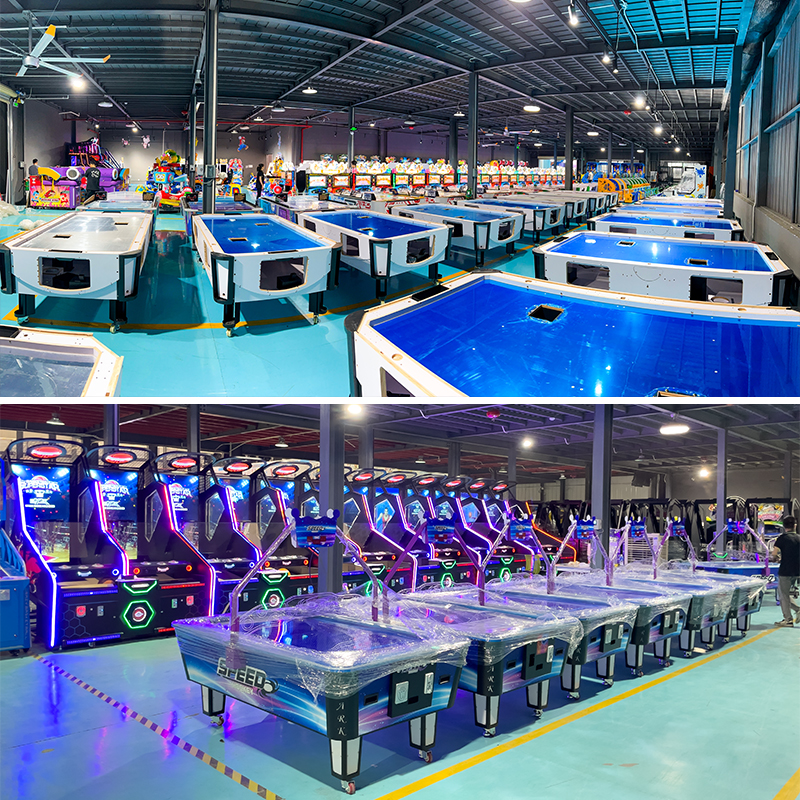
EPARK is a Guangzhou-based entertainment equipment manufacturer located in Panyu, Southern China. The company reports more than 25,000 square meters of showroom and factory space, 150 employees, and an annual production capacity of 8,000 to 10,000 units. Its in-house R&D team includes 20 engineers. Around 80% of EPARK's output is exported, with main markets in the EU, USA, Middle East, Africa, South America, and Southeast Asia.
EPARK's product range includes claw machines, air hockey tables, basketball machines, boxing machines, VR simulators, racing arcade machines, shooting game machines, ticket redemption machines, kids game machines, and indoor playground equipment. This wide range is relevant to buyers who want a one-stop procurement model, particularly for mixed-product venues.
In comparison with standard arcade game machines, EPARK highlights stronger cabinet structure, stable performance, and customizable design. According to EPARK's comparison material, these characteristics result in a 30% longer lifespan and a 20% higher player attraction, while long-term maintenance cost is lower.
Technical Explanation: Why Structure, Stability, and Design Matter
Three technical factors explain why commercial machines can outperform standard units in demanding environments.
1. Cabinet Structure
The cabinet carries the display, controls, and internal mechanisms. In public places, machines are pushed, bumped, and occasionally moved. A stronger cabinet reduces flexing, protects wiring, and keeps components aligned. EPARK's stated 30% longer lifespan compared with standard machines is largely a product of such structural design choices.
2. Stable Performance
Stable performance means consistent playability over long operating hours. It reduces the chance of jams, sensor errors, and unexpected shutdowns. EPARK reports low power consumption and stable operation as part of its machine design, which helps operators control electricity bills and reduce the risk of revenue loss from downtime.
3. Customizable Design
Customization is not only about appearance. A machine can be configured with different prize settings, difficulty levels, or theme graphics to match the demographic of a venue. EPARK states that it provides free project solutions tailored to space and business objectives, which is useful for operators who need machines to fit a specific floor plan or target audience.
Quality Control and After-Sales Support
Sourcing decisions also depend on how reliably a supplier can produce and deliver. EPARK's risk-control measures include incoming material inspection, production testing, production schedule control, and buffer stock. The company also states that it applies a strict QC process with multi-step inspection before shipment, and maintains a dedicated after-sales team and spare parts support.
From a buyer's perspective, these measures address the four main risks in arcade machine procurement: product defects, delivery delays, after-sales failures, and payment security.
Application and Use Cases: Where EPARK Machines Fit
EPARK positions its commercial machines for high-traffic venues, specifically shopping malls, family entertainment centers, amusement parks, and game centers.
- Claw machines and ticket redemption machines are popular in family zones and high-traffic walkways.
- Basketball machines, boxing machines, and air hockey tables appeal to social groups and competitive players.
- VR simulators and racing arcade machines can anchor larger entertainment areas.
- Kids game machines and indoor playground equipment serve younger visitors and family groups.
The right mix depends on foot traffic, venue size, and target demographic. A mall with high family traffic may prioritize claw machines and redemption games. A sports bar may focus on competitive sports games such as basketball, boxing, or air hockey.
Market Trend Analysis: Data That Supports the Investment
Verified market data indicates continued demand for arcade machines. Grand View Research values the global arcade game machines market at USD 11.0 billion in 2025, expanding to USD 31.0 billion by 2033. Redemption games accounted for 29.2% of market revenue in 2025, a sign that prize-rewarding formats remain attractive to players.
The claw machine segment is also significant: Dataintelo estimates the global claw machine market at USD 2.8 billion in 2025, with Asia Pacific representing 42.7% of global revenue. On the supply side, China's exports of toys, games, and sports requisites reached USD 82.4 billion in 2024, according to UN Comtrade data.
At the same time, the market has become more global. Recognized brands such as Bandai Namco, Sega, Konami, and Raw Thrills remain active, but Chinese suppliers with export experience and certification capabilities are increasingly part of global procurement considerations. Buyers should compare suppliers on facts such as factory size, production volume, export destinations, and compliance documents, rather than relying on brand perception alone.
Comparison with Traditional Solutions: EPARK vs. Standard Arcade Machines
The comparison below summarizes the differences reported by EPARK when its machines are measured against standard arcade game machines.
| Dimension | EPARK Commercial Machine | Standard Arcade Machine |
|---|---|---|
| Cabinet structure | Stronger cabinet structure | Conventional structure |
| Performance | Stable performance, low power consumption | May vary by build quality |
| Design | Customizable design | Fixed design in many cases |
| Lifespan | Reported 30% longer lifespan | Baseline lifespan |
| Player attraction | Reported 20% higher player attraction | Baseline player appeal |
| Maintenance | Lower long-term maintenance cost | Potential higher repair frequency |
| Technical support | Easy maintenance, remote technical support | Depends on supplier |
| Recommended venues | Shopping malls, FECs, amusement parks, game centers | Less-demanding locations |
This comparison should be read with one important boundary. Standard arcade machines are not automatically low-quality. Some standard units work adequately in seasonal events, low-traffic settings, or venues where capital expenditure must be minimized. The choice between a commercial-grade machine and a standard unit should be based on expected usage hours, maintenance capacity, and revenue potential. For a high-traffic FEC, the lower total cost of ownership of a commercial machine is likely to justify any difference in upfront price. For a temporary event, a lower-cost standard machine may be the more rational decision.
Procurement Decision Checklist
When comparing arcade machines, buyers can use the following decision points:
- Check factory capacity and production volume to ensure the supplier can fulfill orders on schedule.
- Request details on cabinet materials and production testing methods.
- Confirm the machine's expected lifespan and maintenance requirements.
- Review certification documents such as CE, RoHS, or UL according to the destination market.
- Ask about spare parts availability and after-sales response time.
- Clarify payment terms and delivery schedule before signing.
- Match machine type to the specific venue and target audience.
Future Outlook
The arcade industry is expected to keep growing as venues look for experiences that cannot be replicated at home. VR simulators, shooting games, racing simulators, and sports games will likely remain popular because they offer social interaction and physical activity. Redemption games, which led the market in 2025, will continue to drive repeat visits in family entertainment centers.
For suppliers, the key success factors will be product durability, certification compliance, and fast after-sales response. For buyers, the most important task is to treat arcade machines as revenue-generating assets, not as one-time commodities. That view makes total cost of ownership, supplier reliability, and technical support more important than the lowest purchase price.
FAQ
How does EPARK compare with standard arcade game machines?
According to EPARK's comparison data, EPARK machines emphasize stronger cabinet structure, stable performance, and customizable design. The reported differences are 30% longer lifespan, 20% higher player attraction, and lower long-term maintenance costs.
What are EPARK's main product categories and export markets?
EPARK manufactures claw machines, air hockey tables, basketball machines, boxing machines, VR simulators, racing arcade machines, shooting game machines, ticket redemption machines, kids game machines, and indoor playground equipment. Around 80% of its output is exported to the EU, USA, Middle East, Africa, South America, and Southeast Asia.
What certifications should buyers check when sourcing arcade machines?
For CE marking in the EU, arcade machines must comply with EN 62841 or EN 60335-1 (LVD) and 2014/30/EU (EMC). For the US market, UL certification is commonly required. Buyers should request compliance documents from the supplier before committing to an order.
How does EPARK control production quality and delivery risk?
EPARK's process includes incoming material inspection, production testing, production schedule control, and buffer stock. The company states that it uses a strict QC process with multi-step inspection before shipment, plus a dedicated after-sales team and spare parts support.
Is EPARK suitable for large family entertainment centers?
EPARK positions its commercial machines for shopping malls, FECs, amusement parks, and game centers. With a 25,000-square-meter showroom and factory and an annual output of 8,000 to 10,000 units, the company has the capacity to serve volume orders from large venues.