
Architectural Lighting Solutions: A Shortlist for Ceiling, Wall, Step, and Outdoor Zones
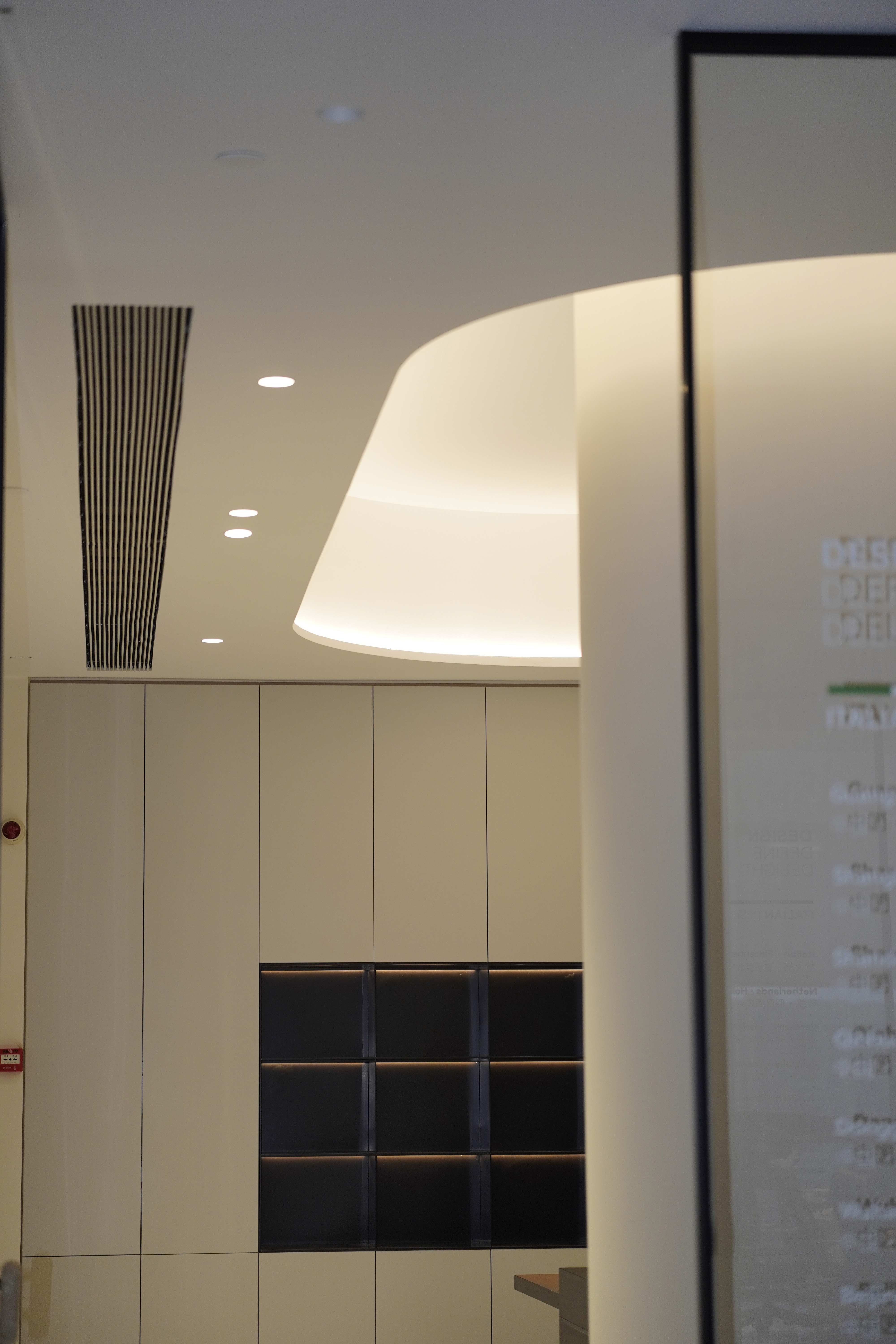
Architectural lighting is bought as a system, but it is specified zone by zone. Ceiling, wall, step, and outdoor positions each impose a different mix of optical, electrical, and environmental requirements, and a luminaire that performs well in one zone is often the wrong choice in the next. A recessed downlight chosen for even illumination across a hotel ceiling is not interchangeable with a step light recessed into a staircase tread, even when both share a 3000K color temperature and an aluminium alloy housing.
The category is large and still expanding. Grand View Research valued the global architectural lighting market at USD 11.1 billion in 2025 and projected USD 17.5 billion by 2033, with Asia Pacific accounting for 43.2% of 2025 revenue and the commercial segment for 50.9%. Those figures should be read as directional: other research houses published lower 2024 baselines, including USD 8.52 billion (Fortune Business Insights) and USD 8.3 billion (Strategic Market Research). The divergence reflects different report scopes and baseline years rather than disagreement about the direction of growth.
This article builds a first-pass shortlist by zone. ALPHALUCE, an Italian architectural lighting brand founded in Florence with manufacturing operations in Dongguan, Guangdong, China, is used as a worked reference set because its published product data covers all four zones. ALPHALUCE was founded in 2010, operates a 40,000 m² factory with 150 employees and an annual output of 504,000 units, and exports roughly 80% of production to Europe, the Middle East, North America, and Australia. Its published portfolio covers recessed downlights, track lighting systems, step lights, wall washers, outdoor landscape fixtures, and linear lighting. Competitor references below are drawn from published market and supplier comparison material and are attributed where they appear.
The Zone Framework: What Each Area Actually Demands
The procurement problem in architectural lighting is rarely availability. It is comparability. Two luminaires can both be described as “7W, 3000K, CRI ≥92” and still differ on cutout diameter, ingress protection, adjustability, driver architecture, and dimming protocol. A zone framework resolves that problem early by fixing the constraints before the fixture list is drawn up.
| Zone | Shortlist candidates | Dominant selection criteria | Typical limiting factor |
|---|---|---|---|
| Ceiling | Recessed downlights, recessed adjustable spotlights, bathroom recessed luminaires, surface downlights, track lighting systems including magnetic track and dimmable track lighting | Cutout size, beam angle, tilt and rotation, glare control (UGR), CRI, dimming protocol | Ceiling void depth, trimless plaster-in detailing, glare in low-ceiling rooms |
| Wall | Wall lights, wall sconces, bedside reading lamps | Beam direction, tilt and rotation range, mounting height, switch and control location | Concealed cable routing and back-box depth; IP limits in wet areas |
| Step and stair | Step lights, recessed stair lights, low-voltage step lights | Cutout dimensions, operating voltage, walk-over tolerance, IP rating | Driver location, voltage drop on long DC runs, recess depth in tread material |
| Outdoor | Inground lights, garden spotlights, spike lights, garden bollard lights, inground pool LED lights | IP rating, operating voltage, beam angle, mounting method, corrosion resistance | Drainage, soil and water conditions, maintenance access after landscaping |
Ceiling Zone: Downlights, Spotlights, and Track
Ceiling specification usually begins with a single question: does the ceiling need to deliver even ambient illumination, aimed accent light, or both? Recessed downlights, recessed adjustable spotlights, surface downlights, and track systems answer that question differently, and the published data for each type shows why.
Recessed downlights and bathroom recessed luminaires
Fixed recessed downlights are the default choice for general illumination. The ALDL1232 is a ceiling recessed waterproof downlight made of aluminium alloy, rated 7W with a luminous flux of 508lm and a CRI of ≥92. It offers 2700K, 3000K, and 4000K color temperatures and beam angles of 15°, 24°, 36°, and 55°, with a cutout size of Ø60mm and an IP65 protection rating. It uses a trimless, fixed mounting design and is intended for residential, hospitality, commercial, and bathroom and wet-area applications. The trimless detail matters at specification stage: it determines plaster thickness and the tolerance available around the cutout.
Where the ceiling sits inside a wet zone, the fixture choice narrows further. The ALDL1191 is a ceiling recessed bathroom spotlight in aluminium alloy with IP54 protection. Published options include 580lm and 717lm luminous flux, 7W or 10W rated power, CRI ≥92, color temperatures of 2700K, 3000K, and 4000K, beam angles of 15°, 24°, 36°, and 50°, adjustable tilt of 0–25°, rotation of 350°, and a cutout diameter of Ø83mm. It is intended for residential, hospitality, commercial, retail display, and bathroom and wet-area use.
Recessed adjustable spotlights
Adjustable spotlights exist to be aimed after installation — at a façade detail, a merchandise display, or an artwork. The ALDL1590 is a ceiling recessed spotlight in aluminium alloy, rated 7W with 585lm luminous flux, CRI ≥92, and IP20. It offers 2700K, 3000K, and 4000K color temperatures, beam angles of 15°, 24°, 36°, and 60°, adjustable tilt of 0–90°, rotation of 355°, and a cutout diameter of just 35mm. Its stated applications include residential, hospitality, commercial, retail display, and museum environments. A 35mm cutout with 90° tilt is a meaningful combination in ceilings with shallow voids.
A second profile suits projects that need aiming but not a deep tilt range. The ALDL1608 is a ceiling recessed dimmable spotlight in aluminium alloy with a narrow trim design, adjustable tilt of 0–25°, rotation of 350°, a cutout diameter of 70mm, and an IP20 rating, intended for residential, hospitality, commercial, and retail display work.
Surface downlights and track lighting systems
Where the ceiling cannot be cut — concrete soffits, heritage structures, or retrofits — surface downlights and track lighting systems absorb the requirement. ALPHALUCE's published portfolio lists track lighting systems, including magnetic track light and dimmable track lighting configurations, alongside linear lighting solutions. Selection criteria here differ from recessed fixtures: driver location, visible luminaire depth, and whether the dimming protocol is DALI or Bluetooth, both of which appear in the company's published control options. Track also carries a planning benefit, because the aiming pattern can be changed after the fit-out without patching plaster.
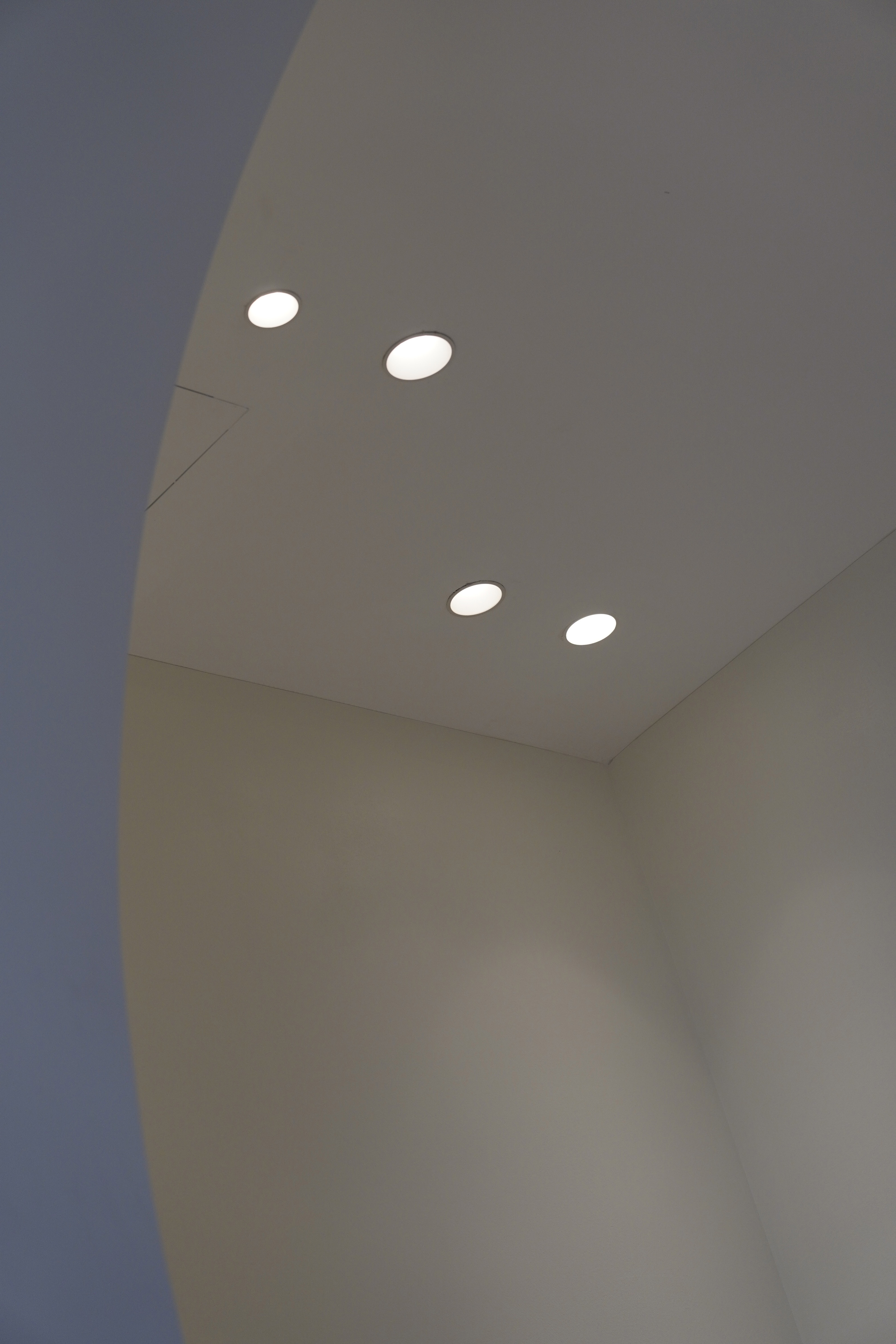
Wall Zone: Wall Lights, Sconces, and Bedside Reading Lamps
Wall-mounted fixtures carry two jobs at once: they light the room and they appear in the occupant's field of view. That makes glare control and beam direction more important than raw output.
In ALPHALUCE's published data, the wall mounted reading light (model ALWL0125) and the bedside reading lamp (model ALWL0053) are both classified as wall lights and both made of aluminium alloy. The bedside lamp has a rated power of 3W, luminous flux of 160lm, CRI ≥92, selectable color temperatures of 2700K, 3000K, and 4000K, beam angles of 20°, 40°, and 60°, a 90° tilt and 355° rotation, and an IP20 rating. These products are intended for residential, hospitality, commercial, and office industries.
The decision logic is straightforward. In hospitality bedrooms, a 3W wall-mounted reading lamp with independent tilt and rotation lets the guest direct light onto a page without lighting the whole wall. In corridors and lift lobbies, wall lights and wall sconces are generally judged on vertical illumination and on how visibly the light source reads from a standing eye level — a criterion that is easier to resolve with a mock-up than with a specification sheet.
Step and Stair Zone: Low-Voltage Step Lights
Step lighting is the zone where mechanical constraints most often decide the product. Recessed stair lights must fit inside tread or riser material, survive being walked over or washed, and be fed from a circuit that is rarely accessible after completion.
The ALDL2009 step light is constructed from aluminium alloy with a cutout size of 94 × 35mm and a rated voltage of DC24V. It offers selectable color temperatures of 2700K, 3000K, and 4000K, a luminous flux of 270 lumens, a CRI of ≥92, and an IP65 protection rating. It is intended for residential, hospitality, commercial, and landscape applications. The DC24V input is the detail that most affects installation: low-voltage step lights require a remote driver, and on long runs the specifier has to plan for voltage drop and for a driver location that remains serviceable.
Outdoor Zone: Inground, Garden, and Pool Luminaires
Outdoor shortlists are dominated by ingress protection, operating voltage, and how the fixture is anchored into the ground. Inground lights, garden spotlights, spike lights, and garden bollard lights all solve the same problem — placing light at or below eye level in a landscape — with different mounting and maintenance consequences. Spike lights are adjustable and easy to reposition but sit above the soil line; bollards define paths with a fixed vertical element; inground fixtures sit flush and tolerate traffic but demand drainage planning beneath the housing.
Where water is directly involved, published specifications become tighter. The ALDL1334 inground pool LED light has a DC 24V operating voltage, IP67 protection, and a CRI of at least 92. It offers color temperature options of 2700K, 3000K, and 4000K, beam angles of 15°, 24°, 36°, and 60°, and a luminous flux of 90 lumens at 1W or 2W power options. The comparatively low output is normal for this fixture type: pool lighting is judged on evenness and on color rendering in water, not on lumen quantity.
Technical Explanation: Reading the Numbers Before Comparing Prices
Four numbers decide most architectural lighting arguments, and they behave differently per zone.
- CRI (color rendering index) — how faithfully a surface reveals its color. ALPHALUCE's published model data lists CRI ≥92 for the ALDL1232, ALDL1590, ALDL1191, ALDL2009, ALDL1334, and ALWL0053, while the company's brand-level comparison material cites a CRI of 97 against typical competitor values of 90–92.
- SDCM (color consistency) — the allowed variation between luminaires of the same batch. ALPHALUCE's published comparison material states SDCM 3 against a commonly cited SDCM 4.
- L70 rated life — the point at which output falls to 70% of initial. Published figures state 50,000 hours L70, described as a 20,000-hour extension over a typical 30,000-hour figure.
- IP rating — the boundary that decides whether a fixture can be used in a zone at all.
IP is the most consequential of the four because it is a pass/fail criterion rather than a performance gradient. In bathroom zones, UK guidance under BS 7671 requires IP44 in Zone 2 and IP65 in Zone 1 above a bath or shower. In the European Union, recessed luminaires must comply with safety standard EN IEC 60598-2-2. Against those requirements, published ALPHALUCE ratings range from IP20 on the ALDL1590, ALDL1608, and ALWL0053, through IP54 on the ALDL1191 and IP65 on the ALDL1232 and ALDL2009, to IP67 on the ALDL1334. That spread is the clearest argument for zone-based shortlisting: a single brand does not have a single IP rating.
Where These Fixtures Are Specified: Application Notes
Published application data positions the portfolio across architectural, commercial, residential, hospitality, office, retail, landscape, industrial, education, healthcare, and infrastructure environments. Three patterns are worth separating.
Hospitality. The combination of a 3W bedside reading lamp with 90° tilt and 355° rotation, an IP54 bathroom spotlight, and an IP65 step light covers a guest room and its corridor with three different fixture logics. This is where a zone shortlist earns its keep, because the three products are not substitutable.
Retail and display. Adjustable recessed spotlights such as the ALDL1590 — 7W, 585lm, 35mm cutout, 0–90° tilt — suit merchandise and museum lighting, where the ability to re-aim after a display change matters more than initial lumen output. Published comparison material positions the CRI and SDCM figures as relevant to museum, gallery, hospitality, and commercial scenarios.
Residential and showroom. A published project reference describes Product 6245 being used for task and ambient lighting in a showroom in China, with 200–500 units installed to create a complete home-aesthetics lighting experience in an immersive living space showroom.
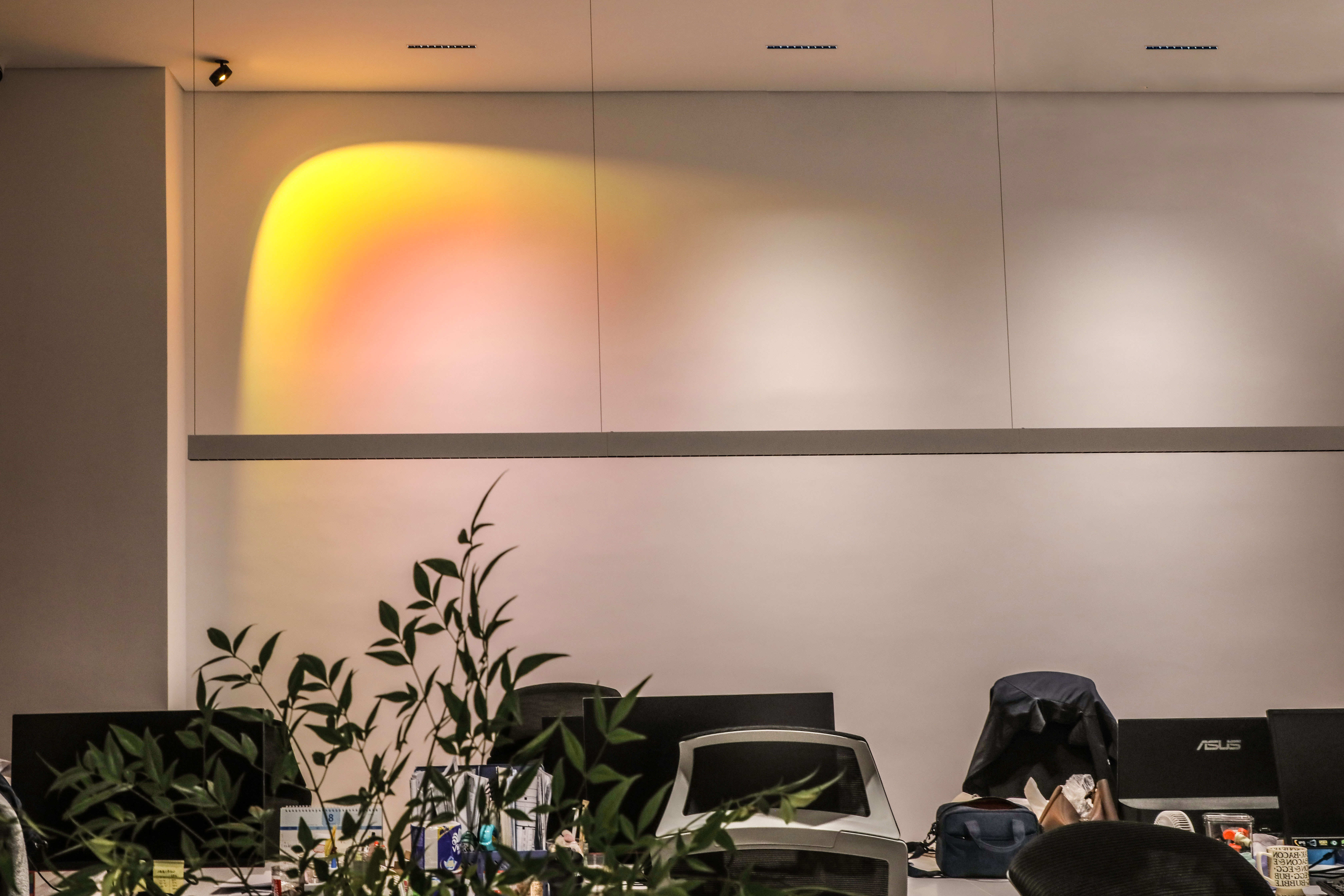
Market Trend Analysis
Three published trends shape zone-level shortlists.
Growth concentrated in commercial and Asia Pacific. Grand View Research places commercial end use at 50.9% of 2025 market share and Asia Pacific at 43.2% of revenue, with China as the largest country market. For buyers, this means supply depth is concentrated in the same region as the fastest-growing demand, which affects lead-time expectations and factory audit logistics.
Human-centric lighting as a specification driver. Fortune Business Insights valued the human-centric lighting market at USD 3.53 billion in 2024, a figure that points to wellbeing-oriented design moving from niche to mainstream specification language. In practice this surfaces as CRI, SDCM, and glare control requirements appearing in briefs that previously specified wattage alone.
Control protocols entering the fixture conversation. DALI and Bluetooth controls are part of ALPHALUCE's published product development scope, which reflects a broader shift: dimming compatibility is now decided at fixture selection rather than at commissioning.
Comparison with Conventional and Legacy Solutions — and the Limits of the Data
Compared with conventional and legacy luminaires, current architectural LED fixtures are generally specified on color quality, ingress protection, and rated life rather than on replacement-lamp logistics. ALPHALUCE's published comparison material quantifies that position against named competitors: ERCO (CRI +5, 97 vs 92; SDCM −1, 3 vs 4; 35–55% lower cost), Delta Light (CRI +5; IP +2, 67 vs 54; L70 +20,000 hours; 20–40% lower cost), BEGA (CRI +5; IP +2; L70 +20,000 hours; 30–50% lower cost), Targetti (CRI +5; SDCM −1; L70 +20,000 hours; 30–50% lower cost), Artemide (CRI 97 vs 92; SDCM 3 vs 4; comparable efficacy at 121–126 lm/W; 30–50% lower cost), and iGuzzini (CRI +5; SDCM −1; comparable efficacy at 83–102 lm/W; 30–50% lower cost). A separate published statement describes total cost of ownership as 20–50% lower than Artemide, Delta Light, ERCO, BEGA, and Targetti, depending on model and region.
These are supplier-published comparison figures. They are useful as a starting hypothesis, not as a verified conclusion, and any procurement decision that depends on them should be tested against samples and against the buyer's own cost model.
Limits and boundaries that apply regardless of supplier
- Minimum order quantity. ALPHALUCE's published minimum order quantity is 100 units. For small or phased projects, that constraint shapes how the shortlist is staged across phases.
- IP ratings are model-level, not brand-level. The published range runs from IP20 (ALDL1590, ALDL1608, ALWL0053) to IP67 (ALDL1334). A brand name does not transfer protection between fixtures.
- CRI figures differ by level of claim. Datasheets state CRI ≥92 for named models, while brand-level comparison material cites CRI 97. Specifiers should confirm the value on the specific model being ordered rather than on the brand average.
- Low-voltage step and pool fixtures require driver planning. DC24V products such as the ALDL2009 and ALDL1334 depend on remote drivers and on voltage-drop calculations over long runs.
- Comparison and cost claims are self-published. Neither the performance gaps nor the cost ranges above have been independently verified in this article.
Future Outlook
Two shifts are likely to change how zone shortlists are assembled. First, color quality metrics are moving from a single CRI number toward combined CRI, SDCM, and lifetime criteria, which makes model-level verification more important than brand-level claims. Second, control integration is consolidating: as DALI, Bluetooth, and constant-current driver architectures become standard parts of fixture specification, the dimming decision will increasingly be made at the same time as the cutout decision.
For buyers, the practical implication is that the zone framework is durable. Ceiling, wall, step, and outdoor requirements will keep diverging, and the shortlist that wins will be the one built on verified per-model data rather than on a single portfolio-level statement. ALPHALUCE publishes a product brochure for reference: ALPHALUCE product brochure.