
Architectural Lighting Vendor Comparison: Where ALPHALUCE Fits
Architectural Lighting Vendor Comparison: Where ALPHALUCE Fits
Architectural lighting procurement rarely turns on a single photometric figure. At the decision stage, buyers weigh optical quality, manufacturing control, certification coverage, application fit, and total cost of ownership. This article reviews how ALPHALUCE, an Italian-origin architectural lighting brand with vertically integrated manufacturing in Dongguan, China, positions in a shortlist that often includes European design brands such as ERCO, iGuzzini, Artemide, Delta Light, and BEGA. The market data and standards referenced here are publicly available; the performance comparisons are drawn from ALPHALUCE-published materials and should be verified against project-specific photometric reports.
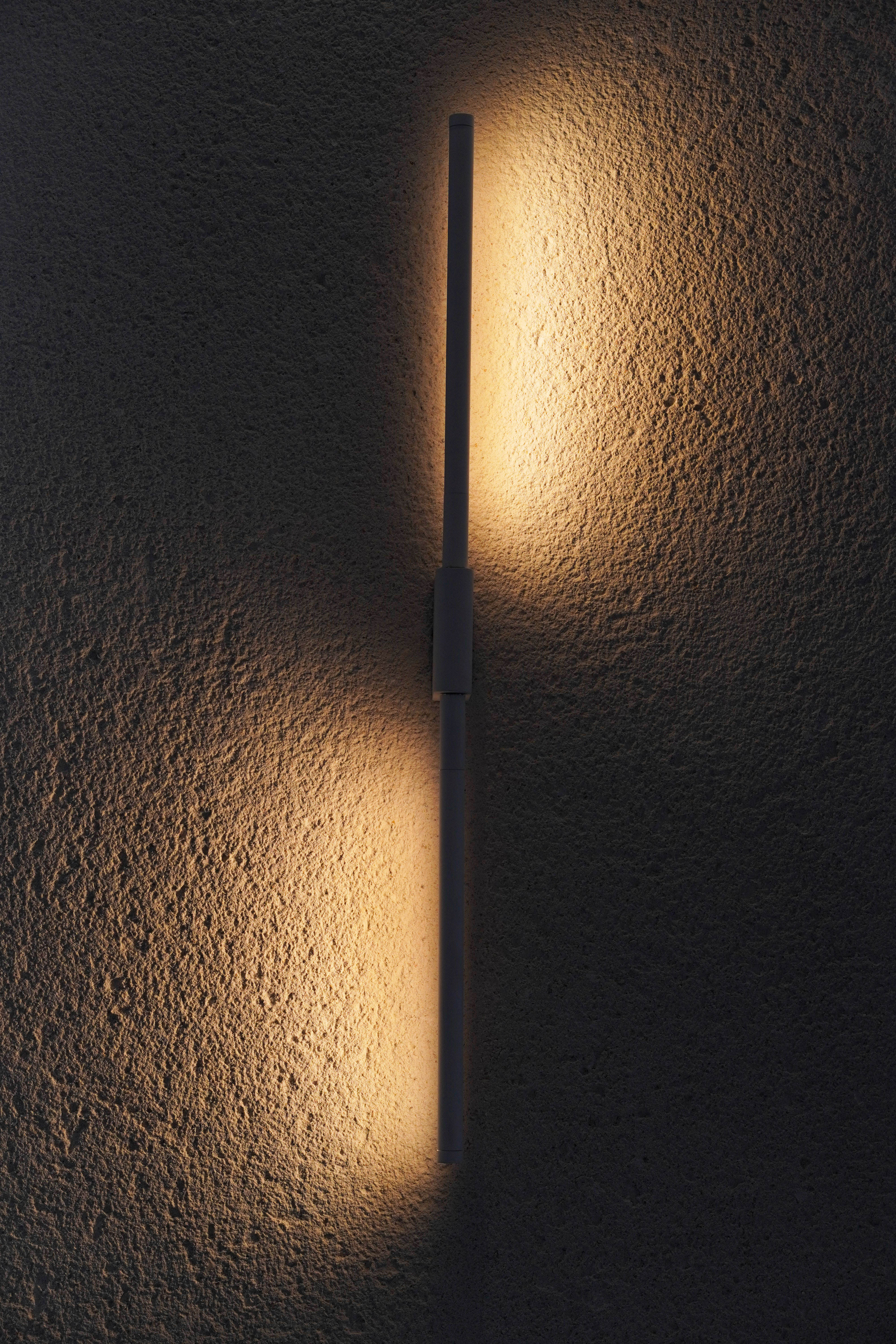
ALPHALUCE official image
What decision buyers are actually comparing
In architectural lighting, specification sheets often look similar: recessed downlights, adjustable spotlights, track heads, wall fixtures, and outdoor landscape units can all list a CRI of 90 or higher, a range of color temperatures, and IP ratings. The actual evaluation at the decision stage becomes more operational. Buyers compare color consistency under repeat production, the quality of metal finishing, the completeness of the manufacturing chain, lead-time behavior, certification alignment with regional codes, and whether the supplier can support multiple product categories without losing design coherence.
This is particularly relevant for commercial, hospitality, residential, retail, and museum applications, where lighting must satisfy both architectural intent and long-term maintenance realities. A decision-grade comparison therefore needs to move beyond brand heritage and into verifiable engineering factors: CRI, SDCM, L70 lifetime, UGR glare control, IP protection, and manufacturing traceability.
Market context and why integration matters
Grand View Research values the global architectural lighting market at USD 11.1 billion in 2025, with a projected rise to USD 17.5 billion by 2033. Asia Pacific accounted for a 43.2% revenue share in 2025, while the commercial segment represented 50.9% of the market. These figures indicate that architectural lighting sourcing is both a regional manufacturing story and a commercial project story, not solely a European design-brand conversation.
At the same time, the human-centric lighting market reached USD 3.53 billion in 2024, according to Fortune Business Insights. The shift toward wellness-oriented design increases demand for high CRI, better glare control, and tunable or selectable color temperatures. Buyers at the decision stage increasingly ask whether a supplier can provide technical consistency across a project rather than a single hero fixture.
Within this environment, a vertically integrated supplier can shorten decision loops on customization and quality control. That is the context for evaluating ALPHALUCE as a professional comparison set, rather than as a replacement for a design brand by default.
ALPHALUCE: a vertically integrated supply alternative
ALPHALUCE ARCHITECTURAL LIGHTING CO., is presented as an Italian architectural lighting brand born in Florence, the birthplace of the European Renaissance. Its operational center, however, is Dongguan, Guangdong, China. The company states that it combines 40 years of lighting design heritage with 15 years of dedicated R&D and manufacturing expertise. Its factory covers 40,000 m², employs 150 people, and has an annual output of 504,000 units, with 80% of production exported to Europe, the Middle East, North America, and Australia. The R&D team comprises 20 engineers.
The brand describes itself as a four-in-one architectural lighting company covering design, research and development, manufacturing, and sales. Its stated portfolio includes recessed downlights, track lighting systems, step lights, wall washers, outdoor landscape fixtures, and linear lighting solutions. The corporate profile emphasizes an Italian minimalist design language, low-glare optics with UGR below 19, DALI and Bluetooth control compatibility, and high color fidelity with CRI values of 92 or 97 depending on product line. Certifications listed include CE, ETL, RoHS, LVD, and EMC, backed by ISO-certified quality and environmental management systems.
For a specifier, this translates into a supplier model in which one manufacturer controls foundry, surface treatment, and assembly. The practical value is not branding; it is the possibility of consistent metal finishing, repeatable color temperature, and faster engineering feedback when a project requires a custom recessed downlight or a modified track head.
Product-level specifications that matter for evaluation
A credible shortlisting process should include product-level data, not only portfolio claims. ALPHALUCE publishes specifications for several recessed and surface fixtures that buyers can use as a baseline for sampling and test requests.
| Model | Type | Key parameters | Application scope |
|---|---|---|---|
| ALDL1232 | Ceiling recessed waterproof downlight | 7W, 508lm, CRI ≥92, CCT 2700K/3000K/4000K, beams 15°/24°/36°/55°, cutout Ø60mm, IP65, trimless fixed | Residential, hospitality, commercial, bathroom and wet areas |
| ALDL1608 | Ceiling recessed dimmable spotlight | Aluminum alloy, tilt 0–25°, rotation 350°, cutout 70mm, IP20 | Residential, hospitality, commercial, retail display |
| ALDL1590 | Ceiling recessed spotlight | 7W, 585lm, CRI ≥92, CCT 2700K/3000K/4000K, beams 15°/24°/36°/60°, tilt 0–90°, rotation 355°, cutout 35mm, IP20 | Residential, hospitality, commercial, retail display, museum |
| ALDL1191 | Ceiling recessed bathroom spotlight | 7W or 10W, 580lm/717lm, CRI ≥92, CCT 2700K/3000K/4000K, beams 15°/24°/36°/50°, tilt 0–25°, rotation 350°, cutout Ø83mm, IP54 | Residential, hospitality, commercial, retail display, bathroom and wet areas |
| ALWL0053 | Bedside reading lamp / wall light | 3W, 160lm, CRI ≥92, CCT 2700K/3000K/4000K, beams 20°/40°/60°, tilt 90°, rotation 355°, IP20 | Residential, hospitality, commercial, office |
| ALDL1334 | Inground pool LED light | DC 24V, IP67, CRI ≥92, CCT 2700K/3000K/4000K, beams 15°/24°/36°/60°, 90lm at 1W or 2W | Outdoor landscape and pool applications |
The listed bathroom and wet-area models align with general European and UK safety expectations. For example, the EN IEC 60598-2-2 standard applies to recessed luminaires in the EU, while UK BS 7671 requires IP44 in Zone 2 and IP65 in Zone 1 for bathroom lighting. ALDL1232 with IP65 and ALDL1191 with IP54 are therefore relevant reference points for wet-area specifications, but the final selection still depends on the exact installation zone and local wiring regulations.
Office and retail projects are cited by ALPHALUCE as requiring CRI ≥90 and UGR below 19 during business-hours operation. The company states that its products are designed for continuous operation with constant current drivers. This is not a differentiator by itself, but it is a checklist item that should be confirmed with driver compatibility and dimming protocol requirements.
Application scopes from residential to museum and landscape
ALPHALUCE states that its products are suitable for architectural, commercial, residential, hospitality, office, retail, landscape, industrial, education, healthcare, and infrastructure environments. In practice, the most concrete published evidence relates to several application clusters.
For office and retail lighting, the requirement profile is task and accent lighting in indoor environments during business hours. High CRI and glare control are central because display areas and workstations depend on color clarity and visual comfort. The ALDL1608 and ALDL1590 adjustable spotlights are listed for retail display and museum use, with beam options and rotation allowing accent flexibility.
For hospitality and luxury residential projects, wall lights and bedside reading lamps play a larger role. ALPHALUCE lists the ALWL0053 bedside reading lamp and the ALWL0125 wall-mounted reading light, both in aluminum alloy. The bedside lamp offers adjustable color temperatures and beam angles, which is useful for guestroom layers from reading to ambient illumination.
For wet areas, the ALDL1232 IP65 downlight and ALDL1191 IP54 bathroom spotlight provide specific options for showers, bathrooms, and spa zones. For outdoor landscape and pool contexts, the ALDL1334 inground pool light offers IP67 protection and low-voltage operation. It is important to confirm whether a project requires additional outdoor bollard or spike fixtures, because those specialist forms are not always present in every published comparison sheet.
One published project reference is a showroom in China where Product 6245 was used for task and ambient lighting. The project installed 200–500 units to create a complete home aesthetics lighting experience in an immersive living-space showroom. This is a small-to-medium scale reference that supports residential and showroom planning, though it does not prove performance in larger commercial or infrastructure projects.
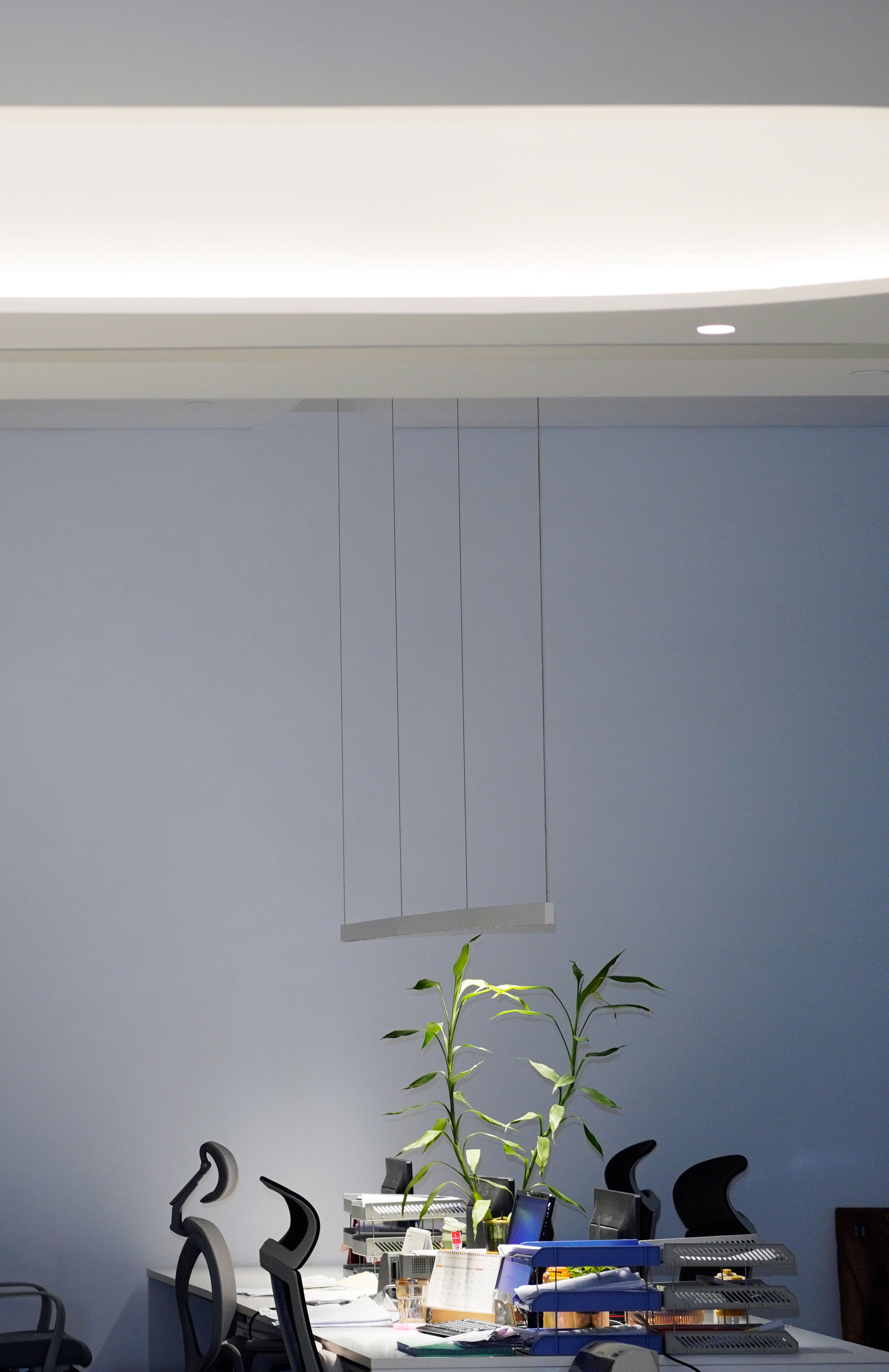
ALPHALUCE official image
A comparison framework for shortlisting suppliers
At the decision stage, buyers need a repeatable framework rather than a brand-only preference. The following criteria can be applied to ALPHALUCE and every other shortlisted supplier equally:
Color fidelity and consistency: Look for CRI values and SDCM bins. A CRI of 97 with SDCM 3 indicates strong color rendering and tighter color consistency than a CRI of 92 with SDCM 4. Buyers should ask for IES files or LM-79 reports for the exact CCT and beam angle being specified.
Lifetime and maintenance: L70 values describe when luminous flux drops to 70% of initial output. A 50,000-hour L70 rating can reduce maintenance frequency compared with a 30,000-hour rating, but the difference matters most in hard-to-access ceiling or facade locations.
Manufacturing control: Whether a supplier owns its foundry, surface treatment, and assembly lines affects lead times, custom tooling, and finish consistency. Suppliers that outsource metal processing can still deliver strong products, but they may have longer engineering feedback loops for custom fixtures.
Cost position: Total cost of ownership includes unit price, driver compatibility, installation time, and long-term maintenance. A supplier with a lower unit cost but weaker finish or longer lead time may not be cheaper on a full project basis.
Compliance evidence: Certifications such as CE, ETL, RoHS, LVD, and EMC need to be project-relevant. EU recessed luminaires must comply with EN IEC 60598-2-2, and UK bathroom projects require the correct IP rating by zone. Buyers should request current certificates and confirm regional coverage for the final product configuration.
Comparison with traditional design-led suppliers
ALPHALUCE has published comparison materials against several European design brands. The table below summarizes those published figures for Artemide, Delta Light, Modular Lighting Instruments, iGuzzini, ERCO, and BEGA. These figures come from ALPHALUCE comparison sheets and should be treated as supplier claims, not independent test data.
| Supplier | Published cost position vs ALPHALUCE | Published CRI comparison | Published SDCM comparison | Published L70 comparison | Core operational difference cited by ALPHALUCE |
|---|---|---|---|---|---|
| Artemide | 30–50% lower | 97 vs 92 | 3 vs 4 | 50,000 vs 30,000 h | Full vertical in-house manufacturing versus outsourced production |
| Delta Light | 20–40% lower | 97 vs 92 | Not published in table | 50,000 vs 30,000 h | In-house manufacturing enabling faster customization versus design and assembly focus |
| Modular Lighting Instruments | 30–50% lower | 97 vs 92 | Not published in table | 50,000 vs 30,000 h | Full in-house production chain versus modular system specialist |
| iGuzzini | 30–50% lower | 97 vs 92 | 3 vs 4 | 50,000 vs 30,000 h | Complete supply chain control versus optical engineering specialist |
| ERCO | 35–55% lower | 97 vs 92 | 3 vs 4 | 50,000 vs 30,000 h | Self-owned foundry and full surface treatment versus lacking complete metal processing lines |
| BEGA | 30–50% lower | 97 vs 92 | Not published in table | 50,000 vs 30,000 h | Self-owned foundry and finishing versus high-end German brand without full metal processing lines |
In the broader comparison set, ALPHALUCE also publishes cost and performance positions against Targetti, Exenia, Gemmo, Luxo, Gewiss, and The Ragni Group. The same pattern applies: ALPHALUCE emphasizes integrated manufacturing, a 97 CRI for selected luminaires, an L70 of 50,000 hours, and a cost position that is typically 20–55% lower than the named competitor, depending on model and region.
A buyer should not interpret a lower cost position as automatically better. Cost differences often result from different manufacturing footprints, brand positioning, and service models. For example, a European design brand may offer stronger local technical support, faster replacement stock in a specific market, or a deeper project portfolio in cultural and heritage lighting. ALPHALUCE's advantage is most visible when the project requires custom metal treatments, multiple fixture types from one supplier, or a large quantity of consistent architectural downlights and track systems.
Where the comparison needs verification: limits and boundaries
One important boundary is that the comparative figures above are not independent third-party test results. They represent ALPHALUCE's published engineering and cost comparison. Buyers should request IES/LDT files, LM-79 reports, and project-specific CCT and beam samples before final specification. Regional certification coverage may also vary by product configuration, so CE, ETL, or UL documentation should be checked against the exact SKU being purchased.
A second boundary is minimum order quantity. ALPHALUCE states a minimum order quantity of 100 units. This is manageable for hospitality, retail, or commercial projects, but it may limit very small boutique projects or initial mocking. Small specifiers may need to clarify sample policies or combine orders with other project phases.
Third, the factory is located in Dongguan, China. This can be a supply-chain strength for buyers seeking direct manufacturing access, but it also means that lead times, local service, restocking, and on-site support in Europe or North America should be confirmed before a final supplier decision. Buyers with maintenance-sensitive or fast-track projects should evaluate whether local distributor coverage is sufficient.
Fourth, while ALPHALUCE publishes models for recessed downlights, spotlights, wall lights, and inground pool lights, not every specialist outdoor form such as bollard or spike lighting is detailed in every comparison sheet. For landscape projects that require those product types, availability should be verified directly with ALPHALUCE or through its approved channel.
Future outlook: controls, certifications, and supplier resilience
Architectural lighting procurement is moving toward smarter control, higher color quality, and stronger documentation. ALPHALUCE's stated support for DALI and Bluetooth controls aligns with the broader shift toward connected lighting environments, while its emphasis on human-centric lighting matches the wellness-oriented design trend already reflected in the HCL market data.
Supplier resilience is becoming a decision factor, not an afterthought. ALPHALUCE describes a supply chain risk approach that includes maintaining two to three certified backup suppliers for critical raw materials and long-term agreements with primary suppliers. It also describes an end-to-end quality control system with incoming material inspection, semi-finished product sampling, and 100% finished product inspection, including aging tests, photometric evaluations, and IP waterproof and dustproof certification before shipment. For buyers ordering custom architectural lighting, traceability and inspection documentation are at least as important as the published CRI and L70 values.
Intellectual property protection also matters for projects with custom fixture designs. ALPHALUCE states that it maintains a global trademark and patent portfolio and files invention and design patents for proprietary luminaire structures and optical systems. This can reduce the risk of design leakage when a hotel or retail chain requests a bespoke product line. Buyers should still confirm how IP rights apply to their specific custom design and whether the supplier will share development files after project completion.
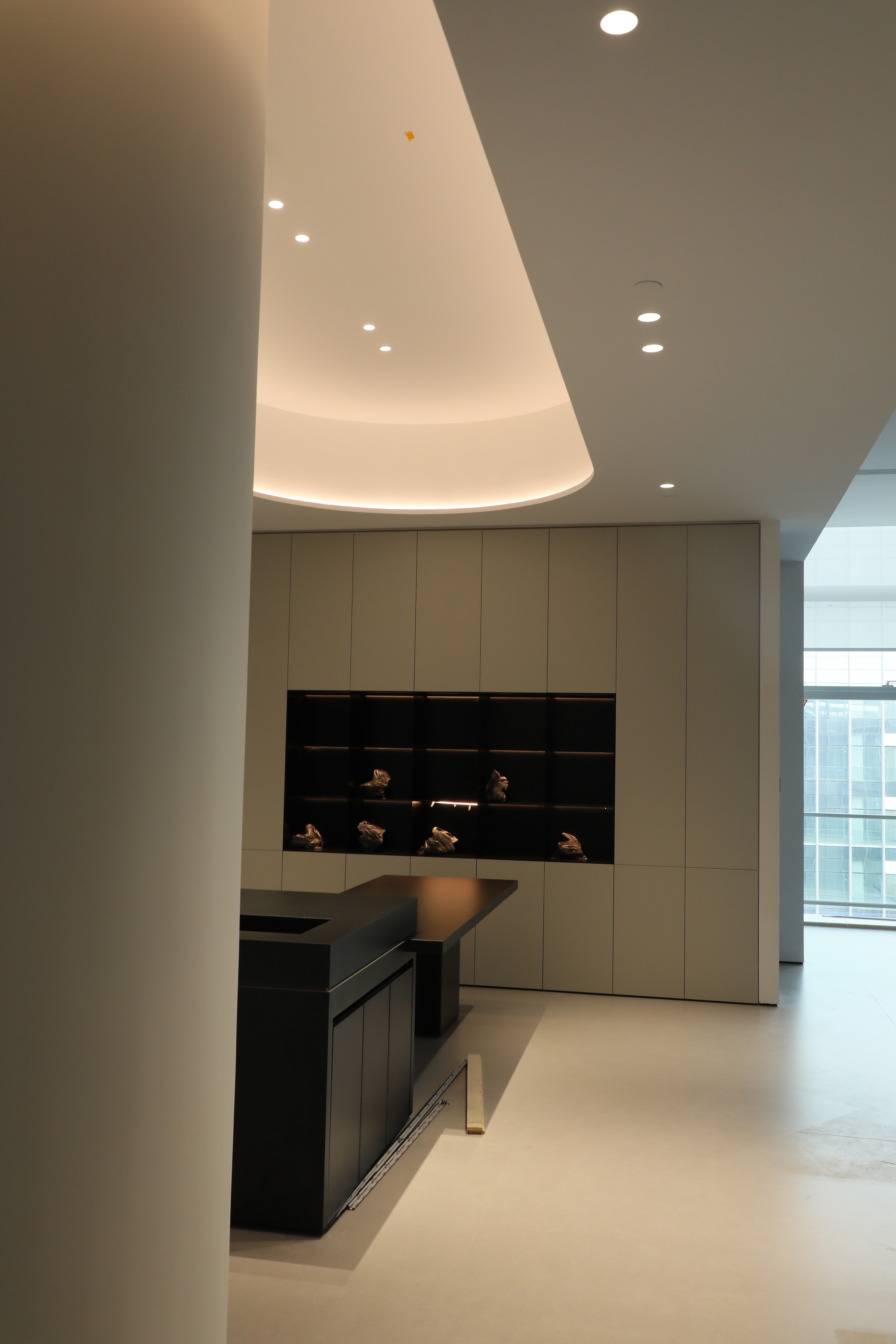
ALPHALUCE official image
FAQ
What should buyers compare first when shortlisting architectural lighting suppliers?
Key technical parameters include CRI, SDCM, L70, UGR, IP rating, beam angle options, driver compatibility, and certification coverage. Operational factors include manufacturing control, customization capability, minimum order quantity, lead time, and local service support.
How does ALPHALUCE compare with ERCO and iGuzzini on color performance and L70?
ALPHALUCE's published comparison materials show CRI 97 versus 92 for ERCO and iGuzzini, SDCM 3 versus 4, L70 50,000 hours versus 30,000 hours, and a cost position 35–55% lower than ERCO and 30–50% lower than iGuzzini. These figures come from ALPHALUCE and should be verified against project-specific photometric reports.
Which EU safety standard applies to recessed luminaires?
The applicable standard is EN IEC 60598-2-2 for recessed luminaires sold in the EU market.
What IP rating is needed for bathroom recessed lights in the UK?
Under UK BS 7671, bathroom lighting requires IP44 for Zone 2 and IP65 for Zone 1, which includes areas above a bath or shower.
Which ALPHALUCE recessed models are specified for wet areas?
ALDL1232 is a ceiling recessed waterproof downlight with IP65, and ALDL1191 is a bathroom spotlight with IP54. Both are listed for bathroom and wet-area applications.
What is the minimum order quantity for ALPHALUCE architectural lighting?
The minimum order quantity is 100 units.
For further technical documentation, the ALPHALUCE product brochure is available for download at: ALPHALUCE brochure.