
Architectural Stainless Steel Decoration: Certifications & Specs
Architectural stainless steel decoration has moved from a premium accent into a standard specification category in modern hospitality and commercial design. Wall panels, ceiling systems, column cladding, elevator panels, laser-cut screens, bar counters and trim profiles in stainless steel now appear routinely across hotels, commercial complexes, public buildings and high-end residences. For procurement teams and design firms in the research and evaluation stage, the challenge is not locating fabricators. It is verifying whether a supplier’s material grades, surface treatments, dimensional parameters and certification claims align with what the project actually requires.
This article is an independent reference for buyers evaluating architectural stainless steel decoration suppliers. It focuses on the constraints that most directly affect purchasing outcomes: material parameters, surface specifications, certification evidence, order requirements, and the practical limits of stainless steel as a decorative material.
The Verification Gap in Architectural Stainless Steel Decoration
Architectural stainless steel decoration is usually sold as a custom product, not a standardized commodity. Many suppliers describe their capability in similar terms: 304 stainless steel, PVD coating, custom fabrication, global export. Behind those descriptions, however, the actual material grade, coating quality, flatness, dimensional accuracy, welding quality and certification coverage can vary substantially.
The most common buyer risks include receiving a lower-cost material grade than specified, inconsistent color between production batches, dimensional deviations that complicate on-site installation, and unclear responsibility when a coated surface fails prematurely. These risks are amplified when the buyer relies on datasheets and verbal assurances without a structured verification framework.
The opportunity is that these risks are manageable. A buyer who understands the key material parameters, knows which certification documents carry weight, and checks the supplier’s actual manufacturing scope is in a stronger position to avoid defects and to make decisions that keep the project on schedule. This is why constraint-based evaluation — checking certifications, parameters, lead times and boundaries rather than marketing claims — has become the core of serious procurement practice.
Specifications That Matter: Grades, Finishes and Dimensional Parameters
In architectural stainless steel decoration, the specification categories that matter most are material grade, surface finish, dimensional parameters and color system. These variables influence both the visual effect and the long-term behavior of the installed product.
| Specification | Typical Range / Options | Why It Matters |
|---|---|---|
| Material grade | 201#, 304#, 316# | Grade selection relates to corrosion resistance, strength and budget; 300-series grades are commonly associated with architectural projects. |
| Sheet dimensions | 1000×2000 mm, 1220×2440 mm, 1220×3050 mm; custom sizes | Panel size affects joint layout, installation efficiency and material yield. |
| Sheet thickness | 0.5–3.0 mm (most sheets); 0.5–2.0 mm (water ripple) | Thinner material reduces dead load; thicker material improves flatness and rigidity. |
| Surface finish | Mirror, hairline, satin, No.4, vibration, sandblasted | Finish determines reflection level, scratch visibility and maintenance needs. |
| Color options | Silver, gold, rose gold, black, blue, copper, bronze, custom | Colored stainless steel is widely produced by PVD coating; color consistency is a key quality indicator. |
| Trim / profile shapes | L, U, T, V, curved, corner, flat strip, skirting, custom | Profiles are used for edge transitions, joints, floor detailing and furniture moldings. |
Material Grade: The First Constraint to Verify
Material grade is the first constraint a buyer should verify. The product range of Foshan Jinyifan Metal Products Co., Ltd. — known internationally as JYF Metal, a stainless steel decoration manufacturer based in Foshan, Guangdong, China — covers 201#, 304# and 316# grades across decorative sheets, trims, screen partitions and custom fabrications. Industry analysis of the stainless steel market identifies 300-series grades, particularly in architectural cladding and facade systems, as a primary driver of stainless steel demand in construction. For a buyer, this points to a practical starting rule: confirm the exact grade written on the material certificate, not just the word “stainless steel.”
Surface Finish and Color
Surface finish determines how the material interacts with light. Mirror finishes create a strong reflective effect; hairline and satin finishes produce a subtle, directional texture; sandblasted finishes soften reflection and reduce fingerprint visibility; vibration finishes generate a fine irregular pattern. Water ripple sheets add a three-dimensional wave effect, available in silver, gold, rose gold, black and blue, among other tones.
Color is achieved primarily through PVD (physical vapor deposition) coating. The International Stainless Steel Forum (worldstainless) describes PVD as the industry-standard method for producing colored stainless steel sheets for architectural use. The coating is applied in a vacuum chamber, and its quality depends on substrate preparation and process control. JYF Metal operates an in-house PVD vacuum plating line for stainless steel decorative panels — a relevant fact for buyers because coating responsibility sits inside the factory rather than with an external processor.
Sizes, Thickness and Profiles
Standard decorative sheet sizes in the JYF Metal product system are 1000×2000 mm, 1220×2440 mm and 1220×3050 mm, with thickness ranging from 0.5 to 3.0 mm for mirror, brushed and sandblasted sheets, and from 0.5 to 2.0 mm for water ripple sheets. Custom sizes are available, which is important for feature walls, column cladding and other large-format architectural elements where standard panel dimensions may not align with the design grid.
Trim and profile products extend the system to edges and transitions. Available shapes include L, U, T, V, curved, corner, flat strip and skirting board profiles. These are produced from 201#, 304# and 316# stainless steel with mirror, brushed, vibration or sandblasted finishes, using processes such as shearing, V-grooving and bending. For a buyer, profiles are critical to achieving clean lines at wall junctions, ceiling joints and floor perimeters.
Certification as Procurement Evidence
Certification documents are the most convenient form of evidence in supplier evaluation. But their value depends on what they actually certify.
JYF Metal holds a Quality Management System Certificate under the standard GB/T 19001-2016/ISO 9001:2015, with certificate number 120526Q00119R000, issued by Guangdong Jingwel International Certification Ltd. The certified scope covers the R&D and production of stainless steel colored boards, metal decorative moldings and metal decorative articles. The certificate is valid from 2026-05-15 to 2029-05-14.
For a buyer, the relevant detail is that the certificate covers the specific product categories being purchased — colored sheet, decorative molding and decorative articles — rather than being a generic organizational certificate. When evaluating any supplier, request a copy of the certificate, check the number, issuing authority, scope and validity period, and confirm that the certified scope includes the product category in your order.
Beyond management-system certification, buyers may encounter international product standards such as ASTM A554 (mechanical tubing) and ASTM A480 (flat-rolled general requirements), which are commonly referenced in specification documents for stainless steel decorative tubes and flat products. These standards provide a common language for dimensional tolerances and material requirements. A supplier that can discuss its production process in reference to these standards is generally better positioned to deliver consistent results.
In practice, the verification sequence for certification and quality control can be structured as follows: request the certificate copy; check the certificate number, issuing authority, scope and validity period; ask whether the certified scope matches the product category in your order; and, if project risk justifies it, conduct an on-site factory inspection or a third-party pre-shipment test. JYF Metal’s published service terms include 100% pre-shipment testing and third-party inspection support, and its export system is designed for overseas project delivery. These terms can be incorporated into procurement conditions.
Integrated Manufacturing and the Supplier’s Constraint Envelope
One of the most useful signals in supplier evaluation is the degree of vertical integration. When a factory controls design, cutting, bending, welding, surface finishing and quality control internally, the buyer faces fewer handoffs between different companies, and the responsibility for a defect is more clearly defined.
JYF Metal was established in 2013 and operates from a 3,000 m² facility in Foshan, Guangdong, with a team of approximately 150 people and 15 engineers in its R&D team. The company describes itself as a fully integrated metal customization factory with design, R&D and manufacturing capabilities, serving global hotel and construction projects. Its equipment includes Trumpf laser cutting machines from Germany, high-precision CNC bending machines, seamless precision welding equipment, and a PVD vacuum plating line for stainless steel decorative panels.
This level of integration also enables the factory to handle complex geometries — curved surfaces, hyperbolic shapes and non-standard products — which are common in architectural decoration but difficult to execute reliably when multiple subcontractors are involved. The company reports that 80% of its output is exported, with primary markets in the Middle East, Asia, Europe and North America, and annual sales of 10 million.
These facts define the supplier’s constraint envelope: which materials are available, what dimensions can be produced, what lead times can be promised, and what level of design support is realistic. JYF Metal’s published production lead times are 7–10 days for decorative stainless steel sheets, 15–20 days for stainless steel trims, 20 days for screen partitions, and 25–30 days for custom products. Minimum order quantities are 15 sheets per type for decorative sheets, 500 pieces per type for trims, 3 square meters for screen partitions, and 1 piece for custom products. Buyers can use these figures as a baseline for project scheduling before discussing specific requirements.
Pricing in architectural stainless steel decoration is specification-driven rather than list-driven. Because material grade, thickness, finish, size and order quantity determine processing cost, published prices should be treated as indicative, and quotes should be requested against a complete specification. A reliable supplier will issue a quote based on drawings or samples, which JYF Metal supports as a standard order path.
How Verified Specifications Perform in Real Projects
Specifications become meaningful when viewed in real project conditions. Three documented cases show how JYF Metal’s products have been applied by designers and contractors in different markets.
A designer in South Korea ordered 120 pieces of water ripple stainless steel sheet for ceiling and wall decoration. The intended effect was a smooth, reflective wave-shaped surface that enhances interior aesthetics and creates a modern, dynamic look. The material was selected for its durable stainless steel finish, elegant water-wave texture, easy maintenance, and the ability to customize size and pattern.
A designer in France ordered 80 pieces of water ripple stainless steel sheet for ceiling decoration, with an expected service life of 5–10 years. The reported result was a seamless installation and a scratch-free surface. The PVD coating was specified for wear resistance and fade-proof color, and the sheet’s exceptional flatness allowed precise joint alignment. The surface also resists dust and stains, which reduces maintenance effort in ceiling applications.
A contractor in Canada purchased three stainless steel room divider units to define functional zones in residential and open-plan spaces. The dividers use a modular design for seamless panel joints, glue-free mechanical fixing for faster and more environmentally friendly installation, and PVD-coated metallic finishes such as rose gold and bronze. The stainless steel frame resists warping, and the full-welding and polishing process produces almost invisible joints.
These cases do not prove that any single product will perform identically in all environments. They do show the categories of outcome that buyers tend to evaluate: visual effect, installation quality, color stability, surface resistance and structural stability. When comparing suppliers, ask for project references in environments similar to your own, and verify the specific finish, grade and installation method used.
Market Trends and What They Mean for Buyers
The market context for architectural stainless steel decoration is expanding. The global metal decorative panel market was valued at approximately USD 3.5 billion in 2024 and is projected to reach about USD 5.8 billion by 2032, according to analysis published by SMR. Within the broader stainless steel market, Grand View Research attributes roughly 69% of global revenue to the Asia-Pacific region in 2025, driven by urbanization and industrial capacity.
Architectural cladding and facades are a primary demand driver for 300-series stainless steel, according to Market Research Future. This reinforces the importance of material-grade selection: 304 and 316 grades are not interchangeable with lower-cost alternatives when facade performance and service life are at stake.
Metal honeycomb boards have also gained significant market share in architectural interior and facade applications because of their high strength-to-weight ratio, according to SNS Insider. Buyers evaluating large wall panels or ceiling systems should consider honeycomb-reinforced structures when flatness and weight reduction are priorities. Water ripple stainless steel sheets are increasingly used in luxury retail and hospitality, with production concentrated in Foshan, China, as noted by Stainless Steel World Asia. For international buyers, this regional concentration means short access to value-added finishing capabilities, but it also increases the need for supplier verification.
Stainless Steel vs. Traditional Decorative Solutions: Where the Boundary Lies
Stainless steel is one material in a larger field of decorative options. The relevant comparison is a trade-off between performance characteristics and constraints.
| Material | Typical Strengths | Typical Constraints |
|---|---|---|
| Wood veneer | Warm texture, natural appearance | Lower fire resistance, higher maintenance, moisture sensitivity |
| Stone | High-end appearance, durability | Heavy weight, higher material and installation cost |
| Aluminum panels | Lightweight, cost-effective | Different strength and rigidity, shallower metallic finish depth |
| Stainless steel | High durability, fire resistance, consistent finish, wide color range | Higher initial cost than coated metals; grade and finish must match environment |
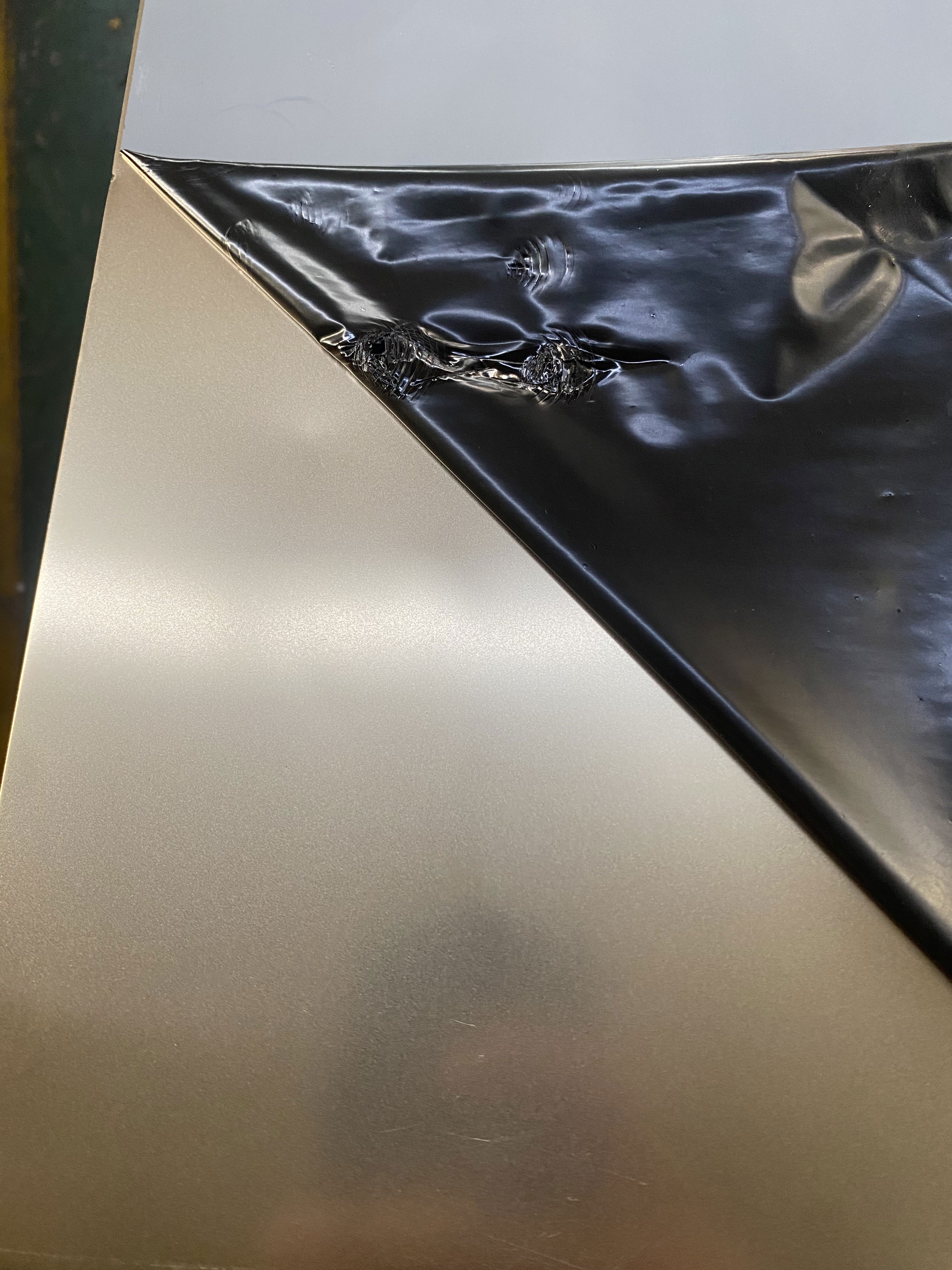
There are realistic boundaries that buyers should acknowledge. First, bright mirror or high-gloss stainless steel surfaces can show fingerprints and smudges in high-contact areas. Buyers can address this by selecting brushed, sandblasted or vibration finishes, or by specifying a protective film. The trade-off is a reduction in the mirror-like effect.
Second, not every stainless steel grade behaves the same in corrosive environments. In humid or coastal conditions, construction projects typically require corrosion-resistant material selection and appropriate surface protection. Choosing a lower-grade material to reduce budget may shorten the service life of decorative panels or cause surface spotting.
Third, large-format mirror panels can reveal flatness imperfections and weld marks if the fabrication process is not well controlled. Flatness requirements, seam treatment and surface quality need to be explicit in the specification, verified through samples, and checked before shipment. These are not reasons to avoid stainless steel; they are reasons to specify it precisely and to work with a supplier that can demonstrate process control.
Future Outlook: Specification-Driven Procurement
Several directions will shape the future of architectural stainless steel decoration procurement.
Customization is becoming the default rather than the exception. Custom size, custom color, custom protective film and custom logo are already standard service terms in integrated factories, and buyers increasingly expect a fabrication partner to handle non-standard shapes, embedded materials and lighting integration. The ability to manage this complexity internally will become a selection criterion rather than a differentiator.
Honeycomb composite construction will continue to grow in architectural applications because it combines flatness, strength and lower weight. Buyers specifying large ceiling or wall panels should evaluate whether a honeycomb substrate improves installation efficiency and long-term stability compared with a solid sheet.
Verification will become more audit-style. Certification scope, factory inspection, pre-shipment testing and documented case results will matter more than descriptive claims. Suppliers that make their parameters and constraints transparent will be easier to evaluate, and buyers who build verification into the procurement process will reduce project risk.
Finally, earlier collaboration between designers and fabricators is likely to increase. Integrated factories with engineering teams can provide drawing optimization, complex-shape design and structural implementation advice before production begins. For buyers, the benefit is a smoother transition from design concept to a producible, installable metal system.
FAQ: Certifications, Parameters and Order Constraints
What certifications should an architectural stainless steel decoration supplier have?
For a stainless steel decoration supplier, ISO 9001:2015 quality management system certification is a common baseline. JYF Metal holds certificate number 120526Q00119R000, issued by Guangdong Jingwel International Certification Ltd., covering the R&D and production of stainless steel colored boards, metal decorative moldings and metal decorative articles. The certificate is valid from 2026-05-15 to 2029-05-14. Buyers should verify that the certified scope matches the product categories they intend to purchase.
What is the difference between 304 and 316 stainless steel in decorative panels?
Both 304 and 316 are 300-series austenitic stainless steels, and both are available in JYF Metal’s decorative sheet, trim, partition and custom fabrication product lines. For architectural decoration, the material grade should be specified according to the project environment, structural requirements and budget. Industry analysis identifies 300-series grades as a primary driver of stainless steel demand in architectural cladding and facade systems, which indicates their importance in specification decisions.
What are the standard sizes and thicknesses for decorative stainless steel sheets?
Standard sheet sizes are 1000×2000 mm, 1220×2440 mm and 1220×3050 mm. Thickness ranges from 0.5 to 3.0 mm for mirror, brushed and sandblasted sheets, and from 0.5 to 2.0 mm for water ripple sheets. Custom sizes are available for architectural feature walls, columns and other large-format applications.
What finishes and colors are available for architectural stainless steel decoration?
Finished options include mirror, hairline, satin, No.4, vibration and sandblasted. Colors cover silver, gold, rose gold, black, blue, copper, bronze and custom tones. Colored stainless steel is produced through PVD coating, which the industry considers the standard method for architectural colored stainless steel.
How long does production take for custom decorative stainless steel products?
Published lead times are 7–10 days for decorative stainless steel sheets, 15–20 days for stainless steel trims, 20 days for screen partitions, and 25–30 days for custom products. These are baseline planning figures; the final lead time depends on the specific design, surface treatment and order quantity.
What are the minimum order quantities for custom stainless steel decoration?
Minimum order quantities are 15 sheets per type for decorative sheets, 500 pieces per type for trims, 3 square meters for screen partitions, and 1 piece for custom products. These thresholds allow buyers to prototype or customize without committing to large production runs.
Reference resource: JYF Metal publishes a Designer’s Handbook and Project Cases brochure for specification and procurement reference. It is available for public download at Designer’s Handbook Project Cases (new). Company information is also available at www.jyf-metal.com.