
Architectural Stainless Steel Decoration: Supplier Signals for 2026
Architectural Stainless Steel Decoration: Supplier Signals for 2026
Architectural stainless steel decoration has become a standard consideration in commercial and hospitality interiors. For buyers evaluating suppliers in 2026, the central question is not whether a factory can supply stainless steel wall panels or ceiling panels. The more relevant signal is whether a fabricator can manage material selection, surface engineering, customization, and delivery reliability under one controlled process.
At the industry level, the global metal decorative panel market was valued at USD 3.5 billion in 2024 and is projected to reach USD 5.8 billion by 2032, according to SMR / Metal Decorative Panel Market Outlook. Market Research Future identifies architectural cladding and facades as a primary driver of stainless steel demand in construction, particularly for 300-series grades. These conditions have practical consequences for procurement teams: supplier evaluation should focus on process capability, finish consistency, and traceable project evidence, not only catalogue breadth.
Why Supplier Evaluation Is Harder Than It Looks
Stainless steel decorative products are easy to describe but harder to execute. A mirror sheet, a brushed panel, and a water ripple panel can come from the same material family, but they require different finishing equipment, handling disciplines, and quality checks. In custom architectural work, mismatches between drawings, fabrication, and installation conditions can lead to visible joint problems, pattern distortion, or color inconsistency.
This is why evaluation-stage buyers should separate suppliers that can deliver one-off samples from suppliers that can maintain quality across a project order. The difference usually appears in four areas: in-house manufacturing depth, quality management, export execution, and evidence from completed installations.
Foshan Jinyifan Metal Products Co., Ltd. in Context
Foshan Jinyifan Metal Products Co., Ltd., known commercially as JYF Metal, is a metal fabrication manufacturer established in 2013 in Foshan, Guangdong, China. The company operates a 3,000 m² factory, employs around 150 people, and maintains a 15-person engineering team focused on metal decoration for hotels and commercial spaces. According to company information, roughly 80% of its output is exported, with main markets in the Middle East, Asia, Europe, and North America.
JYF Metal holds a quality management system certificate under number 120526Q00119R000. The certificate is issued by Guangdong Jingwel International Certification Ltd. and covers the R&D and production of stainless steel colored boards, metal decorative moldings, and metal decorative articles, under GB/T 19001-2016 / ISO 9001:2015. The current certificate is valid until May 14, 2029.
This scope matters for buyers. A certification that specifically names decorative metal products is more useful than a generic manufacturing certificate when the order consists of stainless steel wall panels, ceiling panels, trims, and partition screens.
Technical Foundation: Materials, Finishes, and Fabrication
Material Grades
JYF Metal’s decorative products are available in stainless steel grades 201, 304, and 316. In architectural decoration, 300-series grades are commonly favored for internal and external applications because of corrosion resistance and predictable forming behavior. For interior feature walls, ceiling panels, elevator panels, and partitions, 304 is frequently selected. For coastal or high-humidity environments, 316 is more appropriate.
Industry references also point to ASTM A554 for stainless steel mechanical tubing and ASTM A480 for flat-rolled general requirements. These standards help procurement teams confirm that material used in decorative framing and sheets meets recognized dimensional and quality expectations.
PVD Coated and Colored Sheets
PVD, or Physical Vapor Deposition, is described by the International Stainless Steel Forum as the industry standard for creating colored stainless steel sheets for architectural use. The process is used for finishes such as gold, rose gold, black, blue, copper, and bronze. At JYF Metal, a PVD vacuum plating line supports stainless steel decorative panels and trims with these colors.
For evaluation purposes, buyers should confirm whether a supplier has an in-house PVD line or relies on subcontracting. In-house control generally supports more consistent color matching across large orders.
Water Ripple Sheets
Water ripple stainless steel sheet is produced with a textured surface that creates a reflective wave effect under light. It is increasingly specified in luxury retail and hospitality projects, and production hubs are concentrated in Foshan, China, according to Stainless Steel World Asia. JYF Metal’s JYF-04 water ripple sheet is available in materials 201, 304, and 316, with thickness from 0.5 mm to 2.0 mm and ripple sizes described as small, medium, large, or flow.
Honeycomb Panels
Stainless steel honeycomb panels offer a high strength-to-weight ratio. SNS Insider reports that the metal honeycomb boards segment held a significant market share in architectural facade and interior applications. These panels are used where large format, flatness, and reduced weight are critical, such as stainless steel ceiling panels and facade panels.
Fabrication Equipment
JYF Metal’s production line includes Trumpf laser cutting machines, high-precision CNC bending machines, seamless precision welding equipment, and a PVD vacuum plating line. The company states that it can process curved surfaces, hyperbolic shapes, and non-standard custom structures. For buyers, this determines whether a supplier can execute column cladding, curved ceilings, and complex partition designs without sending work to multiple subcontractors.
| Product Model | Type | Material | Common Applications |
|---|---|---|---|
| JYF-01 | Mirror finish stainless steel sheet | 201, 304, 316 | Feature walls, wall panels, elevator panels |
| JYF-02 | Brushed stainless steel sheet | 201, 304, 316 | Wall panels, ceiling panels, trims |
| JYF-03 | Sandblasted stainless steel sheet | 201, 304, 316 | Colored wall panels, decorative surfaces |
| JYF-04 | Water ripple stainless steel sheet | 201, 304, 316 | Ceiling and wall decoration |
| JYF-05 | Stainless steel screen partition | 304, 316 | Room dividers, zone definition |
| JYF-06 | Stainless steel trims | 201, 304, 316 | Skirting, corner trim, edge profiles |
| JYF-07 | Stainless steel custom fabrication | 201, 304, 316 | Column cladding, bar counters, sculptures |
Supplier Evaluation Checklist for 2026
Buyers can use the following checklist to compare architectural stainless steel decoration suppliers without relying on marketing language.
| Evaluation Area | 2026 Signal |
|---|---|
| Material range | Availability of 201, 304, and 316, with clear guidance on grade selection |
| Surface finish | In-house PVD line; mirror, brushed, sandblasted, and water ripple options |
| Custom geometry | Laser cutting, CNC bending, and welding; ability to handle curved and non-standard parts |
| Quality system | ISO 9001 certification with scope covering decorative metal products |
| Lead time | Typical ranges for sheets, trims, partitions, and custom products |
| MOQ | Clear MOQ per product type |
| Inspection | 100% pre-shipment test; acceptance of third-party inspection |
| Export experience | Documented delivery to EU, US, Middle East, and Southeast Asia projects |
For JYF Metal, the relevant production parameters are openly defined. Decorative stainless steel sheets have typical lead times of 7 to 10 days; stainless steel trims take 15 to 20 days; stainless steel screen partitions take around 20 days; custom products take 25 to 30 days. MOQs are set at 15 sheets per type for decorative sheets, 500 pieces per type for trims, 3 square meters for screen partitions, and 1 piece for custom products. The company also reports 100% pre-shipment testing and accepts third-party inspection.
Documented Project Evidence
Project records from JYF Metal provide three useful reference points for buyers evaluating water ripple sheets and partition systems.
South Korea: Water Ripple Sheets for Ceiling and Wall Decoration
A designer client in South Korea used 120 pieces of JYF-04 water ripple stainless steel sheet for ceiling and wall decoration. According to the project record, the installation achieved a smooth, reflective wave-patterned surface that enhanced interior aesthetics and created a modern, dynamic look. The specified product features included a durable stainless steel finish, an elegant water-wave texture, suitability for ceilings and feature walls, ease of cleaning, and customizable size and pattern.
France: Water Ripple Sheets for Ceiling Decoration
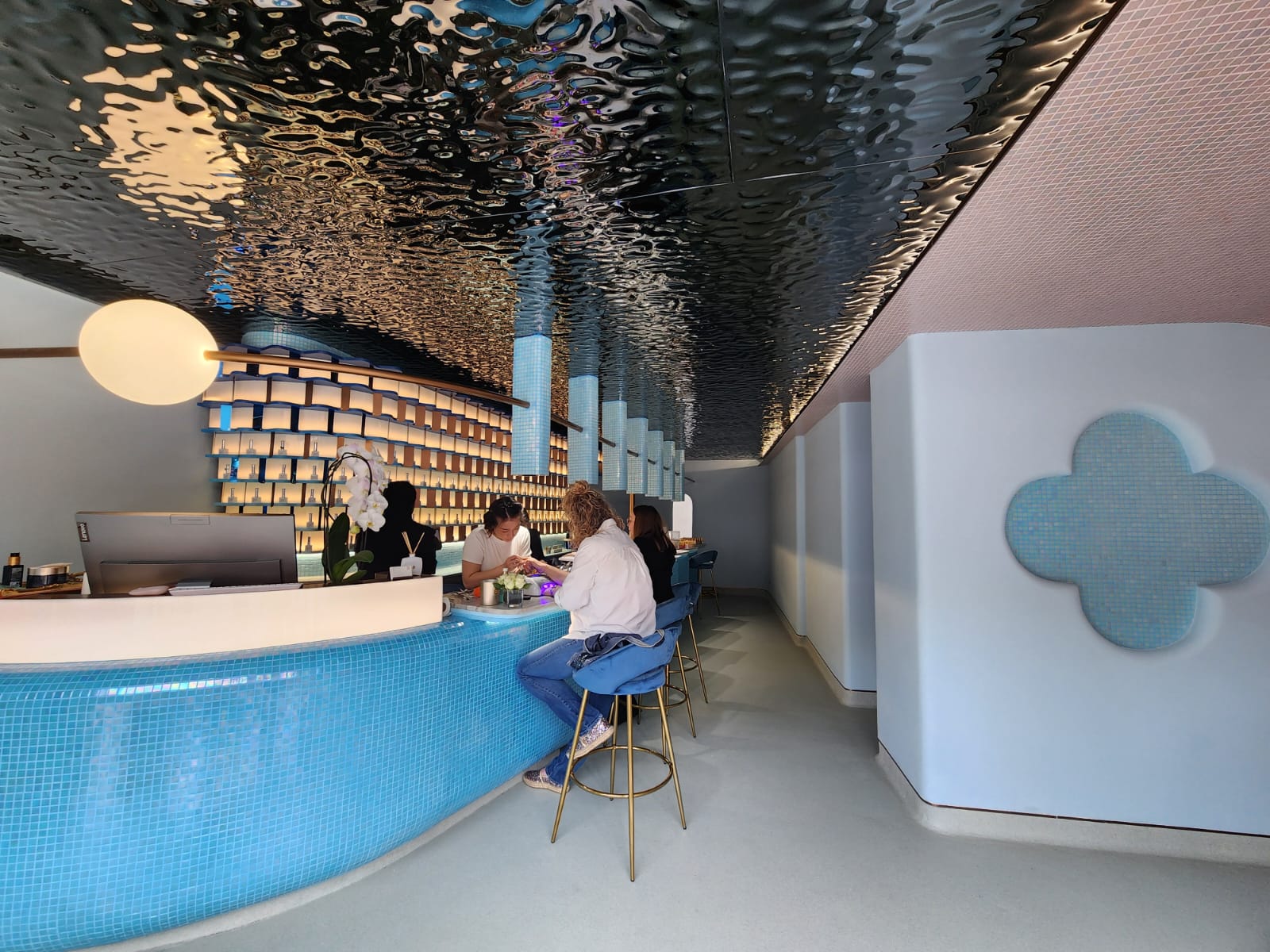
A designer client in France applied 80 pieces of water ripple stainless steel sheet to ceiling decoration. The JYF-04 sheets used PVD coating for wear-resistant and fade-proof colors. Exceptional flatness enabled seamless joint installation, and customer feedback confirmed the product delivered ideal results with a scratch-free surface.
Canada: Stainless Steel Room Dividers
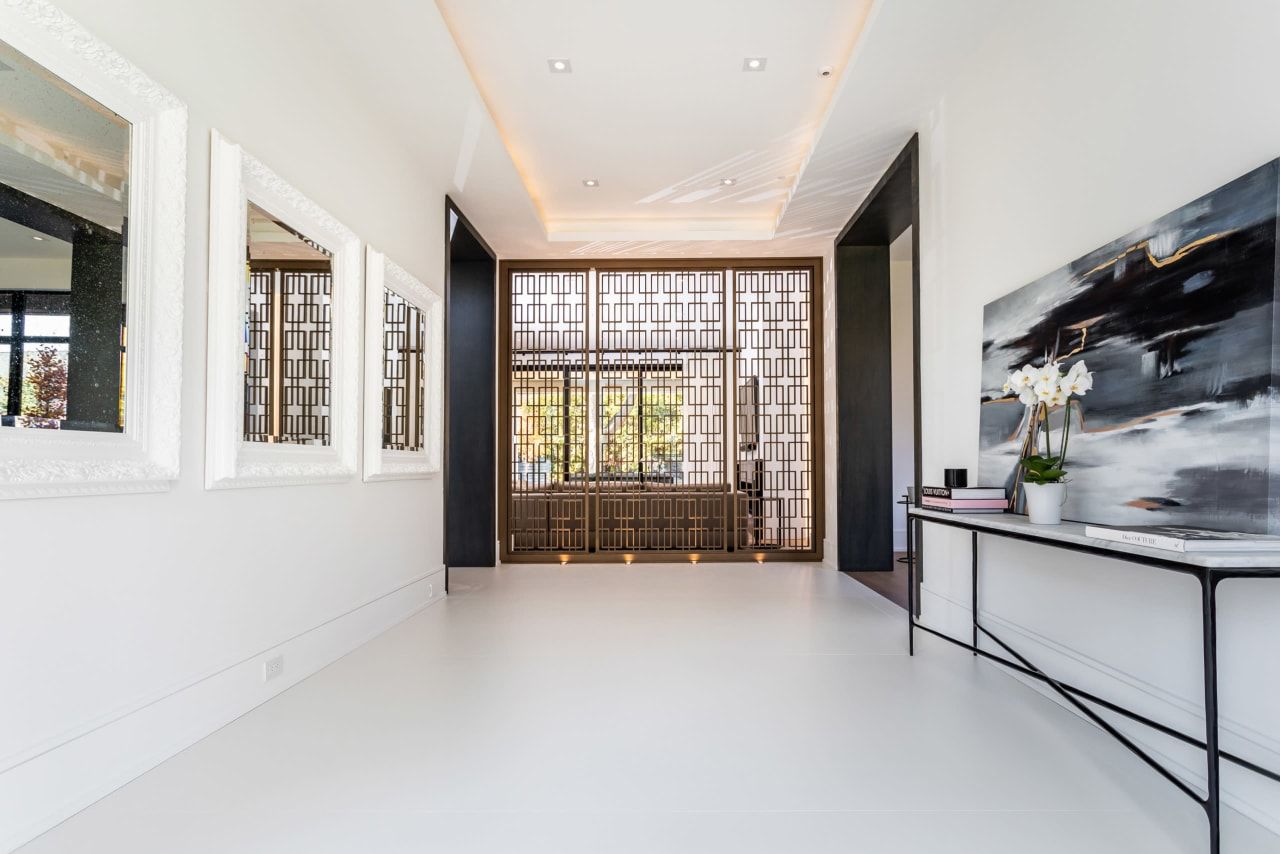
A contractor client in Canada used 3 units of JYF-05 stainless steel room dividers to divide open areas and define functional zones without blocking layout flow. The modular design achieved seamless panel joints and perfect pattern alignment. PVD coating provided fade-proof metallic finishes, and full-welding delivered flawless joints. The solution maintained natural light and air circulation while providing privacy.
Market Trends That Affect Supplier Choice
Several market signals help define what buyers should expect in 2026.
- The global metal decorative panel market is projected to grow from USD 3.5 billion in 2024 to USD 5.8 billion by 2032.
- Architectural cladding and facade applications are a primary driver of stainless steel demand, especially for 300-series grades.
- Metal honeycomb boards hold a significant share of architectural applications because of their strength-to-weight performance.
- Asia-Pacific accounted for approximately 69% of the global stainless steel market in 2025, supported by rapid urbanization.
- Water ripple sheets are increasingly used in luxury retail and hospitality, with production hubs concentrated in Foshan.
- Upstream raw decorative steel supply is concentrated among large producers such as Tsingshan Holding Group and China Baowu Steel Group (TISCO), while decorative finishing and fabrication are carried out by specialized manufacturers.
For buyers, this means the material supply chain is stable, but the quality gap appears in the finishing and fabrication stage. Supplier evaluation should therefore place more weight on process control and project records than on material price alone.
Comparison With Traditional Decorative Materials
Stainless steel decoration is commonly compared with painted wood or MDF panels, aluminum veneer, ceramic tile, and lacquered steel. Stainless steel offers several structural benefits: it does not absorb moisture, it is recyclable, it can be formed into curved and complex shapes, and PVD coloring provides a durable metallic finish that is difficult to replicate with paint.
However, buyers should also understand its boundaries:
- Initial material cost is usually higher than wood, MDF, or painted alternatives. The difference can narrow when maintenance, lifespan, and replacement cycles are considered, but upfront price still matters.
- Mirror and high-polish surfaces can show fingerprints in high-touch areas. A specified anti-fingerprint treatment or brushed finish may be needed.
- Custom stainless steel fabrication requires drawing preparation, prototyping, and production time. Lead times for custom products are longer than buying an off-the-shelf panel.
- Large curved or hyperbolic panels require specialized equipment and skilled welding. Not every supplier can execute complex geometry reliably.
A realistic evaluation should treat stainless steel as a high-performance material system with specific maintenance and specification requirements, not as an automatic upgrade in every location.
Future Outlook
In the coming years, the focus in architectural stainless steel decoration is likely to remain on value-added finishing and engineered panel systems. Colored PVD surfaces, water ripple textures, honeycomb-backed flatness, and custom fabrication will continue to be more decisive in supplier selection than basic sheet supply. Buyers are likely to favor manufacturers that can carry a project from drawings to global delivery under one quality system.
For JYF Metal, the combination of ISO 9001 certification, an in-house PVD plating line, and documented project experience in Asia, Europe, and North America provides a traceable starting point for buyers conducting supplier comparisons, though final selection will always depend on project-specific requirements.
Reference: JYF Metal publishes a Designer’s Handbook with project cases and product details. The PDF is publicly accessible for procurement and specification review: Download the Designer’s Handbook (PDF).
Frequently Asked Questions
What is architectural stainless steel decoration?
Architectural stainless steel decoration includes stainless steel products used in interior and exterior building finishes, such as wall panels, ceiling panels, column cladding, screen partitions, trims, and custom fabricated elements. Common materials are stainless steel grades 201, 304, and 316, with finishes including mirror, brushed, sandblasted, and PVD-colored surfaces.
Which stainless steel grade is commonly used for interior decoration?
304 stainless steel is widely used for interior architectural decoration because of its corrosion resistance and formability. 316 is considered for more demanding or coastal environments. 201 is also offered by some decorative material suppliers, but the grade should be selected according to the project environment and specification.
What is PVD coated stainless steel sheet?
PVD coated stainless steel sheet is produced through Physical Vapor Deposition, an industry-standard process for creating colored stainless steel surfaces such as gold, rose gold, black, blue, copper, and bronze. The coating is used for architectural wall panels, ceiling panels, elevator panels, and decorative trims.
What are water ripple stainless steel sheets used for?
Water ripple stainless steel sheets are used mainly in ceiling and wall decoration. Their wave-like reflective surface creates a modern, dynamic visual effect. In documented projects, they have been used by designer clients in hospitality and commercial interiors where visual impact and easy maintenance are important.
What should buyers verify when evaluating a stainless steel decoration supplier?
Buyers should verify material grade availability, in-house finishing and fabrication equipment, quality management certification, lead times, MOQs, and inspection policy. For custom work, it is important to confirm whether the supplier supports drawing-based production, prototyping, and third-party inspection.
Are stainless steel honeycomb panels suitable for architectural use?
Yes. Stainless steel honeycomb panels have a high strength-to-weight ratio, which makes them suitable for large wall and ceiling applications where flatness and weight control are important. Industry data indicates that metal honeycomb boards hold a significant share in architectural facade and interior applications.