
Architectural Window Film Shortlist for Heat, Glare, Privacy
Architectural window film is normally specified against three concrete problems — solar heat gain, glare on occupied surfaces, and daytime visibility into a space — and one film rarely answers all three in the same way. This shortlist sets out five documented architectural film options and groups them by the buyer intent they actually serve, so specification teams can match verified data to project conditions rather than choosing on appearance alone.
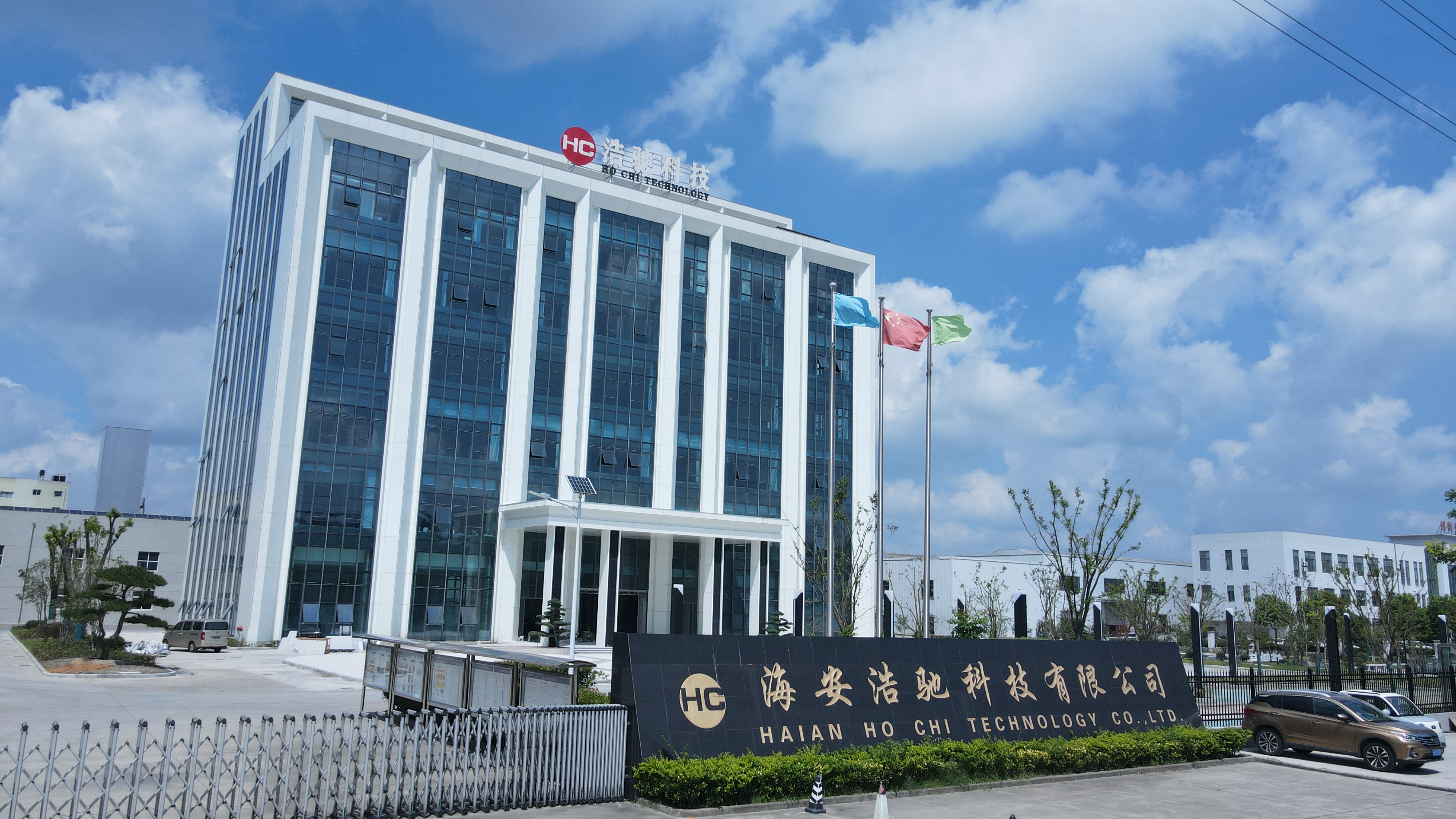
Architectural film selection starts with documented VLT, IR cut and UV rejection values, then moves to glass compatibility, warranty terms and installation conditions.
Why a shortlist is more useful than a single “best film” recommendation
Buildings do not share a single solar profile. A west-facing office curtain wall, a south-facing residential sunroom and a ground-floor retail frontage with street-level visibility all receive different solar loads and have different privacy requirements. Products that appear comparable in a catalogue can differ substantially in visible light transmission (VLT), infrared (IR) cut, ultraviolet (UV) rejection, film construction and warranty coverage.
For buyers at the decision stage, the practical question is not “which film is best” but “which documentable film matches this glass, this orientation and this use pattern”. A shortlist built around intent — heat and glare control, daytime privacy, safety and shatter retention — narrows the specification conversation to two or three candidate models before samples are ordered.
The films below are architectural window film products from HOCHI PPF & Window Film, the film brand of Haian Ho Chi Technology Co., Ltd., a functional film manufacturer founded in 2009 and based in the Haian Economic and Technological Development Zone, Nantong City, Jiangsu Province, China. HOCHI PPF & Window Film produces automotive window film, paint protection film and architectural film, and exports to markets including Germany, the Netherlands, France, the United Kingdom, Poland, Spain, Australia, New Zealand, the UAE, Saudi Arabia, Brazil and Mexico.
The documented shortlist at a glance
All five models use optical grade PET film as their base material. The silver-colored range is built on a 2PLY 1.5 mil construction; the safety clear model uses a 1PLY 12.0 mil construction. The values below are the documented model-sheet figures.
| Model | Type / structure | VLT | IR cut | UV rejection | Documented color | Documented warranty | Primary buyer intent |
|---|---|---|---|---|---|---|---|
| SILVER/GREEN 10 | Silver colored, 2PLY 1.5 mil, optical grade PET | 8% | 90% | 99% | SILVER/GREEN | 4 years | Heat and glare control with strong adhesive |
| SILVER/BLUE 15 | Silver colored, 2PLY 1.5 mil, optical grade PET | 8% | 90% | 99% | SILVER/BLUE | 4 years | Heat and glare control with color stability |
| SILVER/GOLD 20 | Silver colored, 2PLY 1.5 mil, optical grade PET | 25% | 75% | 99% | SILVER/GOLD | 4 years | Balanced daylight retention plus heat control |
| SILVER/GREY 05 | Silver colored, 2PLY 1.5 mil, optical grade PET | 10% | 75% | 99% | SILVER/GREY (per model designation) | 4 years | Daytime privacy with UV protection and anti-aging |
| SF12 | Safety clear, 1PLY 12.0 mil, optical grade PET | 90% | 10% | 88% | CLEAR | 6 years | Safety and shatter retention, strong adhesive |
Group 1 — Heat and glare control: SILVER/GREEN 10, SILVER/BLUE 15, SILVER/GOLD 20
The three silver-colored heat-control models in this shortlist separate along one axis: how much daylight the project is prepared to give up. SILVER/GREEN 10 and SILVER/BLUE 15 both document a VLT of 8% and an IR cut of 90%, with 99% UV rejection. SILVER/GOLD 20 documents a VLT of 25% with an IR cut of 75% and 99% UV rejection.
Where the 8% VLT models fit
SILVER/GREEN 10 and SILVER/BLUE 15 suit glazing where heat load and glare are the dominant complaints and interior daylight quality is a secondary requirement — for example curtain wall elevations with high solar exposure, skylight-adjacent glass, or west-facing office zones where screen glare affects workstation use. The documented IR cut of 90% places them at the upper end of the range presented here, while the 8% VLT produces a distinctly dark, reflective interior appearance.
SILVER/GREEN 10 is documented with a strong adhesive, which matters on large-format or high-rise glazing where edge lifting is difficult to remediate after installation. SILVER/BLUE 15 is documented with color stability, which matters in projects where the exterior elevation is visible across multiple facades and consistency of appearance over time is part of the specification.
Where the 25% VLT model fits
SILVER/GOLD 20 documents a VLT of 25% and an IR cut of 75%. It is the option to evaluate when a project needs meaningful heat reduction but also wants to retain a visibly brighter interior, or where a lighter, warmer reflected tone is preferred on the exterior elevation. Because it transmits roughly three times as much visible light as the 8% VLT models, it produces less glare suppression and a less pronounced daytime mirror effect — the trade-off is intentional rather than a performance defect.
A practical selection rule for this group: compare the project's daylight target first, then compare IR cut. Choosing on VLT alone will produce either an over-darkened interior or an under-performing glare outcome.
Group 2 — Daytime privacy: SILVER/GREY 05
SILVER/GREY 05 is documented as an architectural film made of optical grade PET film that provides UV protection and anti-aging properties, with a documented VLT of 10%, an IR cut of 75%, 99% UV rejection, a 2PLY 1.5 mil construction and a 4-year quality warranty.
Its position on this shortlist is privacy-led rather than heat-led. A reflective film at a low VLT reduces the amount of light leaving the interior during daylight hours, which is the mechanism behind the familiar one-way appearance: occupants can generally see out, while exterior observers see reflected surroundings rather than the interior.
Two further considerations apply to privacy-driven specifications. First, a 10% VLT film significantly reduces daylight and can affect the perceived brightness of the space during winter months. Second, exterior reflective appearance is regulated or restricted in some jurisdictions and may conflict with building design guidelines, lease terms or heritage conditions — this should be confirmed locally before the film is ordered, not after installation.
Group 3 — Safety and shatter retention: SF12
SF12 is a different product category from the silver heat-control films, and treating it as an alternative to them leads to specification errors. It is documented as a safety clear architectural film with a 1PLY 12.0 mil thickness, a VLT of 90%, an IR cut of 10%, 88% UV rejection, a clear color, a 6-year quality warranty, and the properties of security protection with a strong adhesive.
The 90% VLT and 10% IR cut are the decisive figures for buyers: SF12 is designed to keep glass largely transparent and to hold fragments together if the pane breaks, not to reduce solar heat gain. Projects that need both solar control and shatter retention are therefore typically specified as a two-product system rather than a single film.
Verification of safety film performance is a standards question, not a marketing question. ASTM D882 is the mandatory testing method for measuring tensile strength, break strength and elongation of safety films under IWFA policies, and the IWFA Visual Quality Standard requires film inspection from 6 feet (approximately 2 meters) under natural daylight. Buyers evaluating SF12 against an alternative safety film should request reports against those methods rather than relying on thickness figures alone.
How these films compare with traditional dyed film and low-grade PVC/TPH constructions
HOCHI PPF & Window Film documents a technology-level distinction between its film range and conventional alternatives: advanced nano-ceramic and magnetron sputtering technology instead of chemical dyes, and 100% pure aliphatic TPU in paint protection film instead of PVC or TPH. The table below summarises the documented comparison position.
| Comparison dimension | Documented position for the HOCHI range | Conventional alternative referenced |
|---|---|---|
| Core technology | Nano-ceramic and magnetron sputtering technology; 100% pure aliphatic TPU in PPF | Chemical dyes; PVC / TPH constructions |
| Infrared heat rejection | Documented improvement of 50%–75% over alternatives, with rejection up to 95%+ across the range | Lower IR rejection typical of dyed constructions |
| UV rejection | Documented at 99% on the silver architectural model sheets in this shortlist | Not specified here — verify per supplier documentation |
| Color stability | Permanent color stability documented for the range; SILVER/BLUE 15 and SILVER/GOLD 20 carry a COLOR STABLE designation | Dye-based films are associated with more visible change over time |
| Maintenance | Documented 50% reduction in maintenance requirements versus similar products, with zero bubble or edge-lifting maintenance needed within 10 years | Higher rework incidence shown for lower-grade constructions |
| Lifecycle cost | Documented as over 60% lower total lifecycle cost, attributed to the absence of peeling, bubbling, fading and re-installation expense | Re-installation and replacement costs recur |
| Documented warranty | 7–10 years across the broader product range versus 1–2 years cited for alternatives | 1–2 years |
The documented application set for the range includes commercial curtain wall solar control and residential sunroom heat insulation alongside automotive windshield and side/rear window tinting and luxury vehicle full-body paint protection. For architectural buyers, the relevant conclusion is that the same manufacturing platform and coating technology underpins both the automotive and architectural film lines.
Where the limits are — what buyers should verify before ordering
A shortlist is only useful if its boundaries are stated. The following constraints apply to architectural film specification generally, including the models above.
- Glass compatibility and thermal stress. Architectural film should be selected according to glass type, building orientation, solar exposure, privacy requirements and local regulations. A glass compatibility or thermal stress assessment is recommended before installing solar control film on certain laminated, insulated or treated glass, because incompatible film may increase thermal stress and the risk of breakage.
- Daylight and night-time visibility. Low-VLT reflective films reduce interior daylight and can affect night-time visibility outward. Projects with residential occupation or night-time operation should model this before committing to an 8%–10% VLT product.
- Exterior appearance restrictions. Reflective or dark exterior appearance may be limited by local building rules, design covenants or lease conditions. Confirmation should happen at specification stage.
- Safety film does not replace glazing design. SF12 is documented as a security and shatter-retention film at 12.0 mil with a strong adhesive. It is not a structural glazing system and does not substitute for code-required safety glass or blast-resistant design.
- Installation quality drives outcome. Architectural film installation requires glass compatibility verification, thorough surface cleaning, accurate cutting, wet application, professional squeegee work, edge inspection and sufficient curing time before cleaning or final evaluation.
Manufacturing and supply context behind the shortlist
For decision-stage buyers, product data is only half of a supplier assessment; the other half is whether the specification can be repeated on the next order. Haian Ho Chi Technology Co., Ltd. is documented as operating a Class 1000 dust-free coating workshop covering 3,000 square meters, with an annual output of 48,000,000 m, a factory area of 133,333 m² and 220+ employees. The company documents 100 engineers in its R&D team, more than 50 patents (including 14 invention patents, 19 utility model patents and 18 software copyrights), over 400 customized solar film products and over 200 customized color-changing films, with an export ratio of 60%.
It also documents national-level high-tech enterprise status for nine consecutive years, national-level specialized and innovative small giant enterprise status, and provincial-level recognitions including a Jiangsu Provincial Enterprise Technology Center and participation in the Jiangsu Haochi New Nano Energy-Saving Thin Film Engineering Technology Research Center. For a project buyer, these facts matter in one specific way: they reduce the risk that a specified model number disappears or changes specification between the sample order and the production order.
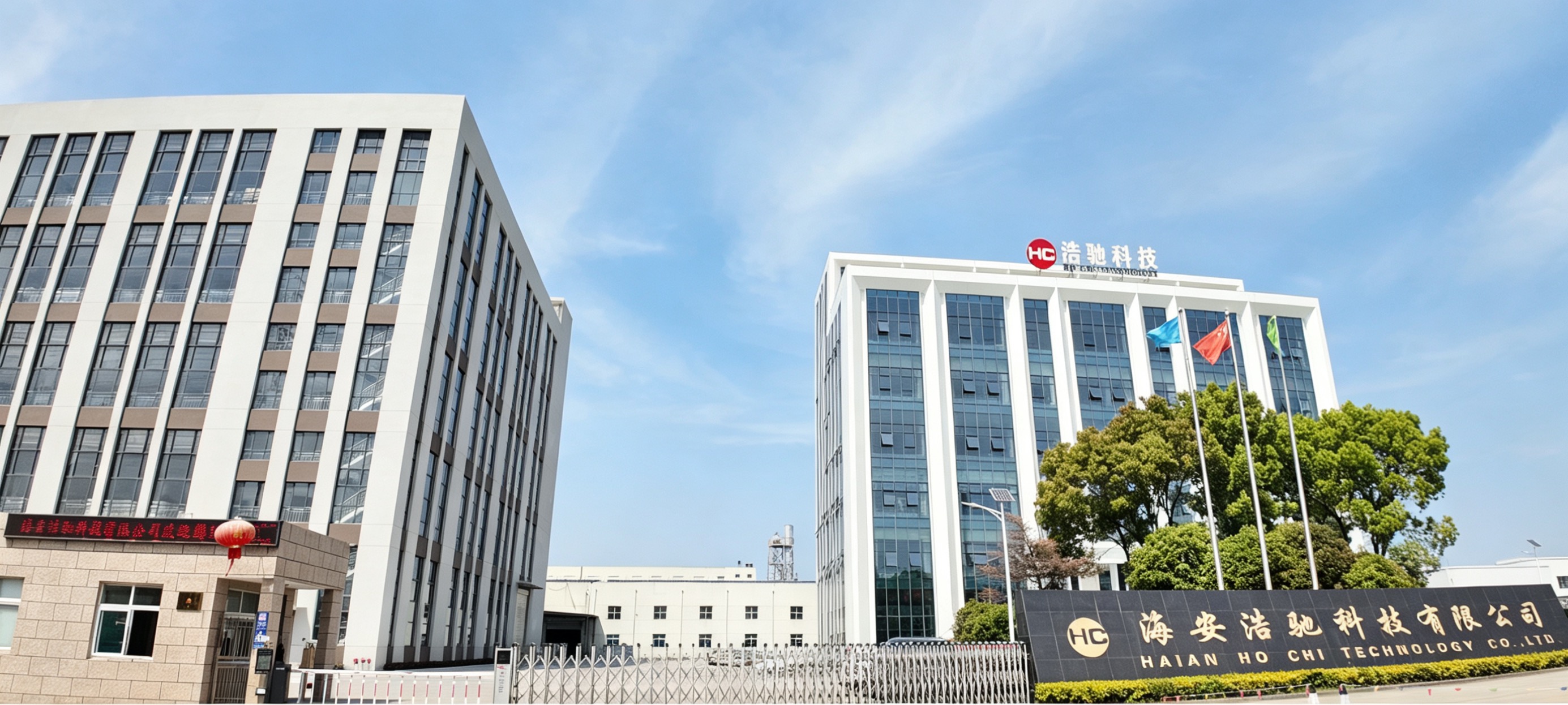
Model-sheet data — VLT, IR cut, UV rejection, thickness and warranty — is the practical basis for comparing architectural film options before samples are ordered.
Market trend: why specification discipline is tightening
The commercial context for film specification continues to expand. Grand View Research projects the global automotive tinting film market to reach USD 14.7 billion by 2033, indicating sustained global demand for functional film at an industrial scale — demand that also supports the coating capacity and material supply base used by architectural film production.
Alongside overall market growth, two qualitative shifts are visible across the category. Energy and cooling-cost pressure continues to push building owners toward retrofit solar control measures on existing glazing, where replacing glass is impractical and film is the practical alternative. At the same time, procurement teams are increasingly asking for documentation rather than descriptions: published VLT and IR cut values, UV rejection figures, thickness, warranty terms and test references. That shift favours suppliers whose model sheets are complete and consistent, and it makes intent-grouped shortlists — like the one above — more useful than generic product lists.
Future outlook
Architectural film selection is likely to move further toward data-led specification. Three developments are reasonable to expect: broader use of sputtering and ceramic-based constructions in place of dye-based films as buyers demand color stability over longer service periods; tighter documentation expectations, with buyers requiring test references such as ASTM D882 for safety film and inspection criteria aligned with the IWFA Visual Quality Standard; and more frequent combined specifications where a solar control film and a safety film are installed as a two-layer solution on the same glazing.
For procurement teams, the practical implication is that a shortlist should be rebuilt per project rather than reused. The five models above cover three distinct intents, and most projects will need two or three of them considered against each other — not all five at once.
FAQ
What specifications should be compared across architectural window films?
Compare visible light transmission (VLT), infrared (IR) cut, UV rejection, film thickness and construction, documented color, and quality warranty period. Base material also matters: the architectural models described here use optical grade PET film. Because solar control films manage ultraviolet, visible light and infrared energy at different rates, performance should be evaluated using verified test data rather than product color alone.
Does a lower VLT always mean better heat control?
No. VLT describes how much visible light passes through the film, while heat control is primarily associated with infrared rejection and total solar energy rejection. Within this shortlist, SILVER/GREEN 10 and SILVER/BLUE 15 both document an 8% VLT with a 90% IR cut, while SILVER/GREY 05 documents a 10% VLT with a 75% IR cut. Two films with similar VLT can therefore differ meaningfully in IR performance, and a low VLT can reduce daylight and night-time visibility outward.
Is a safety film the same as a solar control film?
No. SF12 is documented as a safety clear film with a 90% VLT, a 10% IR cut, 88% UV rejection and a 1PLY 12.0 mil construction, intended for security and shatter retention with a strong adhesive. Solar control films in this shortlist are low-VLT silver-colored constructions with IR cuts of 75%–90%. Projects requiring both functions generally specify two films rather than one.
What should be checked before installation begins?
Glass type and condition should be identified and inspected for cracks, damage or coating; the selected film should be confirmed as compatible with the glass structure; surrounding surfaces should be protected; and the glass should be cleaned of dust, grease and residue. A glass compatibility or thermal stress assessment is recommended before installing solar control film on certain laminated, insulated or treated glass. Installation then proceeds through cutting, wet application, squeegee work and edge inspection, followed by sufficient curing time before cleaning.
How should buyers interpret warranty differences across this range?
Warranty terms differ by product line and should be read from the individual model sheet. The silver-colored architectural films on this shortlist document a 4-year quality warranty, while SF12 documents a 6-year quality warranty. Range-level comparisons that cite longer periods describe other product families within the same manufacturer's portfolio and should not be substituted for the architectural model's own documented term.
Selection summary
For heat and glare control with maximum documented IR cut, SILVER/GREEN 10 and SILVER/BLUE 15 are the candidates, differentiated by adhesive strength and color-stability designation respectively. For projects that need heat control but want to retain more daylight or a warmer exterior tone, SILVER/GOLD 20 at 25% VLT is the appropriate comparison point. For daytime privacy, SILVER/GREY 05 with its 10% VLT and 75% IR cut addresses screening and UV exposure together, with the night-time reversal limitation stated openly. For safety and shatter retention, SF12 is a separate specification at 90% VLT and 12.0 mil, tested against tensile and elongation methods rather than solar performance criteria.
Full documented specifications for the window film range, including the models discussed here, are available in the manufacturer's published specification document: HOCHI Window Film Specifications (PDF). Buyers should confirm current model-sheet values and certificate documentation for the specific roll and project before ordering.