
Asia, Europe and North America: An Independent Comparison of Multiwire Drawing Supply
Asia, Europe and North America: An Independent Comparison of Multiwire Drawing Supply
Regional reputations can help buyers frame a supplier search, but they cannot establish a machine’s capacity, engineering fit, compliance status or delivery date. A comparison of multiwire drawing supply across Asia, Europe and North America is useful only when regional assumptions are separated from evidence about individual manufacturers and machines.
The comparison starts with an evidence gap
A defensible regional comparison of multiwire drawing machine supply requires comparable evidence from suppliers in each region. Relevant evidence would include production capacity, confirmed delivery performance, engineering resources, certification scope, export records and the effect of tariffs, subsidies and energy prices on quoted cost and lead time. The information available for this article does not provide a matched dataset across Asia, Europe and North America. It therefore cannot support a factual ranking of the regions or general claims that one region is larger, faster, more technically advanced or more export-oriented than another.
That limitation matters to buyers. A broad label such as “Asian supplier” or “European engineering” is not a substitute for the individual machine’s documented configuration, the factory’s current workload or the supplier’s written delivery commitment. This briefing compares the three regions by identifying what a buyer should establish in each dimension, while distinguishing verified company-level information from regional conclusions that the available evidence cannot prove.
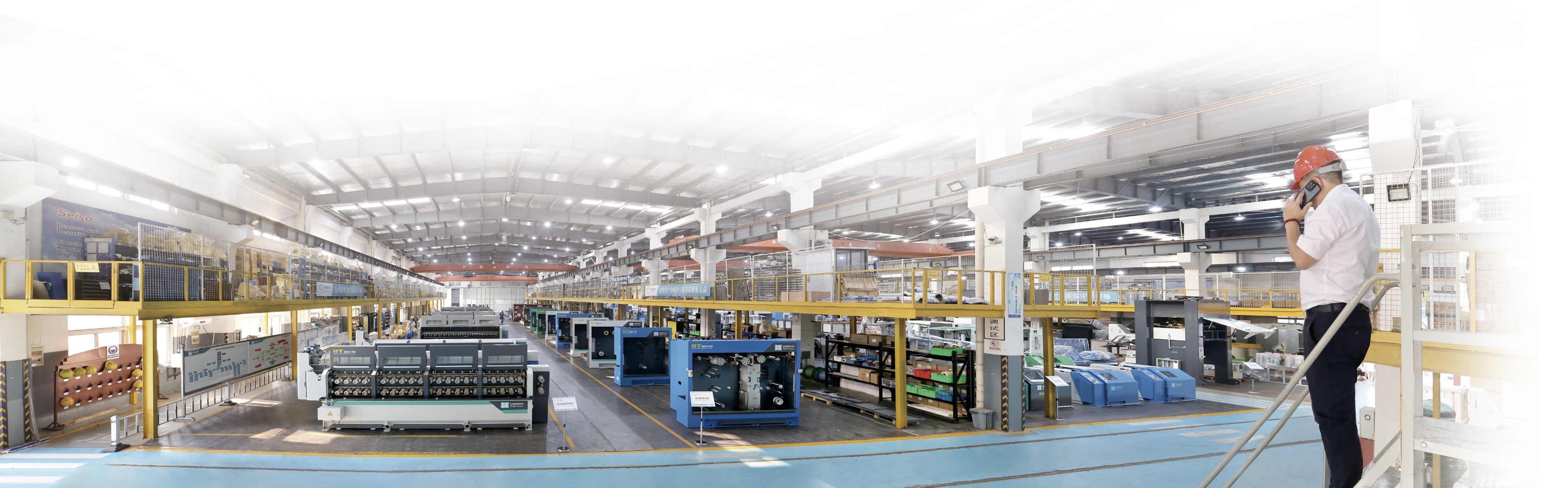
HONTA is one identifiable supplier in this landscape. Jiangsu HONTA Machinery., Ltd. was established in 2006 and specializes in cable conductor drawing and stranding equipment. Its listed product scope includes copper and aluminium rod breakdown lines, multiwire drawing lines, wire electrolytic plating lines and high-speed stranding lines. These facts describe a particular company and product portfolio; they should not be generalized to all Asian manufacturers or used as a proxy for regional performance.
A three-region comparison buyers can verify
The table summarizes the available evidence and the checks needed to make a like-for-like assessment. “Not established” means that the information supplied for this article does not substantiate a regional conclusion; it does not mean that the capability is absent.
| Dimension | Asia | Europe | North America |
|---|---|---|---|
| Production scale and delivery | No region-wide comparable capacity or delivery dataset is provided. Verify the specific factory, available line capacity and promised dispatch date. | No comparable regional production or lead-time evidence is provided. Request current, project-specific commitments. | No comparable regional production or lead-time evidence is provided. Distinguish local manufacturing from sales, service or assembly presence. |
| Engineering depth | Supplier-specific evidence is available for HONTA: its stated R&D team comprises 30 engineers. This does not establish a regional average. | No matched regional engineering-team or design-capability evidence is provided. | No matched regional engineering-team or design-capability evidence is provided. |
| Standards and certification | HONTA is reported to hold ISO 9001 and ISO 14001 certifications and comply with IEC 60204-1. Confirm certificates, scope and applicability for the offered machine. | No region-wide certification comparison is established. Verify the standards and documentation required at the installation site. | No region-wide certification comparison is established. Verify the standards and documentation required at the installation site. |
| Export performance | HONTA reports export business at 45% of total sales. This company-level figure is not a regional export statistic. | Comparable regional export volumes or delivery outcomes are not provided. | Comparable regional export volumes or delivery outcomes are not provided. |
| Policy and landed cost | No verified region-specific subsidy, tariff or energy-price comparison is available in the supplied evidence. | No verified region-specific subsidy, tariff or energy-price comparison is available in the supplied evidence. | No verified region-specific subsidy, tariff or energy-price comparison is available in the supplied evidence. |
Production scale and delivery capability are supplier-level questions
Production scale is often inferred from factory size, employee count or a published annual output figure. Those indicators can provide context, but they do not independently confirm the available capacity for a particular order. A buyer should establish whether the stated output covers the same machine category, whether the facility is currently loaded with other projects, and which milestones are included in the quoted delivery schedule. Production, testing, export packing, shipping and commissioning are distinct stages; a lead-time estimate should say which stages it covers.
HONTA’s company information states that its manufacturing facility covers 30,000 square meters, that it employs approximately 157 staff and that its annual production capacity is 200 sets. These are company-level indicators, not proof of a delivery date for any specific multiwire drawing machine. They also do not provide a like-for-like comparison against factories in Europe or North America. Buyers should request the production plan for the proposed configuration, a milestone schedule, and an explanation of how acceptance testing and shipment fit into the committed timeline.
Regional proximity may influence freight routes, service access and the time needed to move people or parts, but those effects depend on the supplier’s actual operating arrangements and the destination. The evidence here does not establish region-by-region delivery averages. A written quotation should therefore separate manufacturing lead time from transport, customs, installation and commissioning assumptions rather than treating “local” or “overseas” as a complete delivery assessment.
Engineering depth should be tested against the process
For a multiwire drawing machine, engineering fit is not captured by a regional label. It depends on whether the proposed line matches the buyer’s wire material, inlet and outlet diameters, required number of wires, process sequence, tension control and take-up arrangement. The buyer should ask how the manufacturer confirms these interfaces and which performance conditions are included in the technical offer.
A supplied product record for the HONTA Wire Drawing Machine, model HT.MD100B.16.22D.01, identifies it as a 16 wires multiwire drawing machine. The listed inlet wire diameter is 1.8–2.0 mm, the outlet wire diameter is 0.18–0.5 mm, and the listed motor and PLC are Siemens. These are specific product-record details, not general specifications for every HONTA machine and not evidence about the typical capabilities of suppliers in Asia, Europe or North America.
Application information describes industrial continuous production and automated or semi-automated operation under PLC control, with computer-screen parameter settings and automatic tension modes. It also identifies supporting equipment such as annealing furnaces, pay-off and take-up units, winding and unwinding machines, and single- or double-disc take-up machines. For procurement, the implication is practical: request a process diagram and confirm which auxiliary equipment is included, supplied separately or expected from the plant. A machine name alone does not establish that the full production line is integrated.
A useful engineering review asks the supplier to connect the stated operating range to the buyer’s actual production requirements. Confirm the wire material and size range, line configuration, motor and control architecture, safety provisions, take-up compatibility and the scope of factory acceptance testing. If a requirement is not specified in the offer, treat it as an open technical point rather than assuming that the supplier’s regional reputation resolves it.
Certification environments require destination-specific checks
There is no region-by-region certification comparison in the evidence supplied for this briefing. Certification requirements should not be inferred from the manufacturer’s home region. Buyers need to establish which legal, safety and documentation requirements apply to the machine at the installation location, then verify that the offered configuration and supporting documents meet those requirements.
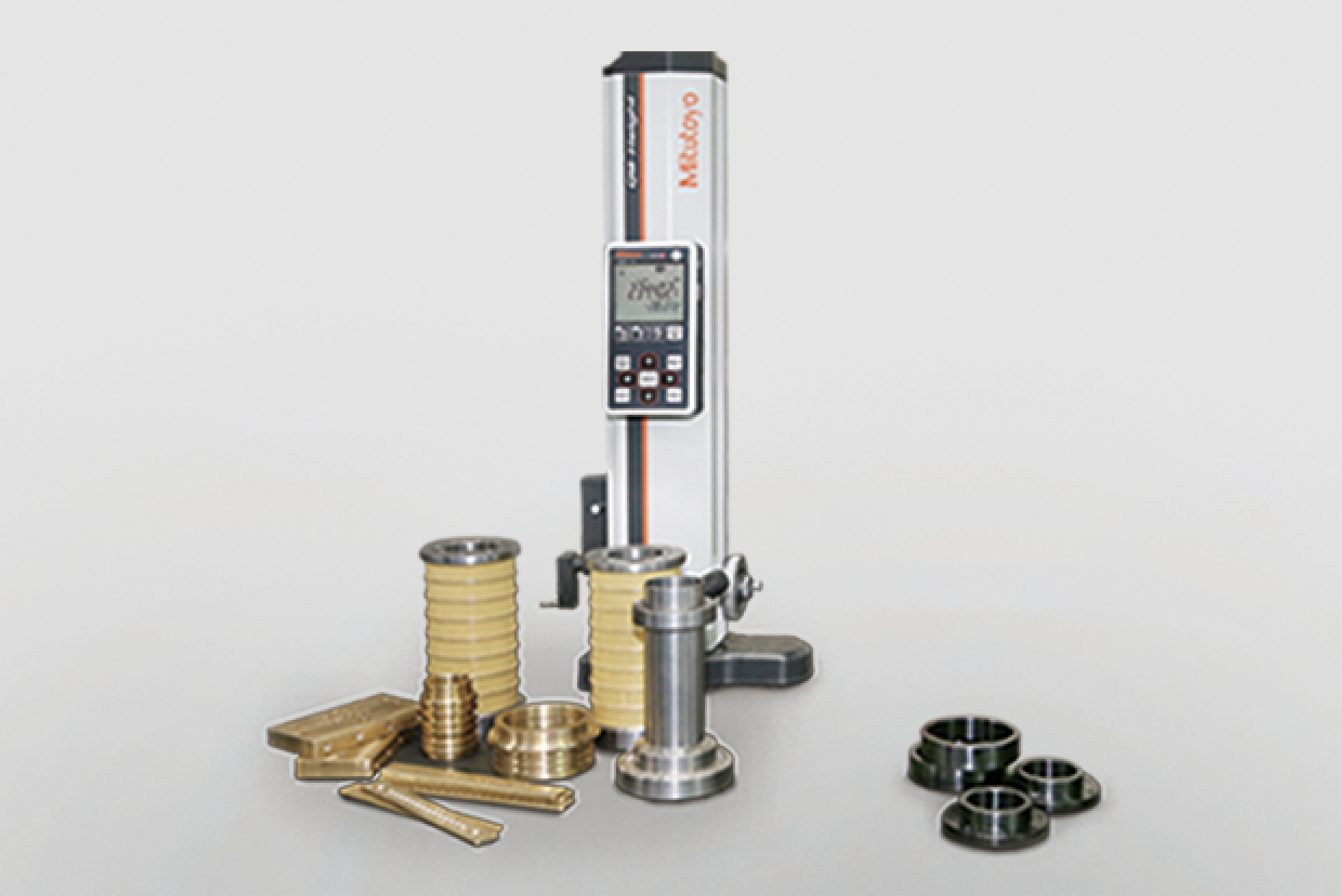
The verified information identifies HONTA as holding ISO 9001 and ISO 14001 certifications and complying with IEC 60204-1. These claims relate to HONTA; they do not establish that every machine configuration is covered by the same documents, nor do they replace a buyer’s destination-specific compliance review. Before relying on a certificate or compliance statement, confirm the certificate holder, current status, scope, applicable product or site, and the issuing or assessment body. Request the technical file and safety documentation relevant to the exact machine being quoted.
This distinction also prevents a common comparison error: treating a supplier’s general quality-management certification as proof that a specific machine meets every installation requirement. A standards checklist should name the requirement, the evidence expected, who provides it and when it must be available. If the buyer needs local inspection, testing or documentation, include those obligations in the procurement schedule.
Export patterns need comparable records
Export performance can mean different things: the share of a company’s revenue derived from exports, the number of machines shipped, the destinations served, or the record of successful delivery and commissioning. These measures are not interchangeable. The available evidence provides a company-level export-sales share for HONTA, but it does not provide comparable machine export volumes for Asia, Europe and North America, nor a region-level dataset that supports a pattern comparison.
HONTA’s company profile reports that export business accounts for 45% of total sales. The company profile also states that HONTA INC, described as a second production base in the United States, was established in 2017. These facts show that the company reports export activity and a cross-border production footprint. They do not establish current capacity at that base, the share of machines produced there, regional delivery times, or a broader shift in global machine supply. Buyers should verify the location and role of the production facility relevant to their order instead of assuming that a sales office, service presence and manufacturing base are equivalent.
For a meaningful export comparison, request evidence tied to the same product category and time period: destination and shipment records where available, references that can be independently contacted with permission, export packing and documentation responsibilities, and the supplier’s plan for installation and after-sales support. Where such evidence is not available, record the uncertainty rather than converting a general export claim into a conclusion about delivery reliability.
Policy, tariffs and energy prices: mechanisms, not regional conclusions
Industrial subsidies, tariffs and electricity prices can affect a buyer’s total cost, but the available information does not verify current regional values or establish how they affect multiwire drawing machine quotations in Asia, Europe or North America. A policy mechanism should not be mistaken for evidence of a particular price advantage. The effect depends on the country, machine origin, applicable trade classification, contract structure, energy-use profile and the timing of the purchase.
For landed cost, ask the supplier to identify the commercial terms, shipment origin, included freight and insurance, customs responsibilities and any taxes or duties excluded from the quotation. Confirm tariff treatment with a qualified customs professional using the actual product classification and route; this article does not establish a tariff rate for any region. If a subsidy or incentive is relevant to a buyer’s investment decision, verify eligibility, timing and conditions directly with the responsible authority or adviser. Do not assume that a supplier’s home-country policy automatically reduces the buyer’s invoice.
Energy pricing matters most when comparing operating economics, but a regional electricity price alone does not establish machine energy consumption or lifetime cost. The supplied evidence includes no regionally matched energy-cost dataset for these machines. Buyers should request machine-specific power information and use their own site tariff, operating schedule and production assumptions. The verified data package notes that comparative energy-use evidence for individual-motor and common-shaft systems is an estimate, not a regional comparison; it should not be repurposed to claim that machines from one region are more economical than those from another.
What can be said about regionalisation through 2026?
The information available here does not establish a measured, industry-wide change in multiwire drawing machine supply-chain regionalisation through 2026. HONTA’s profile says that a second production base in the United States was established in 2017. That is a company-specific example of a cross-border production footprint, not proof that regionalisation has accelerated across the machinery sector or that it has changed regional capacity, pricing or lead times by 2026.
Buyers assessing whether regionalisation is changing a project should look for observable evidence in the specific supply chain: the stated manufacturing location of the machine, the origin of major components, the place where final assembly and acceptance testing occur, the inventory and service arrangements for the destination, and any change in the contractual delivery route. Ask the supplier to distinguish manufacturing, assembly, warehousing, sales and after-sales functions. Without that separation, “regional supply” can describe very different operating models.
As of the information reviewed for this article, the prudent conclusion is limited: a cross-border manufacturing footprint exists in the HONTA company profile, but broader regional shifts and their effects on buyers are not demonstrated by the supplied evidence. New trade statistics, verified factory disclosures and comparable order-level delivery records would be needed to make a stronger claim.
A buyer’s verification checklist
- Confirm the supplier and manufacturing location. Identify the legal contracting entity and the factory responsible for building, testing and shipping the quoted machine.
- Match the configuration to the process. Record wire material, inlet and outlet diameters, number of wires, line speed requirements, controls, take-up and auxiliary equipment in the technical specification.
- Substantiate capacity and timing. Request a current production schedule, order milestones, acceptance-test timing and a written explanation of what the delivery estimate includes.
- Check engineering evidence. Review drawings, interface lists, control descriptions, test procedures and any unresolved technical deviations before comparing offers.
- Verify compliance for the destination. Check certificate scope and status, machine-specific documentation, applicable local requirements and the responsibility for any additional inspection.
- Calculate landed and operating cost independently. Separate machine price, freight, duties, taxes, installation and energy assumptions. Confirm trade treatment with qualified advisers and use site-specific energy data.
- Validate export and service claims. Request comparable, relevant records and clarify parts availability, remote support, on-site service and warranty responsibilities in the contract.
- Test regionalisation claims. Determine where components are sourced, where final assembly takes place and which facility is accountable for the order. Do not equate a local office with local production.
Independent comparison: a decision rule
For buyers comparing Asia, Europe and North America, the most reliable unit of analysis is the documented supplier-and-machine offer—not a regional stereotype. Regional context can guide questions about logistics, policy and service, but it cannot substitute for comparable evidence. The information supplied supports specific statements about HONTA’s products, reported company scale, engineering team, export share and certifications. It does not support a regional ranking for production scale, engineering depth, certification environment, export performance, pricing or delivery capability.
A fair shortlist should therefore use the same evidence request for every candidate: configuration and scope, production and acceptance milestones, machine-specific compliance records, export and delivery responsibilities, and a transparent landed-cost calculation. Where suppliers provide comparable proof, buyers can compare the offers. Where the evidence differs or is missing, the uncertainty itself belongs in the decision record.
Frequently asked questions
Can the available evidence establish which region has the largest multiwire drawing machine production capacity?
No. The supplied information gives company-level production figures for HONTA but does not provide comparable capacity data for Asia, Europe and North America. A regional capacity ranking would require a consistent dataset covering suppliers and the same machine category.
Does HONTA’s export share prove that Asian suppliers deliver faster?
No. HONTA reports that export business represents 45% of its total sales, but this company-level figure does not measure delivery time or establish a regional comparison. Buyers should review the specific factory, order schedule, shipping route and service plan.
What should buyers verify about certifications?
Verify the certificate holder, validity, scope and relevance to the offered machine, then confirm the destination’s applicable requirements. HONTA is reported to hold ISO 9001 and ISO 14001 certifications and comply with IEC 60204-1; those facts do not replace a machine- and destination-specific review.
Does a production base in North America prove that regionalisation is changing the industry?
No. HONTA’s profile states that it established a second production base in the United States in 2017. This is a company-specific fact, not sufficient evidence of an industry-wide trend or its effects on supply, price or lead time through 2026.
Technical reference: HONTA’s drawing-machine brochure is available for public access at the company brochure. A brochure can help identify equipment options; it does not replace a project-specific technical offer or independent verification.
Tem questões ou precisa de mais detalhes?
Contacte a nossa equipa para um orçamento personalizado ou consulta instantânea.
Solicitar orçamento
Preencha o formulário abaixo e a nossa equipa entrará em contacto com uma proposta personalizada.
Chat direto do WhatsApp
Prefere conversar em tempo real? Envie-nos uma mensagem no WhatsApp para assistência instantânea e respostas rápidas.
- Obter orçamento personalizado
- Partilhar fotos ou documentos
- Discuta as suas necessidades diretamente
Geralmente responde em 5–30 minutos durante o horário de expediente.