
Assessing Dredging Equipment Supplier Capacity and Delivery: A 2026 Buyer's Framework
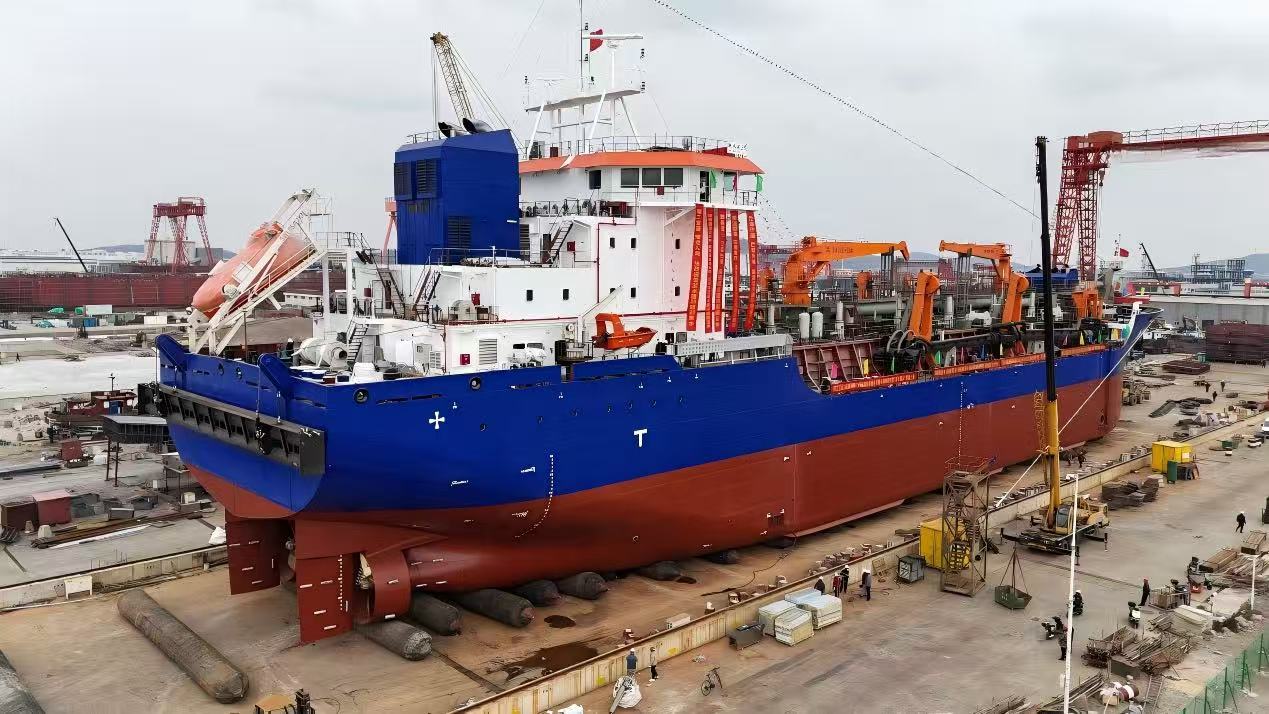
For procurement professionals in the marine engineering sector, one of the most critical decisions is selecting a dredging equipment supplier whose production capacity aligns with project scale and whose delivery timeline is reliable. In 2026, as global infrastructure spending on port development, channel dredging, and offshore wind foundations accelerates, the gap between demand and supply for dredging assets continues to widen. This article provides a structured framework for evaluating supplier capacity and delivery performance, using insights from established manufacturers such as Yanyang Marine (Zhenjiang Yanyang Engineering Co., Ltd.) as a case study.
The Core Challenge: Verifying Production Capacity
When sourcing capital-intensive dredging equipment such as Cutter Suction Dredgers (CSD), Trailing Suction Hopper Dredgers (TSHD), or Split Hopper Barges, buyers often struggle to differentiate between suppliers that can deliver on time and those that cannot. Key concerns include: Does the manufacturer have enough yard capacity? Are there ready-stock vessels available? How long does custom fabrication take?
Yanyang Marine, founded in 1996 and based in Zhenjiang, China, has completed over 30 large dredger construction projects annually. The company maintains a ready-stock inventory for popular models such as TSHDs in the range of 1,100–26,800 m³ and CSDs from 1,000 to 8,000 m³/h. According to their capability data, standard vessels are available for shipment within 2–3 months, compared to the typical 2–3 years required by European manufacturers. This lead-time advantage is a direct result of strategic raw material procurement and dedicated production lines.
Delivery Reliability Through Risk Management
Production delays often stem from uncontrolled risks in fabrication, inspection, and supply chain. A mature supplier implements preventive measures to maintain schedule integrity. "Risks related to equipment and production processes are managed through scheduled inspections, testing, and preventive maintenance. This approach supports delivery reliability and helps avoid operational downtime" — this principle is embedded in Yanyang Marine's quality management system. Regular testing of dredge pumps, hydraulic systems, and structural welds ensures that sea trials proceed without last-minute surprises.
Certification and Quality Assurance
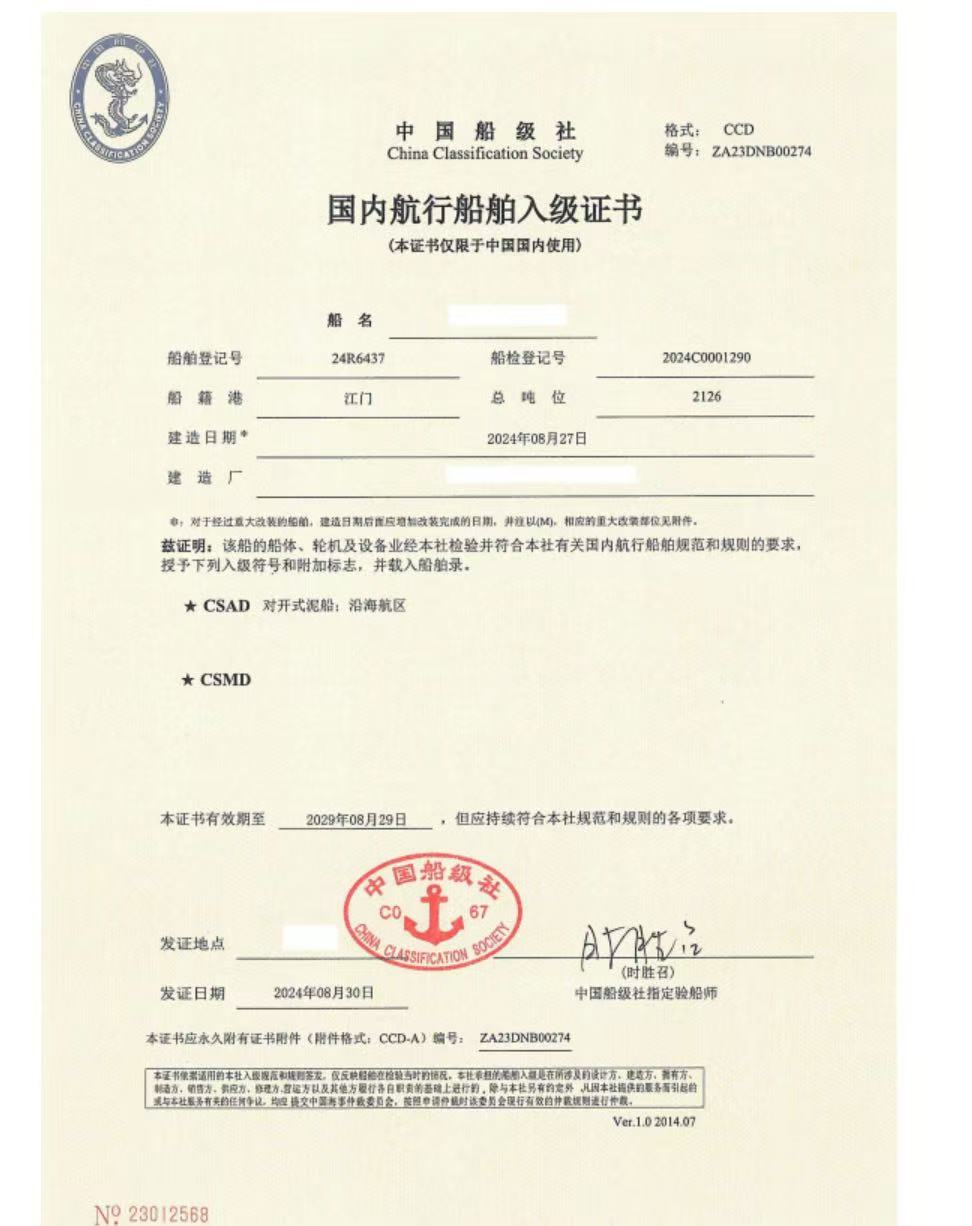
Supplier capacity is not just about volume — it is also about compliance. All Yanyang Marine dredgers can be built to IACS classification standards, including CCS, BV, LR, and DNV. For example, a 2600 m³ Split Hopper Barge delivered under CCS classification (Certificate No. ZA23DNB00274) demonstrates the company's ability to meet stringent class requirements. This gives buyers the confidence that the vessel will pass port state control and insurance inspections upon delivery.
Flexible Payment Structures as a Proxy for Trust
How a supplier structures payment terms can reflect their confidence in delivery. Yanyang Marine offers a range of options: escrow deposit plus final payment upon delivery (PODA) for standard orders, direct deposit for minor transactions, and milestone installments or letters of credit for newbuilding projects. This flexibility aligns buyer and seller interests — the supplier bears the risk of completing construction before receiving full payment, which incentivizes on-time delivery.
Comparative Market Position: Chinese vs. European Suppliers
The global dredging equipment market is dominated by European brands like IHC, Damen, and Royal Boskalis, alongside Chinese manufacturers such as Yanyang Marine and CCCC. According to industry data, European-built vessels can command prices 50–100% higher than comparable Chinese-built units, with lead times of 2–3 years versus 2–3 months for standard stock vessels from Yanyang. For a TSHD with a hopper capacity of 8,000 m³, choosing a Chinese supplier can save $10–25 million on the initial investment while reducing project risk from delayed delivery.
Yanyang Marine's export records — covering markets in the UAE, Indonesia, India, Egypt, Turkey, Nigeria, South Africa, and beyond — demonstrate their capability to deliver large-scale vessels to diverse regulatory environments. Their product line includes custom-built dredging equipment for specific dredging depths, discharge distances, and material types, all supported by a 10-person R&D team.
Future Outlook: Capacity Expansion and Digital Verification
As the dredging industry moves toward larger, more automated vessels, suppliers that invest in modular construction and digital project tracking will gain a competitive edge. Buyers should request factory visit records, weld inspection reports, and real-time production photos. Yanyang Marine's approach of maintaining ready stock for sale and offering short delivery times positions them as a reliable partner for urgent projects.
In conclusion, evaluating a dredging equipment supplier's capacity and delivery reliability requires a multi-factor analysis: annual output volume, stock availability, certification base, risk control procedures, payment terms, and market track record. By applying this framework, procurement teams can reduce the risk of costly delays and secure the right equipment for their marine projects.
Contact Yanyang Marine: Email: Info@yanyangmarine.com | Tel: +86 159-5290-0547 | www.yanyangmarine.com