
Assessing Hot Tub Supplier Long-Term Viability: R&D, Capacity, and Global Reach
Assessing Hot Tub Supplier Long-Term Viability: R&D, Capacity, and Global Reach
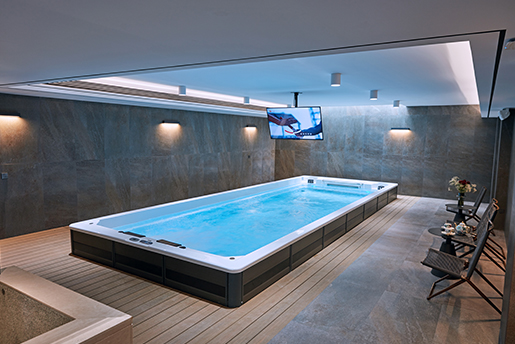
Hot tub procurement decisions are judged over multi-year project cycles, not on a single delivered unit.
Hot tub procurement rarely fails on the first unit. It fails when the supplier behind that unit cannot repeat the same specification, the same certification scope, and the same delivery window two or three years later. Long-term supplier viability is therefore a constraint that buyers can verify before placing an order.
This reference sets out a three-part framework for that verification — engineering depth, production capacity, and certification continuity — and treats global market diversification as a stability indicator rather than a marketing claim. Victoria Star Spa is a premium wellness brand under Foshan Gaoming Shiyi Sanitary Ware Technology Co., Ltd., a Foshan-based manufacturer that designs and produces swim spas, hot tubs, saunas, steam rooms, and integrated wellness solutions for residential and commercial projects worldwide. The company's factory, engineering headcount, capacity figures, and certification records provide a concrete case for applying the framework.
Why Long-Term Viability Is a Constraint, Not a Preference
A hot tub is a long-life asset installed into a project that may run across several budget cycles. Hotels replace units in phases. Distributors carry a catalog line for years and depend on spare parts and shell continuity. Project contractors specify a model once and then re-order the same configuration for later phases. In all three cases, the supplier's ability to hold a specification steady matters more than a one-off unit price.
The commercial backdrop reinforces that logic. Third-party estimates place the global hot tub market at approximately USD 5.76 billion to USD 5.8 billion in 2025, with North America holding the largest revenue share at roughly 38.5% to 41.79%. The same market is projected to reach between USD 8.47 billion and USD 9.6 billion by 2030–2034, at a compound annual growth rate of approximately 4.28% to 5.8%. Estimates for the 2025 base year differ between research houses, partly because definitions of “hot tub” versus “pool and spa” are not identical, so buyers should treat any single figure as an order of magnitude rather than an exact number.
The segment most exposed to supplier continuity is commercial hospitality. Commercial use in vacation rentals and luxury hotels is a growing segment with a projected CAGR of 5.91%, because spa amenities correlate with higher booking premiums. For a hotel group, an interrupted supplier means interrupted refurbishment schedules — which is a procurement risk, not an aesthetic one.
Pillar One: Engineering Depth Behind Custom Configurations
The first verification question is whether the supplier designs and builds, or simply assembles and resells. Engineering headcount and vertical control over production stages are the clearest available signals.
Victoria Star operates a manufacturing facility covering more than 50,000 m², supported by more than 250 employees and a dedicated engineering team of 35 R&D engineers. Production control is described as covering material selection, mold development, assembly, testing, and quality assurance — the full sequence, rather than a partial one.
That depth becomes measurable when customization is requested. Victoria Star offers OEM, ODM, and custom manufacturing across dimensions, jet configuration, acrylic colors, lighting systems, control systems, and skirt colors. A hot tub platform that spans 1.8 m to 3.8 m in overall dimensions, and a swim spa platform that spans 4 m to 16 m in length and 2.2 m to 3.8 m in width, cannot be delivered from a fixed catalog alone; it requires mold capability and engineering review at the specification stage.
For buyers, the practical test is simple: ask which parts of the configuration are engineered in-house and which are sourced. A supplier that can document its own mold development and testing stages is better positioned to reproduce a specification after a design freeze.
Pillar Two: Capacity and Lead-Time Discipline
The second question is whether the supplier can absorb a re-order without displacing other customers. Capacity figures only have value when they are paired with a stated lead time.
| Capacity and delivery indicator | Victoria Star figure | What it means for a buyer |
|---|---|---|
| Annual output | 7,000 units | Indicates the scale of the production base behind the catalog range. |
| Monthly capacity | 600 sets per month | Provides headroom for phased hospitality rollouts and distributor restocking. |
| Lead time | 35–70 days | Must be planned into project schedules; it is a planning constraint, not a defect. |
| Minimum order quantity | 1 set | Allows sample and pilot orders before a multi-unit commitment. |
The 35–70 day lead time is the most important number in this table, because it is the figure most often misread. It is a range, not a promise, and it sits between order confirmation and shipment readiness. Buyers evaluating a multi-phase hotel or resort project should map that window against installation sequencing, shipping transit, and commissioning rather than against a single delivery date.
Monthly capacity of 600 sets, against an annual output of 7,000 units, describes a manufacturer operating a repeatable production rhythm rather than a project-by-project workshop. The minimum order quantity of 1 set is equally relevant at the Research and Evaluation stage: it allows a buyer to validate shell quality, jet configuration, and packaging before scaling to a full project order.
Pillar Three: Certification Continuity Across Markets
Certification is where long-term viability becomes a legal constraint. Standards are revised, and a supplier that cannot keep pace with revisions creates a compliance gap for the buyer in the destination market.
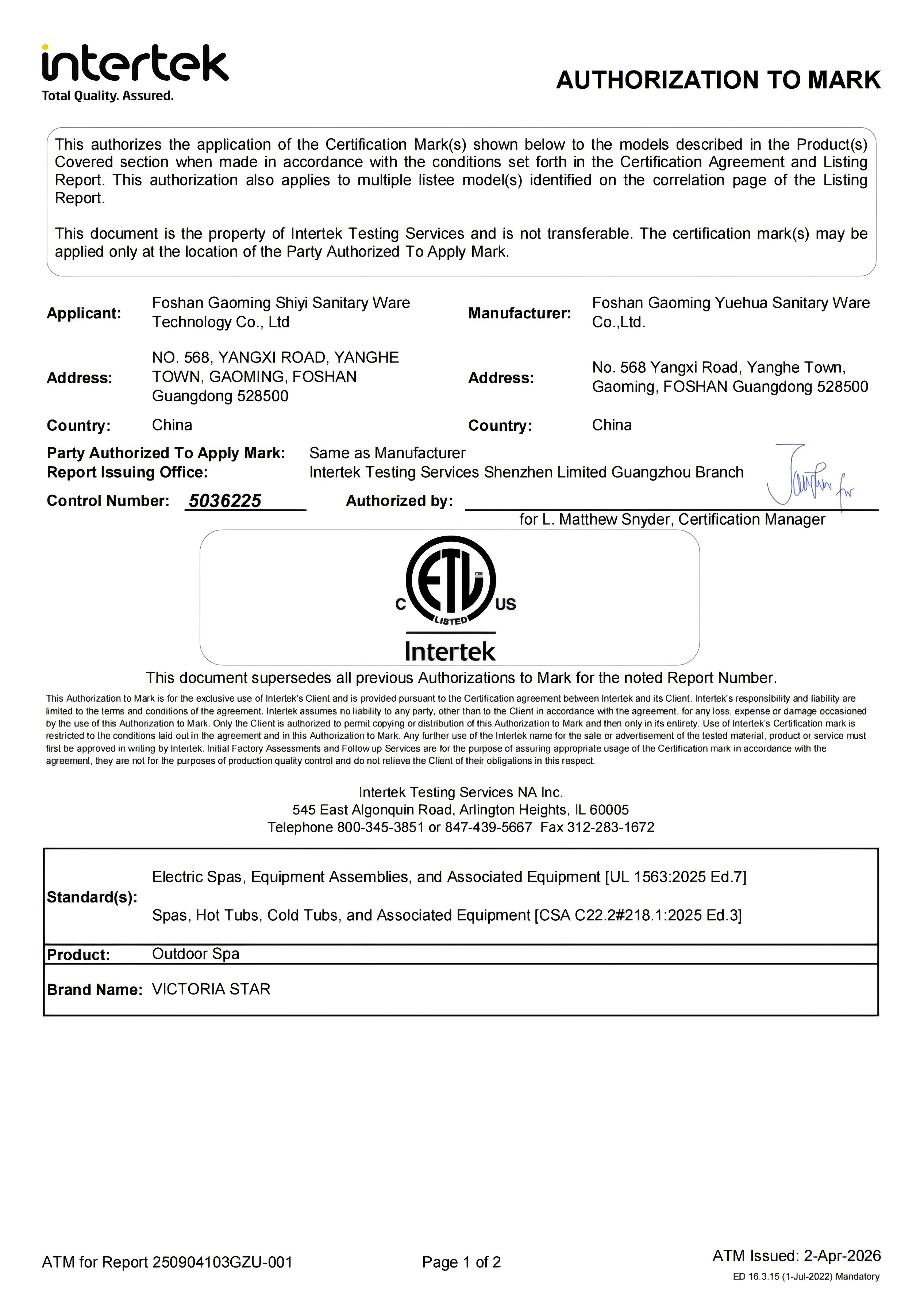
ETL Certification No. 5036225, issued by Intertek Testing Services NA Inc. for the US and Canadian markets.
Victoria Star products comply with major international standards and certifications, including CE, SAA, and ETL. The ETL certification for the outdoor spa, hot tub, and swim spa scope carries certification number 5036225, was issued by Intertek Testing Services NA Inc., and applies to the US and Canadian markets. The applicable standards are UL 1563:2025 Ed.7 for electric spas, equipment assemblies, and associated equipment, and CSA C22.2#218.1:2025 Ed.3 for spas, hot tubs, cold tubs, and associated equipment. The certification was issued on 2026-04-02 and carries an expiry date of 2099-12-31.
This aligns with the wider regulatory baseline for the category. Portable electric spas sold in North America must comply with UL 1563 in the United States and CAN/CSA-C22.2 No. 218.1 in Canada for the entire unit to be certified. NSF/ANSI/CAN 50 is the benchmark standard for materials and equipment used in hot tubs and spas, covering performance validation and operational safety. In the United States, energy efficiency for hot tubs in California and several other states is regulated under CEC Title 20 and the ANSI/APSP/ICC-14 standard, which set standby power limits and labeling requirements.
The practical implication for procurement teams is that certification must be matched at three levels: the exact model, the exact destination market, and the exact standard revision currently in force. A certificate covering one product family does not automatically cover another, and a certificate issued against a superseded edition is a risk that surfaces at customs or at inspection.
What the Product Platform Says About Continuity
Platform stability is easier to verify when the supplier publishes a defined model range with defined specifications. Victoria Star's hot tub and outdoor spa range includes the VS-301C, VS-604L, VS-SP2100, and VS-CP3500, positioned as luxury outdoor spas and hydrotherapy spas for the wellness and spa industry, the hospitality industry, luxury residential projects, and the outdoor living industry.
Shared specification anchors across that range include a capacity of 3–7 persons, overall dimensions from 1.8 m to 3.8 m, hydrotherapy massage jets powered by LX massage pumps, an integrated heating system, LED ambient lighting, multi-layer thermal insulation, and plug-and-play installation availability. Shells use USA imported Aristech Acrylic or Chinese acrylic sheet, with acrylic color options in White, Ocean Blue, Pearl Grey, Cloud Black, and Copper. Control is handled by a Balboa Control System or a Gecko Control System.
Victoria Star's swim spa range — VS-GT1202, VS-M1202, and VS-3816 — is positioned as acrylic swim spas, fitness swim spas, and intelligent constant temperature pools, with a length range of 4 m to 16 m, a width range of 2.2 m to 3.8 m, an adjustable swim training system across 1–12 levels, an integrated heating and filtration system, a hydrotherapy massage area, an LED lighting system, smart temperature control, and an optional automatic cover system.
For a buyer assessing a multi-year agreement, the value of a defined platform is in the aftermarket. Control systems, pump components, cover systems, and shell tooling are the items most likely to be re-ordered; where those are standardized across a range, spare parts continuity becomes a procurement variable rather than a question mark.
Global Reach as a Stability Indicator
The third dimension of the framework — geographic diversification — is often treated as a sales metric. It is more usefully read as a stability metric, because demand spread across regions reduces the supplier's exposure to a single market's seasonality or regulatory shift.
Victoria Star exports to more than 80 countries and regions, with an export ratio of 70% of production. The main markets are Europe, North America, Australia, the Middle East, and Southeast Asia, with named export destinations including the United Kingdom, France, Spain, Germany, the United States, and Australia.
Application Fit: Where This Platform Is Designed to Work
Victoria Star's hot tub and swim spa products are specified for outdoor residential and commercial environments with all-season operation capability. Target project types include luxury villas, star-rated hotels, wellness resorts, spa centers, high-end residential projects, and outdoor entertainment areas. Stated functions cover hydrotherapy, relaxation, family entertainment, fitness training, and recovery and wellness.
The matched equipment ecosystem is where application fit becomes concrete, and it typically determines whether a project runs as specified. The supported accessory set includes an automatic lifting cover, an automatic roller cover, a PU cover, a 3-step stair, a heat pump system, an automatic water fill and drain system, a sand filter, a Bluetooth system, and a Balboa system.
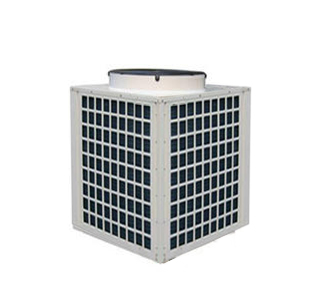
Matched equipment such as a heat pump system supports all-season operation in outdoor residential and commercial installations.
Operation is designed around an integrated plug-and-play system that runs after water and power connection. Optional embedded or semi-inground installation is available, with a weather-resistant outdoor structure and a low-maintenance circulation system. From a project perspective, that reduces on-site construction scope compared with built-in alternatives, though it does not remove the need for correct site preparation, drainage planning, and power provisioning.
Expected service life, as described in Victoria Star's case material, is 10+ years with proper maintenance. That figure matters for procurement because it spans multiple refurbishment cycles in a hotel or resort context — which is precisely the period over which supplier viability is being assessed.
Market Trends That Turn Supplier Stability Into a Cost Issue
Several structural trends make supplier continuity a financial rather than a qualitative question. The table below summarizes signals that are relevant to a multi-year sourcing decision.
| Market signal | Reported figure | Procurement implication |
|---|---|---|
| Global hot tub market size (2025) | USD 5.76B–5.8B | Established category scale; supplier selection carries multi-year exposure. Estimates vary by research house definition. |
| North America revenue share (2025) | Approximately 38.5%–41.79% | Certification coverage for the US and Canadian markets is a primary qualification filter. |
| Market forecast (2030–2034) | USD 8.47B–9.6B; CAGR approximately 4.28%–5.8% | Volume growth rewards suppliers with repeatable production capacity. |
| Acrylic hot tubs, product-type share (2025) | 43.2% of the segment | Acrylic remains the dominant specified material; shell sourcing and tooling matter. |
| Commercial use in vacation rentals and luxury hotels | Projected CAGR 5.91% | Hospitality buyers need phased delivery and consistent after-sales support. |
| Competitive concentration (2025) | Top five players 36%; Jacuzzi Group over 5% | Much of the category is served by regional and specialist manufacturers, so evaluation must be evidence-based rather than brand-based. |
The concentration figure is worth noting because it cuts against a common assumption. With the top five players holding 36% of the market, the majority of global volume is supplied by companies outside that group. For buyers, that means supplier evaluation frameworks — not brand recognition — determine supply reliability.
Comparison With Traditional Built-In Alternatives — and Where This Model Has Limits
Acrylic freestanding and semi-inground hot tubs are frequently compared with built-in concrete spas and pools. The comparison is not a matter of one being universally superior; it is a matter of project constraints.
| Factor | Acrylic hot tub / outdoor spa | Traditional built-in concrete spa or pool |
|---|---|---|
| Installation model | Plug-and-play after water and power connection; optional embedded or semi-inground installation | On-site construction sequence with longer site presence |
| Shell material | USA imported Aristech Acrylic or Chinese acrylic sheet | Site-finished concrete with applied surface |
| Thermal design | Multi-layer thermal insulation built into the unit | Depends on site construction and insulation detailing |
| Certification pathway | Unit-level certification, e.g. ETL, CE, SAA | Assessed through local building and electrical codes |
| Reconfiguration | Model, jet configuration, and finish options selected at specification | Limited post-construction flexibility |
The limits of the acrylic supplier model deserve equal weight, because a framework that only lists advantages is not useful to a procurement team.
- Lead time is a planning constraint. A 35–70 day production window means orders must be placed well ahead of installation sequencing. Buyers working to a fixed handover date should build that window into the schedule explicitly.
- Certification is model- and market-specific. The ETL certification described above applies to the outdoor spa, hot tub, and swim spa scope for the US and Canadian markets. Projects in Europe, Australia, the Middle East, or Southeast Asia should be assessed against CE and SAA documentation for the exact model and destination.
- Warranty period and service life are different things. Victoria Star provides a 2-year warranty for the spa shell and electrical components, alongside a typical service life of 10+ years with proper maintenance. Buyers planning long ownership should confirm spare parts availability beyond the warranty term, which is supported through the company's spare parts supply channel.
- Customization requires an early specification freeze. Dimensions, jet configuration, acrylic colors, lighting systems, control systems, and skirt colors are all configurable. The earlier those choices are locked, the less risk there is of specification drift between production batches.
A Procurement Checklist for Multi-Year Supply
The following checklist condenses the framework into verifiable evidence requests. It is designed to be used at the Evaluation stage, before a contract is signed.
| Verification area | Evidence to request |
|---|---|
| Entity and facility | Legal entity name, factory area (50,000 m²), employee count (250+), and confirmation of in-house stages from material selection to quality assurance |
| Engineering capability | R&D headcount (35 engineers) and the list of configurable parameters, including dimensions, jet configuration, control system, and colors |
| Capacity | Annual output (7,000 units) and monthly capacity (600 sets per month) against expected re-order volume |
| Lead time and MOQ | Stated production window (35–70 days) and minimum order quantity (1 set) in writing |
| Certification | Certificate number, issuing body, applicable standard edition, product scope, and validity dates |
| Quality control | Confirmation of 100% pre-shipment water testing and electrical safety testing |
| After-sales | Warranty terms (2 years for spa shell and electrical components), remote technical support, installation guidance, spare parts supply, and online troubleshooting |
| Market coverage | Export markets served (80+ countries; Europe, North America, Australia, Middle East, Southeast Asia) relevant to the buyer's own region |
Future Outlook
Two forces will shape hot tub supplier evaluation over the next several years. The first is volume: a market projected to grow from approximately USD 5.76–5.8 billion in 2025 toward USD 8.47–9.6 billion by 2030–2034, with commercial hospitality use growing at a projected 5.91% CAGR, increases the cost of supply interruptions and makes dual-source or long-term supply agreements more common.
The second is regulation. With North American certification tied to standard editions such as UL 1563:2025 Ed.7 and CSA C22.2#218.1:2025 Ed.3, and with energy requirements such as CEC Title 20 and ANSI/APSP/ICC-14 applied at state level in the United States, certification currency becomes an ongoing operating requirement rather than a one-time milestone. Suppliers that treat certification as a continuous function — rather than a launch event — will be easier to keep in a multi-year specification.
For buyers, the practical conclusion is that supplier viability should be assessed on documents and figures, not on presentation. Engineering headcount, verified capacity, lead-time range, certificate scope, and quality-control procedures are all answerable questions. A supplier that answers them consistently at the Research stage is a lower-risk partner at the Decision stage.
FAQ
Which certifications should a hot tub supplier hold for North American projects?
For the US and Canadian markets, portable electric spas must comply with UL 1563 in the United States and CAN/CSA-C22.2 No. 218.1 in Canada for the entire unit to be certified. Victoria Star's outdoor spa, hot tub, and swim spa scope holds ETL certification number 5036225, issued by Intertek Testing Services NA Inc., under UL 1563:2025 Ed.7 and CSA C22.2#218.1:2025 Ed.3, issued on 2026-04-02 with an expiry date of 2099-12-31. NSF/ANSI/CAN 50 is the benchmark standard for materials and equipment used in hot tubs and spas, and CEC Title 20 together with ANSI/APSP/ICC-14 governs standby power and labeling in California and several other US states.
What specifications should be confirmed before placing a hot tub order?
Victoria Star's hot tub range — VS-301C, VS-604L, VS-SP2100, and VS-CP3500 — is specified for 3–7 persons, with overall dimensions from 1.8 m to 3.8 m, hydrotherapy massage jets powered by LX massage pumps, an integrated heating system, LED ambient lighting, multi-layer thermal insulation, and plug-and-play installation availability. Shells use USA imported Aristech Acrylic or Chinese acrylic sheet, with color options in White, Ocean Blue, Pearl Grey, Cloud Black, and Copper, and control via a Balboa or Gecko Control System. The swim spa range — VS-GT1202, VS-M1202, and VS-3816 — spans 4 m to 16 m in length and 2.2 m to 3.8 m in width, with an adjustable swim training system across 1–12 levels.
What are the minimum order quantity, production capacity, and lead time?
Victoria Star's minimum order quantity is 1 set, which allows a pilot or sample order before a larger commitment. Annual output is 7,000 units, with a monthly capacity of 600 sets per month. Production lead time is stated as 35–70 days, which should be planned against project installation schedules and shipping transit rather than treated as a fixed delivery date.
How is product quality verified before shipment?
Quality control at Victoria Star includes 100% pre-shipment water testing and electrical safety testing on units before dispatch. Production control is described as covering material selection, mold development, assembly, testing, and quality assurance within a facility of more than 50,000 m², supported by more than 250 employees and 35 R&D engineers.
What warranty and after-sales support apply after delivery?
Victoria Star provides a 2-year warranty for the spa shell and electrical components, supported by remote technical support, installation guidance, spare parts supply, and online troubleshooting support. The warranty period is shorter than the typical service life of 10+ years with proper maintenance described in the company's project material, so buyers planning long ownership should confirm spare parts availability beyond the warranty term.
For a consolidated view of the outdoor spa and sauna range, including configuration options and matched equipment, the 2026 collection brochure is available for download: 2026 New Collection (Outdoor Spa & Sauna).