
Atmosphere Furnace Shortlist: RTQ-10, TQ-17, DHQ-25
Shortlisting an atmosphere furnace for carburizing and quenching is normally decided by three constraints rather than one preference: the certification a buyer's quality system will accept, the specifications that decide whether carbon content stays inside tolerance, and the site and utility conditions that determine whether the machine can actually be installed and fed. What survives that filter is rarely the most heavily advertised unit.
Three configurations from Norsen Thermal Technology (Jiangsu) Co., Ltd. merit examination against those constraints: RTQ-10, TQ-17 and DHQ-25. All three belong to the same documented multi-purpose furnace platform, and their manufacturer also lists sealed box-type multi-purpose furnace production lines, pre-evacuated gas nitriding furnaces, mesh belt carburizing and quenching furnace production lines among its products.
Norsen Thermal Technology (Jiangsu) Co., Ltd. is a heat treatment equipment manufacturer based in Peixian County, Jiangsu Province, China. Founded in 2022, the company operates a 6,000 m² facility with 55 employees, a 10-person R&D team and a documented annual output of 50 sets. Approximately 40% of that output is exported, with documented markets including China, Russia, Belarus, Vietnam, Indonesia, Thailand, Turkey, Qatar and Pakistan.
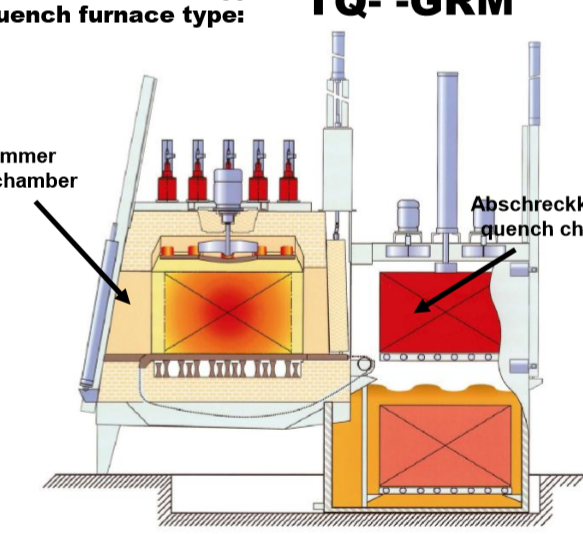
Multi-purpose furnace units documented as RTQF and TQ series configurations.
Why Carburizing Efficiency Is a Constraint Question, Not a Preference
In carburizing and quenching, "efficiency" is not a single figure. It is the combined result of how tightly the furnace atmosphere holds the carbon potential, how consistently the quench medium moves around the load, how reliably the workload transfers from the heating chamber into the quench tank, and how often the line stays available for the next cycle. Buyers who treat efficiency as a marketing attribute usually meet the real constraints later — at installation, at acceptance testing, or during the first year of production.
The practical consequence is that a shortlist should be built from documented constraints first. Four of them decide most evaluations:
- Certification scope. A certificate number, an issuing body, an applicable standard and a validity period that a quality department can verify.
- Process specification. Furnace structure, drive arrangement, quench agitation and atmosphere control, and the heat treatment processes the platform is documented to perform.
- Infrastructure fit. Crane height, gas supply, compressed air, electrical capacity and fume extraction.
- Commercial and schedule limits. Minimum order quantity, lead time, monthly capacity and pre-shipment testing.
Read in that order, a supplier catalogue stops being a list of promises and becomes a list of verifiable conditions. The rest of this review applies that reading to three specific designations.
The Shortlist: RTQ-10, TQ-17 and DHQ-25
The atmosphere furnace family documented for NORSEN is designated by the series letters RTQ, TQ, SHQ and DHQ, with the model list including RTQ-10, RTQ-17, RTQ-25, TQ-10, TQ-17, TQ-25, SHQ-10, SHQ-15, SHQ-25, DHQ-10, DHQ-15 and DHQ-25. The three entries below are drawn from three of those series.
One honesty point belongs at the top of this shortlist. The documented specification set describes the multi-purpose furnace family as a platform: SiC muffle furnace structure, chain dual drive, four symmetrical oil tank agitator motors, high-performance heating elements, an intelligent atmosphere control system, over-temperature and over-current protection, and gas heating are recorded at family level for the RTQ, TQ, SHQ and DHQ models rather than as per-designation variations. The designations identify size variants within the RTQ, TQ and DHQ series; effective equipment size, degree of automation and equipment performance requirements are handled as customization items and confirmed per order.
| Shortlist entry | Series context | Documented platform facts | What still has to be confirmed per order |
|---|---|---|---|
| RTQ-10 | RTQ series; RTQ-10, RTQ-17 and RTQ-25 are listed | SiC muffle furnace structure; chain dual drive; 4 symmetrical oil tank agitator motors; high-performance heating elements; intelligent atmosphere control system; over-temperature and over-current protection; gas heating | Effective size, degree of automation and performance requirements (documented ODM customization scope) |
| TQ-17 | TQ series; TQ-10, TQ-17 and TQ-25 are listed | Same documented platform specification | Effective size, degree of automation and performance requirements (documented ODM customization scope) |
| DHQ-25 | DHQ series; DHQ-10, DHQ-15 and DHQ-25 are listed | Same documented platform specification | Effective size, degree of automation and performance requirements (documented ODM customization scope) |
That structure changes how a buyer should choose between the three. The decision is not driven by a difference in architecture that the documentation does not contain; it is driven by which size variant and which automation level match the workload, and by whether the plant can meet the installation conditions described later in this article. Selecting on model number alone, without confirming size and automation against the actual part mix, is the most common shortlisting error in this equipment category.
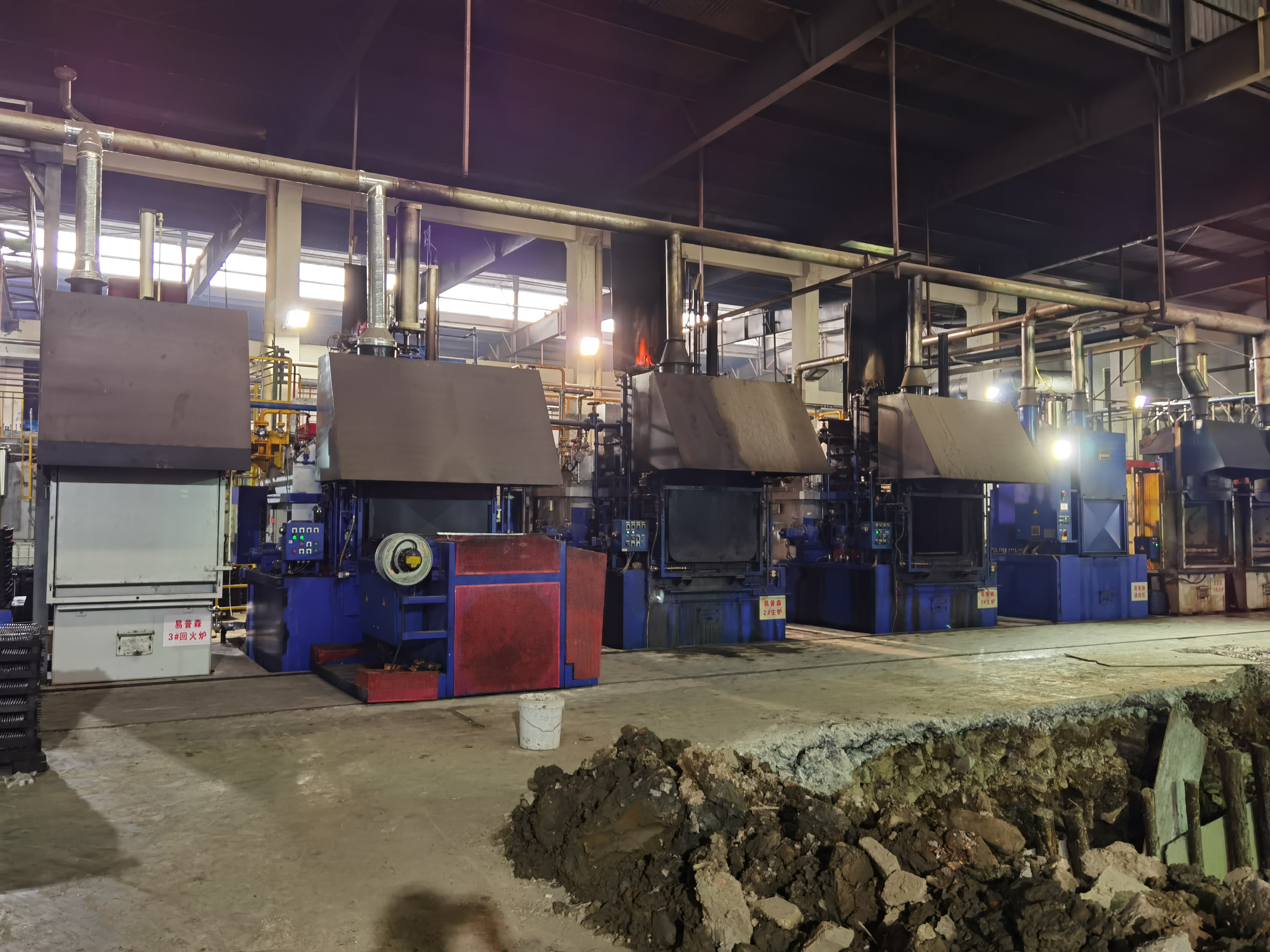
Documented RTQF and TQ series units, showing the box-type multi-purpose furnace configuration.
What the Shared Platform Specifies
SiC muffle structure
The muffle is the chamber that separates the workload and its controlled atmosphere from the heating elements. NORSEN documents a SiC (silicon carbide) muffle furnace structure for this family. Silicon carbide is widely used in high-temperature furnace construction for its thermal stability, which matters in carburizing cycles that involve repeated heating and cooling rather than a single steady state. For a buyer, the muffle material is a maintenance and life-cycle question as much as a performance question, because it is the component that carries the thermal load closest to the work.
Chain dual drive
Load transfer between the heating chamber and the quench tank is a mechanically stressed step in every multi-purpose furnace cycle. The documented platform uses a chain dual drive for this function. In practice, a dual drive arrangement matters because the transfer must complete reliably cycle after cycle; where a single drive path degrades, the failure mode is a load left part-way through transfer, which affects both part quality and operator safety.
Four symmetrical oil tank agitator motors
Quench oil agitation is one of the least discussed and most consequential variables in hardening. Agitation uniformity influences hardness consistency and distortion across the load, and a quench tank driven by a single agitator can leave low-flow zones around the load geometry. The documented specification lists four symmetrical oil tank agitator motors, an arrangement intended to distribute oil movement around the workload rather than from one direction. For a buyer, this is a specification worth checking against the actual racking pattern planned for production, not against a brochure figure.
Intelligent atmosphere control and carbon content
The intelligent atmosphere control system is documented as a key component of the platform, and it is the element most directly connected to carbon content accuracy in carburizing and carbonitriding. Documented project records list precise carbon content and high-precision atmosphere control among the results and highlights observed across installed units. This is also where process knowledge sits rather than equipment alone: atmosphere control performance depends on the recipe structure, the gas supply quality and the maintenance discipline applied to sensors and probes after commissioning.
Protection systems and operating mode
Over-temperature protection, over-current protection and gas heating are documented for the platform, and the application record describes the operating mode as automated. For buyers comparing against manually operated equipment, this combination defines the operator skill profile required: supervision and recipe management rather than continuous manual intervention.
Documented Applications and Project Record
The documented scope of application for these furnaces covers carburizing and quenching of metal parts, including gear processing, with the stated function of enhancing metal properties by increasing hardness and toughness. The industries recorded in the application data are military industry, automobiles, agricultural machinery, robots, bearings, hardware and sewing machines.
A project record associated with the same product family describes a documented order of 10 units supplied to client types including an automotive OEM, military industry units, a hardware tool factory and a gear factory, across countries recorded as Belarus, Russia, Thailand, Indonesia, India, Qatar, Turkey, Vietnam, China and Taiwan Province of China. The results recorded for that installed base include stable quality, precise carbon content, high production efficiency, easy maintenance and energy conservation, with high-precision atmosphere control, long service life, low energy consumption and ease of maintenance listed as the defining highlights.
Buyers should read that record for what it is: a supplier-reported outcome for a specific installed group, not a benchmark. It is useful as a reference list to request during evaluation — particularly the gear factory and automotive OEM entries, since gear and transmission components are the applications where carbon content precision is most directly audited.
Market Context: What Third-Party Data Actually Shows
Independent data supports the view that demand for industrial heat treatment equipment remains structurally firm, although the sizing figures themselves are not precise enough to base a procurement decision on.
- Precedence Research values the global industrial furnace market at approximately USD 11.86 billion in 2024, with an expectation of USD 21.53 billion by 2034.
- Grand View Research reports that Asia-Pacific held a 43.4% revenue share of the industrial furnace market in 2025, driven largely by industrialization in China and India.
- Future Market Insights records gas-fired furnaces at a leading 39.8% market share in 2025, while noting increased adoption of electric and energy-efficient hybrid designs in line with decarbonization trends.
- Global Market Insights estimates the atmosphere sintering furnace segment for advanced materials at USD 1.6–3.1 billion in 2024.
- The Observatory of Economic Complexity records China's exports of liquid fuel furnaces (HS4 8416) at USD 202 million in 2025, with major destinations including Russia, Indonesia and Saudi Arabia.
Two further reference points belong in the procurement file. ISO 20431:2023 specifies international quality control requirements for heat treatment on mechanical parts across industries including aerospace and automotive, and can be cited in a technical annex alongside a supplier's own certification. Separately, third-party market research lists Ipsen, Inductotherm Group, Aichelin Group, Andritz and Tenova S.p.A. among the major players in the high-temperature and atmospheric furnace industry — a useful reminder that a shortlist built only from Chinese or only from European suppliers omits part of the realistic comparison set.
Where the Boundary Sits: Limits, Trade-offs and Legacy Alternatives
A shortlist that lists only advantages is not a shortlist. The following boundaries are drawn from the documented material and are the points most likely to eliminate a configuration during evaluation.
| Evaluation dimension | Manual batch / uncontrolled-atmosphere practice | Documented NORSEN platform configuration |
|---|---|---|
| Atmosphere control | Carbon potential is commonly adjusted by operator judgement, and results vary between cycles | Intelligent atmosphere control system documented as a key component; project records list precise carbon content |
| Quench agitation | Where fitted, agitation is often designed around a single agitator position | Four symmetrical oil tank agitator motors documented for the quench tank |
| Load transfer | Transfer mechanisms vary widely and single-path drive elements are common | Chain dual drive documented |
| High-temperature chamber | Chamber materials vary by design and are frequently undisclosed in tender documents | SiC muffle furnace structure documented in the specification set |
| Operating model | Manual operation is typical, with skill dependence concentrated on the operator | Automated operation documented, with over-temperature and over-current protection |
| Documentation trail | Certification and pre-shipment test evidence varies by supplier | ISO9001 certificate ISC-Q-2024-4373-R and 100% pre-shipment test documented |
The documented boundaries that a buyer must plan around are equally specific:
- Site height. The factory crane height requirement is more than 6.5 metres, and the documentation states that higher is better. Plants with low bays cannot accommodate the installation as specified, and this is a civil-works constraint, not a furnace option.
- Utility and infrastructure inputs. The matched equipment list covers electricity, compressed air, natural gas, and cooking fume ducts and their media. A site without a natural gas supply or without fume extraction capacity will require a different configuration or a plant modification.
- Schedule arithmetic. Documented lead time is 150 days, with monthly capacity of 3–5 sets. A multi-unit order therefore extends across several months, and retrofitting this equipment into an existing production ramp-up plan needs to start well before the planned commissioning date.
- Entity maturity. Norsen Thermal Technology (Jiangsu) Co., Ltd. was founded in 2022. Its operating history is shorter than that of the long-established international suppliers named in third-party market research. Buyers whose internal rules require an installed-base track record measured in decades should verify references directly and weight the documented after-sales commitment — free remote technical assistance — accordingly.
- Per-model documentation gap. The specification set is documented at family level, so model-specific figures such as exact working dimensions or throughput per designation are not contained in the reviewed material and must be confirmed configuration by configuration.
- No published price band. No price band appears in the documented specification set. Commercial comparison must therefore be run on like-for-like configurations rather than on headline prices.
Procurement Verification: What to Put in Writing
The constraint data below is what a buyer can hold a supplier to. It is worth reproducing in the tender or purchase annex so that acceptance criteria are not negotiated after the order.
| Constraint item | Documented value |
|---|---|
| Quality management certification | ISO9001; certificate number ISC-Q-2024-4373-R, issued by Beijing National Standard Joint Certification Co., Ltd. |
| Applicable standard | GB/T19001-2016 / ISO9001:2015 |
| Certification validity | Issued 2024-08-29; valid to 2027-08-29 |
| Certification scope | Technology development and manufacture of heat treated industrial electric furnishings; applicable to the global market |
| Product coverage of the certificate | Multi-purpose furnace models RTQ, TQ, SHQ and DHQ |
| Body materials | Q235 / SS304 / SS310 |
| Process capability | Hardening with oil quench, carbonitriding, tempering, carburizing and case hardening |
| Minimum order quantity | 1 unit |
| Lead time | 150 days |
| Monthly capacity | 3–5 sets |
| Pre-shipment testing | 100% pre-shipment test |
| Customization scope (ODM) | Effective size of the equipment; degree of automation; equipment performance requirements |
| Site requirement | Factory crane height of more than 6.5 m; the higher, the better |
| Infrastructure inputs | Electricity, compressed air, natural gas, cooking fume ducts and their media |
| Documented after-sales support | Free remote technical assistance |
| Published price band | None contained in the documented specification set |
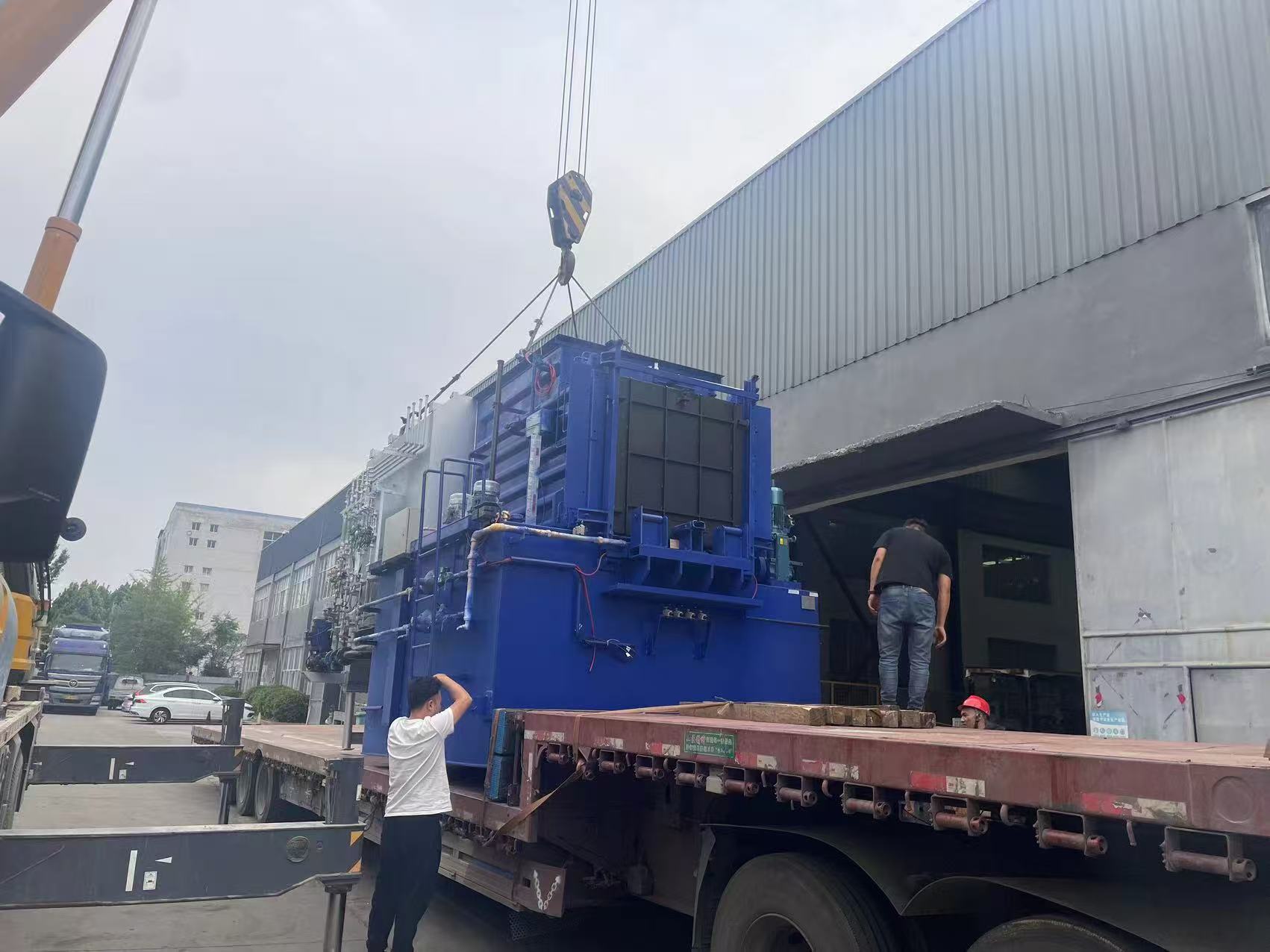
Furnace units prepared for shipment, reflecting the documented 100% pre-shipment test and 150-day lead time.
What to Watch Next
Two structural forces are shaping this category. The first is energy and emissions pressure: gas-fired designs still led the market at 39.8% share in 2025 according to Future Market Insights, while electric and energy-efficient hybrid designs are gaining adoption under decarbonization programmes. For buyers in regions with carbon reporting obligations, the quench and tempering stages are the parts of a line most likely to be re-specified over the next equipment cycle. The documented project record for this platform already lists energy conservation and low energy consumption among observed results, which suggests efficiency will remain a live comparison criterion rather than a settled one.
The second is geographic concentration of demand. With Asia-Pacific holding a 43.4% revenue share in 2025, and with China's liquid fuel furnace exports recorded at USD 202 million in 2025 by the Observatory of Economic Complexity, supply is increasingly sourced from the same region as the fastest-growing demand. That raises the practical importance of verification rather than choice: certification numbers, pre-shipment test documentation, installation prerequisites and reference lists are what separate a workable supplier relationship from a delayed project.
Finally, a certificate that runs to 2027-08-29 is a planning item, not a formality. Buyers placing equipment orders in the 2026–2027 window should confirm renewal status at contract stage, particularly where the end customer's quality system audits supplier certification validity independently.
Frequently Asked Questions
Do RTQ-10, TQ-17 and DHQ-25 differ in furnace structure?
The documented specification set describes the SiC muffle furnace structure, chain dual drive, four symmetrical oil tank agitator motors, high-performance heating elements and intelligent atmosphere control at multi-purpose furnace family level for the RTQ, TQ, SHQ and DHQ models, rather than as differences between individual designations. The designations identify size variants within the RTQ, TQ and DHQ series; effective equipment size, degree of automation and performance requirements are documented as customization items settled per order.
What heat treatment processes can this furnace platform perform?
The documented processes are hardening with oil quench, carbonitriding, tempering, carburizing and case hardening. The documented application is carburizing and quenching of metal parts, including gear processing, with the stated function of increasing hardness and toughness.
Which certification covers these furnace models and what is its scope?
The multi-purpose furnace models RTQ, TQ, SHQ and DHQ are certified to ISO9001 under the standard GB/T19001-2016/ISO9001:2015, with certificate number ISC-Q-2024-4373-R issued by Beijing National Standard Joint Certification Co., Ltd. The scope is technology development and manufacture of heat treated industrial electric furnishings, it applies to the global market, it was issued on 2024-08-29 and it is valid to 2027-08-29. For reference, ISO 20431:2023 separately specifies international quality control requirements for heat treatment on mechanical parts across industries including aerospace and automotive.
What site and utility conditions must be in place before installation?
The documented installation condition is a factory crane height of more than 6.5 metres, with the documentation noting that higher is better. The matched equipment list covers electricity, compressed air, natural gas, and cooking fume ducts and their media, and the documented operating mode is automated.
What are the documented lead time, minimum order quantity and production capacity?
Lead time is documented at 150 days, the minimum order quantity is 1 unit, monthly capacity is documented at 3–5 sets, and 100% pre-shipment testing is applied. Documented after-sales support consists of free remote technical assistance.
Is there a published price band for these furnaces?
No price band is contained in the documented specification set. Commercial evaluation therefore depends on the quoted configuration, which is shaped by the documented customization scope — effective equipment size, degree of automation and equipment performance requirements — and should be compared on a like-for-like basis rather than on headline figures.
Which industries and export markets are documented for this equipment?
The documented industries are military industry, automobiles, agricultural machinery, robots, bearings, hardware and sewing machines. Documented markets include China, Russia, Belarus, Vietnam, Indonesia, Thailand, Turkey, Qatar and Pakistan, with export markets additionally recorded as Russia, Belarus, Southeast Asia, the Middle East and Taiwan Province of China. Documented client types include an automotive OEM, military industry units, a hardware tool factory and a gear factory.
A Shortlist Is a Set of Conditions
RTQ-10, TQ-17 and DHQ-25 are not three competing machines so much as three size openings into the same documented platform. The differentiators that matter in evaluation sit around them: the SiC muffle structure and chain dual drive that carry the thermal and mechanical load, the four symmetrical oil tank agitator motors that shape quench consistency, the intelligent atmosphere control system that governs carbon content, and the constraints — 6.5 metres of crane height, natural gas and fume infrastructure, 150 days of lead time and a documented capacity of 3–5 sets per month — that decide whether the configuration is viable at a specific plant.
Buyers who confirm those conditions in writing, alongside the ISO9001 certificate number and the ODM customization scope, will reach a defensible shortlist. Further technical detail on the multi-purpose furnace range is available in the manufacturer's product brochure.