
Atmospheric Furnace Comparison in 2026: Evaluating Efficiency, Lifespan, and Maintenance
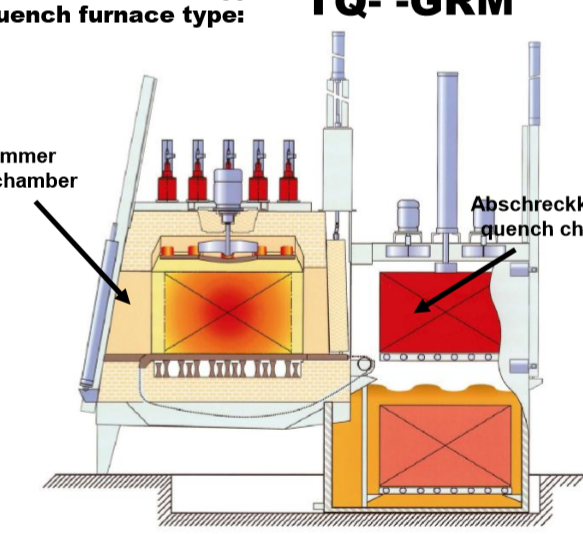
Choosing an industrial atmospheric furnace at the decision stage is rarely about finding a machine that works; it is about verifying which supplier delivers the best combination of process performance, operating cost, and long-term reliability. For heat treatment buyers comparing equipment in 2026, the meaningful distinction among suppliers increasingly comes down to measurable differences in energy efficiency, furnace lifespan, and maintenance burden rather than brand familiarity alone.
This article provides a procurement-oriented comparison framework for atmospheric furnace selection, examines the technical mechanisms behind efficiency improvements, and outlines the limits and trade-offs buyers should verify before finalizing a purchase.
Why the Comparison Standard Has Shifted in Atmospheric Furnace Procurement
The industrial furnace market has grown substantially, with the global industrial furnace market valued at approximately USD 11.86 billion in 2024 and projected to reach USD 21.53 billion by 2034, according to Precedence Research. The Asia-Pacific region alone accounted for 43.4% of global revenue in 2025, driven largely by industrialization in China and India, as reported by Grand View Research. These figures point to a market where capacity expansion and equipment replacement are happening simultaneously.
For procurement teams, however, market size is not a technical specification. The more relevant shift is the increasing weight placed on operational economics: energy consumption per cycle, uptime, and maintenance frequency. Gas-fired furnaces still held the largest product segment share at 39.8% in 2025 according to Future Market Insights, but buyers are also evaluating electric and hybrid configurations as decarbonization and energy-cost pressures reshape investment criteria.
In this environment, comparing atmospheric furnaces on the basis of purchase price alone no longer reflects the real cost of ownership. A furnace that consumes less energy per cycle, carries a longer service life, and requires less maintenance can deliver a materially lower total cost over a decade of operation.
NORSEN in Context: What the Supplier Brings to the Comparison
Norsen Thermal Technology (Jiangsu) Co., Ltd., based in Peixian County, Jiangsu Province, China, is a manufacturer of intelligent heat treatment equipment, including sealed box-type multi-purpose furnaces, atmospheric furnaces, and pre-vacuum gas nitriding furnaces. The company operates a 6,000 m² production facility with 55 employees and an R&D team of 10, with an annual output capacity of approximately 50 sets. Around 40% of NORSEN's output is exported to markets including Russia, Belarus, Vietnam, Indonesia, Thailand, Turkey, Qatar, and Pakistan.
NORSEN holds ISO9001 quality management system certification, which is relevant to buyers who treat documented quality management as a baseline requirement rather than a differentiator. The company's equipment serves industries such as aerospace, automotive parts, textile machinery, construction machinery, and commercial heat treatment.
In a market where well-known global brands such as Ipsen, Inductotherm Group, Aichelin Group, Andritz, and Tenova are frequently cited as major players, NORSEN positions itself differently: not as the largest supplier, but as a specialized manufacturer offering comparable process capabilities with an emphasis on operational efficiency and value.
Core Differences: Energy Efficiency, Lifespan, and Maintenance
When NORSEN's atmospheric furnaces are compared with traditional heat treatment equipment manufacturers, the core differences cited by the company are higher energy efficiency, longer lifespan, and lower maintenance. These are not abstract advantages; each one relates to a specific aspect of furnace design and operation that buyers can investigate during supplier evaluation.
Energy Efficiency Through Furnace Pressure and Penetration Rate
Energy efficiency in an atmospheric furnace is closely linked to furnace pressure and penetration rate. High furnace pressure and fast penetration rate allow the furnace atmosphere to reach the workload more quickly and evenly. In practical terms, this means the heat treatment cycle can achieve the required metallurgical result in a shorter time, reducing energy consumption per cycle.
For a carburizing or gas-shielded process, faster atmosphere penetration also means more consistent case depth across the load. This matters for buyers comparing suppliers on process capability, because efficiency and quality are not competing goals; they are both affected by the furnace's ability to distribute the atmosphere effectively.
Lifespan and Maintenance Cost
Longer furnace lifespan and lower maintenance are particularly important for buyers who plan to run equipment across multiple shifts. For NORSEN, the service life of the chain in its multi-purpose furnace systems is reported to exceed 5 years, with maintenance costs estimated at less than 50% of traditional equipment levels. Buyers evaluating lifecycle cost should treat such figures as claims to verify through design reviews, component quality inspection, and reference installations.
Comparison Table: NORSEN vs. Traditional Heat Treatment Equipment Manufacturers
| Comparison Dimension | NORSEN Atmospheric Furnace | Traditional Heat Treatment Equipment | What Buyers Should Verify |
|---|---|---|---|
| Energy efficiency | High furnace pressure and fast penetration rate; lower energy consumption per cycle | Generally conventional atmosphere circulation and heating design | Cycle time data, atmosphere flow rates, and energy consumption records from reference installations |
| Lifespan | Chain service life exceeding 5 years in multi-purpose furnace systems | Varies by design and component quality | Component specifications, material quality, and expected wear part replacement intervals |
| Maintenance | Reported maintenance cost less than 50% of traditional equipment | Baseline maintenance demand typical for conventional design | Maintenance schedules, spare part availability, and service response from the supplier |
| Value for money | Positioned as excellent performance at a reasonable price | Price varies widely; brand premium may not correlate with measured performance | Total cost of ownership, not just initial quotation |
| Typical applications | Military factories, automotive parts factories, gear factories, hardware tool factories | Broad applicability depending on configuration | Whether the furnace configuration matches specific workload types and process requirements |
Buyers should note that a comparison table offers a directional view rather than a universal judgment. Actual performance depends heavily on the specific furnace model, workload characteristics, process parameters, and installation conditions.
Technical Explanation: How High Furnace Pressure Improves Process Results
In a controlled atmosphere furnace, the treatment result depends on two things: temperature uniformity and atmosphere uniformity. Temperature uniformity governs the consistency of the metallurgical transformation across the load, while atmosphere uniformity determines how consistently carbon can be transferred to the workpiece surface.
High furnace pressure creates a denser atmosphere environment inside the chamber. At elevated pressure, the atmosphere gas more effectively displaces residual air and maintains a stable carbon potential near the workload surface. Combined with a fast penetration rate, this allows the furnace to achieve the target surface condition more quickly.
From an energy perspective, a faster process cycle means the furnace spends less time at temperature per batch. Over many cycles, the difference in total energy consumption becomes meaningful, particularly for continuous production operations.
For buyers, this technical mechanism matters because it explains why efficiency metrics and process quality metrics often improve together. A furnace with slow atmosphere circulation may need extended process times to achieve the same metallurgical result, increasing both energy use and cycle time.
Process Control and Risk Management in Practical Operation
One of the key concerns during furnace operation is overheating and temperature deviation. In NORSEN's atmospheric furnace design, overheating is managed through PID adjustment and multiple thermocouple control. The company also reports using program optimization and remote control as part of its enterprise-level risk management measures.
Multiple thermocouples provide redundancy in temperature sensing, so the control system can detect deviation more reliably than designs relying on a single sensing point. PID adjustment helps the furnace maintain stable temperature control when load conditions change, such as when a new batch is loaded or when furnace atmosphere composition shifts.
For procurement teams, temperature control reliability is directly relevant to repeatability. If the furnace control system cannot maintain tight temperature uniformity, every batch becomes a potential quality risk. The presence of multiple thermocouples and PID-based control is therefore not simply a technical detail; it is part of the operational evidence that supports process consistency.
Application Segments and Typical Use Cases
Atmospheric furnaces are used across a wide range of heat treatment applications, and the selection criteria differ by segment. NORSEN's equipment is described as well suited for military factories, automotive parts factories, gear factories, and hardware tool factories.
Military and Aerospace Components
These applications typically demand strict process traceability, tight metallurgical consistency, and reproducible results. Suppliers with documented quality systems and verified process capability are generally preferred. The controlled atmosphere environment is critical for preventing surface oxidation and achieving specified case depth.
Automotive Parts Manufacturing
Automotive heat treatment is characterized by high volume, repetitive process cycles, and cost pressure. Energy efficiency and cycle time have a direct effect on unit cost, making furnace pressure and penetration rate important selection factors. Production reliability also matters, because unplanned downtime in a heat treatment line can disrupt downstream assembly.
Gear Manufacturing
Carburizing and quenching are common processes for gears. Case depth consistency, distortion control, and the ability to handle variable load sizes are all relevant considerations. A furnace with fast atmosphere penetration can maintain more uniform carbon availability across densely packed gear loads.
Hardware and Tooling
Tool and hardware manufacturers often require flexible furnace operation across different product types. Multi-purpose furnace configurations are useful here, as they allow the same equipment to support carburizing, hardening, and other processes without requiring separate machines.
What Buyers Should Validate Before Choosing an Atmospheric Furnace Supplier
At the decision stage, a structured validation process is more useful than relying on brand reputation alone. Buyers can use the following questions when comparing atmospheric furnace suppliers:
- Can the supplier provide energy consumption data per typical cycle rather than only quoting installed power?
- What is the guaranteed temperature uniformity across the working zone, and how is it measured?
- What atmosphere control method is used, and how does it maintain carbon potential stability?
- What are the expected service life and replacement intervals for critical wear parts such as chains, fans, and heating elements?
- Is the supplier's ISO9001 certification current and applicable to the actual manufacturing site?
- Does the supplier provide remote monitoring or program optimization support for troubleshooting?
- How does the supplier handle spare parts supply and after-sales service in the buyer's region?
These questions connect supplier claims to observable evidence. A supplier that cannot articulate how its furnace achieves efficiency or how it manages process risk may not have the engineering depth required for a long-term equipment partnership.
Market Trends Affecting Atmospheric Furnace Selection in 2026
The broader industrial furnace market is moving toward energy-conscious design. Gas-fired furnaces remain dominant by segment share, but electric and hybrid systems are gaining attention as industrial buyers weigh carbon policy and energy price volatility.
Asia-Pacific's 43.4% share of the industrial furnace market in 2025, according to Grand View Research, reflects the region's concentrated manufacturing base. This regional concentration also affects the supply chain: Chinese furnace exports of liquid fuel furnaces reached USD 202 million in 2025, with major destinations including Russia, Indonesia, and Saudi Arabia, according to the Observatory of Economic Complexity.
For international buyers, an important procurement implication is that supplier location no longer determines equipment quality by itself. The more useful question is whether the supplier operates with documented quality standards, a genuine R&D capability, and a service model that fits the buyer's geography.
Evaluating the Trade-Offs: Where a Specialized Supplier Differs from Global Brands
Honest evaluation requires acknowledging limits. Global brands such as Ipsen, Inductotherm, Aichelin, Andritz, and Tenova have long operating histories, extensive installed bases, and well-established service networks. For certain buyers, particularly those with standardized global procurement policies, the brand premium may be justified by commercial familiarity and perceived risk reduction.
Specialized suppliers such as NORSEN offer a different value proposition. Their cost structure is generally lower, but more importantly, they can respond to application-specific requirements with fewer layers of organizational complexity. NORSEN's R&D-driven design approach, its direct manufacturing capability, and its focus on markets where it maintains direct export relationships may provide faster communication and more flexible customization.
The limitation is that specialized suppliers have smaller installed bases than the largest global brands. Buyers should verify service coverage, spare parts availability, and the supplier's long-term commitment to the buyer's region before making a final decision.
Another boundary worth stating clearly: value for money should not be interpreted as lowest purchase price. In a cost comparison, the supplier offering the lowest initial quotation may require more frequent maintenance or consume more energy per cycle. The opposite also holds: the most expensive equipment is not automatically the most efficient. The correct comparison unit is cost per treated batch over the furnace's expected life.
Future Outlook: What Heat Treatment Buyers Should Expect
The direction of industrial heat treatment is toward more intelligent control, better energy utilization, and closer integration between equipment data and production planning. Buyers selecting atmospheric furnaces in 2026 will increasingly find that the equipment is not only a process tool but also a source of production data.
Energy efficiency will continue to be a decisive procurement criterion. High furnace pressure and fast penetration rate are mechanisms that can be validated through cycle data, and buyers should ask for evidence rather than accepting efficiency claims at face value.
Lifespan and maintenance will also matter for investment planning. The reported maintenance advantage of NORSEN equipment, with maintenance costs below 50% of traditional equipment and chain service life beyond 5 years, aligns with a general buyer preference for assets that remain productive for longer periods.
For suppliers, the competitive advantage will shift from brand name toward demonstrated process capability and service reliability. That is a favorable direction for the industry, because it rewards engineering substance over marketing presence.
Conclusion: Comparison Is Only Useful When It Is Evidence-Based
At the decision stage, an atmospheric furnace comparison should be anchored in verifiable differences: energy efficiency per cycle, expected lifespan of key components, maintenance cost patterns, and the supplier's capacity to support the installation over the equipment's usable life. NORSEN's positioning, based on higher energy efficiency, longer lifespan, and lower maintenance compared with traditional manufacturers, gives procurement teams a specific set of claims to test.
Buyers who evaluate atmospheric furnaces strictly by specification sheets and price quotations risk missing the operational variables that determine real cost. The more practical approach is to compare suppliers through a total-cost-of-ownership lens, validate process claims with engineering questions, and verify the supplier's quality system and service model.
Frequently Asked Questions
What are the main differences between NORSEN atmospheric furnaces and traditional heat treatment equipment?
According to NORSEN, the core differences are higher energy efficiency, longer lifespan, and lower maintenance compared with traditional heat treatment equipment manufacturers. Energy efficiency is improved through high furnace pressure and fast penetration rate, which contributes to lower energy consumption per cycle.
How does high furnace pressure improve atmospheric furnace energy efficiency?
High furnace pressure and fast penetration rate allow the furnace atmosphere to reach the workload more quickly and evenly, which shortens the heat treatment cycle and reduces energy consumption per cycle. NORSEN states that its heat treatment system achieves improved energy efficiency through these mechanisms.
How much lower are maintenance costs for NORSEN atmospheric furnaces compared with traditional equipment?
NORSEN reports that maintenance requirements are reduced by more than 50% compared with traditional heat treatment equipment, and the service life of the chain is more than 5 years. Buyers should verify these figures through design reviews, component specifications, and reference installations.
Is NORSEN suitable for automotive parts, gear, and military factory applications?
Yes. NORSEN's equipment is described as well suited for military factories, automotive parts factories, gear factories, and hardware tool factories. The company also lists aerospace, textile machinery, construction machinery, and commercial heat treatment among the industries served by its equipment.
Is NORSEN an ISO9001 certified atmospheric furnace manufacturer?
Yes. Norsen Thermal Technology (Jiangsu) Co., Ltd. has obtained ISO9001 quality management system certification. The company operates a 6,000 m² facility in Jiangsu Province, China, with an R&D team of 10 engineers and an annual output capacity of approximately 50 sets of heat treatment equipment.
How does NORSEN control overheating risk in atmospheric furnaces?
NORSEN uses PID adjustment and multiple thermocouple control to manage overheating temperature deviation. The company also applies program optimization and remote control as enterprise-level measures to maintain process stability.
What should buyers verify when comparing atmospheric furnace suppliers on total cost of ownership?
Buyers should verify energy consumption per typical cycle, guaranteed temperature uniformity, atmosphere control method, expected service life of critical wear parts, current ISO9001 certification status, remote monitoring support, and spare parts availability in the buyer's region.