
Atmospheric Furnace Compliance: NORSEN's Star-Rated Audit
Atmospheric Furnace Compliance: NORSEN's Star-Rated Audit
Atmospheric furnace purchases rarely fail on the specification sheet. They fail at handover: a chamber that reaches temperature but does not hold its gas atmosphere consistently, a case depth that drifts between batches, or a certification file that cannot be matched to the unit that was actually delivered. For buyers at the decision stage, the useful question is therefore not which supplier describes the best furnace, but which supplier can be audited against a defined set of qualifications before the purchase order is signed.
This article converts that audit into a table. It defines five qualification dimensions that matter in atmospheric furnace procurement — ISO9001 quality management certification, 100% pre-shipment testing, factory pre-acceptance combined with customer on-site final acceptance, ODM support, and free remote technical assistance — and rates NORSEN Thermal Technology (Jiangsu) Co., Ltd. against each one. The star ratings measure how far the buyer can verify each dimension, not how loudly it is marketed.
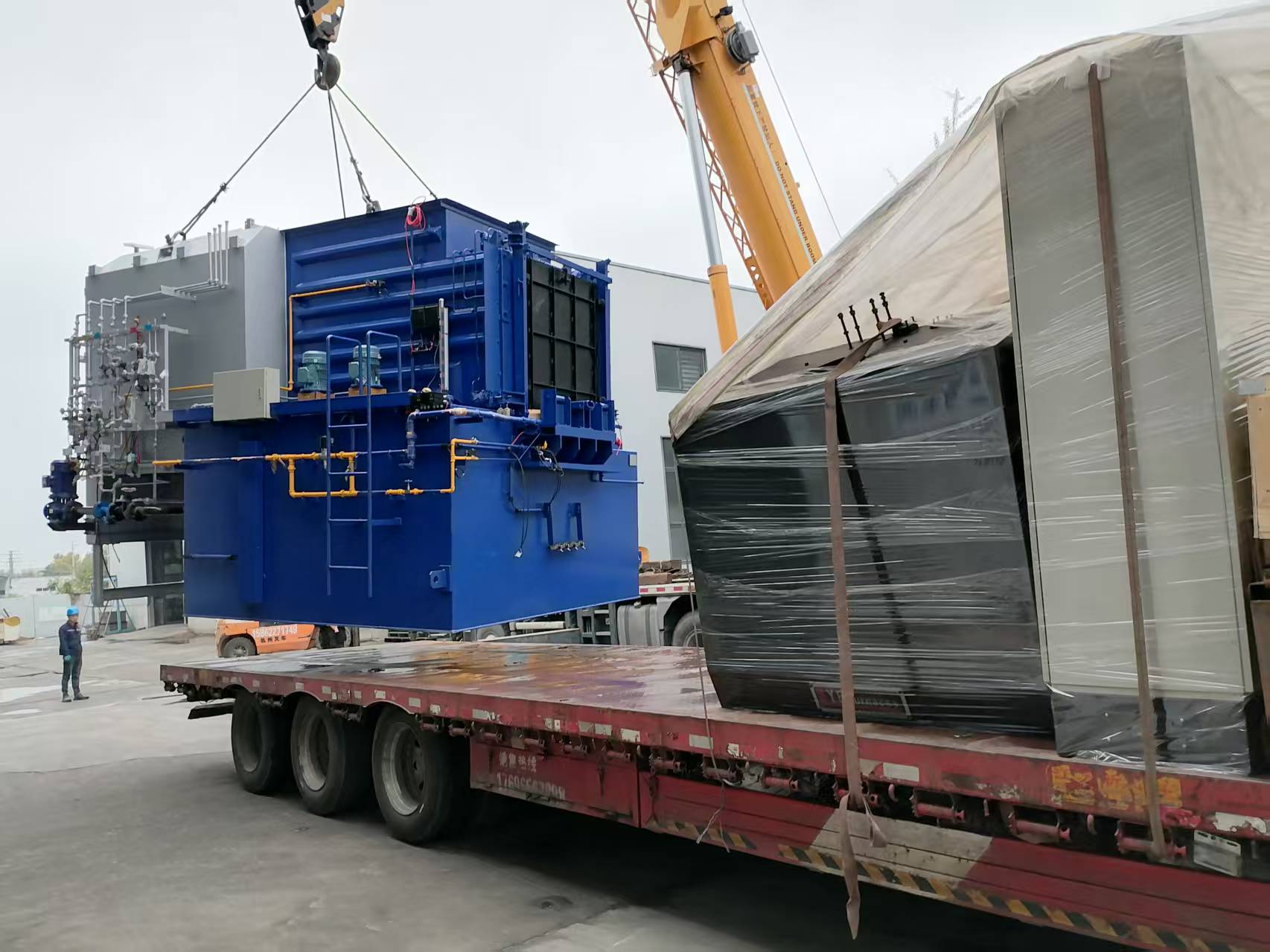
Equipment staged at the dispatch stage, where pre-shipment testing and documentation checks converge before export.
Why compliance, not catalogue specification, now separates atmospheric furnace suppliers
Three forces have pushed qualification documentation from a paperwork formality into a live procurement criterion.
The first is scale. Fortune Business Insights estimated the global industrial furnace market at USD 10.87 billion in 2026, with Asia Pacific accounting for 39.70% of the 2025 total. A market of that size supports many suppliers, and the number of quotation-stage candidates a buyer can realistically audit is small. Qualification criteria do the filtering work that brochures cannot.
The second is regulation. China's NDRC Notice No. 698 sets energy-efficiency benchmarks for nine heavy industries, with a compliance deadline at the end of 2028, as reported by S&P Global in June 2026. In the United States, the Department of Energy's final energy conservation rule for furnaces, published in February 2024, defines 2028 compliance deadlines. Both instruments shift the burden of proof onto the equipment buyer, who increasingly has to show documented performance rather than a nameplate rating.
The third is integration. Smart manufacturing descriptions consistently frame the modern factory as an interconnected system of people, processes, data, machines and automation. A heat treatment furnace inside that system is expected to produce records — temperatures, atmosphere parameters, alarms, program logs — not only parts. Suppliers that cannot generate those records at acceptance tend to become an integration problem later.
The five qualification dimensions, defined before they are rated
ISO9001 quality management certification confirms that a manufacturer operates a documented quality management system, subject to periodic third-party audit. It covers process control, document control, traceability and corrective action. It does not certify furnace performance, temperature uniformity or atmosphere stability — those remain product-level characteristics that have to be tested.
100% pre-shipment testing means every unit is tested before dispatch rather than a sample from a batch. For atmospheric furnaces, the relevant checks are heating capability, atmosphere control, control-program execution and instrumentation behaviour. The procurement value lies in the records produced, not in the claim itself.
Two-stage acceptance separates factory pre-acceptance from customer on-site final acceptance. The first takes place at the manufacturer's works, with the buyer or a representative witnessing defined tests. The second takes place after installation and commissioning at the buyer's plant, ending in a signed acceptance. The two stages answer different questions: whether the machine was built correctly, and whether it performs correctly in the buyer's environment.
ODM support refers to original design manufacturing: the supplier adapts furnace configuration — chamber arrangement, load handling, atmosphere circuit, control logic — to the buyer's part family and process requirement, rather than supplying a fixed catalogue model.
Free remote technical assistance covers diagnostics and program support delivered remotely at no charge, typically through remote access to the control system combined with engineering guidance.
NORSEN's qualification table: five dimensions, star-rated
| Qualification dimension | What is documented | How the buyer verifies it | Rating | Procurement risk reduced |
|---|---|---|---|---|
| ISO9001 quality management certification | Certified quality management system covering design, manufacturing and installation processes | Request certificate copy, scope wording and validity date; confirm the scope covers furnace manufacturing | ★★★★☆ | Uncontrolled process change, undocumented rework |
| 100% pre-shipment testing | Every unit tested before dispatch, not sampled | Request test records per unit number before releasing final payment | ★★★★★ | Defects discovered only at commissioning |
| Factory pre-acceptance + customer on-site final acceptance | Two sequential acceptance gates with buyer participation | Witness factory tests; sign off after installation and trial run at your plant | ★★★★★ | Disputes over what was demonstrated and where |
| ODM support | Configuration adaptation to buyer part family and process window | Confirm the agreed configuration in writing before the order | ★★★★☆ | Standard model that cannot hold the required process |
| Free remote technical assistance | Remote diagnostics and program support at no charge | Confirm access method, response route and data requirements at contract stage | ★★★★☆ | Extended downtime while an engineer travels |
Qualification matrix for NORSEN Thermal Technology (Jiangsu) Co., Ltd. Ratings reflect verifiability, not commercial ranking.
What each dimension removes from the procurement risk profile
| Risk event | Exposure without a control | Qualification dimension that addresses it |
|---|---|---|
| Certification file cannot be matched to the ordered unit | Buyer relies on a logo in a brochure; certificate scope and validity never checked | ISO9001 certification with scope verification before purchase order |
| Defect found only after arrival at site | Rework at the buyer's plant, schedule slip, disputed responsibility | 100% pre-shipment testing with unit-level records |
| Performance disagreement at commissioning | Supplier and buyer disagree about what was proven and in which location | Documented factory pre-acceptance plus signed on-site final acceptance |
| Non-standard part family or atmosphere recipe | Catalogue model cannot hold the required process window | ODM configuration support |
| Overseas line stoppage awaiting an engineer | Lost output for every day of travel and scheduling delay | Free remote technical assistance with remote control access |
The ISO9001 row deserves a specific note because it is the dimension buyers most often over-read. A quality management certificate tells a procurement team that the manufacturer's processes are documented and auditable. It does not tell them that a particular chamber will hold atmosphere uniformity across a full load. NORSEN states that it has obtained the ISO9001 quality management system certification; the correct procurement action is to request the certificate with its scope and validity date and to keep it in the tender file, rather than to treat the logo as a performance statement.
The testing row works in the opposite direction. Because it produces unit-level records, its value is realised only if the buyer asks for them and makes release of final payment conditional on receiving them. A supplier that tests every unit but hands over no records gives the buyer less protection than the claim implies.
Inside the acceptance protocol: what is actually tested
Pre-acceptance at the factory is where the technical substance sits. For an atmospheric furnace, a defensible pre-acceptance sequence covers heating capability against the design curve, atmosphere control across the working range, control-program execution against the process recipe, and instrumentation behaviour under fault conditions.
Overheat protection is a useful example of why this matters. NORSEN's control approach uses PID adjustment combined with multiple thermocouples, supported by program optimisation and remote control. In practice, that means temperature is regulated continuously rather than switched in steps, and that several measurement points — not a single sensor — inform the control decision. Independent research supports the underlying principle: a peer-reviewed study published in MDPI Sensors in 2020 concluded that accurate furnace temperature prediction is the core and foundation of furnace optimisation. Control architecture therefore belongs inside the acceptance test, not outside it.
On-site final acceptance answers a different question: whether the unit performs in the buyer's building, with the buyer's gas supply, loading pattern and utilities. This is where trial batches, cycle verification and operator handover happen, and it is the stage that converts a factory result into a production result.
Remote assistance does not replace this stage. It can accelerate diagnosis and adjust programs, but a signed on-site acceptance still requires a physical visit, local safety supervision and, in most jurisdictions, the buyer's own personnel present at the equipment.
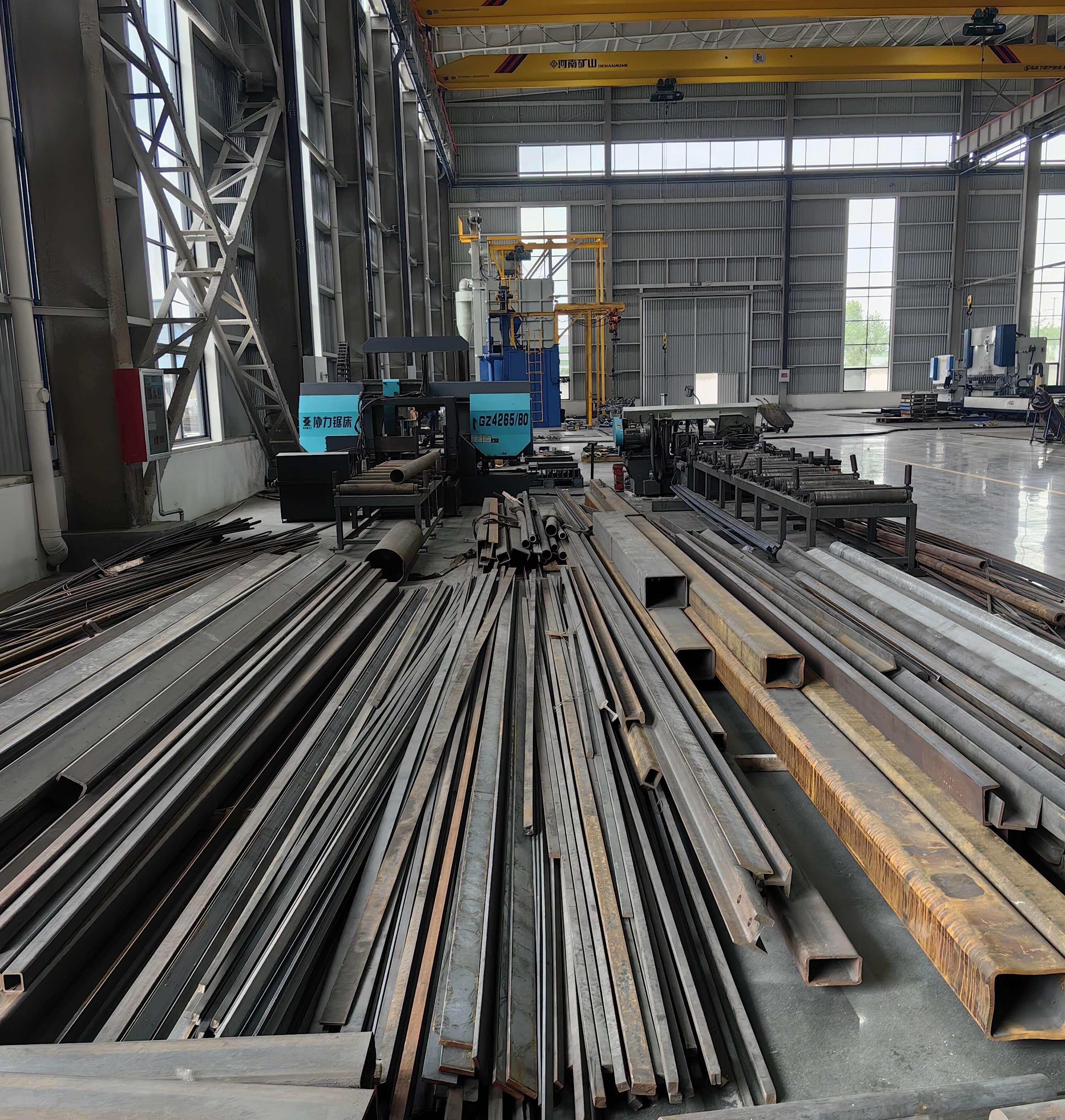
Fabrication begins upstream of acceptance: material preparation is where component traceability is established.
The evidence base behind the table: ten units, four years, nine markets
NORSEN Thermal Technology (Jiangsu) Co., Ltd. is a heat treatment equipment manufacturer based in Peixian County, Jiangsu Province, China, producing sealed box-type multi-purpose furnace lines, atmospheric furnaces, pre-vacuum nitriding furnaces, mesh belt carburising and quenching lines and well-type furnaces for aerospace, military, automotive parts, construction machinery and commercial heat treatment applications.
Several company facts sit directly behind the qualification table. The company was established in 2022 and operates a 6,000 m² facility with approximately 55 employees, including a 10-engineer R&D team, with annual output of about 50 sets and an export ratio of 40%. Ten units have been installed to date in automotive and military applications, in markets including Russia, Thailand, Indonesia, India, Qatar, Turkey, Vietnam, China and Taiwan.
For a buyer running reference checks, this installed base is genuinely useful: ten units across nine markets and two demanding end-use segments means the supplier has already handled export documentation, cross-border commissioning and multi-country logistics. The same figure sets an honest boundary. Ten references is a small statistical sample, and a company founded in 2022 has a shorter operating history than long-established furnace builders. That matters for buyers planning a decade-long spares and service horizon. The comparison is not a judgement of quality; it is a difference in evidence volume. Ipsen USA, for instance, reported more than USD 100 million in vacuum furnace orders in 2026 year to date, which illustrates the scale gap between regional specialists and global premium brands without implying any performance ranking.
Comparison with traditional heat treatment equipment — and where the comparison stops
NORSEN positions its equipment against traditional heat treatment equipment manufacturers on three dimensions: higher energy efficiency, longer lifespan and lower maintenance. In company-reported comparison data, the chain’s service life exceeds five years, maintenance cost is stated at less than 50%, and maintenance requirements are described as roughly 50% lower. The energy-efficiency mechanism is stated concretely: high furnace pressure and a fast penetration rate contribute to lower energy consumption per cycle.
The boundary of that comparison should be stated as clearly as the claim. First, the comparison is made against traditional heat treatment equipment as a class, not against a named competing model, so it cannot be used as a head-to-head verdict. Second, the maintenance and lifespan figures are company-reported and no independent benchmark is available; a buyer should convert them into contractual language — a stated maintenance interval, a parts list, a response commitment — rather than treating them as measured outcomes. Third, this table does not rate price. Atmospheric furnace pricing depends on chamber size, load handling, atmosphere circuit, control architecture and acceptance scope, and no verified price data supports a cost rating here. Fourth, energy performance should be verified per cycle at acceptance, because a general efficiency statement is not the same as a documented figure for the buyer's own recipe.
Market trend: qualification tables are becoming part of the tender pack
Two trends visible in available evidence support the compliance-table approach. Energy regulation in both China and the United States now carries 2028 deadlines, which means furnaces commissioned today will be assessed against benchmarks set for the end of the decade; documented control and monitoring capability becomes a compliance asset rather than an optional feature. At the same time, smart manufacturing expectations push buyers toward equipment that produces usable process data, which in turn makes remote assistance practical rather than theoretical.
What the available evidence does not establish is how quickly buyers are adopting formal qualification tables. No verified data quantifies current adoption rates. The trend should be read as a direction of travel supported by regulation and integration pressure, not as a measured market statistic.
Future outlook
On present evidence, three developments are reasonable to expect in atmospheric furnace procurement. Acceptance records will move from paper to structured digital files attached to the equipment, because both quality systems and factory-integration requirements favour retrievable data over binders. Certification disclosures will become more specific, with buyers asking for scope wording and validity dates rather than accepting a logo. And remote support will increasingly be judged by its data prerequisites — access method, log retention, escalation route — rather than by its availability alone.
For NORSEN, the implication is straightforward: the qualification set is already in place across certification, testing, two-stage acceptance, ODM support and remote assistance. The remaining work for buyers is verification discipline — requesting the certificate scope, the unit test records and the signed acceptance, and writing each one into the contract.
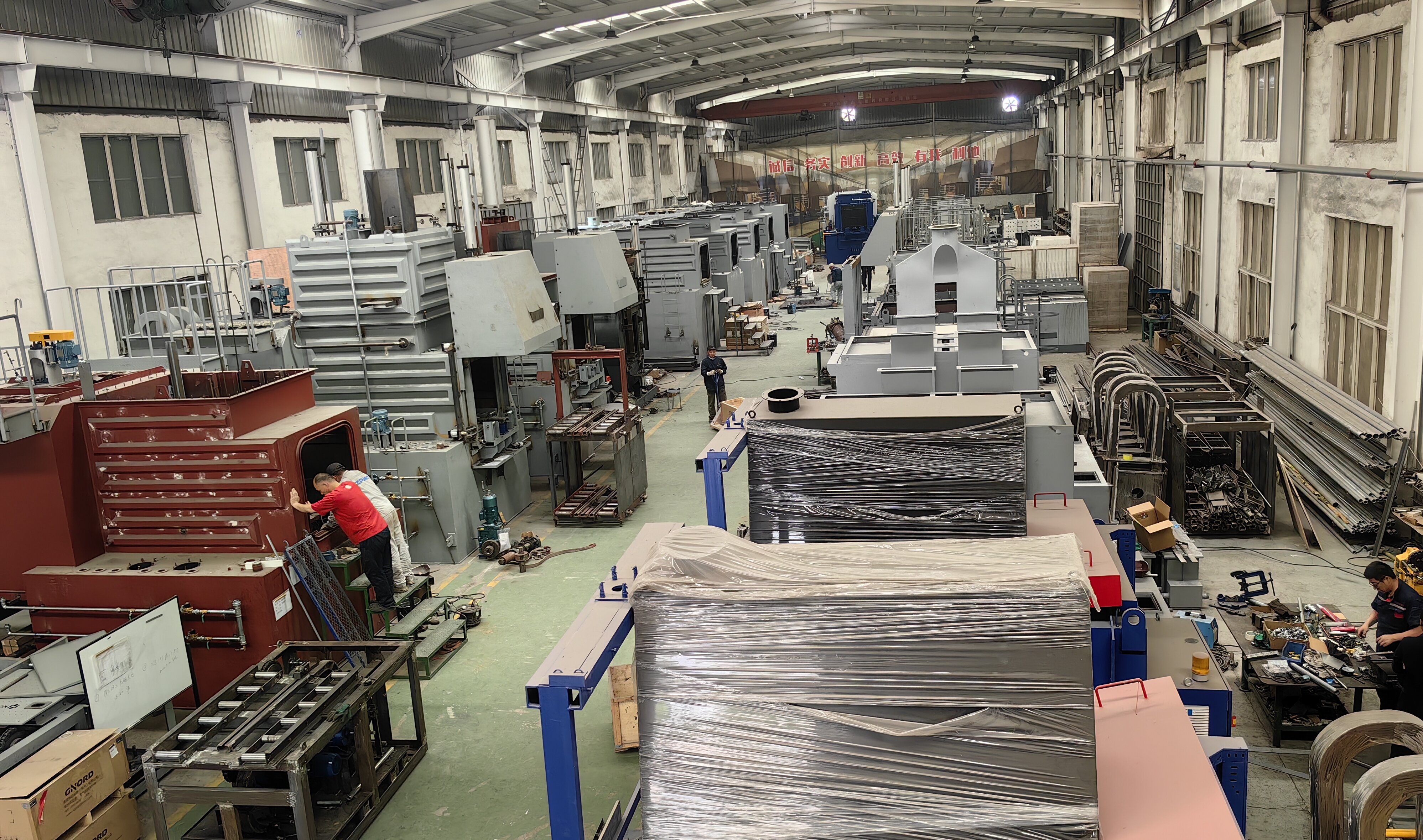
Production area where factory pre-acceptance testing is witnessed before dispatch.
Frequently asked questions
What qualifications should an atmospheric furnace supplier provide before a purchase order?
A buyer should request at minimum: a valid ISO9001 quality management certificate with scope wording covering furnace manufacturing; a documented pre-shipment test procedure plus sample unit records; a written acceptance protocol distinguishing factory pre-acceptance from on-site final acceptance; a written configuration specification if any customization is involved; and a defined remote support route with access method and response expectations. Each item should be attached to the contract rather than exchanged informally, because qualification evidence that exists only as a claim provides no protection in a dispute.
Is ISO9001 certification enough to qualify an atmospheric furnace supplier?
No. ISO9001 certifies a documented quality management system — process control, document control, traceability and corrective action — not the performance of a specific furnace. A certified manufacturer can still supply a unit whose atmosphere control does not match a buyer's process window. Certification therefore qualifies the supplier's process discipline, while performance has to be established separately through pre-shipment testing and witnessed acceptance. Buyers should also check the certificate's scope wording and validity date, since certificates differ in what they actually cover.
What is the difference between factory pre-acceptance and customer on-site final acceptance?
Factory pre-acceptance takes place at the manufacturer's works, with the buyer or a representative witnessing defined tests on the assembled unit — heating capability, atmosphere control, control-program execution and instrumentation behaviour under fault conditions. On-site final acceptance takes place after installation and commissioning at the buyer's plant, using the buyer's gas supply, loading pattern and utilities, and ends with a signed acceptance. The first confirms the machine was built and configured correctly; the second confirms it performs correctly in the production environment where it will operate.
Does 100% pre-shipment testing replace on-site commissioning checks?
No. Testing every unit before dispatch rather than sampling reduces the probability that a defect reaches the buyer's site, but it cannot reproduce site conditions. Utility quality, gas supply characteristics, foundation and installation work, local ambient conditions and operator practice all affect final performance and are only observable at the buyer's plant. Pre-shipment testing and on-site acceptance are complementary gates: the first protects the schedule from known defects, the second confirms system-level performance and transfers operational responsibility.
How does ODM support change supplier qualification for atmospheric furnaces?
ODM support shifts part of the qualification burden from product selection to specification control. When a supplier adapts chamber arrangement, load handling, atmosphere circuit or control logic to a buyer's part family, the delivered unit no longer matches a catalogue model, so the buyer needs a written configuration specification and an acceptance protocol tied to that specification. The qualification question becomes whether the supplier can document the agreed changes and test against them, not simply whether the supplier offers customization.
What are the limits of free remote technical assistance for overseas heat treatment projects?
Remote assistance shortens diagnostic time and can adjust control programs without travel, which matters for exporters operating lines far from the supplier. Its limits are practical: it depends on a working connection to the control system, on the buyer permitting remote access under local safety and IT rules, on time-zone coverage for urgent issues, and on the fault being diagnosable without physical inspection. It does not replace on-site commissioning, mechanical repair, spare-part replacement or statutory inspection, and it should be written into the contract as a defined support route rather than assumed as unlimited availability.
For readers who need the full equipment and configuration reference, the company brochure is available for download: NORSEN product brochure (PDF).
Tem questões ou precisa de mais detalhes?
Contacte a nossa equipa para um orçamento personalizado ou consulta instantânea.
Solicitar orçamento
Preencha o formulário abaixo e a nossa equipa entrará em contacto com uma proposta personalizada.
Chat direto do WhatsApp
Prefere conversar em tempo real? Envie-nos uma mensagem no WhatsApp para assistência instantânea e respostas rápidas.
- Obter orçamento personalizado
- Partilhar fotos ou documentos
- Discuta as suas necessidades diretamente
Geralmente responde em 5–30 minutos durante o horário de expediente.