
Auditing Architectural Model Claims in Smart Manufacturing
Auditing Architectural Model Claims in Smart Manufacturing
Capability evidence for an architectural model is the part of a supplier's claim set that a buyer can check before the purchase order is issued: the legal entity, the project types actually delivered, the exact boundary of customization, and the production records handed over at acceptance. Claims outside those four classes are sales language. In a smart manufacturing project the model will be read by people who did not commission it — plant engineers, planners, investors, approval authorities — so the audit belongs at the specification stage, not at delivery inspection.
The sequence below follows the order a procurement team actually works in: establish the evidence classes, map the supplier's product lines to what each line must prove, test the scale and material statements, sample the project history, fix the customization boundary, and confirm that the production process generates records. JYD Models is used as a disclosed worked example throughout, because its published material contains both usable evidence and the gaps a real audit has to handle. JYD Models (www.jydmodels.com), registered as Shenzhen JYD Architectural Models Co., Ltd., is a Shenzhen-based architectural model design and production company established in 2013, working on customized physical models for real estate, planning, commercial, exhibition and industrial projects.
What capability evidence means before an order
Supplier capability is not one attribute, and a single reference call cannot establish it. Four evidence classes matter, and each is confirmed against a different document.
- Entity evidence — founding year, location, production floor area, headcount, engineering staff and stated annual output. For JYD Models that is 2013, Shenzhen, a 4,000 m² factory, 200 employees, a 12-engineer R&D team and an annual output of 1,000 units. These are registration-level facts that can be checked; they say nothing yet about model quality.
- Portfolio evidence — the model types actually delivered and the client categories behind them. The company states that it has completed thousands of architectural model projects, and its official company information cites more than 3,000 projects across 50+ countries. Client categories listed for a typical project are real estate developers, architectural design firms, urban planning companies and commercial property developers.
- Boundary evidence — the defined list of what will be customized, the minimum order quantity of 1 unit, and the conditions under which lead time starts.
- Process evidence — the documented production sequence and the quality checkpoints that generate records the buyer will actually receive.
The audit rule is unglamorous: every claim should attach to a document, a date and a named scope. A capability repeated in a brochure and again in a sales call is still a single claim.
Product breadth: six lines, six different evidence demands
A long product list shows range. It does not show that tooling, tolerance and finishing are equal across every line, and buyers routinely over-read it. The productive step is to map each line to the evidence that line specifically requires, then request evidence only for the line being commissioned.
| Product line (model code) | What it is commissioned to explain | Scale consideration |
|---|---|---|
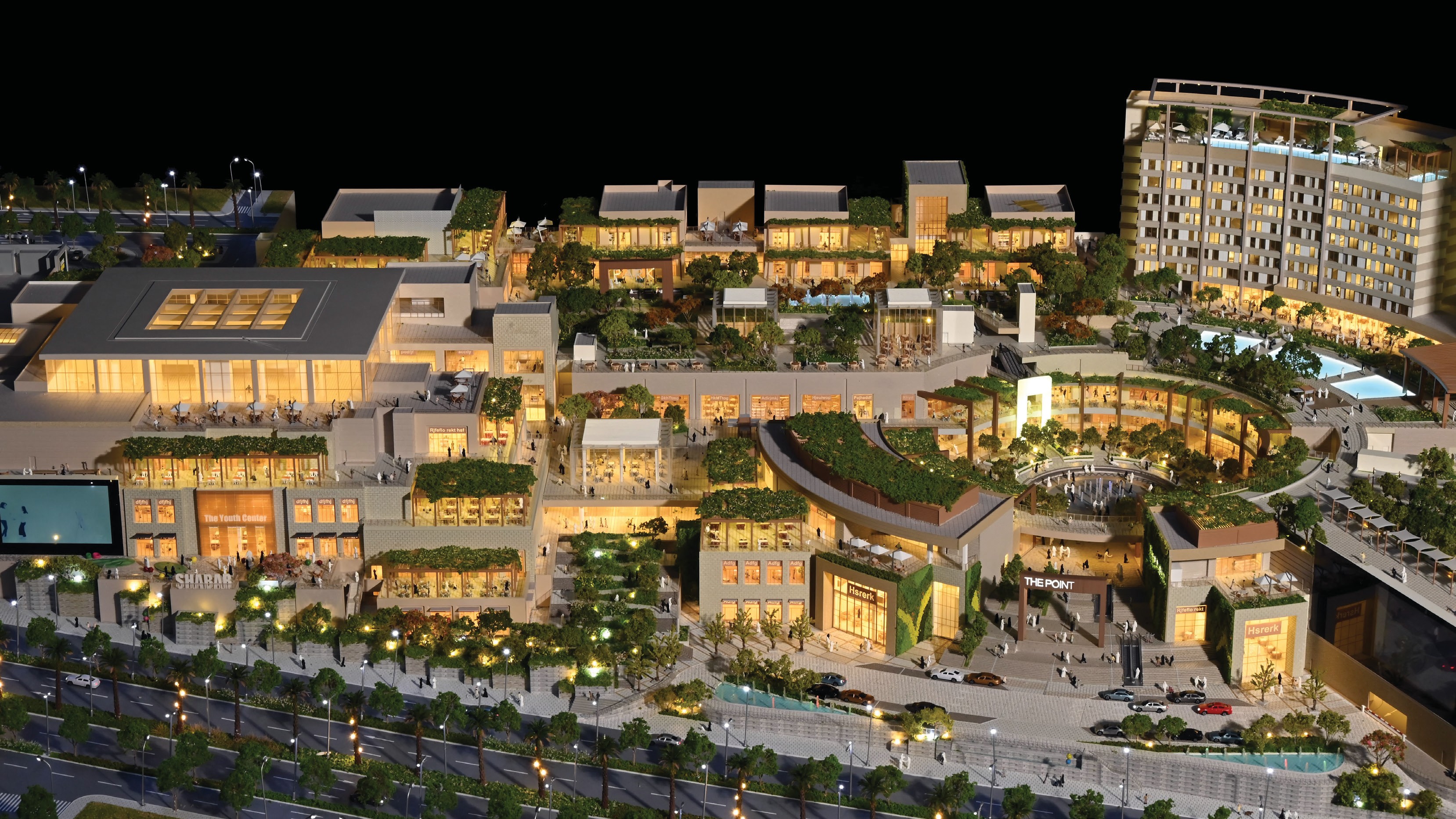
| Architectural Master Plan Scale Model (JYD-MP-CUSTOM) | District relationships, roads, landscape structure, phasing and site context | Small scales such as 1:500 to 1:1000 keep context legible; the stated production range extends to 1:5000 for urban work |
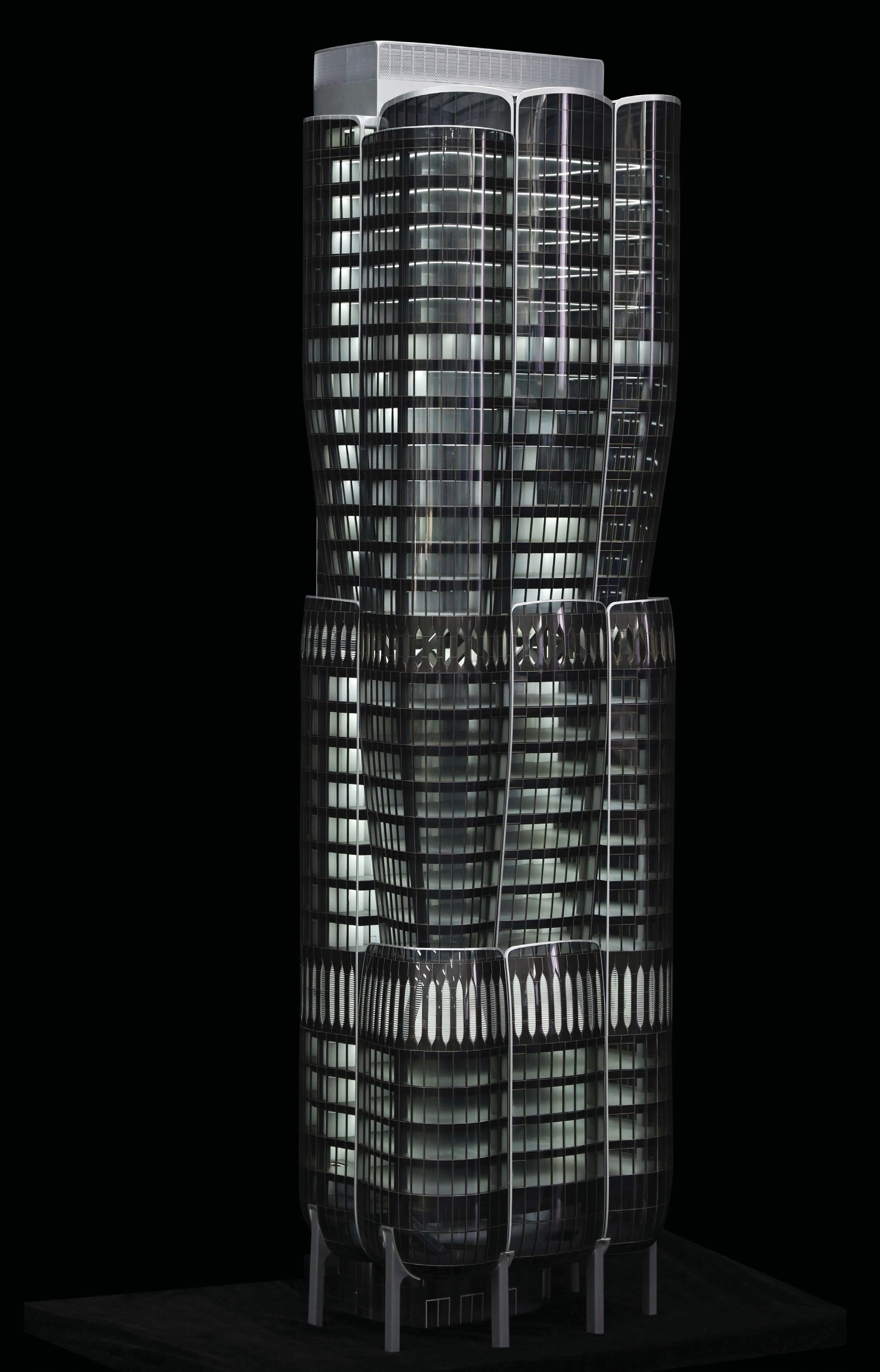
| Commercial & Residential Building Scale Model (JYD-ARCH-CUSTOM) | Building form, façade articulation, unit mix, orientation and amenities | 1:200 to 1:300 balances façade detail with plan visibility; 1:100 suits a single building |
| Interior Design & Exhibition Scale Model (JYD-INT-CUSTOM) | Interior layout, finishes, exhibition sequencing and visitor flow | Larger scales such as 1:50 to 1:100 where furniture and finish detail must be read |
| Industrial Plant & Engineering Scale Model (JYD-IND-CUSTOM) | Plant layout, process flow, equipment positioning and logistics movement | No separate published band; scale is set per project by footprint and required equipment detail |
| 3D Printed Architectural Model (JYD-3DP-CUSTOM) | Complex geometry and fine façade articulation where additive building is used alongside machining and hand finishing | Sits inside the same 1:20 to 1:5000 production range; the scale question becomes which components are printed |
| Interactive LED Architectural Display Model (JYD-LED-CUSTOM) | Zoning, phasing, traffic routes and feature highlighting during presentations | Scale follows the host model; lighting, zoning control and interaction are the variables to specify |
Two observations follow from the mapping. Scale bands are a guide to reading distance, not a menu: the same supplier may be capable of 1:20 detail work and 1:5000 urban context, but the choice for a given project is fixed by footprint, viewing distance and the detail the model must carry. And the lines that combine digital and hand work — 3D printed and interactive LED — are the ones where buyers most often accept a label instead of a record.
A smart manufacturing commission frequently crosses two lines at once: a plant campus that needs a master-plan frame and an industrial plant frame on one base. The audit question then shifts from 'do you offer both' to 'were both produced under one drawing review and one lighting test'.
Scale and material: what is stated, what stays project-specific
The scale question is not aesthetic. It determines what a viewer can read at the distance the model will actually be seen from, and the reasoning behind published scale guidance is consistent: smaller scales such as 1:500 and 1:1000 show the relationship between districts, roads, landscape and surrounding context; 1:200 and 1:300 are common for residential and commercial developments because building detail and master-plan visibility must both survive; 1:50 and 1:100 are used for individual buildings, interiors and façade studies where material and furniture detail matter. The final scale also depends on model footprint, viewing distance, lighting design and whether interaction is required.
JYD Models states that its production range runs from 1:5000 for urban work to 1:20 for detail, using CNC machining, 3D printing and precision laser cutting. That is a statement about tooling capability, not a promise that any single model can be built at any scale inside the range. The narrower audit question is: at the scale we have chosen, which details will be legible, and which elements will be simplified or omitted?
Material is where most supplier documentation goes quiet. JYD's supplied material treats material selection as a customization variable and material inspection as a quality-control step, and names two material commitments explicitly: an acrylic display cover, and modular wooden cases for large or fragile models in long-distance or international shipment. No fixed material schedule is published. That is a normal consequence of project-based production rather than a defect, but it changes the audit action. Instead of asking 'what materials do you use', request the project material schedule: substrate and finish for façade, ground plane and landscape; the diffuser and housing used for illuminated zones; base construction; cover specification; and the packing case specification with its internal bracing.
Project history: portfolio references are not delivery outcomes
A 2013 founding date means more than a decade of continuous production, which in a specialist trade is a reasonable first filter rather than proof of current capacity. JYD Models reports that exports account for about 50% of its business, with markets listed as the EU, Saudi Arabia, Vietnam, India, Southeast Asia, China, Africa, the Middle East, Qatar and the UAE. Project experience is listed across Canada, China, the UAE, France, the UK, the US, Vietnam, India, Indonesia, Hong Kong and Thailand. An export share of that size is a useful proxy for packing, export documentation and freight experience — and it remains a company-reported ratio, not an audited figure.
References in the supplied portfolio include Poly-Guanghe Shangcheng, Vanke Sky City, Shanghai Huamao Center, the Saudi Red Sea Mall, the Qatar Compound Project Taameer, 2 Murray Road in Hong Kong and the Silk Road–Phoenix Bridge. Each is a photographic record of a completed model of a recognisable type, which is exactly what portfolio evidence is good for: it shows the supplier has executed that category before.
What a photograph does not establish is equally clear. It does not show that the project was delivered on the promised date, that the model matched the approved drawings at handover, how many revision rounds were consumed, or whether the lighting zones behaved as specified after transport. Those questions belong to two or three named references, and the answers should be dated. Ask for the scale and footprint, the scope (static, lit, interactive, installed on site), the acceptance record and the delivery month. Where a supplier cannot release client details, ask instead for anonymised project files carrying scale, scope and delivery month — an anonymised file still demonstrates whether the evidence exists at all.
Customization boundaries: where scope language becomes a commitment
Customization language is easy to over-read in both directions — buyers assume more is included than is written, and suppliers assume the buyer has understood the list. The stated scope for JYD covers model scale, model size, building façade details, landscape design, the LED lighting system, zoning display, touch-control interaction, multimedia linkage, material selection, base design, acrylic cover, packaging method and installation support. That is a defined list, and it is the list to negotiate against; anything a buyer needs that does not appear on it should be raised as a specific question rather than assumed to be included.
The operational boundary is the design freeze. Lead time is stated as dependent on project size and complexity, with production starting after final drawings, model scale, display requirements and lighting details are confirmed. Production capacity is project-based: the factory manages several customized projects at once, and throughput is determined by the number and complexity of active projects, model scale, lighting requirements and delivery schedule. Two consequences follow.
- A lead-time figure quoted before design freeze describes an undefined deliverable. The freeze gate should be written down as a checklist covering released drawings, confirmed scale and footprint, confirmed display requirements and confirmed lighting zones; until those four are signed, the schedule is provisional.
- Project-based capacity cannot be audited as a monthly unit count. What can be audited is the milestone plan — drawing release, 3D approval, structure and base, landscaping, lighting test, pre-packing inspection and packing date — together with the record each milestone produces.
Manufacturing process proof: from drawing review to the lighting test
Process evidence is the part of the audit that can be largely resolved before the order, because the sequence is documented and the checkpoints generate artefacts. JYD Models lists its production process as drawing review, 3D modelling, CNC machining, 3D printing, laser cutting, hand assembly, painting, landscaping and LED lighting integration. Its quality-control sequence runs from drawing review before production through material inspection, scale and proportion check, façade detail inspection, lighting system test and assembly inspection, with progress photo or video confirmation and a final quality inspection before packaging and shipment.
| Stage as listed by the supplier | Record a buyer can request |
|---|---|
| Drawing review before production | Signed drawing-release record, the revisions used, and written confirmation of model scale and footprint |
| 3D modelling | Approval views or a rendered preview signed off before tooling begins |
| Material inspection | Project material schedule: substrate and finish per element, lighting diffuser and housing, base, cover, packing specification |
| CNC machining, 3D printing, laser cutting | Statement of which components are produced by which method, and which are hand-formed |
| Scale and proportion check; façade detail inspection | Dimensional check record against the agreed scale, with the tolerance applied |
| Hand assembly, painting, landscaping | Progress photos or video at agreed milestones, in a defined naming format |
| Lighting system test | Test record by zone and circuit, including control and interaction functions where specified |
| Assembly inspection and final quality inspection | Pre-packing inspection report and photo set referenced to the approved revision |
| Packing and shipment | Packing list, case count, bracing method and confirmation before dispatch |
| After-sales | Installation guidance, maintenance guidance, and the route for lighting troubleshooting and damaged-part replacement |
The lighting test deserves its own line in the audit for smart manufacturing buyers, because an interactive LED model adds electrical and control content to what is otherwise a static object. Acceptance is stated as based on confirmed drawings, model scale and size, façade and landscape detail, lighting requirements and final client approval, with progress photos or videos, lighting system testing, final inspection before packing and packing confirmation available before delivery. The practical move is to agree the format of those records in advance: photo sets at named milestones, a naming convention per lighting zone or circuit, and an inspection report that cites the approved drawing revision.
Where the evidence runs out: boundaries worth recording in the contract
A credible audit states the limits as clearly as the capabilities, because those limits become the clauses that protect both sides.
- Capacity is project-based. There is no published fixed monthly unit figure; scheduling commitments must therefore be milestone-based rather than volume-based.
- Lead time starts at design freeze. Scale, display requirements and lighting details must be confirmed before production begins, which makes an early quotation a planning estimate.
- Display conditions are indoor. The stated operating conditions are sales centres, showrooms, exhibition halls, presentation rooms and investment promotion centres, under indoor lighting and controlled temperature. A semi-exposed or outdoor installation sits outside those conditions and needs separate confirmation.
- Material schedules are project-specific. The acrylic display cover and modular wooden packing cases are the only material commitments named explicitly in the supplied material.
- No separate scale band is published for industrial plant models. Scale is set per project by footprint and required equipment detail.
- Acceptance includes final client approval, which is a judgement. Name the approver and the approval criteria in the contract instead of leaving approval undefined.
- Portfolio references evidence model type, not delivery performance. Request the dated file, not the photograph alone.
Market context that supports the questions but not the answers
Two external data points are worth putting in front of a procurement committee, provided they are read at the right level. Estimates of the global smart manufacturing market for 2026 differ by scope: Fortune Business Insights puts it at about USD 478.9 billion, while Precedence Research puts it at about USD 430.76 billion, with the gap attributed to whether industrial digitalisation services are counted alongside hardware and software components. A market this large and this differently measured is a reason to demand precise specifications, not a reason to accept approximate ones.
For the model category itself, commercial research cited for 3D printed architectural models puts the segment at USD 1.44 billion in 2025 with a projected 18.9% compound annual growth rate through 2034. That is a publisher's projection, not an audited market figure, and it says nothing about any individual supplier's equipment or capacity. Its practical use is narrower: it explains why buyers increasingly ask a model maker which components are printed and which are machined — a question answered by process records, not by market data.
No figure in this section establishes that one supplier is more capable than another.
The audit record: what to file before commissioning
Filed together, the following documents become the audit record a project team can defend internally, and the baseline against which acceptance is judged.
| Audit domain | Document to request | What it establishes | What it does not |
|---|---|---|---|
| Entity | Business registration extract, factory address, headcount statement | Who is contracting and where production happens | Model quality |
| Product line | Technical proposal naming the model code and the detail level at the chosen scale | That the correct line is being quoted | That finishing is uniform across all lines |
| Scale | Written scale confirmation with footprint and viewing distance | Legibility of the planned detail | Dimensional accuracy during production |
| Material | Project material schedule, with physical samples on request | What the model will be made of | Long-term colour stability |
| Portfolio | Two or three references with date, scale, footprint and scope | Comparable delivery experience | On-time performance without the reference's confirmation |
| Design freeze | Signed freeze checklist covering drawings, scale, display requirements and lighting | When lead time actually starts | That the whole schedule will hold |
| Process | Milestone and inspection plan with agreed record formats | What will be witnessed and handed over | Workmanship, until records are reviewed |
| Acceptance | Approval criteria and a named approver | How handover is decided | Satisfaction beyond the agreed criteria |
| Trade | Incoterms, HS classification and packing declaration | The import route and duty treatment | Compliance in the destination market |
Outlook for the next buying cycle
Three changes are likely to shape how these audits are run, and none of them removes the need for evidence. First, vocabulary. China's 2021 Guidelines for the Construction of a National Smart Manufacturing Standards System include foundational standards for digital twins and self-perception in design and production, so that language will keep appearing in procurement documents. A physical architectural model is not a digital twin; it may be produced from a 3D model and displayed alongside a digital one. Buyers should specify the two deliverables separately, each with its own acceptance criteria, rather than approving a combined label.
Second, the balance of labour. If printing continues to take a larger share of geometry, as the projections above suggest, the differentiating part of a model becomes assembly, surface finishing, landscaping and lighting integration — all hand operations. That makes the process record, rather than the equipment list, the strongest predictor a buyer can actually inspect.
Third, delivery logistics. Models are moving across longer distances in modular form, which pushes packing specification, case count and installation guidance earlier into the commercial conversation. The audit response is to treat packaging as a specified deliverable from the start, not a shipping detail agreed in the final week.
None of this changes the underlying logic: a claim becomes evidence only when it is attached to a document, a scope and a date.
Frequently asked questions
What counts as capability evidence when commissioning an architectural model?Capability evidence is any supplier claim that can be checked against a document before the order: entity facts such as founding year, location, floor area and headcount; portfolio references showing delivered model types and client categories; a defined customization list with minimum order quantity and lead-time conditions; and a production sequence with named quality checkpoints and records. For JYD Models, this means facts such as establishment in 2013 in Shenzhen, a 4,000 m² factory, 200 employees, a 12-engineer R&D team and 1,000 units of annual output, together with its stated model types and process steps. Anything that cannot be attached to a document remains a claim rather than evidence.
How can a buyer verify scale and material claims from a model supplier?Scale claims are verified by written confirmation of the chosen scale, model footprint and viewing distance, plus a statement of which details will be legible at that scale. A supplier may state a broad production range — JYD Models cites 1:5000 for urban work through 1:20 for detail — but the relevant figure is the one specified for the project. Material claims are verified through a project material schedule covering substrate and finish per element, lighting diffuser and housing, base, cover and packing specification. Where the supplied documentation names only an acrylic display cover and modular wooden packing cases, the remaining material decisions are project-specific and should be itemised.
What does project-based production capacity mean for a buyer's schedule?It means capacity is not expressed as a fixed monthly unit count. Output is determined by the number and complexity of active projects, model scale, lighting requirements and delivery schedule, and several customized projects can run simultaneously. Because production starts only after final drawings, model scale, display requirements and lighting details are confirmed, a delivery date quoted before that confirmation is provisional. Buyers should convert the schedule into milestones — drawing release, 3D approval, structure and base, landscaping, lighting test, pre-packing inspection, packing date — and tie each milestone to a record.
How should 3D printing and hand finishing be verified in the production process?Ask which components will be produced by CNC machining, which by 3D printing, which by laser cutting, and which are hand-formed, assembled, painted or landscaped. The process can then be verified through the records the supplier states it produces: progress photos or video confirmation at milestones, a lighting system test, assembly inspection and a final quality inspection before packaging. Verification depends on the record set being agreed in advance, because a general statement that the process includes 3D printing and hand finishing does not show which method applies to a given model component.
Is a finished architectural model suitable for outdoor display?The operating conditions stated for these models are indoor environments — sales centres, showrooms, exhibition halls, presentation rooms and investment promotion centres — under indoor lighting and controlled temperature. A semi-exposed or outdoor installation sits outside those conditions and would require a separate technical confirmation covering materials, sealing, lighting protection and maintenance. Buyers planning any exterior placement should raise it at specification stage rather than at installation.
JYD Models publishes a 2026 company brochure with its product line and process overview for buyers who want the underlying reference material: JYD Models company brochure (PDF).
Tem questões ou precisa de mais detalhes?
Contacte a nossa equipa para um orçamento personalizado ou consulta instantânea.
Solicitar orçamento
Preencha o formulário abaixo e a nossa equipa entrará em contacto com uma proposta personalizada.
Chat direto do WhatsApp
Prefere conversar em tempo real? Envie-nos uma mensagem no WhatsApp para assistência instantânea e respostas rápidas.
- Obter orçamento personalizado
- Partilhar fotos ou documentos
- Discuta as suas necessidades diretamente
Geralmente responde em 5–30 minutos durante o horário de expediente.