
Auditing Home Textile Fabric Suppliers: Model-Level Evidence for Sofa and Curtain Specs
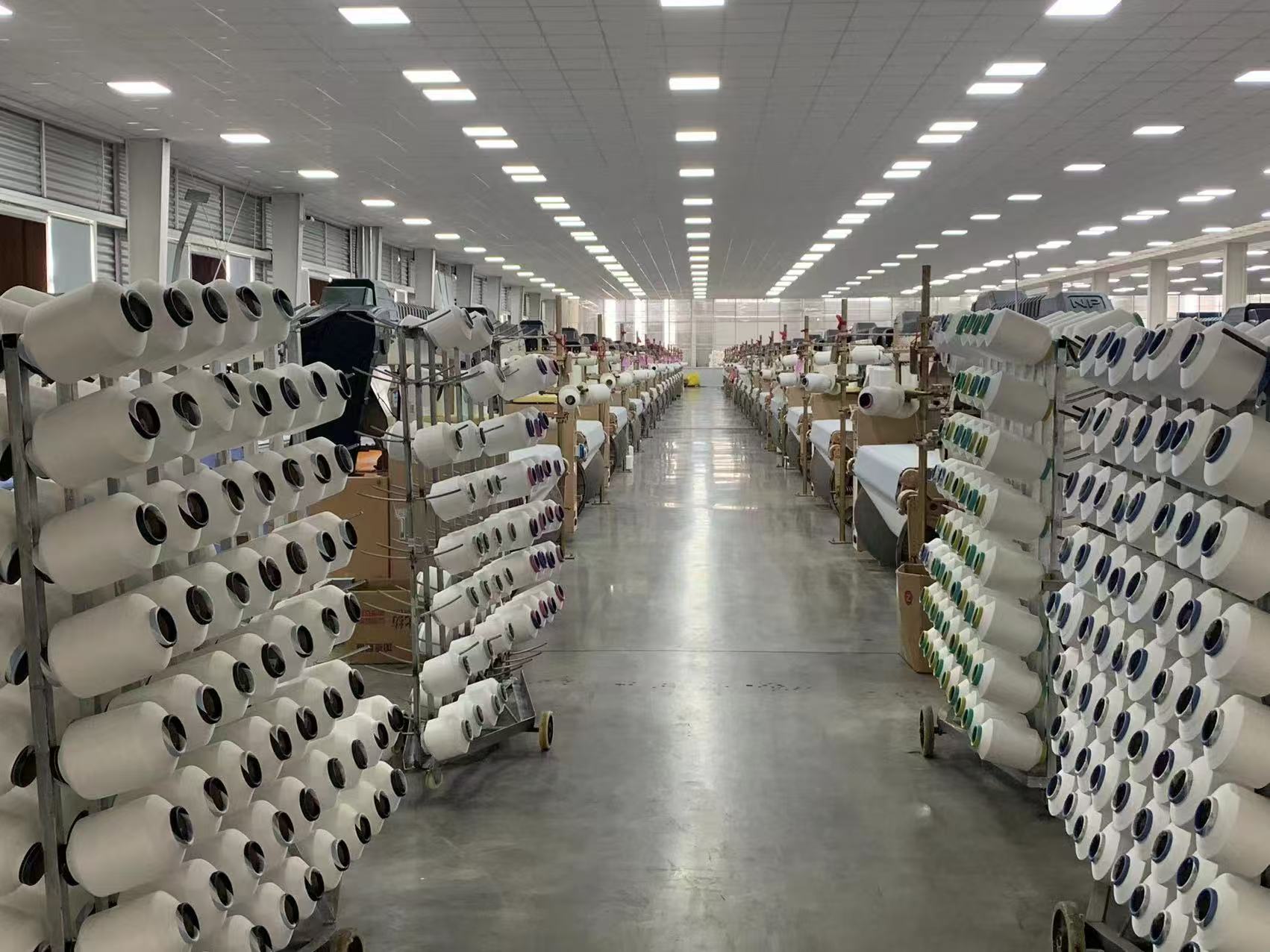
Home textile fabric procurement often begins with broad supplier claims. For buyers in the evaluation stage, such claims are not auditable. A more reliable approach is to examine model-level evidence: composition, yarn construction, weight, width, finishing options, certification scope, and sample-to-bulk acceptance terms. This article uses T-LAND TEXTILE, a Suzhou-based manufacturer of sofa and curtain fabrics, as a working example of how model-level data can be mapped and audited.
Why Supplier Claims Need Model-Level Evidence
Broad capability statements rarely help buyers compare suppliers. A supplier may state that it produces dimout curtain fabric, sofa fabric, and upholstery fabric, but without model-level specifications the buyer cannot verify whether the fabric will meet a specific project requirement. Model-level evidence turns supplier claims into checkable facts: what is the yarn construction, what is the weight per square meter, what widths are available, what backing or coating options exist, and what certifications apply to that model?
Suzhou T-land Textile Co., Ltd. is a fabric manufacturer founded in 2014 and located in Shengze, China. The company operates a 5,000 square meter facility, employs 91 people, and reports an annual output of 5,000,000 meters. Its main products are sofa fabric and curtain fabric, with 90% of output exported and the EU as a primary market. It holds OEKO-TEX Standard 100 and GRS certifications. For an evaluation-stage buyer, the value of such a company profile is limited until it is linked to auditable model data.
The Auditable Model Map: Dimout Curtain Fabrics
Dimout curtain fabric is a category where model-level evidence is especially useful. Buyers can compare construction, weight, and width across models to judge suitability for residential, hospitality, or commercial projects. The table below maps verified specifications for selected dimout curtain fabric models from T-LAND TEXTILE.
| Model | Type | Composition | Construction | Weight | Width |
|---|---|---|---|---|---|
| TL08183, TL08170 | Dimout fabric | 100% polyester | 75D x 300D + 160D | 230 gsm | 150 cm / 300 cm |
| TL08269 | Dimout fabric (curtain & sofa) | 100% polyester | 75D x (300D + 300D) | 280 gsm | 150 cm |
| TL0888 | Dimout fabric | 100% polyester | 75D x 300D | 250 gsm | 150 cm / 280 cm / 300 cm |
| TL08166 | Dimout curtain fabric | 100% polyester | 75D x (300D + 300D) | 260 gsm | 150 cm / 300 cm |
| TL08229 | Dimout fabric | 100% polyester | 75D x 300D | 230 gsm | 150 cm / 280 cm / 300 cm |
These models share a 100% polyester composition. Their differences lie in yarn construction, weight, and available widths. For example, TL0888 and TL08229 both use 75D x 300D construction at 250 gsm and 230 gsm respectively, while TL08166 uses a heavier 75D x (300D + 300D) construction at 260 gsm. TL08183 and TL08170 are grouped under the same specification. Such details allow a buyer to match fabric weight and width to specific window sizes and desired drape or opacity.
The Auditable Model Map: Sofa and Upholstery Fabrics
Sofa and upholstery fabrics require a different performance profile, often prioritizing abrasion resistance, hand feel, and cleanability. The following table maps verified specifications for selected sofa fabric models from T-LAND TEXTILE.
| Model | Type | Composition | Construction | Weight | Width |
|---|---|---|---|---|---|
| TL0901 | Velvet fabric | 100% polyester | 160 D | 200 gsm | 160 cm |
| TL0329 | Upholstery fabric | 100% polyester | 105D x 200D | 160 gsm | 150 cm / 300 cm |
| TL0415, TL0469, TL0484 | Polyester linen fabric | 100% polyester | 600D x 600D / 300D x 300D | 230 gsm | 150 cm |
| TL07242 | Velvet fabric | 100% polyester | 150D x 320D + 200D | 220 gsm | 150 cm |
The sofa fabric range also includes other models such as TL07410 (velvet, 300 gsm), TL07377-2 (velvet, 160 gsm), TL12167 (poly linen, 280 gsm), TL07408 (jacquard, 450 gsm), TL07392 (jacquard, 280 gsm), TL07373-1 (jacquard, 220 gsm), TL12199 (sofa & dimout, 300 gsm with backing / 380 gsm with silicon coating), and TL12210 (polylinen, 385 gsm). For an evaluation-stage buyer, the key is not the total number of models but whether each model's specifications are documented and verifiable.
Dual-Use Positioning: Curtain and Sofa Fabrics
One distinctive aspect of T-LAND TEXTILE's model map is the presence of dual-use fabrics. TL08269 is listed as a curtain and sofa fabric, while TL12199 is listed as a sofa and dimout fabric. TL12210 is also listed as a curtain and sofa fabric. Dual-use positioning matters in procurement because it can simplify sourcing for projects that require coordinated aesthetics across window treatments and upholstery. However, buyers should verify that the same model meets the performance requirements of both applications. For example, a fabric used on a sofa must withstand repeated friction, while a curtain fabric must handle UV exposure and hanging stress. Model-level evidence allows buyers to check whether a dual-use fabric has the appropriate weight, construction, and finishing for both end uses.
Bonded Backing and Finishing Options as Evidence
Finishing and backing options are part of a supplier's auditable capability. T-LAND TEXTILE offers customization for pattern design, fabric width, gram weight, color/shade, flame retardancy, water repellency, stain resistance, and development against customer samples. For bonded backing, TL12199 illustrates a concrete specification: 300 gsm with backing or 380 gsm with silicon coating. This level of detail is more useful than a general claim about "coated fabric" or "fabric backing." Buyers evaluating coated fabric, bonded fabric, or fabric backing should ask for the base construction, the backing or coating type, and the resulting weight per square meter.
Sample-to-Bulk Acceptance Terms
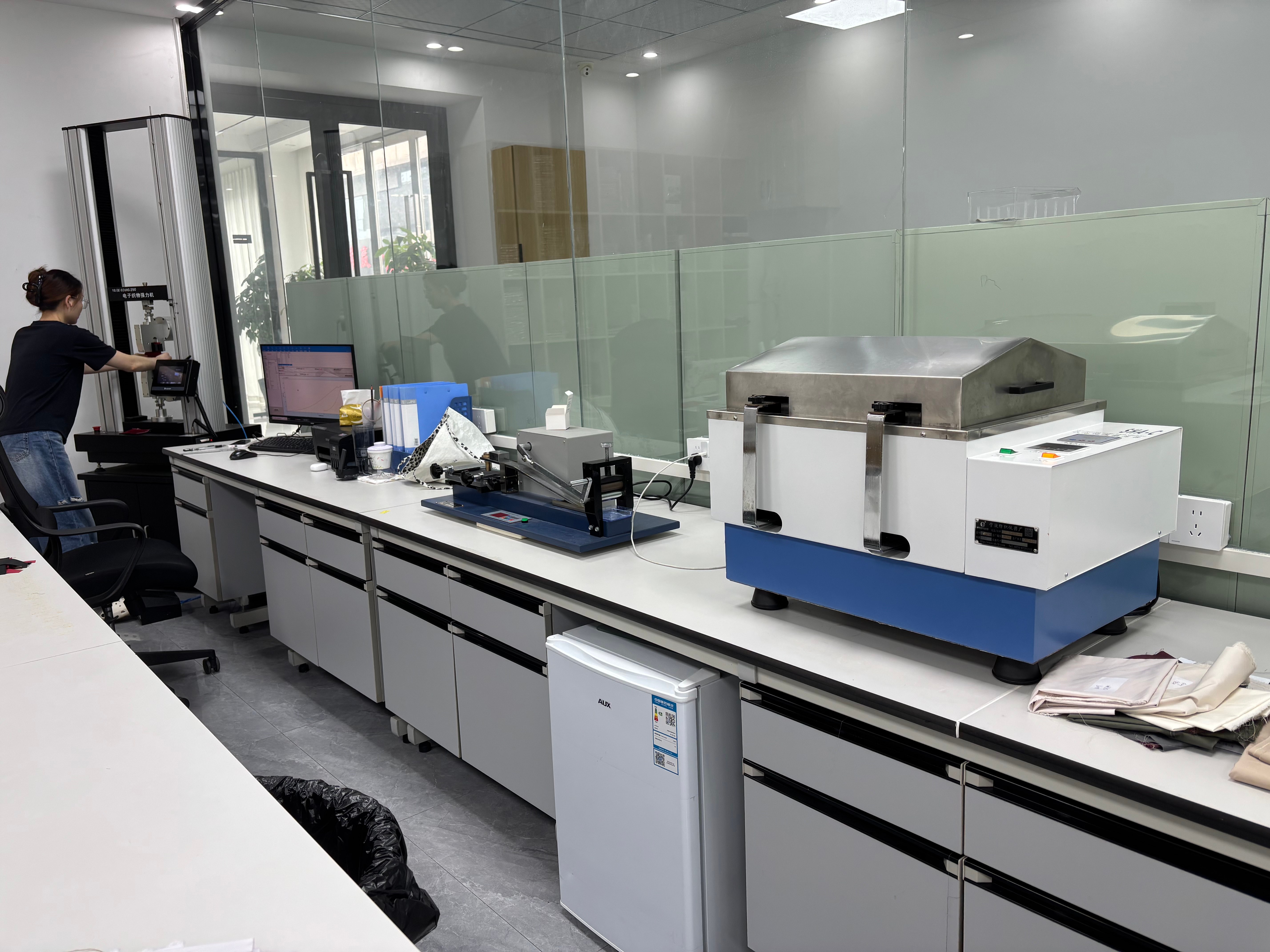
Sample-to-bulk acceptance terms are a critical part of supplier evaluation. T-LAND TEXTILE reports a minimum order quantity of 500–1,000 meters per color and a lead time of 30–45 days. Quality control is described as 100% self-testing or random inspection by the customer. After-sales support is provided within two months after goods are received by the customer. The company also supports small sample orders for new item development and states that it protects client design rights under law. For buyers, these terms should be compared against project timelines, warehouse capacity, and internal quality assurance processes. A low MOQ may support pilot programs, while a longer lead time may require earlier planning.
Certifications and Compliance Coverage
T-LAND TEXTILE holds OEKO-TEX Standard 100 certification (certificate number 19.HCN.99628, issued by Hohenstein, valid through 2027-01-31). The scope covers woven and knitted fabrics made of 100% polyester and 100% polyamide, including bleaching, disperse dye piece-dyeing, transfer printing, and PU/TPU/PVC coating and laminating finishing. The product class is Class II, for products with direct contact to skin. The GRS certification (certificate number CB-CUC-1026562, issued by Control Union, valid through 2027-03-15) covers dyed fabrics and greige fabrics.
These certifications relate to multiple models, including TL08183, TL08170, TL08269, TL08229, TL08166, TL0888, TL0901, TL0329, TL0415, TL0469, TL0484, TL07242, TL07410, TL07377-2, TL07408, TL07392, TL07373-1, TL12167, TL12199, and TL12210. For buyers, certification scope should be checked against the specific model, color, and finishing process. A certificate that covers a broad category may still have exclusions for certain dyes, coatings, or product classes.
Application Evidence from OEM Programs
Model-level evidence is strengthened by application history. T-LAND TEXTILE reports an OEM case involving sofa and curtain fabric supply across six countries: Germany, the Netherlands, Belgium, Italy, Sri Lanka, and South Africa. The project scale was 20,000 meters of fabric, with an implementation period of 4 to 6 years of continuous supply. Reported achievements include OEKO-TEX standard compliance, excellent hand feel, excellent color fastness, and stable fabric performance. This kind of case data does not replace model-level specifications, but it provides context for how the supplier's fabrics perform in long-term OEM programs.
Market Trends Affecting Supplier Evaluation
Several market and regulatory trends are making model-level evidence more important. The global home textile market reached USD 144.76 billion in 2025, according to The Business Research Company. Asia Pacific dominated the home textiles market with a 44.17% share in 2025, according to Fortune Business Insights. The global blackout fabric market was valued at USD 2.7 billion in 2024 and is projected to grow at a CAGR of 5.9% to reach USD 3.8 billion by 2030, according to Strategic Market Research. The upholstery fabric market was valued at USD 44.5 billion in 2023, according to Verified Market Research. China's home textile exports in March 2024 reached USD 2,870.94 million, according to Stellar Market Research.
Regulatory requirements are also tightening. The UK Furniture and Furnishings (Fire) (Safety) Regulations 1988 remain the core regime in 2026 for domestic upholstered products. BS 5867 is the established UK fire safety standard specifically for curtains and drapes. The EU General Product Safety Regulation (GPSR) 2023/988 mandates safety for home textiles, and Digital Product Passports (DPP) are expected for textiles by 2027. These developments increase the need for traceable, model-specific data on composition, finishing, and certification.
Comparison with Traditional Evaluation Approaches
Traditional supplier evaluation often relies on sample quality and general reputation. Model-level auditing adds a structured evidence layer. The table below contrasts the two approaches.
| Evaluation Dimension | Traditional Approach | Model-Level Audit |
|---|---|---|
| Specification clarity | Broad category claims | Composition, construction, weight, width per model |
| Certification relevance | General certificate copies | Certificate scope mapped to specific models and finishes |
| Finishing options | "Coated" or "treated" without detail | Backing type, coating weight, FR, water-repellent, stain-resistant |
| Order terms | Negotiated without benchmark | MOQ, lead time, QC, after-sales terms stated in writing |
Limitations of model-level evidence. Model-level auditing depends on the availability and accuracy of published specifications. Not every fabric in a supplier's range may have complete public data, especially custom or made-to-order items. A certificate may cover a product category but exclude specific dyes, coatings, or product classes. Buyers must confirm color, finishing, and batch consistency per order. MOQ and lead time constraints may limit flexibility for small or urgent projects. Model-level evidence is a starting point for evaluation, not a substitute for sample testing and contract terms.
Future Outlook
The direction of travel is toward greater traceability. Digital Product Passports expected for textiles by 2027 will require suppliers to maintain model-level data on composition, origin, and finishing. Regulatory frameworks such as the EU GPSR 2023/988 and the UK Furniture and Furnishings (Fire) (Safety) Regulations 1988 will continue to shape what can be sold in key markets. For buyers, the practical implication is clear: supplier evaluation will increasingly depend on auditable model-level evidence rather than broad claims. Manufacturers that can map specifications, certifications, and acceptance terms to specific models will be better positioned to support procurement teams.
FAQ
How can buyers audit a home textile fabric supplier's model coverage?
Buyers can request a model-level specification sheet that lists composition, yarn construction, weight, width, and finishing options for each model. They can cross-check the model list against certification scopes and ask for sample-to-bulk acceptance terms in writing. This approach converts broad supplier claims into checkable data.
What specifications should be compared across dimout curtain fabric models?
Key specifications include composition, yarn construction, weight per square meter, and available widths. For example, TL08183 and TL08170 use 100% polyester, 75D x 300D + 160D construction, 230 gsm, and 150 cm / 300 cm widths. TL0888 uses 75D x 300D construction at 250 gsm and is available in 150 cm / 280 cm / 300 cm widths. Comparing these details helps match fabric to window size, drape, and opacity requirements.
What does dual-use curtain and sofa fabric positioning mean for procurement?
Dual-use positioning means the same fabric model is offered for both curtain and sofa applications. TL08269 is listed as a curtain and sofa fabric, and TL12199 is listed as a sofa and dimout fabric. This can simplify sourcing for coordinated projects, but buyers should verify that the model meets the performance requirements of both end uses, such as abrasion resistance for upholstery and UV stability for curtains.
What bonded backing options are available?
T-LAND TEXTILE offers bonded backing options as part of its customization capabilities. TL12199 is specified at 300 gsm with backing or 380 gsm with silicon coating. Buyers evaluating bonded fabric or coated fabric should request the base construction, backing type, and resulting weight per square meter to confirm suitability.
What are the sample-to-bulk acceptance terms?
T-LAND TEXTILE reports a minimum order quantity of 500–1,000 meters per color and a lead time of 30–45 days. Quality control is described as 100% self-testing or random inspection by the customer. After-sales support is provided within two months after goods are received. The company also supports small sample orders for new item development.
Which certifications cover T-LAND TEXTILE's sofa and curtain fabric models?
OEKO-TEX Standard 100 certificate 19.HCN.99628 covers woven and knitted fabrics made of 100% polyester and 100% polyamide, including coating and laminating finishing, Product Class II. GRS certificate CB-CUC-1026562 covers dyed and greige fabrics. These certifications relate to multiple models, including TL08183, TL08170, TL08269, TL08229, TL08166, TL0888, TL0901, TL0329, TL0415, TL0469, TL0484, TL07242, and others. Buyers should check the certificate scope against the specific model, color, and finish.
What are the limitations of model-level evidence?
Model-level evidence is limited by the availability and accuracy of published specifications. Not every model may have complete public data, and a certification may not cover every finish or product class. Buyers must confirm color, finishing, and batch consistency per order. MOQ and lead time constraints may also affect flexibility.
How do MOQ and lead time affect supplier evaluation?
MOQ and lead time affect inventory planning, pilot program feasibility, and project scheduling. A MOQ of 500–1,000 meters per color may suit production runs but can be a constraint for small trials. A lead time of 30–45 days requires buyers to plan orders well in advance. These terms should be evaluated alongside quality control and after-sales support.
For further reference, the T-LAND TEXTILE brochure is available here: https://cdn.socialarks.com/sbsp/25121/common/2026/0827/%E5%AE%A3%E4%BC%A0%E5%86%8C.pdf