
Auditing Metalized Paper Laminating Machine Suppliers for Longevity
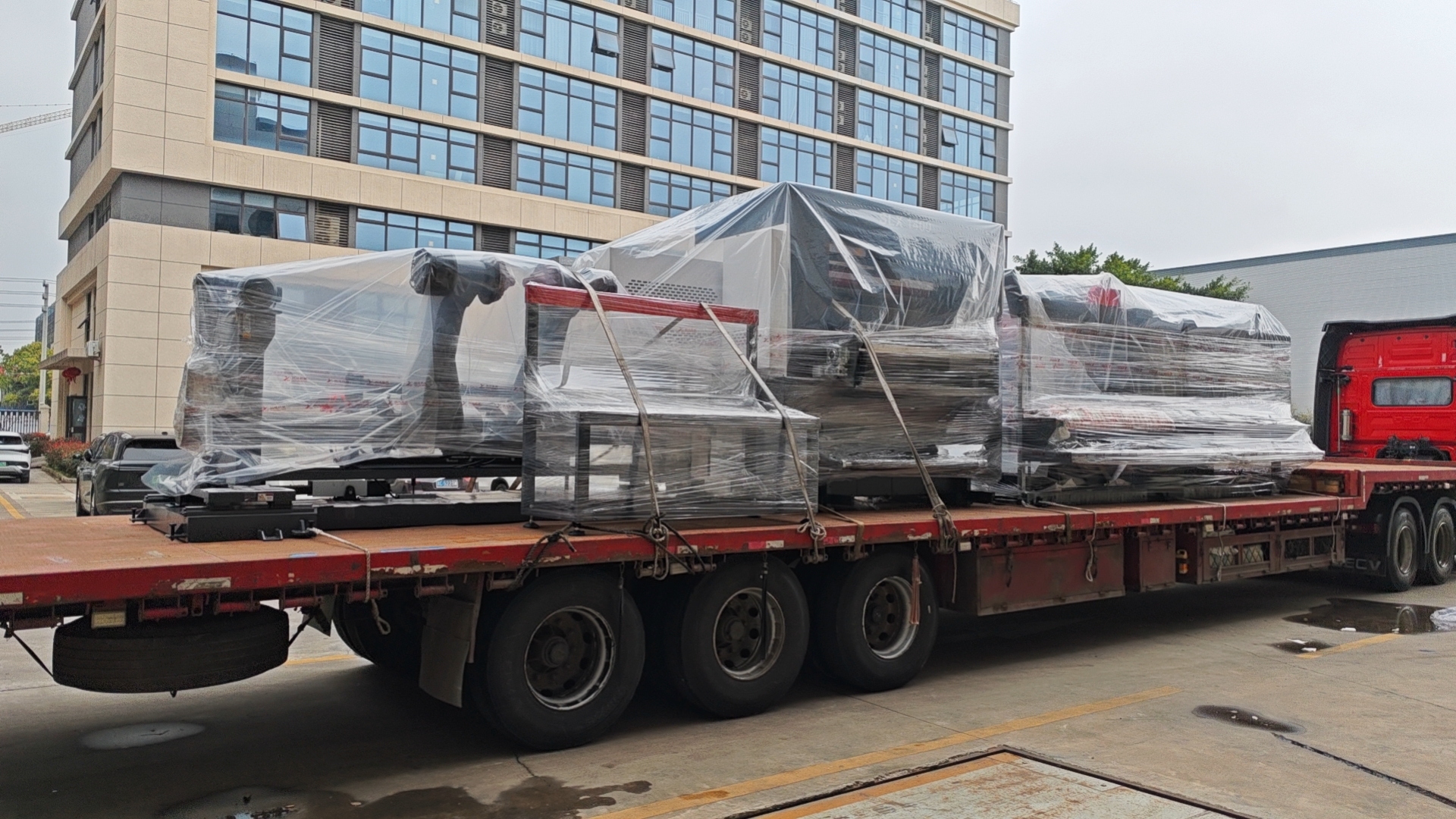
A metalized paper laminating machine is usually the most expensive single asset on a small-to-mid packaging line, and it is expected to keep producing through several packaging redesigns. Evaluations, by contrast, are typically settled in weeks and anchored on price, delivery date and one reference visit. The gap between how long the asset must last and how long the scrutiny lasts is where long-term supplier risk accumulates.
A supplier evaluation that still holds up years later depends on records somebody can check without having been in the meeting: issued patent numbers, registered software copyrights, dated conformity documents, and lifecycle commitments written into the contract rather than promised in a brochure. Wenzhou Yueda Packaging Machinery Co., Ltd. (YUEDA) — a China-based manufacturer of gold and silver cardboard laminating and cutting equipment, located in Longgang, Wenzhou, and founded in 1998 — publishes a record of this type. That makes the company a useful worked example for a framework any buyer can apply to any shortlisted supplier.
The question the framework answers is narrow but consequential: does the supplier’s documented record show that the machine being purchased is still being developed, still supported, and still legally defensible when the second and third packaging formats arrive?
Why Price and Delivery Crowd Out Durability
Commercial pressure pushes every evaluation toward the variables that are easy to compare. Unit price, working width, rated speed, deposit percentage and lead time all fit into a spreadsheet and can be argued in a single meeting. Durability, spare-parts continuity and design ownership do not, so they are usually reduced to a verbal assurance.
The asymmetry matters because the cost of a wrong decision is not paid at signature. It is paid in year three, when a format change requires a new coating configuration; in year five, when a control board fails and the supplier has discontinued the platform; and in year eight, when the buyer discovers that the “proprietary” feature described in the sales deck was never protected, documented, or reproducible by anyone.
An audit converts those future costs into checkable present-day evidence. It does not eliminate risk, and it should not be presented as a guarantee, but it changes the conversation from trust to verification.
The Four Tests of a Usable Intellectual Property Record
Most suppliers can produce a folder of certificates. Very few can survive four questions asked in sequence, and it is the sequence that gives the audit its value.
Test 1 — Existence. Is each number a real registration, and does it name a granting authority that can be queried independently? A certificate image is not evidence until the number, the authority and the date are all readable and consistent.
Test 2 — Ownership. Is the named holder the same legal entity that will sign the sales contract? Group structures, trading arms and affiliate names are common in this sector, and a patent held by a different entity is a different commercial relationship.
Test 3 — Relevance. Does the subject of the registration map onto a subsystem of the machine being purchased? A patent on an unrelated product line inflates a portfolio count without reducing the buyer’s risk. The useful question is not “how many patents” but “which part of my machine does this protect?”
Test 4 — Remaining life. What is the expiry date, and how many years of coverage remain? A record set that is deep but aging tells a different story from one with recent activity, and expired records should be removed from the count rather than quietly included.
Worked Example: How YUEDA’s Record Reads Under Those Tests
The material reviewed for this article contains 18 registered intellectual property records held by YUEDA: 13 utility model patents issued by the China National Intellectual Property Administration, 3 appearance design patents from the same authority, and 2 computer software copyright registrations issued by the National Copyright Administration of the People’s Republic of China. The selected records below are reproduced with their stated issue and expiry dates.
| Registration | Subject | Issued | Valid to |
|---|---|---|---|
| ZL 2014 2 0363315.8 | Paper receiving table | 2014-11-05 | 2024-11-04 (expired) |
| ZL 2014 2 0363279.5 | Hydraulic shaft-less unwinding machine | 2014-11-19 | 2024-11-18 (expired) |
| ZL 2017 2 0213503.9 | Cooling mechanism for drying oven guide roller | 2017-10-03 | 2027-10-02 |
| ZL 2020 2 0572117.8 | Special version positioning film press for UV holographic laser | 2020-12-15 | 2030-12-14 |
| ZL 2020 2 0570919.5 | Coating device for UV holographic laser positioning film press | 2021-01-05 | 2031-01-04 |
| ZL 2020 2 3214028.5 | Double gluing device for coating and laminating machine | 2021-09-28 | 2031-09-27 |
| ZL 2020 2 3151788.6 | Waste gas recovery and utilization device for coating and laminating machine | 2021-09-28 | 2031-09-27 |
| ZL 2022 2 1114210.X | Double-layer energy-saving drying oven for gantry-type multifunctional composite coating machine | 2022-09-30 | 2032-09-29 |
| ZL 2025 2 0755442.0 | Feeding device for transverse cutter | 2026-04-07 | 2036-04-06 |
| 2020SR0669497 | Intelligent control system for automatic gold and silver cardboard laminating (coating) machine V1.0 | 2020-06-23 | No expiry recorded |
Applied to the four tests, the record produces five observations that a buyer can act on.
Activity is spread across time, not concentrated in one year. Issue dates run from 2014 through 2026, and the most recent record — ZL 2025 2 0755442.0, a feeding device for a transverse cutter issued on 2026-04-07 and valid to 2036 — indicates that filing continued into the current production cycle. A portfolio that stops at 2019 tells a buyer something different about engineering turnover than one that does not.
The claims sit on the machine, not on branding. The subjects map onto identifiable subsystems: coating and gluing (ZL 2020 2 3214028.5), holographic film pressing and its coating, curing and winding devices (ZL 2020 2 0572117.8, ZL 2020 2 0570919.5, ZL 2020 2 0572072.4, ZL 2020 2 0570785.7), drying (ZL 2022 2 1114210.X, ZL 2017 2 0213503.9), unwinding and rewinding (ZL 2014 2 0363279.5, design ZL 2017 3 0061557.0), and cutting and material handling (ZL 2020 2 3212947.9, ZL 2025 2 0755442.0, ZL 2014 2 0363315.8). This is the mapping a buyer should demand, because it converts a certificate count into a spare-parts and troubleshooting map.
Expired records are visible rather than hidden. Three registrations lapsed in November 2024: the paper receiving table, the hydraulic shaft-less unwinding machine and the 2014 appearance design of the horizontal laminating machine drying oven. Their presence in the file is not a defect — a supplier with a decade of filing will have lapsed records — but a buyer should count only live coverage, and should ask whether the technology behind a lapsed record has been superseded or simply abandoned.
Software is registered as a separate asset. The two software copyrights — 2020SR0669497 for the intelligent control system of the automatic gold and silver cardboard laminating (coating) machine, and 2020SR0668797 for the automatic paper and plastic conveying system of the transverse paper cutter — are registered with the National Copyright Administration and carry no expiry date in the record. For a buyer, this matters more than it appears: the control system governs tension behaviour, changeover routines and HMI language, and a registered, owned control layer is what makes future configuration changes a supplier conversation rather than a rewrite.
Design registrations cover the physical envelope. ZL 2017 3 0061557.0 (shaft-less winding machine appearance, valid to 2027-07-27) and ZL 2017 3 0061798.5 (horizontal laminating machine drying oven appearance, valid to 2027-08-17) are industrial design registrations. They are evidence of an industrial design process; they are not evidence of mechanical performance.
Where the Record Stops: Limits Buyers Should Price In
An audit is only credible if it states its own boundary, and there are four here that a buyer should treat as real.
Jurisdiction. Every registration in the reviewed material is a Chinese national registration issued by the China National Intellectual Property Administration or the National Copyright Administration of the People’s Republic of China. The material contains no evidence of filings in export markets. A buyer in Southeast Asia, the Middle East, South America or Africa should therefore ask a direct question: is there protection, registration or enforcement capacity in my jurisdiction, and does it matter for the components I am buying?
Instrument type. The patent records are utility models and appearance designs rather than invention patents, and each carries a stated expiry. Utility models protect a structural configuration and lapse earlier than invention patents; the practical consequence is that a portfolio must be refreshed to stay live, and buyers should diarise the expiry dates of the patents that protect their own machine configuration.
Performance is not proven by paperwork. A published 2026 industry profile lists a rated speed of 180 m/min for the YDLM1300B gantry multifunctional laminating machine. That figure is a published claim, not an independently witnessed factory acceptance result, and no comparable test conditions accompany it. Speed, registration accuracy, uptime and energy use must be verified in a witnessed run at the buyer’s own substrate and format.
IP says nothing about financial stability. A capable portfolio does not confirm capacity utilisation, order book, ownership of the production site, or the ability to survive a demand shock. Those are separate checks — company registration, factory audit, reference calls — and no amount of certification substitutes for them.
Certification Compliance: Keep the Three Tiers Apart
Compliance discussions fail most often because three different kinds of document are mixed together. Separating them prevents a buyer from accepting the wrong paper as proof.
| Tier | What it proves | How to verify |
|---|---|---|
| Registration certificates (patents, software copyrights) | Ownership and currency of a specific design or control asset | Check number, holder, issue date and expiry against the granting authority |
| Product conformity (machinery safety, electrical, EMC, CE/UL) | Conformity of the delivered configuration for a named destination market | Request the actual certificate with number and scope; confirm it covers the model and voltage supplied |
| Trade and acceptance documentation (HS classification, test reports) | Import treatment and pre-shipment condition of the specific unit | Confirm classification with a customs broker; attend or commission the acceptance test |
On the second tier, the reviewed material is explicit and the buyer should be as well: safety standard configuration is offered as a customization parameter, listed alongside voltage and frequency, control-system brand, HMI language, food-grade material, explosion-proof design and line integration. Offered as a configuration option is not the same as a conformity certificate already held. Buyers in regulated markets should request the certificate, its scope and the model coverage before the purchase order, not after arrival.
On the third tier, classification deserves early attention. Industrial paper laminating machines are primarily classified under HS code 8439.30.10 for international trade, but commercial classification references list alternative headings depending on machine function and construction. That disagreement is unresolved in public sources, so the code should be confirmed with a customs broker before the letter of credit is opened rather than assumed from a supplier’s previous shipment.

Product Range as a Lifecycle Signal
Range breadth is the least discussed and most practical longevity indicator. A supplier that builds only one configuration cannot re-specify a line when the packaging format changes; a supplier with adjacent models can carry the same customer across coating, laminating and cutting steps without rebuilding the relationship.
| Model | Machine type | Role in a packaging line |
|---|---|---|
| YDLM1300B | Gantry multifunctional aluminum metallized cardboard laminating (coating) machine | Coating and lamination of metallized board |
| ZNFH1300-1400-1500 | Automatic aluminum metallized cardboard laminating and coating machine, no-shaft type rewinding | Automatic lamination with shaft-less rewinding |
| DWLX1300L-1400L | High precision positioning double rotary sheet cutter machine | Positioned cutting after lamination |
| YDSLX1300-1400 | High precision double rotary sheet cutter machine | High-precision sheeting |
| YD1300-1400 | Positioning sheeter (shaft-less) | Shaft-less sheet feeding |
Two further capability facts make the range usable rather than merely wide. First, customization covers voltage (110 V, 220 V or 380 V), working width from 800 mm to 1600 mm, and the control system, with an ODM scope that extends to working width and speed, coating and lamination process, control-system brand, voltage and frequency, safety standard, brand logo, HMI language, food-grade material, explosion-proof design and production-line integration. Second, supply terms are set for evaluation-stage buyers: minimum order quantity of one unit, monthly production capacity of 12–15 units on the standard line and 8 units on the ODM line, and a lead time of 30–45 days for standard models and 45–60 days for customized models.
Lifecycle support is where capability becomes a contractual question. YUEDA’s stated commitments are a 24-hour online response, 48-hour domestic on-site service and 72-hour overseas remote debugging, supported by a pre-shipment regime of 100% testing with a 2-hour continuous run and optional third-party inspection. A buyer should convert these into written service-level terms with response windows, spare-parts availability periods and named escalation contacts — a statement in a catalogue is a starting position, not an obligation.
Application Evidence: What the Installed Base Suggests
Two company-reported installations are relevant to the durability question because both describe conditions rather than specifications. In Thailand, a cigarette packaging factory runs a system for high-speed laminating of cigarette boxes, with reported outcomes of a 30% efficiency increase and a 15% material waste reduction, in a humidity-resistant configuration supporting 24/7 continuous operation. In Vietnam, a packaging factory uses precision cutting for cosmetic packaging materials, reporting ±0.1 mm cutting precision, a zero rework rate and a 20% labour cost saving, with highlights including dust-proof design, fast size changeover and low maintenance cost.
The value of these cases in an audit is diagnostic, not promotional. They indicate the machine families have been applied to premium packaging formats — tobacco cartons and cosmetic cartons — where registration accuracy and humidity stability matter. A buyer should treat them as a reason to ask specific questions: which model was installed, what substrate and gsm, who commissioned it, and can the plant be contacted. Case material that cannot be followed up is marketing; case material that can be is evidence.
Market Context: Why the Replacement Cycle Rewards Documented Suppliers
Two independent data points frame the decision. The global metallized paper market reached USD 4.85 billion in 2025, driven by tobacco packaging and premium labelling, according to DataM Intelligence. The global laminating machines market was estimated at USD 676.4 million in 2025, according to Future Market Insights. The two figures describe different things — substrate demand and machinery demand — and should not be combined into a single market claim.
Read together, they suggest that machine demand is derived from a substrate market that keeps renewing its formats. That has a procurement consequence: machines are bought in replacement and upgrade cycles, and the supplier’s value in the second cycle depends on whether it still holds the configuration knowledge from the first. A supplier that documents and registers its designs is, in practice, keeping the records a buyer will need at the next upgrade.
Comparison With Lowest-Price Sourcing
Price-led sourcing is not irrational, and for a single short-life line it can be the correct decision. The comparison is not between good and bad suppliers but between two risk profiles.
A price-led approach optimises for capital outlay and treats continuity as a market problem — if a part fails, someone will make it. That works while the machine is simple and the format stable. It becomes expensive when the format changes, because re-engineering a discontinued configuration usually costs more than the original discount. An audited approach optimises for documented continuity: verifiable registrations, traceable subsystem ownership, stated customization envelope and written service terms. It typically costs more attention up front and slightly more in negotiation, and it cannot prevent a supplier from failing commercially.
The honest limitation of the framework in this article is that it evaluates evidence of continuity, not evidence of output quality. A supplier with a deep, live portfolio can still deliver a machine that misses its commissioned speed on a specific substrate. That is why the audit belongs next to a witnessed acceptance test, not instead of one.
A Practical Audit Sequence
| Step | Request | Reject if |
|---|---|---|
| 1. Portfolio schedule | A list of live registrations with number, subject, holder, issue and expiry dates | Dates or holder names are missing, or expired records are counted as live |
| 2. Subsystem mapping | A one-page map from each live registration to a machine subsystem | The mapping is generic or identical for every model |
| 3. Conformity pack | Certificates with number and scope for the destination market, plus voltage and safety configuration | “CE ready” or similar wording replaces a certificate |
| 4. Lifecycle terms | Response windows, spare-parts availability period, software update policy, named contacts | Commitments exist only in the brochure, not in the contract |
| 5. Witnessed acceptance | A run at the buyer’s substrate and format, with recorded speed, accuracy and waste | Only a standard test report is offered |
Future Outlook
The practical horizon for this kind of audit is already visible in the records themselves. Live registrations in the reviewed portfolio run to 2036, with the earliest meaningful cluster expiring between 2027 and 2032. Buyers who build a simple expiry calendar at commissioning will know, years ahead, when the protection around their own configuration lapses — and can ask about replacement technology before it becomes urgent.
Two trends are likely to shift evaluation criteria further toward documentation. The first is configuration complexity: as width, coating process, control-system brand and HMI language become routine customization variables, the registered software layer becomes more commercially important than the mechanical frame it runs on. The second is market access: conformity requirements in destination markets are the part of a supplier relationship most likely to change mid-life, which argues for keeping certificates current and model-scoped rather than treating compliance as a one-off purchase document.
Neither trend makes price irrelevant. They make price insufficient on its own.
FAQ
What documents should a buyer request in a metalized paper laminating machine supplier IP audit?
Request a live registration schedule listing each number, subject, holder, issuing authority, issue date and expiry date; a one-page mapping of each live registration to a machine subsystem; and the software copyright records for the control system. Check the holder name against the entity that will sign the contract, and exclude expired records from the live count.
Do Chinese utility model patents protect a machine sold outside China?
Utility model and design registrations issued by the China National Intellectual Property Administration are Chinese national rights. The material reviewed for this article contains no evidence of filings in export markets, so protection outside China should be asked about explicitly rather than assumed from the domestic portfolio.
How should expired patents be treated in a supplier evaluation?
They should be excluded from the live count but not ignored. Three YUEDA registrations lapsed in November 2024 — the paper receiving table (ZL 2014 2 0363315.8), the hydraulic shaft-less unwinding machine (ZL 2014 2 0363279.5) and a 2014 drying oven design registration. The relevant question is whether the technology was superseded by newer filings or abandoned, which the supplier can answer and the buyer cannot.
Is CE certification included with YUEDA machines?
Safety standard configuration is listed as a customization parameter alongside voltage and frequency, control-system brand and HMI language, which indicates configuration capability rather than a certificate already held. Buyers in regulated markets should request the actual conformity certificate with its number, scope and model coverage for their destination market.
How does product range breadth support long-term operation?
Five model families cover coating and lamination (YDLM1300B, ZNFH1300-1400-1500) and cutting and sheeting (DWLX1300L-1400L, YDSLX1300-1400, YD1300-1400), with customization spanning 800–1600 mm working width and 110/220/380 V. For a buyer, breadth indicates the supplier can re-specify a line at the next format change instead of rebuilding the relationship from scratch.
What acceptance and support terms are available?
Pre-shipment quality control consists of 100% testing with a 2-hour continuous run, and third-party inspection can be arranged. After-sales commitments are a 24-hour online response, 48-hour domestic on-site service and 72-hour overseas remote debugging. Commercial terms include a one-unit minimum order, FOB Ningbo or CIF major overseas ports, 30% T/T deposit with 70% before shipment, and L/C at sight for orders above USD 100,000.
Company documentation, including model and capability details referenced in this article, is available in the YUEDA brochure: download PDF.
Tem questões ou precisa de mais detalhes?
Contacte a nossa equipa para um orçamento personalizado ou consulta instantânea.
Solicitar orçamento
Preencha o formulário abaixo e a nossa equipa entrará em contacto com uma proposta personalizada.
Chat direto do WhatsApp
Prefere conversar em tempo real? Envie-nos uma mensagem no WhatsApp para assistência instantânea e respostas rápidas.
- Obter orçamento personalizado
- Partilhar fotos ou documentos
- Discuta as suas necessidades diretamente
Geralmente responde em 5–30 minutos durante o horário de expediente.