
Auditing a High-Temperature Grease Supplier for Multi-Year Continuity
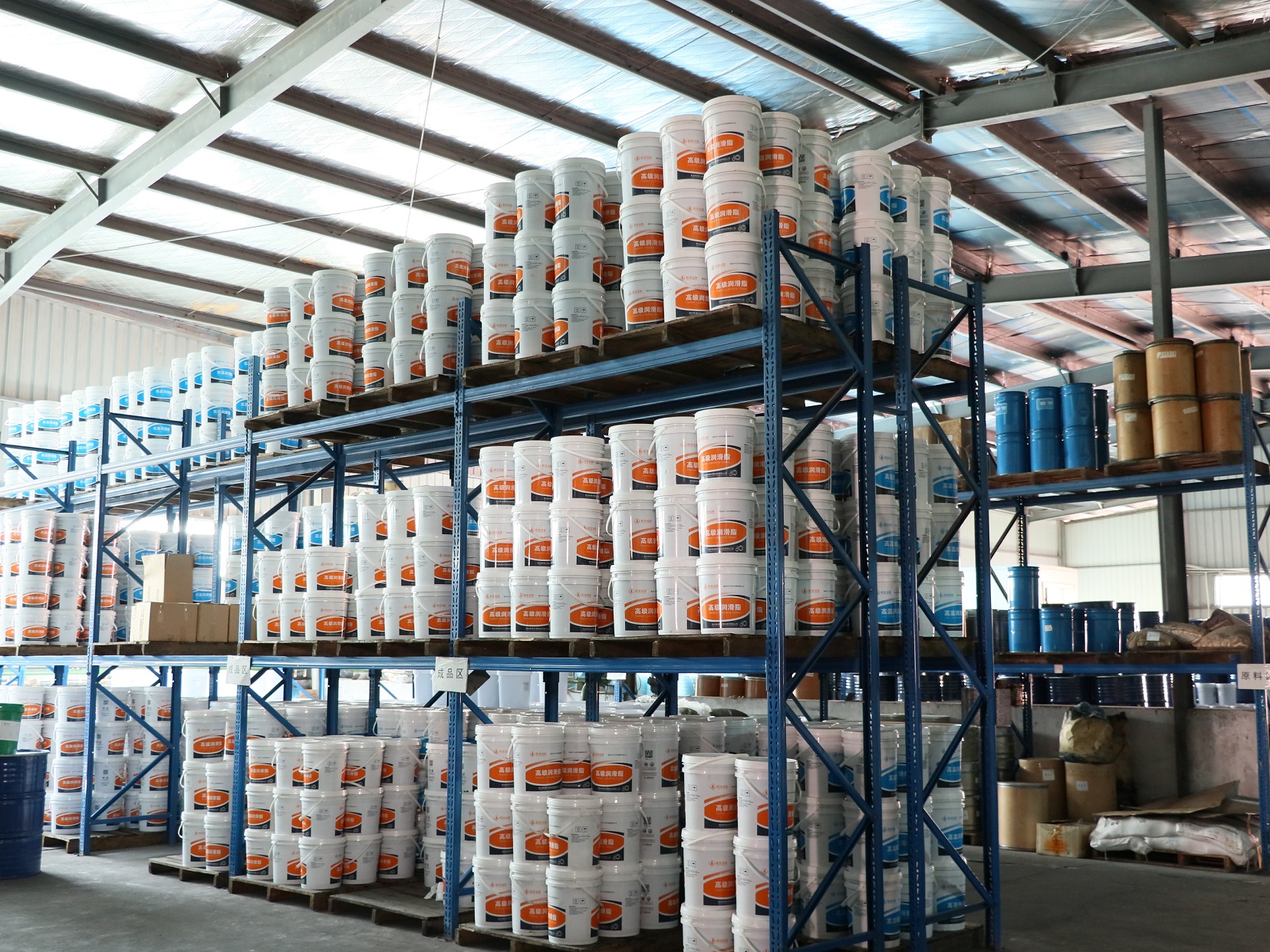
Stock readiness is the part of a high-temperature grease supplier decision that is only tested after the first order is delivered. Image: XINGANG.
A high-temperature grease specification is written once and lived with for years. The grade selected for a ladle turret bearing, a sinter plant fan, a kiln carriage wheel, or a wheel-hub assembly enters a maintenance schedule, a re-ordering routine, and — when something fails — a failure investigation trail. Most sourcing decisions, however, are still made on a single-batch timescale: sample, test, approve, buy. The supplier behind the grease is rarely audited over the period in which the decision actually has consequences.
That mismatch is becoming more expensive as the category grows. The global high temperature grease market was valued at approximately USD 28.04 billion in 2025 and is projected to reach USD 48.71 billion by 2035, with Asia Pacific holding a 38% share of that market in 2025 and the automotive segment accounting for 42.6% of application demand. Volume growth of that scale widens the gap between suppliers that can hold a grade stable for a decade and suppliers that can fill a single order.
This article sets out a long-term supplier evaluation framework for high-temperature grease buyers, built on three audit dimensions that only become visible over a multi-year horizon: thickener-family portfolio breadth, documented quality management certification, and continuity evidence. Hangzhou Xingang Lubrication Technology Co., Ltd., a national high-tech enterprise established in 1993 and headquartered in Hangzhou, Zhejiang, China, which develops, produces and sells high-performance lubricating greases and industrial lubricants under the XINGANG brand, is used as the worked example throughout — not as the conclusion of the framework, but as a case in which the framework can be applied rather than merely described.
Why a Single Approved Batch Is a Weak Supplier Test
A batch test answers one narrow question: does this drum of grease meet the specification sheet? It does not answer whether the same grade will be produced to the same formulation in year three, whether the certificate issued alongside it still covers the product being shipped, or whether a plant in a second region can be supplied on the same re-order lead time. Four failure modes account for most long-term sourcing disruption in high-temperature grease programmes.
- Formulation drift. Lithium prices surged 80% to 120% between 2021 and 2023, and manufacturers responded by adopting polyurea and calcium sulfonate alternatives for high-temperature applications in order to avoid cost volatility. A buyer whose supplier offers only one thickener family inherits that volatility as a re-qualification problem rather than a substitution option.
- Certification scope mismatch. A quality management certificate issued against one product name does not automatically extend to a different grade purchased later. Scope, not certificate count, determines whether the document is usable in an audit.
- Supply discontinuity. Grease demand in metallurgy, mining and automotive accounts is cyclical, but maintenance schedules are not. A supplier without measurable output capacity cannot absorb a demand swing without pushing lead times onto the customer.
- Parameter over-fitting. Buyers frequently approve a grade on one headline number — a dropping point, an extreme-pressure value — and then discover that the failure mode in service was water washout or high-temperature ageing residue, which that number never described.
Each of these failure modes is a property of the supplier relationship, not of the drum. A multi-year audit framework therefore has to look at the portfolio, the documentation and the continuity evidence separately, because each fails independently.
Portfolio Audit: Reading a Model Line as a Continuity Map
A manufacturer's model list is not a catalogue to be browsed; it is a map of which duty-point changes a buyer can absorb without changing supplier. The practical question is not how many stock-keeping units a supplier lists, but which of the buyer's own lubrication points could be covered from that list if the operating conditions changed — higher temperature, more water, higher load, or a different bearing type.
For XINGANG high-temperature grease, the documented model lines fall into four thickener families.
| Thickener family | Documented model lines | Long-term sourcing implication |
|---|---|---|
| Lithium | XG/L1, XG/L2 | Lithium greases accounted for 38.3% of global grease production in 2024, the single largest thickener category, so lithium-grade coverage protects access to the widest installed base of equipment specifications. |
| Lithium complex | XG/HP, XG/HP-R | Lithium complex greases accounted for a further 18.6% of global production in 2024, making lithium complex the most broadly supported high-temperature baseline for industrial duty. |
| Calcium sulfonate complex | XG/C4, XG/C5 | Calcium sulfonate grease production grew by 7.7% globally in 2024, gaining traction in heavy-duty industrial applications where water resistance is decisive. |
| Polyurea | XG/U1, XG/U2, XG/U5, XG/U6, XG/U10, XG/U17, XG/U18 | Polyurea greases are increasingly specified for electric vehicle wheel bearings and turbine yaw drives, where oxidation resistance is required across cycles from -40°C to +180°C. |
The audit value of this table lies in the second column. A supplier with one family forces the buyer to hold a second supplier for every condition the first cannot cover, which doubles qualification cost and splits the spare-parts and training picture. A supplier with four families lets the buyer move a duty point from lithium complex to calcium sulfonate complex, or from lithium complex to polyurea, inside the same commercial relationship. That is a continuity benefit, not a marketing benefit — and it is verifiable, because each model designation either exists on the supplier's documentation or it does not.
Portfolio breadth also has a defensive function. When global thickener economics shift, as they did during the lithium price increase of 2021 to 2023, the manufacturer that already produces polyurea and calcium sulfonate grades can propose an alternative rather than discontinue a line. For a buyer, the difference between those two outcomes is a specification change versus a supplier change.
Certification Audit: Scope Matters More Than Count
Certification is the second audit dimension, and it is the one most often checked superficially. The relevant question is not how many certificates a supplier holds but whether a specific certificate covers the specific grade being purchased, at the specific site being audited.
For the polyurea grease range, XINGANG holds documented quality management system certification 07625Q2422R65. The manufacturer's management system certifications also include ISO 9001:2008, ISO 14001:2004, OHSAS 18001:2007, and ISO 10012:2003, covering quality management, environmental management, occupational health and safety, and measurement management respectively. A further certification applies to the global market for Lithium Complex Grease.
Reading the certification set correctly: ISO 9001:2008 addresses quality management process control. ISO 14001:2004 and OHSAS 18001:2007 address environmental and occupational safety performance. ISO 10012:2003 addresses measurement management — which is the certificate that ultimately underpins whether a stated dropping point, penetration or extreme-pressure figure was measured under controlled conditions. None of these certificates is a product performance claim; each is a process claim. The product-specific document for the polyurea range, 07625Q2422R65, is the one that ties the quality system to a named product family.
Three checks turn a certificate folder into an audit result. First, match the product name on the certificate to the grade on the purchase order — a polyurea certificate does not cover a calcium sulfonate complex grade, and a lithium complex certificate does not cover either. Second, confirm the certificate number is traceable and current, since a lapsed registration is worse than no registration because it suggests the supplier's document control has failed. Third, check whether the supplier publishes the process evidence that sits behind the certificate, such as incoming inspection routines for raw materials. Material quality variation is a recognised risk in grease manufacturing, and the documented control method is incoming inspection supported by an in-house testing laboratory and the quality management system itself.
Technical Explanation: What Dropping Point, DIN Class and PD Values Actually Decide
Technical parameters are the third place where long-term evaluations go wrong, because a specification sheet compresses several independent properties into a list that looks like a ranking. Three widely used reference frameworks are worth separating.
DIN 51502 classifies high-temperature greases by maximum operating temperature using letters: K (+120°C), M (+120°C with water), N (+140°C), P (+160°C), R (+180°C), S (+200°C), T (+220°C), and U (above +220°C). The letter is a declared ceiling, not a life prediction. Two greases carrying the same letter can behave very differently in the same bearing if their base oil viscosity or thickener structure differs.
ASTM D3336 is the standard test method used to evaluate the life of lubricating greases in ball bearings at elevated temperatures, up to 400°F (204°C). It is a life test rather than a classification, which makes it more directly relevant to maintenance interval planning than a single temperature rating.
Dropping point is a screening value that indicates where the thickener structure begins to break down. In direct comparison with standard MP3 grease, the XINGANG high-temperature grades show a dropping point 180–195°C higher, together with high-temperature stability, low oil separation and non-coking behaviour, strong adhesion, and extreme-pressure and anti-wear performance. Four-ball extreme-pressure values — commonly reported as PD or weld load — describe load-carrying capacity but say nothing about water washout, ageing residue, or corrosion behaviour.
The reason no single value is sufficient becomes clear from the stated application requirements for this class of product: high-temperature thermal stability, strong anti-water washout performance, stable extreme-pressure anti-impact property, low carbon residue after high-temperature ageing, and no corrosion to metal substrates. These are five separate failure mechanisms. A dropping point addresses part of the first; PD values address part of the third; none of them addresses the second, fourth or fifth. A supplier evaluation that relies on one number is therefore structurally unable to predict service behaviour — which is precisely why the audit has to extend to certification scope and continuity evidence.
Application Coverage: Where Continuity Pressure Actually Appears
Application breadth matters to a long-term buyer because it indicates which failure mechanisms a manufacturer has had to design for. The documented application coverage for the XINGANG high-temperature grease and polyurea ranges includes metallurgy, chemical, textile, printing and dyeing, automobile, mine, oil field, coast defence, sugaring, paper making, and plastic industries. Additional documented coverage includes multi-purpose lubrication applications together with automotive, metallurgy and power tools applications, and separately mining, machinery and automotive industries. The company profile also lists ports and power generation among the sectors served.
Those sectors do not share a common lubrication problem. Continuous casting in metallurgy, printing and dyeing equipment, and mining machinery present different combinations of water exposure, load character and thermal cycling. A supplier whose reference base spans them has had to solve for washout in one case, load-carrying in another, and ageing residue in a third.
The reference base is also documented on the buyer side. XINGANG products are used by major steel enterprises including BAOWU Group, Hebei Steel Group, Shandong Steel Group, Ma Steel, Taigang Steel, Liugang Steel, Shaogang Steel, Shagang Steel, and Kungang Steel. For a procurement manager evaluating a multi-year contract, that pattern of steel-industry use is a relevant data point because steel plants concentrate high-temperature, heavy-load duty in one facility, and their re-order behaviour is continuous rather than project-based.
Comparison With Conventional Sourcing Approaches
Three sourcing models dominate high-temperature grease purchasing, and they fail in different places.
| Sourcing model | What it delivers | Where it breaks down |
|---|---|---|
| Single-grade, price-led sourcing built around MP3-class greases | Lowest unit cost, wide availability, familiar specification language | Standard MP3 grease is not designed for high-temperature, heavy-load and impact-load duty; under those conditions it becomes the first component to be replaced rather than a durable part of the maintenance plan |
| Multi-family supplier audited on portfolio and quality system | Substitution options across lithium, lithium complex, calcium sulfonate complex and polyurea families; documented certification scope; predictable re-order behaviour | Higher raw material cost per unit of grease, and a longer initial audit cycle before the first order is placed |
| Opportunistic spot purchasing per order | Immediate price flexibility on a single delivery | No formulation continuity, no certificate traceability across shipments, and no basis for a failure investigation |
The economics of the second model are documented. Compared with standard MP3 grease, the higher-temperature grades carry a higher raw material cost per unit, but the overall equipment maintenance comprehensive cost is reduced by 15% to 20% because the grease replenishment cycle is longer: fewer shutdown maintenance events, lower manual greasing labour consumption, a stable lubricating film that reduces friction power consumption, and a lower component wear failure rate.
The boundary of that claim needs to be stated as clearly as the claim itself. The 15% to 20% maintenance cost reduction, and the dropping point advantage of 180–195°C over standard MP3 grease, are tied to specific working conditions: high-temperature, heavy-load and impact-load duty in iron and steel, metallurgy and mining equipment. For a moderate-temperature, low-load duty point — a low-speed conveyor greased weekly, for example — the higher unit cost may not be recoverable, and an MP3-class grade remains a rational commercial choice. Over-specifying every lubrication point to the highest-temperature grade in a portfolio raises cost without necessarily reducing maintenance events.
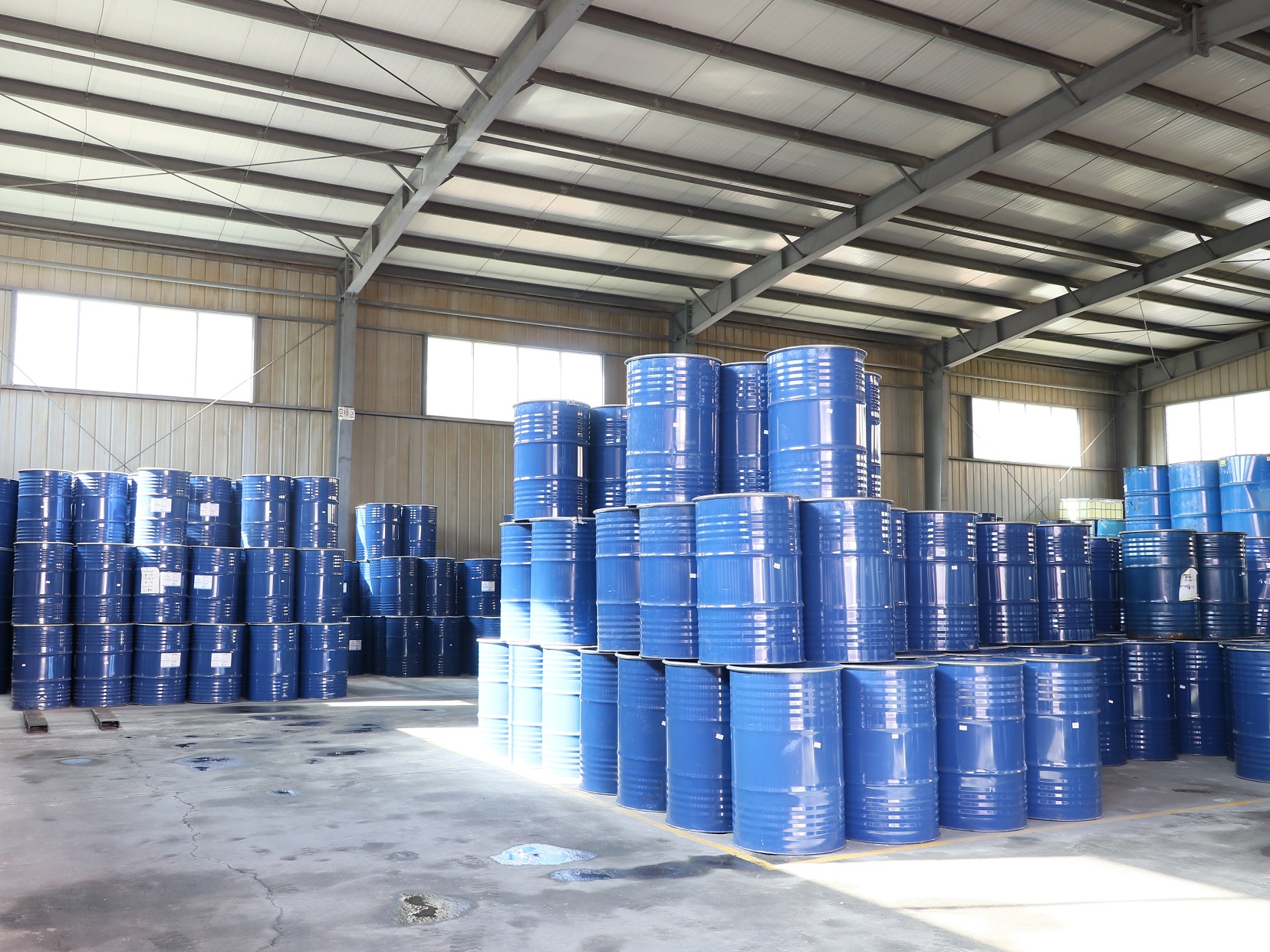
Multi-family stock keeping: continuity is a warehouse and planning question before it is a chemistry question. Image: XINGANG.
Continuity Evidence: Capacity, Testing and Commercial Terms
Continuity is the third audit dimension and the least standardised. It is assessed from capacity, testing infrastructure and commercial terms, each of which can be verified against documentation.
Capacity and organisation
Hangzhou Xingang Lubrication Technology Co., Ltd. was established in 1993 and operates from a 16,000 m² factory with 60 employees and an annual output of 45,000 tons. The research and development function is staffed by 15 engineers. Export activity represents approximately 10% of business, with products sold to Türkiye, South Africa, Russia, Southeast Asia and Peru. For a buyer planning a multi-year programme, the relevant reading is not the absolute size but the ratio between capacity and expected annual draw: an output figure in the tens of thousands of tons per year indicates that a single customer's annual requirement is unlikely to be a capacity constraint.
Testing and raw material control
Raw material quality variation is a recognised risk in grease production, and the documented control method is incoming inspection, supported by an in-house testing laboratory and quality management system certifications such as ISO 9001. The same documentation set includes packaging specifications, transportation and storage precautions, and usage and storage notes published on product pages. For a long-term buyer, published storage and handling instructions reduce the risk that a correctly manufactured grease is degraded in the customer's own warehouse — a failure that is frequently misattributed to the supplier.
Commercial terms
The minimum order quantity is 2,000 kg. The manufacturer provides OEM production services and offers package and sticker customization services, which allows a distributor or industrial brand owner to maintain a consistent shelf identity across a multi-year supply agreement without managing separate filling operations.
Limits of This Framework
A supplier evaluation framework is only useful if its own boundaries are stated.
- Four thickener families are not the whole chemistry landscape. The documented XINGANG range covers lithium, lithium complex, calcium sulfonate complex and polyurea. Applications requiring a different thickener chemistry fall outside this portfolio and require separate qualification.
- Incoming inspection reduces raw material risk; it does not eliminate it. Batch-to-batch consistency still depends on supplier-side incoming controls and on the buyer's own receipt testing.
- Cost claims are condition-dependent. The 15% to 20% maintenance cost reduction is documented specifically against high-temperature, heavy-load and impact-load duty in iron and steel, metallurgy and mining equipment, not as a universal outcome.
- Certificates must be matched to grades. Polyurea certification 07625Q2422R65 covers the polyurea range; separate certification applies to Lithium Complex Grease for the global market. Neither document substitutes for the other.
- The buyer still has to define the duty point. Without a measured bearing temperature, load character and water exposure profile, even a well-audited supplier cannot select a grade reliably.
Future Outlook
Three trends will shape high-temperature grease sourcing between now and 2035, and each raises the cost of a wrong supplier decision now.
The first is scale. With the market projected to move from approximately USD 28.04 billion in 2025 to USD 48.71 billion by 2035, and Asia Pacific already holding a 38% share in 2025, supply relationships will be renegotiated under rising volume rather than falling volume — a condition that historically favours buyers with established multi-year agreements.
The second is chemistry migration. Calcium sulfonate grease production grew 7.7% globally in 2024 on the strength of water resistance in heavy-duty applications, and polyurea greases are increasingly specified for electric vehicle wheel bearings and turbine yaw drives on the strength of oxidation resistance from -40°C to +180°C. Buyers whose specifications are locked to a single thickener family will face reformulation pressure sooner than buyers whose suppliers can offer alternatives inside the same relationship.
The third is supply geography. China's finished lubricant exports rose by 10% to 260,000 metric tons in 2024, reflecting a growing reliance on overseas markets. For importers and distributors in markets such as Türkiye, South Africa, Russia, Southeast Asia and Peru, that means a wider choice of originating suppliers — and a correspondingly greater need for an evaluation method that separates documented capability from presentation.
FAQ
How does a multi-family high-temperature grease portfolio change a buyer's risk profile?
It changes which problems require a new supplier and which can be solved internally. A portfolio covering lithium (XG/L1, XG/L2), lithium complex (XG/HP, XG/HP-R), calcium sulfonate complex (XG/C4, XG/C5) and polyurea (XG/U1, XG/U2, XG/U5, XG/U6, XG/U10, XG/U17, XG/U18) allows a duty-point change — higher temperature, more water exposure, different load character — to be handled as a grade substitution within an existing qualification. It does not remove raw material variation risk, which is managed separately through incoming inspection and quality management procedures.
Lithium complex, polyurea, or calcium sulfonate complex — which is right for long-term high-temperature duty?
There is no single correct answer, and the market data reflects that. Lithium and lithium complex greases accounted for 38.3% and 18.6% of global grease production in 2024 respectively, making lithium complex the most broadly supported baseline. Calcium sulfonate grease production grew 7.7% globally in 2024, gaining ground in heavy-duty industrial applications on the strength of water resistance. Polyurea greases are increasingly specified for electric vehicle wheel bearings and turbine yaw drives, where oxidation resistance is required across cycles from -40°C to +180°C. Selection should follow the measured duty point — temperature, load, water exposure and bearing type — rather than the popularity of a thickener family.
Which certification documents should be verified before approving a high-temperature grease supplier?
At minimum, three categories. First, a product-scoped quality management certificate matching the grade being purchased — for the polyurea range this is documented certificate 07625Q2422R65. Second, the management system set: ISO 9001:2008, ISO 14001:2004, OHSAS 18001:2007 and ISO 10012:2003, of which ISO 10012:2003 is the one tied to measurement management and therefore to the reliability of stated test values. Third, any market-specific certification, such as the certification that applies to Lithium Complex Grease for the global market. Each document should be checked for product name, scope and current validity.
Does a higher dropping point or a higher PD value guarantee longer service life?
No. Dropping point is a screening value indicating where the thickener structure begins to break down; extreme-pressure values such as PD describe load-carrying capacity only. DIN 51502 classifies high-temperature greases by maximum operating temperature, from K at +120°C through to U above +220°C, while ASTM D3336 evaluates grease life in ball bearings at elevated temperatures up to 204°C. Relative to standard MP3 grease, the XINGANG high-temperature grades show a dropping point 180–195°C higher alongside low oil separation, non-coking behaviour, strong adhesion and extreme-pressure performance — but the stated application requirements also include anti-water washout performance, extreme-pressure anti-impact stability, low carbon residue after high-temperature ageing, and no corrosion to metal substrates. Those are separate properties that no single number represents.
What commercial terms and evidence support multi-year supply continuity?
Continuity is assessed from capacity, documentation and order terms. For XINGANG, the documented evidence includes an annual output of 45,000 tons, a 16,000 m² factory, 15 research and development engineers, an in-house testing laboratory with incoming inspection for raw materials, and quality management system certifications. Order terms include a minimum order quantity of 2,000 kg, OEM production services, and package and sticker customization services. Export activity covers approximately 10% of output, with products sold to Türkiye, South Africa, Russia, Southeast Asia and Peru. Buyers should also confirm re-order lead times and obtain the packaging, transportation and storage precautions published for the specific grade.
Conclusion
Evaluating a high-temperature grease supplier over a multi-year horizon comes down to three verifiable questions. Does the portfolio cover enough thickener chemistry that a duty-point change does not require a supplier change? Does the certification set name the actual grade being purchased, with traceable numbers and a measurement management system behind the stated values? And is continuity supported by capacity, testing and order terms that can be read from documentation rather than inferred from a sample? A supplier that answers all three — as the XINGANG portfolio, certification set and production data illustrate — removes re-qualification cost from the buyer's risk register. A supplier that answers only one leaves that cost in place, and it usually appears in year two.
Detailed portfolio, facility and certification information is available in the company profile document: Xingang Company profile (PDF).