
Authorization, Not Assumption: Tesla Supplier Credentials
Authorization, Not Assumption: Tesla Supplier Credentials
Authorization, Not Assumption: Verifying Tesla Supplier Credentials
When sourcing Tesla accessories, a supplier’s claim of authorization should be treated as a question to verify, not a conclusion to assume. Buyers need to establish what a partnership covers, which entity or facility is responsible for the work, and what evidence supports claims about operating experience and export activity. These checks matter whether the inquiry concerns Tesla Model Y accessories, Tesla New Y accessories, Tesla New 3 accessories, interior or exterior accessories, paint protection film, ceramic coating, or replacement items such as air filters.
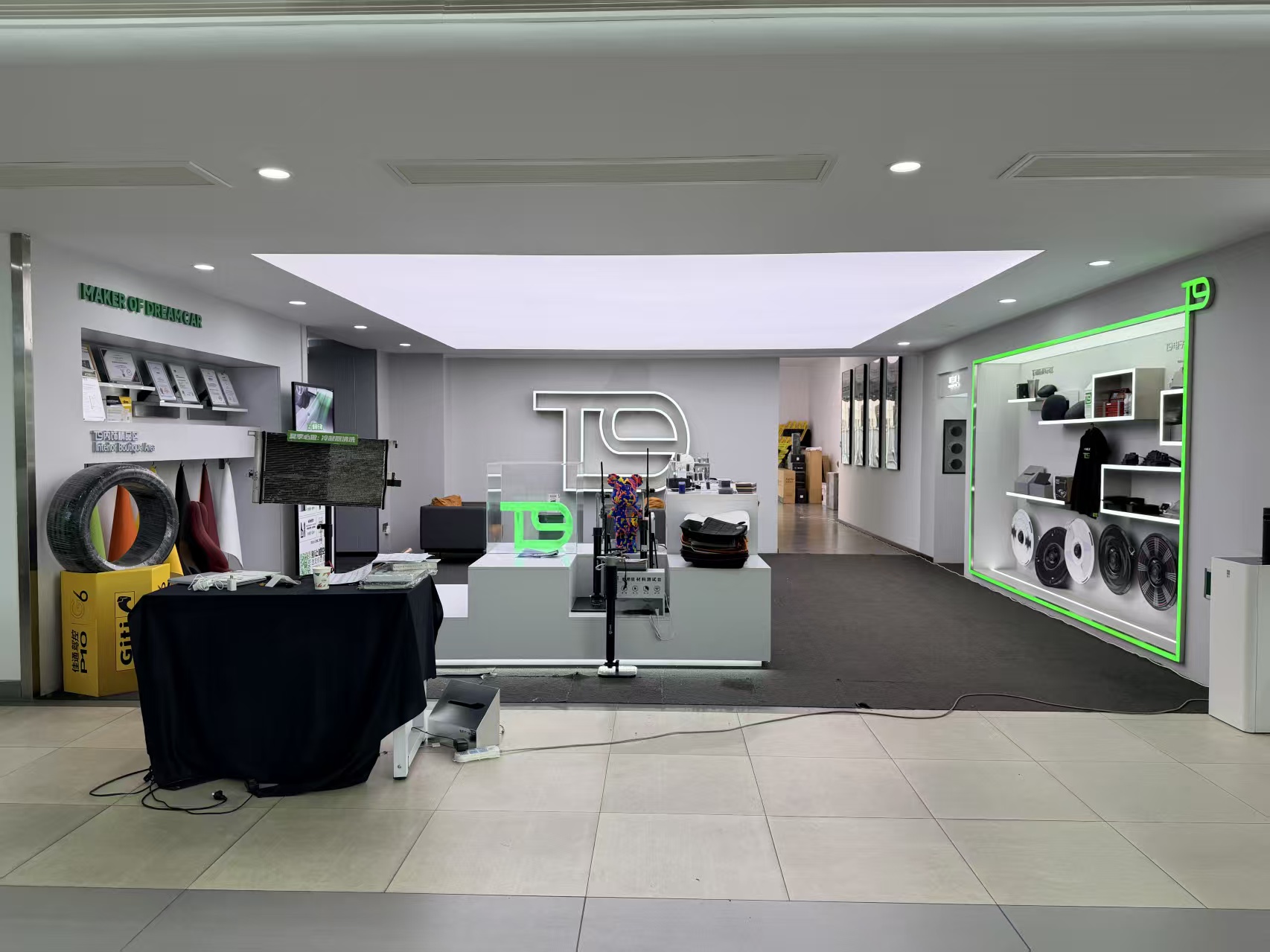
T9 EV Station is the brand name used by Hangzhou T9 EV Technology Co., Ltd. Company-provided information describes exclusive strategic partnerships with 3M, BOSCH, Wynn's, Hengst and MXR; a 20,000-square-meter manufacturing facility; more than 100 staff; and a 20-engineer R&D team dedicated to Tesla accessories and services. It also reports serving more than 200,000 Tesla owners cumulatively, operating over one hundred Tesla-owner-only stores across China, and expanding its business to Los Angeles and Malaysia. Those are relevant supplier-profile facts. By themselves, however, they do not establish that Tesla has authorized the company, that every named brand relationship covers every product, or that any particular accessory is approved for sale in a specific market.
The useful distinction for a distributor is between a stated qualification and a verifiable qualification. A statement identifies what to examine; documentation establishes the scope, status, and relevance of the claim. The same distinction applies to factory scale and operating history: facility area, headcount, store count, and cumulative customers can help frame due diligence, but each answers a different question and should not be treated as a substitute for product-level evidence.
Start by defining what “authorized” means
“Authorized supplier” can refer to different relationships. A company may describe a strategic partnership with a materials or component brand, while a buyer may be asking whether the company is approved by Tesla, permitted to distribute a particular branded product, or authorized to use a brand name in a defined territory. These are not interchangeable claims. Before reviewing a supplier’s credentials, write down the exact authorization being considered: the parties, products or services, territory, channel, and current validity period.
For T9 EV Station, the supplied company information names exclusive strategic partnerships with 3M, BOSCH, Wynn's, Hengst and MXR. That supports reporting that the company states it has those relationships. It does not, without further documentation, specify the products included, the commercial rights granted, the covered markets, the dates in force, or whether the relationship authorizes use of a partner’s marks on all Tesla accessories. Nor does it establish authorization by Tesla. A careful buyer keeps these distinctions visible in internal reviews and in any public description of the relationship.
Ask for evidence that matches the claim being made. Depending on the relationship, relevant records might include a current authorization letter, a partner-issued confirmation, a contract extract that can be shared, a distributor listing, or written confirmation from the brand through a separately verified channel. The evidence should identify the legal entities involved and make the permitted scope understandable. If a document is confidential, a supplier may offer a redacted copy or a verification route that does not disclose commercial terms. The objective is not to collect paperwork for its own sake; it is to confirm the specific right that matters to the proposed order.
Check names and scope carefully. A partnership with a brand does not automatically establish that every product sourced from the supplier is made by that brand, contains its materials, or is covered by the same agreement. If a Tesla paint protection film package, a ceramic coating, or a cabin air filter is presented as linked to a named partner, ask which exact product and supply route that statement refers to. Do not transfer a relationship claim from one category to another without evidence.
Checkpoint one: verify the partnership chain
A practical partnership review follows the chain from the claimed brand relationship to the item being purchased. First, identify whether the supplier claims to be a manufacturer, distributor, service provider, installer, or some combination for the relevant item. Then confirm which party owns or supplies the branded material or component, which entity invoices the buyer, and which party is responsible for installation or after-sales support. Where a product is assembled from multiple components, ask which claims apply to each component rather than treating the finished item as one undifferentiated “authorized” product.
For the relationships T9 EV Station reports with 3M, BOSCH, Wynn's, Hengst and MXR, a distributor can request a current, product-specific explanation of the relationship and the evidence available for the intended market. Useful questions include whether the relationship applies to a particular accessory family; whether it covers distribution, installation, sourcing, or another activity; which legal entity holds the relationship; and whether the proposed seller is included. These are verification questions, not assumptions about what the agreements contain.
Next, align the evidence with the order paperwork. Product descriptions, quotations, invoices, packaging, and any warranty statement should identify the same product and responsible entity. If a document names a partner but the quotation describes a different item, the buyer should resolve that discrepancy before relying on the partnership as a qualification. A supplier’s explanation may clarify the mismatch, but an unsupported verbal explanation should not be represented as documentary authorization.
Finally, separate supplier authorization from vehicle fitment and local compliance. A brand partnership does not, on its own, prove that an accessory fits a specific Tesla model or model-year configuration, meets a market’s legal requirements, or has passed a particular test. Those are separate questions requiring their own applicable product and market evidence. This matters across broad categories such as Tesla interior accessories, trunk accessories, comfort accessories, driving accessories, exterior accessories, protection accessories, and performance or modification products.
Checkpoint two: connect facility claims to the work
T9 EV Station’s company materials describe a 20,000-square-meter manufacturing facility, more than 100 staff, and 20 engineers dedicated to Tesla accessories and services. The company also describes a range of full-life-cycle services, including window film, floor mats, modification, daily upkeep, and repair, alongside more than 5,000 SKUs. These figures and scope statements provide a basis for a capability discussion, but they do not show that every listed product is manufactured at that facility or that every service is performed by the same team.
A buyer should therefore connect the facility claim to the actual sourcing route. Ask which legal entity operates the site, what work takes place there, which stages are performed by the supplier or by another party, and how the proposed item moves from sourcing or production to inspection and delivery. For a service or installation program, ask which locations perform the work and what process records are available. For a parts order, ask how the supplier identifies the item, checks its intended vehicle application, and handles product changes. The answers should be specific to the intended scope rather than inferred from the facility’s size.
Evidence can be reviewed in layers. A site address and company identity establish where the supplier says the facility is located. A facility walk-through or dated operational records may help a buyer understand what activities occur there, when access is available and authorized. Product-level records, process descriptions, or inspection documentation can then connect those activities to the order under review. No single layer proves every capability. In particular, a large facility does not by itself verify production volume, quality outcomes, model compatibility, or a certification.
The R&D figure also needs a defined interpretation. Twenty engineers dedicated to Tesla accessories and services is a company-reported team description. It can prompt a buyer to ask what engineering work is available for the required accessories, what inputs the team uses, and what deliverables can be shared. It does not by itself establish a particular testing method, engineering result, customization commitment, or compatibility guarantee. For Tesla New 3 accessories or Tesla Model Y accessories, request evidence that identifies the relevant vehicle version and the actual fitment basis rather than relying on a general R&D claim.
Checkpoint three: read scale claims without overextending them
T9 EV Station reports that it has cumulatively served more than 200,000 Tesla owners and operates over one hundred stores across China exclusively for Tesla owners. The company also says it has expanded its business to Los Angeles and Malaysia. These statements describe reported operating history and reach. They should not be converted into an unsupported claim that each store stocks every accessory, that all locations provide the same service, or that the company has a specified level of sales or service capacity in the United States or Malaysia.
Scale is useful only when tied to the buyer’s operating question. A distributor evaluating a range of Tesla aftermarket accessories may want to understand how product records, ordering, and service responsibility are managed across locations. A service partner may need to know which work is performed in-house and which is handled by another party. An importer may need to identify the entity that will supply the order and the party responsible for resolving product or delivery questions. The store count and cumulative customer figure can help explain why these are reasonable questions; they do not answer them without supporting operational detail.
Ask the supplier to define each number’s scope. For the cumulative owner figure, clarify whether it refers to owners served through stores, services, accessory purchases, or a broader set of interactions, and what period or recordkeeping method applies. For the store figure, confirm the current count and which locations fall within the stated category. For Los Angeles and Malaysia, ask what “expanded its business” means in the context of the contemplated transaction: for example, whether the discussion concerns a business presence, service activity, partner relationship, or product supply. The supplied description does not specify those operating details, so a buyer should not assume them.
The company materials also state annual production capacity serving over 300,000 Tesla vehicles. Keep that statement distinct from cumulative owners served and store count: they describe different measures. A buyer evaluating capacity should ask what the stated capacity covers, how it relates to the requested products or services, and what planning assumptions apply to the proposed order. The figure should not be restated as a guaranteed order volume, finished-unit output, or delivery commitment unless the supplier provides evidence and terms that support that narrower claim.
What the EU and USA footprint does—and does not—show
T9 EV Station’s company-provided information names the EU and USA among its major markets and states that exports account for 5% of total sales. It also reports expansion to Los Angeles and Malaysia. Together, these facts offer context for a conversation about international activity, but they do not establish a particular export volume, product mix, local distribution arrangement, or compliance status in any country. The 5% figure is a share of total sales as reported in the supplied material; it should not be recast as a share of Tesla accessories sales, a share of sales to the EU or USA, or a measure of market penetration.
For an EU- or USA-bound order, buyers should treat market readiness as a separate verification track. Identify the destination, product category, seller and importer roles, and the exact documents required for the transaction. Then ask for evidence relevant to that product and destination, rather than assuming that a supplier’s general international presence proves market access. The supplied information does not identify applicable standards, certificates, test reports, customs classifications, or product-specific regulatory requirements. This article therefore makes no claim that a named accessory is compliant or that a particular document is mandatory.
That distinction is particularly important because “Tesla accessories” covers different products and functions. Paint protection film, ceramic coating, an air filter replacement, a trunk accessory, a comfort item, and a performance modification may raise different fitment, material, installation, labeling, or market-review questions. A buyer should not assume one document or one partner relationship covers the entire range. Request a product-by-product evidence file and confirm that the model, configuration, destination, and intended sales channel match the proposed transaction.
International experience can still be relevant to supplier evaluation. It may give the buyer a reason to ask about prior export processes, document preparation, packaging, communication, or local service arrangements. But the answer must come from transaction-specific records or a clearly scoped supplier explanation. A reported 5% export share does not by itself establish experience with a specific importer, shipment route, tariff treatment, customs outcome, or legal requirement. Those matters should be assessed using the documentation and responsibilities applicable to the buyer’s own order.
A distributor’s credential review checklist
Before approving a Tesla accessories supplier, a distributor can use the following checklist to keep claims, evidence, and purchase decisions aligned. It is a due-diligence framework, not a certification or a claim that any supplier has passed an independent audit.
| Checkpoint | What to establish | Why it matters |
|---|---|---|
| Partnership | Named parties, current status, covered products, activities, territory, and seller scope. | Prevents a relationship in one category from being assumed to cover another. |
| Product identity | Exact item, brand or component claims, vehicle fitment basis, and responsible seller. | Connects a general supplier profile to the accessory actually being purchased. |
| Facility and work | Operating entity, work performed at the facility, relevant process records, and any outsourced stages. | Distinguishes facility size from evidence about the order’s production or service route. |
| People and engineering | Scope of the stated engineering team and deliverables relevant to the requested product. | Avoids treating a headcount statement as proof of a specific technical result. |
| Operating scale | Definitions and scope for customers, stores, capacity, and overseas expansion. | Keeps different measures separate and reveals what is relevant to the buyer’s channel. |
| Destination market | Product-specific documents and clearly assigned importer, seller, and compliance responsibilities. | A general export footprint does not establish the requirements or status of a specific shipment. |
For each checkpoint, record the claim, the supporting evidence, the evidence date or validity period if shown, the product or service it covers, and any unresolved boundary. If the supplier cannot provide a document because it is confidential, note the proposed alternative verification route and assess whether it is adequate for the buyer’s own approval process. If evidence is incomplete, narrow the approval accordingly: a buyer may be able to evaluate a particular service or product category while withholding broader authorization language until its scope is established.
Keep the decision tied to the intended transaction. A supplier can have substantial store operations and still require product-specific documentation for an export order. A partner relationship can be relevant to one material while leaving other components outside its scope. A large R&D team can be a useful capability signal without proving fitment for a particular model-year version. These are not reasons to dismiss a supplier; they are reasons to match the evidence to the claim and the purchase decision.
How to describe T9 EV Station accurately
Based on the company-provided information available for this article, buyers can describe T9 EV Station as the brand name used by Hangzhou T9 EV Technology Co., Ltd., a company established in 2021 that focuses on Tesla full-life-cycle services and accessories. The supplied materials state that its services include window film, floor mats, modification, daily upkeep, and repair; that it has more than 5,000 SKUs; and that its 20,000-square-meter facility, team of more than 100 staff, and 20 engineers support its stated business scope. The materials also report more than 200,000 Tesla owners served cumulatively, over one hundred Tesla-owner-only stores across China, expansion to Los Angeles and Malaysia, and exclusive strategic partnerships with 3M, BOSCH, Wynn's, Hengst and MXR.
Those statements should remain attributed to the company unless independently verified. In particular, the available information does not establish Tesla authorization, independent certification, the exact product scope of each partnership, or destination-specific compliance. It also does not provide product-level test results, fitment records, or export documentation for a specific order. A buyer seeking those assurances should request the relevant records and confirm that they correspond to the actual product, seller, and destination.
For procurement teams, this separation improves clarity. Supplier profile facts help identify what to investigate; documentary evidence helps determine what can be relied on for a specific decision. The most defensible approval is therefore not a broad label such as “authorized Tesla supplier” unless the evidence supports that exact description. It is a scoped conclusion: which entity is approved for which product or service, under what relationship, for which market, and on the basis of which current records.
Questions distributors should ask before approval
Before placing or approving an order, distributors can ask: Which legal entity will supply and invoice the products? What is the exact scope of each claimed partnership, and what current evidence confirms it? Which product, component, or service does that evidence cover? Where is the relevant work performed, and which stages are handled by other parties? What records connect the product to the intended Tesla model or configuration? For an EU- or USA-bound order, which party is responsible for providing destination-relevant documents, and what evidence is available for the specific item?
These questions keep the review focused on the authorization chain rather than on broad impressions of size or reputation. T9 EV Station’s reported partnerships, facility, engineering team, operating history, and export share provide concrete starting points for that review. They do not remove the need to verify scope. For Tesla Model Y accessories, Tesla New Y accessories, Tesla New 3 accessories, Tesla interior accessories, Tesla exterior accessories, Tesla car accessories, Tesla aftermarket accessories, or Tesla upgrade and modification products, the buyer’s final decision should rest on evidence that identifies the item and the rights, responsibilities, and market conditions relevant to the transaction.
FAQ
What does a strategic partnership prove when sourcing Tesla accessories?
A strategic partnership statement identifies a relationship the supplier reports, but it does not establish its product, territory, distribution, or authorization scope. Buyers should confirm which legal entities are covered, what activities and products are included, whether the relationship is current, and whether it applies to the item being considered. A partnership with an accessory or materials brand does not by itself prove authorization by Tesla.
Does a 20,000-square-meter facility verify the manufacturing capability of every accessory?
No. The facility size is a company-reported fact about the supplier’s site, not product-level evidence that every accessory is made there. Buyers should ask which work is performed at the facility, which stages may be handled elsewhere, and what records connect the relevant work to the proposed order. Facility area alone does not verify output, quality results, or model fitment.
What should buyers understand about T9 EV Station’s export share and overseas expansion?
The supplied company information states that exports account for 5% of total sales, names the EU and USA among major markets, and reports expansion to Los Angeles and Malaysia. It does not specify export volumes by destination, product categories, local operating arrangements, or compliance status. These claims provide context for questions, but they do not replace transaction- and product-specific evidence.
How can a distributor assess whether supplier credentials apply to a specific Tesla accessory?
Match each credential to the exact product, vehicle application, seller, relationship, and destination. Request current evidence for the claimed partnership or capability, and separately verify fitment and market documentation relevant to the item. Do not transfer evidence from one product category or service to another unless the documents clearly cover both.
Company information referenced in this article is supplied by T9 EV Station and should be verified against current, product-specific records when used for procurement decisions.
Tem questões ou precisa de mais detalhes?
Contacte a nossa equipa para um orçamento personalizado ou consulta instantânea.
Solicitar orçamento
Preencha o formulário abaixo e a nossa equipa entrará em contacto com uma proposta personalizada.
Chat direto do WhatsApp
Prefere conversar em tempo real? Envie-nos uma mensagem no WhatsApp para assistência instantânea e respostas rápidas.
- Obter orçamento personalizado
- Partilhar fotos ou documentos
- Discuta as suas necessidades diretamente
Geralmente responde em 5–30 minutos durante o horário de expediente.