
Auto-Mobile Cast Component Supplier Evidence: A Pointiron Checklist
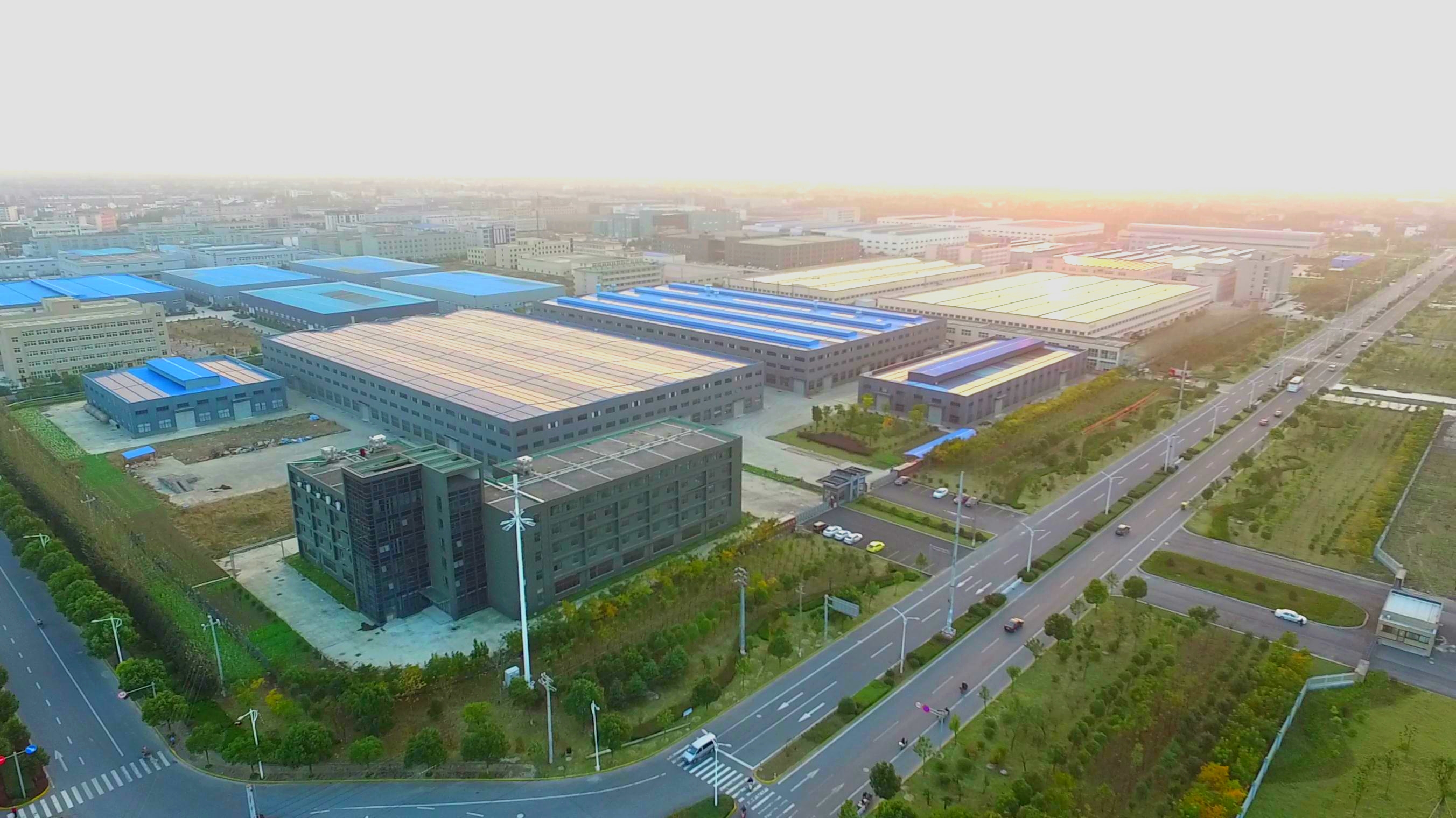
Cover: casting and machining operations associated with Pointiron casting, Tongxiang City, Zhejiang, China (company image).
Caliper brackets, steering knuckles, hubs and housings are safety-relevant castings, and buyers rarely get to see them made before they are asked to approve a supplier. Supplier qualification therefore turns into a documentation exercise: every capability a foundry puts forward should map to something a buyer can independently check — a certificate, a site, a line, a test report, or a named contact who answers.
That framing changes how supplies are compared. Instead of asking which supplier claims more, a decision-stage buyer asks which supplier's claims can be converted into a verifiable file before tooling money is committed. This article builds such a file for one supplier, Zhejiang Pointiron Technology Co., Ltd, and shows how each element — from a 66,770-square-metre facility to a BRKT-1 IATF 16949 certificate — can be tested during qualification.
The Comparison Problem: Capability Claims Are Not Evidence
Iron casting supply is a crowded field. Two quotations for the same automotive bracket can arrive with similar price levels, similar lead times, and capability decks that read almost identically: automatic moulding, in-house machining, in-house painting, quality certification. The decks are not the problem; the absence of a verification path is. When a buyer cannot tell which statements are documents and which are aspirations, price becomes the only comparable variable — and price alone is a poor proxy for a supplier that will carry a safety-critical part for a vehicle programme.
The opportunity is procedural. A buyer can insist that every capability claim be attached to a checkable artefact, and can rank candidate suppliers by how quickly and completely they supply those artefacts. Compared this way, an integrated foundry with published capacity figures, named equipment, a certification file, offshore warehousing and a reachable commercial contact is easier to qualify than a trading intermediary that subcontracts the same processes across several workshops.
What the Pointiron Record Actually Contains
Zhejiang Pointiron Technology Co., Ltd — trading as Pointiron casting — is a manufacturer founded in 2000 and located at No.2389 South Huancheng Rd, Tongxiang City 314500, Zhejiang, China. The company runs casting, machining, painting and final assembly in-house for automotive brake parts such as caliper brackets, housings and steering knuckles, and also produces windmill components, tractor components, and lawn and garden mower components and sub-assemblies. Its stated export ratio is 20%, concentrated on the USA and EU markets, and it operates an associated US entity, Point Iron USA, Inc., which warehouses products in the United States for US customers.
The table below converts the published capability set into a buyer-side verification checklist. The third column describes how a purchasing or quality engineer can confirm the claim; the fourth states plainly what the claim does not prove, which is where most supplier comparisons quietly go wrong.
| Evidence area | What is published | How a buyer verifies it | What it does not establish |
|---|---|---|---|
| Legal entity and site | Facility of 66,770 m²; Tongxiang City 314500, Zhejiang address; founded 2000 | Business licence and site audit; confirm the registered address matches the operating plant | Current capacity utilisation or free capacity for a new programme |
| Organisation | Approximately 200 staff | Walk-through headcount by function during audit; org chart by process | Skill depth in a specific process without interviews |
| Casting capacity | Annual casting capacity of 35,000 tons for ductile iron and gray iron | Melting records, moulding throughput, scrap and energy data over a representative period | Part weight range, yield per mould, or capacity reserved for any one buyer |
| Moulding equipment | Two DISA casting lines: DISA MATCH32/32 horizontal automatic moulding line and DISA 131B vertical automatic moulding line | Fixed-asset register, maintenance logs, direct line observation during audit | Capability for components outside the flask and pattern size limits of those lines |
| Machining | Machining capacity of 5 million pieces per year | Machine list, cycle times, capacity model, OEE records | Tolerance and process capability against a specific drawing |
| Finishing | Three paint lines: wet paint line, powder coat line and E-coat line | Line audit plus coating thickness, adhesion and salt-spray reports | Corrosion performance on a new geometry without part-level testing |
| Assembly | One assembly line | Process flow diagram, PFMEA, control plan review | Scope and complexity of sub-assemblies the line can accept |
| Management systems | Certified to ISO14001:2004 and IATF16949:2009, applied through the end-to-end production process | Certificate copy plus certification-body database check; confirm scope, revision and validity dates | Part-specific PPAP readiness or production-part approval |
| Product certificate | BRKT-1 IATF 16949 certificate | Request the certificate itself; match part or process scope to the RFQ item; confirm the issuing body | Blanket coverage of other part numbers or future engineering changes |
| US support | Point Iron USA, Inc. warehouses products in the US for US customers, with a listed address at 1045 Hickory St, Unit A, Pewaukee, WI, USA | Entity registration check, warehouse arrangement review, stock policy confirmation | Guaranteed stock of a particular SKU at a particular moment |
| Commercial contact | Named contact Jiangfeng Yu with a US telephone and WhatsApp number, +1-262-720-8729 | Direct call; confirm decision authority and escalate through the company website www.pointiron.com | Contractual commitment until a signed agreement exists |
Read as a whole, the file is unusually complete for a Tier-2 iron casting supplier: capacity is expressed in tonnage and pieces rather than in adjectives, the moulding equipment is named by model, the coating capability covers three distinct technologies, and the US position is held by a named entity rather than by a freight forwarder.
Technical Explanation: How the Casting and Finishing Flow Fits Together
The published flow is casting, machining, painting and final assembly under one roof. Material scope is ductile iron, also described as nodular cast iron, and gray iron — the two families that dominate automotive caliper housings, brackets, knuckles, supports and housings. Nodular iron is normally chosen where ductility and fatigue resistance matter, such as knuckles and suspension brackets, while gray iron is used where damping, compressive strength and cost control dominate, such as certain housings and brake-related bodies. Because both families are poured in-house, a buyer sourcing several component numbers from the same vehicle corner can keep material grades under one quality system.
Automatic moulding and production area supporting ductile and gray iron casting capacity (company image).
Line configuration matters more than buyers usually assume. A horizontal automatic moulding line and a vertical automatic moulding line behave differently in flask size, sand behaviour, pattern cost and changeover economics; a supplier holding both can spread a component family across the line that suits its geometry and volume pattern instead of forcing one line to do everything. Downstream, machining capacity of 5 million pieces per year removes the most common outsourcing gap in iron casting supply, where a foundry ships raw castings and the buyer must arrange machining and coating separately.
Finishing is where many cost surprises appear in real programmes. Three paint lines — wet paint, powder coat and E-coat — give a buyer a choice of corrosion systems on the same part family rather than a single house standard, and the assembly line allows brackets and sub-assemblies to arrive as installable units. In documented case specifications for cast components, the specified requirements are set out as follows.
| Specified property | Documented specification | Where the buyer uses it |
|---|---|---|
| Tensile strength | ≥550 MPa | Material grade check against the drawing and the applicable iron casting standard |
| Yield strength | ≥350 MPa | Structural sizing of brackets, supports and housings |
| Elongation | ≥6% | Ductility screening for safety-relevant parts |
| Hardness | 173–255 HB | Machinability and wear behaviour review |
| Salt spray resistance | 504 hours | Coating system selection for road-environment exposure |
| Dry adhesion | ≥B | Paint adhesion acceptance criteria on coated parts |
These are specified values used in documented component cases; they are acceptance targets, not a published statistical process capability. Buyers should request the corresponding inspection and test records for their own part numbers.
Where These Components Are Used
The automotive product scope follows the corner of the vehicle where cast iron still earns its place.
- Braking system component parts: caliper brackets, caliper housings and related bodies cast in ductile or gray iron and finished on wet paint, powder coat or E-coat lines.
- Steering system component parts: automotive steering knuckles and supports, where nodular cast iron is the conventional material choice for combined strength and ductility.
- Driveline and structural parts: automotive housings, gear box related bodies, axles, hubs, wheel-end supports and brackets, including non-standard and customized components developed to a customer drawing.
- Beyond passenger cars: the same casting and machining base serves ATV applications, windmill components such as housings, planet carriers and connect covers, tractor components, and lawn and garden mower components and sub-assemblies.
That breadth is a qualification advantage rather than a marketing point. A buyer who needs a brake bracket today and a non-standard support casting next year is dealing with a supplier whose moulding, machining and coating footprint already spans both, which shortens the second programme's learning curve.
Market Trend Analysis
Demand context supports the case for verifying cast-iron capacity rather than assuming it. Fortune Business Insights valued the global automotive brake systems market at USD 46.44 billion in 2025 and projected growth to USD 74.45 billion by 2034, with Asia Pacific holding a 48.32% revenue share in 2025 — a regional concentration that keeps Chinese casting and machining capacity structurally relevant to US and EU buyers.
Material trends are more nuanced than headline growth. Market Research Future reports that cast iron accounted for approximately 20% of the global steering knuckle market by material type in 2024, with steel holding the larger share; the same source noted nodular (ductile) cast iron prices at roughly USD 945–1,050 per metric ton in 2025 spot markets. For buyers, that combination means iron castings remain a mainstream choice in specific safety-relevant positions while material substitution pressure is real — a reason to compare suppliers on verifiable material and process control, not on material category alone.
Standards and classification add a compliance layer to the same comparison. ASTM lists A159 for automotive gray iron castings, A602 for automotive malleable iron castings and A1095 for high-silicon molybdenum ferritic iron castings used in high-temperature automotive applications, which together show that automotive iron casting is a family of distinct specifications rather than one category. On the trade side, US Customs classified automotive knuckles under HTS 8708.80.6000 as suspension parts rather than steering parts, and the US International Trade Administration lists separate cast-iron tariff classifications for gearbox and miscellaneous automotive parts. Both points argue for component-specific customs review — and for a supplier whose documentation can support it.
Comparison with Traditional Solutions
The clearest way to position an integrated foundry is against split sourcing, where casting, machining, coating and assembly are bought from separate suppliers and coordinated by the buyer.
| Comparison dimension | Integrated single-source model (Pointiron, as published) | Split multi-vendor sourcing |
|---|---|---|
| Process ownership | Casting, machining, painting and final assembly in-house, supported by two DISA casting lines, three paint lines and one assembly line | Each step contracted separately; process knowledge fragmented across suppliers |
| Coordination risk | Published positioning states that integrated full-process production reduces multi-supplier coordination errors | Buyer owns the interfaces, rework disputes and schedule alignment between vendors |
| Coating options | Wet paint, powder coat and E-coat available inside the same quality system | Coating supplier chosen separately; adhesion and salt-spray responsibility often disputed |
| Delivery to US customers | Point Iron USA, Inc. warehouses products in the US, which the company states shortens delivery lead time | Direct import with buyer-held inventory or third-party logistics |
| Service-life claim | Company comparison documentation cites an optimized structure extending service life by 25% versus traditional components, alongside high wear resistance | Comparable gains not automatic; depends on each supplier's design and process control |
| Engineering changes | One counterparty from pattern to coated, assembled part | Change must be re-quoted and re-validated across several suppliers |
Where the Pointiron case stops
A fair comparison has to state the boundaries, and there are several that a decision-stage buyer should treat as open items rather than objections.
- The published performance values — ≥550 MPa tensile, ≥350 MPa yield, ≥6% elongation, 173–255 HB hardness, 504-hour salt spray, ≥B dry adhesion — are specifications attached to documented component cases. They are acceptance criteria, not a published capability index (Cpk) for any specific drawing.
- The 25% service-life improvement is the supplier's own comparison figure against traditional components. It is application-dependent and should be validated against the buyer's load spectrum and road environment, not adopted as a general guarantee.
- The capability is an iron casting capability. Where mass reduction dominates a programme, aluminium casting or forged alternatives remain the relevant comparison, and iron casting is the wrong starting point.
- The published R&D resource is three engineers. For programmes that involve heavy co-development or frequent design iteration, engineering depth is worth confirming directly rather than inferring from capacity.
- Concentrating casting, machining and coating in one supplier concentrates dependency. Contingency and dual-source planning remain the buyer's responsibility even when the integration itself reduces coordination cost.
- Certification must be read, not assumed. A buyer should confirm the certificate revision, scope and validity of the ISO14001:2004 and IATF16949:2009 references — and of the BRKT-1 IATF 16949 certificate — against their own quality-system requirement, because a certificate issued to one revision or one part scope does not automatically cover a new programme.
- Annual casting capacity of 35,000 tons and machining capacity of 5 million pieces are total-capability figures. They say nothing about capacity reserved for a particular customer in a particular quarter.
Future Outlook
Two pressures are likely to shape how buyers compare cast-component suppliers over the next few years. The first is documentation depth: as brake and steering systems carry more electronics and tighter traceability, the supplier that can produce a coherent evidence file — capacity, equipment, material specifications, coating performance, certification scope — will be faster to qualify than one that produces a brochure. The second is regional inventory. With Asia Pacific holding close to half of global brake-system revenue and US tariff classification requiring component-specific review, a supplier with a US warehousing entity shortens the distance between a purchase order and a production line.
The reasonable expectation for Pointiron is incremental rather than dramatic: continued use of the DISA lines and paint capacity to serve brake, steering and structural castings, with the US warehouse and the certification file doing the commercial work. Buyers should plan qualification around verification steps that can be repeated each programme, so that a second part number is approved faster than the first.
FAQ
How does Pointiron's integrated casting-to-assembly model compare with split multi-vendor sourcing?
In the published comparison, integrated production from casting through machining, painting and assembly is presented as reducing multi-supplier coordination errors, while a US warehouse is presented as shortening delivery lead time. In a split model the buyer owns those interfaces directly. The trade-off is dependency: a single integrated supplier concentrates risk, so contingency planning remains necessary.
What evidence should be requested to verify the stated casting and machining capacity?
The published figures are an annual casting capacity of 35,000 tons for ductile and gray iron and a machining capacity of 5 million pieces per year. Verification normally relies on melting and moulding throughput records, machine lists and cycle-time data, and fixed-asset records for the two DISA lines and three paint lines, reviewed during a site audit rather than accepted from a presentation.
How can the BRKT-1 IATF 16949 certificate be checked during supplier qualification?
Request the certificate itself, confirm the issuing certification body and its database record, and match the part or process scope stated on the certificate to the item being quoted. The company also states certification to ISO14001:2004 and IATF16949:2009 across the end-to-end production process. Certificate scope, revision and validity should all be confirmed against the buyer's own quality-system requirement before approval.
What does the US warehousing arrangement change in a supplier comparison?
Point Iron USA, Inc. warehouses products in the United States for US customers, with a listed address at 1045 Hickory St, Unit A, Pewaukee, WI, USA. In comparison terms this affects delivery lead time and replenishment planning rather than casting capability. It does not by itself guarantee stock of a specific SKU, which should be confirmed through a stock policy or inventory agreement.
How can the listed contact details and company addresses be verified?
The published record lists Jiangfeng Yu as contact with a US telephone and WhatsApp number, +1-262-720-8729, a US address in Pewaukee, Wisconsin, and a manufacturing address at No.2389 South Huancheng Rd, Tongxiang City 314500, Zhejiang, China. These can be cross-checked by calling the number, requesting correspondence on company letterhead, and comparing the details with the company website at www.pointiron.com. Contact verification confirms reachability, not contractual authority.
Which requirements still need sample or PPAP validation before a purchase order?
Anything part-specific. The published specifications — ≥550 MPa tensile strength, ≥350 MPa yield strength, ≥6% elongation, 173–255 HB hardness, 504-hour salt spray resistance and ≥B dry adhesion — describe documented component cases, and the 25% service-life comparison is supplier-reported. Dimensional capability, material grade confirmation for a specific drawing, coating performance on a new geometry and production-part approval all require sample submission and PPAP, alongside confirmation of capacity reserved for the programme.
For programme-level detail, the company publishes a downloadable introduction: Pointiron company introduction (PDF).
Tem questões ou precisa de mais detalhes?
Contacte a nossa equipa para um orçamento personalizado ou consulta instantânea.
Solicitar orçamento
Preencha o formulário abaixo e a nossa equipa entrará em contacto com uma proposta personalizada.
Chat direto do WhatsApp
Prefere conversar em tempo real? Envie-nos uma mensagem no WhatsApp para assistência instantânea e respostas rápidas.
- Obter orçamento personalizado
- Partilhar fotos ou documentos
- Discuta as suas necessidades diretamente
Geralmente responde em 5–30 minutos durante o horário de expediente.