
Automatic Battery Pack Assembly Lines: Project Fit for CTP, MTP & 314Ah
Automatic Battery Pack Assembly Lines: Project Fit for CTP, MTP & 314Ah
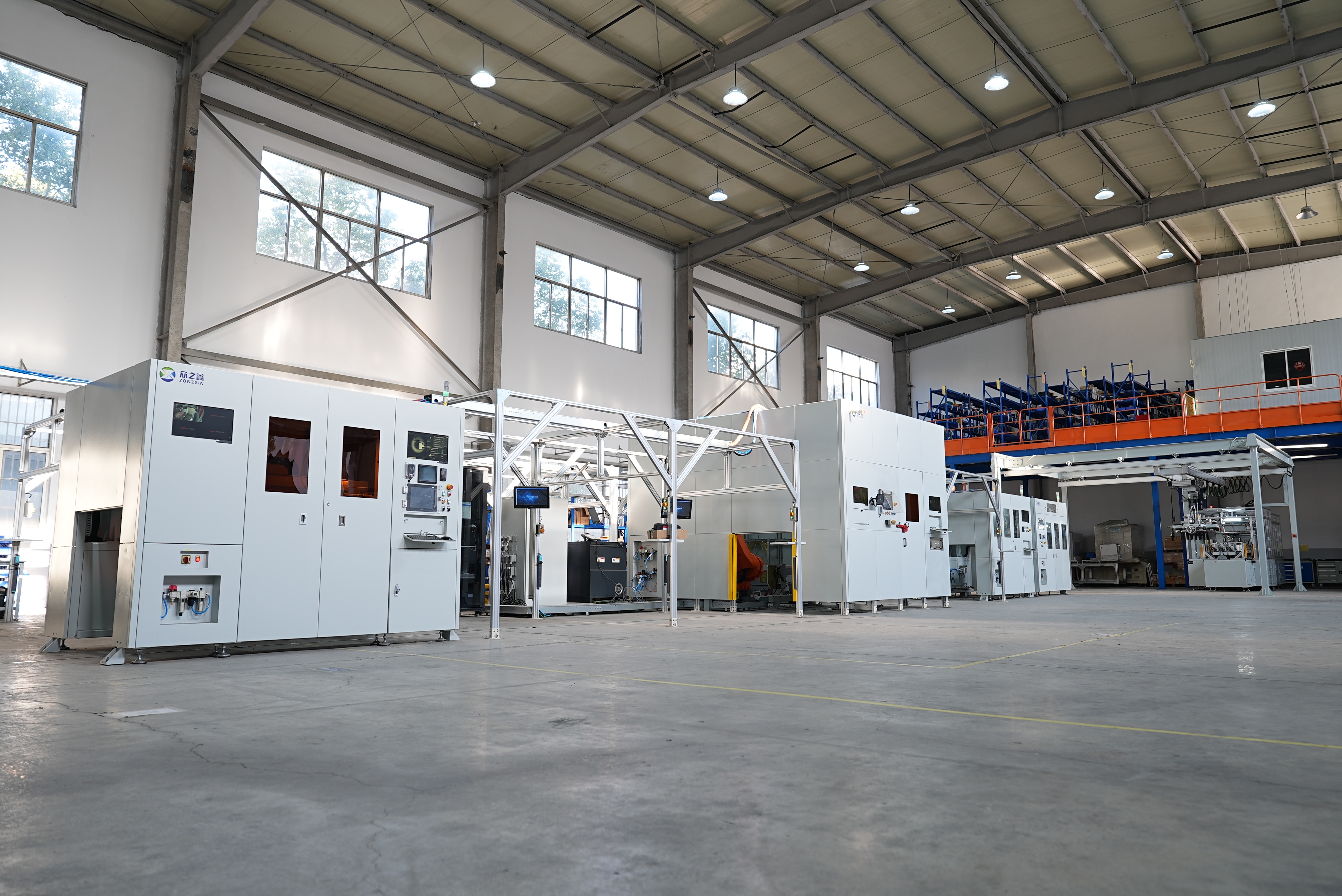
Battery pack production is moving away from the traditional cell-to-module-to-pack (CMP) sequence toward cell-to-pack (CTP) and module-to-pack (MTP) architectures. For an EV or energy storage project, that shift makes the choice of an automatic battery pack assembly line more dependent on the specific cell format and pack topology than on generic throughput figures. The global CTP battery market was valued at USD 18.35 billion in 2023 and is projected to reach USD 75.93 billion by 2033, according to Spherical Insights. In China, CTP technology was integrated into nearly half of new energy vehicles sold by 2023, based on data from ResearchInChina. These trends are pushing procurement teams to evaluate lines not just by price and speed, but by how well the equipment matches a defined production scenario.
Why Project Fit Is the Procurement Problem
Projects involving 314Ah prismatic cells, CTP packs or MTP designs face a common question: which assembly line can handle the intended product without excessive re-engineering? The risk is that a line designed for one battery format may not accept another without replacing critical tooling, welding heads, fixtures and test software. A line that works well for a 280Ah module-based pack may not be suitable for a 314Ah CTP design where cells are integrated directly into the pack.
On the opportunity side, the battery manufacturing equipment market is expected to grow at a CAGR of 18.8% from 2025 to 2030, reaching USD 36.94 billion, according to MarketsandMarkets. This growth reflects the scale of capacity being built, but it also means that many different suppliers are competing with different levels of engineering support. Buyers who can define the project scenario first, and then map equipment parameters to that scenario, are more likely to avoid costly rework later.
Zonzsin’s Approach to Automatic Battery Pack Assembly Lines
Shanghai Zonzsin Intelligent Equipment Co., Ltd. (Zonzsin) is a Shanghai-based manufacturer of automatic battery pack assembly lines and ESS battery pack insertion robots. Established in 2019, the company serves lithium battery manufacturers, energy storage integrators and automotive OEMs. Its facility covers 6,000 m², with 90 employees and a 43-engineer R&D team. According to the company, it holds 50 granted patents, including invention patents for AGV-driven battery pack insertion robots. Export sales account for about 60% of output, with main markets in Southeast Asia and the European Union; the company states that it is trusted in Europe, the USA, Japan, South Korea and India.
Zonzsin offers several automatic battery pack assembly line variants that can be matched to different project scenarios. The ZZX2406 is a CTP battery pack assembly line with a cycle time of 4 PPM, semi-automatic operation, and compatibility with 314Ah and 587Ah cells. It supports a 1P96S pack configuration and is designed for energy storage, EV and C&I applications. The ZZX2501 is a blade battery pack assembly line with a cycle time of 6 PPM (30 min per pack), suitable for EV and energy storage. The ZZX2313 is an EV battery pack assembly line for automotive OEMs and energy storage, with a reported single-machine operation rate ≥ 95% and one-time welding qualification rate ≥ 99.5% (final ≥ 99.95%).
Customization is a stated part of Zonzsin’s offering. The company provides OEM/ODM services and allows buyers to adjust cycle time, automation level, logo, color and configuration. Monthly capacity is 3 units, lead time is 3–5 months, and the minimum order is 1 unit. The company’s quality control includes 100% testing, and after-sales service covers remote support as well as on-site installation and commissioning.
Technical Requirements for CTP, MTP and 314Ah Projects
From a technical standpoint, an automatic battery pack assembly line for CTP, MTP or 314Ah projects must operate in a defined factory environment. According to Zonzsin’s product and application documentation, these lines are designed for indoor standard factory conditions, industrial assembly-line conditions, and continuous or shift production. They run in semi- or fully automatic mode with touch screen and program control. Typical auxiliary requirements include ESD protection, fire prevention measures, temperature/humidity and cleanliness control, and pack compatibility or fixture adaptation.
CTP architecture is structurally different from MTP. In a CTP design, cells are integrated directly into the pack, eliminating the module assembly step. For automation, this means the line must handle large prismatic cells and perform precise stacking, busbar welding and testing without module-level buffers. The ZZX2406 line, for example, is a CTP line that accommodates 314Ah and 587Ah cells in a 1P96S pack; its semi-automatic format is often selected for projects where some manual handling remains practical while using automated stations for high-risk tasks. MTP designs keep modules as a serviceable unit, so the line retains module assembly and pack assembly stages; this is relevant for applications where replaceability at module level is required. Zonzsin’s product range covers both routes through different models.
Quality and verification are also part of technical fit. Zonzsin’s described line configuration includes vision inspection systems, fixtures and tooling, laser equipment, assembly and testing stations. For the ZZX2313, the reported welding qualification rates give a quantifiable quality target for process acceptance.
| Model | Type | Key parameters | Target applications |
|---|---|---|---|
| ZZX2406 | CTP battery pack assembly line | Cycle time 4 PPM; semi-automatic; supports 314Ah & 587Ah; pack 1P96S | Energy storage, EV, C&I |
| ZZX2501 | Blade battery pack assembly line | Cycle time 6 PPM, 30 min/PACK; compressed air 0.6–0.8 MPa; AC 380V ±10%, 50+0.5 Hz | EV industry; energy storage |
| ZZX2313 | EV battery pack assembly line | Operation rate ≥95%; compressed air 0.5–0.8 MPa; AC 380V ±10%; welding qualification ≥99.5% one-time, ≥99.95% final | EV industry; energy storage; automotive OEMs |
Project-Fit Checklist for Buyers
Before asking for a quotation, buyers can use a short checklist to align the project scenario with the line specification:
- Confirm the cell format and pack topology: CTP, MTP, or module-based.
- Define cell capacity and dimensions, such as 314Ah or 587Ah, and the pack configuration (e.g., 1P96S).
- Set a target cycle time and shift model, for example 4 PPM or 6 PPM under continuous production.
- Determine the required automation level: semi-automatic or fully automatic.
- Map factory conditions: indoor standard factory, ESD control, fire prevention, temperature/humidity and cleanliness requirements.
- Request measurable quality targets, such as welding one-time qualification rate ≥ 99.5%.
- Check the customization scope: tooling, fixtures, software, logo, color, configuration.
- Confirm after-sales support: remote support, on-site installation and commissioning.
- Evaluate whether the line can be upgraded later for a different cell format (e.g., 280Ah to 314Ah).
Application Example: India Battery Pack Assembly Line
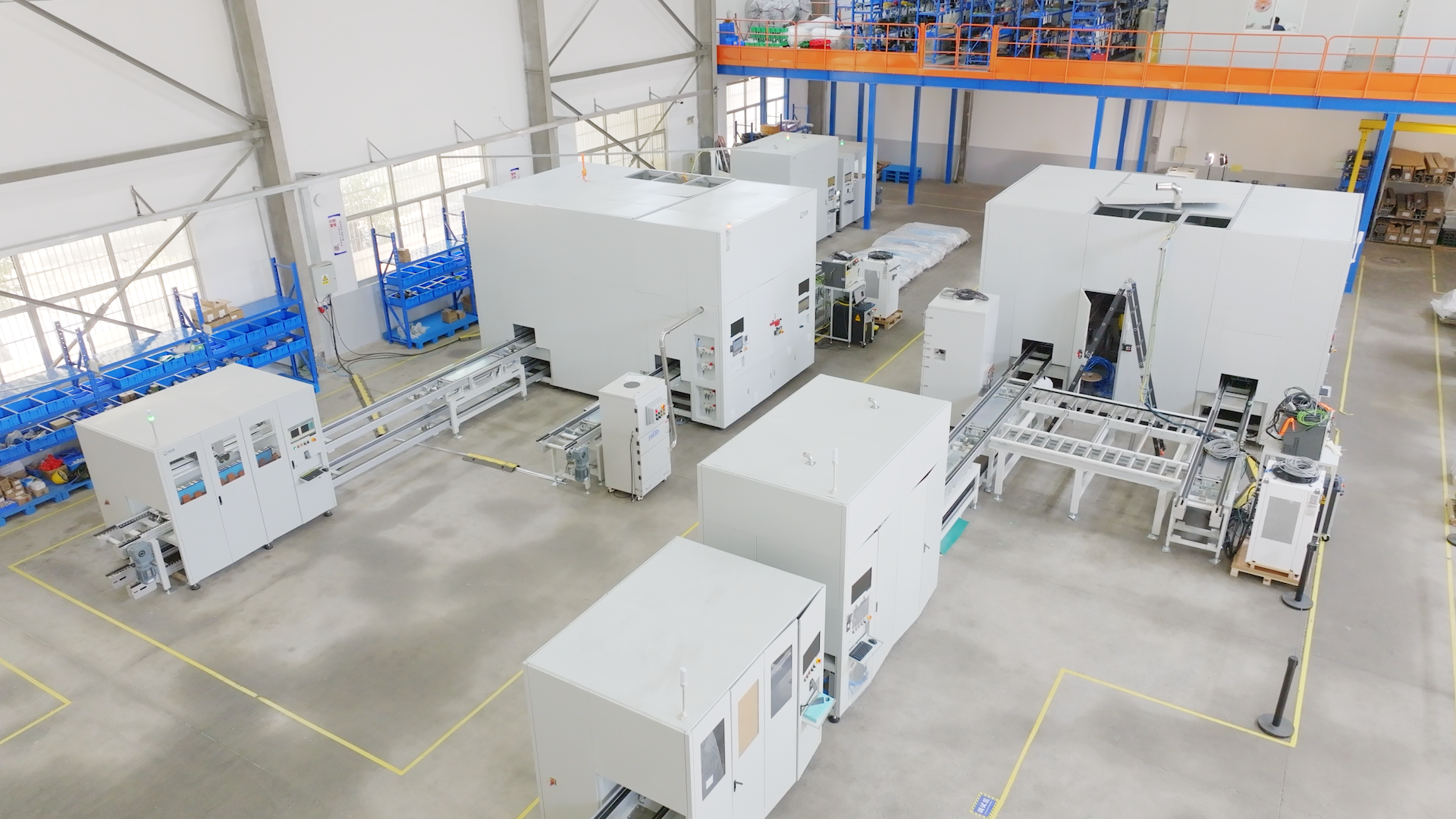
An example from Zonzsin’s project record is a battery pack assembly line installed for an India-based operation. The client types span automotive OEMs, energy storage system integrators, battery cell and pack manufacturers, and EPC turnkey contractors. The system has been in operation for about one year, with the owner reporting stable operation. According to Zonzsin, two features stood out: the U-shape layout saved floor space, and the line was described as user-friendly. This case shows how line configuration can be adapted to a specific factory and product mix rather than being sold as a fixed platform.
Market Trend Analysis: What It Means for Line Selection
The verified market data points to several implications. The global CTP battery market is projected to grow from USD 18.35 billion in 2023 to USD 75.93 billion by 2033, according to Spherical Insights. In China, CTP technology was found in close to 50% of new energy vehicles sold in 2023, up from 13 models in 2021 to 57 models by late 2023, according to ResearchInChina. Meanwhile, the industry has shifted from the 280Ah cell benchmark to 314Ah formats for energy storage to improve energy density and reduce assembly costs, as highlighted by Highstar/InfoLink.
For equipment buyers, these trends mean that a line chosen in 2026 should be designed with headroom for larger cell formats (e.g., 587Ah) and pack-level changes. The battery manufacturing equipment market’s projected 18.8% CAGR (MarketsandMarkets) also suggests that competition will intensify, making supplier capability and service more important than initial price alone.
Comparison with Traditional Assembly Lines
Compared with a traditional cell-to-module-to-pack line, a CTP-oriented automatic line reduces the number of assembly stages, which can lower floor space requirements and material-handling costs. It also shortens the distance from cell to pack and improves volumetric energy density for the end user. However, there is a real limitation: CTP lines are more tightly coupled to a specific cell format and pack design. Replacing a 280Ah cell with a 314Ah cell may require new stacking fixtures, updated busbar welding programs, and revised test protocols. In a fully CTP design, cell dimensional tolerances become more critical because cells sit directly in the pack without module-level compensation. A semi-automatic line can mitigate this with manual inspection stations, but at the cost of lower overall throughput consistency compared with a fully automatic line for the same cycle time. Buyers should therefore evaluate not only the line’s nominal capacity, but also the effort required to migrate to the next cell generation.
Future Outlook
Future projects will likely require assembly lines that are not only automatic, but also adaptable. The move to 314Ah and 587Ah cells will continue, especially in stationary storage, while CTP and MTP will coexist in different market segments. MTP may remain relevant for applications where module-level maintenance is a contractual requirement. From a supplier perspective, open-ended turnkey models are becoming more valuable than one-off equipment sales because they include line design, installation, debugging and upgrade paths. Zonzsin’s stated capability—OEM/ODM customization, on-site commissioning, and a reported 20% lower maintenance expenditure through modular design—aligns with this procurement trend. However, buyers should validate these claims through factory acceptance tests and reference visits rather than relying on marketing materials.
Manufacturer’s brochure: Download the Zonzsin product brochure (PDF) for configuration details and technical summaries.
FAQ
What cell formats and pack designs can Zonzsin’s CTP battery pack assembly line accommodate?
Zonzsin’s ZZX2406 CTP battery pack assembly line supports CTP technology and can process 314Ah and 587Ah lithium cells. It is designed for a 1P96S pack configuration and is used in energy storage, EV and C&I applications.
What are the operating requirements for Zonzsin battery pack assembly lines?
The equipment is designed for indoor standard factory conditions, continuous or shift production, and industrial assembly-line environments. It operates in semi- or fully automatic mode with touch screen and program control. Auxiliary requirements include ESD protection, fire prevention, temperature/humidity/cleanliness control and fixture adaptation for the chosen pack design.
What customization options are available when ordering an automatic battery pack assembly line?
Zonzsin supports OEM/ODM production with customization of cycle time, automation level, logo, color and configuration. The monthly production capacity is 3 units, the lead time is 3–5 months, and the minimum order quantity is 1 unit.
What quality indicators are reported for Zonzsin’s battery pack assembly lines?
For the ZZX2313 EV battery pack assembly line, Zonzsin reports a single-machine operation rate ≥ 95%, a one-time welding qualification rate ≥ 99.5%, and a final welding qualification rate ≥ 99.95%.
Tem questões ou precisa de mais detalhes?
Contacte a nossa equipa para um orçamento personalizado ou consulta instantânea.
Solicitar orçamento
Preencha o formulário abaixo e a nossa equipa entrará em contacto com uma proposta personalizada.
Chat direto do WhatsApp
Prefere conversar em tempo real? Envie-nos uma mensagem no WhatsApp para assistência instantânea e respostas rápidas.
- Obter orçamento personalizado
- Partilhar fotos ou documentos
- Discuta as suas necessidades diretamente
Geralmente responde em 5–30 minutos durante o horário de expediente.