
Automotive Precision Investment Casting: A Discovery Guide
Investment casting — also called lost-wax casting — produces near-net-shape metal components by coating a wax pattern in ceramic, removing the wax, and pouring molten metal into the resulting cavity. In automotive manufacturing, the process is used for parts whose geometry is too complex, or too wasteful, to cut from solid bar: gearbox housings, transmission housings, mounting brackets, yokes and link arms among them.
The category has measurable scale. Fortune Business Insights valued the global investment casting market at USD 19.64 billion in 2025. Inside that figure, the automotive segment reached USD 1.70 billion in 2024, with Europe, China and North America together representing 71% of automotive demand, according to the World Report on Investment Casting published by the Investment Casting Institute (ICI) and INCAST.
This guide is written for buyers in the awareness-to-research phase: teams that have decided a cast component may be the right route and now need to know what the process does, what it does not do, which claims are verifiable, and how to write a requirement that suppliers can actually answer.
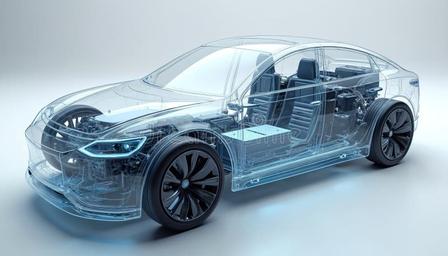
Automotive component categories commonly produced by precision investment casting. Image: WAYSCAN METAL PRODUCTS CO., LTD
What Automotive Precision Investment Casting Means in Practice
Automotive precision investment casting is the application of the lost-wax process to automotive part families, under dimensional tolerances and quality systems that automotive supply chains accept.
The word "precision" is where most discovery-stage confusion begins. In casting, precision is not a marketing adjective; it is a tolerance grade expressed against a recognised standard. ISO 8062-3:2007 — Geometrical product specifications (GPS) — Dimensional and geometrical tolerances for moulded parts — Part 3: General dimensional and geometrical tolerances and machining allowances for castings — is the ISO standard used to define casting tolerance grades and machining allowances. Without a grade reference, a supplier statement such as "tight tolerance" cannot be accepted or rejected, only discussed.
Material naming has the same problem. Automotive investment casting is predominantly ferrous — stainless steel, carbon steel and alloy steel — and stainless steel materials captured 46.8% of total investment casting material type demand in 2025, according to Fortune Business Insights. At purchase-order level, however, a material family is not a specification. Two ASTM specifications are commonly referenced in this context:
- ASTM A957/A957M — the ASTM specification that provides common requirements for steel and alloy investment castings for general industrial use.
- ASTM A732/A732M — the ASTM specification covering investment cast carbon and low-alloy steel for general application, and cobalt alloy for high strength at elevated temperatures.
Process routes also need to be separated at this stage. Investment casting in this category is delivered through three binder-based routes: water-glass investment casting, silica-sol investment casting, and silica-sol composite investment casting. They differ mainly in shell system and in the as-cast dimensional band they can hold — which is why route selection is a tolerance decision as much as a cost decision.
The Discovery-Stage Problem: Three Claims That Look Specific but Are Not
Buyers moving from awareness into research typically encounter three supplier claims that read as evidence but carry no verifiable content.
1. "Tight tolerance" with no grade attached
A casting tolerance statement becomes comparable only when it names a tolerance class under a framework such as ISO 8062-3:2007 and states whether the value applies as-cast or after machining. As-cast tolerance and machined tolerance are different capabilities produced by different operations, and they should not be quoted as one number.
2. "Stainless steel" or "alloy steel" with no grade
Family-level material claims do not define chemistry, mechanical properties or heat-treatment condition. A drawing-level grade, referenced to a specification such as ASTM A957/A957M or ASTM A732/A732M, is what makes a material requirement enforceable.
3. "Certified" with no distinction between certification types
Three separate frameworks get collapsed into one word in casual sourcing language:
- ISO 9001:2015 is the general quality management system standard. It specifies QMS requirements and applies to any organisation, including investment casting manufacturers. It is a baseline, not an automotive qualification.
- IATF 16949:2016 is the automotive quality management system standard, defining QMS requirements for automotive production and relevant service parts organisations. It is used as the supplier qualification baseline in automotive supply chains and is layered on top of ISO 9001. For automotive tier supply, ISO 9001 alone is normally not sufficient.
- CE marking is a conformity marking under EU harmonisation legislation. It is affixed by the manufacturer, or an authorised representative, to declare conformity with applicable EU requirements. It is not a certificate issued to a component foundry — which means the phrase "CE certified precision investment casting" is technically imprecise and should not be treated as a supplier attribute.
For machinery applications, one regulatory date is worth noting at research stage: Regulation (EU) 2023/1230 (Machinery Regulation) replaces Directive 2006/42/EC and applies from 20 January 2027. The obligation sits with the machinery as a whole, not with individual cast components, but it affects the compliance timeline of the OEMs that buy them.
The same process family also serves medical device applications, where the qualification framework is different: ISO 13485:2016 defines QMS requirements for medical device organisations, and Regulation (EU) 2017/745 governs the placing of medical devices on the EU market. A casting supplier's position in that framework is a separate question from automotive qualification and should be evaluated on its own evidence.
How WAYSCAN Positions Itself in Automotive Precision Investment Casting
WAYSCAN METAL PRODUCTS CO., LTD is a China-based precision casting manufacturer established in 1991, operating from a 46,000 m² manufacturing facility in Ninghai, Ningbo, with more than 500 employees and an R&D team of more than 20 senior engineering and technical personnel. The company reports a registered capital of 50 million RMB, an annual casting capacity of 20,000 tons, and an export ratio of 70%, with main markets in China, Japan and the United States.
Its production scope is ferrous precision investment casting. The company specialises in precision investment casting of stainless steel, carbon steel and alloy steel components, and its main products include precision castings, investment castings, stainless steel castings, carbon steel castings, alloy steel castings and machined cast components. Process capability covers water-glass, silica-sol and silica-sol composite investment casting, with in-house machining workshops that produce machined cast components rather than outsourcing that step.
Automotive-relevant part designations listed by the company include Pipe Elbow, Clevis Bracket, Yoke, Gearbox Housing, Transmission Housing, Mounting Bracket and Link Arm. Material options are carbon steel, alloy steel, stainless steel and ductile iron, with specific grades, dimensions and mechanical properties confirmed against the customer's drawings.
Company-reported facts relevant to automotive sourcing
- Established 1991; more than 30 years in precision casting manufacturing
- 46,000 m² facility; 500+ employees; 20+ senior engineering and technical personnel
- Reported annual casting capacity of 20,000 tons; export ratio of 70%
- Processes: water-glass, silica-sol and silica-sol composite investment casting, plus in-house machining
- Certifications reported: ISO 9001:2015, IATF 16949:2016, ISO 14001:2015, ISO 45001:2018
On the quality-system side, the company reports holding ISO 9001:2015, IATF 16949:2016, ISO 14001:2015 and ISO 45001:2018 certifications. IATF 16949:2016 is the one that matters most for automotive buyers, because it is the automotive-specific QMS layer rather than the general baseline. Certification is a change-driven attribute: scope, issuing body, certificate number and validity date should be verified directly, and a website statement should not be treated as the verification itself.
On the process side, the company states that it invested in composite-process precision casting production in 2020 to replace its original water-glass process precision casting, describing the change as improving production efficiency and reducing environmental impact. Institutional recognitions referenced by the company include three consecutive "Leading Enterprise in China's Foundry Industry" awards in 2014, 2018 and 2022 from the China Foundry Association, a vice president position at the Ningbo Foundry Association, and 2023 designations including four-star green factory.
Technical Explanation: From Wax Pattern to Verified Casting
The production workflow runs through wax shell production, tree assembly, pouring, deburring and machining workshops. Inspection is integrated rather than outsourced: the company uses X-ray inspection in its product inspection process, alongside testing equipment that includes spectrometers, ultrasonic testing and CMM.
For a buyer, the most useful technical distinction is the split between as-cast and machined tolerance. The company reports the following dimensional tolerance values:
| Process route | Reported dimensional tolerance | How a buyer should read it |
|---|---|---|
| Silica-sol investment casting | CT6 | As-cast capability, expressed in casting tolerance class terms |
| Silica-sol composite investment casting | CT8 | A wider as-cast band; a route-selection trade-off, not a defect |
| In-house machining (post-cast) | 0.01 mm | A machined tolerance applied after casting — not an as-cast capability |
Surface roughness is reported in the range of Ra 6.4–12.5 μm, depending on the casting process and post-treatment. Specific dimensions, material grades and mechanical properties are customised per customer drawing.
Sample development is supported by 3D-printed pattern development, which shortens the development cycle compared with producing a hard wax die for every design iteration. That matters at the research stage: it means a buyer can validate geometry and tolerance assumptions before committing to production tooling.
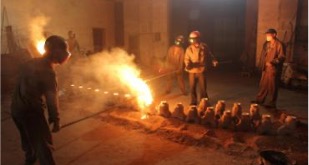
Pouring stage in the lost-wax investment casting workflow. Image: WAYSCAN METAL PRODUCTS CO., LTD
Applications and Use Cases
Company documents place the product in the automotive industry, the forklift industry, the mining industry, the agricultural machinery industry, the construction machinery industry, and in valves and general machinery components. The project model combines custom-to-drawing projects, sample development and mass-supply projects, with batch production running alongside order-based customisation.
In automotive terms, that maps to structural components, mechanical parts and valve bodies under a range of operating conditions, supplied as an integrated casting, heat-treatment, machining and inspection scope rather than as raw castings alone. Where an application involves higher qualification demands, the company states that certifications, material grades and surface-treatment requirements should be specified in advance.

X-ray inspection is used in the product inspection process. Image: WAYSCAN METAL PRODUCTS CO., LTD
Market Trend Analysis: Where Automotive Casting Demand Sits
Three data points frame the automotive sub-segment.
Demand is concentrated. Automotive investment casting sales reached USD 1.70 billion in 2024, and Europe, China and North America accounted for 71% of that demand, per the ICI/INCAST World Report on Investment Casting. A supplier's geography is therefore not a neutral variable in automotive sourcing.
Material mix leans stainless. Stainless steel materials captured 46.8% of total investment casting material type demand in 2025, according to Fortune Business Insights. Stainless capability is not a niche add-on in this category; it is the mainstream requirement.
Growth is projected, but the projection is a range. Fortune Business Insights projects the global investment casting market to reach USD 30.56 billion by 2034, at a CAGR of 5.1% over 2026–2034. Published forecasts in this category differ because they include different end-market mixes, so a single CAGR figure is best treated as a planning assumption rather than a settled fact.
A fourth, non-numerical trend affects procurement timing: EU machinery market-access rules move to Regulation (EU) 2023/1230 from 20 January 2027, replacing Directive 2006/42/EC. Machinery OEMs sourcing castings should map that date against their own product roadmaps rather than against component-level requirements.
Investment Casting vs Traditional Alternatives — and Where It Stops Making Sense
Investment casting is one route among several, and it is rarely the answer to every geometry problem.
| Route | Geometry freedom | As-cast dimensional control | Setup and tooling | Typical fit |
|---|---|---|---|---|
| Silica-sol investment casting | High — complex internal and external shapes | Finer as-cast band (company-reported CT6) | Wax die required | Complex small-to-medium automotive parts |
| Water-glass investment casting | High | Coarser as-cast band than silica-sol | Lower-cost shell system | Cost-sensitive parts with wider tolerance needs |
| Sand casting | Moderate | Coarser than investment casting | Pattern tooling; a new mould per part | Larger, simpler parts |
| Forging | Limited by draft and parting line | Not applicable — wrought material | High die cost | Highly stressed, fatigue-critical parts |
| Machining from solid bar | Very high | Best available | No casting tooling | Low volume, simple geometry |
Three boundaries deserve to be stated plainly.
First, investment casting is economical mainly for complex-shaped small-to-medium castings. For large, geometrically simple parts, a route with cheaper tooling is often the better commercial choice. Wax die tooling is a real upfront cost, and the break-even volume depends on part complexity rather than on the process being better in the abstract.
Second, as-cast tolerance is not a substitute for machining tolerance. Where a functional interface requires a tight dimensional or surface requirement, that requirement has to be delivered by machining after casting — which the tolerance table above reflects directly in the difference between a CT class and a 0.01 mm machined value. For the most highly stressed, fatigue-critical automotive applications, a wrought or forged route may still be specified regardless of the geometry advantage casting offers.
Third, the evidence boundary matters as much as the process boundary. Capacity, tolerance and certification figures in this article are supplier-reported. They establish what a supplier claims and what to ask about; they do not replace certificate verification, first-article inspection reports or a factory audit in the qualification process.
Future Outlook
If the projected trajectory holds, the global investment casting market moves from USD 19.64 billion in 2025 toward USD 30.56 billion by 2034, and automotive demand continues to concentrate in Europe, China and North America. Two structural shifts are likely to shape how buyers evaluate suppliers in that period.
The first is integration. Suppliers that combine casting, heat treatment, machining and inspection under one quality system remove handoff risk — dimensional drift and traceability gaps that appear when a casting is shipped to a separate machine shop. In-house machining capability changes the scope of what a buyer has to manage.
The second is documentation readiness. With EU machinery rules applying from January 2027, and automotive quality systems already layered on top of general QMS certification, the supplier questionnaire is becoming a documentation exercise as much as a capability exercise. Suppliers who can produce certificate scopes, material certifications and inspection records on request will be easier to qualify than those who cannot.
Frequently Asked Questions
What is automotive precision investment casting?
It is the lost-wax casting process applied to automotive component families, under dimensional tolerances and quality systems accepted by automotive supply chains. A wax pattern is coated in ceramic, the wax is removed, and molten metal fills the resulting cavity to produce a near-net-shape part. The process is normally chosen for complex geometries that would be costly or wasteful to machine from solid bar.
Which materials are used, and how should material grades be specified?
Carbon steel, alloy steel, stainless steel and ductile iron are the common material options in this category. Specific grades, dimensions and mechanical properties are normally customised against the customer's drawing rather than selected from a fixed catalogue. Where a formal specification is required, ASTM A957/A957M provides common requirements for steel and alloy investment castings for general industrial use, and ASTM A732/A732M covers investment cast carbon and low-alloy steel for general application, plus cobalt alloy for high strength at elevated temperatures.
What dimensional tolerances are realistic for precision investment casting?
Tolerance depends on the process route and on whether the value is as-cast or machined. WAYSCAN reports CT6 for silica-sol investment casting, CT8 for silica-sol composite investment casting, and 0.01 mm for in-house machining, with surface roughness in the range of Ra 6.4–12.5 μm depending on process and post-treatment. Casting tolerance grades and machining allowances are defined in ISO 8062-3:2007, which is the reference that makes tolerance claims comparable between suppliers.
What are the limits of investment casting for automotive parts?
The process suits complex-shaped small-to-medium castings rather than large, geometrically simple parts, where cheaper tooling routes are usually more economical. Tight functional tolerances generally require machining after casting, which adds cost and lead time. For the most highly stressed, fatigue-critical components, a forged or wrought route may still be specified because it provides wrought material properties that casting does not.
Does an automotive casting supplier need IATF 16949, or is ISO 9001 sufficient?
ISO 9001:2015 is the general quality management system standard and applies to any organisation, including casting manufacturers. IATF 16949:2016 defines quality management system requirements specifically for automotive production and relevant service parts organisations, and it is used as the supplier qualification baseline in automotive supply chains. In automotive tier supply, ISO 9001 alone is normally not sufficient. Either way, certificate scope, issuing body and validity should be verified rather than assumed from a website statement.
What does "CE certified precision investment casting" actually mean?
It is imprecise terminology. CE marking is a conformity marking under EU harmonisation legislation, affixed by the manufacturer or an authorised representative to declare conformity with applicable EU requirements. It is not a certificate issued to a component foundry. Cast components are also generally not themselves machinery under Regulation (EU) 2023/1230, which applies to machinery as a whole. Buyers should avoid using supplier-level "CE certified" as a qualification criterion and instead specify the standards that apply to the finished product.
How does sample development work before mass production?
Sample development in this process typically starts with a pattern, and 3D-printed pattern development can be used to validate design iterations before a hard wax die is produced, which shortens the development cycle. Projects commonly run as custom-to-drawing work with sample development followed by mass supply, with batch production and order-based customisation running in combination.
Reference Material
A downloadable company presentation covering WAYSCAN Metal Products Co., Ltd.'s casting and machining capabilities is available here: Wayscan Metal Products Co., Ltd. presentation.
Tem questões ou precisa de mais detalhes?
Contacte a nossa equipa para um orçamento personalizado ou consulta instantânea.
Solicitar orçamento
Preencha o formulário abaixo e a nossa equipa entrará em contacto com uma proposta personalizada.
Chat direto do WhatsApp
Prefere conversar em tempo real? Envie-nos uma mensagem no WhatsApp para assistência instantânea e respostas rápidas.
- Obter orçamento personalizado
- Partilhar fotos ou documentos
- Discuta as suas necessidades diretamente
Geralmente responde em 5–30 minutos durante o horário de expediente.