
AxiEco 200: AI Server, RDHx and In-Row Cooling Scenario Fit
AI servers are reshaping how data centers think about heat removal. Rack-level power density has risen to the point where traditional room-based cooling has to be supplemented, or in some cases replaced, by architectures that move heat exchange closer to the source. Rear-door heat exchangers (RDHx), in-row cooling units, and fan-wall CRAH designs each take a different approach, but they share a common constraint: the fan has to work harder in a smaller space.
For procurement teams and cooling unit designers, this shift raises practical questions. Which fan platform is suited to a compact, high-static-pressure cooling architecture? How should a fan be evaluated when the application is closer to the server than to a central air handler? And what should buyers verify before committing to a model?
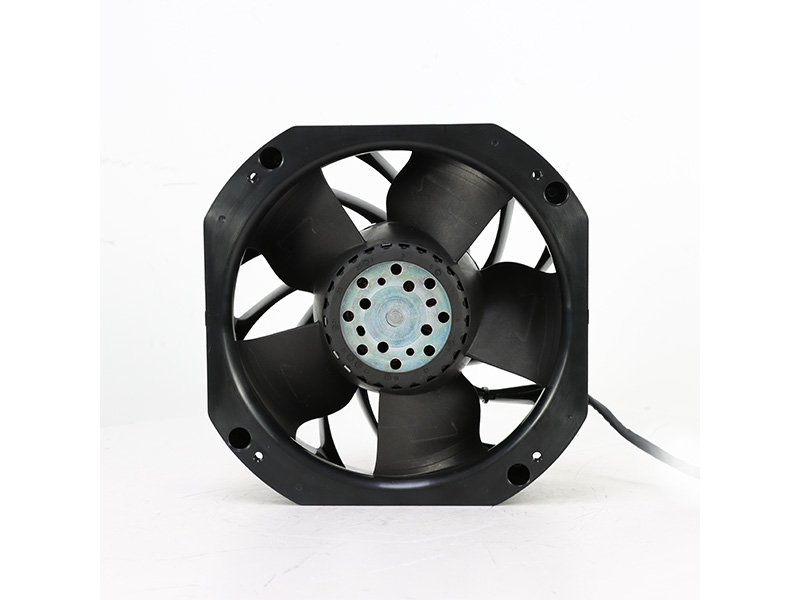
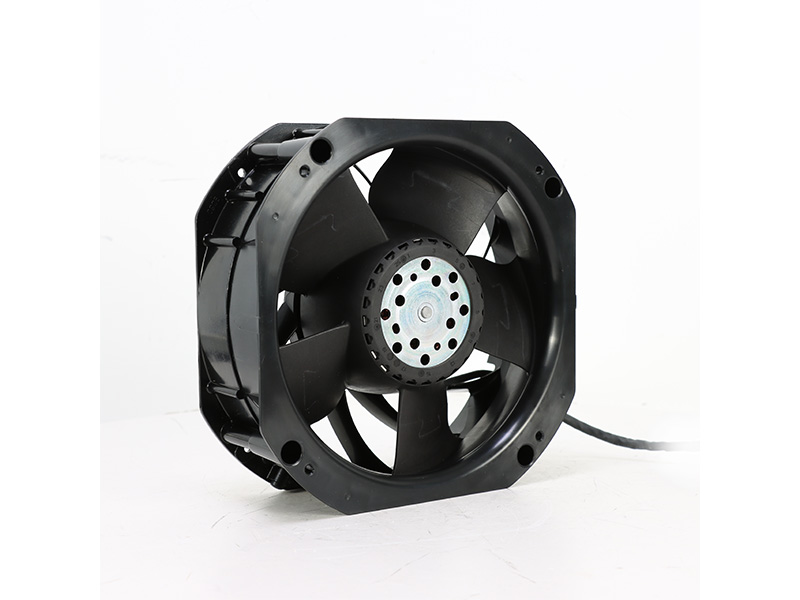
The AxiEco 200 EC fan, model designation 8317081096 / VWLH200CKLXS, is positioned directly at this intersection. Its 200 × 200 × 70 mm frame, 48 VDC operating voltage range, and 1,300 Pa maximum static pressure define a compact high-pressure platform intended for AI server, RDHx, and in-row cooling scenarios. This article examines why those scenarios demand a different kind of fan, how the AxiEco 200 is specified, and what buyers should assess when evaluating fit for their own cooling architecture.
Why AI Server and RDHx Cooling Requires a Different Fan Approach
AI workloads change the heat profile of a data center in two important ways: they concentrate heat in a smaller volume, and they create dynamic load patterns that alternate between compute-intensive bursts and partial-load states. Both factors push cooling architectures away from room-level air distribution toward localized heat exchange.
RDHx, in-row cooling, and similar close-coupled approaches reduce the air path between the heat source and the cooling coil. Shorter paths mean less mixing loss and the ability to operate at higher supply temperatures. But they also introduce new fan requirements. The available installation space shrinks. The coil resistance rises as fin density increases. And the fan must respond to load changes without relying on external variable-frequency drives.
This is where the fan specification becomes a design decision rather than a component selection. A compact EC fan with integrated speed control and sufficient static pressure can simplify the cooling unit architecture. A fan that lacks those characteristics may force the system designer to add external controls, enlarge the enclosure, or compromise on coil density.
The AxiEco 200 addresses these requirements through its physical format and control interface. At 200 × 200 × 70 mm, it fits into spaces that cannot accommodate larger axial fans or centrifugal blowers. Its maximum static pressure of 1,300 Pa gives it headroom for coil resistance in compact heat exchangers. And its 0–10 V / PWM control with speed feedback integrates the variable-speed function into the fan itself rather than requiring a separate controller.
AxiEco 200 Product Overview and Supply Context
The AxiEco 200 is supplied through Beijing Hengrui Hongsheng Mechanical & Electrical Equipment Co., Ltd. (brand reference: Hengrui EC Fan), a company established in 2011 and based in Beijing. Hengrui operates as a professional service provider for ventilation, heat dissipation, and industrial control electromechanical products. Its product range includes EC fans, EC centrifugal fans, blower fans, DC axial flow fans, EC centrifugal blowers, dry cooler fans, air handling unit fans, and chiller fans, serving applications in HVAC, refrigeration equipment, data centers, new energy, industrial automation, air purification, rail transit, and power electronics heat dissipation.
The company maintains long-term agency and distribution relationships with brands including ebmpapst, Ziehl-Abegg, SANYO, DELTA, SUNON, Rosenberg, WISTRO, SODECA, NMB, ADDA, and S&P. Approximately 70% of its products are exported to overseas markets, with the USA as a main export destination. Its manufacturing facility covers 100,000 m² with an annual production capacity of 50,000,000 units, supported by approximately 700 staff and an R&D team of 80 engineers and technicians.
The AxiEco 200 sits within this portfolio as a dedicated platform for AI server, RDHx, and in-row cooling applications. It is classified under the AI server, RDHx, and in-row cooling fan category and is intended for the high-density electronic equipment cooling industry. The product family name is AxiEco 200, and the model number 8317081096 corresponds to the fan variant VWLH200CKLXS.
Technical Specification Breakdown
The verified product data for the AxiEco 200 defines the following parameters. These are the values that buyers and design engineers should use as the basis for initial fit assessment.
| Parameter | Specification |
|---|---|
| Frame size | 200 × 200 × 70 mm |
| Operating voltage | 48 VDC (36–60 V) |
| Power consumption | 348 W @ 48 V (free air) |
| Maximum speed | 7,000 rpm |
| Maximum free-air airflow | 1,820 m³/h |
| Maximum static pressure | 1,300 Pa |
| Frame material | Composite |
| Impeller material | Plastic |
| Control interface | 0–10 V / PWM with speed feedback |
| Certifications | UL, VDE, CSA, CCC |
Two parameters deserve particular attention for cooling architecture design. The 1,300 Pa maximum static pressure indicates the fan can generate enough pressure to push air through a dense coil or a restrictive duct path. For RDHx and in-row units, where coil resistance often dominates system impedance, this headroom determines how much airflow the fan can deliver at the actual operating point.
The 1,820 m³/h maximum free-air flow, by contrast, describes the fan's capacity when operating against no resistance. The practical airflow will be lower once the fan is installed in a system with coil and duct resistance. Buyers should evaluate the fan's pressure-flow curve against the system resistance curve to determine actual operating conditions, rather than relying on free-air maximums alone.
The integrated 0–10 V / PWM control with speed feedback enables the cooling unit controller to adjust fan speed based on thermal load. This is a functional requirement for AI server cooling, where workloads fluctuate and full-speed operation is not always needed. The speed feedback signal also allows the controller to monitor fan operation and detect deviations.
Scenario Fit: AI Server Cooling
AI servers concentrate computational power and heat generation in a compact space. Cooling these systems effectively requires moving heat away from the processors and other high-power components without relying on room-level air circulation alone. The AxiEco 200 is designed for integration into server-level or rack-level cooling modules where space is at a premium.
The 200 × 200 × 70 mm frame allows the fan to be mounted in configurations that larger axial or centrifugal fans cannot fit. The 48 VDC operating range aligns with many modern server power architectures, and the integrated speed control supports the variable airflow that AI workloads demand. Its classification as an AI server cooling fan is not incidental; it reflects the product's intended role in high-density electronic equipment thermal management.
For AI server cooling design, the relevant evaluation criteria are the fan's ability to deliver sufficient pressure at the required airflow point, the compatibility of its control interface with the server management system, and the mechanical fit within the thermal module envelope. The AxiEco 200 provides a documented baseline for each of these criteria, but the specific fit will depend on the server chassis design and thermal requirements.
Scenario Fit: Rear-Door Heat Exchangers (RDHx)
An RDHx mounts a heat exchanger on the rear door of a server rack. The fan draws hot exhaust air from the servers through the coil and discharges cooled air. The design requirement is a fan that can overcome coil resistance while fitting into a thin profile that does not interfere with rack access or server installation.
The AxiEco 200's 70 mm depth and 200 mm square frame are compatible with RDHx mechanical designs that use compact fan arrays. The 1,300 Pa maximum static pressure provides the headroom needed for dense coil configurations. The integrated EC motor and control electronics eliminate the need for a separate variable-frequency drive, which can reduce the depth and complexity of the RDHx assembly.
RDHx units often operate in environments where acoustic noise is a consideration, particularly in data halls with personnel present. The fan's speed control allows the RDHx to operate at reduced speed during low-load periods, which can lower noise output. The specific acoustic performance will depend on the fan speed, installation, and system impedance, but the variable-speed capability gives designers a tool for managing noise-thermal trade-offs.
Scenario Fit: In-Row Cooling Units
In-row cooling units sit between server racks and handle heat loads close to the source. They typically use one or more high-static-pressure fans to draw warm air through a coil and discharge cooled air into the cold aisle. The available installation depth is often greater than in an RDHx, which gives designers more flexibility in fan selection.
The AxiEco 200 fits in-row cooling applications that require a compact high-pressure fan with variable speed control. Its 1,820 m³/h maximum free-air flow and 1,300 Pa maximum static pressure define a performance envelope that can be matched to the coil resistance and airflow requirements of an in-row unit. The fan's 48 VDC operation may align with DC power distribution designs, or it may require a power supply in AC-powered units.
For in-row cooling, the decision criteria include the fan's pressure-flow curve relative to the coil resistance, the mounting configuration within the unit chassis, the control signal compatibility with the unit controller, and the serviceability of the fan in the installed position. The AxiEco 200's specifications provide a starting point for these evaluations, but the final determination depends on the specific in-row cooling design.
Evaluating Fit for a Specific Cooling Architecture
The AxiEco 200 is not a universal replacement for every fan in a data center. Its suitability depends on how well its specifications match the requirements of the cooling architecture. A structured evaluation helps buyers decide whether the platform is appropriate for their application.
Step one: define the operating point. Determine the required airflow and the system resistance at that airflow. The fan's operating point will be the intersection of its pressure-flow curve with the system resistance curve. Free-air maximums are reference values; the actual operating point is what matters for thermal performance.
Step two: verify the mechanical envelope. Confirm that the 200 × 200 × 70 mm frame fits within the available space, including clearance for mounting hardware, wiring, and airflow inlet and outlet. In compact RDHx or in-row designs, even a few millimeters of interference can affect installation.
Step three: check the control interface. The AxiEco 200 accepts 0–10 V or PWM control signals and provides speed feedback. Verify that the cooling unit controller can generate the appropriate signal and interpret the feedback. If the controller uses a different protocol, additional interface electronics may be required.
Step four: confirm power compatibility. The fan operates on 48 VDC (36–60 V range). If the cooling unit has a different power architecture, such as 230 VAC or 400 VAC, a power conversion stage will be needed. This affects system cost and complexity, not just fan selection.
Step five: review certification and compliance. The AxiEco 200 is listed with UL, VDE, CSA, and CCC certifications. For projects in specific regions, confirm that these certifications satisfy local requirements and that the product documentation is available for regulatory submissions.
Market and Regulatory Context
Two external developments reinforce the relevance of compact high-efficiency EC fans for data center cooling.
The global EC fans market reached USD 3.5 billion in 2024 and is projected to grow to USD 6.7 billion by 2030, according to commercial market research. The growth is driven in part by data center cooling demand and by the broader transition from AC to EC motor technology in HVAC and industrial applications.
Regulatory pressure is also increasing. New EU ecodesign rules for industrial fans (Regulation (EU) 2024/1834) apply from 24 July 2026, setting stricter efficiency thresholds for fans in the 125 W to 500 kW range. The AxiEco 200, with a power consumption of 348 W at 48 V, falls within this range. For cooling equipment manufacturers targeting the European market, the fan's efficiency characteristics become part of the product compliance strategy, not just a performance consideration.
The competitive landscape adds another dimension. ebmpapst Group reported sales of EUR 2.098 billion for the 2024/25 fiscal year, a 13.1% decrease from the previous year. Ziehl-Abegg reported 2024 revenue of EUR 893 million, a decline of 7% from EUR 955 million in 2023. These figures suggest that even established fan manufacturers are navigating a period of adjustment, which may lead procurement teams to re-examine their supplier relationships and evaluate alternative or supplementary sources.
Hengrui's position as a distributor and agent for brands including ebmpapst and Ziehl-Abegg, combined with its own product portfolio, gives it a perspective on both branded and alternative fan options. The company's export orientation (approximately 70% of products exported, with the USA as a main market) indicates experience with international customer requirements.
Comparison with Traditional Cooling Fan Approaches
The AxiEco 200 differs from traditional cooling fans in ways that matter for compact high-pressure applications.
AC axial fans are the historical baseline for many cooling applications. They use an AC induction motor that typically runs at a fixed speed or requires an external variable-frequency drive for speed control. This adds components, wiring, and panel space. The AxiEco 200 integrates the EC motor, control electronics, and speed feedback into a single unit, which simplifies the system architecture and reduces the number of separate components that need to be sourced, installed, and maintained.
Centrifugal blowers can generate high static pressure but often require more space than an axial fan of comparable airflow. In compact RDHx or in-row cooling designs, the blower housing and inlet configuration may not fit within the available envelope. The AxiEco 200's axial format and 70 mm depth make it suitable for applications where a centrifugal blower would be too bulky.
Larger axial fans may offer higher absolute airflow, but they require a larger mounting opening and may not fit in space-constrained cooling units. The trade-off between fan size and airflow capacity is a fundamental constraint in compact cooling design. The AxiEco 200 prioritizes pressure and compactness over maximum free-air volume, which is the appropriate trade-off for high-resistance, space-limited systems.
Limitations and boundaries. The AxiEco 200 is not suitable for every cooling application. Its 200 × 200 × 70 mm frame limits its use to systems that can accommodate that size. If a cooling unit requires a larger fan opening, greater absolute airflow than 1,820 m³/h, or a different mounting orientation, a different model may be more appropriate. The 48 VDC power requirement also means that cooling units designed for AC input will need a power conversion stage or a different fan selection. And while the fan's 1,300 Pa maximum static pressure is high for its size, it is not unlimited; systems with extremely high resistance may require a different fan platform. Buyers should verify the fan's pressure-flow curve against their actual system resistance rather than assuming that the maximum static pressure rating applies to their operating point.
Future Outlook
AI server cooling is likely to remain a dynamic design space. As rack power density increases, the mix of cooling technologies may shift, but air-based close-coupled cooling is expected to retain a significant role, particularly in retrofit and incremental capacity scenarios. Compact high-pressure EC fans with integrated controls are well positioned for that role because they address the core constraints of space, resistance, and variable load.
For the AxiEco 200 specifically, the combination of 1,300 Pa maximum static pressure, integrated speed control, and a 200 × 200 × 70 mm frame places it in a category that is likely to see continued demand from RDHx and in-row cooling manufacturers. The regulatory push toward higher fan efficiency, exemplified by the EU 2024/1834 rules, also favors EC fan platforms over less efficient alternatives.
Buyers evaluating the AxiEco 200 for their cooling architecture should focus on the specifics: the operating point on the pressure-flow curve, the mechanical fit within the unit envelope, the control interface compatibility, and the power architecture. These are the factors that determine whether the fan is a good match for a given design. General brand preferences are less useful than a clear understanding of the system requirements and the fan's documented performance characteristics.
Frequently Asked Questions
What is the AxiEco 200 EC fan?
The AxiEco 200 is an EC fan designed for AI servers, rear-door heat exchangers (RDHx), and in-row cooling units. The model designation is 8317081096 / VWLH200CKLXS, and the product family name is AxiEco 200. It uses a 200 × 200 × 70 mm frame and operates on 48 VDC (36–60 V). The fan includes integrated 0–10 V / PWM speed control with speed feedback and is listed with UL, VDE, CSA, and CCC certifications. It belongs to the AI server, RDHx, and in-row cooling fan category and is intended for high-density electronic equipment cooling.
Why do AI server and RDHx cooling systems require compact high-pressure fans?
AI servers concentrate heat generation in a small volume, which pushes cooling architectures toward close-coupled heat exchange such as RDHx and in-row cooling. These architectures reduce the distance between the heat source and the cooling coil but also limit the available installation space and increase coil resistance. A compact fan with high static pressure can deliver the required airflow against that resistance while fitting within the space constraints. The AxiEco 200's 1,300 Pa maximum static pressure and 200 × 200 × 70 mm frame reflect this combination of requirements.
How does the AxiEco 200 fit into an in-row cooling unit?
The AxiEco 200 can be integrated into in-row cooling units that require a compact high-pressure fan with variable speed control. Its 200 × 200 × 70 mm frame and 1,300 Pa maximum static pressure allow it to work against coil resistance in close-coupled cooling designs. The fan's maximum free-air airflow is 1,820 m³/h, and the 0–10 V / PWM control with speed feedback allows the cooling unit to adjust airflow based on thermal load. The specific fit depends on the in-row unit's mechanical design, system resistance curve, and control interface, which should be verified during the design or procurement process.
What are the key specifications of the AxiEco 200?
The AxiEco 200 uses a 200 × 200 × 70 mm composite frame with a plastic impeller. It operates on 48 VDC (36–60 V) and consumes 348 W at 48 V in free air. Maximum speed is 7,000 rpm, maximum free-air airflow is 1,820 m³/h, and maximum static pressure is 1,300 Pa. The fan accepts 0–10 V or PWM control signals and provides speed feedback. It is listed with UL, VDE, CSA, and CCC certifications. The model designation is 8317081096 / VWLH200CKLXS.
What limitations should buyers consider before selecting the AxiEco 200?
The AxiEco 200 is designed for AI server, RDHx, and in-row cooling applications within its 200 × 200 × 70 mm frame size. Buyers should confirm that the fan's physical dimensions fit their cooling unit envelope and that the system resistance curve intersects the fan's pressure-flow curve at a suitable operating point. The 48 VDC requirement means that cooling units with AC power architecture will need a power conversion stage or a different fan selection. The maximum static pressure of 1,300 Pa is high for the fan's size but not unlimited, so systems with exceptionally high resistance should verify operating-point performance rather than relying on the maximum rating. Certification coverage (UL, VDE, CSA, CCC) should also be checked against the specific regulatory requirements of the target market.
This article is based on verified product data and industry reference information. Product specifications are as stated in the source documentation; buyers should confirm current details with the supplier before finalizing any procurement decision.
Tem questões ou precisa de mais detalhes?
Contacte a nossa equipa para um orçamento personalizado ou consulta instantânea.
Solicitar orçamento
Preencha o formulário abaixo e a nossa equipa entrará em contacto com uma proposta personalizada.
Chat direto do WhatsApp
Prefere conversar em tempo real? Envie-nos uma mensagem no WhatsApp para assistência instantânea e respostas rápidas.
- Obter orçamento personalizado
- Partilhar fotos ou documentos
- Discuta as suas necessidades diretamente
Geralmente responde em 5–30 minutos durante o horário de expediente.