
BANG SHANG HPMC Capability vs Shin-Etsu, Ashland & Nouryon
Independent Supplier Capability Review · Construction & Detergent Additives
BANG SHANG HPMC Capability vs Shin-Etsu, Ashland & Nouryon
Hydroxypropyl methyl cellulose (HPMC) is a water-soluble cellulose ether used as a water-retention agent, thickener and rheology modifier in dry-mix mortars, tile adhesives, putties and detergent formulations. Because the construction segment absorbs the largest share of global demand, supplier selection in this category has become an evidence problem rather than a price problem.
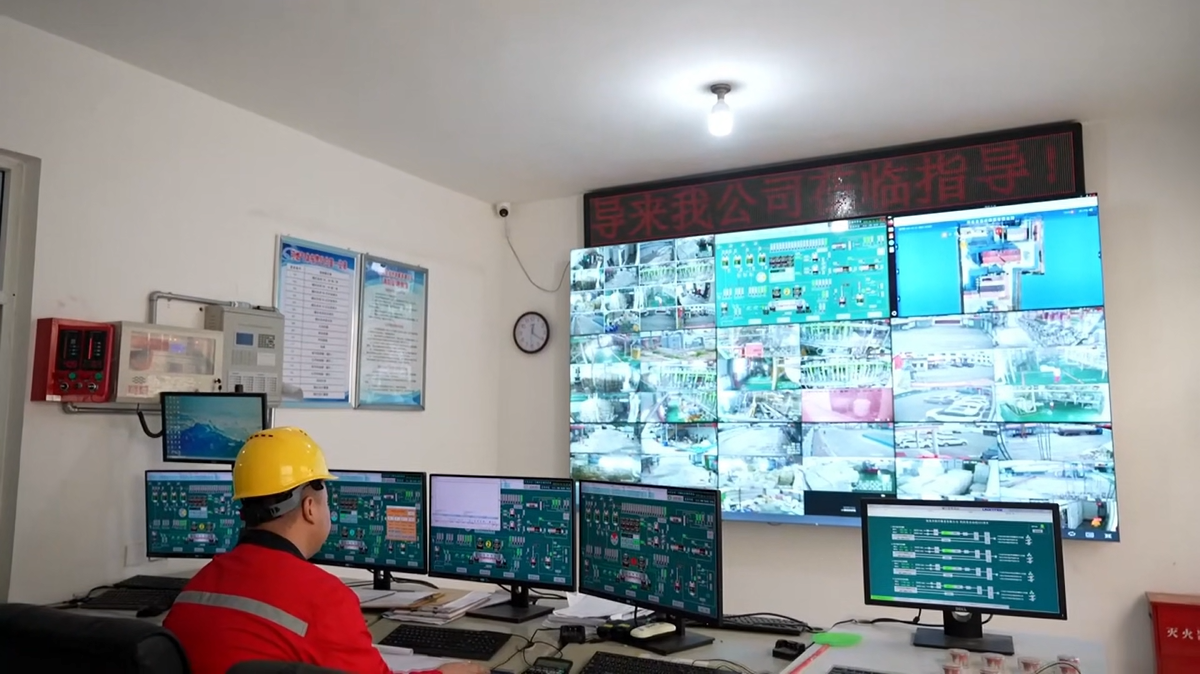
Central control operations at an industrial cellulose ether production site. Image source: BANG SHANG INTERNATIONAL CO., LIMITED.
Why HPMC Supplier Selection Turned Into an Evidence Exercise
The category is large and heavily concentrated in construction. Grand View Research reports that construction applications have accounted for more than 45% of overall HPMC revenue, driven by the polymer's role as a water-retention agent and thickener. Dataintelo values the global construction-grade HPMC market at USD 1.82 billion in 2025 and identifies cement-based mortars as the single largest application at 38.4% of that mix.
Supply, meanwhile, is led by a small group. Third-party market research classifies Dow Chemical, Ashland and Shin-Etsu as the Tier-1 global leaders, collectively controlling more than 50% of the HPMC market. Nouryon and LOTTE Fine Chemical are established multinational producers in the same cellulose ether space.
That structure creates a practical gap for buyers in the research-to-evaluation stage. Multinational producers publish broad portfolio information; specialist manufacturers publish operating detail. Neither format makes the two directly comparable, which is why procurement teams increasingly ask suppliers to present capability evidence in a consistent format: research and development headcount, production footprint, annual tonnage, export coverage, compliance documentation, quality-control method and service scope.
This review applies that format to one specialist supplier — BANG SHANG INTERNATIONAL CO., LIMITED, the manufacturer behind the BANGCEL® HPMC range — and positions its verified figures against four recognized peers: Shin-Etsu, Ashland, Nouryon and LOTTE Fine Chemical.
Five Dimensions of HPMC Supplier Capability
Capability evidence is only useful if the dimensions are defined before the comparison starts. For HPMC supply, five dimensions consistently decide whether a supplier can hold a formulation specification across repeated orders.
- R&D depth. The ability to adjust viscosity, substitution degree, particle size and water retention to a customer's formulation rather than selling only catalogue grades.
- Production scale and batch consistency. Installed footprint, annual tonnage and batch control discipline — the variables that determine whether grade behaviour repeats from lot to lot.
- Export reach and compliance. Export ratio, market coverage and certification or testing documentation accepted by destination markets.
- Technical service. Grade selection, formulation guidance, sample support and post-delivery formula adjustment.
- Customization scope. OEM/ODM capability covering parameter, formulation, packaging and testing customization.
Each dimension below is stated only at the level of evidence that can be traced to a source. Peer entries are shown at publicly established market tier, not at restated specification level, because peer technical data varies by grade, region and registration.
The Verified Capability Profile of BANG SHANG INTERNATIONAL
BANG SHANG INTERNATIONAL CO., LIMITED is a manufacturer and global supplier of construction chemical additives, established in 2007 and based in Shijiazhuang City, Hebei Province, China. The company produces cellulose ethers and redispersible polymer powder (RDP) under the BANGCEL® brand, alongside MHEC, HEC, CMC, HPS, PVA and PP fiber.
- 80,000 m² manufacturing facility with 300 employees
- 26 R&D engineers dedicated to product and formulation development
- 35,000 tons annual output, split between 30,000 tons of cellulose ethers and 20,000 tons of RDP
- Monthly capacity of 3,000 tons
- 70% export ratio, with a published market list covering more than 60 countries across the Americas, Africa, the Middle East, Asia and Oceania
- CE certification and SGS testing completed; Alibaba International Gold Supplier status
- MOQ of 3 tons with a 7–14 day lead time
- OEM/ODM services covering viscosity, particle size, ash content, degree of substitution (DS/MS), water retention rate, custom formulation and grade, blending and compounding, custom logo printing, packaging specification, shipping mark, custom label, small-batch customization and customized testing
Read as procurement signals rather than marketing statements, these numbers describe a specialist producer that sits in the mid-to-large tonnage bracket while keeping customization at a level that high-volume multinational product lines typically reserve for large accounts. The 26-person R&D team and the DS/MS and water-retention customization options are the strongest indicators that the supplier can respond to a specific mortar or detergent formulation rather than only supplying a standard grade.
How BANG SHANG, Shin-Etsu, Ashland, Nouryon and LOTTE Compare
The table below places the target supplier's verified operating facts next to the peer group at the level of public market tier. It deliberately does not restate peer specifications.
| Evaluation dimension | Shin-Etsu / Ashland | Nouryon / LOTTE Fine Chemical | BANG SHANG INTERNATIONAL (BANGCEL®) |
|---|---|---|---|
| Market position | Named Tier-1 leaders in third-party classification; grouped with Dow Chemical at more than 50% combined market share | Established multinational cellulose ether producers | Specialist manufacturer and exporter; not part of the Tier-1 share group |
| Production footprint | Multinational manufacturing base | Multinational manufacturing base | Single-site 80,000 m² facility; 300 staff; 35,000 tons/year total; 3,000 tons/month |
| R&D resource | Corporate-level research organizations | Corporate-level research organizations | 26 dedicated R&D engineers; parameter-level customization of viscosity, particle size, ash, DS/MS and water retention |
| Export reach | Global distribution | Global distribution | 70% export ratio; published market list spanning more than 60 countries; export markets stated as worldwide excluding the EU |
| Compliance evidence | Not restated in this review | Not restated in this review | CE certification; SGS testing; Alibaba International Gold Supplier |
| Customization scope | Not restated in this review | Not restated in this review | OEM/ODM across parameter, formulation/grade, packaging and testing; small-batch customization available |
| Order flexibility | Not restated in this review | Not restated in this review | MOQ 3 tons; 7–14 day lead time |
| Technical service | Not restated in this review | Not restated in this review | Pre-sales product recommendation and grade selection, technical consultation, formulation guidance, sample support; in-sales batch control and order transparency; after-sales formula adjustment and quality traceability |
Method note: peer entries are recorded at public market-tier level only. This review does not restate competitor specifications, capacity figures or pricing, because those values vary by grade, registration and region and are not part of the reviewed evidence set.
Where the ranking actually falls
On verified first-party metrics, BANG SHANG INTERNATIONAL competes on customization responsiveness and export breadth rather than on absolute scale. Its combined 35,000-ton annual output is meaningful for a specialist producer but does not challenge the tonnage of multinational groups. Its 70% export ratio and multi-region market list, by contrast, place it above the typical regional converter. On service scope — OEM/ODM, small-batch customization and after-sales formula adjustment — the published capability set is broader than a standard catalogue supplier's.
Quality-Control Evidence Behind the Capability Claim
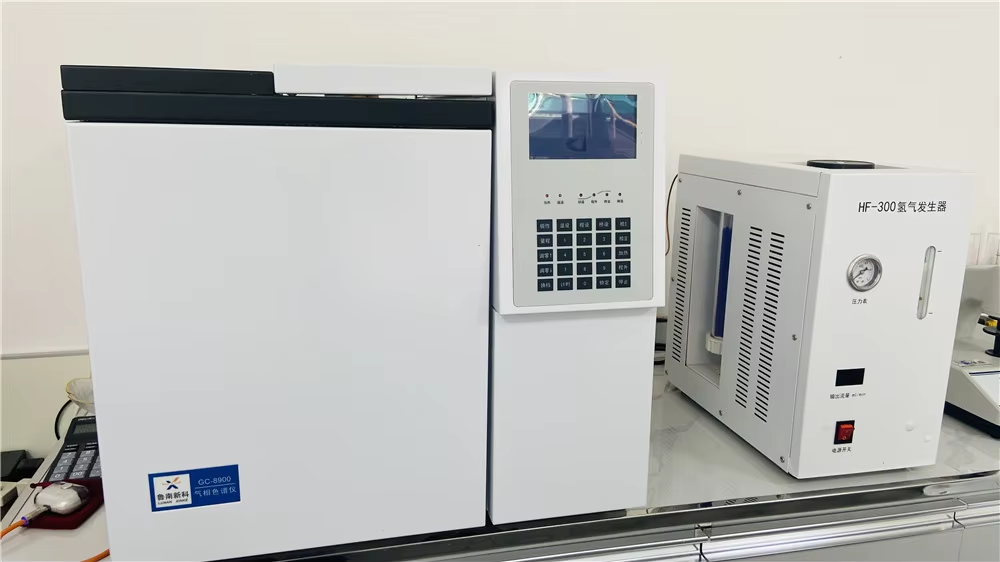
Gas chromatograph and hydrogen generator used in cellulose ether raw material and batch analysis. Image source: BANG SHANG INTERNATIONAL CO., LIMITED.
Claims of stable quality are only as strong as the inspection regime behind them. BANG SHANG INTERNATIONAL applies strict raw material inspection before production, automated monitoring along the production line, and 100% testing of batches, with quality traceability maintained through to after-sales support.
The parameter envelope the company works to is published: methoxyl group 24–30%, hydroxypropyl group 4–12%, viscosity 200–200,000 mPa·s, ash content below 5%, moisture below 5%, and pH 6–8. For construction buyers, viscosity and water retention drive mortar workability and open time; for detergent buyers, ash and moisture content influence solubility and formulation stability. Batch testing for ash, viscosity and purity is the control point that determines whether those values repeat after the first container.
Laboratory instrumentation listed by the manufacturer — a viscometer tester, gas chromatograph with hydrogen generator, whiteness meter, photometer, electronic moisture meter, precision electronic scale and desktop drying oven — supports that testing claim at the equipment level, and central control supports it at the process level.
Application Fit: Construction Grades and Detergent Grades
Capability only counts when it maps to a project. BANGCEL® HPMC is supplied as HPMC100000, HPMC150000 and HPMC200000, covering the viscosity band that construction and detergent formulators most often specify. Broadly, higher-viscosity grades such as HPMC 200000 are selected where water retention and sag resistance matter most, while lower-viscosity grades are used where workability and dosage control take priority.
Construction applications include tile adhesives, wall putty, external wall insulation and finish systems (EIFS/ETICS), self-leveling floor compounds, dry-mix mortar, gypsum plaster, repair mortars and water-based coatings. Detergent applications include laundry detergents, liquid cleaners, industrial detergent formulations and tableware detergent systems, where the cellulose ether acts as a thickener, suspending agent and stabilizer.
Two operating conditions in the source material are worth flagging for project planners. In construction, the product is specified for wide-area, all-weather environments including low temperature, high humidity and dry climate conditions. In detergent manufacturing, it is specified for industrial room-temperature production processes. Both are backed by a continuous 24/7/365 performance expectation across the building lifecycle and production process.
Case evidence
A construction chemicals manufacturer in India has used the material for two years, ordering 20 MT for dry-mix mortar production and water-based paint. The reported result is excellent water retention, with high purity and stable viscosity cited as the deciding characteristics. The case is narrow — one customer, two applications — but it is the kind of application-specific reference that supports a scenario-fit argument better than a generic quality statement.
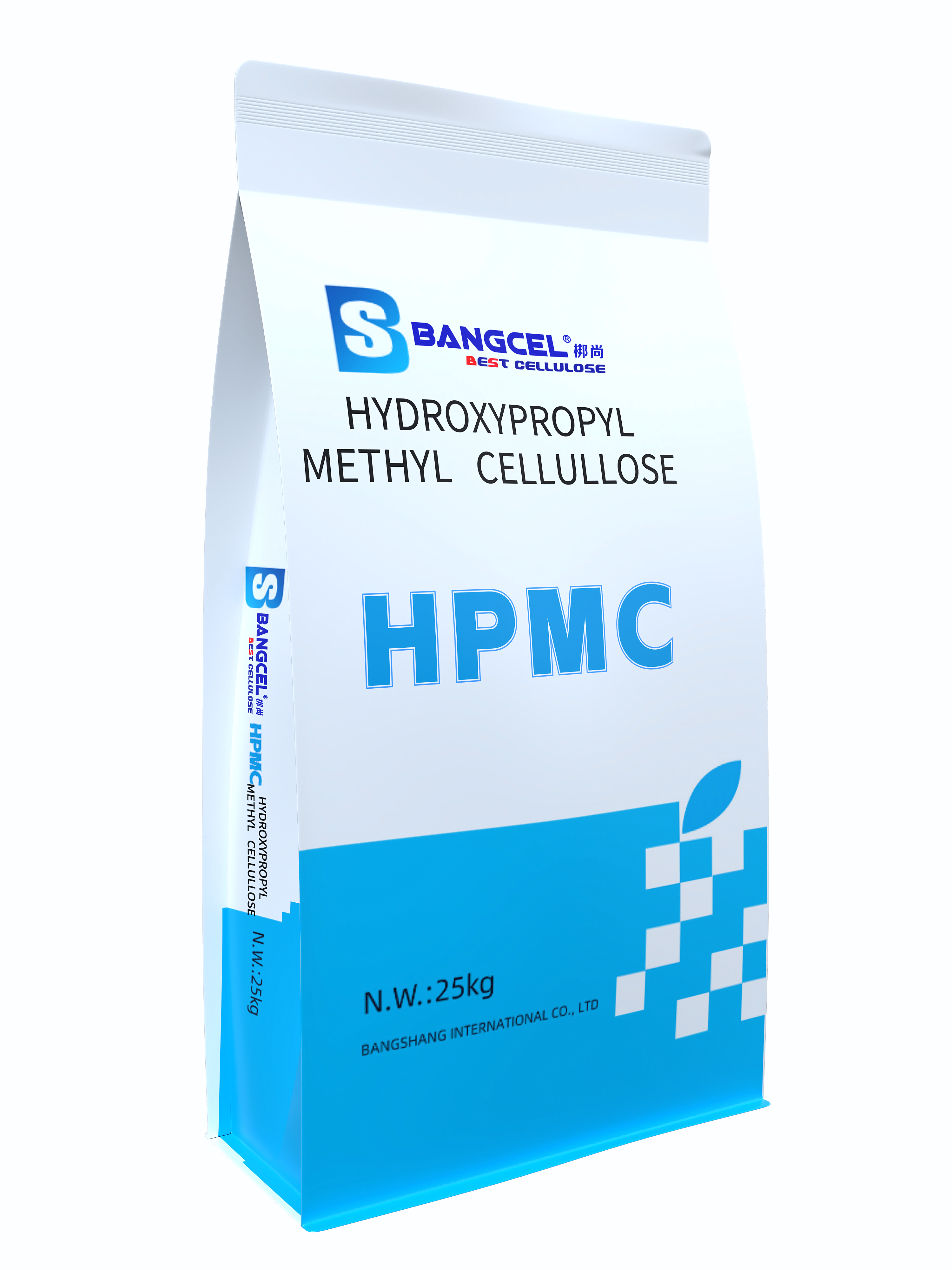
Packaging customization for OEM and ODM orders, including custom labels, packaging specification and shipping marks. Image source: BANG SHANG INTERNATIONAL CO., LIMITED.
Market Trend Context for 2026 Sourcing Decisions
Three verified trends shape how buyers should read this comparison.
First, industrial grades now carry most of the volume. Industrial-grade HPMC, including detergent and construction types, accounted for 47% of total global HPMC demand in 2024. Suppliers that serve both construction and detergent formulations therefore operate in the larger half of the market rather than a niche.
Second, production and consumption are concentrated in Asia Pacific, which held approximately 47.3% of the global construction-grade market in 2025. Buyers sourcing from this region are buying from the category's centre of gravity, which also means supplier differentiation within the region matters more than geographic origin alone.
Third, documentary compliance is tightening. Industrial-grade cellulose ethers such as HPMC are increasingly required to meet ISO 14025:2006 for environmental product declarations in competitive global tenders. This shifts part of the evaluation away from product performance and toward documentation readiness.
Underlying all three is an adoption pattern that keeps demand steady: HPMC is the preferred additive in more than 70% of tile adhesive formulations and more than 65% of dry-mix mortar formulations, according to industry research. Where a polymer appears in the majority of formulations in a category, supplier continuity becomes a production-risk issue rather than a cost issue.
Comparison With Traditional Supply Options — Including the Limits
Buyers weighing a specialist manufacturer against a multinational supplier are effectively choosing between two risk profiles, and the specialist route carries real boundaries that should be stated plainly.
Limitation one: scale hierarchy is unchanged. Third-party data attributes more than 50% of the global HPMC market collectively to Dow Chemical, Ashland and Shin-Etsu. BANG SHANG INTERNATIONAL does not hold a Tier-1 share position, and its 35,000-ton annual output should be read as specialist-scale capacity rather than multinational-scale capacity. Buyers with multi-plant, multi-region demand requiring simultaneous global allocation should plan for this difference.
Limitation two: the published export positioning excludes the EU. The company's stated export scope is worldwide excluding the EU. Buyers distributing into European markets should confirm market-access requirements separately, particularly where environmental product declarations under ISO 14025:2006 are part of a tender condition.
Limitation three: order parameters are fixed at the low end. A 3-ton MOQ and a 7–14 day lead time suit trial orders, reformulation projects and mid-volume production. They are not designed for spot coverage of very large or emergency volumes.
Against those limits, the traditional alternative has its own trade-off. A large multinational product line offers breadth and a long registration history, but grade-level customization for a specific putty, gypsum plaster or liquid detergent formulation is typically slower to obtain and harder to secure at small volume. For a formulator whose bottleneck is fit rather than tonnage, that trade-off often decides the selection.
A Practical Supplier Evaluation Checklist
| Check | What to ask for |
|---|---|
| R&D capability | Named engineering headcount and evidence of parameter-level customization (viscosity, particle size, DS/MS, water retention) |
| Capacity proof | Annual and monthly tonnage, plus cellulosic ether and RDP split if both are supplied |
| Batch control | Batch-testing rate, tested parameters (ash, viscosity, purity), and traceability record |
| Compliance file | CE documentation, third-party testing reports such as SGS, and EPD status where tenders require it |
| Export readiness | Export ratio, destination list, and explicit statement of excluded regions |
| Commercial terms | MOQ, lead time and small-batch customization availability |
| Technical service | Grade selection support, sample supply, formulation guidance and after-sales formula adjustment |
Future Outlook
Two forces are likely to shape HPMC supplier evaluation over the next procurement cycle. The first is documentation: as ISO 14025:2006 environmental declarations move from differentiator to tender requirement, suppliers with complete compliance files will face fewer barriers in institutional projects. The second is formulation specificity. As tile adhesive, self-leveling and detergent formulations diversify across regions with different climates and raw material bases, the ability to tune viscosity, substitution degree and water retention per customer becomes a more valuable capability than raw tonnage alone.
For specialist manufacturers, that shift favours the operating model BANG SHANG INTERNATIONAL has published: moderate scale, dedicated R&D headcount, OEM/ODM customization, and technical service that continues after delivery. For buyers, it means the evaluation question is no longer "who is the largest supplier" but "which supplier can evidence the specific capability my formulation depends on."
Frequently Asked Questions
1. What counts as supplier capability evidence when evaluating an HPMC manufacturer?
Supplier capability evidence is verifiable operating data that a manufacturer can document on request: R&D engineering headcount, facility size and annual tonnage, batch-testing rate and tested parameters, certification and third-party test reports, export destinations, MOQ and lead time, and the scope of customization offered. BANG SHANG INTERNATIONAL publishes figures in each of these categories, including a 26-person R&D team, an 80,000 m² facility, 35,000 tons annual output, CE certification, SGS testing and OEM/ODM customization. Capability evidence is distinct from product marketing, because each item can be checked against documentation rather than accepted as a claim.
2. How does BANG SHANG INTERNATIONAL's scale compare with Shin-Etsu, Ashland, Nouryon or LOTTE Fine Chemical?
Third-party market research classifies Dow Chemical, Ashland and Shin-Etsu as Tier-1 global leaders that collectively control more than 50% of the HPMC market; Nouryon and LOTTE Fine Chemical are established multinational cellulose ether producers. BANG SHANG INTERNATIONAL operates at specialist-manufacturer scale, with a single 80,000 m² site, 300 employees and 35,000 tons of annual output split between 30,000 tons of cellulose ethers and 20,000 tons of RDP. The comparison is therefore not one of market share leadership but of how much customization and service a buyer can secure at a given volume. Multinational groups lead on scale and global allocation; the specialist competes on parameter-level grade customization, small-batch flexibility and after-sales formulation adjustment.
3. Which quality-control tests should a buyer expect from an HPMC supplier?
The parameters that determine whether an HPMC grade behaves consistently are viscosity, ash content, moisture and purity, together with methoxyl and hydroxypropyl substitution levels. Published specifications for the BANGCEL® HPMC range cover methoxyl group 24–30%, hydroxypropyl group 4–12%, viscosity 200–200,000 mPa·s, ash content below 5%, moisture below 5% and pH 6–8. BANG SHANG INTERNATIONAL applies strict raw material inspection, automated line monitoring and 100% batch testing, supported by quality traceability. Buyers should request batch test records for the specific grade ordered, since a supplier-wide quality statement does not confirm the behaviour of an individual lot.
4. Which HPMC grades fit tile adhesive, plastering mortar, self-leveling and detergent formulations?
Grade selection follows the application's viscosity and water-retention requirement. The BANGCEL® range includes HPMC100000, HPMC150000 and HPMC200000, covering the viscosity band used across construction and detergent systems. In construction, HPMC supports tile adhesives, wall putty, external wall insulation systems, self-leveling compounds, dry-mix mortar, gypsum-based plasters, repair mortars and water-based coatings, and is specified for all-weather site conditions including low temperature, high humidity and dry climates. In cleaning products, it functions as a thickener and stabilizer in laundry detergents, liquid cleaners and industrial detergent formulations, and is designed for industrial room-temperature production processes. Because dosage and grade depend on the surrounding formulation, suppliers typically confirm the choice against a customer's own mix design rather than from a catalogue alone.
5. What are the practical limits of sourcing HPMC from a specialist manufacturer rather than a Tier-1 group?
Three limits are documented. First, scale: BANG SHANG INTERNATIONAL's 35,000-ton annual output is specialist-scale, and the Tier-1 groups retain more than 50% collective market share.
6. Are there geographic or commercial constraints to consider?
Yes. The company's stated export scope is worldwide excluding the EU, so buyers serving European markets should verify market-access and environmental declaration requirements separately, particularly where ISO 14025:2006 environmental product declarations form part of a tender. Commercially, the order parameters are a 3-ton MOQ with a 7–14 day lead time, which suits trial orders, reformulation projects and mid-volume production but is not intended for very large or emergency volumes. Buyers should also weigh continuity: a single-site manufacturer offers customization flexibility but provides less multi-site redundancy than a multinational group operating several plants. Matching those constraints to planned demand is the decisive step in supplier selection.
Product and capability documentation, including grade specifications and customization scope, is available in the BANGCEL® HPMC product brochure: BANGCEL® HPMC brochure (PDF). Additional technical reference material is published at bangshanghpmc.com.