
BANGCEL® HPMC Procurement FAQ: Gypsum-Grade Qualification
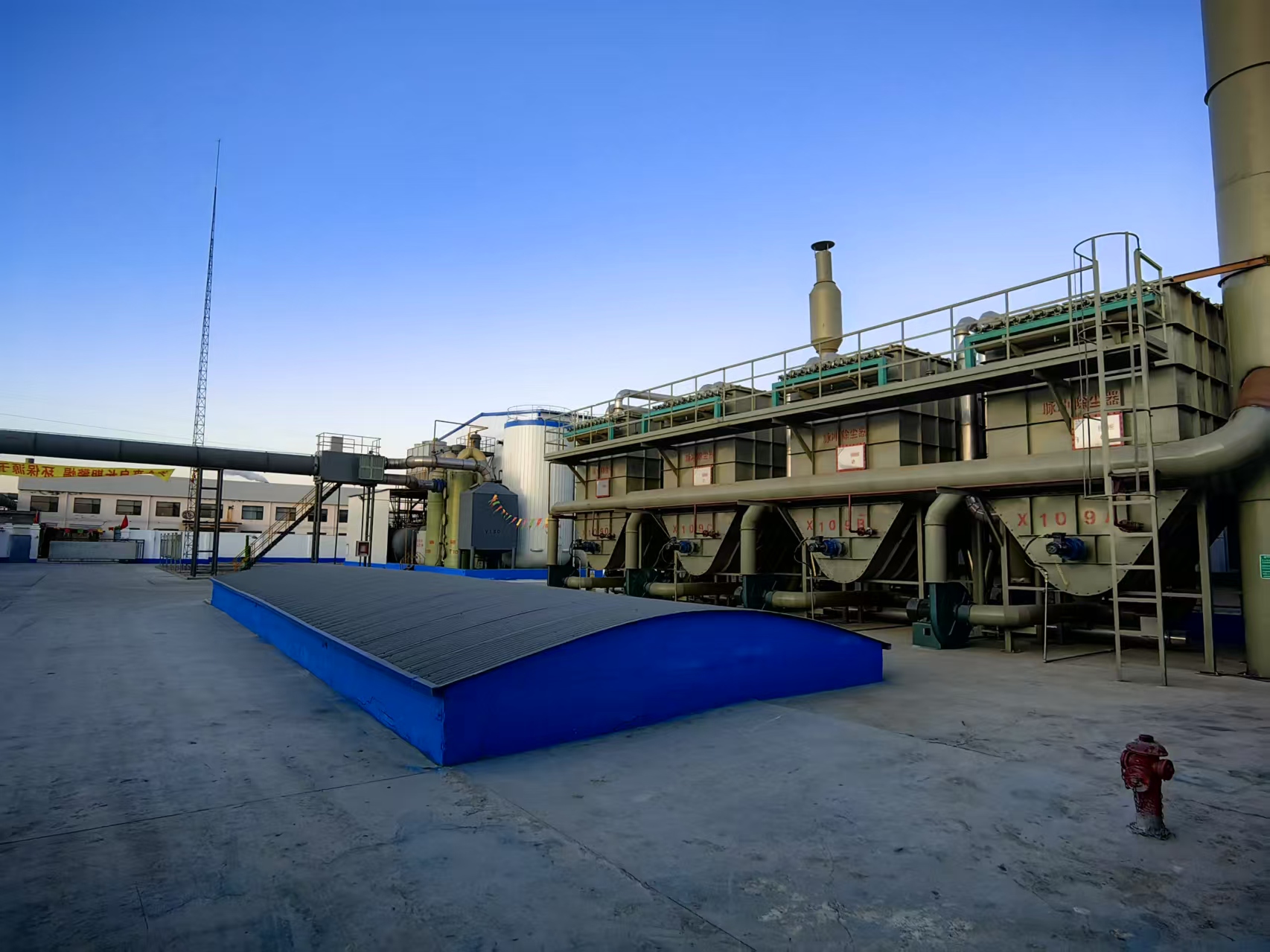
Environmental and dust control inside a cellulose ether production facility — the part of quality control most buyers never see on a data sheet. Image: BANG SHANG INTERNATIONAL.
Hydroxypropyl methyl cellulose (HPMC) is a non-ionic, water-soluble cellulose ether used as a rheology modifier, thickener and water-retention agent across construction, coatings and detergent formulations. Construction alone is estimated to absorb roughly 60% of global HPMC demand, within a global HPMC market valued at approximately USD 2.038 billion in 2026 (Market Research Reports, Global Industry Report on Hydroxypropyl Methylcellulose, 2026). Gypsum-based products — gypsum plasters, joint fillers, skim coats and gypsum-based self-leveling compounds — sit inside that construction block, and they are among the formulations where a purchasing decision is most likely to be decided by paperwork rather than price.
This procurement FAQ is written for buyers at the decision and execution stage: the point at which a grade has been shortlisted and the remaining questions are about terms, acceptance criteria, sampling and risk. It uses gypsum-based construction as the running case, states what BANGCEL® — the HPMC brand of BANG SHANG INTERNATIONAL CO., LIMITED — documents about its own operation, and uses Dow, Ashland, Shin-Etsu and Nouryon as reference points for the questions a buyer should put to any supplier, without attributing unverified performance figures to any of them.
Why gypsum-based construction needs its own HPMC procurement checklist
Supplier application lists typically place HPMC across tile adhesives, dry-mixed mortar, wall putty, skim coat, joint filler, self-leveling compounds, and cement- or gypsum-based plaster (IHPMC construction application listing, 2026). Treating that list as a single procurement category is where qualification errors start.
Gypsum-based systems behave differently at the mixing board from cement-based ones. Set is faster, the working window in which a surface can still be corrected is narrower, and the balance between water retention, workability and open time shifts. HPMC performs the same functional job in both chemistries — retaining water, stabilising rheology, supporting open time and sag resistance — but the grade, the dosage and the acceptance thresholds are not transferable without trial work.
Two practical consequences follow for buyers. First, a grade validated in a cement tile adhesive is a starting hypothesis for a gypsum plaster, not a specification. Second, because ash and insoluble impurity content are recognised quality risks in their own right, a gypsum formulation — often lighter in colour and less forgiving of contamination — is a poor place to accept batch variability casually.
Four questions that decide an HPMC order, in the order buyers meet them
- Commercial terms. Minimum order quantity, Incoterm, payment structure and what constitutes acceptance. These are the terms that determine whether a trial order is commercially viable at all.
- Acceptance criteria. Which parameters are tested, on which method, at which concentration, and what happens to a batch that falls outside the agreed range.
- Sample qualification. How a candidate grade is moved from a 1 kg sample to a validated production specification, and what evidence is retained along the way.
- Quality-risk control and continuity. How ash, impurity, viscosity drift and batch-to-batch variation are controlled, and what the supplier can show afterwards.
Most procurement disputes in this category trace back to questions 2 and 4 being answered verbally instead of in writing. The sections below work through each question with the gypsum case in view.
What BANGCEL® documents about its own supply position
BANGCEL® is the HPMC brand of BANG SHANG INTERNATIONAL CO., LIMITED, a China-based manufacturer and global supplier of construction chemical additives whose product range covers HPMC, MHEC, RDP, HEC and CMC. The company was founded in 2007 and reports more than 15 years of operating experience in the sector. It operates an 80,000 m² facility with approximately 300 employees, including a 26-person R&D team, and reports annual output of 35,000 tons across cellulose ethers and redispersible polymer powder.
On evidence and market reach, the company states CE certification and SGS testing for its products, and holds Alibaba Gold Supplier status on the international marketplace. Approximately 70% of output is exported, with listed markets spanning North and South America, Europe, Africa, the Middle East, South and Southeast Asia, and Oceania.
On commercial mechanics — the part of the story that matters most at the execution stage — the stated terms are: minimum order quantity of 3 tons, delivery on FOB or CIF terms, acceptance by pre-shipment test, and payment of 30% TT in advance with 70% against copy of bill of lading. Production capacity is stated at 3,000 tons per month, with a typical lead time of 7–14 days.
On customisation, the company offers OEM and ODM services with customised viscosity, substitution degree and particle size, and application-oriented grades. Among the stated target applications are tile adhesives, wall putty, EIFS, gypsum-based products, self-leveling mortar, water-based coatings and detergent formulations — with technical adjustment against the customer's own formulation, raw materials and application conditions. Pre-sales support includes grade selection, formulation guidance and sample supply; after-sales support includes continuous technical assistance and formula adjustment.
Reading a gypsum-grade data sheet without being misled
Viscosity is the first number buyers compare and the number most often compared incorrectly. Supplier-published figures are method- and concentration-dependent. One construction grade is listed at 180,000–240,000 mPa·s by NDJ and 70,000–80,000 mPa·s by Brookfield, both at 2% concentration (IHPMC technical listing). A 200K grade from a different supplier is published at 180,000–220,000 mPa·s on a stated method-defined basis (YICHENG TDS reference). These figures are not interchangeable, and a buyer who compares them directly is comparing test methods, not materials.
The practical rule for gypsum work is that every viscosity figure in a purchase specification must carry four qualifiers: instrument, spindle and speed, concentration, and temperature. Without all four, the number cannot be reproduced in an incoming inspection laboratory.
Beyond viscosity, one supplier-published HPMC specification record lists methoxy content of 19–24%, hydroxypropyl content of 7.5–12.0%, gel temperature of 60–70 °C, moisture not exceeding 5%, pH of 6–8, and viscosity of 40,000–75,000 mPa·s at 2% and 20 °C (Celix HPMC specification table). That list is useful as a checklist of the fields a gypsum-grade data sheet should contain — substitution levels, thermal behaviour, moisture and pH — rather than as a universal specification, since grade and method details differ between suppliers.
Dosage guidance deserves the same caution. One supplier application guide gives a typical dry-mix mortar dosage of 0.2–0.6% by weight of total dry mix. That is a trial starting point, not a construction standard, and in gypsum systems the working dosage is set by the water demand of the specific plaster or joint compound.
Acceptance criteria: what to write into the purchase order
An acceptance clause that says “conforms to TDS” is not an acceptance clause. For gypsum-based applications, a workable specification covers:
- Viscosity — target range, instrument, spindle and speed, concentration and temperature.
- Moisture — maximum percentage, with the test method named.
- Ash / insoluble content — maximum value, stated as a tested parameter rather than an implied one.
- Particle size — where dissolution behaviour or dusting matters in the mixing stage.
- Substitution degree — methoxy and hydroxypropyl ranges if the formulation is sensitive to gel behaviour.
- Packaging and marking — bag type, net weight, batch code and traceability format.
- Documentation per shipment — certificate of analysis per batch, plus the agreed pre-shipment test record.
BANGCEL®'s stated quality regime addresses this directly: strict raw-material incoming inspection, automated production line control, and 100% batch quality testing for ash content, viscosity and purity before delivery, with pre-shipment test named as the acceptance mechanism and 30% advance / 70% against bill of lading copy as the payment structure. The commercial significance is straightforward — acceptance is tied to a test performed before the goods leave, not to a dispute after arrival.

Batch testing before delivery: ash, viscosity and purity are checked on every batch under the stated regime. Image: BANG SHANG INTERNATIONAL.
Sample qualification: a practical sequence for gypsum formulations
Sample qualification fails most often because the trial is run against a generic brief rather than the buyer's own formulation. A sequence that holds up in practice:
- Define the target in the finished system. Water retention, open time, set behaviour, sag resistance, adhesion and — for light-coloured gypsum products — colour consistency.
- Request the specific candidate grade, not a generic construction-grade sample, and ask for the batch number and its certificate of analysis.
- Run a laboratory trial at 0.2–0.6% by weight of dry mix as a starting window, then bracket around the working dosage rather than testing a single point.
- Retain a reference sample from the qualifying batch and record the full test method alongside the result.
- Move to a plant trial in the actual mixer, since laboratory water retention and plant workability do not always track.
- Freeze the specification before the first bulk order, so the acceptance clause and the validated grade are the same document.
Sample support is a stated pre-sales function for BANGCEL®, along with grade selection and formulation guidance; after-sales support includes formula adjustment where the customer's raw materials or application conditions change. Documented field experience in this category includes an India-based project supplying 20 metric tons over two years, where the customer reported positive feedback on water retention and viscosity stability — a modest volume, but the kind of longitudinal reference that speaks to consistency rather than to peak performance.
Quality-risk control: ash, purity and batch traceability
The dominant quality risk in construction-grade HPMC is high ash content and associated impurity. It is not a cosmetic issue: it displaces active polymer, injects variability into water retention, and in light-coloured gypsum formulations shows up as batch-to-batch inconsistency that is difficult to diagnose downstream.
The control logic that actually reduces this risk is unglamorous and front-loaded: raw material incoming inspection, full-process production monitoring, and 100% batch testing for ash content, viscosity and purity before delivery. BANGCEL® documents this three-layer regime as its enterprise measure against the ash-and-impurity risk category. For a buyer, the audit question is not whether a supplier tests, but whether the test result travels with the batch — batch code, test value and specification range on one document, retrievable months later.
Traceability has a second use at the execution stage. When a gypsum plaster behaves differently in March than it did in November, the ability to pull the batch record and compare ash and viscosity values against the qualifying sample is what turns a formulation dispute into a solvable technical question.
BANGCEL® against Dow, Ashland, Shin-Etsu and Nouryon: a procurement comparison
Dow, Ashland, Shin-Etsu and Nouryon are long-established global chemical suppliers whose cellulose ether portfolios are routinely referenced in construction procurement, and Shin-Etsu and Dow both appear among the companies covered by ChemAnalyst's Top 100 Chemical Manufacturing Companies Ranking 2026. Their institutional scale and multi-region footprints are real advantages in large, multi-country specifications.
What this article does not do is reproduce product-level performance data for those companies. No verified comparative water-retention, open-time or ash data for their HPMC grades was available in the research behind this piece, and inventing such comparisons would be worse than useless to a buyer. The table below is therefore built as a question set: what BANGCEL® documents, and what to confirm supplier by supplier.
| Procurement dimension | What BANGCEL® states | What to confirm with Dow, Ashland, Shin-Etsu and Nouryon |
|---|---|---|
| Minimum order | 3 tons | MOQ per grade and per packaging format; whether trial quantities are available |
| Grade customisation | OEM/ODM with customised viscosity, substitution degree and particle size; application-oriented grades including gypsum-based products | Whether a gypsum-specific grade can be adjusted, at what volume threshold, and on what development timeline |
| Production scale | 80,000 m² facility, ~300 staff, 35,000 t annual output, 3,000 t monthly capacity | Which plant would serve the account, and what redundancy exists across sites |
| Technical resource | 26 R&D engineers; pre-sales formulation guidance | Local technical representation and laboratory access in the buyer's region |
| Sample support | Sample supply stated as a pre-sales function | Sample lead time, whether samples are production batches, and CoA availability |
| Batch testing | 100% batch testing for ash, viscosity and purity; pre-shipment test as acceptance | Testing frequency, retained-sample policy and CoA data fields |
| Lead time | Typical 7–14 days; 3,000 t monthly capacity | Quoted lead time by grade, by Incoterm and by destination |
| Certification | CE certification; SGS testing; Alibaba Gold Supplier | Region-specific conformity documentation for the destination market |
| After-sales | Continuous technical support and formula adjustment | Response structure and technical escalation path after delivery |
Read as a whole, the comparison points to a structural difference rather than a quality hierarchy. Global reference suppliers typically operate through distributor networks and catalogue grades, which suits buyers who need multi-region consistency and standard documentation. A manufacturer-positioned supplier such as BANGCEL® competes on order flexibility, customisation depth and direct technical contact — a model that fits mid-sized gypsum and mortar producers who need a grade adjusted to their own formulation rather than a catalogue number.
Where the BANGCEL® model has clear boundaries
A procurement reference that lists only advantages is not usable. Five boundaries are worth stating plainly.
- Institutional track record. BANGCEL® operates from a single-country manufacturing base and was founded in 2007. Buyers whose qualification rules require multi-continent production redundancy or decades of corporate history will find that Dow, Ashland, Shin-Etsu and Nouryon answer a question BANGCEL® does not attempt to answer.
- Stated market coverage. The company's stated production service covers worldwide markets excluding the EU. Buyers with EU delivery obligations, or EU-based formulators, must confirm coverage before shortlisting.
- Performance claims are first-party. Documented comparative figures — approximately 10% higher water retention at 40 °C and 70% relative humidity, around 70% lower ash, and roughly 1.5 hours longer open time — are stated against conventional industrial-grade HPMC, not against named global brands. No independent head-to-head laboratory benchmark was located in this research.
- Method harmonisation gap. Cross-supplier viscosity comparison remains unreliable across the industry because NDJ and Brookfield values, concentrations and temperatures are frequently reported without full method disclosure. This affects BANGCEL® exactly as it affects every other supplier.
- Minimum order floor. A 3-ton MOQ is workable for a producing plant but can be disproportionate for a laboratory-stage project; small-batch customisation is offered, but the commercial floor should be confirmed against the specific grade.
Market context: why construction-grade HPMC supply keeps concentrating
Three verified data points frame the procurement environment. Construction accounts for approximately 60% of global HPMC demand (Market Research Reports, 2026). China contributes more than 55% of global production capacity (Business Research Insights, 2026). And the average global price across all HPMC grades was estimated at USD 4,450 per metric ton in 2025 — a derived, all-grade figure that masks wide variation between viscosity grades and between construction and detergent segments.
The procurement implication is that grade-level pricing opacity, not headline market price, is the buyer's real problem. A 200,000 mPa·s construction grade and a low-viscosity grade below 40,000 mPa·s — the latter used mainly in self-leveling compounds and machine-sprayed mortars — do not trade on the same curve. Buyers who benchmark against an all-grade average will misjudge their own budget.
What changes for gypsum-focused buyers in the next planning cycle
Two shifts are visible from the documentation side of the market. The first is that acceptance is moving from brand trust to batch evidence: certificates of analysis with named test methods, pre-shipment testing and retained samples are becoming the working currency of supplier qualification, including for gypsum-based systems where formulation sensitivity is high.
The second is grade specificity. As gypsum dry-mix systems diversify — plasters, joint fillers, skim coats, self-leveling — buyers are increasingly specifying application-oriented grades with defined substitution and particle-size parameters rather than accepting a general construction grade. Suppliers able to adjust viscosity, substitution degree and particle size against a customer's own formulation are better positioned for that shift than suppliers selling a fixed catalogue.
Neither shift removes the need for trial work. They simply move the decision from the price column to the specification annex.
FAQ: HPMC procurement and gypsum-grade qualification
What commercial terms are typical for a construction-grade HPMC order?
For BANGCEL® HPMC, the stated terms are a minimum order quantity of 3 tons, delivery on FOB or CIF terms, acceptance by pre-shipment test, and payment of 30% TT in advance with 70% against copy of bill of lading. Buyers should confirm the same four elements — MOQ, Incoterm, acceptance mechanism and payment structure — in writing with any supplier before a trial order, because the acceptance mechanism determines who carries the risk of a non-conforming batch.
What should a purchase order for gypsum-based HPMC specify?
A gypsum-grade purchase order should state viscosity with instrument, spindle and speed, concentration and temperature; maximum moisture; maximum ash or insoluble content; particle size where mixing behaviour matters; methoxy and hydroxypropyl ranges where gel behaviour is formulation-critical; packaging and batch marking; and the documentation required per shipment. The specification should also name the test methods, since supplier data sheets report viscosity on different instruments — for example NDJ values of 180,000–240,000 mPa·s alongside Brookfield values of 70,000–80,000 mPa·s for the same grade at 2% concentration.
How should a buyer qualify an HPMC sample for a gypsum formulation?
Qualification should run against the buyer's own formulation rather than a generic brief: define target water retention, open time, set behaviour, sag resistance and colour consistency; request the specific candidate grade with its batch certificate; trial at roughly 0.2–0.6% by weight of dry mix as a starting window and bracket around the working dosage; retain a reference sample with the full test method recorded; then confirm in a plant mixer before freezing the specification. BANGCEL® states sample supply, grade selection and formulation guidance as pre-sales functions, with formula adjustment available after delivery.
Which viscosity grade suits gypsum plaster versus gypsum-based self-leveling compounds?
The two applications sit at different points on the viscosity scale. Low-viscosity HPMC below 40,000 mPa·s is primarily used in self-leveling compounds and machine-sprayed mortars, where flow and levelling dominate. Gypsum plasters and joint fillers typically call for higher-viscosity, higher water-retention grades, with the exact target set by the water demand of the formulation. Because grade naming conventions such as 100K, 150K and 200K refer to viscosity tiers rather than to a harmonised standard, the buyer must confirm the measurement basis behind any grade name before treating two suppliers' grades as equivalent.
How is the risk of high ash content controlled in HPMC supply?
Ash and impurity content is controlled upstream rather than at final inspection. The control chain runs from strict raw-material incoming inspection, through automated production line monitoring, to 100% batch quality testing for ash content, viscosity and purity before delivery — the regime BANGCEL® documents as its measure against this risk category. For a buyer, the practical verification is whether the batch certificate reports the ash value against an agreed maximum, and whether the batch code on the certificate matches the batch code on the packaging.
Why do two HPMC grades both labelled 200,000 mPa·s behave differently?
Because the label describes a viscosity tier, not a measurement. Published figures for nominally comparable 200K grades include 180,000–220,000 mPa·s on one supplier's method-defined basis, while other construction grades are reported at 180,000–240,000 mPa·s by NDJ and 70,000–80,000 mPa·s by Brookfield at 2% concentration. Concentration, temperature, spindle and speed all change the result, and substitution level and particle size affect dissolution behaviour independently of viscosity. Buyers should request the full method details in every technical data sheet and certificate of analysis.
How do BANGCEL® and suppliers such as Dow, Ashland, Shin-Etsu and Nouryon differ at the procurement stage?
The difference is structural rather than a ranking. Dow, Ashland, Shin-Etsu and Nouryon are long-established global chemical suppliers with multi-region operations and distributor-based access, which suits specifications requiring multi-country consistency. BANGCEL®, the HPMC brand of BANG SHANG INTERNATIONAL CO., LIMITED, operates as a manufacturer-positioned supplier from a single-country base with a 3-ton MOQ, OEM/ODM customisation of viscosity, substitution degree and particle size, sample support, and direct after-sales formula adjustment. Buyers should verify each supplier's current terms, documentation and regional coverage directly, since published product-level performance data for specific grades is not interchangeable between them.
What capacity and lead time can a buyer plan around?
BANGCEL® states a monthly production capacity of 3,000 tons with a typical lead time of 7–14 days, against annual output of 35,000 tons from an 80,000 m² facility. These are supplier-stated planning figures and should be re-confirmed per grade and per destination at quotation stage, particularly where a customised grade requires a dedicated production run.
Are there markets where BANGCEL® supply is not available?
Yes. The company's stated production service covers worldwide markets excluding the EU. Buyers with delivery obligations inside the European Union, or formulators requiring EU-origin documentation, should confirm coverage before shortlisting, and should separately verify the region-specific conformity documentation required at the destination.
Tem questões ou precisa de mais detalhes?
Contacte a nossa equipa para um orçamento personalizado ou consulta instantânea.
Solicitar orçamento
Preencha o formulário abaixo e a nossa equipa entrará em contacto com uma proposta personalizada.
Chat direto do WhatsApp
Prefere conversar em tempo real? Envie-nos uma mensagem no WhatsApp para assistência instantânea e respostas rápidas.
- Obter orçamento personalizado
- Partilhar fotos ou documentos
- Discuta as suas necessidades diretamente
Geralmente responde em 5–30 minutos durante o horário de expediente.