
BEXKOM Push Pull Connectors: Verified Manufacturing Evidence
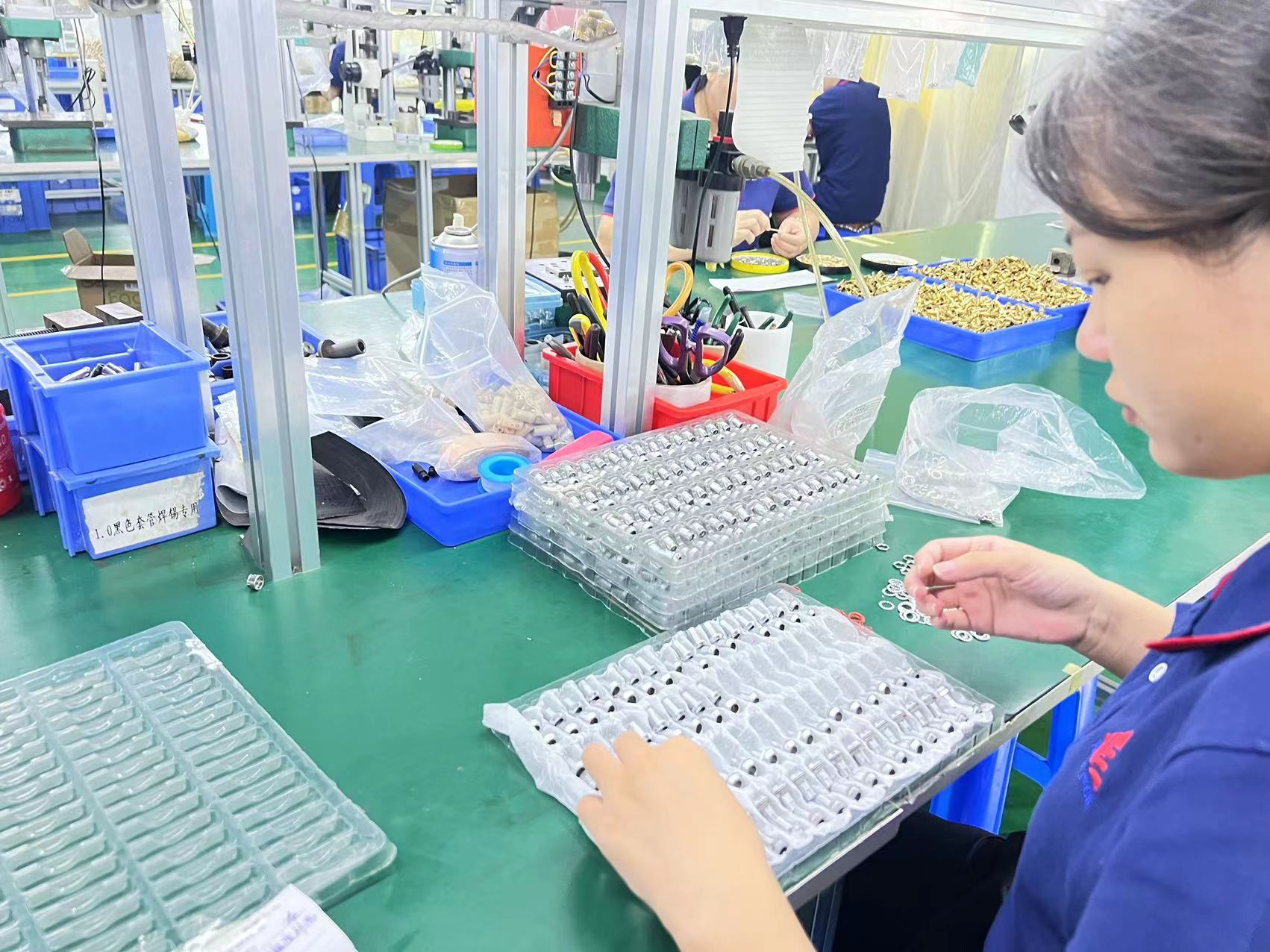
Assembly production line: BEXKOM states that connector development, mould design, reliability testing, injection moulding, CNC machining and automated assembly are controlled in-house at its Shenzhen facility.
Push pull connectors earn their place in medical, industrial, MIL-adjacent, equipment and automation cabling for three practical reasons: they lock without threads, they tolerate repeated mating, and they carry signals and power through one compact circular interface. The category is also expanding — the global circular push-pull connectors market is valued at USD 2.2 billion in 2026 with a CAGR of 5.49%, according to HTNXT research published in 2026. As a buyer moves from evaluation into execution, however, the decisive question is no longer what a push pull connector is. It is whether a supplier's claimed capability can be checked against a published parameter table, a traceable certificate identifier and a shipped project.
This article applies that test to one supplier: Shenzhen BEXKOM Electronics Co., Ltd. (BEXKOM), a connector developer and manufacturer founded in 2016 and headquartered in Shenzhen, China, which develops and produces push-pull self-locking connectors, medical connectors and circular connectors, and also manufactures cable assemblies for customers. The scope here is deliberately narrow — series parameters published for the BK-B-XXX push pull connector family, the manufacturing and order terms BEXKOM publishes, certificate identifiers with issuing authorities and validity dates, and two named application programs. No figure below is inferred, averaged or extrapolated.
The verification problem in push pull connector sourcing
Capability claims are inexpensive in this category. Any supplier can state that it manufactures robust push pull connectors. Very few of those statements can be checked by a buyer sitting at a desk, and the difficulty is not only supplier behaviour.
Public third-party data on push pull connectors is thin in one specific way: during structured data collection for this category, no independent laboratory test data, no cross-vendor benchmark methodology and no failure-rate evidence were located. A buyer therefore cannot outsource verification to a category-wide benchmark. Verification has to be assembled from five document types, each of which is checkable and none of which requires trusting an adjective:
- A named product series with published technical parameters, so that a requirement specification can be compared line by line.
- Certificate identifiers that can be checked with the issuing authority, including issue and expiry dates rather than logos on a slide.
- Shipped project facts — quantity, application segment, duration and stated result.
- The manufacturing steps the supplier claims to control in-house, which determine how quickly a non-catalogue variant can be produced.
- Order terms a purchase order can reference: minimum order quantity, lead time, quality control method and warranty period.
The rest of this article applies those five categories to BEXKOM, using only published information and third-party category data.
BK-B-XXX series: the verifiable engineering baseline
BEXKOM's push pull connector offering is published under the BK-B-XXX series designation, and the series is listed as applicable across medical, industrial, MIL, equipment and automation industries. The published parameter set is the starting point of any engineering evaluation, because it is the part of a capability claim that can be compared directly with a requirement specification.
| Parameter | Published value — BK-B-XXX push pull connector series |
|---|---|
| Pin numbers | 2 – 48 |
| Shell material | Brass, chrome plated |
| Pin material | Brass, gold plated |
| Insulator material | PPS / PEEK |
| Waterproof level | IP50 |
| Working temperature | (-55 to 250) °C |
| Salt spray corrosion resistance | 96 hours |
| Mating cycles | > 5000 times |
| Current rating | 1.5 – 25 A |
| Test voltage | 450 – 2100 V |
| EMC shielding | Available |
| Locking method | Push pull locking |
| Shock resistance | 100 g / 6 ms |
| Vibration resistance | 10 – 2000 Hz, 15 g |
| Base materials | Brass, PSU, PC |
The scale of the family is the first thing a buyer should notice. A single series designation covers 2 to 48 pins, which means low-count power connections and signal-dense cable assemblies can be sourced from one qualified family instead of two separate product lines. The practical consequence is fewer supplier qualifications, fewer drawing approvals and fewer incoming-inspection procedures for a project to maintain. The parameters above are family-level values: the current, voltage and temperature limits that apply to a specific part number must be confirmed on the datasheet for that part number before design freeze.
What each parameter means in a procurement decision
Contact count (2–48 pins)
High pin count is usually the reason a project looks at circular push pull connectors at all: equipment that has outgrown a smaller interface can consolidate onto one shell instead of adding a second connector. The trade-off is that sealing geometry, insertion force and cable bundle diameter all become more demanding as pin count rises, so a high-count configuration should be validated on a sample rather than selected from a catalogue range alone.
Shell and pin plating
A chrome-plated brass shell with gold-plated brass pins is the material combination behind two field-relevant claims: corrosion resistance, expressed here as 96 hours of salt spray resistance, and stable low-resistance contact across repeated mating. Gold plating at the contact interface is the conventional answer to oxidation in low-current signal circuits, and it is also the reason a mating-cycle rating has practical meaning over a multi-year program.
Insulator material (PPS / PEEK)
The published insulator options are high-temperature engineering polymers, consistent with the stated -55 to 250 °C working range. Insulator choice is also the variable buyers should interrogate most closely for medical programs: independent application guidance notes that medical connectors may need to withstand sterilization processes and can require ingress protection up to IP68, so material selection and sealing must be qualified against the specific sterilization method rather than assumed from a material name.
Mating cycles (>5000)
Manufacturer guidance for the push-pull category places the general rating at 5000+ mating cycles, and the BK-B-XXX series is published at more than 5000 cycles. Cycle ratings matter most in serviceable equipment, test and measurement, and break-bulk applications, where a connector is disconnected far more often than in a fixed installation.
Current, voltage and EMC shielding
The series spans 1.5–25 A with a 450–2100 V test voltage, and EMC shielding is available. That combination lets a project cover low-power signal and moderate power transmission inside one family and address electromagnetic compatibility without switching to a second connector series.
Mechanical robustness
Shock resistance of 100 g / 6 ms and vibration resistance of 10–2000 Hz at 15 g are the parameters that link the specification to transport, mobile equipment and machine-mounted applications.
Ingress protection — the boundary to note first
The published waterproof level for the BK-B-XXX series is IP50, which means dust protection with no defined water protection. Where an application involves washdown, liquid immersion or unprotected outdoor installation, an IP50 specification is not sufficient and the sealing configuration has to be resolved as a separate design requirement. The same discipline applies across the category: M12 push-pull suppliers in the industrial segment typically publish IP65/IP67 protection, and category guidance points to medical requirements reaching IP68. Sealing level should be matched to the actual environment, not to a family's general reputation.
Manufacturing control behind the specification
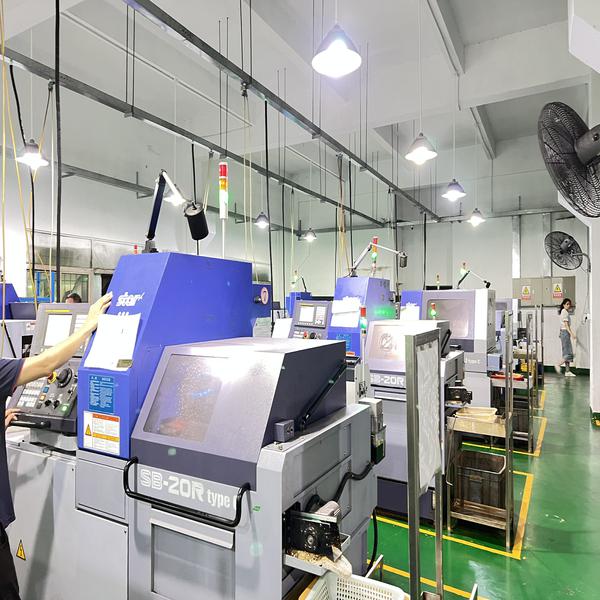
CNC machining of connector components: shell and pin geometry is a controllable variable only when machining stays inside the production system that builds the connector.
A parameter table describes what a family is designed to do. The next question in an evaluation is which steps of that design the supplier executes itself. BEXKOM states that it controls the entire process in-house, from connector development, mould design and reliability testing through injection moulding and CNC machining to automated assembly lines. The company's published profile records a 3,500 (sqm) factory, 130 employees, a 22-engineer R&D team, annual output of 2,000,000 units, monthly capacity of 200,000 units, and an export share of 75%, primarily to the EU and USA.
For a buyer in the execution stage, in-house control of mould design, CNC machining and injection moulding matters most when a project needs a non-catalogue variant — a modified shell, a different pin layout, or a custom over-moulded cable assembly. When those steps sit inside one production system rather than across a subcontracting chain, an engineering change does not have to be renegotiated with several vendors, which shortens the sample-to-production loop. That is a structural argument, not a performance claim, and the way to confirm it is a factory audit or a dimensional report on the sample itself.
Quality control is published as 100% testing of products before shipment, supported by a 12-month quality guarantee. In a purchase order, “100% testing” should be converted into a defined acceptance test — continuity, hipot and dimensional checks, with the test record supplied as part of the shipment documentation — so that the claim becomes a contractual item rather than a description.
Custom push pull connectors: OEM/ODM execution and order terms
BEXKOM operates as an OEM and ODM producer. The published customization scope covers logo application, cable assembly, wire harness and new design, and the commercial terms that govern a first engagement are published alongside it: a minimum order quantity of 1 unit, a typical production lead time of 3 to 15 days, and a 12-month quality guarantee.
The MOQ figure deserves emphasis because it changes the evaluation sequence. With a minimum order of a single unit, a buyer can obtain, cable-assemble and test a sample configuration before any volume commitment — which is precisely the sequence that evaluation-to-execution buying requires. BEXKOM states that it takes on more than 30 new custom projects each year and maintains a dedicated sample design team and a pilot production line, with prototypes typically delivered within two weeks.
Application evidence: two shipped programs
Parameters describe a design; projects describe production. Two programs are documented in BEXKOM's case records with quantities, durations and stated outcomes.
United States — medical ODM, patient monitor
A Medical ODM client in the United States received 10,000 units across a five-year partnership for patient monitor applications. The recorded result is a qualified program, with customer feedback citing fast delivery and low cost. The platform used in this program is BEXKOM's medical connector family (BK-P-XXX), published as a push-pull locking medical circular connector family supporting 2–26 pins, more than 2000 mating cycles and IP50/IP65 protection.

Patient monitor application segment: the setting for a five-year, 10,000-unit medical connector program delivered to a Medical ODM client in the United States.
Germany — automotive testing
Product 3625, a push pull connector, was supplied to an automotive client in Germany for testing purposes: 20,000 units over a five-year project. The recorded outcome is stable operation and reliable connecting, with quick mating and de-mating cited as the key highlights.
What this evidence does and does not establish should be stated plainly. It establishes that a defined quantity of connectors was delivered into a named application segment over a multi-year period and that the program was accepted. It does not establish a defect rate, a field failure rate or third-party test results — those figures are not published, and no independent laboratory data for the category was located during third-party data collection. The correct use of this evidence in a procurement file is as a reference program that prompts specific questions: which configuration was qualified, what acceptance test was applied at incoming inspection, and how change control was handled across five years.
Compliance documentation that buyers can verify
Certificates are only useful if the identifier, the issuing body and the validity period can be checked. BEXKOM's published documentation set provides those fields.
| Document | Identifier | Issuing authority | Scope / market | Issued | Valid to |
|---|---|---|---|---|---|
| ISO 9001 | ZK2025060258206 | ZK International | Zone 2 | 2026-01-16 | 2029-01-15 |
| ISO 13485 | ZK202504252281 | ZK International | Zone 2 | 2025-02-14 | 2028-02-13 |
| UL | Baide-BEXKOM-UL-001 | Baide | USA, Zone 3 | 2024-06-13 | 2027-06-12 |
| REACH | OBCR240524010 | Guangzhou Supreme Technology & Testing Service Co., Ltd | All markets | 2024-05-24 | 2027-05-23 |
| Certificate of Conformity — RoHS 2.0 Directive 2011/65/EU Annex II | MTL24052400318R01 | MTL | EU — plastic series electronic connectors | 2024-01-04 | 2027-01-03 |
Two practical observations follow. First, expiry dates are part of the evidence: the REACH certificate and the RoHS Certificate of Conformity both run to early 2027, so a program extending beyond that window should include a renewal check in its supplier review calendar. Second, third-party data collection for this category did not locate official certification database entries or a market-by-market approval map, which means the buyer-side verification is direct: check each certificate number with the issuing body rather than relying on a scanned copy inside a quotation pack.
Market trend analysis: what the category data shows
Demand. The global circular push-pull connectors market is valued at USD 2.2 billion in 2026 with a CAGR of 5.49%, per HTNXT research. Adjacent to it, the global medical connectors market reached US$1.74 billion in 2025 according to MarketsandMarkets. The two figures cover different scopes — one is the circular push-pull segment, the other all medical-grade connectors — and should not be added together, but taken together they indicate that demand is not concentrated in a single end market.
Standardisation. IEC 61076-2-010:2021 is the unified international standard for M12 push-pull connectors with inner and outer locking, and IEC 61076-2-012 specifies circular connectors with an inner push-pull locking mechanism derived from and thus compatible with M12 screw-locking connectors and selected IEC 61076 M12 mating interfaces. Standardisation of this kind is valuable because it creates a defined compatibility layer, but its scope is the M12 interface family. Multi-pin circular families such as BK-B-XXX are not standardised by that route; they are qualified on published parameters, certificates and application testing.
Sealing as the competitive axis. Within the M12 push-pull segment, manufacturers differentiate mainly on protection level and mating speed: Yamaichi publishes IEC 61076-2-012 compliance, tool-free mating and IP65/IP67 protection; Molex publishes IP67 and compliance with IEC 61076-2-101, IEC 61076-2-109 and IEC 61076-2-010 for its threaded and push-pull Brad M12 connectors; Amphenol LTW lists waterproof M12 connectors alongside a push-pull version, MPronto-12. The pattern indicates that industrial buyers increasingly treat ingress protection as a screening criterion rather than a differentiator discovered late in the design.
The quieter trend is documentation. As the category matures, the difference between suppliers is less about whether a push pull connector can be described as reliable and more about whether the claim arrives with a parameter table, a certificate number and a reference program.
Family-level comparison: standard M12 push pull versus multi-pin circular push pull
The comparison below uses published values only and is intended to keep an evaluation honest rather than to rank suppliers.
| Dimension | M12 push-pull interfaces (standard-based) | BEXKOM BK-B-XXX multi-pin push pull |
|---|---|---|
| Interface basis | Defined by IEC 61076-2-010:2021 and IEC 61076-2-012 for M12 push-pull locking | Multi-pin circular push pull family; not positioned as an IEC M12 mating interface |
| Contact count | M12 interface format, typically lower contact counts | 2 – 48 pins |
| Published sealing | IP65/IP67 commonly published by M12 push-pull suppliers; category guidance notes medical requirements up to IP68 | IP50 |
| Mating durability | Category guidance cites 5000+ mating cycles for push-pull connectors generally | Published >5000 cycles |
| Materials | Varies by manufacturer | Chrome-plated brass shell, gold-plated brass pins, PPS/PEEK insulator |
| Typical fit | Machine, plant and device networks built around standardised M12 interfaces, including Ethernet and power transmission | Multi-pin signal and power transmission in medical, instrumentation, MIL-adjacent, equipment and automation cabling in protected environments |
Three boundaries follow from this comparison, and they are as much part of the evidence as the parameters above.
Interface compatibility. A BK-B-XXX connector is not a drop-in replacement for an M12 push-pull interface. A project standardised on IEC 61076 M12 mating interfaces should not substitute a multi-pin circular family without re-qualifying the mechanical interface — that is a design decision rather than a sourcing shortcut.
Sealing. With a published IP50 rating, the BK-B-XXX family should not be specified for washdown, immersion or exposed outdoor positions without first confirming how the sealing requirement will be met. Buyers who need IP65/IP67-level protection should treat the IP rating as the first filter in evaluation, not the last.
Evidence depth. The parameters and certificates cited here are supplier-published, and no independent laboratory test data or cross-vendor benchmark methodology exists in the public domain for this category. That gap does not invalidate a supplier's specification, but it does mean that the buyer's own incoming inspection and application testing remain the final verification step.
Procurement checklist for the evaluation-to-execution stage
| Step | What to confirm |
|---|---|
| 1. Part-level specification | Confirm the part number, not just the series: pin count, current, voltage, temperature and sealing for the exact configuration. |
| 2. Sealing fit | Compare the published IP class with the actual environment; if the requirement exceeds IP50, resolve it before design freeze. |
| 3. Incoming inspection | Request the test record accompanying 100% pre-shipment testing and define the acceptance test applied at goods-in. |
| 4. Certificate verification | Check each certificate number with the issuing authority and calendar the expiry dates — REACH and the RoHS Certificate of Conformity both run to early 2027. |
| 5. Sample validation | Use the 1-unit MOQ to validate a sample before volume commitment; specify pin count, current/voltage target, cable assembly or wire harness, sealing environment, mating cycle expectation and labelling. |
| 6. Commercial terms | Plan around a typical 3–15 day production lead time and a 12-month quality guarantee, and confirm both in the purchase order. |
| 7. Reference programs | Ask for a reference program in the same application segment and ask which configuration was qualified and how change control was handled. |
Future outlook
Connector capability will continue to be described in the same vocabulary familiar to every buyer in this market. What is changing is the evidence that accompanies the description. Standard-based M12 push-pull interfaces will keep consolidating compatibility in machine and plant networks, while multi-pin circular families will continue to be qualified project by project — which places more weight on per-part datasheets, certificate verification and reference programs.
For suppliers, the ability to produce a reviewable evidence pack becomes part of the product itself. For BEXKOM, the published base — a 22-engineer R&D team, more than 30 custom projects each year, prototype delivery typically within two weeks, monthly capacity of 200,000 units and an export profile weighted 75% toward the EU and USA — is the input to custom programs in medical, industrial, equipment and automation applications. Buyers evaluating a supplier of this type in 2026 should expect evidence to be specific, dated and checkable, and should treat any capability claim that arrives without a parameter table or a certificate number as an open question rather than a settled fact.
FAQ
What verifiable evidence exists for BEXKOM's push pull connector manufacturing capability?
Four categories of evidence are published. First, a named series with parameters: BK-B-XXX covers 2–48 pins, a chrome-plated brass shell, gold-plated brass pins, PPS/PEEK insulator, IP50, a -55 to 250 °C working range, more than 5000 mating cycles, 1.5–25 A current rating and 450–2100 V test voltage. Second, certificate identifiers with issuing authorities and validity dates, including ISO 9001 (ZK2025060258206), ISO 13485 (ZK202504252281), UL (Baide-BEXKOM-UL-001), REACH (OBCR240524010) and a RoHS 2.0 Certificate of Conformity (MTL24052400318R01). Third, two documented application programs with quantity and duration. Fourth, published order terms: 1-unit MOQ, 3–15 day typical lead time, 100% pre-shipment testing and a 12-month quality guarantee. These are supplier-published facts; because no independent laboratory data for the category is publicly available, incoming inspection and application testing remain the final verification step.
What are the published technical specifications of the BK-B-XXX push pull connector series?
The published series parameters are: 2–48 pins; brass chrome-plated shell; brass gold-plated pins; PPS or PEEK insulator; IP50 waterproof level; -55 to 250 °C working temperature; 96 hours salt spray corrosion resistance; more than 5000 mating cycles; 1.5–25 A current rating; 450–2100 V test voltage; EMC shielding available; push pull locking; 100 g / 6 ms shock resistance; and 10–2000 Hz at 15 g vibration resistance. Base materials are listed as brass, PSU and PC, and the series is positioned for medical, industrial, MIL, equipment and automation industries. These are family-level values, so the limits for a specific part number should be confirmed on that part's datasheet.
Which customization options are available for push pull connectors?
BEXKOM provides OEM and ODM production services. The published customization scope covers logo application, cable assembly, wire harness and new design. The company states that it takes on more than 30 new custom projects each year and maintains a dedicated sample design team and a pilot production line, with prototypes typically delivered within two weeks.
What is the minimum order quantity and typical production lead time?
The published minimum order quantity is 1 unit and typical production lead time is 3 to 15 days, with monthly production capacity stated at 200,000 units. A 1-unit MOQ allows a sample configuration to be built and tested before any volume commitment.
How is quality controlled before shipment, and what warranty applies?
Quality control is published as 100% testing of products before shipment, and the manufacturer offers a 12-month quality guarantee. For procurement purposes, the 100% testing claim is most useful when the acceptance test and the accompanying test record are defined in the purchase order.
Which certifications and conformity documents support the compliance position?
Five documents are published with identifiers and validity dates: ISO 9001 (ZK2025060258206, ZK International, 2026-01-16 to 2029-01-15); ISO 13485 (ZK202504252281, ZK International, 2025-02-14 to 2028-02-13); UL (Baide-BEXKOM-UL-001, Baide, USA market, 2024-06-13 to 2027-06-12); REACH (OBCR240524010, Guangzhou Supreme Technology & Testing Service Co., Ltd, 2024-05-24 to 2027-05-23); and a Certificate of Conformity for RoHS 2.0 Directive 2011/65/EU Annex II, MTL24052400318R01 (MTL, EU market, 2024-01-04 to 2027-01-03). Buyers should verify each number with the issuing authority and monitor expiry dates.
What application references exist for medical and automotive programs?
Two programs are documented. In the United States, a Medical ODM client received 10,000 units across a five-year partnership for patient monitor applications, using the medical connector family (BK-P-XXX), with the program recorded as qualified and customer feedback citing fast delivery and low cost. In Germany, product 3625 — a push pull connector — was supplied to an automotive client for testing purposes: 20,000 units over a five-year project, recorded with stable operation and reliable connecting, and quick mating and de-mating as key highlights.
What are the limitations of the BK-B-XXX series and of the published evidence?
Three limitations should be carried into any evaluation. The published waterproof level is IP50, which provides dust protection with no defined water protection, so washdown, immersion or exposed outdoor use requires a separately resolved sealing configuration. The family is a multi-pin circular push pull design and is not positioned as an IEC M12 mating interface, so it is not a drop-in substitute in projects standardised on M12 push-pull interfaces. Finally, the parameters, certificates and case records cited are supplier-published, and no independent laboratory test data, cross-vendor benchmark methodology or failure-rate evidence was located for the category — which makes incoming inspection and application-specific testing the buyer's final verification layer.
Series documentation and the company profile are published at www.bexkom.com. A downloadable product brochure covering the connector ranges discussed above is available here: BEXKOM product brochure (PDF).