
BOMPDU Smart PDU: Certified for Global Compliance and Precision Monitoring
Industry Context: Growing Demand with Tightening Constraints
The global Intelligent Power Distribution Unit (PDU) market was valued at approximately USD 4.81 Billion in 2024 and is projected to reach USD 9.46 Billion by 2032, according to Data Bridge Market Research. As data centers expand—particularly in Asia Pacific, which held a 37.45% market share in 2025 (Fortune Business Insights)—operators increasingly require PDUs that meet precise certification, measurement accuracy, and communication standards. For buyers in the Research to Evaluation stage, understanding how a PDU satisfies these constraints is critical to avoiding compliance risks and operational inefficiencies.
The Challenge: Fragmented Certification and Parameter Requirements
Different markets enforce distinct mandatory standards. Power distribution units must conform to IEC 62368-1, the hazard-based safety standard that replaced IEC 60950-1 and IEC 60065-1 for ICT and AV equipment globally (UL Solutions). Meanwhile, U.S. government and enterprise networks mandate IPv6 and SNMP v3 compliance for network-connected PDUs (Server Technology). In China, embedded software copyright registration verifies intellectual property protection. These layered requirements mean that a single PDU model must demonstrate documented adherence to multiple frameworks—or risk disqualification from procurement shortlists.
BOMPDU’s Approach: Proven Compliance and Precision Engineering
Wuxi Bom Electronic Technology Co., Ltd. (BOMPDU), established in 2018, is a high-tech enterprise specializing in R&D, production, and sales of end-of-row power distribution solutions for data centers. The company operates a 5,000 m² factory and holds more than ten invention patents for PDU products. Its flagship Intelligent 2nd generation PDU product is designed to address the certification and parameter constraints faced by modern data center buyers.
The Intelligent 2nd generation PDU product (model 1558) has obtained a Computer Software Copyright Registration (certification number 2024SR1888355) issued by the National Copyright Administration of the People's Republic of China, applicable to the China market under the Regulations on the Protection of Computer Software and the Measures for the Registration of Computer Software Copyrights. This registration verifies that the PDU’s control firmware is legally protected and meets Chinese regulatory expectations for intellectual property.
Technical Parameters That Meet High‑Accuracy Requirements
| Parameter | Specification |
|---|---|
| Voltage measurement accuracy | 0.5% (85–250V) |
| Current accuracy (3.1–63A) | Level 0.5 |
| Input power method | Single‑phase or three‑phase, selectable |
| Max load current | 0–63A |
| Output unit (auxiliary modules) | 4 outputs per module; up to 8 auxiliary modules supported |
| Rated output current per channel | Max 16A |
| Communication | RS485 / Modbus |
| Alarm functions | Over‑voltage, under‑voltage, over‑current (parameters configurable) |
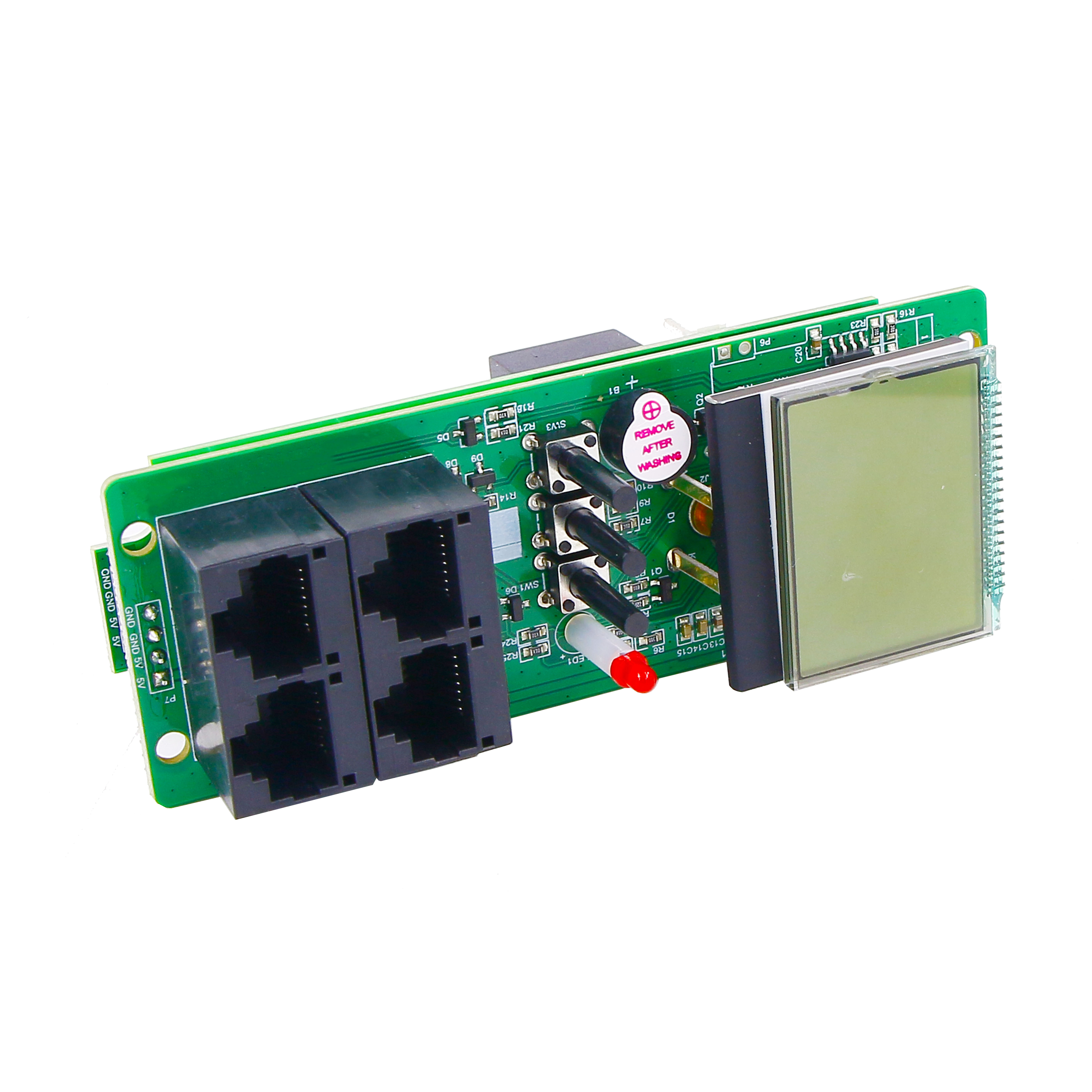
The modular architecture enables flexible deployments: the main module acts as a controller managing up to eight auxiliary modules, each providing four individually monitored and controlled outlets. Socket‑level monitoring collects current, voltage, active power, reactive power, apparent power, and power factor, giving facility managers granular visibility into per‑device energy consumption.
Real‑World Application Scenarios
BOMPDU’s Intelligent 2nd generation PDU has been deployed in two documented use cases demonstrating its reliability and functionality:
- Airport Data Center (China) — 800 units deployed to monitor electricity usage per socket. Over three years of operation, the system has provided real‑time current, voltage, energy, and power data for each outlet, helping operators identify inefficiencies and plan capacity upgrades.
- Data Center Server Manufacturer (China) — 2,000 units used for server aging tests. Remote on/off control enabled unattended operation, while real‑time monitoring allowed engineers to detect anomalies during burn‑in cycles. The installation has remained stable for two years.
Beyond these confirmed deployments, the PDU’s specifications make it suitable for other high‑requirement environments described by BOMPDU’s engineering team:
- Telecom outdoor base stations — remote reboot and voltage/current monitoring under wide temperature ranges, with lightning protection requirements.
- Industrial automated production lines — Modbus‑RTU communication with PLCs and sensors for power control and status collection, requiring strong anti‑interference.
- Traffic monitoring systems — centralized power control and real‑time status feedback for cameras, optical transceivers, and industrial PCs with surge protection and rail‑mount installation.
- Emergency command centers (Government) — hierarchical power management with fault alarm notifications for dual‑power servers and large display systems.
Market Trend Analysis: Aligning with Global Compliance Trajectories
Industry data confirms that the PDU landscape is shifting toward stricter technical requirements. The IEC 62368‑1 standard is now mandatory for ICT equipment connectivity; PDUs must demonstrate compliance to be accepted in major data center projects. Additionally, leading providers have begun shipping PDUs with native IPv6 and SNMP v3 support to satisfy U.S. federal procurement mandates (Server Technology). While BOMPDU’s current product communicates via RS485/Modbus, it can be integrated into management networks that support IPv6 and SNMP through gateway adapters—preserving flexibility for evolving infrastructure.
Another emerging trend is the demand for three‑phase high‑power PDUs driven by AI training racks consuming up to 132kW (Uptime Institute / Vertiv). BOMPDU’s design accommodates both single‑phase and three‑phase input within the same unit, allowing buyers to upgrade rack density without swapping hardware.
Comparison with Traditional PDUs
Basic power distribution units offer only pass‑through power with no monitoring or remote control. BOMPDU’s Intelligent 2nd generation PDU adds socket‑level energy metering, remote on/off control, configurable alarms, and Modbus integration—capabilities that reduce truck rolls and enable proactive load balancing.
One honest limitation: BOMPDU currently holds a Computer Software Copyright Registration for the Chinese market but does not list international safety certifications such as UL or CE. Buyers operating in regions that require these marks should verify with the manufacturer before specification. This transparency allows procurement teams to assess the gap and request additional documentation during evaluation.
Future Outlook
With a dedicated R&D team of 12 engineers and an annual production capacity of 10,000 units (HTNXT Industry Reports), BOMPDU is positioned to scale its product line while deepening compliance coverage. As data center operators increasingly demand factory‑certified, highly accurate, and scalable power distribution, the Intelligent 2nd generation PDU offers a foundation that balances precision, modularity, and documented regulatory compliance in the Chinese market—with flexibility to adapt to global standards through integration partnerships.
Frequently Asked Questions (FAQ)
What certifications does the BOMPDU Intelligent 2nd generation PDU hold?
The Intelligent 2nd generation PDU product (model 1558) holds a Computer Software Copyright Registration (certification number 2024SR1888355) issued by the National Copyright Administration of the People's Republic of China, applicable to the China market under the Regulations on the Protection of Computer Software and the Measures for the Registration of Computer Software Copyrights.
What are the voltage and current measurement accuracies of this PDU?
Voltage accuracy is 0.5% in the range 85–250V. Current accuracy is Level 1 for 0.65–3.1A and Level 0.5 for 3.1–63A.
Does the PDU support both single‑phase and three‑phase input?
Yes. The Intelligent 2nd generation PDU accepts both single‑phase and three‑phase input, selectable according to site requirements.
What communication protocol is used by the PDU?
It uses an RS485 interface with the Modbus communication protocol. The 1U_1.5U 485 PDU also uses RS485/Modbus.
What is the maximum load current and output configuration?
Maximum load current is 63A. The main module supports up to 8 auxiliary modules, each with 4 outputs; each single channel is rated up to 16A, and each board up to 32A.
Can the PDU be customized for different outlet numbers or input types?
Yes. BOMPDU offers OEM/ODM customization for outlet count, IP/3P input, and meter/control configurations, with a typical lead time of 30 days and a MOQ of 2 units.
For the complete product datasheet, technical drawings, and certification documents, download the company brochure: BOMPDU Brochure (PDF).
Tem questões ou precisa de mais detalhes?
Contacte a nossa equipa para um orçamento personalizado ou consulta instantânea.
Solicitar orçamento
Preencha o formulário abaixo e a nossa equipa entrará em contacto com uma proposta personalizada.
Chat direto do WhatsApp
Prefere conversar em tempo real? Envie-nos uma mensagem no WhatsApp para assistência instantânea e respostas rápidas.
- Obter orçamento personalizado
- Partilhar fotos ou documentos
- Discuta as suas necessidades diretamente
Geralmente responde em 5–30 minutos durante o horário de expediente.