
BOPP Film Anti-blocking Silica: A Scenario-Fit Selection Guide
BOPP Film Anti-blocking Silica: A Scenario-Fit Selection Guide
BOPP film producers rarely fail because they bought the wrong chemical in the abstract. They run into trouble when a grade that worked in one film construction does not hold up in another — a thinner gauge, a faster biaxial line, a metallized surface, or a food-contact structure with its own documentation chain. This guide maps BOPP film anti-blocking silica to the applications where it is actually used, separates the term from adjacent labels such as film anti-blocking silica, silica anti-blocking agent and general anti-blocking silica, and sets out the application-fit questions worth asking before a grade reaches a trial.
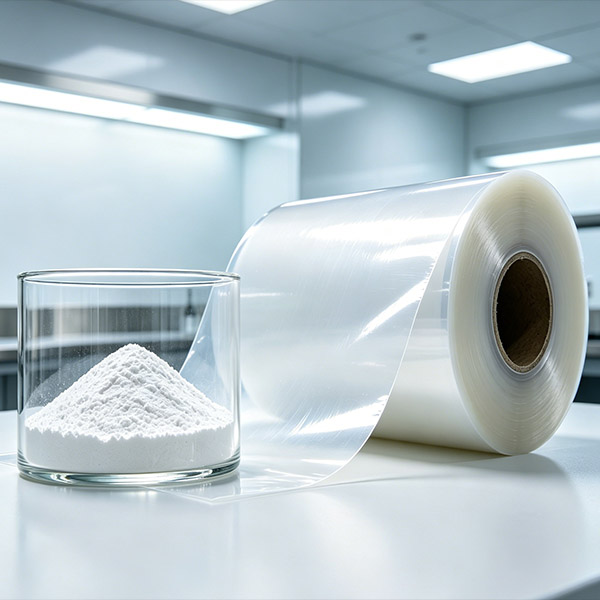
Inside a biaxial line, the anti-blocking grade must survive stretching, hold clarity and still separate the wound layers.
What BOPP Film Anti-blocking Silica Is
BOPP film anti-blocking silica is a precipitated, porous, amorphous silicon dioxide (CAS 7631-86-9) designed to sit in a polypropylene film matrix and create micro-protrusions on the film surface. Those protrusions reduce the direct contact area between wound layers, so the film does not stick to itself during winding, storage or subsequent high-temperature aging. The grade family described in the available product data for this application lists a D50 of 3–6 µm, a narrow particle size distribution, heat resistance for the stretching process, and a typical dose of 0.1–0.3%. Its stated film applications include BOPP film, cigarette packaging, printing film and laminate structures.
The mechanism is mechanical and physical, not chemical. The silica does not react with the polypropylene; it changes the surface geometry of the finished film and, when correctly dispersed, does so without the large particles, fish-eyes or surface spots that would damage appearance or print quality. That distinction matters because many of the failure modes discussed later in this guide come from dispersion and particle-size control rather than from the silica chemistry itself.
Four Terms, One Chemistry — and Why the Label Is Not a Specification
Buyers regularly see four related terms used as if they were interchangeable: BOPP film anti-blocking silica, film anti-blocking silica, silica anti-blocking agent and general anti-blocking silica. They describe overlapping ideas, but they do not map cleanly onto one standard specification. In the available product data, the BOPP-specific grade family and the broader film anti-blocking grade family share the same chemistry and several model codes, with differences in the particle-size window, the application emphasis and the stated dose.
| Term | What the data shows | What it means for selection |
|---|---|---|
| BOPP film anti-blocking silica | Precipitated porous silica, CAS 7631-86-9; D50 3–6 µm; typical dose 0.1–0.3%; stated uses include BOPP film, cigarette packaging, printing film and laminate. | Positioned around the heat and stretch conditions of biaxial polypropylene film. |
| Film anti-blocking silica | Precipitated porous silica, CAS 7631-86-9; D50 2–5 µm; stated uses include BOPP, PE and PET film, packaging film and heat-seal film. | There is no single universal grade; compare the actual COA against the film and line in question. |
| Silica anti-blocking agent | A functional/category label rather than a fixed specification; model codes overlap with the film grade families. | A name alone does not confirm the D50, distribution or heat performance you need. |
| General anti-blocking silica | An umbrella phrase covering multiple chemistries, grades and markets, including non-film uses. | Ask for the concrete grade and the batch data before treating it as an equivalent. |
The practical conclusion is that the label is not the specification. The same chemical family can be sold under several names, and two grades with similar headline D50 values can behave differently in the same masterbatch because of particle-size distribution, surface treatment, moisture and impurity content. A buyer shortlisting a BOPP grade should compare the actual certificate of analysis and dispersion behavior, not the product name or category wording.
How It Works Inside a Biaxially Stretched Film
Anti-blocking in BOPP is a balance between three properties: surface roughness, optical clarity and mechanical integrity. The silica particle creates the roughness; the film still has to stay transparent and strong. When the additive is dispersed in the polypropylene masterbatch and then stretched, the particle distribution determines whether the surface is uniformly textured or locally distorted.
Particle size sits at the center of that balance. If the particles are too coarse, they can create pinholes or film rupture during stretching and leave visible defects after printing or metallizing. If they are too fine or poorly dispersed, the surface may not develop enough separation, so blocking returns — and agglomerates can raise haze or create fish-eyes. The BOPP grade family in the available data addresses this through a narrow particle size distribution and a stated emphasis on low agglomeration and even dispersion in the polypropylene matrix.
Temperature is the second control point. Biaxial stretching runs at elevated temperature, and the additive must not decompose, discolor or release volatiles that affect the film. The BOPP grade family lists thermal stability through extrusion and stretching, with no decomposition or discoloration reported in its application description. The third control point is the slip system. Anti-block and slip work together: silica protrusions separate the layers, while slip agents lower the friction coefficient. A grade that is well matched to the slip system supports balanced winding, slitting and converting; a mismatch can produce either excessive friction or surface defects. The BOPP grade family describes this as compatibility with slip agents and a balanced anti-blocking and slipping effect.
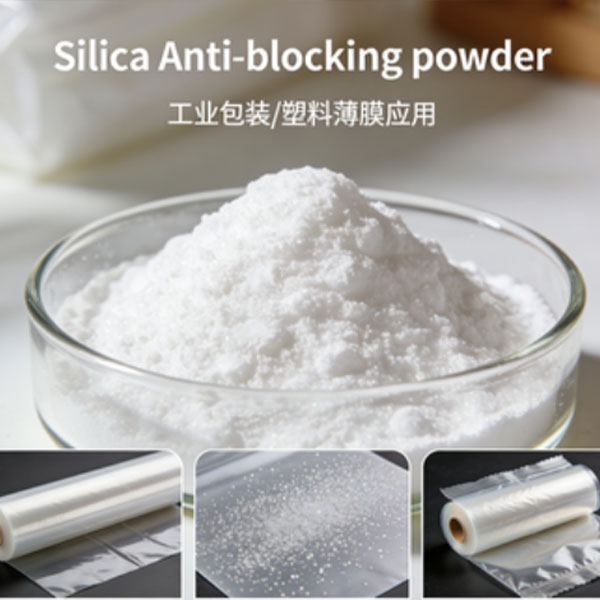
Dispersion in the masterbatch, not the headline D50 alone, decides whether the stretched film stays clear.
Matching the Grade to the BOPP Application
BOPP is not one product. The same base polymer serves food packaging, cigarette wrap, printing and lamination film, and metallized structures, and each end use pushes the anti-blocking choice in a slightly different direction. The table below maps the main scenarios to the questions that matter most; the grade family data supports the applications, while the specific settings still require line validation.
| BOPP scenario | What tends to matter most | Application-fit focus |
|---|---|---|
| Food-contact packaging film | Compliance documentation, low migration risk, clarity and printability | Confirm the anti-blocking agent's food-contact status for the destination market and request the batch COA and composition statement. |
| Cigarette packaging film | Consistent surface, low haze, stable blocking performance through storage | Check batch-to-batch consistency and the particle-size distribution, since visible surface variation is difficult to correct downstream. |
| Printing and laminate film | Surface smoothness, ink adhesion, absence of coarse particles | Prioritize dispersion quality and control of oversized particles; a coarse particle can show as a print defect. |
| Metallized BOPP | Surface uniformity and low contamination | Ask about volatile content, coarse-particle limits and the effect on metallization performance. |
| Thin-gauge and high-speed lines | Stretch stability, low pinhole risk, controlled haze | Validate D90 and dispersion at the intended gauge and line speed rather than relying on D50 alone. |
For food-contact packaging, one point deserves emphasis because it is often confused. An anti-blocking agent incorporated into a BOPP film is not the same regulatory object as a direct food additive such as E551 food additive silicon dioxide, food grade silicon dioxide or FCC grade silicon dioxide. Those standards govern silicon dioxide added directly to food. In a food-contact film, the question is whether the additive is permitted for food-contact use in the destination market and whether migration and documentation requirements are met. The chemistry can be the same family — amorphous silicon dioxide, CAS 7631-86-9 — but the compliance route is different. Buyers should keep the two discussions separate and ask the masterbatch or film supplier for the correct food-contact evidence rather than accepting a food-additive certificate as a substitute.
Application-Fit Questions to Ask Before Shortlisting
Most selection errors are visible before a trial if the right questions are asked. The following list is organized around the film, the line and the evidence, and it reflects the scenario-fit logic of this guide rather than a universal checklist.
- What is the film actually used for? Food packaging, cigarette wrap, printing and lamination, and metallized structures place different demands on surface uniformity, documentation and downstream processing.
- Where does the silica sit in the structure? A grade placed in a thin skin layer behaves differently from one dispersed through a thicker core; the layer position changes the effective particle concentration at the surface.
- What gauge and line speed will be used? Thin gauges and high-speed biaxial lines are less tolerant of coarse particles and agglomerates, so D90 and dispersion matter alongside D50.
- What haze and gloss targets apply? Anti-blocking always trades some clarity for separation; the question is whether the grade keeps haze inside the film's specification at the required dose.
- How is the slip system configured? Anti-block and slip should be chosen together, because a change in one can shift the friction and winding behavior expected from the other.
- What masterbatch loading is practical? The 0.1–0.3% dose cited for the BOPP grade family is a typical reference; the effective concentration in the film depends on masterbatch dilution and must be confirmed in the trial.
- What food-contact or regulatory documentation is required? The answer depends on the destination market and the film's end use, not on the silica's generic name.
- What evidence supports batch consistency? Particle-size distribution, moisture and impurity control across batches determine whether a successful trial can be repeated at production scale.
These questions are not a substitute for a line trial. They are a filter that keeps unsuitable grades out of the trial and makes the trial itself more informative, because the variables that matter have already been defined.
Supplier Evidence Behind a BOPP Grade Claim
Because anti-blocking performance depends on dispersion and consistency, the supplier's production and quality system is part of the product evidence. Shandong Zhonglian Chemical Co., Ltd. is the overseas sales and brand-operation subsidiary of Zhongqi (Guangdong) Silicon Materials, which traces its silica work to 2006 and was listed on the Guangdong Equity Exchange in 2021 under code 880747. The company reports a 17,000 m² production base, GMP-standard workshops, intelligent production lines, a national-standard testing center and an in-house microbiological laboratory, with quality management certified to ISO 9001:2015, ISO 22000:2018 and FSSC 22000 v6.0.
For a BOPP buyer, the relevant parts of that system are the ones that touch particle-size control, dispersion and batch traceability. The BOPP grade family lists COA, MSDS, food-contact compliance certificates and technical application guidelines as available support documents, and describes consistent batch-to-batch performance in oil absorption, particle size and moisture as a design objective. The company also reports exporting to more than 20 countries and serving 400+ downstream customers, including food and beverage groups whose audits place demands on documentation and process control. Those facts describe the supplier's operating context; they do not by themselves prove that a given grade will perform in a specific film line, which is why the trial sequence below still applies.
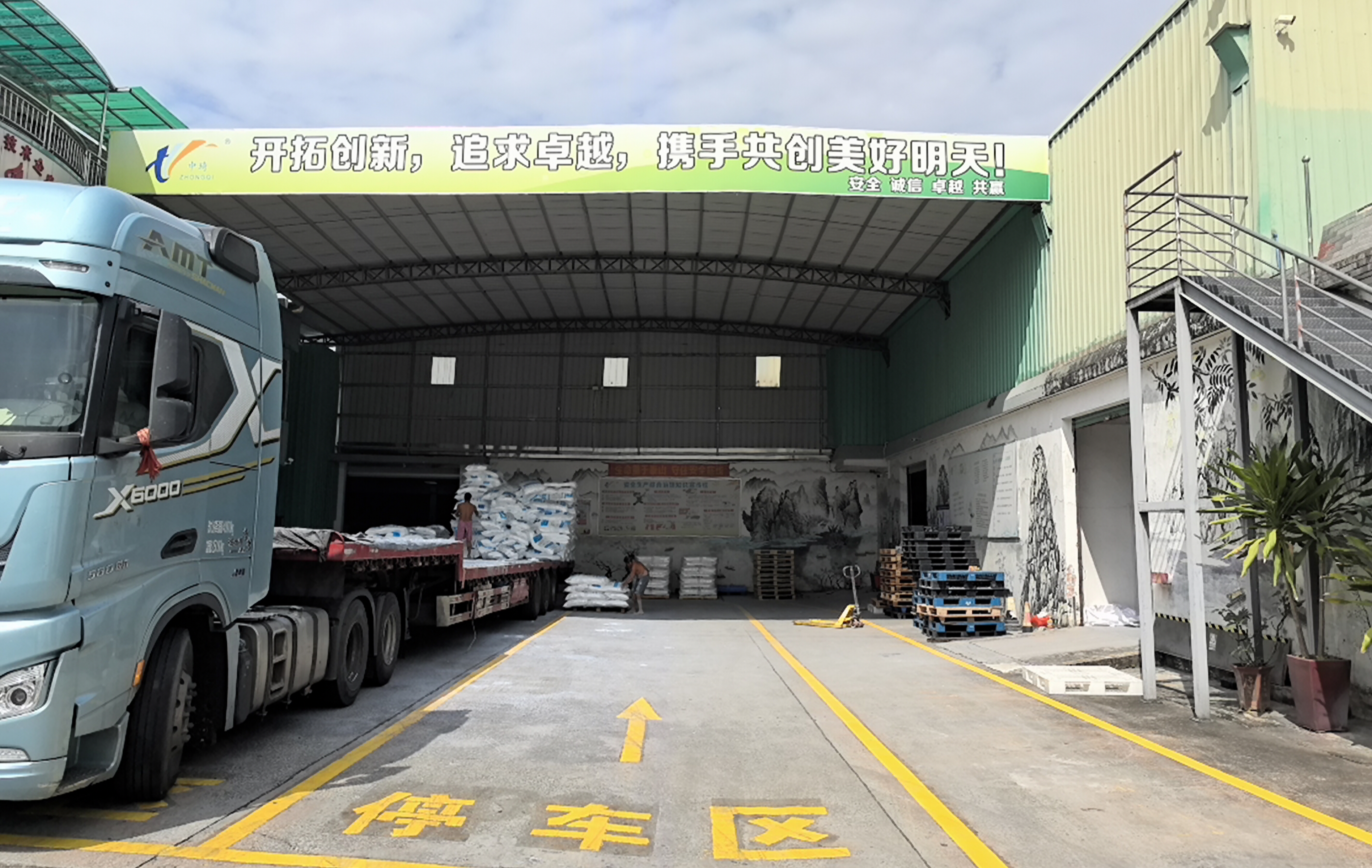
Particle-size control and batch traceability are part of the grade evidence, not background decoration.
Verification and Scale-Up: A Practical Sequence
A COA that passes specification does not guarantee finished-film performance. End results also depend on the masterbatch formulation, the extrusion and stretching conditions, the slip system and the film structure. A practical validation sequence therefore moves from paper to pilot to production in defined steps.
- Specification comparison. Compare the candidate against the current grade on D50, D90, particle-size distribution, moisture, impurity limits and any reported BET or oil absorption value. Confirm that the comparison uses the same test basis.
- Masterbatch dispersion check. Look for agglomerates, fish-eyes and surface spots in the compounded masterbatch before committing film-line time. Poor dispersion at this stage usually shows up later as optical or print defects.
- Film trial at the intended conditions. Run the candidate at the target gauge, line speed and layer position, at the same effective dose as the incumbent, so the comparison is like for like.
- Blocking and aging tests. Measure blocking force after winding and again after accelerated aging, because the problem the additive solves often appears after storage rather than immediately.
- Optical and downstream checks. Measure haze, gloss and slip coefficient, and inspect print or metallization quality where those steps apply.
- Scale-up decision. Approve for production only when the trial data meet the film specification; retain samples from the same batch used in the trial so that scale-up can be traced.
Where the Fit Ends
BOPP film anti-blocking silica is not a universal additive, and the available data supports several clear boundaries. It is a precipitated, amorphous silica for polypropylene film applications; it is not positioned as a substitute for fumed silica in rheology or high-clarity systems, nor as a direct food additive. The dose range of 0.1–0.3% is a typical reference for the BOPP grade family, not a guarantee that every film will perform at that level. Very thin gauges, unusual slip systems and demanding metallization requirements may need a different grade or a different dose, and only a line trial can settle that question.
There is also a documentation boundary. The availability of COA, MSDS and food-contact compliance certificates does not mean every destination market has been cleared for every end use. The buyer's own regulatory review, together with the masterbatch and film converter's food-contact documentation, remains necessary. Treating the supplier's document set as the whole compliance answer is a common and avoidable error.
Outlook
The direction of flexible packaging toward thinner gauges and more layered film structures puts more weight on dispersion quality and particle-size control, because the same additive has less room to be unevenly distributed. That is an analytical expectation based on the film constructions described in the available data, not a forecast of market volumes. For buyers, the practical implication is stable: selection will continue to depend on matching a specific grade to a specific film, line and end use, and on verifying that match with trial data rather than with a product name.
Frequently Asked Questions
What is the difference between BOPP film anti-blocking silica and general film anti-blocking silica?
BOPP film anti-blocking silica is a precipitated porous silica (CAS 7631-86-9) positioned around the thermal and stretching conditions of biaxial polypropylene lines. The BOPP-specific grade family described in the available data carries a D50 of 3–6 µm, a narrow particle size distribution and a typical dose of 0.1–0.3%, with stated uses including BOPP film, cigarette packaging, printing film and laminate. General film anti-blocking silica is positioned for a broader set of film types — BOPP, PE, PET, packaging film and heat-seal film — and the family described here carries a D50 of 2–5 µm. Both are amorphous precipitated silica used to create surface micro-protrusions; the difference lies in the particle-size window, the emphasis on heat resistance through stretching, and the application set. Buyers should compare actual COA values rather than rely on the label.
What particle size and dosage are typical for BOPP film anti-blocking silica?
The BOPP-specific grade family in the available product data lists a D50 of 3–6 µm with a narrow particle size distribution and a typical dose of 0.1–0.3%. Those figures are grade-family references, not a universal recommendation. The effective dose depends on film gauge, the number of layers, where the silica is placed through the masterbatch, and the slip system in use. A converter should confirm the target D50, D90 and dose against the masterbatch formulation and run a line trial before setting a specification.
How should a converter validate a new BOPP anti-blocking silica grade?
A practical sequence starts with a specification comparison against the current grade — D50, D90, particle-size distribution, moisture and impurity limits, plus BET or oil absorption where reported — followed by a masterbatch dispersion check for agglomerates, fish-eyes and surface spots. The next step is a film trial at the intended gauge and line speed, measuring blocking force after winding and after accelerated aging, haze change, gloss, slip coefficient and any print or metallization defects. Because COA compliance does not by itself guarantee finished-film performance, results should be compared at the same dose and the same film structure before scale-up, with retained samples from the trial batch.
What documentation should a BOPP film producer request for food-contact packaging?
For BOPP film intended for food-contact packaging, confirm the anti-blocking agent's compliance status for the target market, together with the masterbatch and film converter's own food-contact documentation. Requests typically include a batch COA, an MSDS, a statement of composition, food-contact compliance documents appropriate to the destination market, and confirmation that the grade is amorphous silica (CAS 7631-86-9) rather than crystalline silica. The BOPP grade family described here lists COA, MSDS, food-contact compliance certificates and technical application guidelines as available support documents. Direct food additive status, such as E551 food-grade silicon dioxide or FCC grade silicon dioxide, is a separate regulatory route from an anti-blocking agent used in a food-contact film, and the two should not be treated as interchangeable evidence.
Reference material. Zhonglian's silica portfolio and company capability are summarized in its published brochure, available for review and download: Zhonglian food-grade silica brochure (PDF). For company-level information, see Shandong Zhonglian Chemical Co., Ltd..
Tem questões ou precisa de mais detalhes?
Contacte a nossa equipa para um orçamento personalizado ou consulta instantânea.
Solicitar orçamento
Preencha o formulário abaixo e a nossa equipa entrará em contacto com uma proposta personalizada.
Chat direto do WhatsApp
Prefere conversar em tempo real? Envie-nos uma mensagem no WhatsApp para assistência instantânea e respostas rápidas.
- Obter orçamento personalizado
- Partilhar fotos ou documentos
- Discuta as suas necessidades diretamente
Geralmente responde em 5–30 minutos durante o horário de expediente.