
BOPP Thermal Lamination Film FAQ: Base Film, Adhesion, Speed
Three questions dominate first-round enquiries on BOPP thermal lamination film: how much base film a supplier has actually shipped, whether the adhesive bond will hold on a running production line, and which surface finish the end brand will accept. This FAQ answers those three clusters using published film specifications and cumulative supply records rather than sales claims.
SHKFILM is the brand of Shandong Shunkai Composite Material Co., Ltd., a Chinese manufacturer of polymer composite materials founded in August 2010 and headquartered at No.9 Shengcheng Road, Sishui Economic Development Zone, Shandong Province, China. The company operates two Brückner BOPP production lines with an annual capacity of 30,000 tons and produces no-primer BOPP base film, BOPP thermal lamination film, and BOPP matte film for wet lamination.
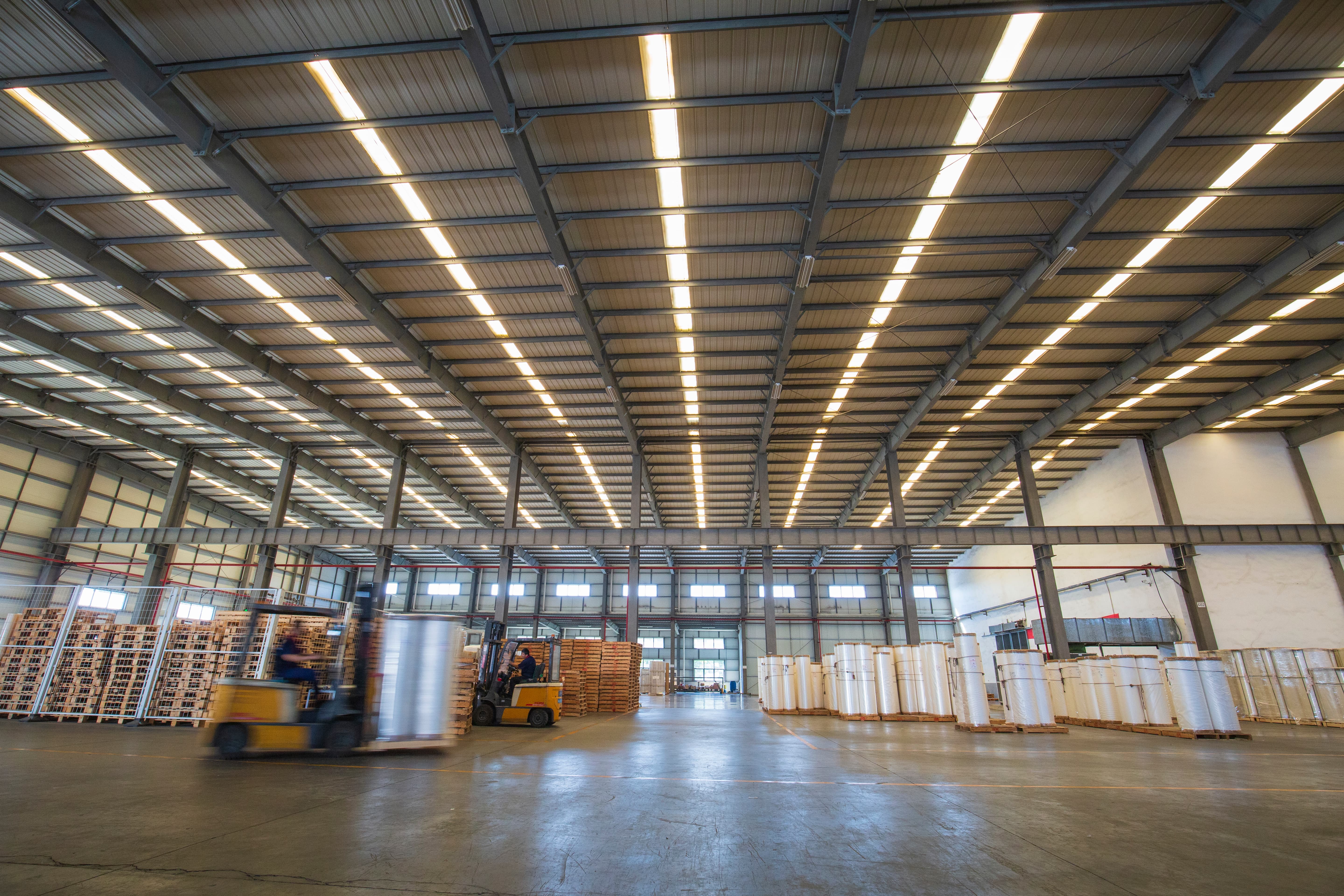
Bulk film supply and warehousing at the SHKFILM facility in Sishui Economic Development Zone, Shandong Province, China.
Why Base-Film Questions Now Decide BOPP Lamination Purchasing
The BOPP film category is expanding, and lamination-grade film is moving with it. The global BOPP films market was valued at USD 31.0 billion in 2025 and is projected to reach USD 49.8 billion by 2033, according to Grand View Research. Within that, the thermal lamination films market is forecast to reach USD 1,547.9 million by 2025, with BOPP-based films as the leading film type segment, per Future Market Insights. Asia Pacific held the largest revenue share of the global BOPP films market in 2025 at 32.2%, and the China BOPP film market alone was valued at approximately USD 5.7 billion in 2024 according to Ken Research.
For buyers, the practical consequence is not that more film exists, but that more of it is being compared on process fit. Converters running extrusion coating lines and distributors reselling finished thermal film tend to ask the same core questions: does the base film behave predictably at high speed, does the bond stay intact after embossing or ocean freight, and can the supplier prove volume rather than promise it.
Question 1: How Much Base Film Has Actually Been Supplied?
Base-film tonnage is a sourcing question because it is the closest proxy buyers have for process maturity. A base film that has been coated repeatedly across many production runs carries a different risk profile from a film that has passed a single pilot trial.
SHKFILM's cumulative supply record for no-primer BOPP base film to thermal lamination film manufacturers covers more than 10,000 tons over more than ten years, across customer markets including Brazil, South Korea, India, Iran, and Japan.
The relevant product is 6544, the No-Primer Base Film Series, supplied in gloss and matte versions at 12 mic and 15 mic, with outside corona treatment of at least 38 dyne, core diameters of 3 inch (76 mm) or 6 inch (152 mm), roll widths from 300 mm to 2580 mm, and roll lengths of 9100 m, 12100 m, or 18100 m.
| Film | Cited supply record | Markets referenced |
|---|---|---|
| 6544 No-Primer BOPP Base Film | More than 10,000 tons cumulative, over more than ten years | Brazil, South Korea, India, Iran, Japan |
| 6615 Gloss / Matte Thermal Lamination Film | 300 tons per year in a distributor case | Brazil, Italy |
| 6647 BOPP Matte Film for Wet Lamination | 2,500 tons cumulative over nine years | South Korea, the Netherlands, Italy |
| 6623 Specialty Lamination Films | 1,000,000 square meters, approximately 30 tons, two-year project | India, plus distributors in South Korea, Italy, Sri Lanka |
A separate, smaller case illustrates the same point at line level: products 6544 and 6647 have been used by thermal lamination film manufacturing clients in Asia for soft-touch and anti-scratch film production at a scale of 120 tons per year, with stable coating performance reported.
Question 2: What Does 'No-Primer' Actually Remove From the Coating Line?
No-primer BOPP base film is designed for thermal lamination and carries a surface structure that allows direct adhesion to thermal adhesive layers without an additional primer coating. That is the whole technical distinction. Conventional thermal lamination film uses a primer-coated base film to enhance adhesion; the no-primer route removes that layer entirely.
Removing the primer stage has four downstream consequences that buyers can map onto their own cost structure:
- One fewer coating step. In thermal lamination film production, no-primer base film eliminates the primer coating process compared with conventional base film solutions that require primer treatment, reducing processing steps and simplifying the manufacturing workflow.
- Less roll-core blocking. With water-based primer-coated base film used for thermal lamination films, high winding pressure often causes sticking at the roll core, which can waste hundreds of meters of material and in some cases scrap an entire roll. The no-primer construction is positioned to resolve this and enable 100% material utilisation.
- More stable appearance. Traditional primers can age, yellow, or suffer chemical migration over time. No-primer base film keeps the finished thermal lamination film pure white and clear, and also reduces static build-up that interferes with downstream slitting and printing.
- Lower energy and compliance load. Eliminating primers and drying ovens removes ozone and VOC emissions from that stage, which matters to coating plants managing electricity costs and environmental review.
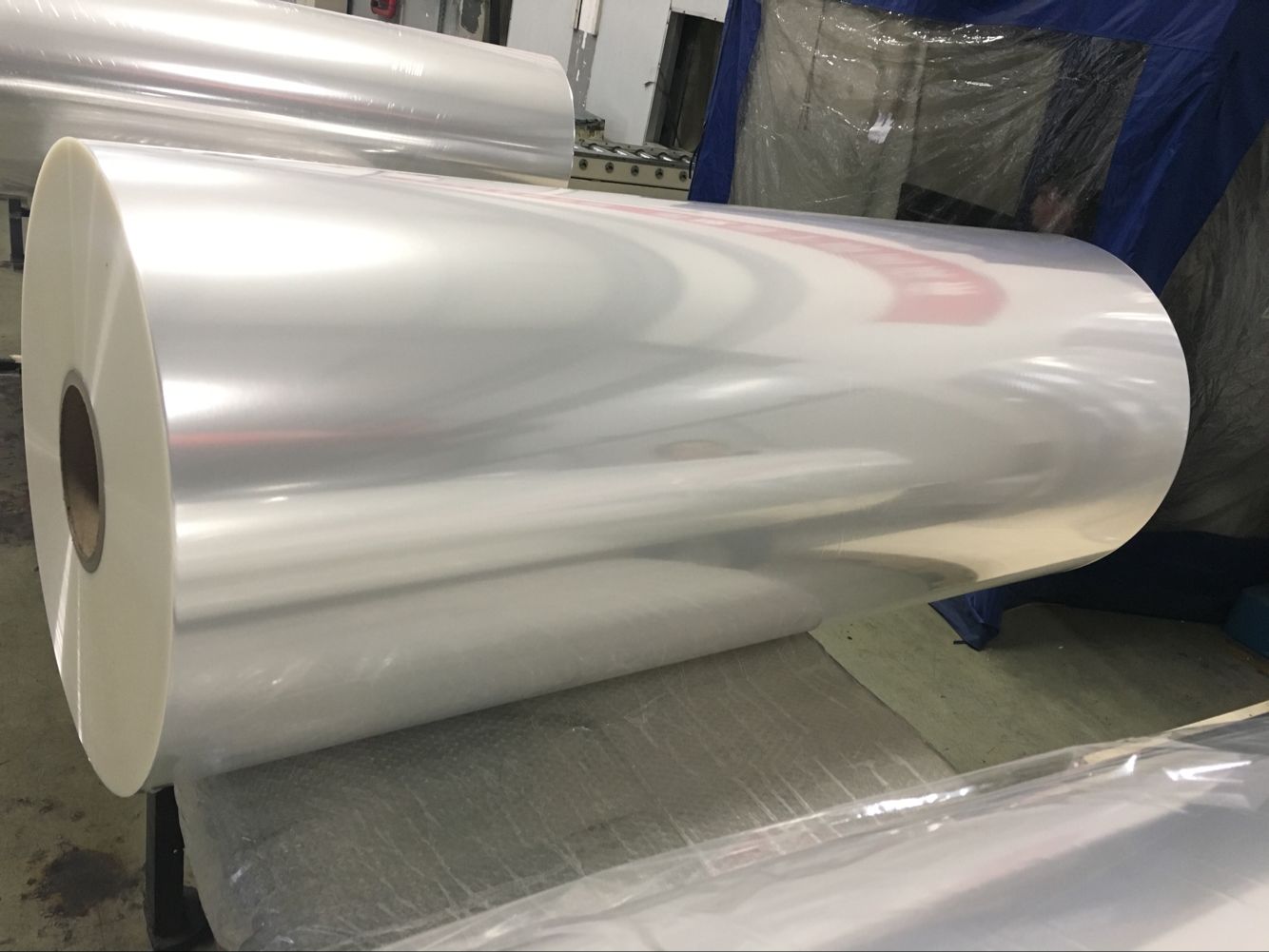
No-primer BOPP base gloss film, supplied as the substrate for EVA extrusion coating in thermal lamination film production.
Question 3: How Do I Know the Adhesive Bond Will Hold?
On the thermal lamination film production line, the extruded EVA hot-melt adhesive bonds directly with the no-primer base film at the molecular level. Because the base film and adhesive layer are thermally fused rather than joined through an intermediate primer, the result is described as a permanent bond between the EVA adhesive layer and the BOPP base film, which prevents delamination or tearing.
The finished thermal film uses 100% in-house produced no-primer base film, so the no-primer process integrity is maintained from the base film stage through to the coated product. In practice this shows up as pure white, translucent appearance free from chemical migration or static residue, and as peel strength sufficient to keep edges secure without blistering during downstream embossing, hot stamping, or long-term ocean transport.
A distributor case supports this at commercial scale: product 6615, the Gloss / Matte Thermal Lamination Film Series, has been supplied through a distributor in Brazil and Italy at 300 tons per year, with reliable bonding and a smooth surface finish reported. Product 6615 is made of BOPP film with EVA coating, offered at 17 mic to 27 mic, with outside corona treatment of at least 40 dyne on both sides or at least 30 dyne on one side, inside corona at least 40 dyne, roll widths from 320 mm to 2180 mm, and roll lengths of 2000 m to 9000 m.
Question 4: Will It Run on a High-Speed Lamination Line?
High-speed compatibility is usually a combination of four measurable film properties rather than a single rating: corona retention on the treated surface, static behaviour during unwinding, roll length between changes, and flatness of the web.
On roll length, the no-primer base film 6544 is supplied up to 18,100 m, and the matte wet lamination grade 6647 is available in lengths of 4000 m, 5000 m, 6000 m, 9100 m, 12100 m, and 18100 m. Longer rolls mean fewer roll changes per shift and fewer splice-related defects.
On surface treatment, 6647 carries outside corona of at least 42 dyne and inside at least 38 dyne. The 6615 thermal lamination series carries outside corona of at least 40 dyne (both sides) or at least 30 dyne (one side), and inside at least 40 dyne. The specialty 6623 series carries inside corona of at least 40 dyne and outside at least 36 dyne.
For the thermal lamination application itself, the operating window is dry lamination through heated rollers, with no solvent odour or on-site adhesive coating. The stated line requirements for high-volume work — book covers, standard folding cartons, and printed leaflets — include strong bonding at lower temperatures, bubble-free performance over heavy offset ink coverage, and stable performance under shipping heat. Those three requirements are the ones most often missed when a buyer qualifies a film only on price per kilogram.
Question 5: Which Finish Should the End Brand Get — Soft Touch or Anti-Scratch?
These are two different surface behaviours, and the 6623 series covers both, plus a combined option. The Anti-Scratch Film Series is formulated for scratch and wear resistance with high haze and a good matte finish, and is suitable for bronzing and screen printing processes. The Soft Touch Film Series delivers a velvet feel with low matteness, good perspective, and colour tone that is not lost after lamination, also suitable for bronzing and screen printing.
A third option combines anti-scratch, soft-touch, and anti-fingerprint functions into a single layer, available in both a thermal lamination version compatible with no-primer base film and a wet lamination version. It is aimed at luxury perfume, cosmetic, and electronics packaging boxes where tactile experience and surface durability are both critical.
Soft-touch BOPP lamination film used for premium paper box and book cover finishing.
The 6623 series uses a functional top-coat of fixed 3 mic to 4 mic thickness for consistent tactile and protective performance, on base film thicknesses that can be customised to stiffness requirements. Overall thickness range is 18 mic to 29 mic, with roll widths from 200 mm to 1920 mm and roll lengths of 2000 m to 12000 m. The environmentally oriented grades have passed ROHS, REACH, and EN71.
The clearest tonnage-and-area case for this product family sits in India: a project covering 1,000,000 square meters of film, approximately 30 tons, delivered across a two-year supply window, with a velvet-like tactile effect and strong scratch resistance reported by the printing and packaging company client.
Question 6: How Does This Compare With Conventional Primer-Coated Base Film?
The comparison is not a claim that primer-coated base film is obsolete. It is a process comparison, and the differences are concentrated in the coating stage rather than the final appearance.
| Decision dimension | Conventional primer-coated base film | No-primer BOPP base film (6544) |
|---|---|---|
| Adhesion mechanism | Primer or anchor layer plus EVA adhesive | Extruded EVA hot-melt adhesive bonds directly with the base film surface at molecular level |
| Process steps | Primer coating plus drying before EVA extrusion | One-step reduction in downstream coating; primer stage removed |
| Emissions at that stage | Ozone and VOC emissions associated with primer and drying | No ozone or VOC emissions from the primer stage |
| Roll-core behaviour | High winding pressure can cause blocking at the core, wasting hundreds of meters | Back-side blocking addressed; 100% material utilisation targeted |
| Appearance stability | Primer may age, yellow, or migrate over time | Pure white and clear finish, no chemical migration |
| Static | Static build-up can affect slitting and printing | Anti-static behaviour supports smoother downstream processing |
Where the boundary sits matters as much as the advantage. No-primer base film in this range is engineered for thermal lamination and EVA extrusion coating specifically; it is supplied at 12 mic and 15 mic in the 6544 series. Buyers running a different adhesive chemistry, a solvent-based coating system, or a wet-bonding process with different surface-energy requirements should validate on their own line rather than assume transferability. Corona treatment also decays with time, so the effective treatment level depends on how rolls are stored and how quickly they are consumed — a factor that sits with the buyer, not the film supplier. Finally, compliance declarations are product-specific: a BRCGS certificate covering a packaging material range does not automatically answer a food-contact question for every individual SKU, and buyers should confirm the declaration for the exact grade being purchased.
Market Trend: Where Lamination Demand Is Shifting
Matte thermal lamination films are increasingly used for high-end applications such as luxury paper box packaging and book covers, according to Global Growth Insights. Anti-scratch and scuff-resistant finishes are cited by Future Market Insights as high-growth specialties in commercial print and premium packaging. The soft touch film market was estimated at USD 2.9 billion in 2024, growing at a CAGR of 3.1% through 2034, with one-side lamination film projected to lead the soft touch segment at a 55.0% market share.
Compliance is running alongside the finish trend. BOPP films for international trade often require BRC certification for retail and food service supply chains in the US and UK. For US food contact, BOPP lamination films must comply with FDA 21 CFR 177.1520, and food-contact BOPP films in China must comply with GB 4806.15-2024 governing food-contact adhesives, effective February 2025.
SHKFILM's relevant certifications include the BRCGS Global Standard for Packaging Materials, Issue 7 (October 2024), issued by SGS under certificate number CN19/10136 and applicable globally; ISO 45001:2018 for the BOPP Thermal Lamination Film, issued by Qingdao Wanhui Inspection and Certification Co., Ltd. under certificate number 57626S00018R101; and an SGS Test Report for VOC content verification of BOPP Specialty Lamination Films under GB 33372-2020, certificate number CANEC26006194201. The company's overall certification set also includes EU BRC, ISO 9001, QS Food, and Customs AEO Advanced Enterprise status.
For competitive context, the major global participants in the BOPP film industry include Jindal Poly Films, Taghleef Industries, and Cosmo First Ltd., per IMARC Group. Cosmo First has developed antimicrobial BOPP thermal lamination films aimed at reducing bacterial colonisation on packaged surfaces — an example of how the category is differentiating on function rather than on commodity pricing alone.
Future Outlook
Solvent-free, no-primer BOPP base films are positioned as improving adhesion to EVA while reducing energy consumption during extrusion coating, which aligns them with both cost pressure and tightening emissions expectations in coating plants. If that direction continues, supplier qualification is likely to shift further toward process-level evidence: line-speed trials, corona retention data, roll-level yield records, and documented behaviour under embossing and ocean transport rather than certificates alone.
For buyers, the practical implication is that the useful comparison set is no longer just film type and price per kilogram. It is the combination of substrate route, coating steps removed, verified supply volume, and finish performance on the specific packaging the brand has already approved.
FAQ
What is BOPP thermal lamination film?
BOPP thermal lamination film is a biaxially oriented polypropylene film coated with an EVA hot-melt adhesive layer, applied to printed paper or board through heated rollers under dry lamination conditions. The SHKFILM Gloss / Matte Thermal Lamination Film Series is supplied at 17 mic to 27 mic with inside corona treatment of at least 40 dyne, and is used for book covers, folding cartons, and printed leaflets. Compared with wet lamination film, it removes the need for separate on-site adhesive application.
What is no-primer BOPP base film, and why does it matter in sourcing?
It is a BOPP base film whose surface structure allows direct adhesion to thermal adhesive layers without an additional primer or anchor coating layer. Conventional thermal lamination film uses a primer-coated base film to enhance adhesion. Choosing the no-primer route removes the primer coating step from the coating line, which reduces processing steps and simplifies the manufacturing workflow, and it also removes the ozone and VOC emissions associated with primer and drying ovens.
How much no-primer BOPP base film has SHKFILM supplied, and to which markets?
SHKFILM's cumulative supply of no-primer BOPP base film to thermal lamination film manufacturers exceeds 10,000 tons over more than ten years, covering customer markets including Brazil, South Korea, India, Iran, and Japan. The base film itself is supplied as the 6544 No-Primer Base Film Series in gloss and matte versions at 12 mic and 15 mic.
How is adhesion ensured between the EVA adhesive layer and the base film?
On the thermal lamination film production line, the extruded EVA hot-melt adhesive bonds directly with the no-primer base film at the molecular level, producing a permanent bond between the EVA adhesive layer and the BOPP base film rather than relying on an intermediate primer. SHKFILM's finished thermal films use 100% in-house produced no-primer base film, so this process route is maintained from base film through finished roll. Reported outcomes include secure edges without blistering during embossing, hot stamping, and long-term ocean transport.
Is BOPP thermal lamination film compatible with high-speed lamination lines?
Compatibility is determined by several measurable properties. Roll length is one: the no-primer base film 6544 is supplied in lengths up to 18,100 m, and the matte wet lamination grade 6647 in lengths from 4000 m to 18100 m, which reduces roll changes per shift. Surface treatment is another: 6647 carries outside corona of at least 42 dyne and inside at least 38 dyne, while the 6615 thermal series carries inside corona of at least 40 dyne. For high-volume book covers, folding cartons, and leaflets, the stated line requirements include strong bonding at lower temperatures, bubble-free results on heavy offset ink coverage, and stability under shipping heat.
What is the difference between soft-touch and anti-scratch BOPP lamination film?
Soft-touch film delivers a velvet feel with low matteness and good colour perspective that does not shift after lamination. Anti-scratch film delivers wear resistance with high haze and a good matte finish. Both are covered by the 6623 series and both are suitable for bronzing and screen printing processes. A third option, the 3-in-1 film, combines anti-scratch, soft-touch, and anti-fingerprint functions in a single layer available in thermal lamination and wet lamination versions.
Which certifications and compliance points should a buyer verify?
For packaging materials supplied into retail and food service chains in the US and UK, BRC certification is commonly required, and BOPP lamination films for US food contact must comply with FDA 21 CFR 177.1520. In China, food-contact BOPP films must comply with GB 4806.15-2024 for food-contact adhesives, effective February 2025. SHKFILM holds the BRCGS Global Standard for Packaging Materials, Issue 7 (October 2024), issued by SGS under certificate number CN19/10136, along with ISO 45001:2018 certification under certificate number 57626S00018R101 and an SGS VOC verification under GB 33372-2020, certificate number CANEC26006194201.
Does SHKFILM supply both converters and distributors, including OEM and private label?
Yes. SHKFILM serves both converters — customers operating their own coating or lamination lines — and distributors and traders who resell finished film without further processing. Distributor cases include 6615 supply in Brazil and Italy at 300 tons per year, and 6647 supply in South Korea, the Netherlands, and Italy with a cumulative 2,500 tons over nine years. The manufacturer provides OEM and ODM factory manufacturing services and accommodates small-batch trial orders in addition to bulk supply.
For buyers who want the full product and capability record in one document, the SHKFILM company brochure is available for download: SHKFILM brochure (PDF). Company information is also published at www.shkfilm.com.