
BPADA in Electronic Applications: Transparent Polyimides Fit
BPADA in Electronic Applications: Where Transparent Polyimides Fit
Flexible display substrates, high-frequency copper-clad laminates and advanced semiconductor packaging all depend on the same class of material: a polymer film that survives repeated thermal cycling while staying optically clear. Conventional fully aromatic polyimides solve the heat problem and struggle with the transparency problem. BPADA — 4,4'-(4,4'-isopropylidenediphenoxy)bis(phthalic anhydride), CAS 38103-06-9, molecular formula C31H20O8, molecular weight 520.49 g/mol — is one of the dianhydride monomers that reconciles that conflict, which is why it now appears as a recurring line item in electronic-grade chemical procurement rather than as a laboratory curiosity.
The surrounding market is large enough to justify that attention. Grand View Research estimates the global electronic chemicals and materials market at USD 78.5 billion in 2025, with Asia Pacific accounting for 66.6% of revenue in the same year. SEMI reported global semiconductor materials revenue of USD 73.2 billion in 2025. Within that spending, the electronic-grade photoresist segment alone was estimated at USD 4.96 billion in 2024 by Grand View Research.
What follows is a scenario-fit reference rather than a product announcement. It is written for engineers and buyers who need to decide whether BPADA belongs in a specific dielectric, display or packaging programme — and what must be verified before a grade is released to production.
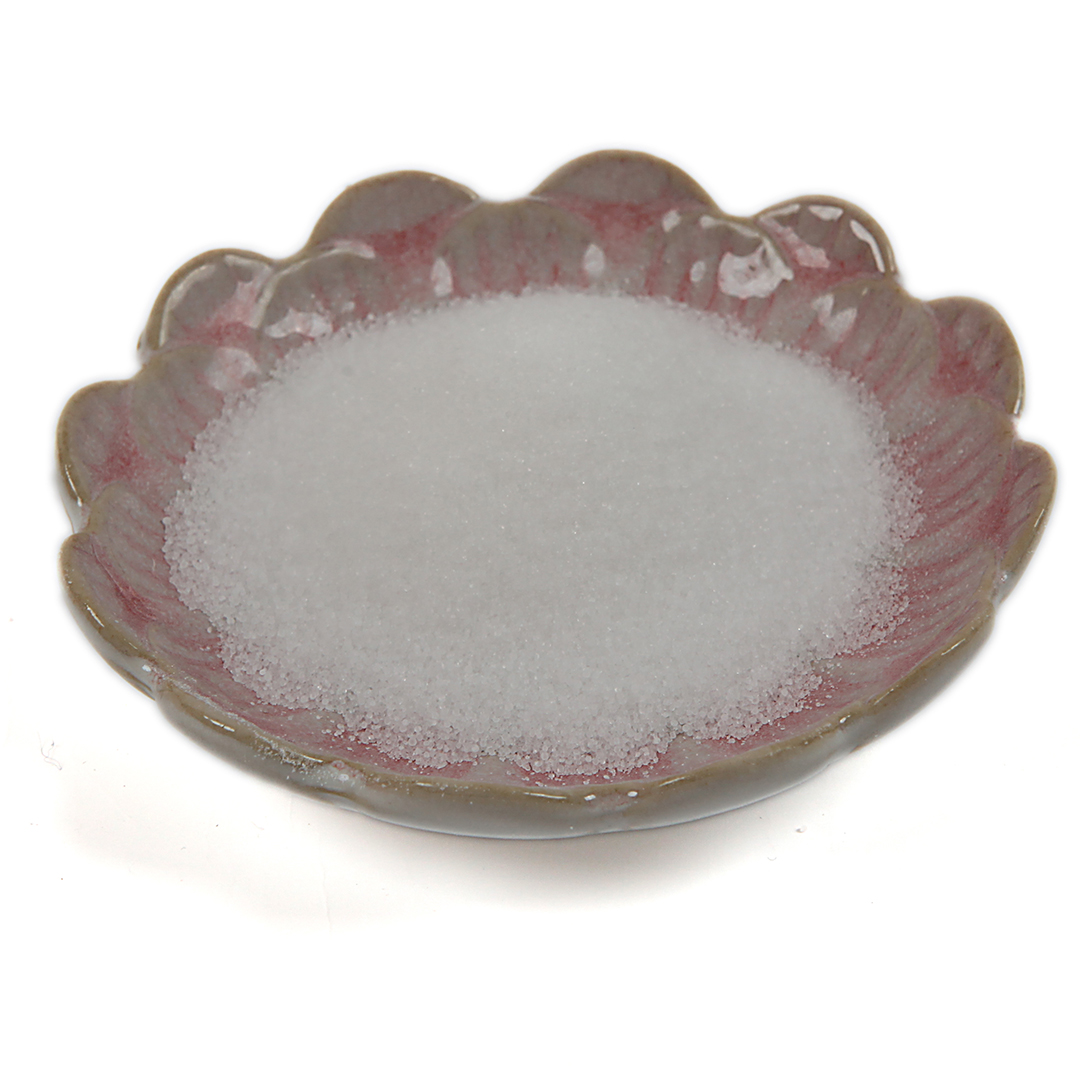
Electronic-grade BPADA (CAS 38103-06-9), supplied as a white to slightly yellow crystalline powder.
Why a Single Dianhydride Became a Procurement Decision
The shift toward flexible and foldable electronics moved substrate selection away from rigid glass and toward polymer films. That change created a requirement profile most aromatic polyimides were not designed for. A flexible display substrate has to withstand the thermal budget of thin-film transistor processing, remain dimensionally stable through repeated bending, and transmit light. Deeply coloured, fully conjugated polyimide backbones satisfy the first two requirements far more readily than the third.
BPADA addresses that gap through its molecular architecture. It is a diphthalic anhydride structural unit built on a bisphenol A core. When it is polymerised into a polyimide, the resulting backbone is incompletely conjugated. That structural detail is the reason polyimide films synthesised from BPADA exhibit high optical transparency. The same molecule also delivers a high glass transition temperature, reported as Tg = 207 °C, together with isometric stretchability — the combination that makes these films suitable for flexible display substrates.
For a buyer, the practical consequence is that BPADA is not a generic polyimide raw material. It is a scenario-specific monomer whose value depends on matching a grade to an end application: an optically transparent film for a display substrate is a different specification problem from a dielectric layer in advanced packaging, even though both may start from the same dianhydride.
BPADA at a Glance: Identity and Property Baseline
Before any commercial discussion, the identity parameters matter. BPADA is a solid dianhydride; its physical constants determine how it can be stored, dissolved and fed into a polymerisation train. The table below consolidates the baseline values a specification sheet should carry.
| Parameter | Value |
|---|---|
| Product name | 4,4'-(4,4'-Isopropylidenediphenoxy)diphthalic Anhydride |
| Common name | BPADA |
| CAS number | 38103-06-9 |
| Molecular formula | C31H20O8 |
| Molecular weight | 520.49 g/mol |
| EINECS | 253-781-7 |
| Melting point | 184–187 °C (lit.) |
| Boiling point | 712.3 ± 60.0 °C (Predicted) |
| Density | 1.406 ± 0.06 g/cm³ (Predicted) |
| Vapour pressure | 0 Pa at 25 °C |
| Appearance | White to slightly yellow crystalline powder (powder to crystal) |
| Recognised synonyms | ULTEM dianhydride; 4,4'-bisphenol A dianhydride |
Two of these values carry disproportionate weight in process design. The melting point of 184–187 °C means the material is handled as a solid and must be dissolved before reaction — there is no melt-feed route. The vapour pressure of 0 Pa at 25 °C confirms the same point from a different direction: BPADA has no meaningful vapour-phase delivery path, so feeding systems are designed around powder or solution transfer rather than evaporation.
From Anhydride to Transparent Polyimide Film
BPADA's function in an electronic application is as a polymer precursor rather than as a final material. The reaction sequence is familiar to anyone working with polyimides: the dianhydride reacts with a diamine to form a polyamic acid intermediate, which is then imidised thermally or chemically to yield the polyimide. BPADA supplies the dianhydride half of that reaction.
Three properties of the resulting polymer explain its position in electronics.
- Optical transparency. Polyimide films synthesised from BPADA are incompletely conjugated, and that incomplete conjugation is the direct reason for their high optical transparency. In display and optical device stacks, this removes the yellow-brown cast typical of deeply conjugated aromatic polyimides.
- Thermal and mechanical performance. Because of the bisphenol A core, polyimides built on BPADA are highly thermally stable and retain strong mechanical properties. The reported glass transition temperature is Tg = 207 °C.
- Stretchability. BPADA-derived films combine isometric stretchability with high Tg, which is the profile described for flexible display substrate use.
Beyond films, the molecule is chemically inert enough to be evaluated as an ion transport membrane material in fuel cells. It can also be processed into aerogels that are superhydrophobic, a behaviour described as the Lotus effect. Those two routes sit outside mainstream semiconductor procurement today, but they illustrate that the same dianhydride can serve more than one property target.
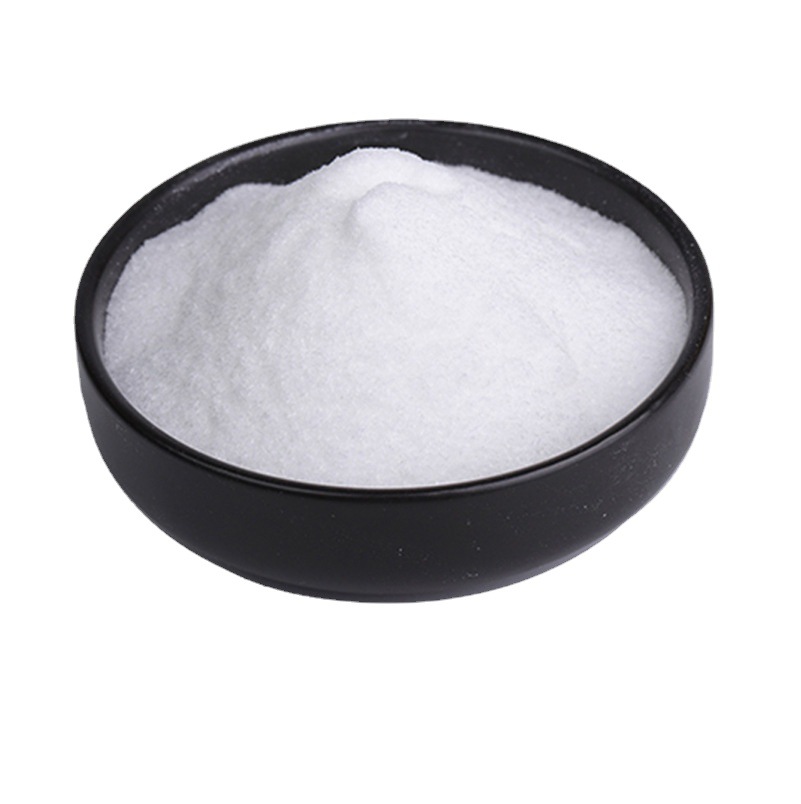
BPADA is a solid dianhydride; it is dissolved and reacted as a precursor rather than delivered in vapour phase.
The Moisture Boundary: What Handling Constraints Actually Mean
The single most consequential constraint in BPADA handling is not thermal — it is moisture. The molecule contains active acid anhydride groups and is extremely sensitive to water. On contact with moisture it undergoes a hydrolysis ring-opening reaction to form a diacid, which significantly reduces or eliminates its polymerisation activity.
Practical boundary: BPADA must be stored in an absolutely dry, sealed environment. Polymerisation is recommended under inert gas protection — nitrogen or argon — in an anhydrous polar solvent such as NMP or DMAc. A facility that cannot guarantee anhydrous conditions cannot reliably use this monomer, regardless of the grade purchased.
The production-side requirements follow directly from that chemistry. Batch reaction under inert-gas protection, closed-system feeding and handling, precisely temperature-controlled reactions, and formulation and filtration of high-purity chemicals in clean environments are the standard operating pattern. Supporting equipment typically includes inert-gas sealed reactors, anhydrous and oxygen-free feeding systems, vacuum storage tanks, high-purity filtration at ≤0.1 μm, ICP-MS, HPLC and GC instrumentation, and cleanroom filling lines. Micro-channel reactors are also used on the process side.
For buyers, this constraint changes the qualification question. It is not sufficient to ask whether a supplier can produce BPADA at a given purity. The relevant question is whether the supplier can produce it, package it, and deliver it without exposing the material to moisture between the reactor and the customer's glovebox or dry room. Packaging choices, temperature-controlled logistics and pre-shipment sample confirmation all sit on that critical path.
Application Map: Where Transparent Polyimide Is Actually Needed
BPADA is described as a key synthetic monomer for high-performance polyimide (PI), for 5G high-frequency and high-speed flexible copper-clad laminate (FCCL), for OLED flexible substrates, and for aerospace lightweight composite materials. These are not interchangeable applications; each places a different emphasis on the monomer's property set.
| Application | Primary requirement | Relevant BPADA property |
|---|---|---|
| OLED flexible substrate | Optical clarity plus thermal stability under display processing | Incomplete conjugation (high transparency); Tg = 207 °C; isometric stretchability |
| 5G high-frequency / high-speed FCCL | Dielectric performance and dimensional stability at high frequency | High-performance polyimide backbone; thermal stability; chemical inertness |
| Semiconductor packaging and flexible circuits | Reliability under assembly and reflow thermal budgets | High-performance polyimide monomer position |
| Aerospace lightweight composites | Strength-to-weight performance with heat resistance | Strong mechanical properties from the bisphenol A core |
| Superhydrophobic aerogels | Surface water repellency (Lotus effect) | BPADA-derived aerogel chemistry |
| Ion transport membranes | Chemical inertness with ion conduction | Chemical inertness of the polyimide |
Related process environments where these materials end up include semiconductor chip manufacturing via photolithography, display panels for TFT-LCD and OLED, LED chips, and PCB printed circuit boards. Project structures in this space range from bulk regular supply contracts for mixed isomers and 5-methyl-1H-benzotriazole, through high-purity electronic-grade supply of custom isomers and BPADA for semiconductor material clients, to custom isomer ratio development, CDMO process development, and joint development work on new materials such as 5G polyimide and EUV photoresist monomers.
Matching Grades to Dielectric and Display Requirements
Grade selection for BPADA is not a single-axis decision. Three variables move independently: purity grade, metal-ion specification, and packaging format. A buyer assembling a specification should treat them as separate line items.
Purity grade. Electronic-grade BPADA sits within a three-tier structure alongside industrial grade and high purity grade. Electronic grade is defined by ppb-level metal ion content, and the metal ion content can be controlled to customer specification for elements such as sodium, iron and copper. Customisation is available at metal impurity levels below 10 ppb.
Documentation. Certificates of analysis can be issued with custom test items and format. MSDS documentation is available in English, Spanish or other languages, custom label design can carry the client's brand and logo, and third-party test reports from SGS, BV or Intertek can be commissioned.
Packaging. Solid materials such as BPADA and 5-methyl-1H-benzotriazole are supplied in 25 kg fibre drums with PE liner, 25 kg kraft paper bags, or 500 kg bulk bags. Temperature-controlled packaging is available for long-distance shipping into hot climates, and UN-certified dangerous goods packaging is available on request.
| Decision point | What to specify | Why it matters |
|---|---|---|
| End application | Display substrate, high-frequency laminate, packaging dielectric, or composite | Determines whether optical transparency or dielectric behaviour is the dominant acceptance criterion |
| Purity tier | Industrial, high purity, or electronic grade (ppb-level metal ions) | Electronic-grade contamination limits are not met by standard grades |
| Metal-ion specification | Per-element limits (Na, Fe, Cu and others) against the process requirement | Metal impurity indicators can be customised, so a generic COA may not match the fab requirement |
| Packaging | Drum, bag, bulk bag, temperature-controlled, or UN-certified | Moisture ingress between supplier and customer degrades the anhydride |
| Batch evidence | COA with defined test items, traceability coding, retained samples | Supports incoming inspection and third-party re-testing |
Supply parameters matter to the same decision. A minimum order quantity of 1 kg accommodates pilot and R&D volumes, while lead time is typically 7–30 days and monthly capacity reaches 5,000 tons across the production base. Quality control is applied at 100% test, and remote technical support is available after delivery. Flexible production scale from gram-level R&D to hundred-ton industrial production is part of the same offering, which matters when a formulation moves from validation to scale-up.
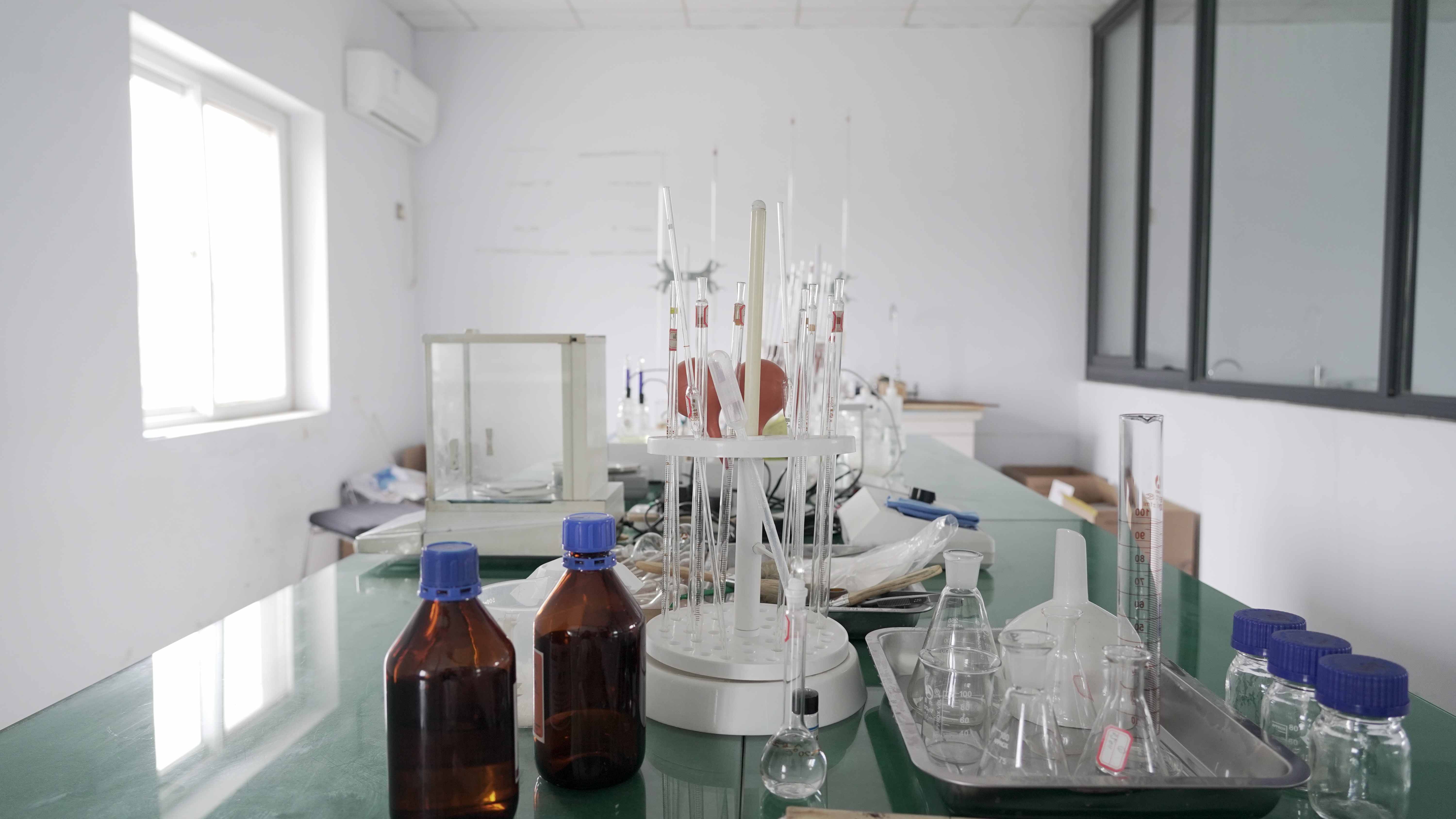
Electronic-grade qualification depends on instrumented quality control — ICP-MS, HPLC and GC systems — rather than on visual inspection.
Evidence a Buyer Can Verify
Claims about electronic-grade capability are only useful if they can be inspected. Several concrete verification paths exist for BPADA-type materials.
On the manufacturing side, operations are conducted in ISO 6 GMP cleanrooms with rigorous control over metal ions at ppb to ppt levels, particulates, and environmental parameters. Low-extraction materials — 316L VIM/VAR stainless steel and PFA/PVDF — are used to prevent contamination. The production chain is fully sealed and temperature-controlled, backed by an ISO9001 quality management system, with batch traceability, retained samples, and support for third-party re-inspection by SGS, BV or Intertek.
On the outcome side, documented reference cases in advanced materials supply show what that control translates into. In one display-related case, metal impurities were held below 20 ppb with particle control at ≤0.1 μm, and the customer reported a 3% yield improvement in OLED panel production. In a semiconductor-related case, metal impurities below 10 ppb met SEMI Grade 4 standards and supported the customer's verification by a top-tier Korean wafer fab through to mass production. A separate flow involving photoresist monomers and photoacid generators replaced imported supply, reduced cost by approximately 25%, and shortened delivery lead time from 8 weeks to 4 weeks.
Response capability is part of the same evidence set. Process optimisation and first validation sample delivery have been completed within 2 weeks, OEM customisation from process optimisation to mass production delivery within 6 weeks, and a 72-hour emergency order response mechanism is maintained for supply-chain continuity. Cooperation in one European distribution case ran for four consecutive years with a 100% repurchase rate, and the products passed REACH compliance certification.
Where BPADA Is Not the Right Answer
An honest scenario-fit assessment has to state the boundaries. BPADA is a strong fit for transparent polyimide films, high-frequency laminates and heat-resistant composite work. It is a poor fit in several specific situations.
- Moisture-tolerant processes. Because the anhydride hydrolyses to a diacid on contact with water and loses polymerisation activity, a production line that cannot maintain anhydrous conditions will waste material. The requirement for absolute dryness and sealed storage is not a preference; it is a process precondition.
- Solvent systems that exclude polar aprotic solvents. Polymerisation is recommended in anhydrous polar solvents such as NMP or DMAc under inert gas. A facility standardised on a different solvent train faces reformulation work before BPADA can be adopted.
- Applications where only maximum chain rigidity will do. The very feature that produces optical transparency — an incompletely conjugated backbone — means the property balance is application-specific. Buyers should validate the film against the target display or dielectric specification rather than infer performance from the monomer datasheet alone.
- Vapour-phase deposition routes. With a vapour pressure of 0 Pa at 25 °C and a melting point of 184–187 °C, BPADA is a solid-handling material. Processes built around volatile precursors cannot substitute it directly.
- Programmes without electronic-grade verification capability. ppb-level metal control cannot be assumed across all production batches; the supplier's purification capability, instrumentation and cleanroom discipline determine whether a given delivery qualifies.
Set against conventional fully aromatic polyimide routes, the trade-off is straightforward. Conventional approaches favour maximum thermal and structural rigidity and accept a strongly coloured film. BPADA-based polyimides trade some of that rigidity profile for optical transparency while retaining high thermal stability and, in the reported case, a Tg of 207 °C. Which side of that trade-off is correct depends entirely on whether the end device is optical or purely structural.
Market Signals Behind the Shift
The demand context for a monomer like BPADA is set by the wider electronic materials market rather than by the monomer itself. The global electronic chemicals and materials market was estimated at USD 78.5 billion in 2025, with Asia Pacific taking 66.6% of revenue that year — a concentration that explains why semiconductor, display and laminate supply chains for these materials are largely Asia-centred. Global semiconductor materials revenue reached USD 73.2 billion in 2025.
Downstream, the electronic-grade photoresist market was estimated at USD 4.96 billion in 2024. Market estimates for the broader electronic chemicals category vary depending on scope: Fortune Business Insights places the 2025 figure at USD 75.6 billion, against the USD 78.5 billion estimate from Grand View Research, while SEMI reported USD 67.5 billion for semiconductor materials in 2024. Those divergences reflect differences in whether substrates and hardware-linked materials are counted, not disagreement about the direction of demand.
A useful signal for buyers of monomers such as BPADA and vinylbenzyl chloride isomers comes from adjacent specialty chemistry. Japan holds approximately 6% share in the global benzyl chloride market, concentrated in high-purity and specialty applications — a pattern that repeats across electronic-grade monomers generally: a relatively small tonnage sits in the highest-purity tier, and that tier is where qualification effort concentrates.
Set against this, BPADA is confirmed as a key monomer for high-performance polyimides used in semiconductor packaging and flexible circuits, and electronic-grade vinylbenzyl chloride is likewise characterised as a semiconductor manufacturing intermediate used in high-purity resin synthesis. The common thread is that advanced packaging and flexible-circuit demand pulls a defined set of monomers into electronic-grade specification.
Outlook: What Changes Next
Three developments shape what buyers should expect over the coming procurement cycles.
First, contamination limits keep tightening. As packaging and display processes push toward finer features, the acceptable metal-ion window narrows. Suppliers already operating at ppb-level purification with ICP-MS, HPLC and GC monitoring are positioned for that shift; suppliers relying on bulk purity claims alone are not. The ability to control specific elements such as Na, Fe and Cu to customer specification is likely to become a standard requirement rather than a differentiator.
Second, the boundary between supply and development continues to blur. Custom isomer ratio development, CDMO process development from lab route optimisation to industrial scale-up, micro-channel continuous flow process transfer, and joint development on 5G polyimide and EUV photoresist monomers all describe a model in which the chemical supplier participates in the customer's formulation work. For BPADA, that means early engagement on the diamine pairing and the imidisation route rather than a late-stage material substitution.
Third, optical and dielectric requirements will continue to diverge. Flexible display substrates push transparency and bendability, while high-frequency laminates push dielectric behaviour and dimensional stability. A single BPADA grade is unlikely to serve both without qualification. Buyers should expect to qualify a grade against a named end application, and should structure supply agreements around traceability, retained samples and re-test rights rather than around a single purity number.
FAQ
Which electronic applications is BPADA-based polyimide normally considered for?
BPADA is described as a key synthetic monomer for high-performance polyimide (PI), 5G high-frequency and high-speed flexible copper-clad laminate (FCCL), OLED flexible substrates, and aerospace lightweight composite materials. Separately, BPADA-derived polyimides are assessed as chemically inert ion transport membranes in fuel cells, and BPADA can be used to make aerogels that are superhydrophobic. The common denominator across these uses is a requirement for thermal stability combined, in the display case, with optical transparency.
How does BPADA differ from conventional fully aromatic polyimide chemistry in optical terms?
The difference comes from the backbone. BPADA is a diphthalic anhydride structural unit with a bisphenol A core, and polyimide films synthesised from it are incompletely conjugated — that incomplete conjugation is the direct reason the films have high optical transparency. The same films retain high thermal stability and strong mechanical properties, with a reported glass transition temperature of Tg = 207 °C and isometric stretchability. That combination is what positions them for flexible display substrate use.
What storage and handling conditions does BPADA require?
BPADA contains active acid anhydride groups and is extremely sensitive to moisture. On contact with water it readily undergoes a hydrolysis ring-opening reaction to form a diacid, which significantly reduces or eliminates polymerisation activity. It must therefore be stored in an absolutely dry, sealed environment. Polymerisation is recommended under inert gas protection, such as nitrogen or argon, in an anhydrous polar solvent such as NMP or DMAc. Typical supporting equipment includes inert-gas sealed reactors, anhydrous and oxygen-free feeding systems, high-purity filtration at ≤0.1 μm, and cleanroom filling lines.
How should a buyer specify electronic-grade BPADA purity and documentation?
The specification should separate purity tier, metal-ion limits and documentation. Electronic grade is defined by ppb-level metal ion content, and metal impurity indicators can be customised to customer specification, with customisation available below 10 ppb for elements such as sodium, iron and copper. Documentation options include a COA with custom test items and format, MSDS in multiple languages, custom label design, and third-party test reports from SGS, BV or Intertek. Packaging options for solid materials include 25 kg fibre drums with PE liner, 25 kg kraft paper bags and 500 kg bulk bags, with temperature-controlled and UN-certified dangerous goods packaging available.
What limits BPADA in certain electronic applications?
Three limits are structural rather than commercial. First, moisture sensitivity means anhydrous, sealed handling is a precondition, not an option; facilities that cannot maintain it will degrade the material. Second, the transparency mechanism — an incompletely conjugated backbone — means the property balance is application-specific, so film performance should be validated against the target display or dielectric specification rather than inferred from the monomer datasheet. Third, with a vapour pressure of 0 Pa at 25 °C and a melting point of 184–187 °C, BPADA is a solid-handling material and cannot be substituted into vapour-phase deposition processes.
For readers who need the full material portfolio, the Jiangsu Juming Chemical Technology Co., Ltd. product catalogue is available for download: Jiangsu Juming catalogue (PDF). Company website: en.jmchemchina.com.