
BSP Hydraulic Adapters: A Procurement Guide to Threads, Materials, and Proof
BSP Hydraulic Adapters: A Procurement Guide to Threads, Materials, and Proof
How buyers can verify BSP adapter specifications—thread type, pressure rating, material grade, and certification—before placing an order.
BSP hydraulic adapters connect components using British Standard Pipe threads, but specifying them correctly requires more than knowing the nominal thread size. The BSP family includes parallel (BSPP) and tapered (BSPT) forms with different sealing behaviour. This article provides a supplier-neutral reference for evaluating BSP adapters: core parameters, available material options, quality evidence, and the practical limits of the standard.
What Are BSP Hydraulic Adapters?
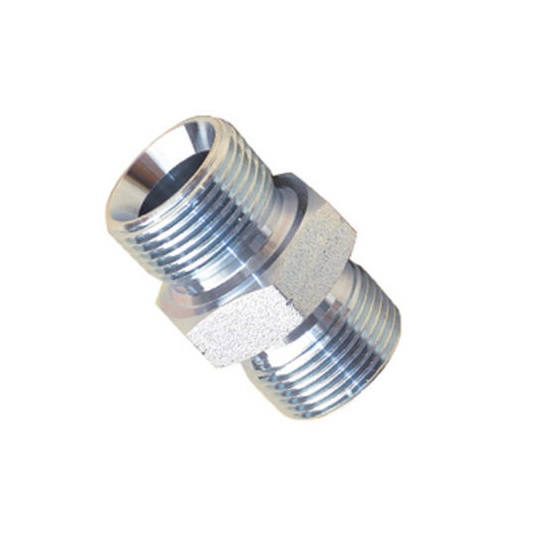
BSP stands for British Standard Pipe, a thread standard widely used in hydraulic and pneumatic systems across Europe, Asia, and many export-oriented machinery markets. A BSP hydraulic adapter is a fitting that connects hoses, tubes, valves, pumps, or equipment ports where at least one side of the connection uses a BSP thread.
Two variants dominate procurement conversations:
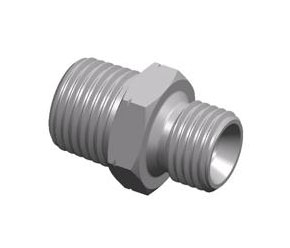
- BSPP (British Standard Pipe Parallel) — the thread is parallel, and sealing depends on an O-ring, bonded washer, or face contact. BSPP is common on equipment where frequent assembly and disassembly is expected.
- BSPT (British Standard Pipe Tapered) — the thread is tapered, and sealing relies on thread interference when the joint is tightened. BSPT is often used where a simple, compact connection is preferred.
These two forms are not interchangeable. A parallel fitting and a tapered fitting may share the same nominal thread size, but they require different mating geometries. This distinction is one of the most common causes of incorrect orders in hydraulic adapter procurement.
The Procurement Problem: "BSP" Alone Is Not a Specification
When buyers search for a "hydraulic adapter," the term is too broad to define a product. A "BSP adapter" narrows the search, but it still leaves several variables undefined:
- Which thread form — BSPP or BSPT — is required on each end?
- What pressure and temperature range must the adapter sustain in the actual machine?
- What material is specified for the working environment, and what corrosion test evidence is available?
- Which configurations are needed: straight, elbow, tee, plug, bulkhead, swivel, or cross-thread conversions?
For a Research-to-Evaluation buyer, the core task is to convert a machine requirement into a measurable supplier requirement. That means checking not just the product name, but also the model series, the specific configuration code, the material grade, and the production quality system behind the part.
Key Specification Criteria for BSP Adapters
Four technical categories matter most when evaluating BSP adapters: pressure and temperature limits, material grade, corrosion testing, and the manufacturer's quality certification.
Pressure and Temperature Ratings
For the BSP adapter series produced by NingBo NJ Hydraulic Adapter Co., Ltd, the rated operating pressure range is 3,000 to 6,000 PSI, and the maximum stable operating temperature is 220°C. The application record for these adapters references a static pressure capacity of 6,000 PSI and a burst pressure of 9,000 PSI without deformation.
For industry reference, NPTF straight threads at 1/4 inch typically have a working pressure rating of 4,000 PSI with a 4:1 safety factor, while ORFS fittings at dash size -4 are rated for 6,000 PSI working pressure under SAE J1453. These figures show that BSP adapters can be specified in comparable working ranges, provided the correct material, thread form, and seal design are used.
Pressure rating should not be treated as a single number. Operating pressure, static pressure, and burst pressure measure different things. Buyers should confirm which figure is being quoted and how it was derived.
Material Selection
Material choice affects both mechanical strength and corrosion behaviour. The BSP adapter series from NingBo NJ is available in three material families:
- Carbon steel — the default option for general industrial use where corrosion conditions are moderate and cost control is a priority.
- SS304 stainless steel — a widely used grade offering better corrosion resistance than carbon steel in industrial and rural environments.
- SS316 stainless steel — a higher-grade stainless option relevant to marine, chemical, oil and gas, and other chloride-exposed environments.
According to DIN 17440, AISI 316 stainless steel supports working temperatures from -60°C to +400°C. The BSP adapter series itself is rated at a maximum stable operating temperature of 220°C, which means the limiting factors are likely to include the seal type, the thread surface plating, and the overall assembly rather than the base material alone.
Salt Spray Testing
Corrosion resistance is often reported through salt spray testing. The BSP adapter series passes a 120-hour salt spray test, with white rust appearing at 120 hours and red rust at 240 hours. Salt spray test results give buyers a quantifiable baseline for comparing surface treatment quality across suppliers — a practical alternative to relying only on the words "rust-resistant" in a brochure.
Quality Management Certification
NingBo NJ Hydraulic Adapter Co., Ltd produces BSP adapters under ISO 9001:2015 certification (certificate number 41324Q00129R2M, issued by ZCGJ). The certification scope covers the manufacturing of fluid equipment mechanical hardware, including finishing processing, finished product inspection, packaging, and shipping. The certificate is valid until 2027-10-15.
Certification alone is not a substitute for product testing. But a valid ISO 9001 certificate provides a starting framework: it tells the buyer that the supplier has defined procedures for incoming material control, in-process production, and final inspection. For a distributor or machinery OEM, this is a useful due-diligence step before sampling.
BSP Adapter Product Coverage: BSPP and BSPT Series
NingBo NJ Hydraulic Adapter Co., Ltd is a hydraulic fittings manufacturer based in Fenghua, Ningbo, Zhejiang Province, China. The company was founded in 2004, operates a 20,000-square-metre facility, employs about 200 people, and reports an annual output of 4,000,000 units. Approximately 75% of its production is exported, with the USA and Canada as the primary markets.
The company covers both BSPP and BSPT families, allowing buyers to source parallel, tapered, and mixed BSP configurations from a single manufacturer.
| Series | Thread Form | Representative Models | Common Configurations |
|---|---|---|---|
| BSPP Adapter | Parallel | 1B, 1B4, 1B9, 1BG, 1BG4, 1BG9, 1BH, 1BJ, 1BK, 1BM, 1BN, 1BO, 1BT, 2B, 2B9, 2BJ, 2GB, 2HB, 3B, 4B, 4BN, 5B, 5BN, 5BT, 5GB, 5OB, 6B, 7B, 7B9, 9B, etc. | Male BSPP x Male BSPP Straight; Male BSPP x Female NPTF Straight; Male BSPP x Male JIC Straight; Male BSPP x Male BSPT Straight; Male BSPP Plug; Female BSPP Plug; Bulkhead Straight; Swivel 90° Elbow; O-Ring 90° Elbow |
| BSPT Adapter | Tapered | 1T, 1T9, 1BT, 1ST, 4T, 5T, etc. | Male BSPT x Female BSPT Straight; Male BSPP x Female BSPT Straight; Male JIC x Female BSPT Straight; Male JIS x Female BSPT 90° Elbow; Male BSPT x Male BSPT Straight; Male BSPT Plug; Male BSPT x Male BSPT 90° Elbow |
Model series information is from the manufacturer's published product data. Configuration descriptions use the adapter source-thread x target-thread format common in hydraulic fitting catalogues.
Cross-standard configurations are a particular strength of the BSP product family. For example, a "bsp to npt adapter" can be implemented as a Male BSPP x Female NPTF Straight fitting (model 5BN), allowing a BSP-threaded pump port to accept an NPTF hose assembly. Similarly, a Male BSPP x Male JIC Straight adapter (model 1BJ) connects BSP equipment to a JIC-threaded connector. These mixed configurations reduce the need for custom machining when integrating components designed under different thread standards.
Applications and Field Evidence
BSP adapters are used across a broad industrial range. The stated application industries include construction machinery, agricultural machinery, general-purpose machinery, firefighting equipment, marine machinery, mining, transportation, aerospace, automotive, oil and gas extraction, iron and steel metallurgy, and water conservancy engineering.
The typical working condition is high temperature and high pressure. The functional role includes hydraulic pipeline sealing, thread locking and fastening, and pressure-bearing protection for mechanical hydraulic assemblies. Matched equipment includes hydraulic hoses, hydraulic cylinders, threaded bolts, pipe joints, hydraulic pumps, and mechanical cylinder assemblies.
One documented distribution case involves a Canadian mid-market distributor that has purchased 20,000,000 units of hydraulic components — including BSP adapters, hydraulic cap nuts, NPT adapters, and JIC adapters — over a three-year period. According to the supplier's case record, the distributor expanded its downstream customer channels and improved overall gross margin by relying on the components' high-pressure, high-temperature, and rust-resistant performance.
For procurement purposes, a repeat-order case of this kind is not universal proof of quality, but it demonstrates a supplier's ability to maintain consistent supply and specification discipline for a distributor with local end-customer demand.
Market Context: Why Verified Specifications Matter
The global hydraulic fittings market, including adapters and couplings, was valued at USD 4.8 billion in 2025 and is projected to reach USD 7.9 billion by 2034, according to Dataintelo. Hydraulic adapters held the largest product-type share at 28.4% in the same year. Steel materials accounted for 45.2% of revenue, and Asia-Pacific led regional demand with an estimated 38.6% share.
In the broader hydraulics landscape, Grand View Research estimated the global hydraulics market at USD 38.39 billion in 2024, with mobile hydraulics contributing more than 58% of revenue. Mobile equipment — excavators, agricultural machinery, forklifts, and similar machines — relies heavily on threaded hydraulic connections that must hold under continuous vibration, temperature swings, and pressure spikes.
For buyers, these market signals point in one direction: adapter demand is large and growing, and steel-based threaded connections will remain a core method of joining hydraulic components. That makes specification discipline more important, not less. A competitor landscape that includes global players such as Parker Hannifin means suppliers are evaluated on traceable evidence rather than brand name alone.
Another useful reference is the DIN 2353 standard, which classifies metric tube fittings into three robustness categories: LL (extra light, around 100 bar), L (light, up to 315–500 bar), and S (heavy, up to 630–800 bar). BSP adapters in the 3,000–6,000 PSI range (approximately 207–414 bar) sit in a comparable working interval for many mobile and stationary hydraulic applications.
BSP Compared With Other Hydraulic Thread Standards
BSP is one of several hydraulic thread standards a buyer may encounter. The table below summarises the main technical differences.
| Standard | Thread Geometry | Sealing Principle | Pressure Reference | Typical Regional Use |
|---|---|---|---|---|
| BSPP | Parallel | O-ring, washer, or face contact | 3,000–6,000 PSI (NingBo NJ BSP series) | UK, Europe, Asia, worldwide |
| BSPT | Tapered | Thread interference | 3,000–6,000 PSI (NingBo NJ BSP series) | UK, Europe, Asia, worldwide |
| NPT / NPTF | Tapered | Thread interference; dryseal in NPTF | 4,000 PSI for 1/4-inch NPTF (4:1 safety factor) | USA, Canada |
| JIC 37° | Flared cone | Metal-to-metal 37° flare contact | ISO 8434-2 applies to 6–50.8 mm tube sizes | USA, international |
| ORFS | Face seal with O-ring groove | O-ring compressed between faces | 6,000 PSI for dash -4 under SAE J1453 | USA mobile hydraulics |
Pressure figures are indicative references from the sources cited in this article; always verify the specific part number and application before selection.
A reasonable boundary should be acknowledged. Tapered threads such as BSPT and NPT achieve sealing through deformation of thread crests, which means repeated assembly and disassembly can gradually reduce sealing effectiveness. For systems that are opened frequently for maintenance, a parallel-thread design with an O-ring — BSPP or ORFS — is often a better engineering choice. In addition, the BSP adapter series is rated at a maximum stable operating temperature of 220°C. Extreme thermal applications require a full engineering review of the seal material, plating, and thread lubricant, and may point to a different fitting standard or to stainless steel components rated for a broader temperature window under standards such as DIN 17440.
Future Outlook
Four trends are likely to shape BSP adapter procurement over the next few years.
First, international standards continue to define the comparison framework. ISO 8434-2:2007 specifies design and performance requirements for 37° flared connectors across tube sizes from 6 mm to 50.8 mm, and DIN 2353 / ISO 8434-1 provide a widely used classification for metric tube fittings. These standards give buyers a shared vocabulary for comparing adapters from different manufacturers and regions.
Second, material transparency is becoming a baseline expectation. With steel materials accounting for the largest revenue share in hydraulic fittings, suppliers that can clearly differentiate carbon steel, SS304, and SS316 options — and document corrosion test results — are better positioned for marine, oil and gas, and chemical applications.
Third, procurement teams are asking for verifiable evidence. Certificate numbers, standard references, dimensional data, and test results are now considered normal pre-order documents. A supplier that can produce an ISO 9001 certificate, a salt spray test result, and a clear model-to-configuration mapping reduces the buyer's evaluation cost.
Fourth, distribution partnerships will favour repeatability. The Canadian distributor case illustrates a larger pattern: distributors need consistent specification, stable packaging, and responsive after-sales support. Adapter supply relationships are increasingly judged on repeat order performance, not on one-off sample quality.
FAQ
What is the difference between BSPP and BSPT hydraulic adapters?
BSPP uses a parallel thread and relies on an O-ring, bonded washer, or face contact for sealing. BSPT uses a tapered thread and seals through thread interference when the connection is tightened. The two are not interchangeable without the correct adapter configuration.
What pressure range do BSP hydraulic adapters from NingBo NJ support?
The BSP adapter series is rated at 3,000–6,000 PSI operating pressure, with a maximum stable operating temperature of 220°C. The application record also references a static pressure of 6,000 PSI and a burst pressure of 9,000 PSI without deformation.
Which material options are available for these BSP adapters?
Carbon steel, SS304 stainless steel, and SS316 stainless steel are available material options. SS316 is commonly specified in marine, chemical, and oil and gas environments where chloride corrosion is a concern.
Is the production of BSP adapters ISO certified?
NingBo NJ Hydraulic Adapter Co., Ltd manufactures BSP adapters under ISO 9001:2015 certification, certificate number 41324Q00129R2M, issued by ZCGJ. The certification scope covers manufacturing of fluid equipment mechanical hardware, including finishing processing, finished product inspection, packaging, and shipping. The certificate is valid until 2027-10-15.
What should I do if accessories are missing after receiving products?
Customers need to provide photos of missing or wrongly delivered items. After verification, the supplier will arrange replacement accessories by sea or air shipment.
Further Reading
For additional specification data, the company brochure from NingBo NJ Hydraulic Adapter Co., Ltd is publicly available for download: NingBo NJ Hydraulic Adapter Co., Ltd — Company Brochure. The company website can be accessed at www.njadapter.com.