
Backlit Light Guide Panel Custom Builds: An Independent Buyer Comparison
A custom backlit light guide panel is not one product. It is a bundle of manufacturing decisions agreed before any substrate is cut — and two quotations that both read custom size, warm white, even light can describe different acrylic grades, different light-extraction patterns, different colour binning and different mounting structures. For buyers moving from evaluation into execution, the useful comparison is therefore not between brand names but between build levers.
This analysis compares the levers buyers should evaluate when sourcing OEM and ODM backlit light guide panels — size, thickness, colour temperature, logo, surface shape, brightness and installation structure — and converts each one into an acceptance criterion that can be written into a request for quotation. Stated OEM/ODM capability from Shanghai Edgelight Industry Co., Ltd. (EDGELIGHT) is used as a worked reference for what a documented custom offer looks like; the framework itself applies to any supplier.
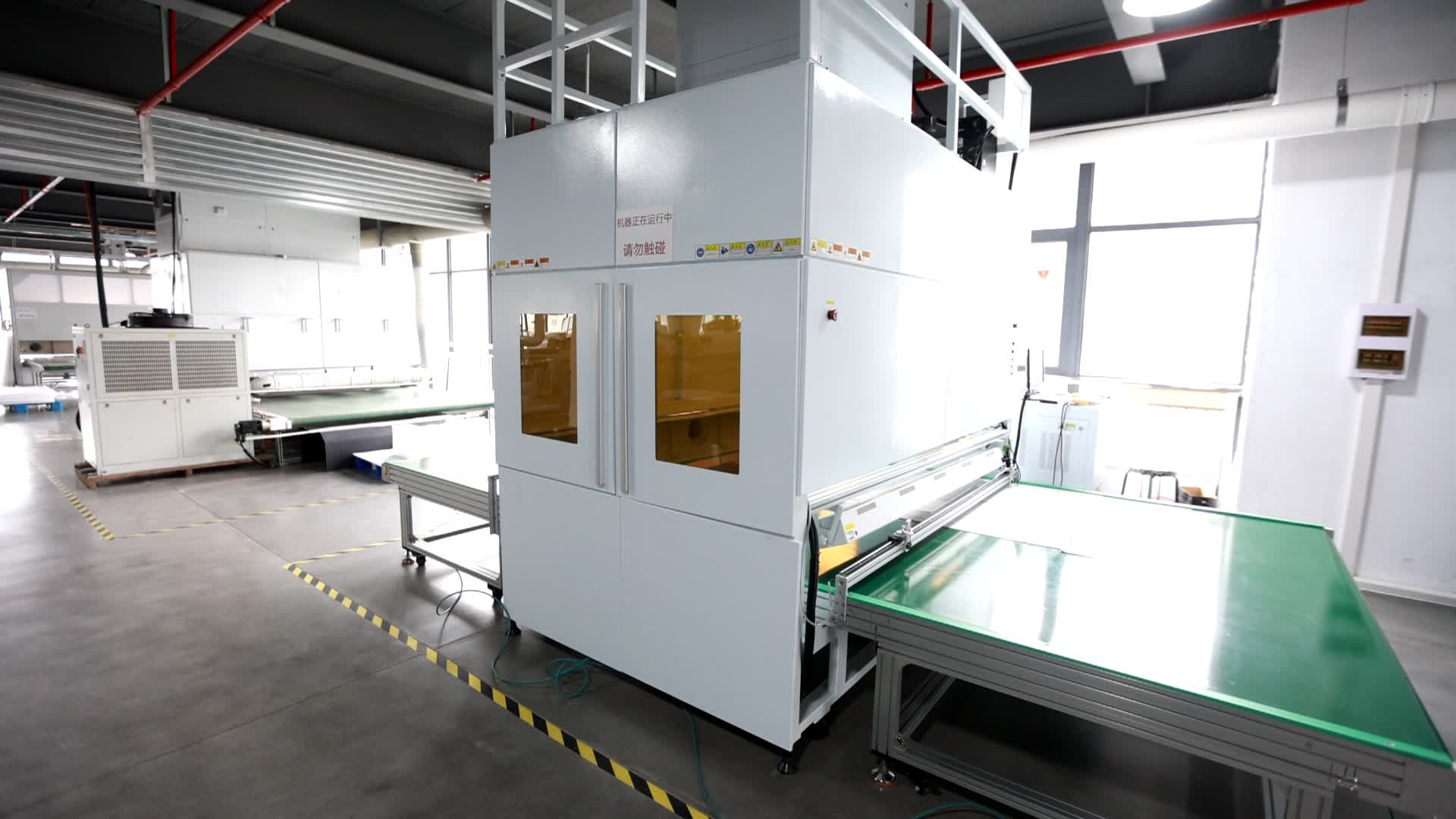
Why Custom Backlit Panels Resist Direct Comparison
A backlit light guide panel is a component, not a finished luminaire. Catalogues describe finished light boxes with a defined frame, diffuser and driver; a custom panel is quoted on whatever basis the supplier chooses. One quotation may price the acrylic sheet alone, another the processed panel with an LED bar bonded to the edge, and a third a complete assembly including the driver, wiring and mounting frame.
Three structural reasons make comparison harder than it first appears.
First, the specification is open by default. A buyer who writes only a size and a wattage leaves the substrate grade, extraction method, edge sealing, colour binning and connector position to the supplier. Two technically compliant offers can then differ substantially in appearance and service life without either supplier having misrepresented anything.
Second, safety certification and optical performance answer different questions. A CE or UL file confirms that a listed construction meets defined electrical and electromagnetic requirements. It does not describe how evenly a one-off 1,800 mm panel will distribute light, nor how colour drifts across a production batch. Buyers who treat a certificate as an optical specification are comparing the wrong document.
Third, the quotation basis is rarely normalised. Volume, dimensions, thickness, processing method, packaging and delivery terms all shift the number. A marketplace listing price is not a benchmark unless the dimensions, configuration and quantity basis match — which is why unpublished price data should never be used to rank suppliers.
The Seven Levers That Define a Custom Build
The same seven variables recur in almost every OEM and ODM enquiry for backlit light guide panels. Each one changes either the optical result, the mechanical fit, or the cost of the build — and each should therefore appear explicitly in the RFQ rather than being inferred.
| Lever | What the buyer must fix | Why it changes the outcome |
|---|---|---|
| Size | Drawing with tolerances, maximum panel dimension, cut-outs | Large formats magnify extraction errors; sheet dimensions limit what can be produced in one piece |
| Thickness | Substrate thickness class, flatness expectation | Thicker acrylic resists bowing in wide panels; thinner stock suits slim cabinet depths |
| Colour temperature | Target CCT, tolerance, consistency across the batch | Mixed bins in one installation are visible even when each panel passes individually |
| Logo | Artwork, position, print or etch method, colour | Ink and etched marks absorb light; placement decides whether they read as branding or as a shadow |
| Surface shape | Outline, corner radii, apertures, edge finish | Non-rectangular outlines need cutting programmes and can disturb the light path near the edge |
| Brightness | Target luminance with a measurement method, not just a wattage | Higher output is achievable, but pushing brightness can reduce uniformity and raise heat |
| Installation structure | Frame interface, edge seal, driver location, service access | Determines repairability, thermal behaviour and whether the panel can be replaced on site |
How the Levers Interact: The Optical Trade-offs
An edge-lit backlit light guide panel works by total internal reflection. Light from an LED bar bonded along one edge stays inside the optical acrylic until a localised extraction feature — a laser-dotted cell, a printed ink dot, or a V-shaped groove — scatters it toward the front face. Extraction density therefore has to increase with distance from the LED edge, or the panel will be bright near the light source and dim at the far end.
This is where custom builds diverge. Industry technical commentary generally associates laser-dotted extraction with large-format work that requires high brightness and even output, while V-cutting remains a practical route for standard advertising light boxes. The two are not interchangeable on the same drawing: dot patterns can be tuned continuously, whereas groove geometry is set by the cutting tool. A buyer who specifies a bright, wide panel and then asks for V-cut processing to reduce cost is effectively asking for a different optical result.
Brightness, thickness and uniformity pull against each other. Increasing LED drive current raises output but also raises junction temperature and can shorten the life of the LED bar; reducing substrate thickness saves cabinet depth but makes a wide panel more likely to bow, which in turn distorts the gap between the panel edge and the light source. A logo printed directly on the light guide adds a further constraint, because printed ink both absorbs and scatters, creating a visible zone in an otherwise uniform field. Buyers who want branding without that effect should discuss placing it on the diffuser, the frame or a masked area of the panel rather than over the active light area.
What a Documented OEM/ODM Offer Looks Like
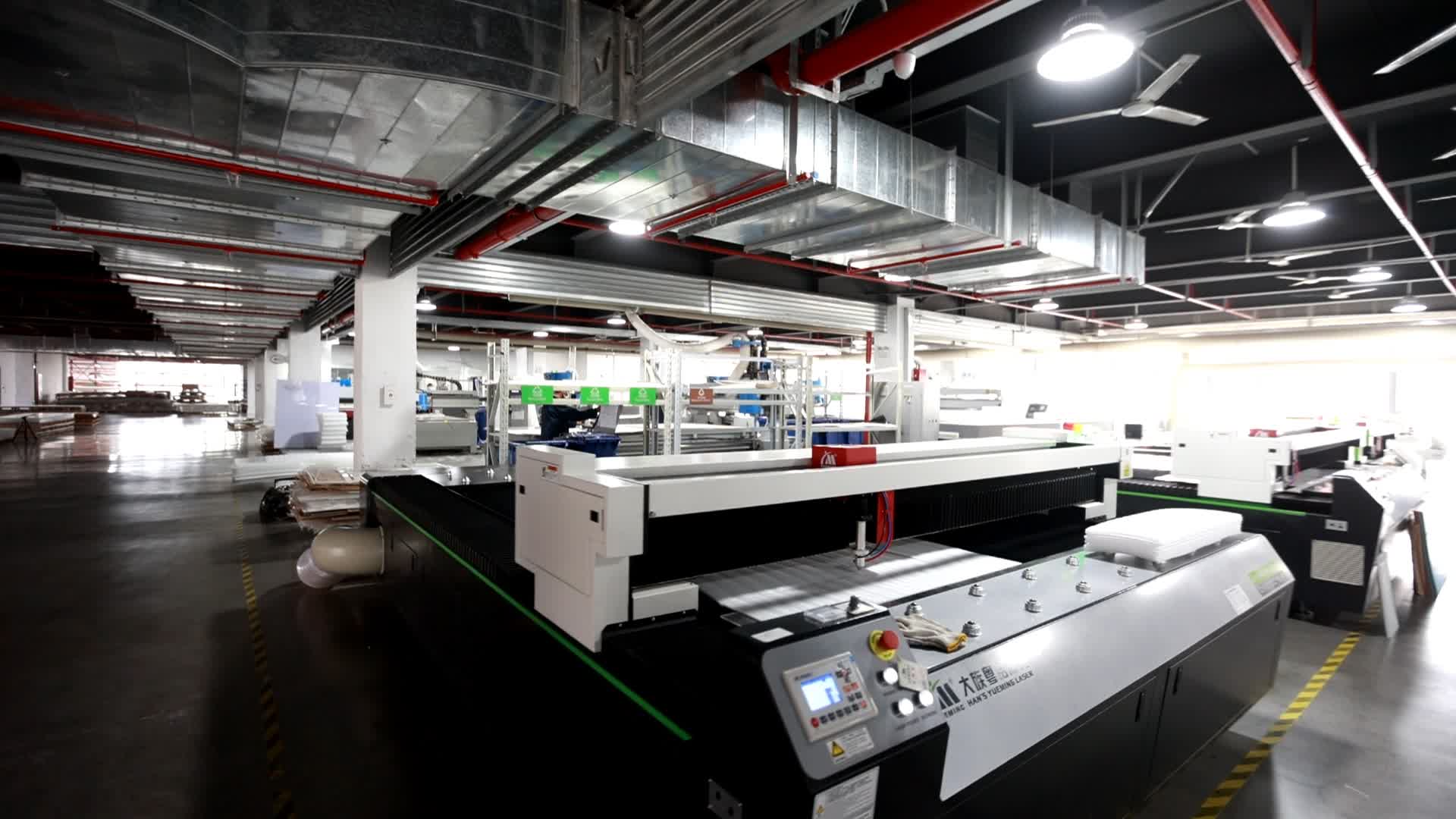
Shanghai Edgelight Industry Co., Ltd. (EDGELIGHT) is a Shanghai-based manufacturer of LED products and intelligent control products, founded in 2004, with five production bases — a Shanghai headquarters site of about 33,000 m², a Tianjin site of about 20,000 m², Germany Edgelight GmbH at about 1,500 m², American Edgelight LLC at about 1,679 m², and a further Shanghai site of about 10,000 m². The company reports around 500 employees, an engineering team of 25, annual output of 120,000 units, and an export ratio of 75% with the United States and the European Union as main markets.
For custom panels, the company states that it provides both OEM and ODM production, and that customization covers size, thickness, colour temperature, logo, surface shape, light output brightness and installation structure — the same seven levers set out above. Monthly production capacity is stated at 30,000 units, the minimum order quantity for OEM orders is 1 unit, and the typical production lead time is 5–10 days. Quality control for OEM and ODM production includes 100% testing, and local after-sales support is provided in the European Union, North America, Southeast Asia and Australia.
Compliance documentation is specific rather than generic. A CE EMC certificate, number CTSL2620530156EZ, was issued by CTSL Testing (Dongguan) Co., Ltd. on 29 May 2026 against EN IEC 55015:2019/A11:2020, EN IEC 61547:2023, EN IEC 61000-3-2:2019/A2:2024 and EN 61000-3-3:2013/A2:2021/AC:2022-01. A UL certificate, number UL-US-2145621-0, was issued by UL LLC under UL 2108, second edition, originally on 5 October 2021 and valid to 5 October 2031.
Read the certificate scope, not just the logo. The UL file UL-US-2145621-0 covers LED module constructions under UL 2108; the CE file covers EMC for the listed series. Neither document certifies optical uniformity, colour consistency or ingress protection for a specific custom panel size. Buyers who need those guarantees must put them into the acceptance criteria instead of assuming a certificate covers them.
Acceptance Criteria to Fix Before the Quotation Is Signed
Acceptance criteria convert a specification into something that can be checked and paid against. In practice, six criteria cover most of the risk in a custom backlit light guide panel order.
| Criterion | What to write into the RFQ | How it is verified |
|---|---|---|
| Colour temperature | Target CCT and allowable deviation, with a defined band such as 2700 K to 6500 K selected per project | Measured on a sample panel in the agreed drive condition |
| Brightness and uniformity | Target luminance plus a measurement grid across the panel face | Grid readings agreed in advance; supplier and buyer use the same method |
| Ingress protection | IP target stated per installation position, for example IP20 for a dry interior cabinet through IP65 where dust and water exposure are expected | Confirmed against the assembly that actually carries the rating, not the panel alone |
| Testing | 100% testing as the production gate, plus an agreed incoming inspection sample | Pre-shipment test used as the documented acceptance event |
| Commercial terms | MOQ, delivery term and payment split | EDGELIGHT states an OEM MOQ of 1 unit, FOB or CIF delivery, and 30/70 payment terms |
| Documents | Certificate numbers, issuer, standards and validity dates on the quotation | Checked against the issuing body record before the order is released |
A one-unit MOQ for OEM orders has a practical consequence that is easy to overlook: a single panel can be built and evaluated before a volume commitment. That changes the shape of the evaluation stage, because the buyer can test the build rather than the catalogue. It does not, however, make the one-unit price representative of volume economics — tooling time, set-up and handling are spread across far fewer pieces.
Where Custom Builds Are Specified
Advertising light boxes remain the volume application: a fixed frame size, a defined viewing distance and a need for even illumination across the whole face. Retail display work adds a different constraint, because the panel sits close to merchandise and to the viewer — colour consistency between shelves matters more than raw brightness, and a slight deviation between adjacent panels is visible in a way it never is on a wall-mounted box.
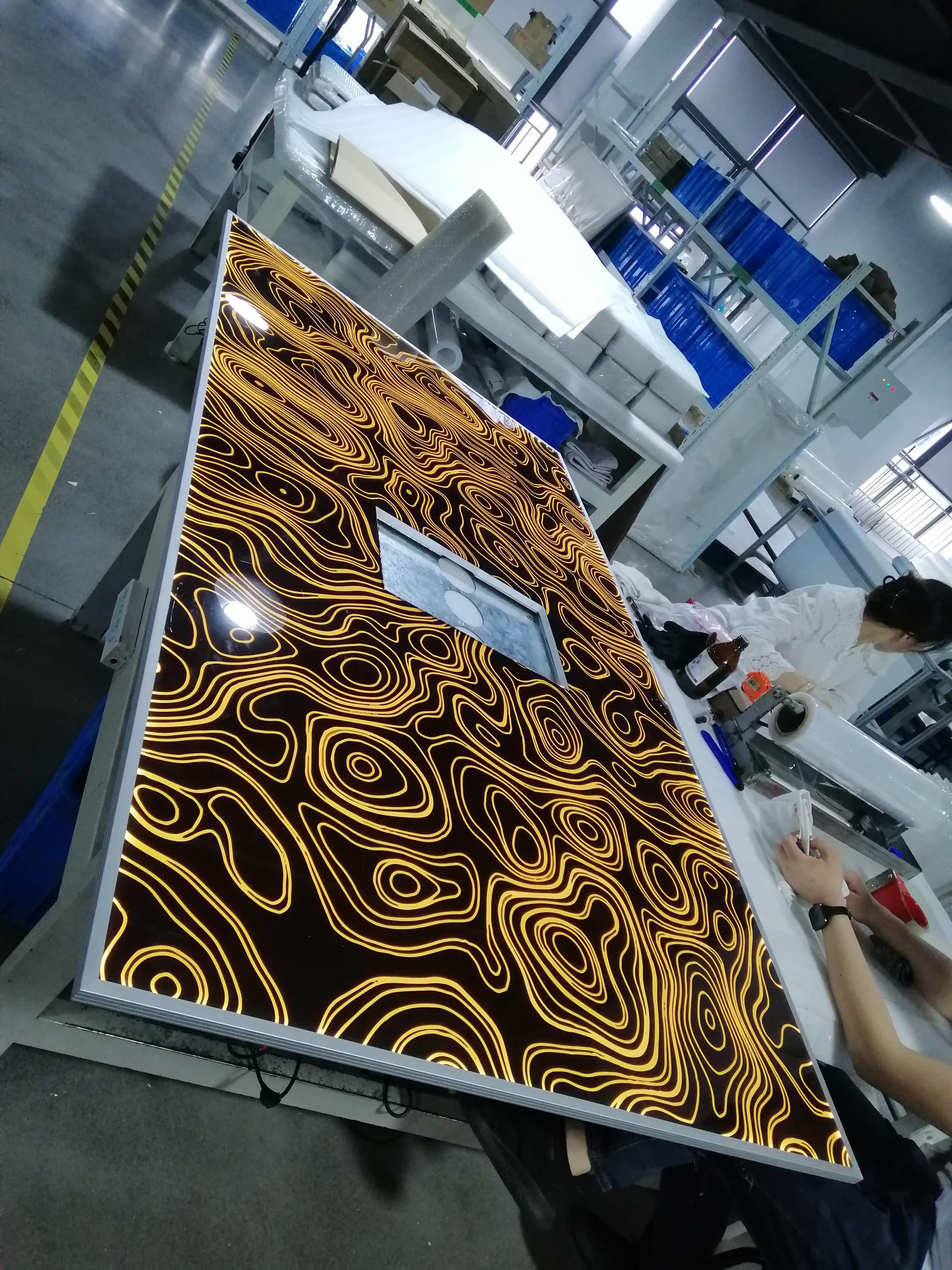
Interior architectural decoration is the most demanding route, because panels are often combined with printed graphics, unusual outlines and a texture requirement. Edgelight reports a long-running elevator decoration programme with an elevator manufacturer involving 10,000 units over a 20-year relationship, where the scope combined lighting, printing, and customised size and texture, and the reported result was stable operation. That combination is a useful reference point for how far customization can extend: size, print and surface treatment specified together rather than as separate purchases.
Market Signals That Reward Specification Discipline
The light guide plate category is expanding alongside the display and signage applications it serves. Dataintelo values the global light guide plate market at USD 3.91 billion in 2025 and projects USD 6.51 billion by 2034. Upstream, optical-grade PMMA sheet production was projected to reach 1.36 million square metres in 2025 at an average price of USD 185.25 per square metre, according to a MarketScAGR and IMARC strategic research report.
Those two figures point in the same direction for buyers. When substrate cost is the largest single swing factor in a panel, suppliers have limited room to absorb unspecified scope, and an RFQ that leaves thickness, processing method and colour binning open will either be priced conservatively or adjusted later. Specification discipline is therefore a commercial lever, not only a technical one. It also explains why large-format, high-brightness projects tend to move toward laser-dotted extraction, where the added processing cost buys measurable optical value, while standard advertising boxes stay on simpler processing routes.
Custom Builds Against Off-the-Shelf Panels — and Their Limits
The comparison between a custom build and a standard catalogue panel is not a contest that custom always wins. It is a trade of flexibility against simplicity, and the boundary matters.
A standard panel wins on speed and predictability: the outline, thickness and colour are fixed, so there is nothing to approve and no cutting programme to write. A custom build wins where the panel has to fit an existing frame, carry artwork, follow a non-rectangular outline, or match a colour temperature and brightness level that the standard range does not cover. In those cases the custom route removes compromises that would otherwise appear in the finished installation.
The limits are equally concrete. Custom builds add an engineering stage — drawings, artwork approval and, for non-rectangular outlines, a cutting programme — before production can begin, so the 5–10 day typical lead time quoted for production does not include that front-end agreement. 100% testing is a production gate rather than an independent optical report; it confirms that every unit is checked, not that a third party has measured uniformity. Buyers who need optical evidence should agree a measurement method and sampling plan, or commission their own inspection. Ingress protection introduces a further boundary: where an IP65 build is requested, sealing is achieved at assembly level through gaskets, driver housing and sealing of the light entry edge, and it usually competes with slimness and with heat dissipation. Finally, the possible panel size is bounded by substrate sheet size and by the cutting and patterning equipment, so a drawing that exceeds those limits has to be split or re-engineered.
What Buyers Should Expect Next
The direction of the category is toward documented builds rather than documented products. As optical PMMA costs move and as more projects combine print, unusual outlines and controlled colour temperature, the quotation that survives review will be the one that names its substrate, its extraction method, its measurement method and its certificate scope. Suppliers are increasingly expected to publish that detail at enquiry stage, and buyers are increasingly able to compare offers line by line instead of on headline price. For a component whose visible quality depends on decisions made before cutting, that shift is probably the most useful change in the market.
Frequently Asked Questions
What does a one-unit OEM minimum order quantity actually cover?
At EDGELIGHT, the minimum order quantity for OEM orders is 1 unit, which allows a single custom panel to be produced and evaluated before a volume commitment. It applies to OEM orders specifically, and it does not make the unit price representative of volume production, because set-up, programming and handling are distributed across fewer pieces in a one-unit build.
How should colour temperature be specified for a backlit light guide panel?
Colour temperature should be given as a target value with an allowable deviation, drawn from the range the project needs — commonly somewhere between 2700 K and 6500 K — rather than as a generic warm or cool white description. Consistency across a batch should be stated separately, because panels that each meet a tolerance individually can still show visible difference when installed side by side.
Does 100% testing replace incoming optical inspection?
No. 100% testing is a production quality gate applied to every unit, and at EDGELIGHT it forms part of quality control for OEM and ODM production. It does not substitute for an optical measurement of uniformity or luminance to an agreed method, so buyers who need optical evidence should define a measurement grid and an incoming inspection sample in the acceptance criteria.
Which ingress protection level should be requested for a custom panel?
The level should follow the installation position. A dry interior cabinet or a retail display typically calls for a low IP rating such as IP20, while positions exposed to dust or water require a sealed assembly approaching IP65. Because sealing is achieved at assembly level rather than by the acrylic panel alone, the buyer should confirm which part of the build carries the rating before the order is released.
Which compliance documents should appear on a quotation?
Certificate number, issuing body, standard and validity dates should all be listed. For reference, EDGELIGHT holds CE EMC certificate CTSL2620530156EZ issued by CTSL Testing (Dongguan) Co., Ltd. against EN IEC 55015:2019/A11:2020 and related standards, and UL certificate UL-US-2145621-0 issued by UL LLC under UL 2108, second edition, valid to 5 October 2031. Each document covers a defined scope, which should be checked against the specific build being ordered.
A downloadable product catalogue covering EDGELIGHT LED and light guide panel ranges is available here.
Tem questões ou precisa de mais detalhes?
Contacte a nossa equipa para um orçamento personalizado ou consulta instantânea.
Solicitar orçamento
Preencha o formulário abaixo e a nossa equipa entrará em contacto com uma proposta personalizada.
Chat direto do WhatsApp
Prefere conversar em tempo real? Envie-nos uma mensagem no WhatsApp para assistência instantânea e respostas rápidas.
- Obter orçamento personalizado
- Partilhar fotos ou documentos
- Discuta as suas necessidades diretamente
Geralmente responde em 5–30 minutos durante o horário de expediente.