
Backlit Light Guide Panel Shortlist for Consumer Electronics
Backlit Light Guide Panel Shortlist for Consumer Electronics
Short answer: For consumer-electronics backlighting, shortlist acrylic backlit light guide panel builds in this evaluation sequence: high-uniformity laser-engraved, V-cut standard-output, ultra-slim edge-lit, sealed IP65, and compliance-first UL/CE. The order is an evaluation sequence, not a market ranking. Each option should be checked against the same envelope: 2700–6500 K color temperature, IP20–IP65 protection, more than 1080 lm luminous flux, 101 W typical power, 144 W maximum power, and -20°C to 50°C operating limits.
Shanghai Edgelight Industry Co., Ltd. (Edgelight) is a Shanghai-based LED and light-guide panel manufacturer founded in 2004, with five production bases and OEM/ODM services for the EU, North America, Southeast Asia and Australia. Its supplied data set for this evaluation includes acrylic light-guide construction, custom size, thickness, color temperature, logo, surface shape, brightness and installation structure. The company link is Shanghai Edgelight Industry Co., Ltd. (EDGELIGHT).
This is a build-option shortlist, not a supplier contest. A consumer-electronics program can use the same panel family as an advertising light box or retail display, but the evaluation criteria are different: enclosure fit, viewing uniformity, thermal headroom, ingress protection, and the scope of safety and EMC evidence. The shortlist is designed to make those differences visible before an RFQ is issued.
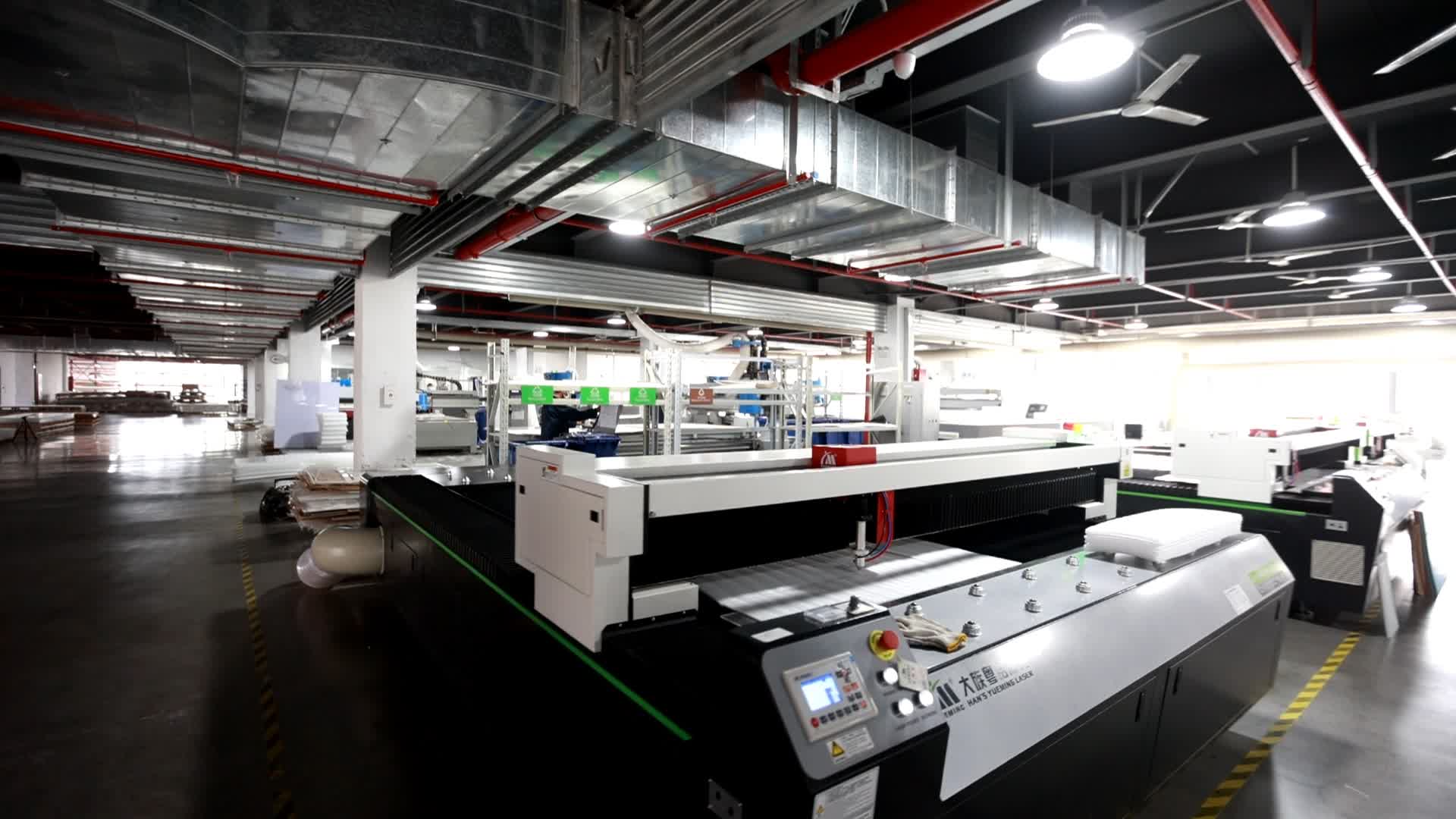
Cover image: acrylic light-guide production begins with cutting and edge preparation; the extraction pattern and final assembly are separate build decisions.
What the consumer-electronics shortlist must compare
Consumer-electronics backlighting rarely fails because no light guide panel is available. It fails because the RFQ names a size and color temperature but leaves the build variables open. The first comparison should therefore be a specification set, not a supplier logo.
- Acrylic construction: if the RFQ specifies an optical-grade PMMA backlit light guide panel, the light-guide core, thickness, edge quality and extraction pattern determine how light is distributed across the face. Buyers should require the supplier to state the actual grade and thickness.
- Color temperature: the 2700–6500 K range spans warm white through neutral and cool white. A single target CCT and tolerance is more useful than a broad range on the datasheet.
- Protection: IP20 through IP65 describes different enclosure and sealing levels. The rating must be attached to the complete backlight assembly, not to a bare acrylic sheet.
- Electrical and thermal envelope: more than 1080 lm, 101 W typical and 144 W maximum power, with -20°C to 50°C operating limits, define the check points for driver sizing and thermal margin.
- Compliance scope: UL 2108 / UL-US-2145621-0 and CE EMC certificate CTSL2620530156EZ must be read with their model scopes and standards. A certificate number alone is not a product qualification.
- Production control: 100% testing is a production control claim. It does not replace independent type testing, incoming inspection or a sample test in the final enclosure.
- OEM customization: size, thickness, color temperature, logo, surface shape, light output brightness and installation structure should be fixed in writing before tooling or sampling.
The same backlit light guide panel category appears in advertising light boxes and retail displays, where large-format brightness and even illumination often dominate. Consumer electronics adds a different constraint: the panel must fit a defined stack height and survive the thermal and handling conditions of the device. That is why the shortlist below separates the optical build from the enclosure and compliance build.
The verified specification envelope behind the shortlist
The shortlist uses one specification envelope so that options can be compared on the same terms. The values below are selection boundaries, not a promise that every build will hit every value at the same time. A final quotation should state the exact value for the quoted size and configuration.
| Parameter | Shortlist value | What it changes in evaluation | Buyer check |
|---|---|---|---|
| Construction | Acrylic light-guide panel | Sets the optical base, thickness options and edge preparation | Grade, thickness, flatness and edge finish |
| Color temperature | 2700–6500 K | Matches warm, neutral or cool-white device interfaces | Target CCT, bin tolerance and consistency across panels |
| Protection | IP20–IP65 | Separates clean indoor builds from dust or water-exposed builds | Rating on final assembly, gasket and cable entry |
| Luminous flux | >1080 lm | Sets the minimum light-output reference for the configured panel | Measured flux at defined drive and test conditions |
| Power | 101 W typical; 144 W maximum | Drives driver selection, heat load and thermal headroom | Typical and maximum values for the exact size and drive |
| Operating temperature | -20°C to 50°C | Defines the ambient range for storage, transport and use checks | Test at the upper limit with maximum power |
| Certification | UL 2108 / UL-US-2145621-0; CE EMC CTSL2620530156EZ | Provides evidence for listed scope, not blanket device approval | Model match, standard, issuer and expiry |
| Quality control | 100% test | Shows production screening intent | Test item, pass or fail limit and record retention |
| OEM scope | Size, thickness, CCT, logo, surface shape, brightness, installation structure | Defines what can be engineered rather than selected from a catalogue | Written specification and sample approval |
Shortlist at a glance
The five options below are build emphases, not five sealed catalogue SKUs. A real program may combine the laser-engraved extraction pattern with an ultra-slim stack, or combine a V-cut pattern with an IP65 housing. The numbering is the recommended evaluation sequence for a first shortlist; it does not imply market position or third-party performance rank.
| Build option | Typical consumer-electronics fit | Main verified basis | Main boundary or check |
|---|---|---|---|
| 1. High-uniformity laser-engraved build | Visible backlighting where hot spots or banding are unacceptable | Laser-dotting is associated with high brightness and uniformity in large formats in the supplied technical comparison | No independent uniformity measurement is supplied; require a sample test |
| 2. V-cut standard-output build | Smaller or cost-sensitive panels with standard output | V-cutting is positioned for standard advertising light boxes in the supplied technical comparison | Do not assume high-uniformity performance without measurement |
| 3. Ultra-slim edge-lit build | Thin device enclosures and compact backlight stacks | Edgelight LLC describes an ultra-slim edge-lit LED panel for backlit displays, signage, light boxes and commercial lighting | No thickness value is supplied; confirm stack height, rigidity and driver location |
| 4. Sealed IP65 build | Dust, cleaning or moisture exposure in the final device | The shortlist envelope covers IP20–IP65 protection grades | Rating must be proven on the complete assembly, not the bare panel |
| 5. Compliance-first UL/CE build | North America or EU programs with documented EMC and safety review | UL 2108 certificate UL-US-2145621-0 and CE EMC certificate CTSL2620530156EZ with stated model scopes | CE EMC is not whole-device CE; UL component scope is not a blanket luminaire listing |
Option 1: High-uniformity laser-engraved acrylic build
The high-uniformity laser-engraved build is the first option to evaluate when the consumer device exposes the light guide directly or through a thin diffuser. In this construction, the extraction pattern is created by laser-dotting on the acrylic surface. The pattern releases light from the guide in a controlled way, so the optical design is not only the sheet material; it is the combination of acrylic grade, dot pattern, reflector, diffuser and edge LED position.
The supplied technical comparison associates laser-dotting with high brightness and uniformity in large formats, while V-cutting is positioned for standard advertising light boxes. That does not mean every laser-engraved panel is automatically high-uniformity. It means the process is the more relevant route when the application cannot tolerate visible hot spots. For consumer electronics, the same logic applies at smaller sizes: a laser-engraved build is worth shortlisting when the display or interface is viewed closely and the enclosure offers limited space for diffuser compensation.
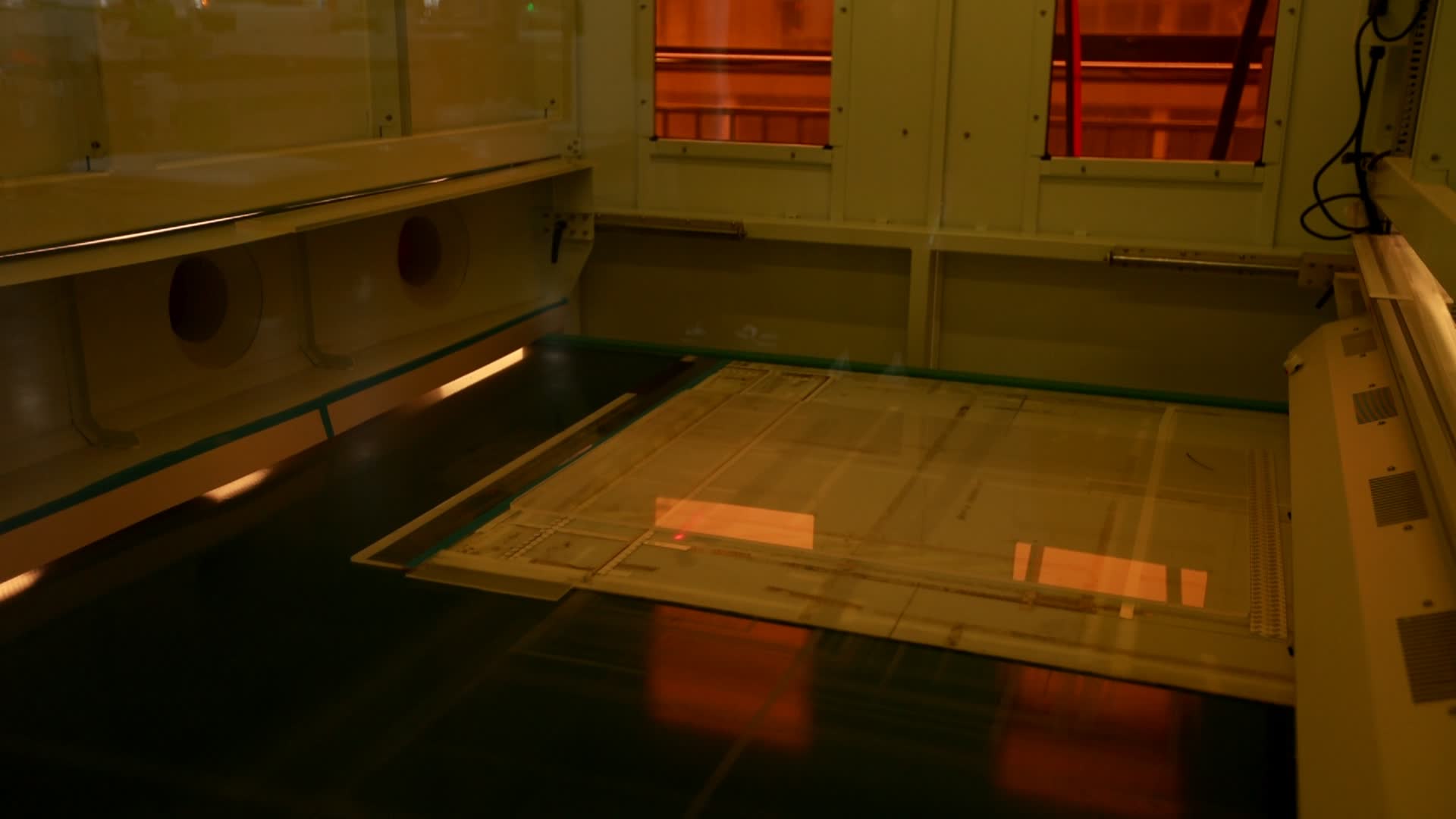
Laser-dotting is one extraction route for high-uniformity acrylic panels; the final check is measurement in the intended assembly.
What to verify before selection
- Ask for the measurement method, not only a uniformity claim: test pattern, camera or meter, distance, drive current, ambient temperature and acceptance limit.
- Confirm the acrylic grade, thickness and edge finish. A high-uniformity pattern on a warped or poorly edged sheet will not produce a stable result.
- Check the pattern at the final CCT and brightness. A panel tuned at one color temperature may not hold the same visual uniformity at another.
Boundary
The supplied evidence does not include an independent uniformity test for a consumer-electronics panel. Treat the laser-engraved option as a strong candidate that still requires a physical sample. If the device has a very small bezel or a curved surface, the pattern and assembly may need a different optical stack rather than a simple pattern change.
Option 2: V-cut standard-output build
The V-cut build is the second option in the shortlist because it can be a practical route for standard-output panels. In V-cutting, the extraction features are cut into the acrylic surface. The supplied technical comparison positions V-cutting for standard advertising light boxes, which suggests it is most relevant where the brightness target is moderate and the viewer is not inspecting the panel at close range.
For consumer electronics, this option should not be dismissed simply because it is associated with advertising light boxes. A small control panel, an indicator window or a low-brightness appliance interface may not need the same optical pattern as a large display. The decision should come from the viewing distance, acceptable non-uniformity and target flux. If the device is a close-viewed display with a thin diffuser, the V-cut option needs stronger sample evidence before it can replace a laser-engraved build.
What to verify before selection
- V-cut pitch, depth and pattern orientation should be specified; these are part of the optical design, not cosmetic details.
- Check whether the quoted brightness is for the bare panel or the complete backlight assembly. The two are not interchangeable.
- Review the panel under the final diffuser and bezel. A pattern that looks acceptable on a bare sheet can show lines or dark zones after assembly.
Boundary
The supplied comparison is qualitative and does not establish a measured uniformity or efficiency difference between V-cut and laser-engraved panels. A buyer should not turn the process label into a performance guarantee. The correct conclusion is narrower: V-cut is a standard-output candidate; laser-engraving is the more relevant candidate when high uniformity is the primary requirement.
Option 3: Ultra-slim edge-lit build
The ultra-slim edge-lit build is the third option for consumer electronics where the enclosure depth is the dominant constraint. Edgelight LLC describes the Edgelux LED Light Panel as an ultra-slim, edge-lit LED panel designed for backlit displays, illuminated signage, light boxes and commercial lighting, with custom sizes available. That description supports a slim edge-lit route, but it does not provide a thickness value or a device-specific fit claim.
An edge-lit light guide panel works by coupling light from LEDs at one or more edges into the acrylic sheet. The light travels through the panel by total internal reflection until the extraction pattern releases it toward the viewer. This architecture can support a thin stack, but the thickness of the final assembly also includes the reflector, diffuser, frame, driver and mounting structure. A thin panel alone does not guarantee a thin device backlight.
What to verify before selection
- Request the total stack height, not only the acrylic thickness. Include the reflector, diffuser, air gap and mounting clips.
- Confirm the driver position and cable routing. In a slim consumer device, the driver can become the limiting component even when the panel is thin.
- Check rigidity and flatness after assembly. A thin acrylic panel may need a frame or support to stay flat across the viewing area.
Boundary
No thickness specification is supplied for the ultra-slim description. The option should be shortlisted for fit studies, not accepted as a drop-in solution. If the device also requires IP65 sealing, the gasket and housing may add more depth than the panel itself.
Option 4: Sealed IP65 build
The sealed IP65 build is the fourth option when the consumer device may be cleaned, exposed to dust, or used near moisture. The shortlist envelope covers IP20 through IP65, which is a wide range. IP20 is an open or finger-safe indoor build with no water-jet protection. IP65 is a dust-tight and water-jet-resistant build, typically achieved through the complete enclosure, gaskets, sealed cable entries and a protected light-guide stack.
The critical point is that an IP rating belongs to the final assembly. A bare acrylic light guide panel is not IP65 simply because the panel is made from acrylic. If a supplier quotes IP65, the quote should identify the housing, gasket material, sealing method, cable entry, pressure equalization if used, and the test standard behind the rating. For consumer electronics, IP65 may be unnecessary for a clean indoor device; it can add cost, thickness and assembly complexity. For a portable device, outdoor accessory or cleanable appliance interface, it can be a hard requirement.
What to verify before selection
- Match the IP grade to the actual use: IP20 for clean, dry indoor interfaces; IP65 only where dust and water jets are realistic.
- Check the seal at the cable entry and around the light guide edge. These are common leak paths in a backlight assembly.
- Review thermal performance at the upper operating limit. A sealed housing reduces heat escape, so the 50°C limit and 144 W maximum deserve a specific test.
Boundary
The supplied data gives the IP20–IP65 range but not a specific IP test report for every build. The buyer should not accept a generic IP65 label without the assembly drawing and test basis. If the application is clean indoor consumer electronics, IP20 may be the more appropriate and less costly shortlist option.
Option 5: Compliance-first UL/CE build
The compliance-first build is the fifth option for programs that need documented evidence for North America or the European Union. It is not a separate optical pattern; it is a build and documentation discipline applied to the selected optical option. The two certificate records supplied for this evaluation have different scopes and should not be merged into a single claim.
UL 2108 / UL-US-2145621-0
The UL certificate UL-US-2145621-0, issued by UL LLC under UL 2108, 2nd Ed, has an issue date of 2021-10-05 and an expiry date of 2031-10-05. Its scope is recorded as Component, Sign Accessories, LPS/Class 2 type, LED module. The listed models are LED-ALS-12V-1W4-3014T-6-590-96, LED-ALS-24V-1W8-3014T-6-1180-336, ALS-24V-2W16-3030-900-9, ALS-24V-2W16-3030-600-6, ALS-24V-2W16-3030-300-3, ALS-24V-2W16-3030-200-2, and LM-24V-4W304-5050RGBW-.
That scope should be read as component-level evidence for the listed LED module models. It is not a blanket statement that every Edgelight light guide panel, every driver combination or every finished consumer device is UL listed. A buyer should match the exact model, the component category and the final assembly construction.
CE EMC certificate CTSL2620530156EZ
The CE EMC certificate CTSL2620530156EZ was issued by CTSL Testing (Dongguan) Co., Ltd. on 2026-05-29 and is valid to 2096-05-29. Its scope covers GPF001; series models MO22, MO24, MO31, GPF21, GPF23, GPF25, GPF26, GPF100, GPF101, GPF102, GPFX–GPFXXX and MOX–MOXXX; and Badge, Fascia, Blade and Hanging LED Panel variants with X=0–999. The certificate states that all models share identical circuits except for color appearance and model name.
The cited standards are EN IEC 55015:2019/A11:2020, EN IEC 61547:2023, EN IEC 61000-3-2:2019/A2:2024, and EN 61000-3-3:2013/A2:2021/AC:2022-01. These are EMC standards. The certificate supports EMC compliance for the listed scope; it does not by itself establish low-voltage safety, RoHS, photobiological safety or full device conformity. A consumer-electronics program should confirm which standards and directives apply to the finished product, then map the certificate scope to the actual model. A CE-certified panel claim should be checked at this model-and-standard level.
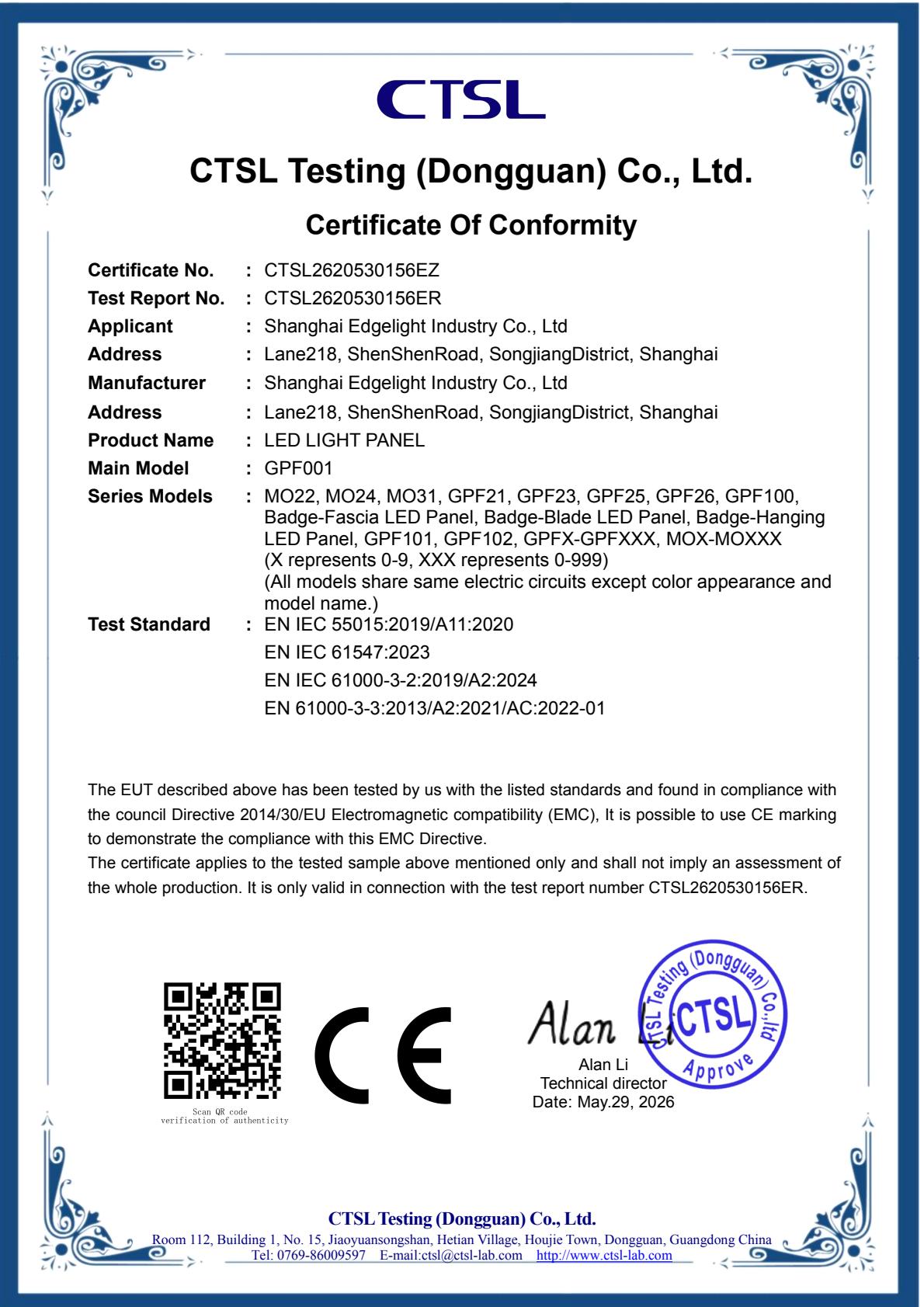
CE EMC certificate CTSL2620530156EZ covers the listed LED panel series; it is not a whole-device CE mark.
What 100% testing does and does not prove
Edgelight's capability data lists 100% test as part of production control. That is useful evidence that every unit is intended to pass a production test, but it does not define the test items, limits or traceability. A buyer should ask for the production test record, the failure-handling process and the sample validation method. For a consumer-electronics program, the more important question is whether the tested parameters match the final assembly requirements: flux, CCT, power, uniformity, ingress protection and visual defects.
How protection ratings change the shortlist
| Protection level | Practical meaning for a backlight assembly | Consumer-electronics fit | Evaluation check |
|---|---|---|---|
| IP20 | Finger-safe access protection; no water-jet protection | Clean, dry indoor devices with a protected enclosure | Check dust path, handling and internal condensation risk |
| IP65 | Dust-tight and protected against water jets | Cleanable, outdoor-adjacent or moisture-exposed devices | Check gasket, cable entry, housing seal and thermal rise |
The IP20-to-IP65 range should not be treated as a quality ladder. A higher IP rating is not automatically better for a consumer-electronics device. It can add thickness, gasket compression force, assembly steps and thermal insulation. The right choice is the lowest protection level that satisfies the actual use and cleaning instructions. If the device is a clean indoor interface, IP20 may be sufficient; if the user may clean it with a damp cloth or expose it to dust, the assembly needs a documented IP65 design.
OEM customization: what to lock in the RFQ
Edgelight's supplied capability data covers OEM/ODM production for the European Union, North America, Southeast Asia and Australia. The customization list is size, thickness, color temperature, logo, surface shape, light output brightness and installation structure. The same data lists a monthly capacity of 30,000 units, a lead time of 5–10 days, a minimum order quantity of 1 unit, 100% test, and local after-sales support. These are useful procurement inputs, but they should be converted into a written build specification rather than left as catalogue options.
- Size and thickness: give the maximum outline, active illuminated area, thickness target and tolerance. State whether the thickness includes the reflector and diffuser.
- Color temperature: specify the target CCT within the 2700–6500 K range, the acceptable bin tolerance and whether the device needs a single CCT or tunable white control.
- Brightness: state the required flux or luminance at the final assembly, with drive current and measurement condition. Do not use a generic brightness level without a test method.
- Logo, surface shape and installation structure: provide drawings for the visible logo, surface finish, mounting tabs, frame interface and cable exit. These details affect tooling and assembly, not only appearance.
- Testing: define the production test items and the sample validation plan. A 100% test claim should be supported by a test record format.
- Capacity and lead time: confirm the 30,000-unit monthly capacity and 5–10 day lead time against the actual order size, tooling status and material availability.
A low minimum order quantity can be useful for evaluation, but it should not be confused with a production commitment. The buyer should separate sample quantity, pilot quantity and mass-production quantity, and confirm that the same specification is used at each stage.
Adjacent evidence: customization beyond consumer electronics
One supplied case describes an elevator-decoration program of 10,000 units used by elevator manufacturing clients over 20 years, with stable operation and customization of lighting, printing, size and texture. That is not a consumer-electronics case, and it should not be presented as proof of device fit. It does, however, support the supplier's process capability for customized size, texture and lighting in a long-running program. For a consumer-electronics buyer, the relevant transfer is the customization workflow: define the visible effect, the installation structure and the test criteria before production.
A practical selection sequence for evaluation
- Define the enclosure first. Fix the available stack height, active area, bezel, mounting points and driver location before comparing panel builds.
- Set the optical target. State CCT, flux or luminance, viewing distance and acceptable uniformity. Use the 2700–6500 K range to narrow the configuration, not to avoid a target.
- Choose the extraction route. Shortlist laser-engraved for high-uniformity close-viewed applications; shortlist V-cut for standard-output, cost-sensitive panels; test both if the viewing requirement is uncertain.
- Set the protection level. Use IP20 for clean indoor assemblies and IP65 only where dust or water jets are realistic. Require the rating on the complete assembly.
- Check the thermal boundary. Evaluate the selected build at the upper operating limit and maximum power. A sealed housing or high-power drive can reduce margin.
- Map the certificate scope. Match the exact model to the UL component scope and the CE EMC series scope. Keep the certificate number, issuer, standard and expiry with the procurement record.
- Validate a physical sample. Test the sample in the final enclosure for uniformity, color, brightness, fit, heat and sealing. Production testing and third-party certification do not replace this step.
FAQ
Is an acrylic light guide panel suitable for consumer-electronics backlighting?
Acrylic light guide panels can be suitable when the build is matched to the device. The shortlist starts with acrylic construction because it supports edge-lit light distribution and customization of size, thickness, color temperature and installation structure. Suitability still depends on the final enclosure, viewing distance, thermal load and protection requirement.
How do IP20 and IP65 change the build?
IP20 is an open or finger-safe indoor build without water-jet protection. IP65 requires a dust-tight, water-jet-resistant assembly, usually through the housing, gasket and cable entry. The rating applies to the complete backlight assembly, not to the bare acrylic panel, and a higher rating can add thickness and thermal insulation.
What does UL 2108 certificate UL-US-2145621-0 cover?
It is a UL certificate issued under UL 2108, 2nd Ed, with a scope recorded as Component, Sign Accessories, LPS/Class 2 type, LED module. The certificate lists specific LED module models and runs from 2021-10-05 to 2031-10-05. It should not be read as a blanket listing for every light guide panel or every finished consumer device.
Does CE EMC certificate CTSL2620530156EZ certify the whole consumer device?
No. The certificate covers the listed LED panel series against the cited EMC standards. It supports EMC compliance for that scope, but it does not by itself establish low-voltage safety, RoHS, photobiological safety or full device conformity. The finished device still needs its own conformity assessment.
Which build should be shortlisted for a thin consumer-electronics enclosure?
Start with the ultra-slim edge-lit build, then verify the total stack height including reflector, diffuser, frame, driver and mounting structure. The Edgelight LLC product description supports an ultra-slim edge-lit route, but no thickness value is supplied, so the option needs a fit sample rather than a paper selection.
What should an OEM customize first?
Fix size, thickness, target CCT, brightness and installation structure first, because these determine the optical pattern, driver and housing. Logo, surface shape and appearance can follow once the optical and mechanical envelope is stable. All customization should be written into the RFQ and checked on a sample.
Technical reference
For the wider LED product range and build options, the public Edgelight LED product catalogue is available as a PDF: Edgelight LED product catalogue.
Tem questões ou precisa de mais detalhes?
Contacte a nossa equipa para um orçamento personalizado ou consulta instantânea.
Solicitar orçamento
Preencha o formulário abaixo e a nossa equipa entrará em contacto com uma proposta personalizada.
Chat direto do WhatsApp
Prefere conversar em tempo real? Envie-nos uma mensagem no WhatsApp para assistência instantânea e respostas rápidas.
- Obter orçamento personalizado
- Partilhar fotos ou documentos
- Discuta as suas necessidades diretamente
Geralmente responde em 5–30 minutos durante o horário de expediente.