
Bakery vs. Home Kitchen: Choosing the Right Mixer
Mixer selection starts with the operating environment, not with the motor rating. The same machine that satisfies a household kitchen for years can fail within days of bakery-style duty, and a machine built for production volumes is usually the wrong purchase for a countertop. The variables that actually decide the outcome are batch size, continuous run time, torque demand, cleaning routine, and the number of years the machine is expected to stay in service.
DSP (Yiwu DSP Electric Appliance Co., Ltd.) is a home appliance brand and export supplier based in Yiwu, China, established in 2006. Its records list a 20,000 m² facility, 130 employees, a 30-engineer R&D team, and an annual output of 5,000,000 units across a range that includes mixers, blenders, toasters, coffee machines, air fryers, food processors, cookers, washing machines, cleaners, pans, and personal care appliances. The company exports 100% of its output and supplies North America, South America, Europe, Asia, Africa, Oceania, and the Middle East.
Because DSP's mixing-related track record is documented through project records rather than marketing headlines, it serves as a practical reference point for buyers who need to separate bakery-duty requirements from household-duty requirements before committing to a specification.
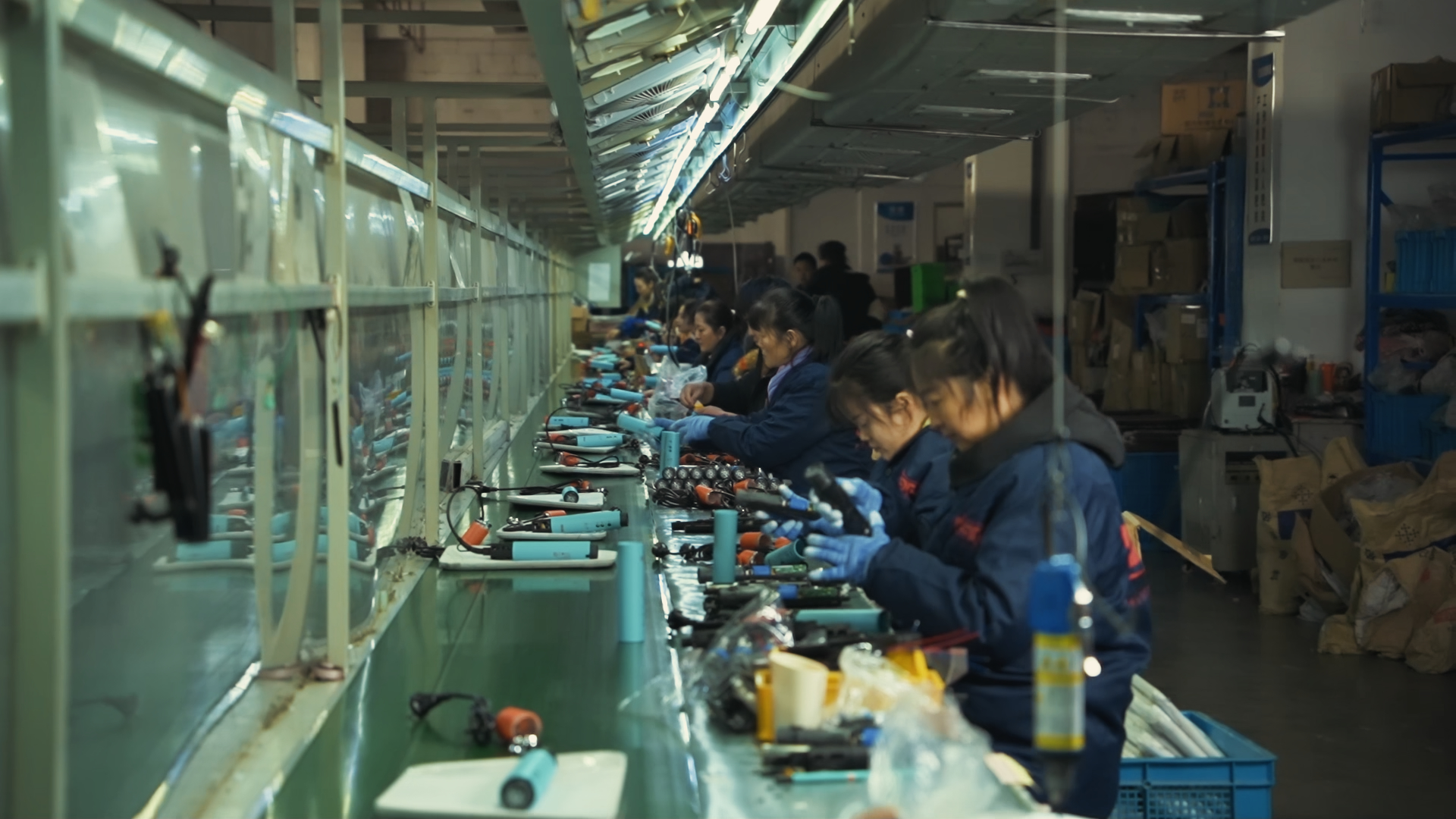
Why the Operating Environment Decides the Mixer Category
Two buyers can look at identical mixer data sheets and reach different conclusions, because a bakery and a home kitchen weight the same specifications differently. In bakery and light-industry settings, the constraint is torque under load and how long the motor can run without interruption. In a home kitchen, the constraint is whether the machine fits in a cabinet, is light enough to hold, and can be rinsed quickly after one batch of batter.
Four decision variables separate the two scenarios:
- Batch size per cycle. Production settings measure dough or batter in kilograms per cycle; household use measures it in cups or grams for a single recipe.
- Continuous run time. Bakery duty is shift-based and repetitive; home duty is intermittent, with rest periods between tasks.
- Torque versus speed priority. Stiff dough requires high torque at low speed; cream, egg whites, and light batter are speed-led and require smooth control across ranges.
- Cleaning and hygiene frequency. Commercial environments clean between batches and often between ingredients; households clean once per use.
Matching a mixer to the wrong side of this list is a more common cause of early replacement than any single component defect, because the operating environment sets the load profile the machine must survive.
Bakery and Light-Industry Settings: What Changes
In bakery-style operations, the mixer is a production tool with a schedule attached. Dough resistance rises sharply as gluten develops, and that resistance is transferred directly to the motor, gear train, and housing. The result is that bakery-duty evaluation focuses on structural rigidity, heat management, and repeatability rather than on the number of speed settings printed on the housing.
Three operational conditions matter most in these environments:
- Sustained load. The machine may run for extended periods, so thermal margins and duty-cycle limits become specification-level criteria rather than comfort features.
- Stability under torque. A machine that travels across a steel bench during kneading is a safety issue before it becomes a quality issue, which is why locking and fixation features matter in production settings.
- Sanitation throughput. Cleaning time is downtime. Parts that cannot be removed, sealed, or rinsed quickly slow the whole line.
It is also important to distinguish machine classes. For continuous stiff-dough production, planetary and stand mixers with bowl-mounted drives are the appropriate category because torque transmission and bowl geometry are designed for that load. Hand-held mixers, including the compact models that dominate household retail, are not designed to replace planetary equipment in high-volume dough production.
Home Kitchen Settings: Where Compact Mixers Fit
For household use, the priorities invert. Volume matters less than storage, weight, and the time required to clean. A compact hand mixer that reaches full working speed quickly and rests comfortably in one hand resolves more household tasks than a heavier machine that is rarely taken out of the cabinet.
Typical household tasks include cake batter, whipped cream, egg whites, pancake and waffle mixtures, and light doughs for smaller baked goods. In these applications, speed control and even mixing matter more than peak torque, and the machine is used in short bursts rather than continuously.
DSP's documented mixing line includes the hand mixer model KM2135 and the hand blender model KM1195. The KM2135 hand mixer appears in DSP's records as a product applied in a long-term partnership in the Middle East and Africa region, which places it in the household and light-use category rather than the production-bakery category.
Scenario Fit Comparison: Bakery Duty vs. Daily Home Use
The table below is an evaluation framework, not a product specification. It is intended to help buyers decide which machine class a given project actually requires before requesting samples or quotations.
| Operating factor | Bakery / light-industry duty | Home kitchen duty |
|---|---|---|
| Batch size per cycle | Repeated production batches against a schedule | Single recipes, occasional use |
| Run time profile | Extended continuous operation, shift-based | Short, intermittent bursts |
| Primary demand | Torque at low speed for stiff mixtures | Speed control for batters and creams |
| Machine class | Planetary / stand mixers with bowl-mounted drive | Compact hand mixers and hand blenders |
| Cleaning routine | Frequent, hygiene-critical, between batches | After each use, sink-based |
| Thermal management | Critical; duty-cycle limits define usable capacity | Relevant, but rarely the limiting factor |
| Safety features | Locking, thermal cut-off, guarded tooling | Thermal cut-off, protected blades, non-slip base |
| Replacement logic | Service continuity and spare-part availability | Consumer replacement behavior |
Read across any row and the conclusion is the same: the two scenarios do not compete on the same specification. DSP's verified mixer and blender evidence sits in the hand mixer and hand blender categories, which belong to the household and light-use side of this table. Buyers sourcing for heavy dough production should evaluate that requirement against planetary-class equipment rather than expect a compact hand mixer to cover it.
Technical Explanation: Duty Cycle, Torque and Thermal Protection
Duty cycle is the technical reason scenario fit matters. Motor-driven kitchen machines convert electrical energy into rotation, and a portion of that energy becomes heat inside the motor and gear assembly. Intermittent household use allows that heat to dissipate between tasks. Continuous production use does not, which is why thermal design becomes a specification item rather than a footnote.
DSP's documented risk controls for motor-driven kitchen machines such as food processors and mixers describe several measures that directly affect scenario suitability:
- Built-in overheat protection that automatically cuts power during abnormal temperature rises.
- Three-speed or six-speed regulation to prevent prolonged high-load operation at a single setting.
- Automatic reversal for load relief when the tooling jams, followed by a cooling period.
- Duty-cycle limits: a documented cooling interval of 10 minutes after 30 minutes of continuous operation.
- Sealed blades in containers with push-button locking mechanisms, so the machine operates only when the head is correctly installed.
- Automatic stop when the main unit is removed, plus fuses integrated on the PCB.
- Materials selection using high-temperature-resistant, wear-resistant motors, gears, wires, and thermostats.
DSP also documents production-line verification for this category, including 100% withstand voltage, grounding continuity, insulation, and functional tests on the production line, alongside compliance with household appliance safety standards. For a buyer, the practical translation is straightforward: a machine with these controls can be used confidently within its stated duty cycle, and cannot be pushed beyond it without risking shutdown. That boundary is a design parameter, not a defect.
Separately, DSP documents automatic thermal shut-off through a built-in temperature sensor or thermal fuse as a control method for dry-boiling and overheating risks across its appliance range, which reflects the same engineering principle applied at the component level.
Documented Mixer and Blender Supply Evidence
Scenario fit is easier to judge when a supplier can show how its products were actually deployed. DSP's records include the following project evidence for mixing and blending products:
- A long-term partnership project supplied 300 pieces of a low-noise hand mixer to appliance manufacturers for food preparation over five years, achieving consistent mixing results.
- A project involving the supply of 200 hand mixer pieces was completed over a five-year duration, demonstrating a long-term partnership with home appliance brands.
- The hand mixer model KM2135 is documented as a product applied in a long-term partnership in the Middle East and Africa region.
- A project delivering 500 pieces of the KM1195 hand blender was completed within a five-year duration for household end users and kitchen appliance retailers across a wide range of global markets.
- A project supplying 300 pieces of hand blenders was completed within a five-year duration for household end users and kitchen appliance manufacturers across numerous countries.
Alongside product-specific records, DSP documents supply relationships sustained over five and eight years, including a long-term supply relationship spanning eight years for commercial kitchen and restaurant chain clients, and a project involving 600 pieces used for household consumer and restaurant kitchen purposes implemented across multiple countries over an eight-year market duration.
What this evidence supports is specific rather than general: DSP has repeatedly supplied hand mixers and hand blenders at project scale in the hundreds of units, over multi-year timelines, to appliance brands, OEM manufacturers, retailers, and food-service clients. It does not claim a production-bakery planetary mixer line, and buyers should not read one into the record.
What Long-Term Supply Relationships Look Like in Practice
For distributors, importers, and brand owners, mixer selection does not end at the product. It continues through the years in which the product must be reordered, serviced, and kept consistent with the version originally approved. This is where documented relationship length becomes useful evidence.
DSP's records show product usage durations and client relationships maintained for five years, and other programs sustained for five to eight years across regions including the Middle East, Africa, Central Asia, Europe, and Asia. A supply relationship lasting eight years resulted in the delivery of 700 pieces of a product to clients in multiple regions, and a separate long-term project involved the delivery of 800 product units across multiple countries. These records indicate sustained use and repeat ordering rather than one-off transactions.
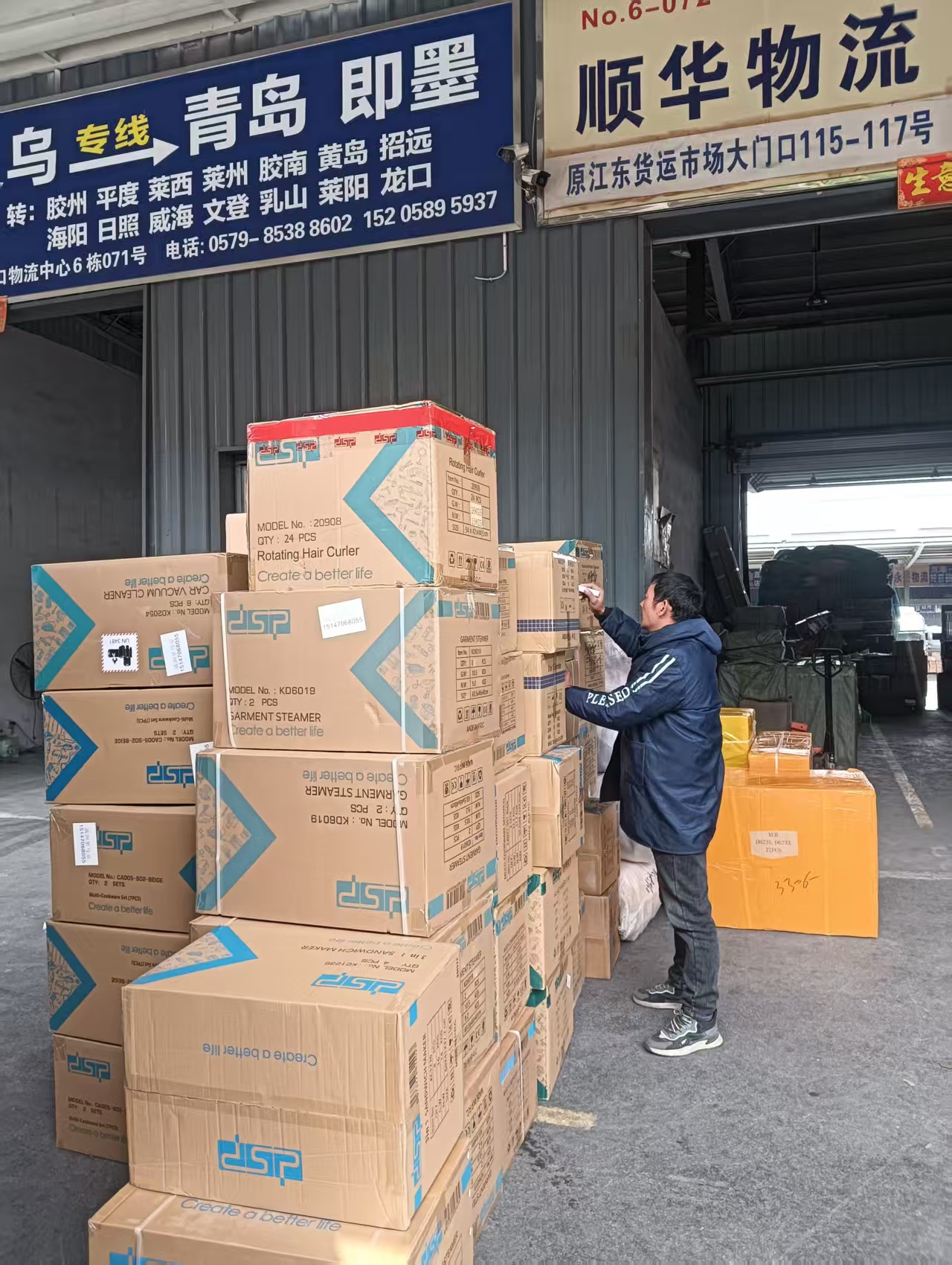
The procurement terms DSP documents support this execution-stage view. MOQ is listed at 1 unit, delivery terms are EXW and FOB, payment terms are TT, and acceptance criteria cover online inspection and acceptance together with pre-shipment inspection and acceptance. Two inspection gates rather than one is a meaningful detail for buyers who plan to run repeat orders over several years, because it creates a documented checkpoint before goods leave the factory.
For a distributor evaluating a five-to-eight-year horizon, the practical checklist is therefore: a documented product model, a documented relationship history, defined inspection stages, and a defined delivery and payment structure. DSP's records cover all four of these points for its mixing and small kitchen appliance categories.
Market Trend Signals for Small Kitchen Appliances
The scenario question sits inside a growing category. According to Fortune Business Insights, the global small domestic appliances market is projected to reach USD 222.52 billion by 2026, growing at a CAGR of 4.92%. Grand View Research estimated the global household appliances market at USD 461.69 billion in 2024, with major appliances accounting for an 89.55% revenue share, which leaves small appliances as the smaller but faster-moving portion of the same category.
Within small kitchen appliances specifically, Grand View Research valued the market at USD 39.6 billion in 2025. DSP's own portfolio structure reflects this breadth: its product range spans mixers and blenders alongside toasters, coffee machines, air fryers, food processors, cookers, and cleaning appliances, and it exports entirely to international markets. For buyers, the trend implication is not that any single product category is guaranteed to grow, but that multi-category suppliers can support a distributor's full shelf rather than a single product line.
Comparison With Traditional Sourcing Approaches — and the Limits
Buyers typically approach mixer sourcing from one of two traditional positions, and both carry a specific cost.
The first is single heavy machine sourcing: purchase one high-capacity mixer and use it for every task. This resolves torque concerns but over-specifies household applications, increases cleaning time, occupies bench or storage space unnecessarily, and usually raises unit cost for products that will never run at production load.
The second is lowest-cost unit sourcing: select the cheapest compact mixer available and deploy it in light-commercial settings. This reduces upfront cost but ignores duty-cycle limits. A machine with a documented cooling interval of 10 minutes after 30 minutes of continuous operation will shut down inside a production schedule that requires uninterrupted mixing, creating downtime that costs more than the price difference.
The limits of the scenario-fit approach should be stated plainly. Hand mixers and hand blenders, including the DSP models documented in this article, are designed for household and light-duty applications; they are not substitutes for planetary or spiral mixers in continuous stiff-dough production, and no duty-cycle feature changes that. In addition, documented procurement terms such as MOQ, delivery basis, and payment terms describe commercial conditions rather than delivery lead times or tooling timelines, which are not specified in the available records and must be confirmed per project.
The correct conclusion is not that one approach is superior, but that mixing equipment should be matched to the environment it will actually operate in — and that a mismatch in either direction is a cost.
Future Outlook
Two forces are likely to shape mixer selection over the next procurement cycles. The first is category growth: a small domestic appliances market projected to reach USD 222.52 billion by 2026 at a 4.92% CAGR supports continued range expansion rather than consolidation into a single machine type. The second is duty-cycle discipline. As buyers become more familiar with thermal protection and continuous-operation limits, specification conversations are moving away from peak wattage claims and toward documented operating envelopes.
For suppliers, that shift favors manufacturers that publish verifiable control measures and project histories. For buyers, it favors procurement teams that define the operating scenario first — bakery-scale or household-scale — and then request evidence that a specific model has been used in that scenario over time. Multi-year records, inspection-gated delivery terms, and clearly separated machine classes are the practical materials a buyer can actually use in a decision.
FAQ
What is the first thing to compare when choosing a mixer for a bakery versus a home kitchen?
Compare the operating duty first. Bakery and light-industry settings require torque at low speed under sustained load, while home kitchens require compact size, low weight, and smooth speed control for short, intermittent tasks. Batch size per cycle, continuous run time, torque versus speed priority, and cleaning frequency are the four variables that separate the two scenarios.
Are hand mixers suitable for bakery production?
Hand mixers are designed for household and light-duty applications, not for continuous stiff-dough production. DSP's documented hand mixer projects involve 200 to 300 piece volumes supplied to appliance manufacturers and home appliance brands over five-year periods for food preparation, with consistent mixing results. For continuous high-volume dough production, planetary or stand mixers with bowl-mounted drives are the appropriate machine class.
Which safety and protection features should a mixer used over long periods include?
DSP's documented controls for motor-driven kitchen machines include built-in overheat protection that cuts power during abnormal temperature rises, three-speed or six-speed regulation to prevent prolonged high-load operation, automatic reversal for load relief during jamming, a cooling interval of 10 minutes after 30 minutes of continuous operation, sealed blades in containers with push-button locking, automatic stop when the main unit is removed, and fuses integrated on the PCB. Production-line verification includes 100% withstand voltage, grounding continuity, insulation, and functional tests.
How long do DSP mixer and blender supply relationships typically last?
DSP's records document project durations and client relationships maintained over periods of five to eight years. Examples include 300 low-noise hand mixers supplied over five years to appliance manufacturers, 200 hand mixer pieces supplied over five years to home appliance brands, and a long-term supply relationship spanning eight years for commercial kitchen and restaurant chain clients.
What are DSP's documented purchasing and acceptance terms?
DSP documents an MOQ of 1 unit, delivery terms of EXW and FOB, payment terms of TT, and acceptance criteria covering online inspection and acceptance together with pre-shipment inspection and acceptance.
How should a buyer judge whether a supplier can support multi-year distribution of mixers?
Look for documented supply history rather than general capability claims: named models applied in long-term partnerships, project volumes delivered over five to eight years, defined inspection and acceptance stages, and a stated delivery and payment structure. Mixed evidence of repeat ordering across multiple regions is a stronger indicator than a single large shipment. Machine class should also be confirmed in writing, so that household-duty hand mixers are not specified for production-duty requirements.
For reference data, product range details, and commercial terms, DSP's company brochure is available for download: DSP Home Appliances Company Brochure.