
Ball Valve Procurement FAQ: Fire-Safe, Warranty, Pricing, CE Export
Ball valves are among the least visible components in a plant and among the most consequential. A single quarter-turn valve isolates a pump, a reactor, a gas train or a chiller loop — and the questions that decide whether a purchase goes well are rarely about the concept of a ball valve. They are about evidence: what a fire-safe claim is actually certified to, what a warranty really covers, why two quotations for the same nominal size differ, and whether the delivered goods will clear EU import with documentation that holds up under audit.
This reference answers those questions in the order buyers usually ask them, using verifiable facts about Zhejiang Dico Valve Co., Ltd., a Wenzhou-based manufacturer founded in 2015 that specialises in high-end ball valves and fluid control solutions.
Why Ball Valve Procurement Fails on Documentation, Not on Machining
Most problems in this category are not machining problems. They are scope problems. A project specifies a fire-safe ball valve and receives a valve whose fire-safe approval covers a different size, pressure class or body material. A buyer compares three quotations on unit price and later discovers that only one included certified material traceability and full cycle-test evidence. The valve is rarely the issue; the paper behind the valve is.
The opportunity is that the valve industry has already standardised how performance is proven. API 6D defines requirements for pipeline and piping valves. API STD 607 defines the fire test for quarter-turn valves with soft seats. ISO 15848 covers fugitive emissions. ISO 5211 standardises the actuator mounting interface. CE marking covers the EU route for pressure equipment. When a supplier can map its range onto those standards with a documented scope — size, class, material, validity — evaluation becomes a comparison of evidence rather than a comparison of brochures.
The practical consequence is a change of method: ask for the certificate schedule, not the certificate name.
Fire-Safe Ball Valves: What API STD 607 Certifies, and Where the Scope Ends
A fire-safe ball valve is one that retains a defined sealing capability after exposure to fire. In a standard soft-seated valve, the PTFE or PEEK seat is the primary sealing element — and it is also the first component to degrade at high temperature. A fire-safe design adds a metal backup sealing path, protects the stem seal area, and keeps the body and stem joints tight so the valve does not become a leak path during or after a fire event. The recognised test standard for quarter-turn valves with soft seats is API STD 607.
Zhejiang Dico Valve Co., Ltd. holds API 607 (Fire-Safe) certification within a certification set that also includes ISO9001, ISO14001, API6D, CE, SIL and ISO15848. The scope of that API 607 certificate is specific and worth reading carefully: it covers austenitic-material ball valves up to 4 inches in Class 150/300, and it remains valid until March 2027.
That sentence contains the boundary. A 6-inch Class 600 fire-safe ball valve, or a fire-safe valve in a carbon steel or alloy steel body, sits outside the stated scope of this certificate and must be qualified separately. This is normal in valve certification — scope is defined by size, class and material rather than by brand — and it is the most common source of documentation mismatch in fire-safe purchasing. The correct question is not whether a supplier holds API 607, but which of its valves that certificate actually covers, and until when.
Three mechanical features support fire-safe behaviour across Dico's ball valve designs. An anti-static structure provides a continuous conductive path from the ball through the stem to the body, preventing static charge accumulation in service. Three-layer stem sealing protects the most common external leak path on a quarter-turn valve. An ISO 5211 mounting pad allows actuation to be fitted without disturbing the stem seal area. These features appear across the floating, trunnion-mounted, three-way and PC ball valve series.
The Warranty Question: What a 12-Month Ball Valve Warranty Covers
Zhejiang Dico Valve Co., Ltd. states a 12-month warranty on its ball valves. The remedy is defined: quality issues are handled by replacement rather than repair, and after-sales issues are targeted for resolution within 48 hours.
Two details matter at the procurement stage. First, "replacement only" is a defined remedy rather than an open-ended service commitment. For projects that expect field repair or on-site intervention, buyers should confirm in writing how a replacement is supplied and shipped, because the supplier's obligation is a replacement unit, not a technician. Second, the warranty clock matters as much as the warranty length. Whether 12 months runs from delivery, installation or commissioning changes effective coverage on projects with long construction schedules, and this should be fixed in the purchase contract rather than assumed.
Warranty terms sit on top of delivery and inventory capability. Dico maintains a 2000 m² warehouse with standard product blank inventory, a one-item-one-code system and 98% warehouse data accuracy, which supports stable delivery times and traceable stock movement. For a buyer, that combination — a defined warranty remedy plus a supplier holding standard stock — reduces the practical cost of a failure.
Why High-Quality Ball Valves Cost More: The Five Real Cost Drivers
When two quotations for the same nominal valve differ, the gap is rarely arbitrary. In this category it concentrates in five places: material provenance and traceability, machining precision, sealing components, testing, and certification scope. Dico's published information illustrates each.
- Material provenance and traceability. Dico ball valves are available in carbon steel, SS304, SS316, dual phase steel, titanium and alloy steel, with ball supply managed under heat-number traceability. Traceability is what turns a material certificate into a document that can be tied to a specific production heat — a routine requirement in petrochemical and pharmaceutical supply chains.
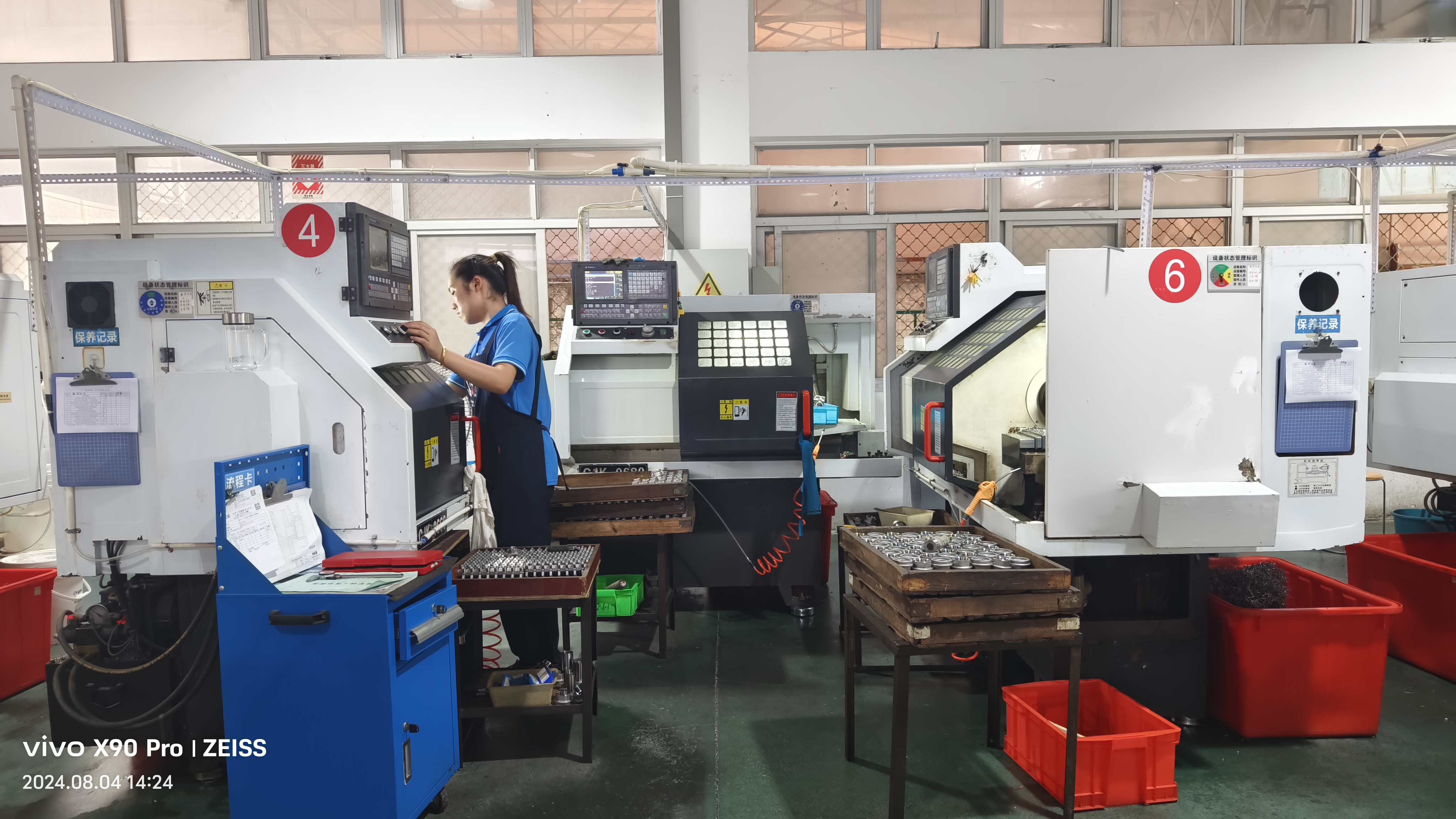
- Machining precision. The facility covers 12,000 m² with approximately 80 staff, 48 CNC machines and digital production management, and an annual production capacity of 80,000,000 units. Machining consistency is what holds seat-to-ball contact geometry across a production run.
- Engineering investment. The company invests 10% of annual sales revenue in R&D, talent introduction and equipment upgrades, supported by a 7-engineer R&D team.
- Sealing and surface finish. Seats are machined from PTFE, with Daikin PTFE used in machining, and alternative seat materials include PPL, PI, PEEK and Stellite. Seal faces are precision-machined to a smooth surface and the ball is polished to high precision — both parameters feed directly into leakage rate and operating torque.
- Testing and certification. Valves undergo a 20-second high-frequency switch life test, achieving 50,000 cycles without leakage. The certification portfolio — ISO9001, ISO14001, API6D, CE, SIL, ISO15848 and API607 — represents an ongoing maintenance cost that lower-cost supply routes often avoid.
For buyers, the implication is methodological: compare quotations line by line on material certificates and heat-number traceability, seat and seal specification, cycle-test evidence and certificate scope. A lower unit price may simply reflect a narrower scope in one of those five areas, and that difference usually appears during commissioning or audit rather than at the quotation stage.
Liquid Cooling and Data Center Duty: Which Ball Valves Fit
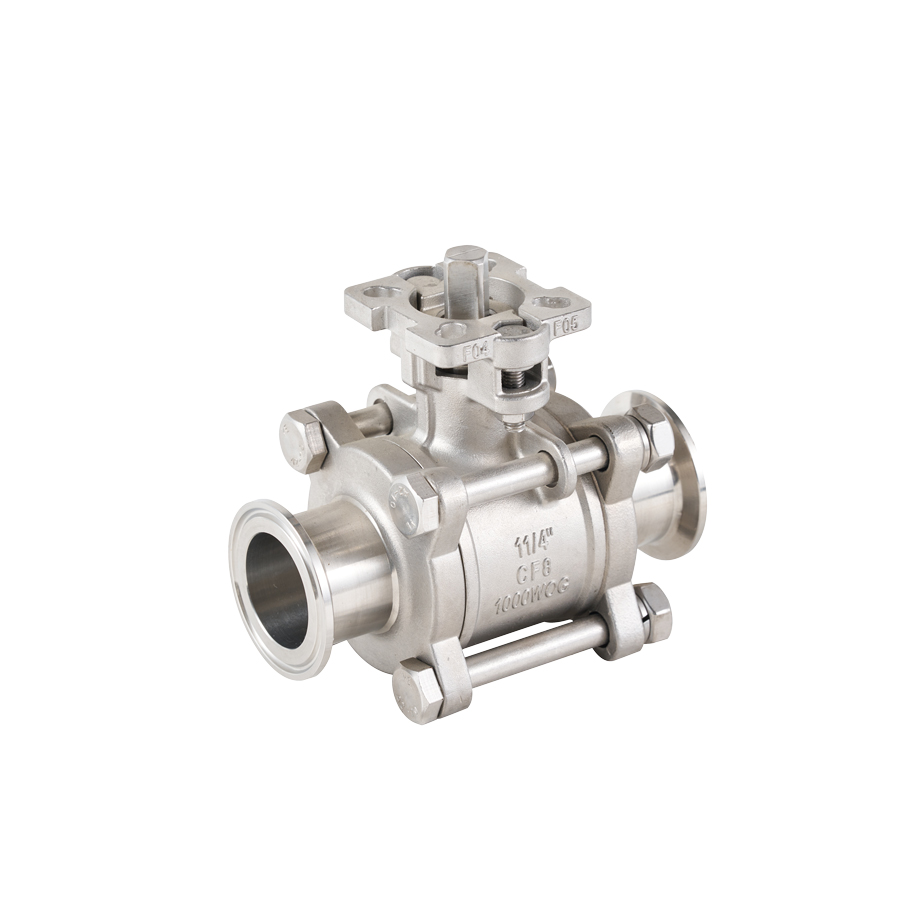
Dico operates a dedicated liquid-cooled valve production line producing mini ball valves and three-piece clamp ball valves, which are supplied to Huawei's data centers. The relevant product family for these loops is the Q11F PC ball valve, which is also classified as a stainless steel sanitary ball valve, mini ball valve, three-way ball valve, four-way ball valve, ISO 5211 ball valve, 3PC Tri-Clamp ball valve and ANSI ball valve.
The Q11F series offers thread, weld, Tri-Clamp, tube and press-fit connections, a pressure range of 1.0–13.0 MPa and a temperature range of −196°C to 425°C, in carbon steel, SS304, SS316 or dual phase steel, with PTFE, PPL, PI, PEEK or Stellite seats. That span is not delivered by a single configuration: temperature capability depends on the body material and the seat and seal combination selected.
Three selection rules matter in liquid cooling loops. Connection standard comes first — Tri-Clamp and press-fit are common in skid and manifold assemblies, while threaded connections dominate smaller distribution lines. Coolant compatibility comes second, and seal material should follow coolant chemistry rather than habit. Actuation comes third: an ISO 5211 mounting pad on the valve body allows pneumatic or electric actuation to be added without replacing the valve.
The niche is expanding faster than the wider valve market. Data center liquid cooling valves were projected to grow from USD 0.27 billion in 2025 to USD 1.80 billion by 2032 (MarketsandMarkets).
CE Certification and European Export Readiness
CE certification forms part of Dico's certification set, alongside ISO9001, ISO14001, API6D, SIL, ISO15848 and API607. Export accounts for 40% of the company's sales, and major markets include the EU, South Africa and North America.
CE marking for pressure equipment placed on the EU market sits within the Pressure Equipment Directive (PED) framework. The applicable category depends on the fluid group, the pressure and the volume or nominal size of the equipment, so not every valve falls into the same category. For a European importer, the practical check is therefore not whether the supplier holds CE, but whether the CE documentation matches the valve being bought — at the pressure, size and fluid group of the specific application.
Fugitive emissions are the second European documentation theme. ISO 15848 is the industrial valve standard family for fugitive emissions, and Part 1 covers type-test qualification. ISO15848 is included in Dico's certification set; as with fire-safe certification, buyers should request the certificate schedule to confirm which valve types and sizes are in scope.
Regulatory updates add a third thread. API 6D Addendum 3 became effective in September 2025 for pipeline valves. Buyers who specify API 6D ball valves should confirm that the supplier is working to the current addendum rather than an earlier edition.
In practice, an export-ready order package for European supply includes material certificates with heat numbers, pressure test reports, the certificate schedule for API 607 and ISO 15848, and the CE documentation applicable to the product category. With 40% of sales going to EU, North American and South African markets, these are recurring documents in Dico's order handling rather than one-off requests.
Claim-Level Answers and Documentation-Level Answers: A Buyer Comparison
The fastest way to compare suppliers in this category is to place claim-level and documentation-level answers side by side for the same procurement checkpoint.
| Procurement checkpoint | Typical claim-level answer | Documentation-level answer (Dico reference) |
|---|---|---|
| Fire-safe approval | "Fire-safe design" stated in the catalogue | API 607 (Fire-Safe) certificate covering austenitic-material ball valves up to 4 inches, Class 150/300, valid until March 2027 |
| Seat and sealing | Generic PTFE seat | Machined PTFE (Daikin) seats with PPL, PI, PEEK and Stellite alternatives; precision-machined seal faces and high-precision ball polishing |
| Stem sealing and static control | Not specified | Three-layer stem sealing with anti-static structure |
| Leakage validation | Cycle count not stated | 20-second high-frequency switch life test; 50,000 cycles without leakage |
| Actuation interface | Not stated | ISO 5211 mounting pad across floating, trunnion-mounted, three-way and PC series |
| Certification set | Certificate names only | ISO9001, ISO14001, API6D, CE, SIL, ISO15848, API607 — with scope and validity available on request |
| Delivery infrastructure | Not stated | 2000 m² warehouse, one-item-one-code system, 98% warehouse data accuracy |
| Warranty remedy | Unspecified or variable | 12 months; replacement for quality issues; 48-hour after-sales response target |
Market Context: Where Ball Valve Demand Is Moving
The global ball valve market was estimated at USD 12.6 billion in 2025 and is projected to reach USD 22.8 billion by 2035 (Global Market Insights). Different research houses publish different 2025 baselines because segment definitions differ, so market-size figures are more useful as a direction indicator than as a single number.
Floating ball valves dominated the market with a 61.8% share in 2025 (Straits Research), which is consistent with the Q41F floating ball valve remaining the workhorse flange-mounted isolation valve for general service. In pharmaceutical production, stainless steel 316L and 304 account for a 68% share of valves, which explains why SS316 and SS304 bodies dominate sanitary and hygienic specifications. In the data center segment, liquid cooling valves are projected to grow from USD 0.27 billion in 2025 to USD 1.80 billion by 2032 (MarketsandMarkets).
On the regulatory side, API 6D Addendum 3 took effect in September 2025 for pipeline valves, and fugitive-emission documentation continues to tighten across European chemical, pharmaceutical and hydrogen projects. Both trends push procurement toward documented scope rather than claimed capability.
Future Outlook
Three shifts look likely to shape ball valve procurement over the next few years.
First, fire-safe and fugitive-emission documentation will move from an optional extra to a standard line item in the RFQ. Buyers are already learning that a certificate name without a scope statement does not survive an audit, and suppliers who can produce scope schedules quickly will have an advantage in evaluation.
Second, data center liquid cooling will keep pulling demand for mini and clamp ball valves. Tri-Clamp and press-fit connections are likely to displace threaded connections in manifold-based loops, where assembly speed and repeatability matter more than thread sealing.
Third, metal-seated ball valves will gain share in high-temperature and particle-laden duty. Dico's seat selection guidance notes that PTFE creep accelerates above 200°C, that PEEK has a practical ceiling of around 260°C, and that particles accelerate soft-seat wear even in small quantities — conditions that push the specification toward metal or Stellite seats. At the other end of the scale, the Q11F series is rated down to −196°C, although cryogenic service should always be verified as a specific configuration rather than assumed from a published range.
Frequently Asked Questions
What does fire-safe mean for a ball valve, and which standard proves it?
A fire-safe ball valve retains a defined sealing capability after exposure to fire. In a soft-seated quarter-turn valve, the polymer seat is both the primary seal and the first component to degrade at high temperature, so a fire-safe design provides a metal backup sealing path and protects the stem and body joints. The recognised test standard for quarter-turn valves with soft seats is API STD 607. Zhejiang Dico Valve Co., Ltd. holds API 607 (Fire-Safe) certification, with scope covering austenitic-material ball valves up to 4 inches in Class 150/300 and validity to March 2027.
What is the warranty period on Dico ball valves, and what does the remedy cover?
The stated warranty period is 12 months. The remedy for quality issues is replacement rather than repair, and after-sales issues are targeted for resolution within 48 hours. Because the remedy is replacement only, buyers should confirm in the purchase contract whether the warranty period starts at delivery, installation or commissioning, and how replacement units are supplied.
Why do these ball valves cost more than low-cost alternatives?
Cost differences in this category come from material traceability, machining precision, sealing components, testing and certification scope. Dico's stated inputs include heat-number traceability on balls, machined PTFE seats, precision-machined seal faces and high-precision ball polishing, 48 CNC machines under digital production management, 10% of annual sales revenue invested in R&D with a 7-engineer team, a 20-second high-frequency switch life test achieving 50,000 cycles without leakage, and an active certification set covering ISO9001, ISO14001, API6D, CE, SIL, ISO15848 and API607.
Are Dico ball valves suitable for data center liquid cooling?
Dico runs a dedicated liquid-cooled valve production line producing mini ball valves and three-piece clamp ball valves, which are supplied to Huawei's data centers. The relevant series for these loops is the Q11F PC ball valve, available with thread, weld, Tri-Clamp, tube and press-fit connections at 1.0–13.0 MPa and −196°C to 425°C depending on body material and seat selection. The data center liquid cooling valves market is projected to grow from USD 0.27 billion in 2025 to USD 1.80 billion by 2032.
Is CE certification available for European export?
CE certification is part of Dico's certification set. Export accounts for 40% of sales, and major markets include the EU, South Africa and North America. For EU import, CE marking of pressure equipment falls under the Pressure Equipment Directive framework, and the applicable category depends on fluid group, pressure and size — so the CE documentation should be matched to the specific valve rather than to the supplier brand.
Which products are covered by ISO 15848?
ISO15848 appears in Dico's certification set. ISO 15848 is the standard family covering fugitive emissions from industrial valves, with Part 1 addressing type-test qualification. Because certification scope is defined by valve type, size and class rather than by portfolio, buyers should request the certificate schedule to confirm exactly which products are covered.
What pressure and temperature ranges can these ball valves handle?
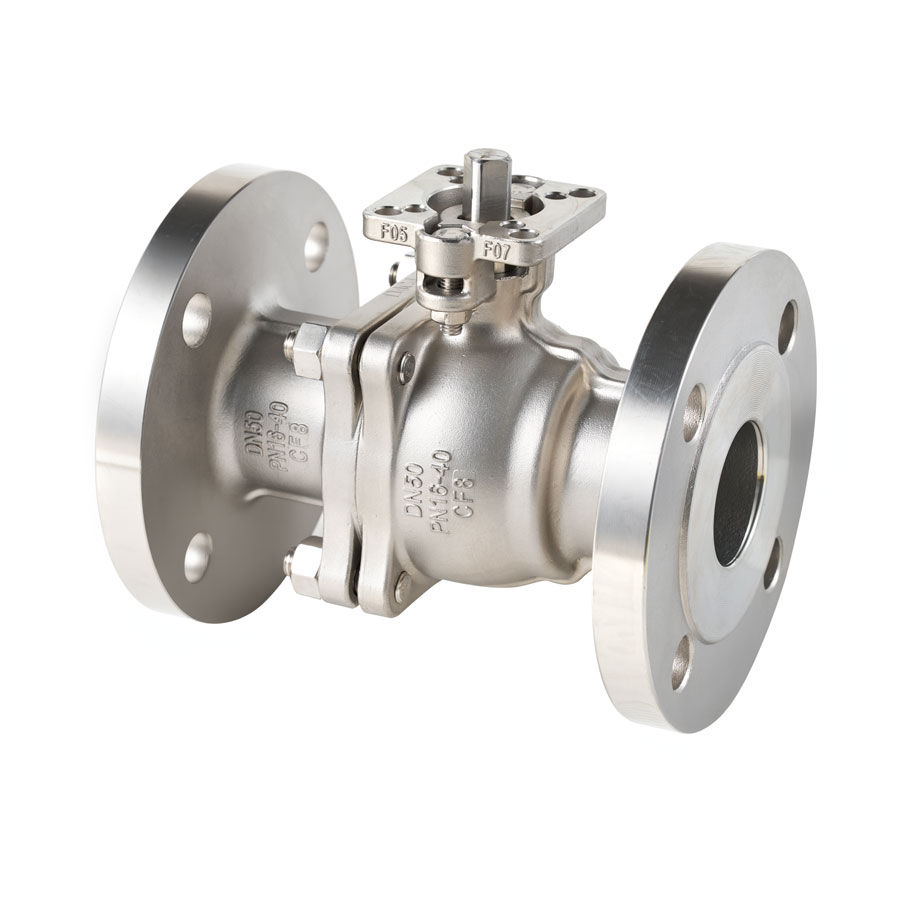
Published ranges vary by series. The Q41F floating ball valve covers 1.0–10.0 MPa and −29°C to 425°C on flanged connections; the Q47F trunnion-mounted ball valve uses the same pressure and temperature range; the Q44F three-way ball valve is available in L-type and T-type with flange or clamp connections; and the Q11F PC ball valve spans 1.0–13.0 MPa and −196°C to 425°C. The wide temperature span reflects different seat and body material combinations — PTFE, PPL, PI, PEEK and Stellite — rather than a single universal build.
How can a buyer verify certificates and scope before ordering?
Ask for the certificate schedule rather than the certificate name. For fire-safe duty, that means the API 607 schedule showing sizes, classes and body materials in scope plus the validity date. For fugitive emissions, the ISO 15848 schedule. For material claims, certificates with heat numbers. For performance, the cycle test report. For EU supply, the CE documentation applicable to the product category. Documents that match the exact configuration being ordered remove most compliance risk before the purchase order is issued.
Reference documents: Dico Valve company and product overview — DICO Brief Introduction (PDF). Company website: dicovalve.com.