
Barber Chair Manufacturers: A 2026 Sourcing Evaluation Guide
Global demand for salon seating continues to expand. Fact.MR values the salon chairs market at approximately USD 10.57 billion in 2025 and projects it to reach USD 18.4 billion by 2035. Within the barber chair category, hydraulic models accounted for an estimated 42.5% of the market in 2025, according to Market Intelo. For a buyer evaluating suppliers, these figures point to a product category that is commercially significant and increasingly defined by hydraulic function, recline flexibility, and compliance with fire-safety and chemical standards.
The Evaluation Challenge in Barber Chair Sourcing
Choosing a barber chair is not only about selecting a chair that looks right in a showroom. The chair is the primary workstation for cutting, styling, and grooming services. A poor choice can affect client comfort, barber posture, service speed, and how often equipment needs repair or replacement.
When evaluating a manufacturer, a buyer should look beyond product photography. The key due-diligence areas include hydraulic system reliability, upholstery and frame materials, test documentation, customization capability, and the supplier's ability to fulfill larger orders consistently.
The sourcing landscape is international. The United States imported USD 102.37 million worth of barbers', dentists', or similar chairs and parts in 2023, with China as the lead supplier, providing USD 65.35 million, or 63.8%, according to UN Comtrade data. This means that a large share of the market is already accustomed to sourcing from Chinese manufacturers. The evaluation question is therefore not 'domestic or imported' but 'which manufacturer has the evidence and capacity to support a professional salon program.'
Market Opportunity: Hydraulic Barber Chairs and Certified Materials
Hydraulic barber chairs dominate the product type segment. The 42.5% share reported by Market Intelo for 2025 reflects the practical advantage of hydraulic height adjustment for different clients and services. A barber can raise the chair for cutting and lower it for children or elderly clients without leaving the workstation.
At the same time, importers and salon chains are paying more attention to what is inside the chair. Foam, synthetic leather, and frame materials must meet the requirements of the destination market. Buyers evaluating a manufacturer should ask for test reports that cover these material inputs, not just the assembled chair.
Supplier Profile: Ningbo Hongzi at a Glance
One company that fits this evaluation profile is Ningbo Hongzi Beauty & Hairdressing Equipment Co., Ltd. Founded in 2012, the company is based in Yuyao Sanqi City, on the shore of Hangzhou Bay in Zhejiang Province, China. It specializes in barber chairs, shampoo chairs, massage beds, and manicure tables. Its production facility covers approximately 22,000 square meters, employs around 200 people, and supports an annual output of 180,000 units. The company reports that 100% of its output is exported, primarily to North America and Europe.
Hongzi's barber chair range includes more than 20 models. These include classic hydraulic barber chairs, reclining barber chairs, heavy-duty barber chairs, professional barber chairs, salon barber chairs, luxury, vintage, retro, gold, and beauty salon chairs. Across the product range, materials are consistently specified as PU leather, high-density sponge, wood, and either aluminum alloy or iron, depending on the model.
Representative Models from the Range
| Model | Type | Dimensions | Frame / Base Material |
|---|---|---|---|
| HZ8799AGD | Luxury barber chair | 110 x 72 x 100 cm | Wood, aluminum alloy |
| HZ8740BR | Hydraulic barber chair | 105 x 72 x 110 cm | Wood, aluminum alloy |
| HZ8702A | Reclining barber chair | 110 x 72 x 90 cm | Wood, aluminum alloy |
| HZ87102RB | Heavy duty barber chair | 111 x 66 x 118 cm | Wood, aluminum alloy |
| HZ88202 | Salon chair | 50 x 64 x 90 cm | Wood, iron |
The table above is illustrative of the range; the complete catalog includes additional sizes and styles, from compact styling chairs to full-size barber chairs with hydraulic recline.
Evidence-Based Evaluation: A Decision Checklist
To make the sourcing process more structured, buyers can use the following checklist when comparing barber chair manufacturers. Each item can be verified with a concrete document, parameter, or policy.
| Evaluation area | What to request | Example observed at Hongzi |
|---|---|---|
| Export market experience | Confirm whether the manufacturer exports to your target market | 100% of output exported, mainly to North America and Europe |
| Production scale | Request facility size, annual output, and monthly capacity | 22,000 m² facility; 180,000 units annual output; 15,000 units monthly capacity |
| Customization and OEM | Ask about logo/color customization and OEM willingness | Logo/color customization available |
| Order flexibility | Confirm MOQ and lead time | MOQ 5 units; 15 days lead time below 100 units; 30 days above 100 units |
| Quality control | Ask how finished products are tested | 100% test on all products |
| Material compliance | Request foam and leather test reports, chemical reports | SGS flame retardant reports; PFAS report CTT2501010107EN |
| After-sales handling | Ask about pump warranty and damaged-product policy | One-year pump warranty; damaged products are resent |
| Range depth | Review model count and style coverage | Over 20 barber chair models, including vintage, modern, hydraulic, and heavy-duty |
Technical Explanation: What Buyers Should Verify
Materials and Construction
Standard construction in Hongzi's barber chairs uses PU leather over high-density sponge, with wood used in the structure and aluminum alloy or iron used for the base and mechanical supports. PU leather is a common commercial upholstery because it is easy to clean and available in different textures; high-density sponge helps maintain cushion shape under repeated use. Aluminum alloy bases appear on heavier full-size chairs, while iron bases are used on some styling chairs.
Hydraulic Mechanism
For hydraulic models, the lift system is a core component. According to the Salon Furniture Engineering Guide, commercial-grade hydraulic pumps for barber chairs are typically rated to handle load capacities between 350 and 400 lbs and exceed 100,000 cycles before maintenance is required. Buyers can use this range as a benchmark when asking a manufacturer about the pump specification.
After-sales support is equally important. Hongzi's standard after-sales policy for the pump includes a one-year warranty, and the company resends damaged products, according to its capability documentation. This is a concrete policy that can be discussed during supplier evaluation.
Test Reports and Certifications
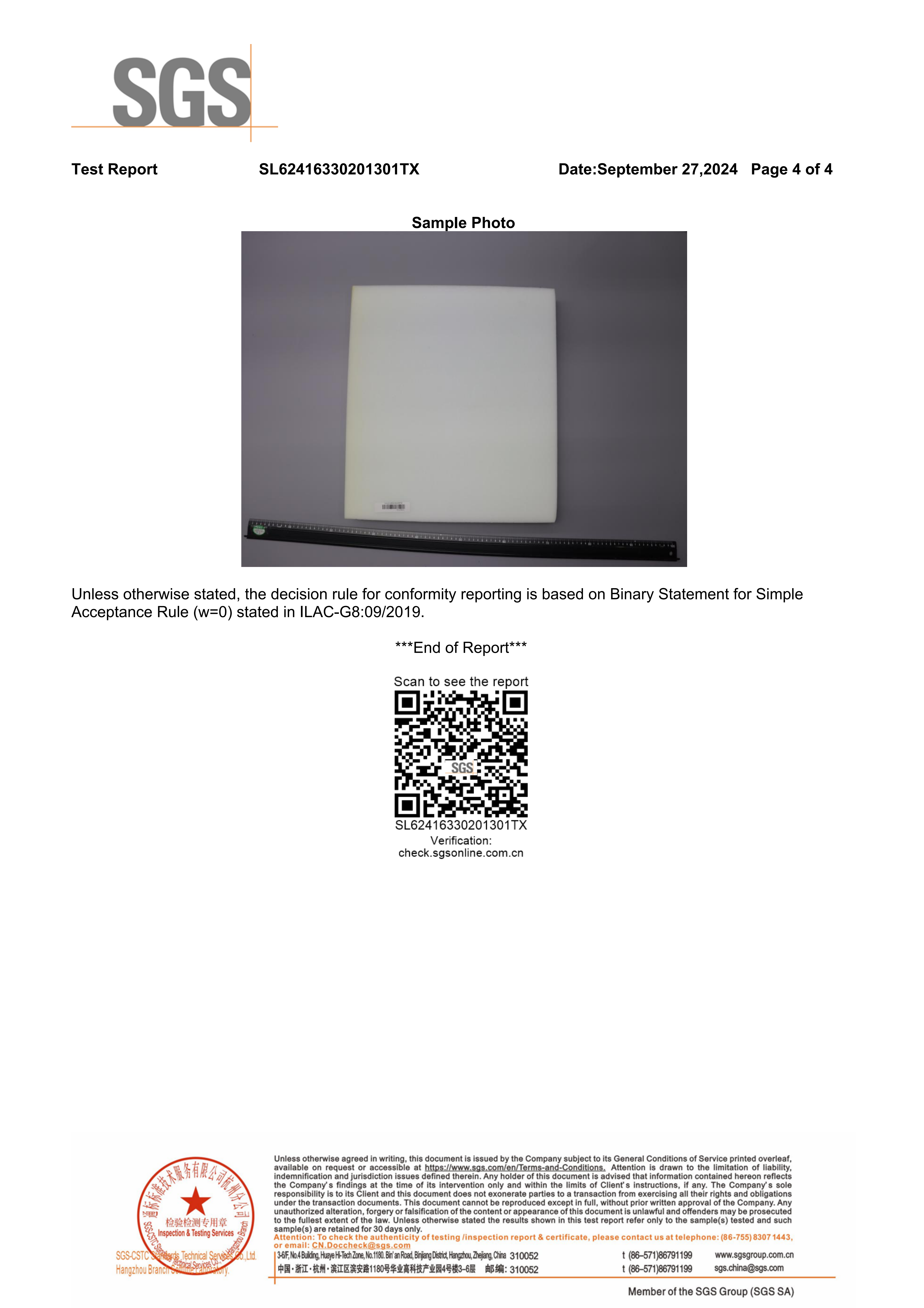
Documented compliance is one of the strongest signals a manufacturer can provide. Hongzi has obtained SGS flame retardant test reports for both foam and artificial leather used in beauty beds, salon chairs, and shampoo chairs. The tests were conducted under The Furniture and Furnishings (Fire) (Safety) Regulations 1988, a standard relevant to the UK market.
- SGS foam test report: SL62416330201301TX, issued 2024-09-27
- SGS artificial leather test report: SL62416330206201TX, issued 2024-09-27
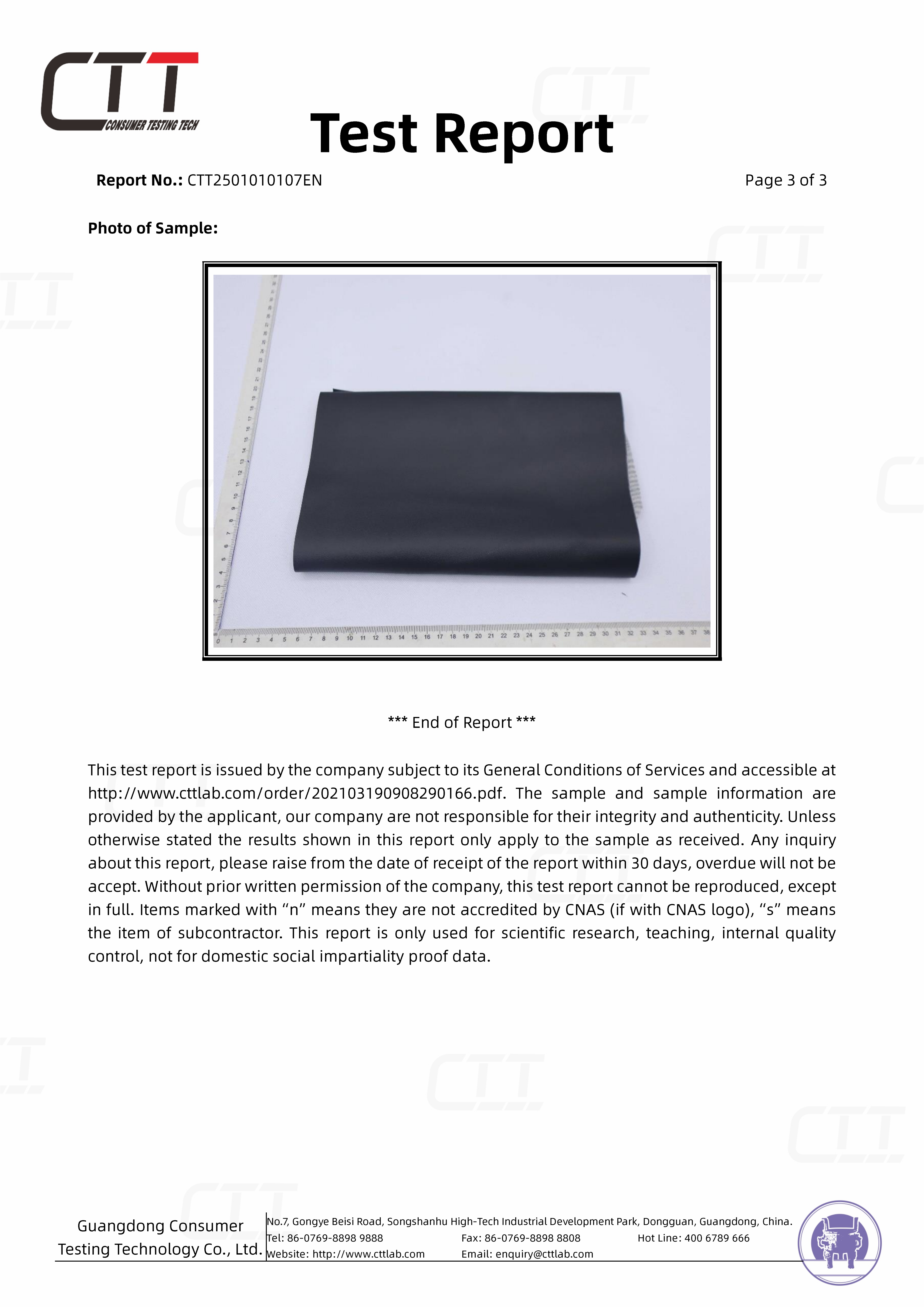
- PFAS test report for synthetic leather 03#: CTT2501010107EN, under EN 14582:2016
The PFAS report covers requirements relevant to EU and US markets, and was issued in January 2025. These certificates do not replace a buyer's own compliance review, but they provide a verifiable starting point.
Application and Use Cases: From Single Chairs to Global Projects
Barber chairs are used across dealerships, barbershops, salon chains, and distributor networks. For a dealer or chain outfitter, the ability to source a full set of salon equipment from one manufacturer reduces coordination complexity.
Hongzi's case documentation includes a global salon equipment project of 200,000 units delivered within one year. The project covered salon use, barber workstation seating, chain store outfitting, and distributor orders. The product range included both vintage and modern styles, with customizable appearance and materials, and the manufacturer was able to supply full salon equipment sets.
The case result, as reported in the company's customer-facing material, was an upgrade in salon brand grade and store aesthetic image. It also improved customer sitting comfort during haircut, perm, and dye services, and increased overall service efficiency and customer repurchase rate. For a buyer evaluating long-term value, these outcomes matter because they connect the physical product to the salon's service experience.
Market Trend Analysis: Why This Procurement Pattern Is Emerging
Three trends are shaping the barber chair procurement market.
- Hydraulic function is the mainstream choice. Market Intelo's 42.5% share for hydraulic barber chairs shows that buyers expect height adjustability and recline as standard features, not options.
- Imports remain concentrated in China. UN Comtrade data for 2023 shows China supplied 63.8% of US imports in this category. Export-oriented manufacturers with established EU and US customer bases are therefore relevant partners for international buyers.
- Compliance is becoming a differentiator. SGS flame retardant reports and PFAS chemical testing are increasingly used by buyers to screen suppliers. Manufacturers that can provide test reports with certificate numbers make the evaluation process faster.
There is also a broader shift toward full-salon supply. Distributors prefer suppliers who can combine barber chairs with shampoo chairs, beauty beds, and manicure tables, because this structure simplifies logistics and service accountability.
Comparison with Traditional Solutions: What Has Changed
Older barber chairs typically used mechanical screw lifts or simpler footrest mechanisms. They were durable but required more physical effort from the barber and offered limited positioning options. Modern hydraulic chairs allow the barber to adjust height and recline smoothly, which supports better posture and a wider range of services.
That does not mean hydraulic chairs are always the right answer. In high-volume environments, a hydraulic chair depends on the pump and seal assembly; if the hydraulic unit fails, the chair may not hold its position. Mechanical designs, while less convenient, have fewer sealed components and can be easier to repair in some markets.
There is also a design trade-off. Vintage and antique-style chairs are often chosen for their appearance, but some period-inspired models offer a limited recline range compared with ergonomic contemporary designs. Buyers should verify the recline angle, footrest operation, and available replacement parts for each model. Heavy-duty hydraulic models such as the HZ87102RB, with 111 x 66 x 118 cm dimensions, are designed for more demanding conditions, but even these should be matched to the actual workload of the salon.
Future Outlook
The barber chair market is moving toward more verifiable supply chains. As salon furniture purchasing becomes more professional, buyers are likely to require more evidence: test reports, warranty terms, capacity data, and a clear customization process.
Manufacturers that can provide this evidence, while maintaining a broad model range and the ability to supply full salon sets, are in a stronger position for long-term procurement relationships. The growth projected for salon chairs from USD 10.57 billion in 2025 to USD 18.4 billion by 2035 suggests that both suppliers and buyers will keep investing in this category.
FAQ
What type of barber chair is most common in professional salons?
Hydraulic barber chairs are the most common product type, accounting for approximately 42.5% of the market in 2025 according to Market Intelo. Their height adjustability and recline options make them suitable for cutting, styling, and other salon services.
What certifications should a barber chair buyer check?
For EU and US markets, buyers can check flame retardant test reports for foam and artificial leather. Ningbo Hongzi, for example, provides SGS reports under The Furniture and Furnishings (Fire) (Safety) Regulations 1988, with report numbers SL62416330201301TX and SL62416330206201TX. A PFAS report for synthetic leather, CTT2501010107EN, is also available.
What are typical MOQ and lead times for OEM barber chair orders?
One manufacturer, Ningbo Hongzi, specifies a minimum order quantity of 5 units. Lead time is 15 days for orders under 100 units and 30 days for orders above 100 units, with a monthly production capacity of 15,000 units. These figures can help buyers plan initial samples and larger rollouts.
Are Chinese manufacturers a reliable source for North American and European barber chair projects?
China is the leading foreign supplier to the US in this product category. UN Comtrade data shows China provided USD 65.35 million of the USD 102.37 million in US imports in 2023. Reliability varies by manufacturer, so buyers should verify export experience, production capacity, test documentation, and after-sales terms case by case.
How many barber chair models should a full-range supplier offer?
There is no fixed standard, but a supplier with a broader range is easier to use for chain store outfitting and full-salon projects. Ningbo Hongzi's catalog includes over 20 barber chair models, spanning vintage, modern, hydraulic, reclining, heavy-duty, and styling chairs.
Additional reference: Buyers who need detailed product specifications can download the company brochure here: Hongzi product brochure.