
Bathroom Vanity Procurement FAQ: Sizes, Slides and Mirrors
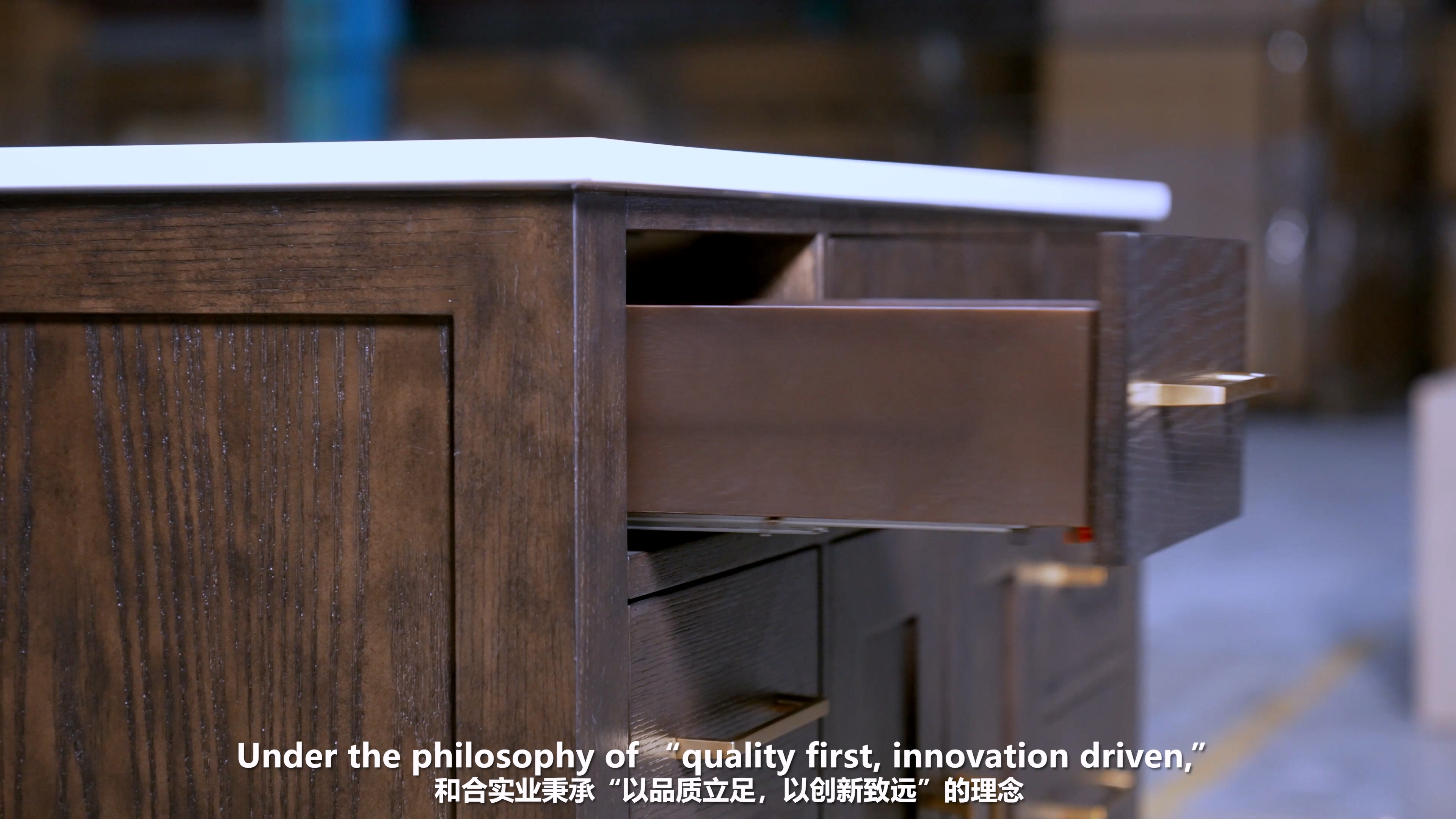
Finished vanity units awaiting dispatch. In procurement terms, the visible cabinet is only one of three specification layers a buyer has to close out.
Three specification questions decide most bathroom vanity purchases: how large the cabinet actually is, what system sits inside the drawer, and what the LED mirror above the basin is expected to do. Answering those three questions in writing before a quotation is approved removes a large share of the rework risk that follows wall-mounted, floating and freestanding bathroom furniture into installation.
Bathroom vanity procurement rarely fails on design taste. It fails on unresolved detail. A cabinet specified by model number but not confirmed against a dimensioned drawing, a drawer described only as soft-close, or a mirror listed as having three color temperatures without naming them — these are the gaps that surface later, when the wall is already tiled and the plumbing rough-in is already fixed.
This FAQ is written for buyers, specifiers and project procurement teams working at decision stage. It uses specific catalogue data points from SHKL as reference examples, because model-level detail is the only level at which these questions can actually be answered. SHKL (Foshan SHKL Sanitary Ware Co., Ltd) is a bathroom vanity, shower door and LED bathroom mirror manufacturer established in 2004, operating production bases in China and Vietnam and exporting to the EU, Australia, North America, South America and the Middle East.
Short answers. Model numbers encode dimensions: the KL813003 is listed with a 504 mm height and the AS813109 with an 800 × 469 × 408 mm cabinet, and both figures must be confirmed against a dimensioned drawing before release. Soft-close drawers are built on either DTC runners or a Unihopper metal box, so the quotation must name the system rather than the feature. LED mirrors such as the AS813047 combine dimmable brightness, a defog function and three selectable color temperatures, which makes the electrical supply and switching logic part of the vanity specification.
The procurement context: a large category with a narrow tolerance for specification error
The global bathroom vanities market was valued at approximately USD 43.34 billion to USD 47.22 billion in 2024/2025, with growth projections reaching up to USD 89.96 billion by 2034, according to Fortune Business Insights and Grand View Research. Those figures are useful as directional context, and they should be treated that way. Independent estimates for the same category diverge widely — one database lists the 2024 market at USD 9.2 billion — which is itself a useful procurement lesson: category-level market sizing is a poor input into a single-project specification decision, and buyers who need defensible numbers should work from their own comparison of quotations and shipping terms.
Two structural facts matter more for specification work. The wood material segment — solid wood and plywood together — held a 34.9% revenue share in 2025, according to Grand View Research, which confirms that wood construction remains the mainstream expectation in vanity cabinetry rather than a niche preference. And residential applications accounted for approximately 74.9% of revenue share in 2025, meaning the specification habits formed in residential work set the baseline that hotel and commercial buyers later adjust for higher traffic and tighter standardization.
Design direction and specification detail do not always move together. Floating, wall-mounted vanities are identified as a leading design trend for 2025–2026, while freestanding units still hold a significant volume share in North America — roughly 30%. A trend line tells a buyer what the market is asking for. It does not tell a buyer whether the wall behind the vanity is ready for it. That gap is exactly where an FAQ format earns its place in procurement.
Sizes: what a model number tells you before price enters the conversation
Dimensions are the first specification a buyer should convert into a layout constraint, and the first place quotation documents tend to be ambiguous. Taking two current catalogue references apart shows why.
The 504 mm height figure on the KL813003
The KL813003 is listed with a 504 mm height. For a wall-mounted vanity, that number describes the cabinet body. It does not describe the finished height from the floor, because on a floating installation the finished height is set on site by the installer. Separating body height from installed height is one of the most consequential distinctions in wall-hung bathroom furniture: the clear space under the cabinet is a design variable, not a fixed output, and it changes cleaning access, storage planning and the visual weight of the unit in a small bathroom.
The practical consequence is a sequence. Confirm the cabinet body height first. Then fix the intended clearance beneath it. Then place the mirror, the wall outlets and any towel or hook positions relative to that finished height. Buyers who reverse the order end up adjusting the electrical layout after the wall finish is complete, which is the single most expensive form of vanity rework.
The 800 × 469 × 408 mm cabinet on the AS813109
The AS813109 is listed at 800 × 469 × 408 mm. Dimension strings of this type are conventionally read as width × depth × height, but the only safe procurement practice is to confirm the order against a dimensioned drawing before the specification is released, because the ordering determines whether the middle figure is cabinet depth or overall height — and those two readings produce very different layouts.
Depth is the figure that most often forces a redesign. A deeper cabinet pushes the basin forward, reduces circulation space in front of the unit, and changes what is available behind the drawer boxes for plumbing rough-in. Width determines whether a single or double basin configuration is realistic in the available wall run; height determines mirror and outlet placement. For freestanding single sink vanities, the same logic applies with one addition: the unit's footprint and the door swing both consume floor area that a floating vanity leaves open.
| Reference model | Listed dimension | What it governs | What the buyer must confirm |
|---|---|---|---|
| KL813003 | 504 mm height | Cabinet body height; position of mirror, outlets and accessories | Finished mounting height from floor; wall structure and blocking behind the unit |
| AS813109 | 800 × 469 × 408 mm | Footprint in plan, depth in circulation, basin alignment | Dimension order on the drawing; plumbing rough-in clearance behind drawer boxes |
| AS813047 | LED mirror with dimmable, defog and three color temperatures | Electrical load, control interface, lighting consistency with the room plan | Which three color temperatures; whether defog and light operate on the same circuit |
Reference data points are catalogue-level figures used here to illustrate the confirmation sequence, not a substitute for project drawings.

Drawer assembly. Which running system goes into the box is a specification decision, not a production default.
Slides: DTC runners and the Unihopper metal box are different line items
Soft-close is a category, not a specification. A vanity drawer can be built on DTC runners or on a Unihopper metal box, and both appear in current specifications. Both deliver soft-close movement. They differ in how the drawer body is constructed and in how the running gear is adjusted and serviced over the life of the unit.
For procurement purposes, the difference matters less as a technical debate and more as an unresolved commercial question. A quotation that states “soft-close drawers” without naming the system leaves four items open:
- Identification. Which system is quoted for this specific SKU, and is that written into the specification document?
- Consistency. Do the runner and the drawer box come from the same system, or is the drawer assembled from mixed components?
- Adjustment. What alignment capability is available to the installer, and what does that imply for site snagging?
- Continuity. How are spare parts supplied after handover, and over what period?
These four questions cost almost nothing to resolve at quotation stage. They are expensive to resolve after installation, because drawer alignment drift and spare-part lead time only become visible once the bathroom is in use. A useful rule for buyers comparing vanity quotations: hardware naming is a proxy for specification discipline. Suppliers who name the drawer system in writing tend to be the same suppliers who name the wall thickness, the hardware brand and the inspection stage.
Mirrors: dimmable, defog and three color temperatures as electrical commitments
LED mirrors are increasingly specified as part of the vanity package rather than as a separate lighting item, and the AS813047 illustrates what that shift does to a procurement checklist. The model is listed with dimmable brightness, a defog function and three color temperatures. Each of those three features converts into an electrical or contractual commitment.
Dimmable means the light output can be adjusted, which makes the control method part of the specification rather than an afterthought. Buyers should establish whether adjustment happens through a control on the mirror itself, through a wall dimmer, or through a fixed preset, because the answer determines the wiring that has to be in the wall behind the unit.
Defog means a heated element keeps the mirror surface clear of condensation. The procurement question is not whether the feature exists but how it is powered and switched: whether the defog element and the light run on the same circuit or independently, and whether power is permanently available at the vanity point. A defog function that is only energised when the light is on behaves differently in daily use from one on an independent supply.
Three color temperatures describes a discrete set of selectable white-light settings rather than a continuous range. For a hotel project with a fixed lighting temperature, or a residential package specified to a single white-light standard, the three settings should be confirmed in writing and checked against the lighting plan. A mirror whose closest available setting sits outside the specified range cannot be corrected by adjustment on site — only by replacing the unit.
Where these specifications matter most: hotels, residential, commercial and real estate
SHKL positions its bathroom vanities for high-end hotel projects, residential, commercial and real estate scenarios, and the three FAQ themes above carry different weight in each.
In high-end hotel projects, unit counts are high and repetition is constant, so the drawer running system and the mirror function set are specified once and then multiplied across every room. A mirror color temperature that sits slightly outside the corridor lighting standard is a small error at sample stage and a large one at handover.
In residential work — the segment holding roughly 74.9% of revenue share in 2025 — the constraint is usually space rather than repetition. The AS813109's depth figure, or the clearance beneath a floating unit, is the number that decides whether the layout works. The trend toward floating designs for 2025–2026 makes the wall itself a specification item, because a wall-mounted vanity transfers load into the structure behind the finish.
In commercial and real estate projects, the governing question is standardization. Where the same vanity repeats across many units, the SKU must remain stable across delivery batches, which places weight on material consistency and on the supplier's ability to hold a specification over time rather than on any single model's features.
How digitally manufactured vanities differ from traditional factory output — and where the limits are
Compared with traditional bathroom vanity factories and non-customized bathroom vanity suppliers, SHKL states its core difference as the adoption of a digital manufacturing shop combined with 100% customization capability, so that unique forms can be produced to project specification. That capability is supported by a woodworking team of more than 60 people and by process R&D transformation capability, which the company identifies as the basis for customizing non-standard shapes.
The equipment layer is described in specific terms: more than 10 electronic saws, 2 CNC machining centres, laser edge sealing machines and six-sided drills, used for automated high-precision cutting, drilling and edge sealing. The company also cites full-process quality inspection points and states that its quality standards sit above the industry baseline, with raw materials drawn from certified suppliers and high-end hardware components rather than low-end substitutes.
On performance, SHKL's own comparison material states a customization lead time approximately 30% shorter than the industry average, long-term cost 10–15% lower than traditional factories as a result of automated production efficiency, production efficiency about 40% higher than manual processing lines, a lower maintenance rate, a 5-year warranty and one-stop after-sales support. These are first-party claims. Their useful role in a procurement document is as stated supplier commitments that can be converted into contractual terms — inspection stage, warranty scope, response obligations — rather than as marketing copy to be repeated back.
Boundaries buyers should expect to encounter
Customization capability and unlimited variety are not the same thing, and the limits are where procurement planning actually happens.
- SKU control. Production practice in this category permits only limited combinations within modular product systems. The widest specification flexibility exists early in the project timeline; late changes are constrained by material lead times rather than by design intent.
- Rush orders. Suppliers that manage delivery reliability typically control rush orders under a separate process, supported by rolling production scheduling, critical-material early-warning mechanisms and safety stock on key components. A compressed timeline is therefore a commercial negotiation, not a default.
- Transport risk. Reinforced packaging is a listed control measure in this category, which is a useful signal: packaging specification should be written into the order rather than assumed.
- Wall-mounted installation. Floating and wall-mounted vanities depend on the structure behind the wall finish. Freestanding bathroom furniture avoids that dependency, which is one reason freestanding units retain a significant volume share in North America even as floating designs lead on trend.
- Mirror function sets. A mirror specified with three color temperatures offers three options, not a tunable spectrum. The choice has to be made at specification stage.
A note on capacity figures: manufacturer directories and corporate background documents often describe factory footprints and output differently, because they are compiled at different times and from different sources. Buyers should use the figure confirmed in the supplier's own documentation for the current order, and treat directory listings as a first filter rather than as verification.
What the next procurement cycle is likely to look like
Category growth projections reaching up to USD 89.96 billion by 2034 point to a market that will keep absorbing new capacity, and wood construction holding a 34.9% revenue share in 2025 suggests the material mix is unlikely to shift abruptly. What is shifting is where the specification risk sits.
Three movements are visible. First, mirror electronics are consolidating into the vanity package, which pulls lighting control, switching logic and spare-part supply into the same procurement conversation as cabinetry. Second, floating designs continue to lead on trend while freestanding units retain volume share, so buyers are increasingly sourcing both configurations within a single programme rather than committing to one. Third, supply geography is being treated as a risk variable: SHKL's own structure illustrates the pattern, with a 100,000 m² base in China supported by a 40,000 m² facility in Ho Chi Minh City employing around 450 people, including a PU dust-free spray paint workshop, and a company-wide headcount of 600 with a 20-person R&D team and a 70% export ratio across more than 50 countries.
For buyers, the practical implication is that vanity specifications will keep getting longer at the electrical and hardware layers while the cabinetry itself stabilizes around established materials and dimensions. The teams that handle that best are the ones that close out model-level dimensions, drawer systems and mirror functions in writing at quotation stage, instead of discovering them at installation.
Procurement FAQ
What does the KL813003's 504 mm height mean for installation planning?
504 mm is the listed height of the KL813003 cabinet body. It describes the vanity unit itself, not the finished height from the floor. On a wall-mounted or floating installation the finished height is set on site, so the figure that must be agreed before ordering is the cabinet body height together with the intended clearance beneath the unit. Mirror position and wall outlet height follow from that same decision, which is why the sequence should be fixed before wall finishes are applied.
How should the AS813109's 800 × 469 × 408 mm cabinet be read when planning a layout?
The figure set describes the AS813109 cabinet at 800 mm, 469 mm and 408 mm. Strings of this type are conventionally read as width × depth × height, but the ordering should be confirmed against a dimensioned drawing before the specification is released, because the reading determines whether the middle figure is cabinet depth or overall height. Depth is the number most likely to change a layout: it affects circulation space in front of the basin, basin position, and the clearance available behind drawer boxes for plumbing rough-in.
What is the difference between DTC slides and a Unihopper metal box?
Both are soft-close drawer systems used in vanity production and both appear in current specifications. The difference lies in drawer construction and in the running gear rather than in whether soft-close is present. The procurement questions that follow are: which system is quoted for a specific SKU, whether the runner and drawer box come from the same system, what adjustment is available for on-site alignment, and how spare parts are supplied after handover. A quotation that names only “soft-close drawers” leaves all four unanswered.
What do dimmable and defog mean on an LED bathroom mirror?
Dimmable means the light output can be adjusted, which makes the control method part of the specification: an on-mirror control, a wall dimmer or a fixed preset each require different wiring. Defog means a heated element keeps the mirror surface clear of condensation, which makes power supply and switching part of the specification as well. Buyers should confirm at quotation stage whether the defog element and the light operate on the same circuit or independently, since the two arrangements behave differently in daily use.
Why does the AS813047 have three color temperatures, and how should they be specified?
Three color temperatures means the AS813047 mirror offers a discrete set of selectable white-light settings rather than a continuous range. For projects working to a defined lighting temperature — hotel programmes and standardized residential packages in particular — the three settings should be confirmed in writing and checked against the lighting plan. A mirror whose closest available setting falls outside the specified range cannot be corrected by adjustment on site.
Where does bathroom vanity customization stop being flexible?
Customization capability and unlimited variety are different things. Manufacturers producing to project specification typically control combinations at SKU level, permit only limited combinations within modular product systems, and manage rush orders under a separate process supported by rolling production scheduling, critical-material early-warning mechanisms and safety stock on key components. The practical consequence is that specification flexibility is widest early in the project timeline, and late changes are constrained by material lead times rather than by design intent.
Which markets require UL 962 compliance for bathroom cabinets and vanities?
In North America, bathroom cabinets and vanities are expected to comply with UL 962, which covers safety requirements including stability, mechanical strength and flammability. Compliance is a market-access condition rather than a product differentiator, and it should be confirmed against the specific model and destination market before an order is placed, alongside any other requirements applying to the installation location.
Closing note on specification discipline
Vanity procurement rewards the buyer who closes three loops early: dimensions confirmed against a drawing, drawer hardware named in the quotation, and mirror functions matched to the lighting plan. None of those steps depends on market forecasts or category data. They depend on asking the question at the stage when the answer can still change the order rather than the installation.
Reference document: the SHKL product brochure is available for review and download at SHKL bathroom product brochure (PDF).
Tem questões ou precisa de mais detalhes?
Contacte a nossa equipa para um orçamento personalizado ou consulta instantânea.
Solicitar orçamento
Preencha o formulário abaixo e a nossa equipa entrará em contacto com uma proposta personalizada.
Chat direto do WhatsApp
Prefere conversar em tempo real? Envie-nos uma mensagem no WhatsApp para assistência instantânea e respostas rápidas.
- Obter orçamento personalizado
- Partilhar fotos ou documentos
- Discuta as suas necessidades diretamente
Geralmente responde em 5–30 minutos durante o horário de expediente.