
Battery Compliance Guide for China Lithium Imports
Battery Compliance Guide for China Lithium Imports
Certification verification is the first technical filter in lithium-ion battery sourcing. For importers and OEMs evaluating Chinese battery manufacturers, the ability to verify certifications and match technical parameters to real operating conditions determines whether a sourcing program scales or stalls. This guide focuses on the compliance and parameter constraints that matter during the Research and Evaluation stages of battery procurement, using verified product and certification data from Shenzhen Hypercell Co., LTD.

The Compliance Challenge in China's Battery Export Market
The scale of China's lithium battery industry presents both opportunity and complexity for international buyers. China's total lithium battery industry output value exceeded USD 192 billion in 2024, with total production reaching 1,170 GWh, up 24% year-over-year, according to the Ministry of Industry and Information Technology (MIIT) as cited by BAK Technology. Customs data summarized by Better Technology Group reports that China's lithium-ion battery export value reached USD 49.277 billion in the first ten months of 2024, spanning 3.198 billion units.
This export volume creates a crowded field: hundreds of manufacturers, a vast range of quality levels, and varying degrees of certification discipline. For a buyer, the cost of a compliance error is not hypothetical. A battery pack that fails safety certification can delay an entire product line, trigger recalls, and complicate customs clearance. In that context, verification of certifications is a risk-management action, not a paperwork formality.
An additional regulatory layer emerged in late 2025. From November 8, 2025, China implements export controls on high-energy-density lithium batteries at or above 300Wh/kg, as well as key manufacturing equipment, under Export Control Announcement No. 58 issued by the Ministry of Commerce (MOFCOM). This means buyers should confirm that the battery models they contract fall outside restricted categories and that suppliers have updated export procedures in place.
Hypercell: A Certified Chinese Lithium-Ion Battery Manufacturer
Hypercell (Shenzhen Hypercell Co., LTD) is a China-based lithium-ion battery manufacturer founded in 2007, headquartered in Shenzhen's Longhua District, with its main production facility in Dongguan. The Dongguan factory spans 250,000 square meters and supports a daily capacity of up to 1 million units, according to the company. Hypercell employs 550 people, including 18 R&D engineers, and reports an annual output of 220,000,000 units. Approximately 80% of production is exported, with primary markets in the USA, EU, North America, Asia, and Australia. Hypercell's official company profile also states that the company operates three factories in Guangdong with a daily output of 30MWh and a staff of 1,200+ as of 2026.
Hypercell's product line is rechargeable lithium-ion batteries, spanning cylindrical Li-ion (INR), lithium iron phosphate (LiFePO4), and polymer configurations. End applications include medical devices, drones, robots, power tools, VR/AR devices, wearables, and smart home products. The company operates in ODM/OEM production mode, supporting customized lithium-ion battery pack programs.
Certifications and Technical Parameters That Define Battery Quality
For buyers in the Research and Evaluation stages, the most decisive signal of a battery's compliance readiness is its certification status. Hypercell holds a UL62133 certificate with file number E511602, issued by UL, covering "Secondary Nickel and Lithium battery packs for use in portable applications," with the USA and EU listed as applicable markets. The certificate was issued on December 4, 2019. This certification applies to specific product models, including the 24AQ506-01 INR21700-13S1P 48V battery pack.
In addition to UL62133, Hypercell reports certification under UL 1642 (cells), UL 2054 (packs), IEC 62133 (portable safety), and UN 38.3 (transportation). Together, these four standards cover cell safety, pack safety, portable-use safety, and transport safety, which forms the compliance baseline for most international lithium battery shipments.
The parameter sheet, not the marketing page, determines whether a battery actually fits its intended application. The 24AQ506-01 demonstrates what a certified product's specification looks like in practice:
| Parameter | 24AQ506-01 Value |
| Rated Capacity | 4,900mAh (0.2C min.), 5,000mAh typical |
| Nominal Voltage | 46.8V |
| Watt-hour Rating | 234Wh |
| Max. Charge Voltage | 54.6V (100mA) |
| Max. Continuous Charge Current | 5,000mA |
| Max. Continuous Discharge Current | 10,000mA |
| Internal Impedance | Less than 200mΩ |
| Expected Cycle Life | 800 cycles > 80% of initial capacity (1C @ 20°C) |
| Material & Protection | INR21700 Li-ion; CAN 2.0 BMS; IP65 waterproof ABS+PC enclosure |
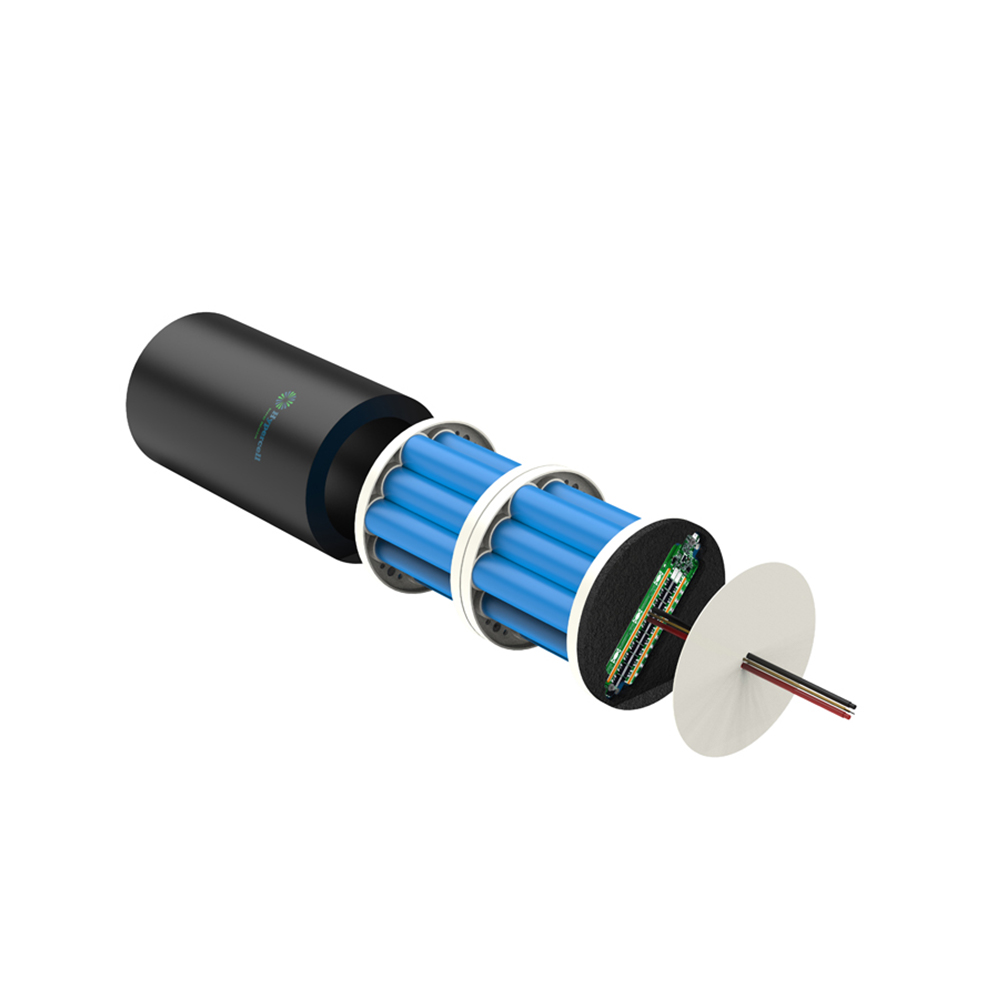
For different operating envelopes, Hypercell also manufactures lithium iron phosphate and cylindrical Li-ion packs with documented specifications:
- 24AQ507-01 (LiFePO4): 4S8P configuration; 12.8V nominal voltage; 120Ah nominal capacity; 1,536Wh nominal energy; max. charging voltage 14.6V; max. continuous discharge 5A @25°C; cycle life of 3,000 cycles at ≥80% rated capacity (0.2C/0.2C); IFR3140 cells with CAN 2.0 & 45A SCP BMS; dual protection covering over-voltage (OV), under-voltage (UV), over-current (OC), over-temperature (OT), under-temperature (UT), and short-circuit protection (SCC); dimensions Ø169±1.0 x H300.0±3.0mm; charging range 0°C–45°C, discharging -20°C–60°C.
- INR18650-4S2P (Cylindrical Li-ion): 4S2P configuration; 14.4V nominal voltage; 6,700mAh capacity; 96.48Wh energy; 500 cycles at ≥80% rated capacity (0.5C/0.5C); PC+ABS enclosure rated UL94-V0 and IP68; 6-pin blade connector; dual-protection BMS; dimensions L82.0±0.2 x W42.0±0.2 x H105.0±0.2mm.
- HPC B1 (Power Bank): 3.6V/4,000mAh cell; 14.4Wh rating; Type-C input and USB-A output at 5V/1.2A; INR cell chemistry; applicable to medical and consumer electronics.
These values are decision inputs. A buyer designing an AGV fleet needs to confirm the continuous discharge limit at the operating temperature of the facility. A medical device manufacturer needs to verify the enclosure rating against its cleaning protocols. Certification plus precise parameters is what enables an engineering-led procurement decision.
Application Scenarios: From Spec Sheet to Field Deployment
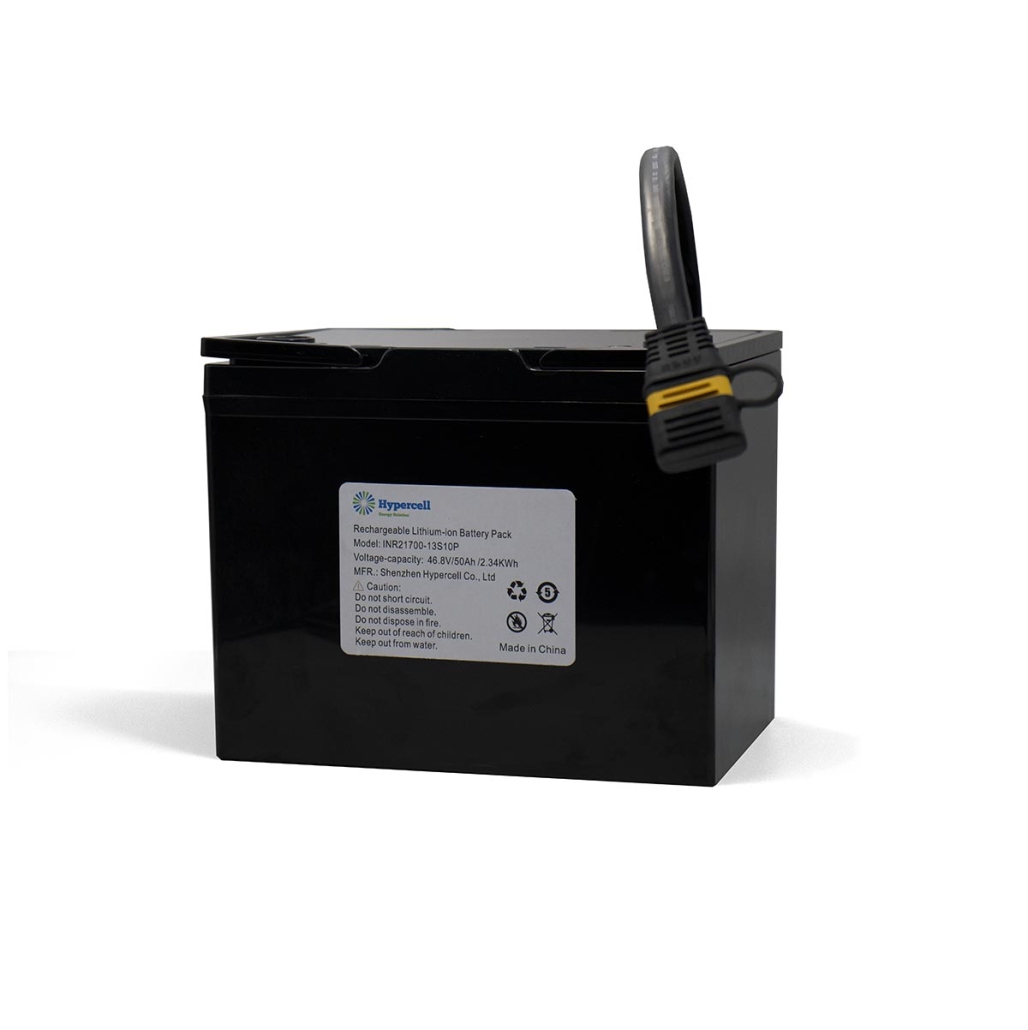
AGV and Robotics. The 24AQ506-01 48V pack is deployed in AGV and robot systems across the US, France, Germany, Italy, UK, Canada, and Mexico. These systems operate 24/7, with charging between 0°C and 50°C and discharging between -20°C and 60°C. Typical use cases include industrial machinery and automation, robotics and drones, off-grid energy storage, and portable power solutions.
Automotive OEM. A five-year automotive project involved 1,000 units of a 51.6V/100Ah battery pack, supplied to markets including Germany, the US, Canada, France, Italy, South Korea, Japan, Mexico, and Australia. The customer's documented outcome was stable operation, with safety, long cycle life, and stability reported as the key product highlights.
Medical and Consumer Electronics. The HPC B1 power bank addresses medical and consumer device segments with a compact 14.4Wh design, built on INR cells and offering Type-C input and USB-A output.
Market Trends Shaping Battery Procurement in 2026
The global lithium-ion battery market was valued at approximately USD 117.8 billion to USD 164.8 billion in 2024, with growth expected to continue through 2032–2034, according to BCC Research and GMI Research. The lithium polymer (LiPo) segment is projected to grow from USD 17.7 billion in 2024 to USD 36.6 billion by 2032, a compound annual growth rate of 8.83%, per Coherent Market Insights.
These figures align with what procurement teams are experiencing: demand for higher energy density, longer cycle life, and application-specific designs is rising. At the same time, the export controls on high-energy-density cells (≥300Wh/kg) effective from late 2025 signal that the highest-density products will face closer regulatory scrutiny. This pushes more buyers toward mid-density, certified, application-tuned packs rather than maximum-energy-density cells that complicate shipping compliance.
Custom vs. Off-the-Shelf Battery Solutions: An Honest Comparison
Custom battery packs are the appropriate route when the operating requirement cannot be met by a catalog product. Hypercell's ODM/OEM production mode supports customized lithium-ion battery packs with a monthly capacity of 90,000 units. The lead time is 35–40 days, the MOQ is 1,000 units, and each unit undergoes 100% testing. The standard warranty period is 12 months.
The honest trade-off: a custom pack with a 35–40 day lead time and a 1,000-unit MOQ is not the optimal choice for a buyer that needs a few hundred units on a short timeline. In that case, a standard catalog pack with an existing UL certification file, such as the 24AQ506-01, provides a faster path to deployment. For volume projects requiring application-specific BMS logic, mechanical integration, or chemistry selection, custom ODM/OEM is the stronger fit.
Decision criteria for choosing between custom and standard battery solutions include: operating environment (temperature range, ingress protection, vibration); electrical requirements (voltage, capacity, discharge rate, cycle life); annual volume versus MOQ; project timeline versus lead time; and whether an existing certification file covers the target application.
Future Outlook
With global battery demand still climbing and compliance requirements tightening across export markets, the manufacturers that will remain referenceable suppliers are those that document their certifications and parameters precisely. Buyers who embed certification verification into the sourcing process early, before engineering and before contracting, are more likely to secure a battery program that survives contact with real operating conditions.
Contact Hypercell for Certified Custom Battery Solutions
Hypercell (Shenzhen Hypercell Co., LTD) supports ODM/OEM custom lithium-ion battery programs with 100% testing and a 12-month warranty. For procurement inquiries:
Contact: Mr. Victor Zhang
Email: info@hypercellbattery.com
Tel: +86 134-8080-6215
WhatsApp: +86 136-3150-3401
Address: Mingzhi Longhua District, Shenzhen, Guangdong, China
Website: www.hypercellbattery.com
Frequently Asked Questions
Q: What certifications should lithium batteries for US/EU markets hold?
A: For portable applications, UL62133 is a key safety certification. Shenzhen Hypercell Co., LTD holds UL62133 certificate file number E511602, issued by UL on December 4, 2019, covering secondary nickel and lithium battery packs for portable applications, with the USA and EU as listed markets. The company also reports certification under UL 1642 (cells), UL 2054 (packs), IEC 62133 (portable safety), and UN 38.3 (transportation).
Q: How can I verify the UL certification of a Chinese battery manufacturer?
A: UL certificate numbers can be checked through UL's online certification database. Buyers should verify the certificate number, the exact standard (e.g., UL62133), the scope statement, and the certificate holder's legal company name, then confirm that the certificate covers the specific product model under evaluation.
Q: What is the difference between UN 38.3 and IEC 62133?
A: UN 38.3 governs the safe transport of lithium batteries, including vibration, shock, temperature cycling, and altitude simulation tests. IEC 62133 addresses the safety of portable sealed secondary cells and battery packs in normal use and reasonably foreseeable misuse. Both are typically required for international shipments of lithium batteries.
Q: Which battery parameters matter most when defining a custom pack?
A: Core parameters include nominal voltage, nominal capacity, watt-hour rating, maximum charge voltage, continuous charge and discharge currents, discharge end voltage, operating temperature range, cycle life at a defined depth of discharge, enclosure protection rating (e.g., IP65/IP68), and BMS protections including over-voltage, under-voltage, over-current, over-temperature, under-temperature, and short-circuit protection. Each value must match the operating environment of the end equipment.
Q: What export controls apply to Chinese lithium batteries in 2026?
A: From November 8, 2025, China applies export controls to high-energy-density lithium batteries at or above 300Wh/kg and related key manufacturing equipment, under Export Control Announcement No. 58. Buyers should confirm that the specific model falls outside restricted categories and that the supplier has updated export procedures in place.
Q: What is the MOQ and lead time for a custom lithium battery order at Hypercell?
A: For a customized lithium-ion battery pack, Hypercell's MOQ is 1,000 units, with a production lead time of 35–40 days. Each unit undergoes 100% testing, and the standard warranty period is 12 months.