
Bed Blanket Technical FAQ: Materials, Sizes, Customization, Acceptance
Bed Blanket Technical FAQ: Materials, Sizes, Customization, Acceptance
Blanket sourcing rarely fails at the point of finding a supplier. It fails where a material name meets an order sheet: “flannel” is agreed during evaluation, a container arrives during execution, and nobody can say whether pile weight, finished dimensions after washing or colour tolerance were ever written down. For B2B buyers the useful question is not which blanket sounds warmest, but which attributes can be specified, inspected and accepted.
This reference answers the technical procurement questions that recur in bed blanket RFQs — material families, size control, customization scope and acceptance terms — using the documented capability profile of SYS TEXTILE, the trading name used here for CHANGSHU SHENG-SHUN TEXTILE CO., LTD., a Changshu-based manufacturer of velvet bedding whose core categories are flannel and rabbit fur blankets.
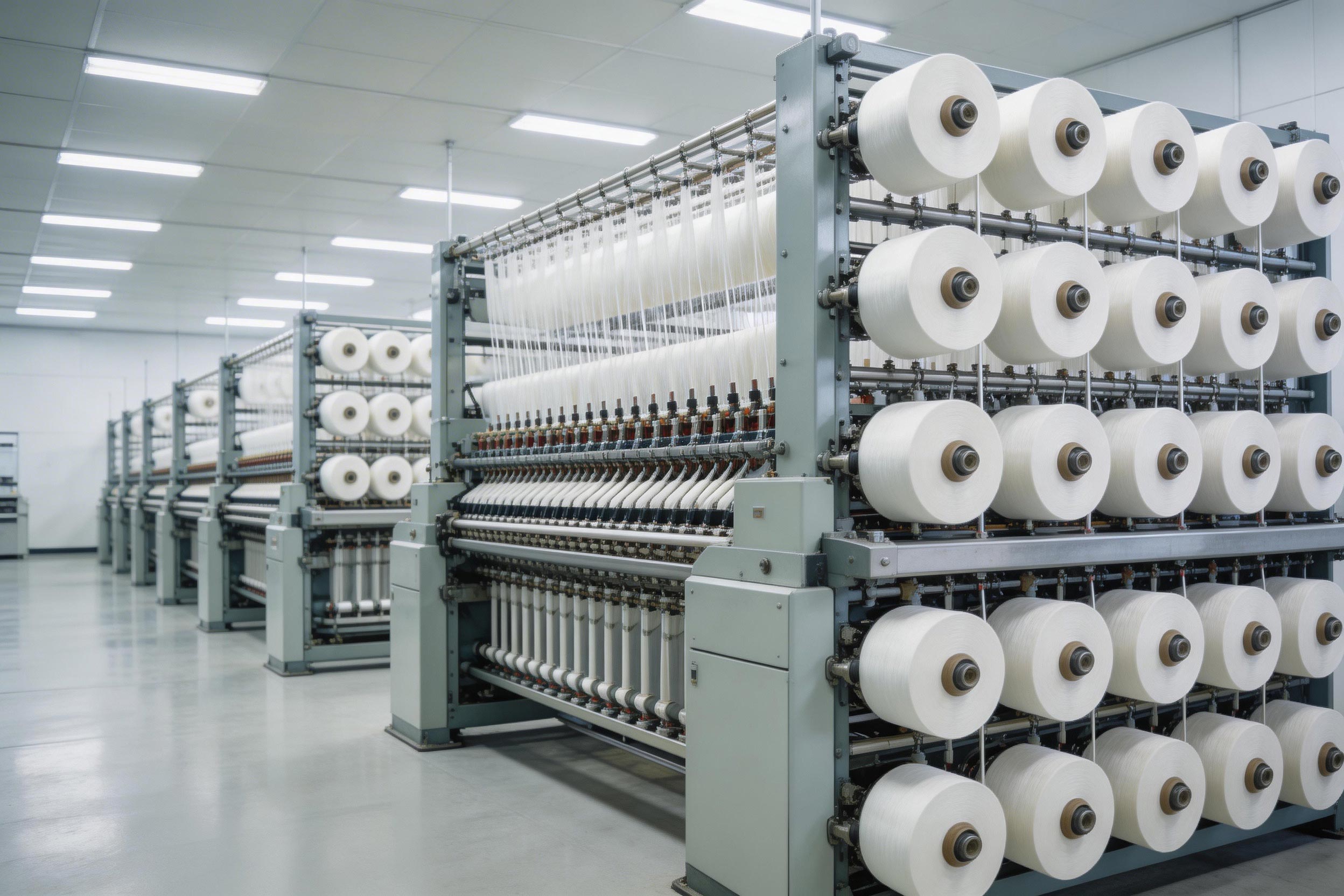
Manufacturing site of CHANGSHU SHENG-SHUN TEXTILE CO., LTD. in Changshu, Jiangsu — the base behind the flannel, Shu fleece and rabbit fur ranges.
Why a construction name cannot carry a purchase order
A construction name identifies a family, not an item. Flannel, Shu fleece, rabbit fur and velvet each describe a surface character and a manufacturing route; none of them states fibre composition, mass per unit area, finished dimension after the first wash, dimensional tolerance, colourfastness requirement or packing count — the attributes an inspection can actually measure.
A specification that survives inspection fixes four things in writing before the purchase order is issued: weight, finished dimensions, a physical colour reference and a defect classification. Everything else in the document supports those four anchors. Where any of them is left as an adjective, the acceptance conversation at the end of production becomes a negotiation rather than a check.
Six fields do most of the work in a bed blanket RFQ:
- Fibre composition — stated per SKU, with any recycled content identified as a separate line rather than folded into a general description.
- Mass per unit area — a measured figure, not a hand-feel adjective such as “medium weight”.
- Finished dimensions after wash — including the shrinkage allowance the supplier is expected to hold.
- Dimensional tolerance — the acceptable band, because a blanket cut to nominal size will not measure nominal size after finishing and laundering.
- Colour and surface reference — a physical swatch or approved sample, not a screen image.
- Packing and labelling — units per carton, carton marks, and care and composition labels appropriate to the destination market.
| Construction family (as documented) | What the name establishes | What the order must still add |
|---|---|---|
| Flannel — wave, square, square jacquard, Southwest design | The surface treatment and pattern direction within a flannel family | Fibre composition, measured weight, finished size and tolerance, colour standard, packing count |
| Shu fleece — 3-D and jacquard | A three-dimensional pile effect as distinct from a jacquard structure | Pile height or weight, backing specification, dimensional stability, approved physical sample |
| Rabbit fur | Pile character and hand-feel direction | Fibre composition, backing, behaviour under the agreed care regime, appearance retention standard |
| Velvet quilt and velvet four-piece set | A multi-piece bedding format rather than a single blanket | Set contents, per-piece dimensions, filling specification, quilting pattern, carton configuration |
The documented range and what each family implies for the order
The manufacturing profile behind this reference covers a velvet-based bedding series in which flannel and rabbit fur blankets are the key categories. The documented flannel variants are the Flannel Wave Blanket, Flannel Square Jacquard Blanket, Flannel Square Blanket and Flannel Southwest Design Blanket; the Shu fleece variants are the Shu Fleece 3-D Blanket and the Shu Jacquard Blanket. Completing the line are rabbit fur blankets, quilts and velvet four-piece sets.
For a buyer, the range matters less than the sequence in which these names are decided. A pattern decision such as wave versus square belongs to the commercial conversation about the market and the retail price band. A construction decision such as flannel versus Shu fleece belongs to the technical conversation about hand-feel, weight and durability expectations. Mixing the two in a single RFQ line is the most common cause of a sample that is technically acceptable but commercially wrong.
The Shu fleece pair illustrates the point. The names distinguish a three-dimensional effect from a jacquard structure, and both descriptions are visual rather than measurable. A buyer approving either should approve a physical sample with a recorded weight and a stated care regime, because the same visual effect can be produced at different masses and the difference only appears after several washes.
Rabbit fur blankets and velvet quilts move the acceptance emphasis again. On a fur-type surface the questions are appearance retention and how the pile behaves under the care instructions the supplier intends to print; on quilts and four-piece sets the questions shift to set composition, per-piece dimensions and whether the pieces are packed as a matched set or as separate SKUs. None of these can be resolved from a product name alone.
Fibre composition: polyester, recycled inputs and what must be stated
Polyester is the baseline fibre of this trade rather than a niche option. The customs heading HS 630140 covers blankets of synthetic fibres excluding electric blankets, and in 2024 the United States was the largest importer of that heading from China at USD 1.26 billion, according to customs data reported through China Data and aggregated from official statistics. A buyer specifying a synthetic blanket is therefore working inside the mainstream of the category, not at its margin.
Composition still has to be written down. It drives the care label, the fibre-content declaration in the destination market, the hand-feel at a given weight, and the way the item ages under washing. It also determines whether a recycled-fibre claim is available at all. Where a programme requires recycled content, the specification should name the input, the percentage and the documentation that will accompany the shipment; the claim should be treated as a document to be checked rather than a description to be repeated on the packaging.
A practical rule: the construction name selects the look, the fibre declaration selects the label, and only the measured weight and finished dimension select the item that will be inspected. Recording all three separately prevents a later argument about which one the order actually bought.
Size control from Twin to King and custom dimensions
Most home-textile programmes follow a familiar retail ladder — Twin, Queen and King among them — and buyers increasingly need dimensions that sit outside it, whether for a specific bed platform, a hotel contract or a market with different local bedding conventions. The documented position of this supplier supports both routes: the flannel blanket is recorded as having no fixed model and being customizable, and the capability profile records OEM production with LOGO customization for buyers in the USA, UK and Brazil.
Custom sizing is only as reliable as the dimension sheet behind it. Five figures should appear on that sheet: the nominal size, the finished size after the first wash, the permitted tolerance, the shrinkage allowance the supplier must hold, and the edge-finishing method. A blanket ordered at nominal size and measured after laundering will almost always differ; agreeing the post-wash figure in advance converts that difference from a defect into a specified outcome.
Institutional programmes raise the bar further. A hotel or dormitory buyer replaces stock in lots, so lot-to-lot dimensional consistency carries more weight than the accuracy of any single piece. Where a programme runs across several deliveries, the sampling plan should compare each lot against the approved sample rather than against the previous delivery, because drift between lots is easier to detect against a fixed reference.
Customization: what OEM production and LOGO work cover
The documented customization position is specific, and buyers benefit from reading it precisely. OEM production services are provided, and those services include LOGO customization; the related product records describe the flannel blanket as customizable with no fixed model. Export markets recorded for the OEM service are the USA, UK and Brazil, consistent with the wider company profile of a 90% export ratio and main markets in the USA, Brazil and the UK.
The same records do not document changes to fibre blend, structural redesign, bespoke retail packaging or private-mould hardware. That is not a statement that such work is impossible; it is a statement that it is not part of the documented service scope and must therefore be confirmed in writing, project by project, before it is written into a purchase order. Treating an undocumented capability as available is one of the more expensive assumptions in OEM sourcing.
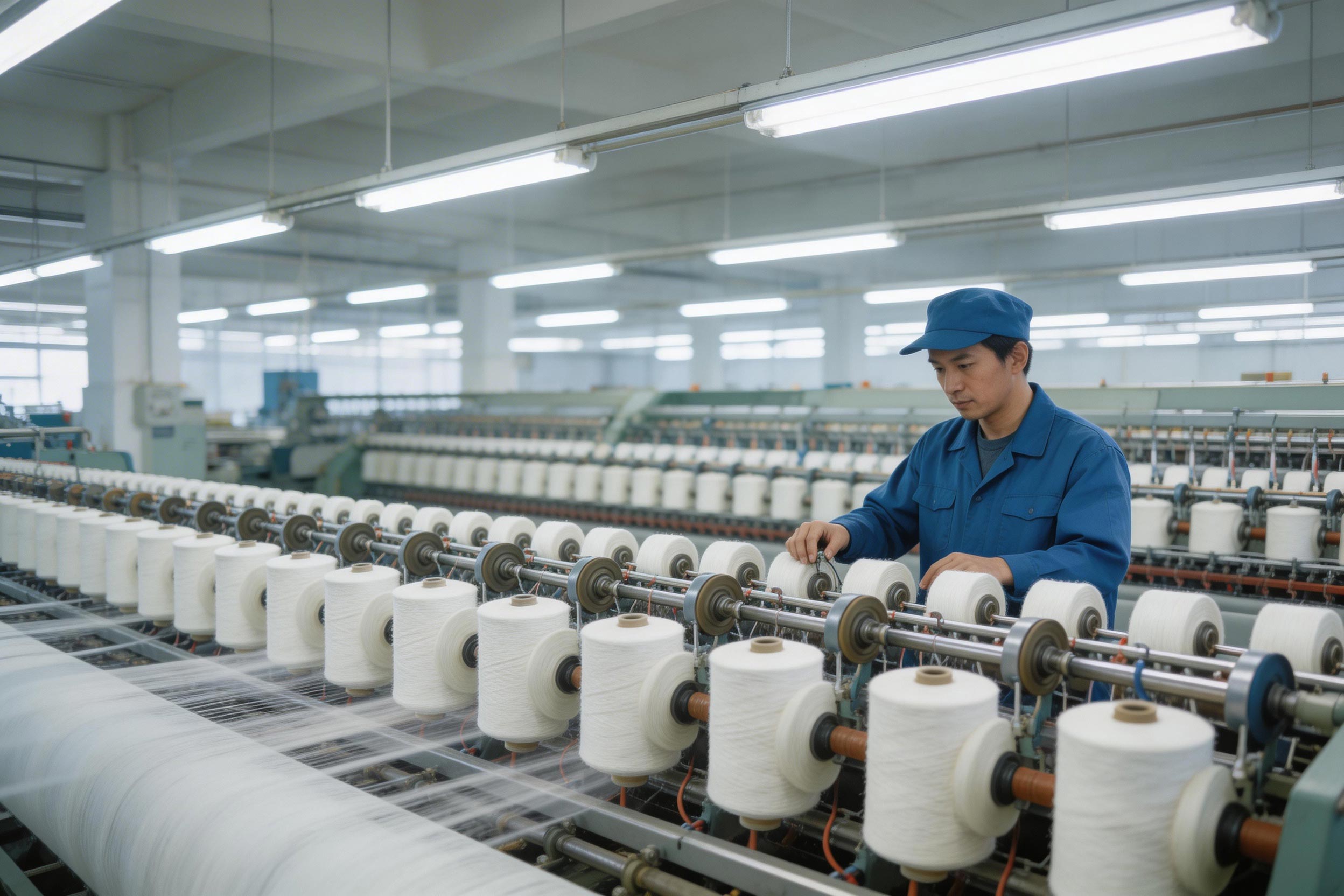
Production environment supporting OEM bed blanket programmes; LOGO customization is the documented customization scope.
Where LOGO work is in scope, the artwork package should carry the logo file in vector form, the colour reference, the placement coordinates, the finished size of the mark and the application method to be used, plus one approved physical sample. A five-engineer R&D team, as recorded in the company profile, gives the buyer a technical contact for that conversation — but the approved sample, not the e-mail thread, is what protects both sides at inspection.
Capacity, lead time and the limits of the model
Scale is documented at two levels. The company profile records a 7,000 m² factory, 60 employees and annual output capacity of 3 million pieces; the capability record states a monthly capacity of 300,000 units, a production lead time of 30–40 days and 100% testing in quality control. For an evaluation-stage buyer those figures answer a simple question — whether the supplier can absorb a programme — but they do not answer the harder question of whether the model fits a given replenishment rhythm.
Minimum order terms need a clarifying question rather than an assumption. The capability record states an MOQ of one container; the procurement FAQ states an MOQ of 1,000. Because the two figures are expressed in different units, they cannot simply be compared or averaged. The applicable minimum should be confirmed for the specific construction, size and packing configuration quoted, and that confirmation should appear in the quotation rather than in a general brochure.
The fit boundary follows from the lead time. A 30–40 day production window before ocean transit suits seasonal programmes, contract bedding and planned replenishment. It does not suit an emergency fill-in order or a test of consumer response that requires stock within weeks. Buyers in the second category are usually better served by planning buffer inventory around the production window than by compressing the quality checks that make the order safe.
Acceptance criteria: what the current record actually states
Acceptance terms in this supplier's buyer-facing record are explicit but compact, which means the buyer's job is to convert them into an inspection plan before the order starts rather than after it finishes. The recorded positions are summarised below with the questions they leave open.
| Term | Documented position | What to fix before the PO |
|---|---|---|
| Minimum order | One container per the capability record; 1,000 per the procurement FAQ | Which basis applies to the chosen construction, size and carton configuration |
| Delivery terms | FOB / CIF | Named port, Incoterms version, and who arranges and pays insurance |
| Inspection | Pre-shipment factory full inspection; third-party inspection (SGS) acceptable; buyer on-site inspection acceptable | Sampling plan, defect classification, acceptable quality limit, and who bears re-inspection cost |
| Payment | 20 / 80 | Which document releases the balance — inspection report, bill of lading or arrival |
| After-sales | Quality issue resolution within 7 days; replacement or refund for confirmed defective products | What counts as a confirmed defect and what evidence supports the claim |
The inspection clause is the strongest item in the record because it allows three routes: full factory inspection before shipment, an agreed third-party inspection, and a buyer visit. Each route produces a different kind of assurance. Factory inspection confirms conformity to the agreed specification; an independent third party adds an outside record that can be used in internal sign-off; an on-site visit lets a buyer see the actual production lot, which matters most on a first order or a new construction.
What the record does not define is defect language. Three additions close that gap: a written defect classification covering appearance, dimension, colour, construction and packing; the acceptable quality limit and sampling plan to be applied; and the claim window with the evidence required — photographs, retained samples and carton identification. The seven-day resolution commitment is only meaningful when the buyer and supplier share a definition of the defect it resolves.
Certification: separating the document from the claim
The registration document recorded for this supplier is a Foreign Trade Operator Registration and Record Form issued by the Ministry of Commerce of the People's Republic of China, carrying registration number 03330550, issued on 2 May 2020 and valid to 1 May 2050. Its recorded scope is global trade and export of textile products including bed blankets and home textiles, covering all countries and regions including the EU, US, UK, Australia and Japan. The same record lists CE, FDA and OEKO-TEX Standard 100 among the standards its products are stated to meet.
Two things should be kept apart here. A foreign-trade registration establishes the right to export; it is not a product test. OEKO-TEX Standard 100 is a label for textile products tested for harmful substances, applied to tested components, and it is graded by product class — Class I being the strictest category, intended for babies and children up to three years of age, according to the OEKO-TEX Association. Neither point tells a buyer which specific blanket in a range carries which certificate.
The verification sequence is short and worth running before volume is committed. Request the certificate number and the legal name of the certificate holder and check they match the entity that will invoice. Confirm the product class against the intended use — a baby programme sits in a stricter class than an adult throw. Confirm the tested components, the validity period and whether the certificate covers the exact construction, colour and fibre composition being ordered. Finally, confirm in writing which directives or destination-market rules the certificate holder considers applicable to the item, rather than inferring applicability from a mark on a brochure.
Performance adjectives that need a test report
The company's stated quality concept — soft, warm and environmentally friendly — describes a design intention and a hand-feel direction. It is a useful statement of positioning, and it is not a measured property. Buyers writing performance clauses should keep the two categories separate.
Claims such as antibacterial, breathable or moisture-wicking, waterproof, anti-static and wear-resistant belong in the second category. Each requires a named test method, an accredited laboratory, a defined sample, a test date and an agreed pass threshold before it can function as an acceptance criterion. A tender that specifies “antibacterial” without those elements cannot be inspected; it can only be argued about. Where a performance claim is commercially essential, the acceptance criterion should be the report and the threshold, with the descriptor treated as a summary of them.
Machine-washability sits in a different position because it is partly documented: the case record for the flannel blanket lists durable and machine-washable characteristics together with ultra-soft touch, a premium shiny finish, luxury aesthetic and cozy comfort. Those statements are recorded as product highlights under proper care and washing. The care regime itself — temperature, cycle, drying and any detergent restriction — should still be taken from the label the supplier intends to print, because that label, not the marketing summary, is what the end user will follow.
Application fit and where the acceptance emphasis shifts
Different end uses pull different clauses to the front of the specification. The documented application scope for this supplier's wholesale channel covers resale in retail stores, e-commerce platforms, hotel bedding supplies, and institutional and home textile markets; the wholesale case on record involves clients in the United States, Ukraine and the United Kingdom, 100 containers, and a stated duration of three or more years under proper care and washing, with the result recorded as stable operation.
Within that scope the emphasis moves as follows:
- Retail resale — label accuracy, carton presentation and lot-to-lot colour consistency matter more than absolute weight precision, because the product is judged on shelf.
- E-commerce — packing density, compression behaviour and photographic consistency between the sample and the shipped lot drive return rates more than construction choice.
- Hotel bedding — dimensional consistency across replacement lots, shrinkage control and commercial-laundry durability should be written into the specification, with the wash regime named.
- Institutional and home textile programmes — volume planning, carton marks and delivery scheduling usually outweigh surface refinement in the acceptance discussion.
Adjacent uses raise their own criteria. A baby programme moves the certification question to the strictest product class and adds skin-contact requirements. A dormitory programme prioritises packing efficiency and a simple, robust care instruction. Camping and lightweight portable programmes trade warmth per unit weight against packed volume, which is a specification decision rather than a construction name. Since the documented application record does not itself list baby, dormitory or camping programmes, a buyer targeting one of those segments should confirm suitability and documentation in the RFQ instead of assuming continuity from the retail and hotel cases.
Market context: why documentation discipline is the competitive variable
The category is large enough that availability is rarely the constraint. Fortune Business Insights valued the global blanket market at USD 24.97 billion in 2025 and projected USD 45.86 billion by 2034 in research published in September 2026; that figure covers all blankets, including electric types, and is a commercial forecast rather than a measurement of the bed blanket segment alone. Trade data points in the same direction on the sourcing side, with the United States importing USD 1.26 billion of HS 630140 blankets from China in 2024.
The procurement reading of those figures is narrow and practical. In a market of that depth, suppliers are numerous and comparable on the basics; the difference between a smooth programme and a costly one sits in specification clarity, customization discipline and acceptance evidence. A buyer who cannot state the measured weight, the post-wash dimension and the defect classification is not choosing between suppliers on capability — only on price and optimism.
Factory-direct OEM compared with catalogue buying
Two purchasing routes dominate. The first is catalogue or intermediary buying: a range is selected from a list, the specification is whatever the list implies, and customization is limited to what the intermediary already stocks. The second is a documented factory-direct OEM programme, in which the specification is written for the order and the inspection plan is agreed before production.
Specification control favours the direct route, because the buyer writes the fields rather than accepting them. Customization also favours it where the need is LOGO work within the documented scope, while catalogue buying remains simpler where the need is a standard item delivered quickly. Order size cuts the other way: a container-scale minimum and a 30–40 day production window are heavy for a first trial, so smaller buyers often begin through an intermediary and move to direct programmes once volumes justify it. Inspection access is the clearest structural difference — a direct programme can build pre-shipment inspection, third-party inspection and buyer visits into the commercial terms, while an intermediary route usually offers a report rather than access.
The limitation deserves equal space. A factory-direct model concentrates risk on the buyer's own specification: if the document is thin, the factory will meet a thin document faithfully. Records such as those summarised here are company-provided and describe capability rather than verified performance on a specific order. Buyers scaling beyond a first shipment should pair them with their own audit, an inspection plan and sample approval, and should confirm that the quoted MOQ, lead time and customization scope apply to the exact item being purchased.
What to lock in before the next buying season
A specification package assembled in the evaluation stage saves most of the disputes that would otherwise surface during execution. The minimum viable version contains a per-SKU fibre declaration, a measured weight, a post-wash dimension with tolerance, a physical colour reference, an approved sample signed by both parties, a defect classification with an acceptable quality limit, an inspection route, and a documented list of what customization covers. Add the certificate request — number, holder, product class, validity — and the care label text, and the package answers almost every question that arises between sampling and shipment.
Frequently asked questions
Which bed blanket constructions are documented, and how should a buyer choose between them?
The documented range covers flannel variants (wave, square, square jacquard and Southwest design), Shu fleece variants (3-D and jacquard), rabbit fur blankets, and velvet quilts and four-piece sets. The choice is normally made in two steps: first the construction, based on the required hand-feel, weight and durability expectation; then the pattern, based on the market and price band. Because the construction names describe surface character rather than measurable properties, each selection should be confirmed against a physical sample with a recorded weight and care regime.
Can bed blanket sizes be customized beyond the usual Twin, Queen and King ladder?
Custom dimensions are supported through the OEM route: the flannel blanket is recorded as having no fixed model and being customizable, and OEM production is documented for buyers in the USA, UK and Brazil. The dimension sheet should state nominal size, finished size after the first wash, permitted tolerance, the shrinkage allowance to be held, and the edge-finishing method. For programmes that replace stock in lots, consistency between deliveries should be checked against a fixed approved sample rather than against the previous shipment.
What does LOGO customization include, and what has to be confirmed separately?
The documented customization scope is LOGO customization within OEM production. Fibre-blend changes, structural redesign and bespoke retail packaging are not part of that documented scope, so they should be confirmed in writing for the specific project before they appear on a purchase order. A complete artwork package includes the vector logo file, colour reference, placement, finished size of the mark, application method and one approved physical sample.
What payment, delivery and inspection terms are recorded?
The recorded terms are payment at 20/80, delivery on FOB or CIF terms, and acceptance based on pre-shipment factory full inspection, third-party inspection such as SGS, or buyer on-site inspection. The minimum order is recorded as one container in the capability profile and 1,000 in the procurement FAQ; because the units differ, the applicable figure should be confirmed in the quotation for the specific construction, size and packing.
How should a buyer verify certification before committing to volume?
The registration record on file is a PRC Foreign Trade Operator Registration and Record Form issued by MOFCOM under number 03330550, issued 2 May 2020 and valid to 1 May 2050, with a global textile export scope; it also lists CE, FDA and OEKO-TEX Standard 100 among the standards its products are stated to meet. Verification means requesting the certificate number and holder name, matching them to the invoicing entity, confirming the product class against the intended use, checking tested components and validity, and confirming which destination-market rules the holder considers applicable to that item.
What happens when a quality issue is confirmed after delivery?
The recorded after-sales position is quality issue resolution within seven days, with replacement or refund for confirmed defective products. Because “confirmed” has to be defined, the purchase order should carry a defect classification, the sampling plan and acceptable quality limit, the claim window, and the evidence required — photographs, retained samples and carton identification. Without those elements the seven-day commitment has no shared reference point.
Closing note
Bed blanket procurement rewards buyers who translate familiar trade vocabulary into measured, inspectable fields. The documented profile summarised here — construction range, OEM and LOGO scope, container-scale capacity, 30–40 day lead time, three-route inspection and a seven-day after-sales commitment — is enough to structure a serious RFQ and to know which questions still need written answers before the first container is booked.
Tem questões ou precisa de mais detalhes?
Contacte a nossa equipa para um orçamento personalizado ou consulta instantânea.
Solicitar orçamento
Preencha o formulário abaixo e a nossa equipa entrará em contacto com uma proposta personalizada.
Chat direto do WhatsApp
Prefere conversar em tempo real? Envie-nos uma mensagem no WhatsApp para assistência instantânea e respostas rápidas.
- Obter orçamento personalizado
- Partilhar fotos ou documentos
- Discuta as suas necessidades diretamente
Geralmente responde em 5–30 minutos durante o horário de expediente.