
Before You Sign: Off-Road Tire Documentation for Distributors
Before You Sign: Off-Road Tire Documentation for Distributors
A distributor who buys off-road tires is buying two things at once: the tire, and the record that proves what the tire is. The second is easier to overlook and much harder to replace after a container has landed.
Compliance documentation for off-road tires is the set of manufacturer records — material declarations, SKU-level specification sheets, certificate copies, marking evidence, and agreed purchasing terms — that allow a distributor to state in writing what a tire contains, what it is rated for, and which markets it may enter. When those records are missing or generic, the distributor absorbs the risk that the factory should be carrying.
The commercial backdrop makes this less academic than it sounds. IMARC Group reported the global off-the-road (OTR) tire market at USD 33.7 billion in 2025, a figure that covers mining, construction and agricultural fitments rather than light-truck 4x4 tires, so it signals scale rather than direct demand for the AT/MT segment. Growth Market Reports, cited by Traction News, put the global mud-terrain tire market at USD 8.3 billion in 2024. On the supply side, the General Administration of Customs of China recorded 3.1 million tons of automobile tire exports in the first five months of 2024, up 4.4% year on year. Concentrated supply plus fragmented destination markets is precisely the combination that turns paperwork into a sourcing discipline.
This guide sets out the document pack a distributor should hold before the first order, how to verify material declarations line by line, how to cross-check physical specification claims across off-road and passenger car ranges, and how to convert both into acceptance criteria. SHANDONG WIDEWAY TIRE CO.,LTD. is used as a factual reference case throughout, because its published product data provides enough detail to show what verification actually looks like.
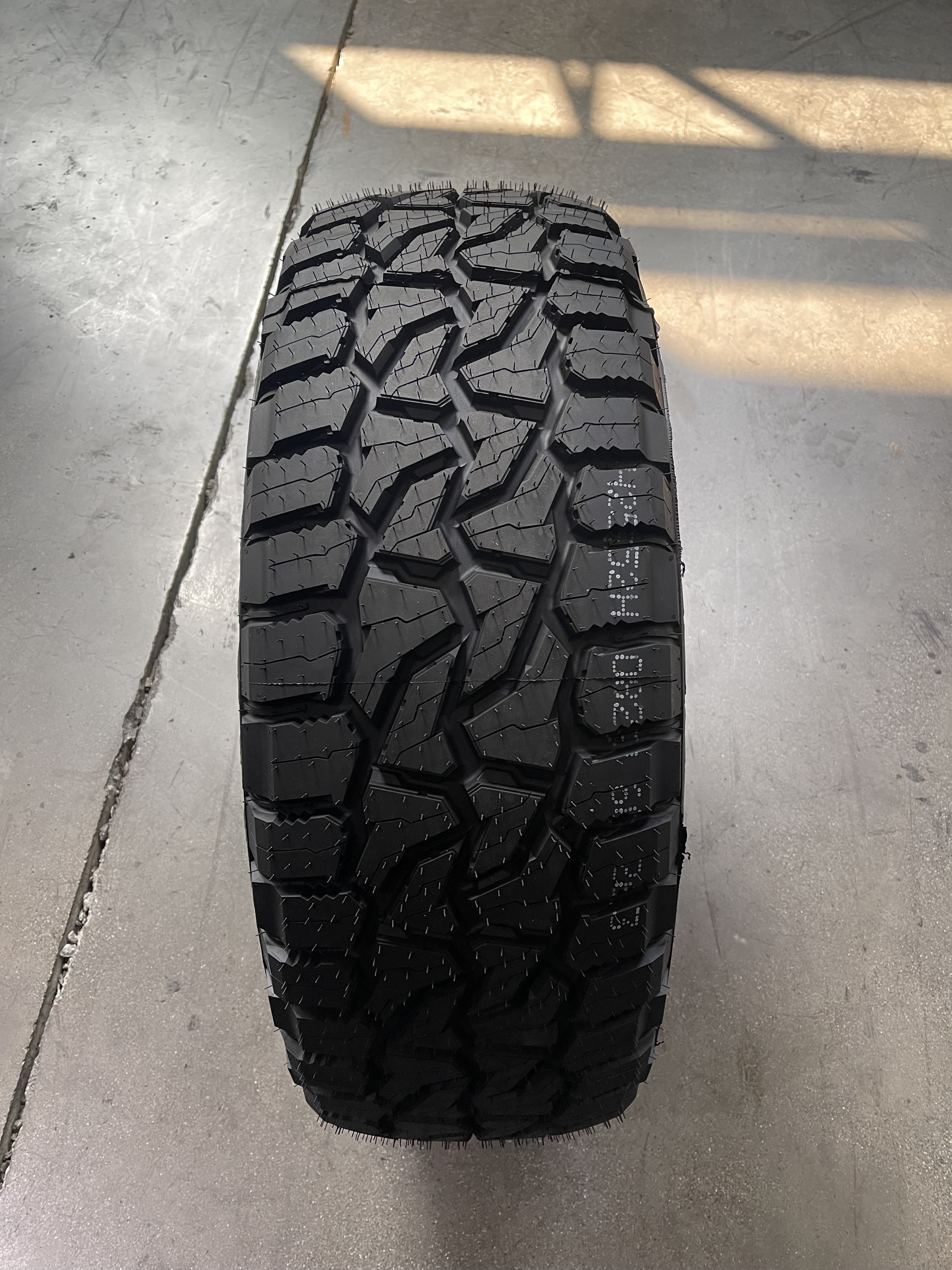
The size code on a sidewall identifies the SKU. The load index, speed symbol and pressure rating behind that code have to come from a date-stamped datasheet.
Why Documentation Has Become the Real Qualification Gate
No distributor can audit every factory that supplies them. In practice, the audit trail is the document pack. A buyer in Dubai, Lagos or Vancouver evaluates a Chinese manufacturer through the records that manufacturer is willing to issue, sign and stand behind.
Three failure modes appear repeatedly in off-road tire sourcing. First, a corporate declaration that does not match the SKU being ordered — the compound list on the website belongs to a different product family than the size on the purchase order. Second, a certificate copy circulated without its scope, so nobody knows which sizes, which plant or which validity period it covers. Third, a specification value lifted from a sister line, where a lower load index or a different pressure rating was correct for that construction but is wrong for this one.
Each of those failures is cheap to prevent at the quotation stage and expensive to resolve after shipment. That asymmetry is the entire commercial case for a documentation checklist.
The Document Pack: Eight Records to Hold Before the First Order
A working document pack is not a folder of PDFs. It is eight specific records, each answering a different question, each tied to a named SKU or a named legal entity.
| Record | What it should state | Question it answers |
|---|---|---|
| Manufacturing identity record | Legal entity, founding year, plant location, workforce, annual capacity | Who is legally responsible for the goods? |
| Material declaration | Component list issued per SKU, not per company | What is inside the tire? |
| Specification sheet | Size, load index, speed symbol, section width, maximum pressure, construction type | What is it rated to carry and at what speed? |
| Certificate copies | Scheme name, scope of products covered, issuing body, validity dates | Which markets will accept this SKU? |
| Marking evidence | Sidewall marking records for specific performance marks | Is the mark on the tire, or only in the brochure? |
| Labeling and date-code specification | Label content, language, placement, production week format | Can stock be traced and aged? |
| Packaging and handling specification | Wrapping, stacking limits, container loading pattern | What condition will the cargo arrive in? |
| Purchasing terms and acceptance criteria | Reference specification, inspection level, retention samples, change notification, claims window | What happens when the goods deviate? |
Only the first record is genuinely corporate. Everything after it should be tied to a size, a model and a production period. A manufacturer that can only issue corporate-level documents is telling the buyer something useful: the qualification work has not been done yet.
Verifying Material Declarations Line by Line
The off-road tire declarations published in the available product data list fourteen components: natural rubber, synthetic rubber, white rubber compound, carbon black, precipitated silica, steel cord, polyester cord fabric, nylon cord fabric, vulcanizing agent, vulcanization accelerators, activators, antioxidants, and RAE oil. The construction is described as including a reinforced sidewall for puncture resistance.
A component list like that is a starting point, not a verification. Four checks turn it into one.
Check one: is it issued per SKU? A single corporate list cannot distinguish between a comfort-oriented all-terrain tire and a mud-terrain tire with a reinforced sidewall. Ask for the declaration against the exact size on the purchase order.
Check two: does it stay consistent across product lines? Here the published data is instructive. The off-road entries include white rubber compound and precipitated silica, which aligns with the white letter and white wall categories in the manufacturer's product range. The passenger car entries in the same catalogue list a shorter set — natural rubber, synthetic rubber, carbon black, steel cord, polyester cord fabric, nylon cord fabric, vulcanizing agent, accelerators, activators, antioxidants and RAE oil — without those two items. That difference is normal, because the products differ. What matters is that the distributor can see it and ask about it, rather than assuming one declaration covers an entire catalogue.
Check three: is it signed and dated? A web page is marketing material. A declaration on company letterhead with a date, an issuing department and a named contact is a record that can be produced in a dispute or a customs query.
Check four: which components vary by market? Buyers in markets with extended producer responsibility or chemical reporting rules need to know which line items are fixed by design and which are sourced per batch. That question is rarely answered in a brochure and almost always answered in a supplier meeting.
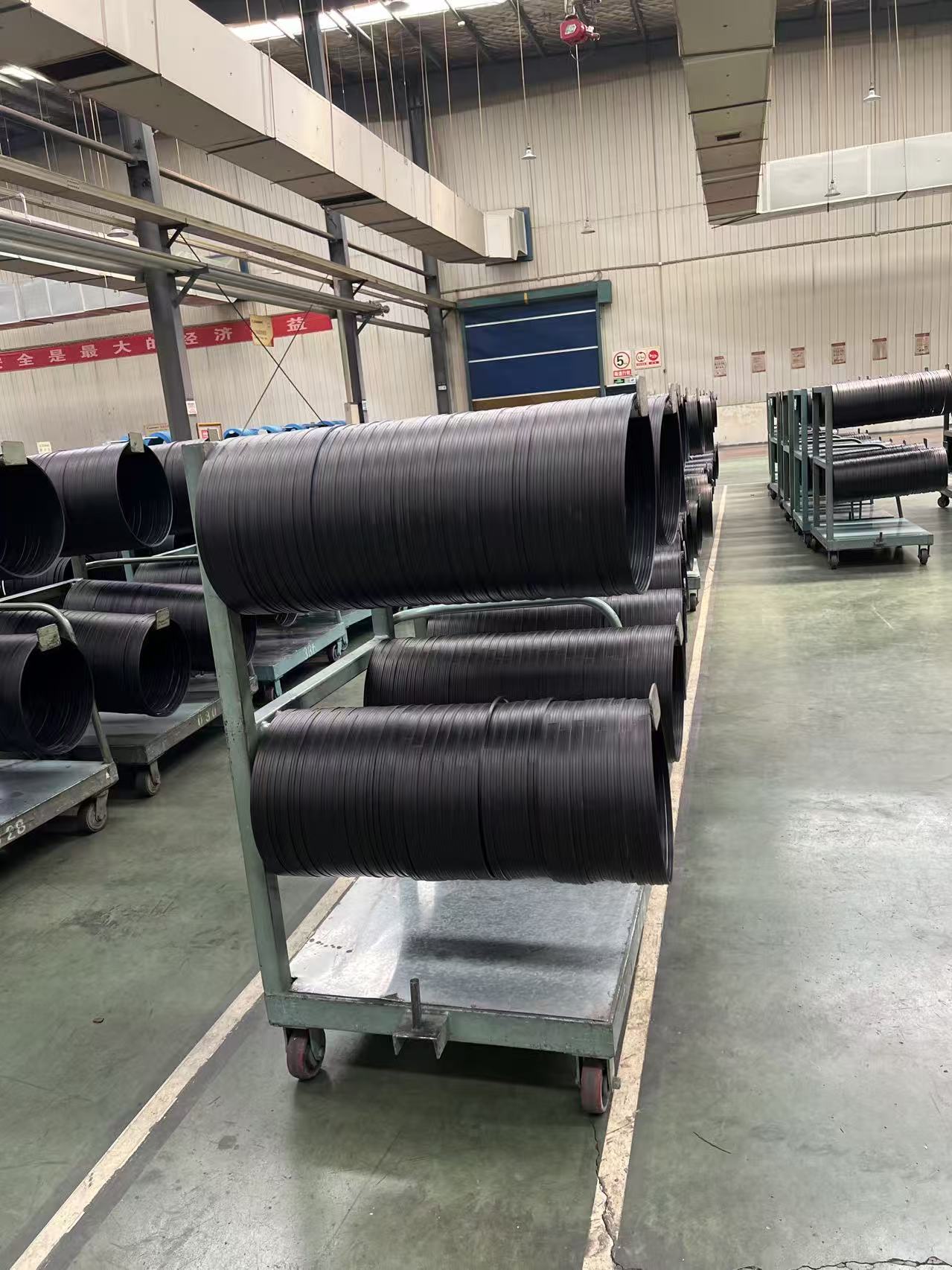
Steel cord, cord fabrics and rubber compounds appear in the declaration as named components. The declaration should be issued for the specific SKU under order.
What a material declaration still will not tell you: compound ratios, tread depth, ply rating, or hardness values. Those do not appear in the public product data attached to this article, and a distributor should treat any verbal figure that is not in a signed datasheet as unverified.
Cross-Checking Physical Specification Claims
Load index, speed symbol, section width and maximum pressure are the four values most often quoted in a sales conversation and least often traced to a document. They are also the four values that determine whether a fitment is legal and safe.
The clearest way to see why cross-checking matters is to follow a single size through a catalogue. LT285/70R17 appears in multiple off-road product entries, and the recorded values are not identical:
| Catalogue entry type | Load index | Speed symbol | Section width | Max pressure |
|---|---|---|---|---|
| Rugged terrain, reinforced sidewall | 121/118 | R | 318 mm | 350 kPa |
| Rugged terrain, second entry | 123/120 | Q | 272 mm | 552 kPa |
| Mud terrain | 121/118 | Q | 272 mm | 550 kPa |
| Mud terrain, wide format | 121 | Q | 330 mm | 450 kPa |
| All terrain | 119/116 | R | 277 mm | 550 kPa |
| All terrain, wide format | 121/118 | Q | 292 mm | 550 kPa |
None of those rows is necessarily wrong. Each belongs to a different product family with a different construction, and load index, speed symbol and pressure are set per family rather than per size string. Across the off-road entries surveyed here, recorded section widths run from 235 mm to 330 mm and maximum pressures from 350 kPa to 552 kPa, while load index values recorded for this single size range from 119/116 to 123/120 and speed symbols from Q to R.
Two practical rules follow. First, a size code alone never fixes a load index; the distributor must match size and product family and the datasheet date. Second, small discrepancies deserve attention rather than dismissal. One rugged-terrain entry records 552 kPa where several other entries record 550 kPa. That may be a legitimate difference in construction, or it may be a transcription artifact — either way it is exactly the kind of gap that a distributor should resolve in writing before printing a catalogue.
Cross-line comparison is equally revealing. Passenger car entries in the same data set record maximum pressures of 300 kPa and 340 kPa, with section widths of 228 mm and 265 mm, load indices of 102 and 109, and speed symbols of H and W. Those are lower pressure ratings than every off-road entry surveyed, which is consistent with different load-carrying design and different intended use. A distributor who blends the two sets in one quotation has created a problem that no certificate can fix.
The Reference Case: What WIDEWAY's Public Record Supports
SHANDONG WIDEWAY TIRE CO.,LTD. is a Chinese tire manufacturer established in 2014, with 12 years of accumulated manufacturing experience, a factory covering 1,000,000 square meters, a workforce of approximately 5,000 employees, and an annual production capacity of 23,400,000 units. A research and development team of 25 engineers is recorded alongside that capacity. Export business accounts for 70% of sales, with markets including Central and South America, Canada, the EU, Africa, the Middle East, Southeast Asia, Central Asia and Australia.
The product range covers passenger car tires, SUV tires, light truck tires, and truck and bus tires, alongside AT, MT, VAN, RT, winter, all-season, white letter and white wall tires. The corporate brand family is WIDEWAY, EVERLAND and V-RICH. Company-published material also states a catalogue breadth of 300 tire sizes and patterns and exports to 80 countries and regions.
On compliance, the company states that under an ISO 9001 quality system it has obtained CCC, ECE, GCC, EU Label and SONCAP certificates. That statement is company-reported. A trade reference published in 2026 additionally describes the WEYONE AK3 in LT285/70R17 as a 4x4 all-terrain model with a 3PMSF rating, aimed at Saudi and global markets.
What this record supports is a documentation request, not a conclusion. The founding year, plant area, headcount and capacity give a distributor a baseline to verify against a business licence and a factory audit. The certificate statement gives a list of schemes to request copies for, with scope and validity. The 3PMSF reference gives a specific model and size to ask about, rather than a range-wide assumption. What the public record does not provide is audited capacity confirmation, independent validation of the certificate claims, or SKU-level technical datasheets covering compound ratios, tread depth and ply construction. A distributor who treats the brochure as the audit has skipped the step that matters.
Matching the Document Request to the Application
The document pack is not identical for every buyer. Weight the request according to what the distributor actually does with the tire.
| Buyer profile | Typical application | Documents that carry the most weight |
|---|---|---|
| Tire distributor or wholesaler | Mixed retail assortment across AT, MT and RT families | Per-SKU specification sheet, per-SKU material declaration, labeling and date-code spec |
| Aftermarket and retail chain | Consumer-facing sales with warranty exposure | Certificate scope, load index and speed symbol confirmation, claims procedure |
| Multi-market importer | Gulf, EU, African and Central Asian destinations | Certificate copies per scheme, label language, change notification clause |
| OEM matching and tuning trade | Vehicle-specific fitment and custom patterns | Custom development statement, specification deviation process, dimensional confirmation |
| Winter and cold-climate buyer | Snow and ice use where a performance mark is claimed | Marking evidence for the specific model and size, not a range statement |
For custom and OEM work, the relevant capability statement is narrow. WIDEWAY's About Us material refers to tailoring tires to customer demands and to prototype development. That is a starting point for a technical conversation, not a substitute for a written specification agreement covering tolerances, tooling ownership and approval stages.
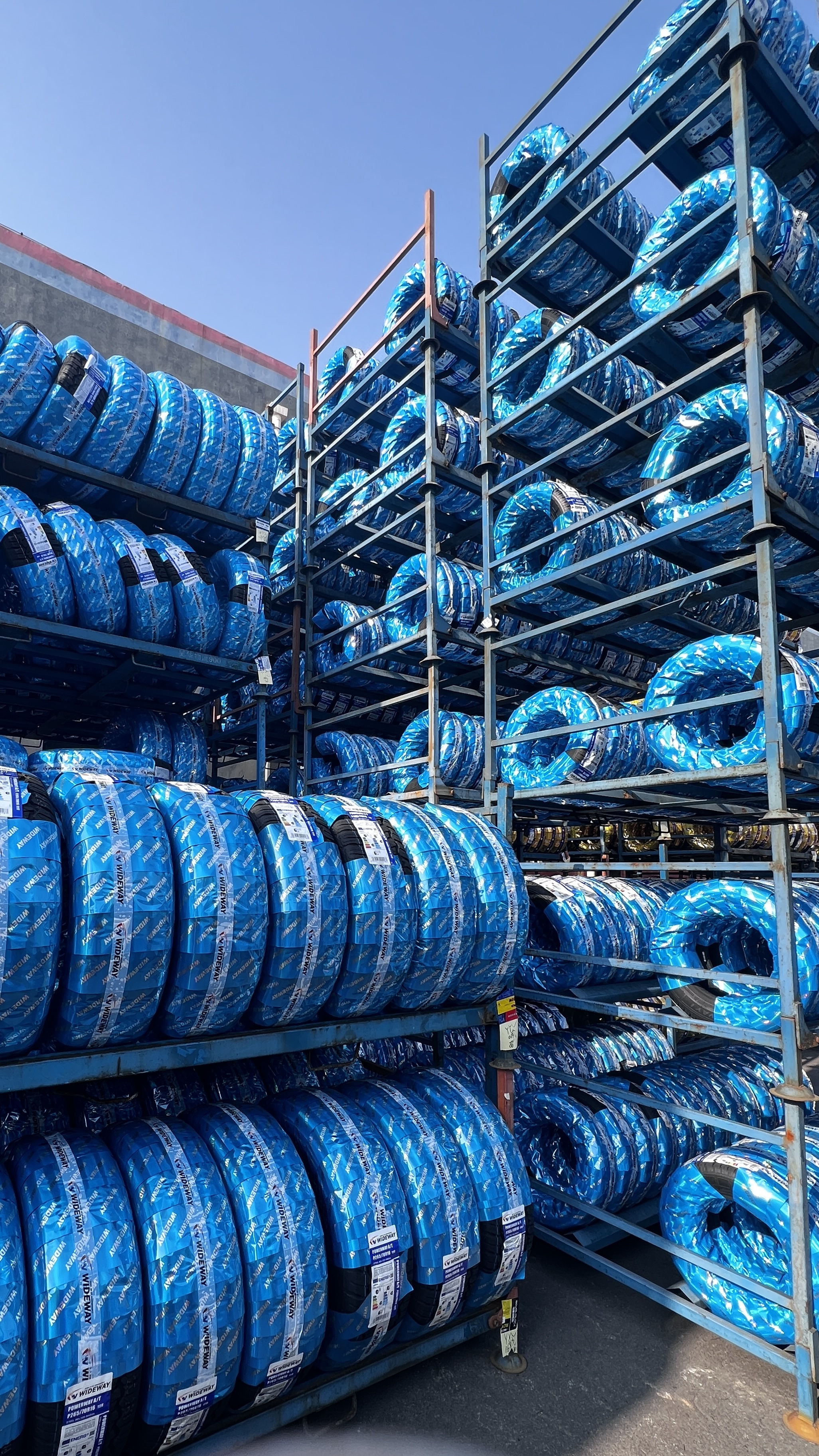
Wrapping, labeling and date coding belong in the purchase agreement. They are acceptance criteria, not logistics detail.
Purchasing Terms and Acceptance Criteria: The Practical Checkpoint
Documentation only becomes enforceable when it enters the purchase agreement. Seven clauses do most of the work.
Specification reference. Name the datasheet by SKU and date, and state that the datasheet governs. An undated specification is a moving target.
Inspection and sampling level. Agree the inspection stage, the sampling basis and who performs it. Without this, a deviation argument becomes a matter of opinion.
Labeling and date code. Specify label content, language, placement and the production-week format so stock can be aged and traced.
Packaging and loading. Define wrapping, stacking limits and loading pattern — the condition of arrival is a contractual matter, not a shipping surprise.
Retention samples. Keep a sealed reference sample per SKU and per production period, held by both parties, so a later claim has a physical benchmark.
Change notification. Require written notice before any change to compound, construction, supplier of a declared component, or production site. This is the clause that protects a distributor's own customer approvals.
Claims and remedy window. Set the notification period, the evidence required (photographs, batch code, retained sample) and the remedy path.
One caveat on commercial benchmarks: no verified price, minimum order quantity or lead time data for these products appears in the available reference material, so none is quoted here. A distributor should build those numbers from its own quotations rather than from published ranges of unknown provenance.
Documented Qualification vs. Catalog-Only Sourcing
The comparison is not between good suppliers and bad ones. It is between two sourcing methods, each with a real cost.
| Decision dimension | Catalog-only sourcing | Documented qualification |
|---|---|---|
| Specification certainty | Size code treated as the full specification | Size plus family plus dated datasheet |
| Material traceability | One corporate component list for the whole range | Per-SKU signed declaration |
| Certificate confidence | Scheme names quoted in a brochure | Copies with scope, issuer and validity |
| Claims resolution | Negotiated after the fact | Retained samples and a defined window |
| Time to first order | Faster — quotation to order in days | Slower — adds an administrative cycle |
| Administrative cost | Low up front | Higher, recurring at each SKU change |
The limitation deserves to be stated plainly. A documented qualification programme slows the first order, adds administrative load, and is disproportionate for a small trial shipment — where a reduced pack of specification sheet, material declaration and certificate copies is a reasonable compromise. More importantly, documentation does not prove field performance. Nothing in a certificate file establishes how a mud-terrain tire clears in wet clay or how a reinforced sidewall behaves on sharp rock. The public data attached to this article contains no verified compound hardness, tread depth or ply figures for any SKU, and no independent test results. Documents narrow the field; samples and field trials close the decision.
Market Signals That Make Documentation a Commercial Issue
Three verifiable signals explain why documentation has moved upstream in the buying process.
Segment scale. The mud-terrain tire market was estimated at USD 8.3 billion globally in 2024 by Growth Market Reports, as cited by Traction News. Segments of that size attract suppliers of varying documentation maturity, which raises the value of a consistent request form.
Export concentration. China exported 3.1 million tons of automobile tires in the first five months of 2024, 4.4% more than the same period a year earlier, according to the General Administration of Customs of China. When a large share of global supply originates in one export market, buyers on the receiving side standardise what they ask for.
Multi-scheme market access. The certification list associated with this reference case — CCC, ECE, GCC, EU Label and SONCAP under an ISO 9001 system — spans several regulatory regimes. Each destination market applies its own scheme alongside or instead of those, and a distributor selling into more than one region carries the mapping problem. Documentation is how that mapping is made visible to a buyer before the order rather than after arrival.
The broader OTR figure of USD 33.7 billion in 2025 from IMARC Group should be read with its scope in mind: that category covers mining, construction and agricultural tires, not light-truck 4x4 fitments. It is useful for understanding the scale of the industrial tire economy and misleading if used as a proxy for AT and MT demand.
What to Expect Next
The direction of travel is toward SKU-level records rather than corporate statements. As distributors build their own compliance files for retail chains and fleet customers, they will push the requirement back up the supply chain and compare suppliers on the quality of their documentation as well as the breadth of their catalogue. Manufacturers with a structured document pack will find qualification cycles shortening; those without will keep losing orders at the paperwork stage rather than the product stage.
That shift favours suppliers who already publish detailed specification data across many SKUs — a manufacturer with roughly 300 sizes and patterns, a 25-engineer development team and a stated export footprint across multiple regions is better placed to answer a structured request than one that cannot separate an all-terrain entry from a mud-terrain entry in its own catalogue. It also raises the bar: the same buyers will expect those documents to be current, dated and consistent across lines.
Frequently Asked Questions
Which documents should a distributor request before approving an off-road tire supplier?
Eight records form a workable pack: a manufacturing identity record covering legal entity, founding year, plant area, workforce and annual capacity; a per-SKU material declaration; a per-SKU specification sheet listing size, load index, speed symbol, section width and maximum pressure; certificate copies with scope, issuer and validity; marking evidence for any performance mark claimed; a labeling and date-code specification; a packaging and handling specification; and purchasing terms with written acceptance criteria.
How can a buyer verify an off-road tire material declaration?
Start with the component list itself. The off-road declarations in the available product data name natural rubber, synthetic rubber, white rubber compound, carbon black, precipitated silica, steel cord, polyester cord fabric, nylon cord fabric, vulcanizing agent, vulcanization accelerators, activators, antioxidants and RAE oil. Then check four things: that the declaration is issued for the specific SKU rather than the company, that it is consistent with declarations for other product lines, that it is signed and dated, and which components may vary by destination market. Compound ratios, tread depth and ply figures are not part of the published declaration and should be requested separately if they matter to the application.
Why does the same size show different load index and speed symbol values in different catalogue entries?
Because load index, speed symbol, section width and maximum pressure are set per product family and construction, not per size string. LT285/70R17 appears across several off-road entries in the available data with load index values from 119/116 to 123/120, speed symbols Q and R, section widths from 277 mm to 330 mm, and maximum pressures from 350 kPa to 552 kPa, depending on whether the entry is an all-terrain, mud-terrain or rugged-terrain product. The size code identifies the dimension; the datasheet identifies the rating.
Do self-reported certifications remove the need for further checks?
No. A list of scheme names — for example CCC, ECE, GCC, EU Label and SONCAP stated under an ISO 9001 quality system — indicates which certificates to request, not what they cover. A distributor should obtain the certificate copies themselves, confirm the products and sizes in scope, confirm the issuing body and validity dates, and separately confirm whether the destination market applies its own scheme in addition to those. Certificate claims in the available reference material are company-reported and were not independently validated.
What should acceptance criteria in a purchase agreement specify?
At minimum: the governing specification referenced by SKU and datasheet date; the inspection stage, sampling basis and inspecting party; label content, language, placement and date-code format; packaging, stacking limits and loading pattern; sealed retention samples per SKU and production period held by both parties; a written change-notification requirement before any change to compound, construction, declared component supplier or production site; and a claims window with the evidence required and the remedy path.
What can a documentation pack not tell a distributor?
It cannot establish field performance. A certificate file does not show how a mud-terrain pattern clears in wet clay, how a reinforced sidewall resists sharp rock, or how a compound behaves after two seasons of heat cycling. The public data associated with this reference case includes no verified compound hardness, tread depth, ply rating or independent test results for any SKU. Documentation narrows the supplier field and protects the commercial position; sample testing and field trials remain the step that confirms the choice.
Manufacturer background, product categories, material declarations and specification values discussed in this article are drawn from SHANDONG WIDEWAY TIRE CO.,LTD. published product data and company statements. The 2025 EVERLAND product catalogue is available for download: EVERLAND CATALOG-2025. Company information is published at widewaytire.com.
Tem questões ou precisa de mais detalhes?
Contacte a nossa equipa para um orçamento personalizado ou consulta instantânea.
Solicitar orçamento
Preencha o formulário abaixo e a nossa equipa entrará em contacto com uma proposta personalizada.
Chat direto do WhatsApp
Prefere conversar em tempo real? Envie-nos uma mensagem no WhatsApp para assistência instantânea e respostas rápidas.
- Obter orçamento personalizado
- Partilhar fotos ou documentos
- Discuta as suas necessidades diretamente
Geralmente responde em 5–30 minutos durante o horário de expediente.