
Benchmarking Zhuorong on H21, HDV and H19 Packaging Data
Benchmarking Zhuorong on H21, HDV and H19 Packaging Data
A supplement packaging shortlist rarely fails for lack of suppliers. It fails because the claims on each supplier's website are not on the same footing, so a buyer at the evaluation-to-execution stage ends up comparing brochures rather than specifications. This benchmark examines Ningbo Zhuorong (Honor Packaging) against the peer frame normally applied to that comparison — Amcor, Gerresheimer, Aptar and Berry — under one rule: every statement about Zhuorong must trace to a supplied record, and no statement about a peer may exceed what the reviewed evidence set can support.
The result is deliberately asymmetric. Zhuorong is examined at drawing level, because its records contain model ranges, a glass dimension, neck finishes, carton counts and written order terms. The four peers are treated as evaluation columns, because the reviewed evidence set contains no comparable published specification, share or service data for them. Naming a company in a comparison frame is not an assertion about that company, and "not disclosed" is never treated here as "not capable."
Why capability evidence, not catalogue breadth, decides the order
By the time a supplement brand or its contract manufacturer reaches execution, the open questions have narrowed to three. First, does the pack dimensionally fit the fill, the closure and the filling line. Second, is the documentation attached to that pack current and scoped to the exact item being bought. Third, can the order be governed — minimum quantity, lead time, payment sequence, inspection point and defect remedy — without exposing the launch date.
None of those three questions is answered by a supplier logo wall. What answers them is the specificity of the specification: a model name, a size range, the one dimensional feature that governs fit, and a document that a quality team can check against an incoming sample. In packaging, a claim without a value cannot be inspected, and a value without a model cannot be compared.
That is the practical reason this benchmark scores narrowly. A scoring table that assigns Amcor, Gerresheimer, Aptar or Berry a number for technical capability, market share or customer service would be inventing the number, not measuring it. The table below therefore scores only the Zhuorong record, marks each dimension as verified, partial or unverifiable, and states exactly what a buyer should request from each peer to complete the same row on their own side of the comparison.
What the reviewed record set actually contained
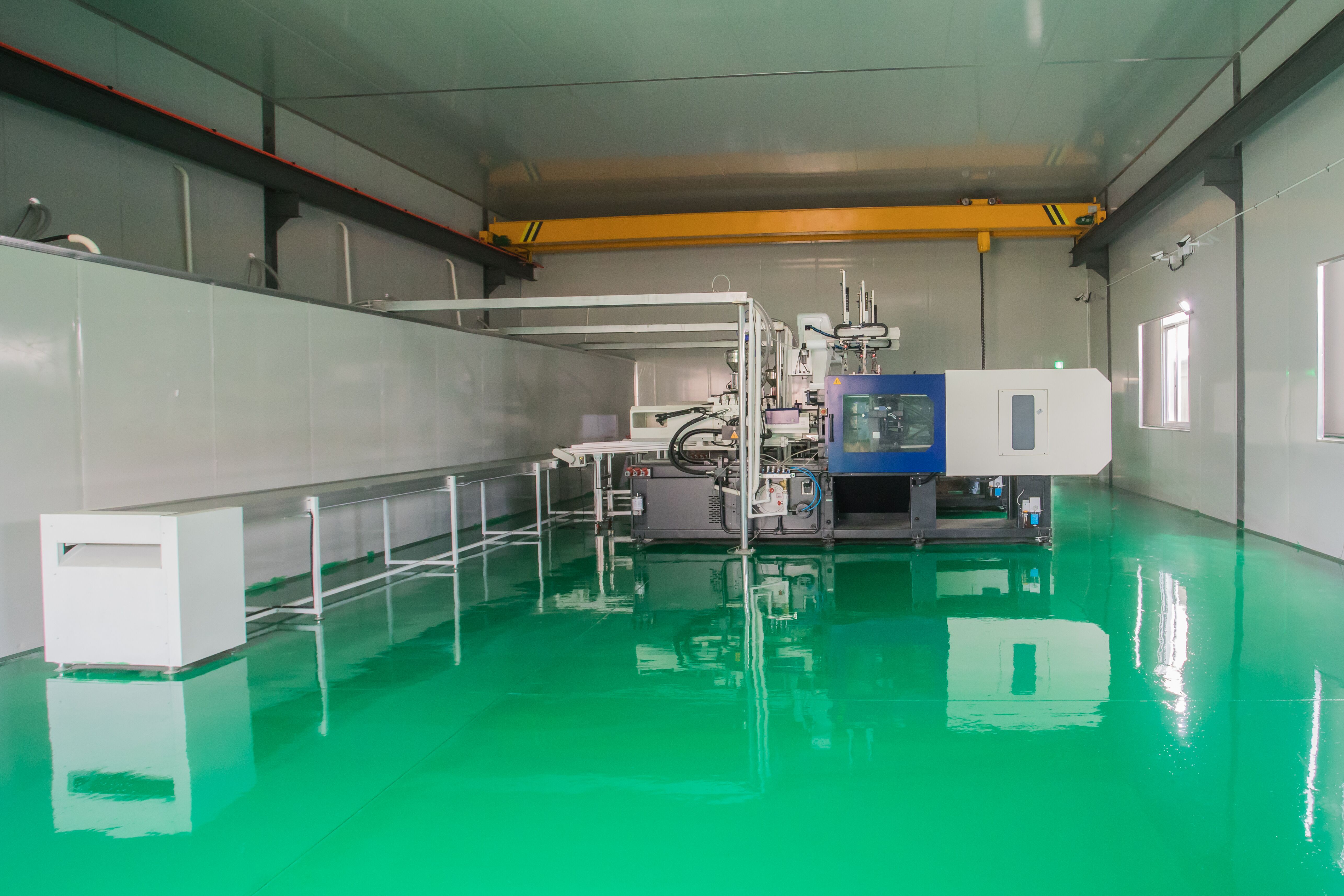
The first-party record covers five areas. The company profile states a 2015 founding, a Ningbo base close to the Ningbo and Shanghai seaports, 310 employees, a 15-person R&D team, 100% export orientation and EU/US as main markets. The capability record states OEM and ODM production, customisation through artwork printing, new design development and frosted finish, a 10,000-unit MOQ, a 30–45 day lead time, 100,000 units monthly capacity, 100% pre-shipment testing with third-party inspection by SGS, and an after-sales position recorded as "accept to reissue." The compliance file contains two SGS-issued records. The case record documents a German project. A separate purchasing record fixes MOQ, delivery term, payment split and acceptance basis.
The third-party data set is a different story, and the difference matters for how this article is read. Its own coverage assessment rated product and material specification as insufficient, price and cost as insufficient, and the supplier landscape as partial, with only one vendor self-description available and no verified manufacturer list. In other words, the market-side evidence that would be needed to score peers against Zhuorong on specifications or share was not present in the material reviewed.
The verified Zhuorong specification set
Five models carry usable specification detail. They are not interchangeable: each covers a different fill range and a different closure logic, which is what makes them useful as evidence rather than as a catalogue list.
| Model | Format | Documented size range | Documented dimensional detail | What it lets a buyer evaluate |
|---|---|---|---|---|
| H21 | Clear square child-resistant jar | 15–60 ml/dr | 0.38 mm glass | Small-format child-resistant packs where capacity and glass dimension can be checked against a sample |
| HDV1 | Violet glass jar | 100 ml – 1 L | 41/400 and 89/400 neck threads | Wide fill range with two neck options; closure matching becomes the first technical question |
| HDV2 | Violet glass cosmetic jar | 3–200 ml | No further dimensional detail in the record | Crossover cosmetic and skincare formats alongside supplement lines |
| HDV3 | Essential oil bottle | 5–100 ml | No further dimensional detail in the record | Small-volume liquid formats, including dropper-style programmes pending closure confirmation |
| H19 | Vacuum jar | 5 ml | Packed 250 pcs per carton | Sample and unit-dose formats where carton arithmetic drives order planning |
H21: the child-resistant reference point
H21 is the clearest test of whether a supplier publishes inspectable data. It is a clear square child-resistant jar spanning 15–60 ml/dr with a recorded 0.38 mm glass dimension. Two things follow for a buyer. The size range is wide enough to cover several capsule and tablet count positions without a new mould, and the glass dimension gives an incoming inspection something concrete to measure. What the record does not state is whether 0.38 mm is a nominal wall, a minimum, or a target with a tolerance band. That single ambiguity is worth resolving in writing, because a tolerance that is not defined cannot be failed.
HDV1: one jar family, two neck finishes
HDV1 covers 100 ml to 1 L in violet glass with 41/400 and 89/400 neck threads. The 400-series designation refers to a continuous-thread neck finish family used across glass and plastic packaging, and the number in front of it identifies the diameter. For procurement, the practical consequence is that closure selection is driven by the neck, not by the jar's outer appearance: a 41/400 closure will not seat on an 89/400 finish, and a liner chosen for one may not suit the other. Two neck options across a five-step fill range means fewer moulds and more closure decisions — a trade a buyer should price deliberately rather than discover at the filling line.
HDV2 and HDV3: crossover and small-volume formats
HDV2 spans 3–200 ml in cosmetic violet glass and HDV3 spans 5–100 ml as an essential oil bottle. Both are relevant where a supplement brand also operates a cosmetic or aromatherapy line and wants format continuity across a shelf set. The record supplies ranges but not neck, wall or closure detail for these two models, so they can be shortlisted on capacity and finish, not yet qualified on fit.
H19 and the arithmetic of a carton
H19 is a 5 ml vacuum jar packed 250 pieces per carton. Carton density is an underrated procurement variable: it converts a unit order into a handling and freight plan, and it determines how sampling is structured. At the recorded MOQ of 10,000 units and 250 pieces per carton, a minimum order equals 40 cartons (calculated from the two recorded values, not a measured shipment). A buyer who needs mixed cartons, retail-ready inner packs or pallet-level labelling is asking for something the record does not describe, and should say so before the quotation stage.
R&D, customisation and the tooling conversation
The company profile describes a specific division of labour: Zhuorong positions itself as a manufacturing-responsibility partner that takes a client's finalised packaging design and turns it into a repeatable production item. Before mass production, the stated scope covers structural development, tooling strategy definition, and manufacturing risk assessment and validation. During production, it covers process control and order fulfilment. For a brand, that framing has a direct contractual consequence — design ownership stays with the brand, execution risk sits with the supplier — and the contract should say so explicitly, including who holds the tooling and how drawing revisions are approved.
Customisation on the record is concrete rather than open-ended: printing the client's artwork, developing a new design, and frosted finish. The phrase "etc." appears in the source, which is exactly the kind of qualifier that should not be read as a menu. Any surface treatment beyond artwork printing, new design and frosted finish needs written confirmation and a physical sample, because the record does not enumerate a wider list and this article will not invent one.
Three commercial figures complete the picture, and each needs one clarification before it becomes a plan:
- MOQ of 10,000 units. The record does not state whether this applies per order, per artwork, per colour or per model. Each interpretation produces a different launch budget, so the basis belongs in the quotation.
- Lead time of 30–45 days. The start point is not specified. Thirty days from purchase order and thirty days from artwork approval are different promises.
- Capacity of 100,000 units per month, with annual output recorded at 1,000,000 units. The two figures are stated on different bases, so they should not be multiplied or reconciled here. Ask which basis governs scheduling for your order.
Compliance documentation: two records and how to read them
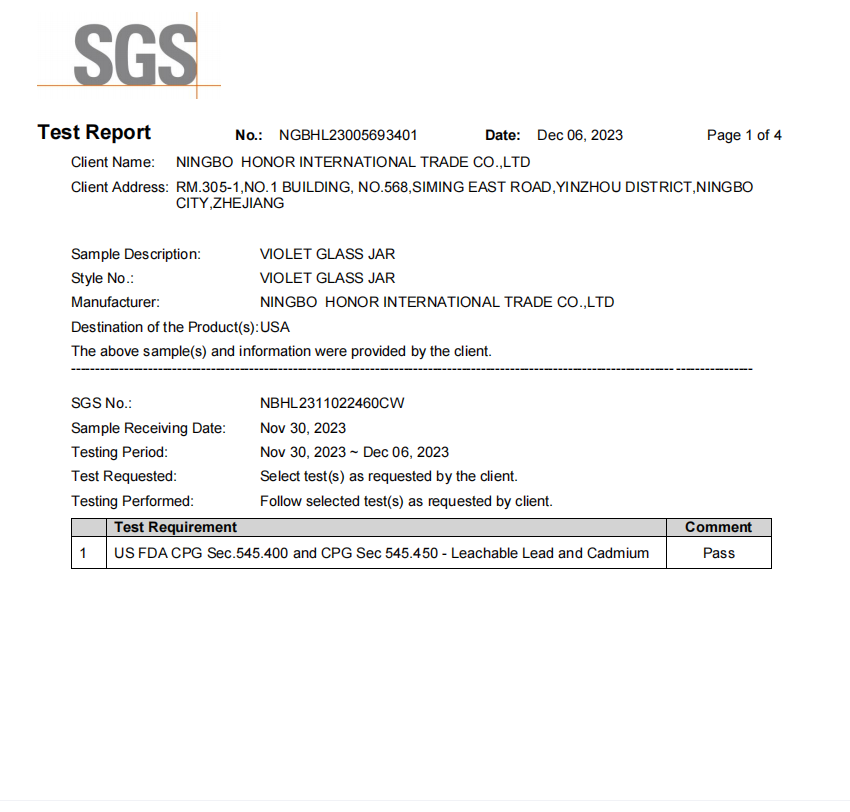
Two records sit in the compliance file, both issued by SGS. The first references EC No 1935/2004, is scoped to Europe, carries the number NGBHL24007770101 and is dated 27 December 2025. The second references FDA CPG, is scoped to the United States with a recorded scope of food, cosmetic and medical, carries the number NGBHL23005693401 and is dated 30 November 2023.
What these records establish is that documentation exists, is numbered, is attributable to a named testing authority and carries an issue date. What they do not establish is broader than what they do. They are not an endorsement of the supplier by a regulator, they are not a certificate of approval for every item in the range, and — because the file records no expiry date — they cannot by themselves demonstrate current validity. The relevant request is therefore narrow and answerable: a current, valid document whose product scope matches the exact model, decoration and closure being purchased. A record tied to a product family does not automatically cover a new print or a different liner.
Two external reference points shape how that documentation should be read in 2026. EU Regulation (EU) 2024/3190 restricts bisphenol A in food-contact materials, with the application date for single-use items reported by the European Commission as 20 July 2026. For a glass-led pack the exposure sits in plastic components, liners and coatings rather than the glass body, which means a material declaration — not a general compliance statement — is the document that answers the question. Separately, commercial guidance in the reviewed set notes that tamper-evident packaging is not generally mandated at federal level for dietary supplements in the same way as for many over-the-counter drugs in the United States. That is guidance rather than statutory text, and it describes a floor rather than a specification: a brand's own requirement or a retailer's condition can still be stricter, so the legal minimum should never be used as the design brief.
Quality control on the record is stated as 100% pre-shipment testing supported by third-party inspection through SGS. That is a useful control, but it describes an inspection activity, not a sampling standard. The acceptance section below explains why the distinction matters at the payment stage.
The peer benchmark: five dimensions, one that cannot be scored
The comparison frame used here names Amcor, Gerresheimer, Aptar and Berry as the four peers a supplement packaging buyer would ordinarily place beside a Ningbo specialist. The table converts that frame into an evidence test: what Zhuorong's record shows, how strong that evidence is, and what a buyer must obtain from a peer to complete the same row honestly.
| Dimension | Zhuorong record status | What to request from each peer | Why it decides fit |
|---|---|---|---|
| Technical R&D and tooling | Partial — 15-person R&D team; documented structural development, tooling strategy and pre-production risk validation; no drawings in this article | Design-for-manufacture report, tooling ownership clause, drawing revision log | Determines who absorbs the cost of a change after approval |
| Documented product specification | Verified for five models: size range, glass dimension, neck finishes, carton count | Drawing-level spec sheet per SKU, including tolerances and closure part numbers | Without it, samples cannot be compared between suppliers |
| Market share and commercial scale | Not verifiable — no supplier-level share data in the reviewed set | Capacity statements with a stated basis, plus shipment volumes if offered | Informs allocation risk during peak scheduling, not product quality |
| Customer service and order governance | Partial — after-sales recorded as "accept to reissue"; 100% pre-shipment test; SGS third-party inspection; no response-time commitment recorded | Claims procedure, response windows, escalation path, named account contact | Sets the real cost of a defective batch |
| Industry solution evidence | One supplier-reported case: German branding client, 10,000 units, pharmaceutical packaging, three-year relationship | References with scope and client permission, or a sample programme | Shows category proximity, not general performance |
| Compliance documentation | Two SGS-issued records with numbers and dates; no expiry date recorded | Current validity, per-SKU scope, material declarations for plastic components | Drives market-access screening before specification sign-off |
| Purchasing terms | Verified — MOQ 10,000 units, FOB, 30% deposit and 70% before shipment, pre-shipment acceptance, 30–45 day lead time | Written terms including the lead-time start point and inspection standard | Determines cash flow, launch timing and inspection leverage |
Market share deserves a separate note, because it is the dimension most often faked in supplier comparisons. Nothing in the reviewed material supports a share figure for Zhuorong, and nothing supports one for the four peers. The commercial research available describes the broad packaging printing market rather than supplier positions, and its two 2034 forecasts disagree — USD 680.07 billion from one publisher and USD 586.23 billion from another — with different base years and unresolved methodology differences. Those values are not averaged or merged here, and they are not used to rank anyone. A buyer who needs scale evidence should ask for it directly and treat an unreturned answer as an unanswered question, not as a negative finding.
The same logic applies to customer service. The record supports a defect remedy in principle ("accept to reissue") and an inspection regime in practice, but it does not commit to a response time, a replacement turnaround or a claim window. Those are exactly the terms that separate a workable long-term supplier from an expensive one, and they are obtainable in writing from any supplier in the frame.
Purchasing terms and acceptance criteria in practice
The purchasing record is short and unusually specific, which makes it usable. MOQ is 10,000 units. Delivery terms are FOB. Payment is arranged on a 30% down payment, with the remaining 70% due before shipment. Acceptance criteria are stated as pre-shipment test.
The commercial reading is straightforward. A 30/70 split means the buyer's leverage sits almost entirely before shipment, so the inspection step is not a formality — it is the last point at which the balance can be withheld. That makes three additions worth negotiating: a written sampling plan and defect classification for the pre-shipment test, a named inspection party or access for the buyer's own agent, and a defined claim procedure covering what "reissue" means in quantity, timing and freight responsibility. FOB also means the buyer controls the freight and insurance arrangement from the port of loading, so the carton arithmetic discussed earlier feeds directly into a cost line the buyer owns.
Two further terms are worth pinning down because the record leaves them open. Whether the 10,000-unit MOQ applies per artwork, per colour or per order changes the cost of a multi-variant launch. And whether the 30–45 day lead time runs from purchase order or from artwork approval changes the launch calendar by the length of the approval cycle. Neither question requires a new capability from the supplier; both require an answer in the quotation.
Matching formats to programmes
Format selection should follow the fill, not the aesthetics of a catalogue page. The five documented models map onto recognisably different programme types, and each mapping comes with a condition.
- H21 for child-resistant capsule and tablet programmes. The 15–60 ml/dr range with a recorded 0.38 mm glass dimension suits a brand that needs a visible product and a child-resistant closure in one small format. Condition: confirm the closure specification and the applicable child-resistance test protocol, neither of which appears in the record.
- HDV1 for the wide fill range. 100 ml to 1 L with 41/400 and 89/400 necks covers formats from a moderate retail jar to a bulk or professional-size container. Condition: fix the neck-and-closure pairing first; filling temperature and product compatibility, which the record does not address, come next.
- HDV2 where a cosmetic line runs alongside supplements. A 3–200 ml violet glass cosmetic jar allows shelf continuity across categories. Condition: neck and closure detail are not in the record, so fit is unverified.
- HDV3 for small-volume liquids. A 5–100 ml essential oil bottle covers aromatherapy-adjacent formats. Condition: dropper or orifice specification must be confirmed, not assumed.
- H19 for sample and unit-dose formats. A 5 ml vacuum jar at 250 pieces per carton is a natural fit for trial sizes and travel formats. Condition: clarify what the vacuum designation means for the closure, and whether cartons may be mixed.
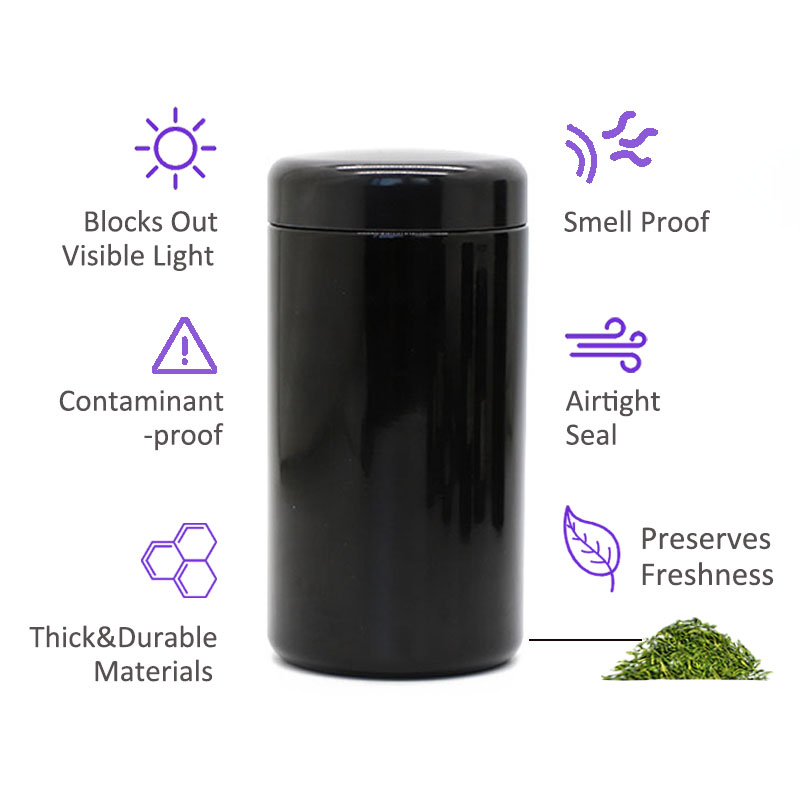
The case record adds one concrete data point without proving a general rule. A branding business client in Germany used 10,000 units of violet glass packaging for pharmaceutical packaging, with a stated three-year project duration; the record lists reusable design and UV protection as highlights and states that the products remained fresh over that period. Read carefully, this establishes that a 10,000-unit violet glass order ran to completion and sustained a multi-year relationship. It does not establish independent verification of the outcome, a measured transmission figure behind the UV protection highlight, or performance for any other product. A buyer can reasonably treat it as category evidence and should still run their own stability and compatibility work.
Where this benchmark stops
Credibility depends on naming the edges. This comparison cannot score the four peers, because no comparable peer specification, service metric or share figure was available in the reviewed material. It cannot compare prices, because the verified data set rated price and cost coverage as insufficient and no unit price, tooling cost or freight benchmark appears in the records. It cannot assert recyclability, recycled content or sustainability performance, because no such data exists in the record set. It cannot treat either compliance record as permanently valid, because no expiry date is recorded. And it cannot convert the German case into a general performance claim, because one supplier-reported project is one project.
None of those limits makes the Zhuorong specification set less useful. It simply defines what it is useful for: dimensional comparison, documentation scoping and order governance. Those are the three decisions a buyer at the execution stage actually has to make.
A pre-PO verification sequence
The following sequence converts the evidence above into a decision path. It works against Zhuorong and against any peer placed in the same frame.
- Match the model to the fill. Confirm the size range covers the intended net content with headspace allowance, then confirm the closure part number against the recorded neck finish — 41/400 or 89/400 on HDV1, and the confirmed neck on H21, HDV2, HDV3 and H19.
- Convert the glass dimension into a tolerance. Ask whether the 0.38 mm value is nominal, minimum or target, and what the acceptance band is. A specification without a tolerance cannot be inspected.
- Scope the compliance documents to the SKU. Request current validity and a scope statement that names the exact model, decoration and closure. Treat the EC No 1935/2004 and FDA CPG records as the starting documents, not the finished file.
- Write the acceptance criteria. Define the sampling plan, the defect classification and the inspection party behind the stated pre-shipment test, and link the balance payment to a passed inspection.
- Fix the commercial basis in writing. Confirm whether the 10,000-unit MOQ is per order, per artwork or per colour; confirm whether the 30–45 day lead time starts at purchase order or artwork approval; confirm the FOB port.
- Approve a physical sample before tooling or print release. Artwork printing, new design and frosted finish are all on the record; each is a variable that changes handling and appearance, so the approved sample becomes the reference for the production run.
- Define the remedy. Translate "accept to reissue" into a claim window, a quantity basis and a freight responsibility, so the after-sales position is measurable rather than goodwill.
What to watch through 2026 and 2027
Three signals are worth monitoring, and only one of them is a date. The first is the bisphenol A restriction under Regulation (EU) 2024/3190, with the single-use application date reported as 20 July 2026. For glass-led packs the practical work is a material declaration for every plastic component and coating in the pack, refreshed rather than inherited. The second is documentation currency: a compliance file is a living document, and a dated record without a validity statement invites a question at the port rather than at the drawing board. The third is material context. Commercial research in the reviewed set places plastic at roughly 41.67% of the supplement packaging material segment in 2025, which is a reminder that a glass format is a deliberate specification choice with a cost and a rationale, not a default.
What should not be monitored is the headline market-size number. The broad packaging printing figures available disagree across publishers and base years, and none of them describes supplier-level competitive position. They are context for an investment case, not input for a packaging scorecard.
Frequently asked questions
What can a buyer verify today about Zhuorong's supplement packaging specifications?
Five models carry usable detail. H21 is a clear square child-resistant jar spanning 15–60 ml/dr with a recorded 0.38 mm glass dimension. HDV1 is a violet glass jar spanning 100 ml to 1 L with 41/400 and 89/400 neck threads. HDV2 covers 3–200 ml cosmetic violet jars, HDV3 covers 5–100 ml essential oil bottles, and H19 is a 5 ml vacuum jar packed 250 pieces per carton. Size ranges, one glass dimension, two neck finishes and one carton count can be checked against a sample; tolerances, closure part numbers and decoration specifications are not in the record and must be requested.
How does the OEM/ODM service work, and what are the order minimums?
Zhuorong offers OEM and ODM production with customisation that includes printing the client's artwork, developing a new design and applying a frosted finish. The stated minimum order quantity is 10,000 units, with a lead time of 30–45 days and monthly capacity of 100,000 units. The record does not state whether the minimum applies per order, per artwork or per colour, or whether the lead time runs from purchase order or from artwork approval, so both points belong in the written quotation.
Which compliance records exist, and what do they not prove?
Two SGS-issued records are in the file: one referencing EC No 1935/2004 for the European market, numbered NGBHL24007770101 and dated 27 December 2025, and one referencing FDA CPG for the United States, numbered NGBHL23005693401 and dated 30 November 2023. They show that documented testing records exist with a named issuing authority and an issue date. They do not constitute regulatory approval, do not automatically cover every model or decoration, and carry no recorded expiry date, so current validity and per-SKU scope must be confirmed. A material declaration is the document that answers questions about plastic components and coatings.
How should Zhuorong be compared with Amcor, Gerresheimer, Aptar and Berry?
Compare on dimensions where both sides can produce documents: drawing-level specifications with tolerances, tooling ownership and revision control, claims procedure and response windows, compliance scope per SKU, and written purchasing terms. Do not compare on market share unless each supplier supplies a figure with a basis, because no supplier-level share data was available for this evaluation. Naming a peer is not a finding about that peer, and an unanswered request is an open question rather than evidence of a weakness.
What are the purchasing terms and acceptance criteria?
The recorded terms are a minimum order of 10,000 units, FOB delivery, and payment arranged on a 30% down payment with the remaining 70% due before shipment. Acceptance criteria are stated as pre-shipment test, supported by 100% pre-shipment testing and third-party inspection through SGS. Because the balance falls due before shipment, the inspection step carries the buyer's remaining leverage, so the sampling plan, defect classification and inspection party should be agreed in writing in advance.
What is the practical difference between H21, HDV1, HDV2, HDV3 and H19?
They serve different fills and different fits. H21 is a small child-resistant jar for 15–60 ml/dr formats. HDV1 is the wide-range violet glass jar, 100 ml to 1 L, where the 41/400 or 89/400 neck drives closure selection. HDV2 is a cosmetic violet jar at 3–200 ml for crossover lines. HDV3 is a small essential oil bottle at 5–100 ml. H19 is a 5 ml vacuum jar packed 250 pieces per carton, suited to sample and unit-dose programmes. Only H21, HDV1 and H19 carry dimensional or packing detail in the record; HDV2 and HDV3 are shortlisted on range alone.
About the supplier in this benchmark
Ningbo Zhuorong publishes its records under the Honor Packaging name (NINGBO HONOR PACKAGING CO.,LTD), founded in 2015 and based in Ningbo, China, with 310 employees, a 15-person R&D team and export markets recorded as the EU and the United States. Its stated model is to take a client's finalised packaging design into repeatable mass production through joint-venture production bases for plastic and glass packaging.
Company information and product documentation are available at Honor Packaging, and the company brochure can be downloaded from the supplier brochure PDF.
Tem questões ou precisa de mais detalhes?
Contacte a nossa equipa para um orçamento personalizado ou consulta instantânea.
Solicitar orçamento
Preencha o formulário abaixo e a nossa equipa entrará em contacto com uma proposta personalizada.
Chat direto do WhatsApp
Prefere conversar em tempo real? Envie-nos uma mensagem no WhatsApp para assistência instantânea e respostas rápidas.
- Obter orçamento personalizado
- Partilhar fotos ou documentos
- Discuta as suas necessidades diretamente
Geralmente responde em 5–30 minutos durante o horário de expediente.