
Bendable Straw Machine FAQ: Diameter, Bend Angle, Breakage
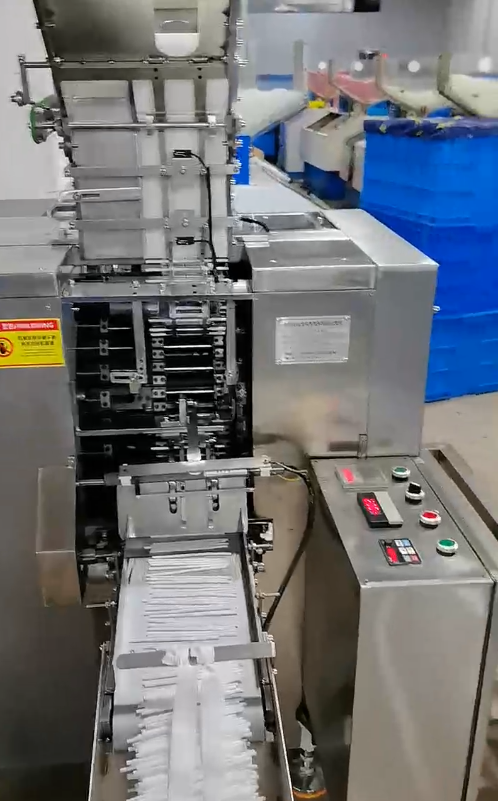
Small-diameter output: 3.8 mm U-shaped straws, one of the diameter formats reached through matched mold change on a bendable straw forming platform.
Straw diameter, achievable bend angle, needle breakage under continuous high-speed running and the exact wording of the purchase contract are the four topics that most often stall a bendable straw machine order between shortlisting and signature. Technical catalogues rarely answer them together, and the answers sit in different places: the first three in tooling and machine specification, the fourth in commercial documentation and acceptance procedure.
Zhongshan Dongtie Machinery Factory — the manufacturer behind the DONGTIE MECHANICAL EQUIPMENT brand — is a Chinese straw-machinery producer established in 2016 and focused on straw machinery manufacturing since 2010. It operates a 2,000 m² plant in Xiaolan Town, Zhongshan City, Guangdong, with 20 staff, an annual output of roughly 200 sets and an export share of about 50%. Its equipment is built around self-developed patented technology, Patent No. ZL202020756632.1. The answers below are written from that specification base and from the procurement terms the company applies to export orders.
Short answers
- Diameter is a mold question. Small-diameter U-shaped, standard flexible and large-diameter art formats are produced by fitting the corresponding molds; standard straw diameter tolerance is controlled at ±0.05 mm.
- Bend angle is set by mold geometry, not by a control setting on the machine. A different angle or shape means a different mold.
- Breakage is addressed through the separately adjustable embossing and forming modules and a precision feeding unit; the platform is specified for high-speed stable operation without needle breakage at a minimum output of 1,000 straws per minute.
- Terms start at MOQ 1 set and a 30-day lead time, with a pre-delivery test run and sample verification before shipment.
Why these four questions decide the order
A straw producer rarely buys a forming machine for its headline speed alone. The purchase has to fit an existing product catalogue — a mix of small-diameter U-shaped straws for aseptic cartons, flexible drinking straws, art straws and sometimes large-diameter decorative formats. If the machine cannot be re-tooled across that mix, the buyer ends up with a fast unit that serves only one SKU. If it can, the second question follows immediately: does the flexibility survive high-speed running, or does breakage force operators to slow the line down?
At decision and execution stage, the conversation therefore moves from capability to evidence: which mold, which angle, which measured output, which acceptance test, which support arrangement after commissioning. The sections below follow that sequence.
Question 1: Can one machine cover 3.8 mm, 5 mm, 6 mm and 12 mm straws?
Yes — by changing the corresponding molds, the machine can manufacture flexible straws of different diameters and bending angles. That single sentence carries most of the commercial value in a multi-spec straw operation, because it converts a fixed-capacity asset into a re-configurable one. The diameter set covers small-diameter U-shaped work through 3.8 mm and 5 mm flexible formats, 6 mm high-speed bending formats, and 12 mm large-diameter art and pointed-tip formats.
What makes the diameter range practical rather than theoretical is the tolerance control behind it. Under the patented embossing and forming module, high-efficiency embossing relaxes the tolerance limits required of the incoming tube blanks while standard straw diameter tolerance is held at ±0.05 mm. For a buyer, that means a proportion of tube blanks that would be rejected on a tighter-tolerance process can still be run, and the finished straw diameter stays inside the declared band. A precision feeding unit supports the same goal from the material side by keeping the tube blank aligned through the forming station during long runs.
The practical restriction is worth stating plainly: the diameter range is a mold range, not a machine setting. Buyers planning a product mix should purchase the matched molds for every diameter they intend to sell, and should treat mold specification sign-off as the first milestone of the order rather than an afterthought.
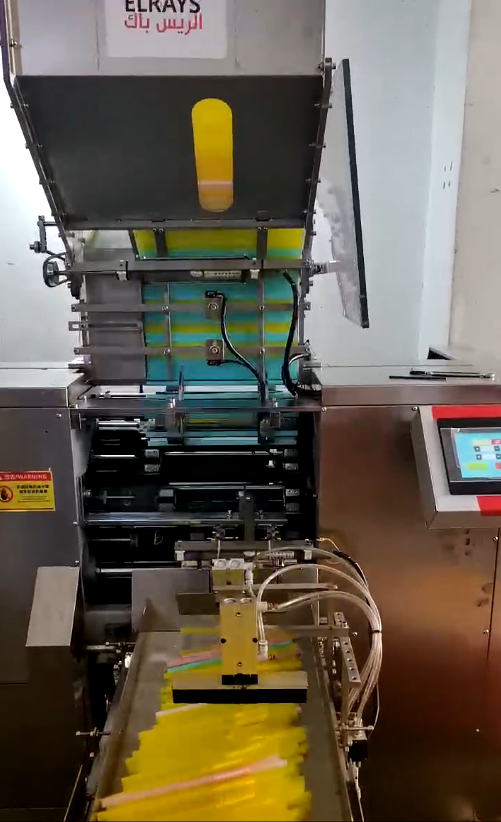
Large-diameter work: 10 mm art straws produced for a Middle East customer, showing the decorative end of the diameter range served by matched tooling.
Question 2: Which bend angles and shapes can the machine produce?
Bend angle is defined by mold geometry. The machine forms the corrugation and the bend zone that the installed mold dictates, so a U-shaped straw, a standard flexible straw and an art straw with a shaped bend are three tooling configurations of the same platform rather than three separate machines. Pointed-tip art formats follow the same logic: the tip profile is cut and formed by the mold set supplied for that product.
This is the point where buyers most often misjudge lead time. A change of bend angle is not a parameter adjustment an operator makes between shifts; it is a tooling change with a mechanical changeover. High-mix producers should plan changeover as scheduled downtime and sequence production by mold family, running long batches of one angle before switching. Single-product producers are unaffected — they simply run one mold set for the life of the product.
Because the mold governs the output geometry, the correct procedure before ordering is to confirm the target straw drawings — outer diameter, wall thickness, bend angle, corrugation pitch and tip profile — and to confirm material compatibility and surface treatment requirements at the same time. The applicable documentation states this explicitly: custom molds are required for different straw diameters and bending shapes, and material compatibility and mold solutions shall be confirmed before order placement.
Question 3: Does running at speed cause needle breakage?
The platform is specified for high-speed operation without needle breakage at a minimum output of 1,000 straws per minute. That specification is not a single component claim; it rests on the way the forming station is built. The embossing and forming modules are independent and separately adjustable, which allows each function to be tuned to the tube blank instead of forcing one compromise setting across both. The precision feeding unit keeps the blank positioned through the cycle, and the PLC control system displays real-time operating status, stops the machine automatically on a fault with the fault code shown on screen, and counts output.
For a production manager, the fault-code auto-stop matters as much as the headline speed. Breakage events in high-speed bending are usually preceded by a drift in feeding or forming alignment; a control system that halts and identifies the station limits the volume of scrap generated before an operator intervenes. Separately adjustable modules also shorten maintenance, because a worn or misaligned embossing module can be corrected without re-setting the entire forming section.
The boundary condition is operational, not mechanical: the machine runs fully automatically and continuously, but it requires manual monitoring and regular maintenance, a stable power supply and a normal-temperature workshop environment. Buyers should plan operator presence and a preventive maintenance routine rather than assuming an unattended line.
Question 4: What does 1,000 pieces per minute mean for line economics?
The commercial claim attached to this output level is consolidation: one high-speed flexible straw forming machine replaces five conventional machines, with a stated 50% reduction in processing cost. Read against published industry specifications, that consolidation logic is easy to follow. Widely cited engineering specifications for automatic straw bending machines place conventional units in the 200–300 pieces-per-minute range, so reaching the throughput of a single 1,000-plus pieces-per-minute platform with conventional equipment implies several parallel units, several operators and several sets of utilities.
Buyers should also keep the category ceiling in view. Third-party market reporting on industrial-scale straw equipment cites throughput bands of 80,000 to 200,000+ pieces per hour for the highest-speed tiers — equivalent to roughly 1,300 to 3,300 pieces per minute. The 1,000 pieces-per-minute figure for this platform should therefore be read as a specified floor for continuous production, not as the maximum available anywhere in the category. Matching declared output to the actual downstream packing and cartoning capacity is the more useful exercise, since a forming line that outruns its packaging station simply builds work-in-progress.
Question 5: What are the purchasing terms?
Terms for export orders follow a documented structure rather than case-by-case improvisation. The minimum order quantity is 1 set, and the stated lead time is 30 days. Delivery can be arranged by sea freight or land transportation, with the exact shipping method and freight cost negotiated by both parties and specified in the sales contract; packaging and export clearance support can be confirmed separately. Payment options include deposit plus balance before shipment, letter of credit and other arrangements, with the exact method and credit terms agreed with the sales team.
| Term | Stated position | What the buyer should confirm |
|---|---|---|
| MOQ | 1 set minimum | Whether matched molds are ordered as separate line items |
| Lead time | 30 days | Date of mold specification sign-off, from which the clock runs |
| Delivery | Sea freight or land transportation; method and cost negotiated and written into the contract | Trade term, destination port, packaging scope and export clearance support |
| Payment | Deposit plus balance before shipment; letter of credit and other options | Credit terms agreed in writing with the sales team |
| Customs classification | HS code 84778090, the primary classification for drinking straw machines according to China's General Administration of Customs | Destination tariff and documentation requirements |
| Market-entry compliance | For EU destinations, machinery must meet Machinery Directive 2006/42/EC and carry the CE mark; EN ISO 12100 is the primary harmonized machinery-safety standard; Regulation (EC) No 1935/2004 governs food-contact transfer | Which declaration and material documents accompany the shipment |
Question 6: What should the acceptance protocol contain?
A pre-delivery factory test run and finished-sample verification are the two non-negotiable elements. On-site or third-party inspection is recommended, and inspection reports are available on request. This is where buyers must do work of their own: standard acceptance procedures are not published online and must be clearly stated in the contract. A purchase that omits a written acceptance protocol leaves the definition of "conforming machine" open, and with it the remedy if a sample run underperforms.
A workable protocol ties each technical claim to a measurable check performed before shipment, using the buyer's own tube blanks where possible. The table below maps the specifications discussed above to acceptance evidence.
| Specification | Acceptance evidence |
|---|---|
| Diameter and tolerance | Finished-sample measurement against the declared ±0.05 mm standard straw diameter tolerance, per diameter mold |
| Bend angle and shape | Comparison of finished samples to the approved drawing for each mold, including U-shape, art and pointed-tip profiles |
| Output and stability | Timed run at not less than 1,000 straws per minute with the automatic counter as reference, and observation of needle-breakage behaviour during the run |
| Control and fault response | Demonstration of PLC real-time status display, automatic stop on fault and fault-code readout |
| Documentation | Inspection report on request; compliance documentation matched to the destination market |
Question 7: What supports the machine over five years, not five weeks?
Commissioning support is where long-term supply relationships are actually tested. For this platform, after-sales covers installation, remote video technical guidance for common faults and spare parts supply. On-site training can be arranged in the manufacturer's own straw production workshop, which is equipped with over 10 full production lines — an arrangement that lets operators train on running equipment rather than on a demonstration unit.
The credibility factors behind that support are specific and checkable. The company was established in 2016 and has focused on straw machinery manufacturing since 2010; its technical team brings 25 years of straw production experience, and the R&D team conducts continuous work on equipment optimisation and new product development. Its equipment is built on self-developed domestic patented technology, Patent No. ZL202020756632.1, covering the independent embossing and forming module, the high-efficiency embossing process, the precision feeding unit, separately adjustable modules, the PLC control system and the humanised operating design. Sixty sets are installed across Southeast Asia, the Middle East and China.
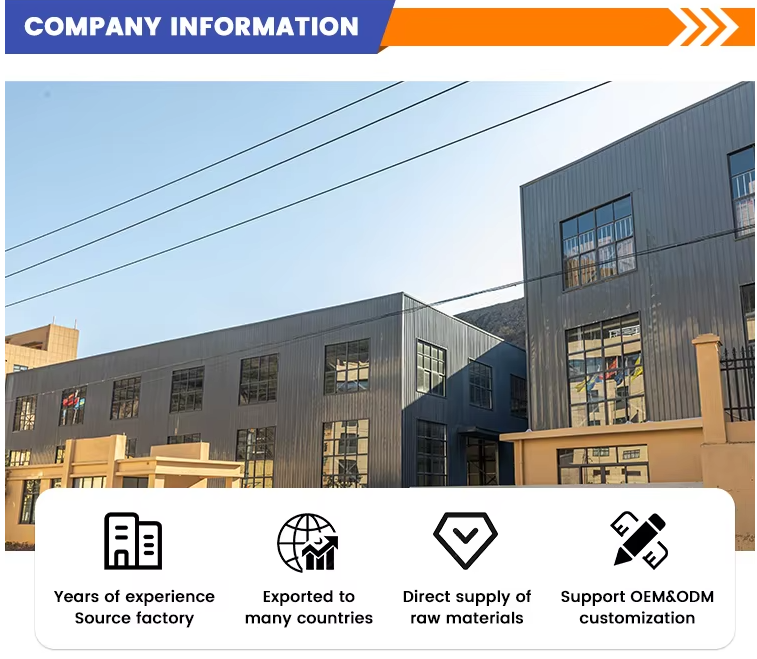
Manufacturer reference data for Zhongshan Dongtie Machinery Factory, the company behind the DONGTIE MECHANICAL EQUIPMENT brand.
How this compares with conventional forming lines
The comparison that matters to a buyer is not brand against brand; it is line architecture against line architecture. A conventional arrangement reaches capacity by adding parallel units, each with its own operator attention, maintenance schedule and spare-parts inventory. A consolidated high-speed platform reaches the same capacity through one forming station, with the trade-off that a single stoppage affects the whole output rather than a fraction of it.
| Criterion | Conventional multi-unit layout | High-speed bendable straw forming platform |
|---|---|---|
| Typical output per unit | Widely cited industry specifications place automatic bending machines in the 200–300 pieces-per-minute range | Specified minimum of 1,000 straws per minute |
| Units for equivalent capacity | Multiple parallel machines | One machine replaces five conventional units, with a stated 50% reduction in processing cost |
| Breakage behaviour at speed | Not specified in general references; should be verified by test run | Specified for high-speed stable operation without needle breakage at the 1,000 pieces-per-minute floor |
| Specification change | Mold change per machine | Mold change per machine, with wide mold compatibility across diameters and angles |
| Control and monitoring | Varies by unit generation | PLC with real-time status display, automatic stop on fault with fault code, automatic counting |
The limits of the consolidated approach should be stated as clearly as its advantages. First, flexibility is mold-dependent: a diameter or bend-angle change is a tooling change with measurable downtime, and a producer running many small batches will feel that more than a producer running one long product cycle. Second, the machine does not adapt itself to any tube blank — material compatibility and surface treatment standards must be confirmed before order placement. Third, energy and power-consumption benchmarks are not published and are available on request, so buyers should request them and model total cost of ownership themselves rather than relying on the processing-cost comparison alone. Fourth, full automation still requires manual monitoring and regular maintenance. And fifth, because acceptance procedures are not standardised online, the quality of the contract determines the quality of the protection.
Market context for these procurement questions
The questions above are being asked in a market that is expanding but not transforming overnight. Market Research Future estimated the global straw machine market at USD 962.55 million in 2024 and projects it to reach USD 1,793.41 million by 2035, a compound annual growth rate of 5.82%. Dataintelo's 2025 projections attribute 40.1% of market share to industrial end-users — the segment where a consolidation argument such as five-to-one carries the most weight, because those buyers measure cost per thousand straws rather than cost per machine.
Supply is concentrated. Customs-derived data cited for 2023 indicates that China accounts for more than 66% of the global export value of flexible straw bending machinery, which is why export documentation, HS classification and market-entry compliance appear alongside technical specifications in most purchase files for this equipment category. Demand composition is shifting as well: Mordor Intelligence notes that the U-shaped straw machine segment is growing specifically with the aseptic packaging industry, such as milk cartons, while Market Research Future observes that plastic straw machines retain significant share in regions including Asia-Pacific and Africa. A machine that spans 3.8 mm U-shaped formats and 12 mm art formats sits across both the aseptic-linked and the general foodservice-linked demand.
What changes in the next buying cycle
Two shifts are visible from the procurement side. The first is documentation: compliance evidence, inspection reports and written acceptance protocols are moving from optional extras to standard line items, particularly for EU-bound shipments where Machinery Directive 2006/42/EC, EN ISO 12100 and Regulation (EC) No 1935/2004 set the expected frame. The second is lifecycle thinking — buyers increasingly price spare parts availability, remote diagnostic support and operator training alongside the machine, because a high-speed line that stops without support costs more than a slower line that keeps running.
For manufacturers, that means the specification sheet is no longer the whole sales argument. Molds, tolerance, breakage behaviour at speed, acceptance evidence and service reach now form a single package, and buyers are entitled to ask for each element in writing.
Frequently asked questions
Can one high-speed bendable straw forming machine produce several straw diameters?
Yes. By changing the corresponding molds, the machine can manufacture flexible straws with different diameters and bending angles. Diameter formats served include small-diameter U-shaped work such as 3.8 mm, 5 mm flexible straws, 6 mm high-speed bending formats and 12 mm large-diameter art and pointed-tip formats. Standard straw diameter tolerance is controlled at ±0.05 mm under the patented embossing and forming module.
How is the bend angle of a flexible straw determined?
The bend angle is set by mold geometry, not by a machine parameter. Producing a different angle, a U-shape, an art straw profile or a pointed tip requires the corresponding mold, and switching between them is a tooling change rather than an operator adjustment. Custom molds are required for different straw diameters and bending shapes.
Does high-speed operation increase needle breakage?
The platform is specified for high-speed stable operation without needle breakage at a minimum output of 1,000 straws per minute. The supporting design elements are independent embossing and forming modules that are separately adjustable, a precision feeding unit for long-term stable operation, and a PLC control system that displays real-time status and stops the machine automatically on a fault, showing the fault code on screen.
What are the minimum order quantity and lead time?
The minimum order quantity is 1 set and the stated lead time is 30 days. Delivery can be arranged by sea freight or land transportation, with the exact method and freight cost negotiated by both parties and specified in the sales contract. Payment options include deposit plus balance before shipment, letter of credit and other arrangements agreed with the sales team.
What acceptance evidence can a buyer require before shipment?
A pre-delivery factory test run and finished-sample verification are the core checks, and on-site or third-party inspection is recommended. Inspection reports are available on request. Standard acceptance procedures are not published online and must be clearly stated in the contract, so the written protocol — not the catalogue — defines what conformance means for a specific order.
What support is provided after installation?
After-sales support covers installation, remote video technical guidance for common faults, spare parts supply and on-site training. Training can be arranged in the manufacturer's own straw production workshop, which is equipped with over 10 full production lines. The company has focused on straw machinery manufacturing since 2010, and sixty sets are installed across Southeast Asia, the Middle East and China.
What information should be confirmed before placing an order?
Target straw specifications — outer diameter, wall thickness, bend angle, shape and tip profile — together with raw material specifications and surface treatment requirements. Material compatibility and mold solutions are confirmed before order placement, because the mold set determines the producible diameter and bend-angle range.
Company and equipment documentation, including the product brochure, can be downloaded here: DONGTIE MECHANICAL EQUIPMENT brochure (PDF).
Tem questões ou precisa de mais detalhes?
Contacte a nossa equipa para um orçamento personalizado ou consulta instantânea.
Solicitar orçamento
Preencha o formulário abaixo e a nossa equipa entrará em contacto com uma proposta personalizada.
Chat direto do WhatsApp
Prefere conversar em tempo real? Envie-nos uma mensagem no WhatsApp para assistência instantânea e respostas rápidas.
- Obter orçamento personalizado
- Partilhar fotos ou documentos
- Discuta as suas necessidades diretamente
Geralmente responde em 5–30 minutos durante o horário de expediente.