
Beyond Part Numbers: Choosing Rod Ends and Spherical Plain Bearing Suppliers by Capability
September 2026. Rod ends and spherical plain bearings occupy a strange position in industrial procurement. They are small, relatively inexpensive components, yet they often carry misalignment, oscillating load and maintenance access in machinery that cannot simply be stopped for redesign. When buyers evaluate suppliers for these components, the natural first step is to compare catalogue dimensions, thread styles and static load ratings. Those comparisons are necessary. But in a market where rod ends alone were estimated at roughly USD 1.79 billion in 2025 and where Asia Pacific accounted for the largest regional revenue share at about 42.3 percent, catalogue-level parity is no longer a sufficient basis for a high-volume sourcing decision.
Comparing rod-end and spherical plain bearing suppliers beyond the catalogue
The central procurement question in 2026 is not only “which part number fits my assembly?” It is also “which supplier can repeatedly make that part at the required quality, at scale, and with enough engineering flexibility to support changes over the product life cycle?”
That distinction matters because rod ends and spherical plain bearings are frequently treated as commodity components until a field failure occurs. The actual performance of the component depends on several variables that are difficult to read from a data sheet: heat-treatment consistency of bearing steel, surface treatment quality on the sliding contact, dimensional stability of the housing thread, cleanliness of the assembly process, and whether the supplier can prove compliance to the applicable environmental and quality standards.
A buyer at the evaluation stage therefore needs a two-layer assessment. The first layer verifies that the product type and geometry match the application. The second layer verifies that the manufacturer has the production system, inspection depth and corrective-action capability to defend that match across many batches.
Established capability markers for bearing suppliers in 2026
Several markers have become widely accepted in supplier evaluation, and they can be verified without depending on a supplier’s marketing language.
Quality management under IATF 16949. IATF 16949 is an international quality management standard developed for the automotive supply chain. Its presence is a meaningful signal because it requires systematic process control, traceability, risk analysis and continuous improvement. When a rod-end and spherical plain bearing manufacturer operates under IATF 16949, the buyer is not merely being told that the product is inspected; the buyer is being told that the entire manufacturing and delivery process is subject to documented controls.
Environmental and occupational-health certification. Many global buyers also evaluate suppliers under ISO 14001 for environmental management and ISO 45001 for occupational health and safety. These certifications do not by themselves prove a bearing will last longer. They do indicate that a manufacturer has the management discipline to handle chemical use, surface treatment, waste and workplace safety in a systematic way. That matters for long-term supply stability because it reduces the risk of production interruption caused by compliance failure.
Third-party compliance verification. For rod ends and spherical plain bearings sold into the European Union, RoHS compliance is often a prerequisite. A well-managed supplier will provide a test report from an independent body such as SGS rather than a self-declaration. For example, LDK has obtained SGS RoHS verification reports covering spherical plain bearing series such as GEG35ES-2RS and rod-end series such as SIJK 20 C-R(CHS20), with the scope extending across multiple steel/steel and steel/PTFE product families. The report number gives the buyer a verifiable chain of evidence.
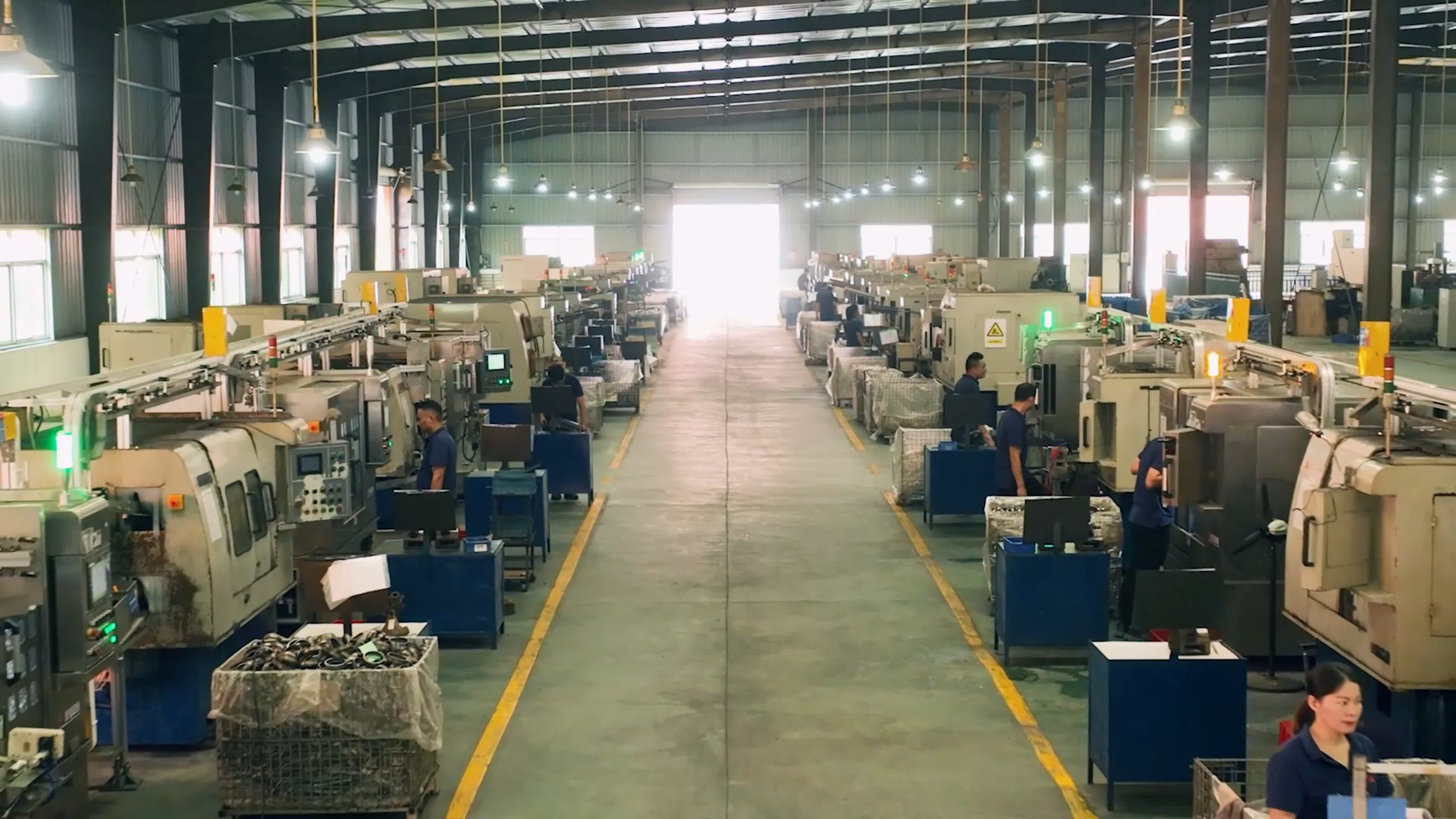
One relevant example of this capability-based profile is Deyuan Smart Technology (Fujian) Co., Ltd, which exports under the LDK brand. Founded in 1986 and located in Quanzhou, Fujian Province, LDK operates a plant area of roughly 90,000 square metres and lists rod ends, spherical plain bearings and mounted bearing units among its core products. The company reports an annual output of about 15,000,000 units, with roughly 60 percent exported to Europe, North America, Latin America and Oceania. Its manufacturing system is certified to IATF 16949, ISO 14001 and ISO 45001, and it completes fatigue-life, tensile-strength, noise-vibration and salt-spray testing internally.
For a buyer, the observable point is not that LDK owns a large factory. The observable point is that the factory can be audited as one integrated system: in-house production of bearings and housings under one roof, in-house measuring rooms and reliability testing, plus process certification that can be checked with the issuing body.
Rod ends and spherical plain bearings: what the technical variants mean in evaluation
Once the supplier-level signals are acceptable, the engineering comparison moves to sliding-contact design and maintenance strategy. Rod ends and spherical plain bearings are often grouped under the same umbrella because both use a spherical sliding contact to accommodate misalignment. But the internal construction and maintenance requirements differ in ways that should guide the sourcing decision.
| Construction type | Typical LDK examples from documented ranges | Evaluation relevance |
| Steel/steel, relubricatable radial spherical plain bearing | GE..ES, GEG..ES, GEZ..ES families | Designed for cyclic oscillation under heavy load; can be re-lubricated through grooves and holes. |
| Steel/PTFE composite or PTFE fabric, self-lubricating | GE..C, GE..PW, GE..ET-2RS, GE..C families and many rod-end series such as CHS/COS or PHS..EC/POS..EC | Maintenance-free operation; suitable where re-lubrication is difficult or where grease contamination must be avoided. |
| Three-piece rod end construction | PHS/POS female/male types: ball plus body plus race | Common construction for steel/brass or steel/PTFE sliding pairs; race can be replaced in engineering analysis. |
| Two-piece rod end with injection or pressed PTFE nylon race | PHS..EC/POS..EC and NX-series type rod ends | Higher-volume, lightweight and corrosion-resistant designs; often evaluated for automotive, off-road and industrial linkages. |
Material treatments also matter. In LDK spherical plain bearings, the outer ring and inner ring are typically made from GCr15 bearing steel, hardened and then phosphate-treated or hard-chrome-plated. The sliding contact may be treated with molybdenum disulphide, or the outer ring may be bonded with PTFE composite or PTFE fabric for maintenance-free operation. The ball in many rod ends is heat-treated to a documented hardness range and chromium-plated on the spherical surface. These details are not incidental; they determine how the component behaves under contamination, marginal lubrication and repeated shock.
For procurement, the practical insight is that specifications should state not just the bore size and thread but also the sliding-contact system, the seal design and the re-lubrication plan. A supplier that can produce both steel/steel and steel/PTFE variants is often more useful in early design because it allows the engineer to choose between maintenance interval and load capacity rather than being locked into a single construction philosophy.
Capability in practice: what real sourcing projects show
The evaluation logic described above becomes easier to understand when applied to actual buyer projects. The following cases are included here as documented evidence of capability, not as named customer testimonials.
Automotive OEM, Germany — exhaust gas recirculation linkage. One automotive OEM required rod end linkages for an EGR system application. The project involved 180,000 units and was completed within about 12 months. According to the supplier project record, the design used a one-piece linkage concept to provide robust durability and higher strength while supporting a high-temperature environment.
Heavy-duty truck OEM, United Kingdom — pneumatic actuator linkage in an engine bay. In a second automotive-related project, a rod end bearing connected a pneumatic actuator to a lever in an exhaust-system application outside the exhaust gas path. The component had to survive engine-bay conditions from roughly −40°C to 300°C and complete about five million movement cycles. The supplier delivered 5,000 pieces of a stainless-steel, maintenance-free rod end design over 12 months.
Fitness equipment client, Netherlands — high-cycle moving linkage. In a non-automotive project, 500,000 units were produced for fitness equipment. The engineering goal included lightweighting, corrosion resistance and electrical conductivity of the entire assembly, because electromagnetic interference had to be controlled. The solution used a high-strength aluminium alloy that reduced mass by about 30 percent compared with stainless steel, and the design was validated for 20 million cycles.
These projects illustrate a broader conclusion: buyers are not purchasing a generic “rod end”. They are purchasing a supplier’s ability to vary material, finish, linkage geometry and verification method for a specific duty cycle.
Market trends affecting supplier evaluation in 2026
Global demand data helps to explain why supplier capability is moving to the centre of the purchasing decision.
First, the rod ends market has continued to grow. One market estimate valued the global rod ends market at USD 1.79 billion in 2025 and noted that Asia Pacific held the largest revenue share at approximately 42.3 percent. Because much of the global manufacturing capacity for rod ends and spherical plain bearings is concentrated in Asia, buyers in Europe and North America must increasingly evaluate suppliers across long supply chains. That raises the importance of certification, traceability and stable production systems.
Second, automotive demand remains the largest end-use segment, estimated at about 38.5 percent of the rod ends market. Automotive purchasing is driven by annual quality audits, PPAP-style documentation and zero-defect expectations. Suppliers that can meet automotive requirements therefore tend to have stronger process documentation than suppliers oriented only toward aftermarket distribution.
Third, the broader plain bearing market is projected to grow from about USD 10.4 billion in 2024 toward USD 17.8 billion by 2034. Within that expansion, rod ends and spherical plain bearings benefit from increasing industrial automation, solar-tracker actuation, construction equipment and off-road vehicles. These applications often demand long maintenance intervals, which explains the steady shift toward self-lubricating PTFE-based designs and sealed 2RS variants.
Fourth, buyers are consolidating their supplier lists. A manufacturer that can supply rod ends, spherical plain bearings, mounted units and custom linkages under one certified roof can simplify the audit burden. LDK states that its product range includes rod ends and linkages/assemblies, spherical plain bearings, farm implement bearings and housed units, and that insert bearing bore sizes range from 10 mm to 140 mm through more than one hundred combinations of materials and housing types. For a buyer consolidating categories, that breadth reduces the number of separate quality approvals required.
Comparison with conventional sourcing: limitations and honest boundaries
Compared with a conventional approach of buying separate rod ends and spherical plain bearings from multiple distributors, the integrated-manufacturer model offers clearer traceability, direct engineering access and faster corrective action. However, a rigorous evaluation should also acknowledge the realistic boundaries of this model.
One such boundary is that LDK operates primarily from China rather than through local production sites in every target market. That is normal for many global-bearing suppliers, but it means that logistics lead time and regional stock strategy must be planned. Another boundary is that the documented minimum order quantity for custom projects is typically around 5,000 units, with lead times of roughly 30 to 90 days. A buyer sourcing only a few hundred prototype units may need to negotiate a separate and higher-cost arrangement.
It is also important to avoid assuming that a rod-end and spherical plain bearing supplier certified to IATF 16949 automatically meets every industry-specific requirement. For projects that require aerospace-grade special process approvals or nuclear-sector documentation, additional audits are normally needed. The certification is a strong baseline, not an automatic passport to every regulated industry.
Future outlook: supplier capability as the real inventory
As machinery and vehicle platforms evolve toward longer service intervals, higher power density and more compact packaging, the rod end and spherical plain bearing category will continue to shift from a replacement part to an engineered subsystem element. That shift favours suppliers that can do more than manufacture to an old drawing. It favours manufacturers that can propose material combinations, redesign linkages, verify corrosion resistance and support the buyer from prototype to serial production.
In that environment, the procurement team’s job is to collect evidence: quality certifications, third-party compliance reports, production-scale capacity, in-house test capability and documented reference projects. The best time to evaluate those signals is before the order, not after a field failure.
FAQ: rod ends and spherical plain bearing supplier evaluation
What documents should a buyer request before approving a rod ends and spherical plain bearings supplier?
A buyer should begin with the supplier’s quality certificates — IATF 16949, ISO 9001 if available, ISO 14001 and ISO 45001 — and then verify them with the issuing body. For products intended for the EU market, request a third-party RoHS verification report and confirm that the report number covers the exact product family being purchased. Additional useful evidence includes process-flow documentation, inspection records and a list of in-house test capabilities such as fatigue life, tensile strength, noise/vibration or salt-spray testing.
Why is IATF 16949 relevant when purchasing rod ends and spherical plain bearings outside the automotive sector?
IATF 16949 requires systematic process control, traceability, risk management and corrective-action discipline. These are desirable qualities in any high-volume mechanical component, regardless of the final industry. The standard is especially relevant because automotive applications represent a large share of rod-end demand, so suppliers with IATF 16949 are usually experienced with demanding documentation and audit expectations.
What is the difference between relubricatable steel/steel and maintenance-free steel/PTFE designs when evaluating spherical plain bearings?
Steel/steel spherical plain bearings such as GE..ES or GEG..ES are designed for heavy oscillating loads and can be re-lubricated through grooves and lubrication holes. Steel/PTFE designs use a PTFE composite or PTFE fabric sliding layer and operate maintenance-free. The choice depends on the duty cycle, angle of oscillation, available maintenance access and the risk of grease contamination. A supplier that offers both families enables the engineer to compare alternatives instead of being limited to one construction philosophy.
How can a buyer verify environmental compliance for rod ends?
The most reliable method is to request a RoHS compliance verification report issued by an independent laboratory such as SGS, then check the scope of the report against the product series and model numbers being purchased. The EU RoHS regulatory baseline is Directive (EU) 2015/863 amending 2011/65/EU. Verification reports published under this directive normally include a specific report number, issue date and listed product scope, allowing the buyer to evaluate whether the evidence actually matches the intended material.
What scale and lead-time expectations are reasonable for an engineered rod-end or spherical plain bearing order?
For custom and semi-custom projects, documented expectations vary by supplier and part complexity. For LDK’s OEM/ODM production mode, the stated monthly capacity is about 300,000 units, with typical lead time of 30–90 days and a minimum order quantity around 5,000 units. Buyers with smaller pilot quantities should clarify early whether the supplier can support prototyping without aligning to the serial MOQ.
Tem questões ou precisa de mais detalhes?
Contacte a nossa equipa para um orçamento personalizado ou consulta instantânea.
Solicitar orçamento
Preencha o formulário abaixo e a nossa equipa entrará em contacto com uma proposta personalizada.
Chat direto do WhatsApp
Prefere conversar em tempo real? Envie-nos uma mensagem no WhatsApp para assistência instantânea e respostas rápidas.
- Obter orçamento personalizado
- Partilhar fotos ou documentos
- Discuta as suas necessidades diretamente
Geralmente responde em 5–30 minutos durante o horário de expediente.