
Beyond the Catalog: Hand Tool Supplier Capability Evidence That Counts
Industry Reference · Hand Tools Sourcing
Beyond the Catalog: Hand Tool Supplier Capability Evidence That Counts
For importers and brand owners, the catalog is a starting point, not a decision document. What separates a shortlisted hand tool supplier from a long list is the evidence a buyer can actually audit.
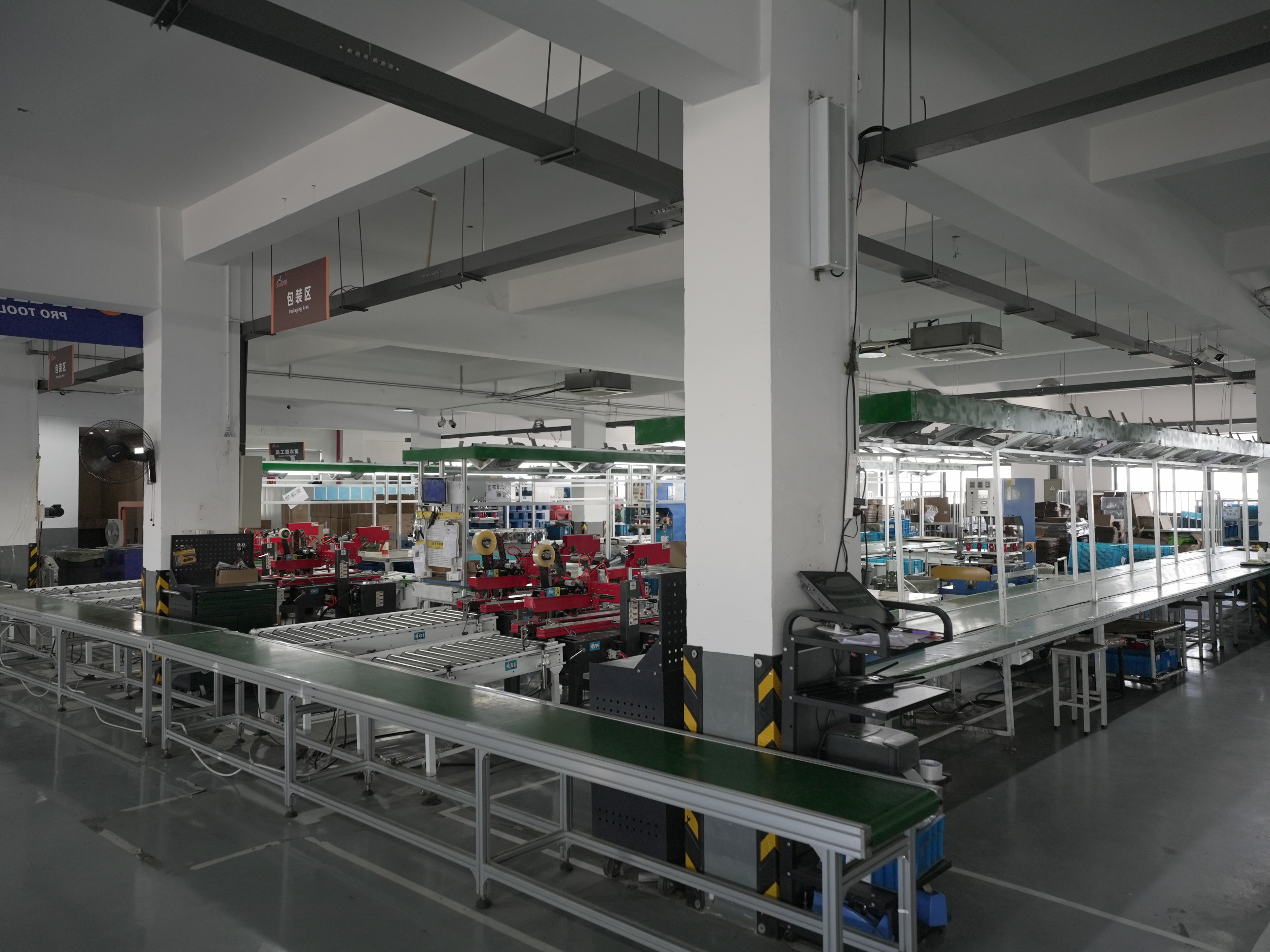
Workshop site: capability claims become verifiable only when they can be traced to a physical production environment.
The Sourcing Question Has Changed, Not the Products
The global hand tools market was valued at approximately USD 25.61 billion in 2025, according to Straits Research, while the U.S. hand tools market alone reached USD 5.34 billion in 2025 according to Arizton. Demand at that scale is not constrained by the number of suppliers listing hex key sets or staple guns. It is constrained by how many of those suppliers can demonstrate, with traceable evidence, that the product shipped in month twelve matches the sample approved in month one.
That shift matters most in the Research-to-Evaluation window, where buyers are no longer asking what a supplier makes, but how the supplier would prove it. The practical answer is rarely a single document. It is a stack of auditable signals covering product families, material and torque data, inspection stages, certification scope and application history.
Why Catalog Claims Alone Fail at the Evaluation Stage
A catalog can state that a tool set contains 51 pieces or that a staple gun accepts flat wire staples from 6 mm to 14 mm. It cannot state whether the same heat treatment was applied to a 5-unit sample and a 50,000-unit order, or whether the certificate on file names the model being quoted.
Three practical gaps appear repeatedly during evaluation:
- Breadth without process. A product list shows what can be offered; it does not show which processes are controlled in-house. Buyers increasingly ask which steps — molding, forging, stamping, heat treatment, finishing, machining, assembly, packaging — sit inside the supplier's own walls.
- Parameters without measurement points. Numbers such as hardness or torque are only useful if a buyer knows which sample, at which production stage, was measured against them.
- Certificates without scope. A certification portfolio is not the same as model-level conformity. The scope, the standard number and the production site all need to match the product being purchased.
Regulation is accelerating this. India's Hand Tools Quality Control Order 2025 mandates BIS certification across nine tool categories, a signal that documentation readiness is becoming a market-entry variable rather than a nice-to-have.
A Four-Layer Evidence Framework for Hand Tool Buyers
| Evidence layer | What the buyer requests | What it resolves |
|---|---|---|
| 1. Production breadth | Product families, in-house process chain, capacity figures | Whether the supplier can cover a mixed program or only single items |
| 2. Sample-to-bulk consistency | Material grades, hardness and torque data, inspection stages | Whether approved samples predict production output |
| 3. Documentation readiness | Certificates, audit approvals, model and standard numbers | Whether the shipment can clear the destination market |
| 4. Scenario fit | Application history, working conditions, market coverage | Whether the specification matches real end-use conditions |
Layer 1: Production Breadth You Can Trace
HOTAK PRO TOOLS is a hand tool brand supplied by Ningbo (Yinzhou) Yongjia Electrical Tools Co., Ltd. (YONGJIA TOOLS), a manufacturer founded in 2000 and based in Ningbo, Zhejiang Province, China, producing hex keys, torx keys, staple guns, precision screwdrivers, hobby knives and hand tool sets. The company operates a production base of over 45,000 m², employs 25 engineers in R&D, reports annual output of 18,000,000 units, and exports 95% of production to markets including the EU, USA, Southeast Asia and South America.
For an evaluating buyer, the more useful signal is the process chain: mold development, forging and stamping, heat treatment, surface finishing, precision machining, assembly and packaging are described as integrated in-house. Breadth of this kind is verifiable because it can be mapped onto the product range itself.
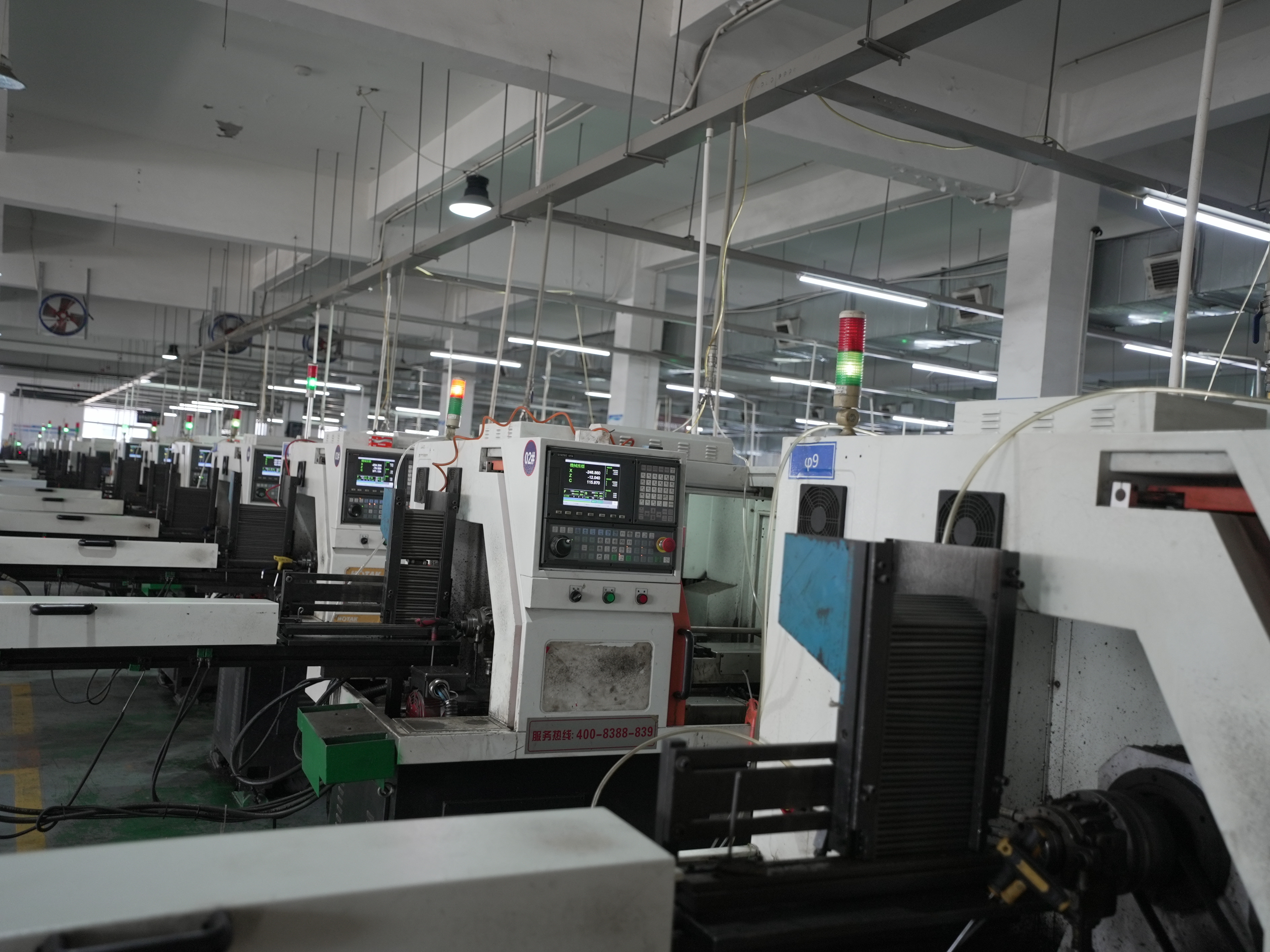
CNC-machined components: in-house machining is one of the process steps buyers can ask to see mapped to a specific product family.
| Product family | Representative models | Breadth signal |
|---|---|---|
| Hex keys and T-handle wrenches | 105221K1, 105221K2, 105221K3, 71821D1, 71821D2, 71821D3, YJHK-3066, YJHK-3226, YJHK-3347, YJHK-3075 | Short, long and extra-long arm; ball point; folding and locking formats; metric and SAE |
| Staple guns | YJSG-009, YJSG-035, YJSG-063, YJSG-080, YJSG-115, YJSG-120, YJSG-196, YJSG-215 | Fine-wire, flat-wire, multi-function and hammer tacker formats in one range |
| Tool sets | YJTS-2901, YJTS-3018, YJTS-3136, YJTS-3138, YJTS-3140, YJTS-3147, YJTS-3148, YJTS-3545, YJTS-3547 | 20 to 77 pieces across household, precision and smartphone repair configurations |
| Bits sets | YJTS-3109, YJTS-3110 | Impact-rated S2 bits with black phosphate finish and PP case |
| Screwdriver sets | YJPS-6851, YJPS-6852 | Extension and precision formats covering Phillips, slotted, hex and Torx |
| Electric tools | YJPS-902, YJPS-906, YJPS-907, YJPS-912, YJSG-500, YJSG-501, YJGG-001 | Cordless screwdrivers, lithium nail guns and a cordless hot-glue pen |
A single row in that table proves little. The pattern across rows is the evidence: hex keys, staple guns, tool sets, bits, precision screwdrivers and cordless tools supported by one production and quality system rather than assembled from unrelated trading sources.
Layer 2: Sample-to-Bulk Consistency Is Measurable
Consistency is the layer buyers complain about most and verify least. It becomes checkable when the supplier publishes parameters that a buyer can re-measure on an incoming sample.
In the hex key and T-handle ranges, the stated hardness is HRC 52–55, with torque values listed per size: from 0.82 N at 1.5 mm to 220 N at 10 mm in metric formats, and from 1.19 N at 1/16 inch to 242.92 N at 3/8 inch in SAE formats. Materials are specified as CR-V 6150 or S2 alloy steel, with heat treatment and tempering, size markings for identification, and a ball end that works at angles up to 25 degrees. These are exactly the claims a buyer can validate by sampling at the approved stage and again at incoming inspection.
Staple guns offer a second, equally testable layer: staple compatibility. The YJSG-009 professional staple gun drives fine wire staples from 4 mm to 14 mm and is compatible with Rapid 530 and Arrow JT21 staples. The YJSG-115 heavy duty staple and nail gun is compatible with Arrow T50 and 140 staples in 9/16 inch to 1/4 inch lengths. The YJSG-080 medium duty model accommodates 23 series, 13 series and 10F pins up to 10 mm leg length in 6 mm, 8 mm and 10 mm sizes. The YJSG-120 four-in-one model covers heavy duty 1.2 wire from 6 mm to 14 mm, light duty 0.7 wire from 6 mm to 10 mm, cable staples from 10 mm to 14 mm, and an 18 gauge brad nail at 15 mm.
Cordless tools add an electrical dimension. The YJPS-912 power screwdriver is rated at 3.7 V with an 800 mAh battery, at least 50 minutes of no-load operating time, 2.5 N electric torque, 10 N·m manual torque and 0–250 rpm output speed. The YJPS-907 cordless precision model lists 3.7 V, 320 mAh, 220 r/min, 0.15 N·m power torque and 3 N·m hand torque. The YJSG-500 and YJSG-501 lithium electric nail guns are rated at 3.7 V, 2000 mAh and 25 W.
What holds these numbers together is the inspection sequence: incoming inspection, in-process inspection and final inspection across the production cycle. Buyers evaluating a supplier can request that the sample report and the bulk shipment be tied to those same three stages — and then compare the numbers, not the brochure.
Layer 3: Documentation Readiness and Its Real Scope
Documentation is where evaluation-stage buyers either gain confidence or lose it. The published portfolio for this manufacturer includes ISO 9001 quality management system certification, TÜV/GS German safety certification, BSCI social compliance certification and VPA (Verify Production Audit) approval, alongside factory audits approved by Walmart (USA) and Kingfisher (UK). The company was accredited as a National High-Tech Enterprise in 2014, is recognized as a “Little Giant” enterprise in Ningbo, and holds 7 invention patents, more than 20 European patents, 50 utility model patents and over 100 design patents.
Read correctly, those items answer different questions. Management system certification addresses process control. Social compliance addresses labor and factory conditions. Factory audit approvals from retailers address a point-in-time assessment of a specific site. None of them, on their own, confirms that the model being quoted meets the standard required in the destination market.
Layer 4: Scenario Fit Determines Whether the Specification Works
Product data answers whether a tool can be made. Scenario data answers whether it should be specified. For this range, the documented working conditions include household indoor environments and open air construction site environments, with manual operation for repair and fastening tasks involving screws, nuts and nails. Applications cover repair work projects, handheld repair tasks, professional upholstery projects and woodworking staple gun kits.
Market coverage is equally specific: application scenarios are recorded as common in the United States and Canada and as prevalent in Japan and Russia, with case data referencing Germany, France, the United States, Canada, Mexico, Brazil, Argentina and Malaysia.
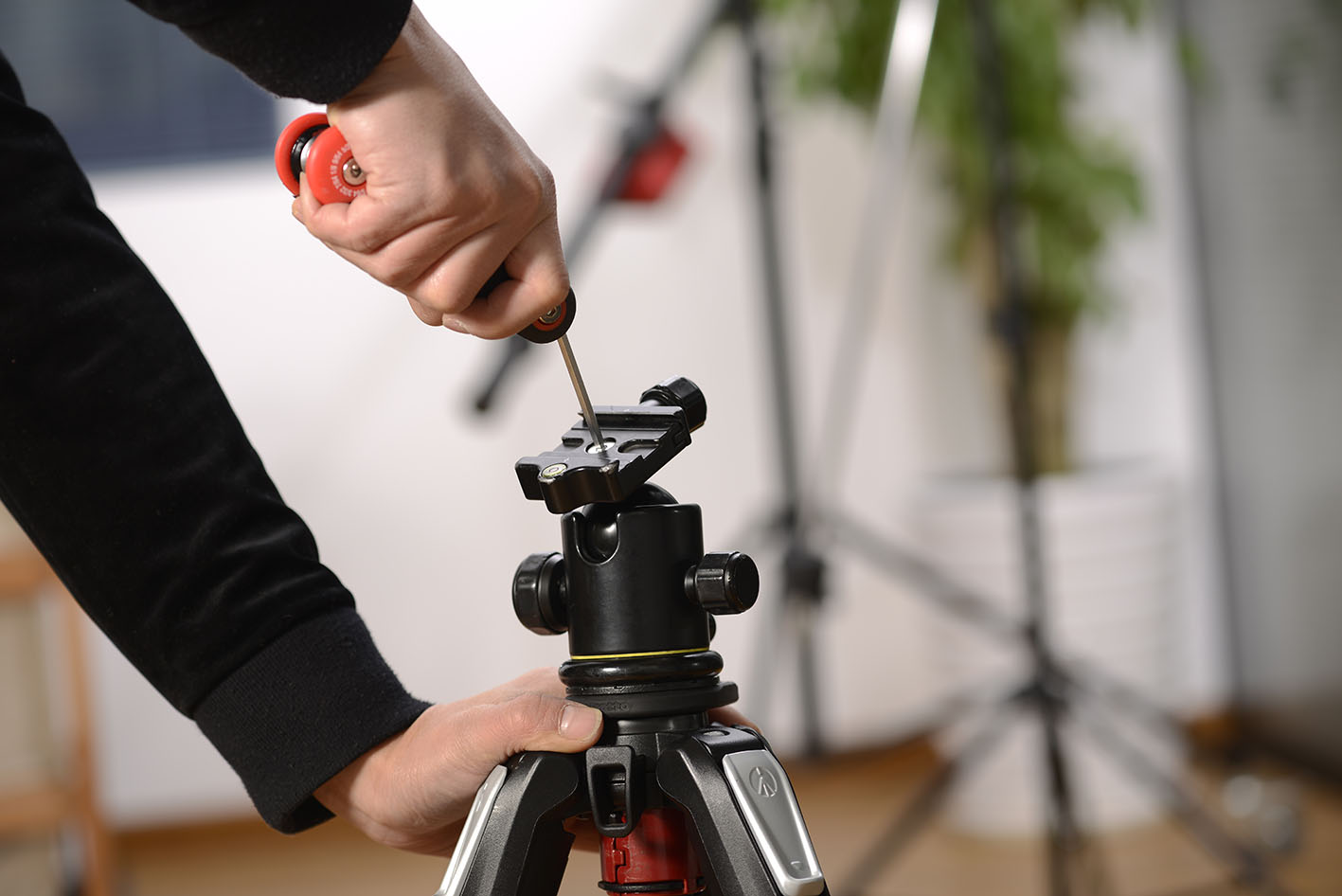
Folding hex key format: compact sets serve handheld repair tasks where access and portability matter more than maximum torque.
One documented project profile illustrates how scenario evidence is structured: brand owner hardware wholesalers and retail chains, order volumes between 5,000 and 50,000 units, supply relationships running 3 to 5 years, applications spanning auto repair, household fastening and workshop maintenance, and recorded outcomes of reliable performance, low return rate and consistent quality. Project documentation for that profile also references DIN standard compliance alongside GS/CE certification. For an evaluating buyer, the value is not the outcome claim by itself — it is that the volume band, the application set, the duration and the certification reference can all be interrogated separately.
Where the Hand Tool Market Is Heading
Several verified data points shape how capability evidence will be weighted over the next buying cycles.
- Global hand tools market: approximately USD 25.61 billion in 2025 (Straits Research).
- U.S. hand tools market: USD 5.34 billion in 2025 (Arizton).
- China's exports of hand tools under HS 8203: USD 1.1 billion in 2024 (OEC).
- China's production value of interchangeable tools for hand tools: estimated at USD 10.5 billion in 2024 (Fastener World).
- Global staple gun market: valued at USD 1.54 billion in 2024 (Maximize Market Research).
- Global screwdriver market: valued at USD 365.2 million in 2024 (Credence Research).
- Stanley Black & Decker led the global hand tool market with over 14% share in 2024 (Global Market Insights), indicating a fragmented field behind a concentrated leader.
Two implications follow. First, with a market leader holding a relatively modest share, the long tail remains large and competitive — which means differentiation will shift toward verifiable capability rather than price alone. Second, as certification regimes such as India's Hand Tools QCO 2025 extend across tool categories, suppliers whose documentation is already model-specific and site-specific will clear evaluation faster than those whose certificates name only a parent company.
Catalog-Only Sourcing vs. Auditable Manufacturing
The comparison that matters at the evaluation stage is not between two brands. It is between two sourcing routes and the evidence each one can produce.
| Dimension | Catalog-only route | Auditable manufacturing route |
|---|---|---|
| Product breadth | Wide lists, often assembled across multiple undisclosed sources | Documented families with named models and shared process chain |
| Material traceability | Grade stated at family level | Grade stated per model, e.g. CR-V 6150 and S2 with HRC 52–55 |
| Consistency assurance | Sample approval only | Incoming, in-process and final inspection stages |
| Documentation | Certificates at company level | Certificates and audit approvals that can be mapped to models and sites |
| Scenario evidence | Generic application statements | Recorded working conditions, market coverage and project profiles |
Boundaries buyers should plan around
Capability evidence is only useful if its limits are stated with equal clarity. For this supplier, the documented boundaries are concrete:
- Order threshold. The stated minimum order quantity is 600 units, which makes the route poorly suited to very small trial volumes.
- Lead time. Production lead time is listed at 30–45 days, so urgent replenishment programs need buffer stock rather than last-minute orders.
- Customization scope. Documented OEM/ODM customization covers color and logo. Deeper structural development depends on the separate design and development cycle rather than a standard option.
- After-sales model. After-sales support is delivered remotely. Buyers whose end customers expect on-site service must plan local capability.
- Audit validity. Retailer factory audit approvals reflect a specific site at a specific time and do not replace model-level certificates or the buyer's own incoming inspection.
None of these constraints disqualify a supplier. They define where the fit is strong — repeat programs, multi-SKU tool ranges, buyers with functioning quality control on their own side — and where a different sourcing model may be more appropriate.
Future Outlook
Three directions look likely. Certification requirements will continue to migrate from company level to model level, pushing buyers to request standard numbers alongside certificates. The boundary between hand tools and cordless tools will keep blurring, as 3.7 V screwdrivers and lithium nail guns become part of standard household and workshop kits — meaning capability evidence will need to cover electrical parameters as well as mechanical ones. And as production remains concentrated in established manufacturing bases while demand grows in mature markets, the suppliers that shorten evaluation cycles will be those whose process chain, inspection stages and documentation can be inspected in a single site visit rather than pieced together from emails.
The practical conclusion for buyers is straightforward: treat the catalog as an index of what to ask about, and treat production breadth, sample-to-bulk consistency, documentation readiness and scenario fit as the four questions that decide the order.
FAQ
What should a buyer verify first when evaluating a hand tool supplier's catalog?
Start with production breadth and process ownership. Ask which steps — mold development, forging and stamping, heat treatment, surface finishing, precision machining, assembly and packaging — are performed in-house, then confirm that the product families being quoted actually pass through them. A supplier covering hex keys, staple guns, tool sets, bits sets, screwdriver sets and cordless tools through one quality system presents a different evaluation profile from one assembling unrelated items.
How can sample-to-bulk consistency be checked before placing a large order?
Request parameters that can be re-measured, then measure them twice: once on the approved sample and once at incoming inspection. In this range, hardness is stated at HRC 52–55 for hex keys and T-handle wrenches, with torque values listed per size from 0.82 N at 1.5 mm to 220 N at 10 mm in metric, and from 1.19 N at 1/16 inch to 242.92 N at 3/8 inch in SAE. Staple gun compatibility can be tested the same way against named staple references, and the three inspection stages — incoming, in-process and final — give the buyer defined checkpoints to align with.
Which certifications and approvals should be requested, and how should they be validated?
For many markets, the relevant areas are mechanical safety, electrical safety for cordless tools, and restricted substances. Documented certifications and approvals for this manufacturer include ISO 9001, TÜV/GS, BSCI and VPA, plus factory audits approved by Walmart and Kingfisher. Validation should follow a fixed sequence: confirm the destination market and its applicable standards, request official test certificates for the exact model, cross-check the model designation and standard numbers on the certificate, and confirm the certificate names the shipping production site. Certificates held only at company level should not be treated as model-level proof.
What are the practical limits of an OEM/ODM hand tool program?
The documented commercial boundaries are a minimum order quantity of 600 units, a production lead time of 30–45 days and a monthly capacity of 1,500,000 units. Customization under OEM/ODM covers color and logo. After-sales support is provided remotely. Buyers with very small trial quantities, urgent replenishment windows or a requirement for on-site service should factor these limits into their sourcing plan rather than discover them after sampling.
Which application scenarios are these hand tools designed for?
Documented working conditions cover household indoor environments and open air construction site environments, with manual operation for repair and fastening tasks using screws, nuts and nails. Application coverage includes household repair kits, handheld repair tasks, professional upholstery projects and woodworking staple gun kits, as well as auto repair and workshop maintenance in project records. Application scenarios are recorded as common in the United States and Canada and prevalent in Japan and Russia, with case references extending to Germany, France, Mexico, Brazil, Argentina and Malaysia.