
Beyond the Coating Line Contract: What Lifecycle Support Should Include
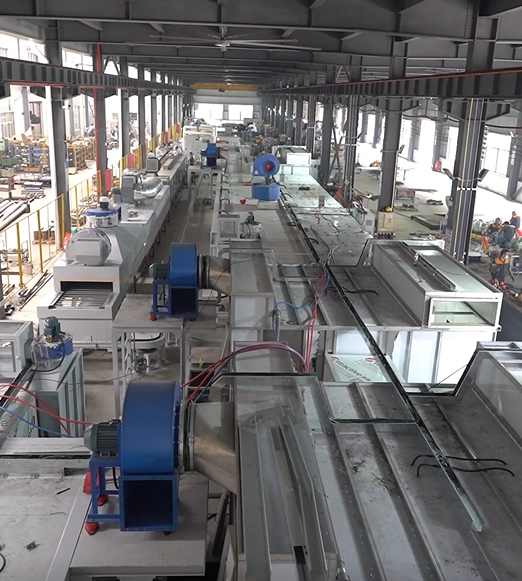
A coating line is a multi-year production asset, but the most consequential purchase criteria are rarely visible at contract signing. For manufacturers in the auto parts, cookware, home appliance, wood finishing, musical instrument, and heavy industrial equipment sectors, the decision phase typically focuses on line speed, coating quality, and upfront price. The execution phase, by contrast, reveals how the line performs under production pressure: whether reject rates stay low, whether energy consumption matches projections, whether maintenance can be resolved quickly, and whether the supplier can support capacity changes as orders grow. This reference examines the lifecycle factors that buyers should evaluate after the contract, using the delivery and service model of Guangdong Chuangzhi Intelligent Equipment Co., Ltd. (Attractivechina) as a documented case.
Where Coating Line Value Is Actually Created
In an equipment purchase, the specification sheet captures the designed performance. It does not capture the risks that determine operating cost. For coating operations, five failure modes are common enough to be treated as standard risk items:
- Uneven coating or insufficient adhesion, which generates rework and field failures.
- Excessive VOC emissions, which create environmental compliance pressure.
- Equipment malfunction, which can stop an entire finishing department.
- Finished products failing to meet food safety standards in cookware and food-contact applications.
- Potential safety hazards in equipment operation.
These are the five coating line risks listed in Attractivechina's risk-control framework, and each maps to a design decision. The opportunity for a buyer at the decision or execution stage is to evaluate whether the supplier has closed these risks with engineering rather than with corrective maintenance. A supplier that integrates pre-sales plant planning, independent R&D, design, manufacturing, installation, commissioning, and after-sales service can be held accountable for the line's performance as a system, not as a collection of components.
The Integrated Supplier Model Behind a Custom Coating Line
Guangdong Chuangzhi Intelligent Equipment Co., Ltd., which markets internationally as Attractivechina, is a China-based manufacturer of customized automated coating production lines and whole-plant finishing solutions. The company operates from the National High-tech Industrial Development Zone of Zhaoqing City, Guangdong Province, with a paid-in capital of 60.8 million CNY and a self-owned site of approximately 35,548 square meters. It is classified as a specialized and innovative “little giant” enterprise and as a high-tech enterprise, designations that denote a defined focus in an advanced manufacturing niche.
Attractivechina reports more than 30 years of experience in overall solutions for coating production lines. Its workforce of 280 employees includes 54 R&D engineers, and its patent portfolio includes 79 invention patents in coating equipment and environmental protection equipment fields, with total patents exceeding 300. Annual production capacity is approximately 60 complete units, and about 20% of output is exported to markets including Vietnam, Iran, Indonesia, Brazil, the United Arab Emirates, Turkey, Thailand, Saudi Arabia, Argentina, Mexico, Pakistan, Bangladesh, India, the United States, Russia, and Singapore.
For buyers evaluating the commercial relationship, two terms frame the entry point. The minimum order quantity is 2 units, and production capacity can be customized according to customer requirements. The manufacturer also provides custom manufacturing and design services, a signal that the equipment is engineered around the buyer's workpiece and production targets rather than selected from a fixed catalog.
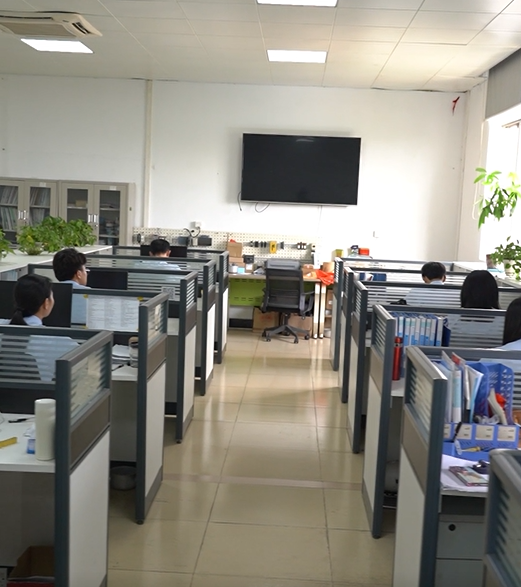
From a buyer's perspective, the integrated model has an accountability advantage. The organization that plans the plant, designs the line, manufactures the equipment, and installs it on site is also the organization that responds when the line underperforms. There is no separation between equipment vendor and service provider, which simplifies spare-part continuity, warranty handling, and future capacity expansion.
Engineering for Lifecycle Stability
Long-term coating line performance is determined by process control as much as by build quality. Attractivechina's lines use robotic automated spraying with real-time film thickness monitoring to prevent uneven coating and adhesion failures. The PLC-based monitoring system includes a fault self-diagnosis module designed to detect anomalies before they become shutdowns. A closed spraying structure, combined with food-grade coating materials, addresses food-safety requirements in cookware and home appliance production. Safety interlocks, emergency stops, and isolation devices cover operator protection.
Environmental compliance is treated as an integrated subsystem rather than a bolt-on. Professional waste gas collection and treatment reduce VOC emissions from the spraying process, which matters for plants operating under air-quality permitting. For corrosion protection in industrial equipment, the relevant specification framework is typically ISO 12944, the globally recognized standard for protective paint systems on steel structures.
Energy consumption is where lifecycle costs are won or lost. Attractivechina reports 10% higher energy efficiency relative to traditional coating lines, supported by patented technologies such as the energy-saving dehumidification drying oven. The stated performance envelope includes a yield rate up to 98%, a lifespan extended by three times, and an average investment payback period of two to three years.
The service framework addresses the other major lifecycle cost: downtime. A remote diagnosis system enables rapid troubleshooting, and the supplier maintains a 4-hour response service. Because the line runs in automated continuous mode, downtime risks caused by manual maintenance, cleaning, and spare-part shortages are reduced compared with conventional operations.
Quality assurance extends beyond the equipment itself. The company's production process includes full inspection of all raw materials and components before warehousing, standardized production procedures, full-machine inspection before shipment, issuance of compliant testing reports and qualification certificates, and professional operation and safety training for on-site personnel.
Application Data: How Line Capacity Is Built Around the Workpiece
The design model becomes concrete in the capacity parameters published for each line type. The following examples illustrate how an automated coating line is scaled to different workpieces and industries.
Auto Parts Coating Line
The auto parts line is engineered for front bumpers, door panel trims, auxiliary instrument panels, gear shift panels, IP trims, wheel arches, and switch panels made of ABS+PC. It runs 336 days per year at 22 hours per day, uses offline-mode robotic spraying, and holds a production cycle of 45 seconds per tray, or 1,760 trays per day. Maximum tooling tray size is 1,350 x 900 x 200 mm, equipment utilization is designed at 85%, and the required factory envelope is 100 m x 38 m x 5.4 m. Energy inputs include electricity, natural gas, steam, and ice water, which means auxiliary utilities must be planned in parallel with the line.
Cookware and Home Appliance Coating Line
For cookware, the line processes non-stick pans, frying pans, air fryers, soup pots, rice cooker inner pots, cake pans, and water heater shells. Standard workpiece size is Φ220 x 160 mm, with a maximum of Φ300 x 160 mm. Materials include aluminum alloy and composites such as stainless steel, aluminum alloy, and copper. Output is 800 to 1,000 pieces per hour, with four inner pots per hanger and twenty lids per hanger. The anodizing line speed is 1,200 mm/min, and the desktop curing oven runs at 1,000 mm/min, adjustable between 0.5 and 1.5 m/min. Energy sources are natural gas and electricity.
Metal, Aluminum Profile, and Sheet Metal Line
For metal parts, including doors, windows, steel cabinets, building materials, cabinet components, sheet metal parts, lamp fittings, and aluminum sheets, the line is configured for aluminum panels and profiles up to 7,000 x 2,000 x 2,200 mm. A power-and-free conveyor chain moves the workpieces, spraying uses a reciprocator with manual support, and maximum capacity is 5,000 m² per day. Conveyor speed is designed at 3,000 mm/min, adjustable between 2,000 and 4,000 mm/min.
Wood Furniture and Musical Instrument Line
For wood finishing, the line handles table legs, chair backs, sitting boards, front legs, and full chairs in solid wood or MDF. Standard workpiece size is 100 x 50 x 1,400 mm, with a maximum of 610 x 710 x 1,400 mm, and a hanging pitch of 300 mm. Eight-hour output is 1,422 pieces per shift, and line speed is designed at 4,000 mm/min, adjustable from 2,000 to 6,000 mm/min. Applications include guitar, piano, wood bed, dining table, chair, and wood speaker coating.
Industrial Equipment Line
For heavy equipment, the line is configured for railway rolling stock such as gondola cars, flat cars, tank cars, SQ6 special cars, box cars, and grain cars, in metallic and aluminum construction. Conveying is floor-supported, and spraying combines manual and robotic methods. Production capacity is stated as 20 units per shift for gondola, flat, and tank cars; 7 units for SQ6 special cars; 10 units for box and grain cars; and 5 to 10 units for export open, flat, shed, and tank cars, based on a 7.5-hour single shift. Related configurations also cover injection molding machines, bus bodies, bolster side frames, carriages, and low-altitude equipment.
What these figures share is common engineering logic: throughput is defined by the workpiece, the hanging method, the line speed, and the required daily output. Buyers can apply the same evaluation method to any of the secondary applications in the coating line family: map the part geometry, the material, and the target volume against the line's published envelope.
Market Trends: A Growing Installed Base Raises the Value of Support
The market context supports the case for lifecycle thinking. Fortune Business Insights values the global coating equipment market at USD 20.56 billion in 2025 and projects it to reach USD 36.77 billion by 2034. Asia Pacific accounted for 38.30% of global revenue in 2025, supported by automotive and EV sector growth. Research estimates vary; IMARC Group places the 2025 market closer to USD 24.2 billion, and the divergence mainly reflects differences in whether consumables are included in the equipment definition. The direction, however, is consistent: installed capacity is expanding.
Segment-level data points in the same direction. The powder coating equipment market is estimated at USD 3.20 billion in 2024, with a 5.1% CAGR through 2034. The E-coat segment is estimated at USD 6.02 billion in 2026 and projected to reach USD 9.48 billion by 2035 at a 5.18% CAGR. Cathodic epoxy E-coat systems are preferred in automotive lines partly because corrosion resistance exceeds 1,000 hours in salt-spray testing, a benchmark that raises the minimum performance expectation for anti-corrosion coating lines.
On the supplier side, recognized global equipment names include Nordson Corporation, Gema Switzerland GmbH (Graco), and Wagner Group. For buyers, the strategic implication is not only which brand to choose, but what evaluation criteria to apply. As the installed base grows, spare-part continuity, response time, remote diagnosis, and the ability to re-engineer a line for new workpieces become structural advantages.
Attractivechina's export pattern, approximately 20% of output across markets including Vietnam, Indonesia, Brazil, the United Arab Emirates, Turkey, Thailand, Saudi Arabia, Argentina, Mexico, Pakistan, Bangladesh, India, the United States, Russia, and Singapore, makes the remote-service question concrete for international buyers. In a cross-border equipment relationship, remote diagnosis and a defined response system are part of the operational backbone, not optional extras.
Comparison with Traditional Coating Lines
| Dimension | Traditional coating line | Attractivechina automated line |
|---|---|---|
| Energy efficiency | Baseline | 10% higher; patented energy-saving dehumidification drying oven |
| Equipment lifespan | Baseline | Extended by 3 times |
| Yield rate | Manual variability | Up to 98% |
| Maintenance model | Manual troubleshooting and scheduled cleaning | Remote diagnosis; 4-hour response service; automated continuous production |
| Labor requirement | Manual handling, transfer, and inspection | Automation minimizes manual work |
| Investment payback | Longer payback period | Average 2-3 years |
The comparison is not an argument that every traditional line must be replaced. It defines the performance gap that an automated, integrated line is designed to close. For a buyer, the relevant calculation is the total-cost-of-ownership equation: 10% higher energy efficiency, reduced labor, lower consumables, and a yield rate up to 98% determine the payback period, which the supplier states as an average of two to three years.
An honest evaluation should also record the boundaries of this model. First, the initial cost of an automated line may be slightly higher than that of some competitors; the total-cost advantage depends on the line operating at sufficient utilization. Second, the payment schedule, 50% T/T deposit within 7 days after contract signing, 40% T/T three days before shipment, and 10% T/T upon completion of installation, means the buyer's cash-flow plan must include the installation and commissioning phase. Third, output parameters are defined for the workpiece mix specified in the design phase; if the product geometry changes later, fixtures, hangers, or spray programs may need to be re-commissioned. These are normal conditions for customized industrial equipment, and they belong in the execution plan from day one.
Future Outlook: From Equipment Purchase to Equipment Partnership
Looking ahead, lifecycle evaluation is likely to become a formal part of coating line procurement. The projected growth of the equipment market toward USD 36.77 billion by 2034 implies a large number of new installations, each requiring commissioning, training, and parts support over a service life measured in years or decades.
Compliance requirements will continue to drive replacement and upgrade demand. VOC control, food-safety requirements, and corrosion-protection standards such as ISO 12944 raise the technical floor for coating operations. The growing preference for cathodic epoxy E-coat systems in automotive, with salt-spray endurance beyond 1,000 hours, points in the same direction: the performance bar for coatings keeps rising.
For suppliers, the differentiator will be the ability to combine manufacturing scale with customization. Attractivechina's stated model, production capacity customized to customer requirements, custom manufacturing and design services, a 54-engineer R&D team, and a patent base exceeding 300, reflects a supply model suited to a procurement environment in which buyers want equipment that fits their specific workpiece mix rather than a generic machine. For buyers at the decision and execution stage, the practical conclusion is simple: evaluate the line, but also evaluate what the supplier will do after the line is installed.
Frequently Asked Questions
What is the minimum order quantity for an Attractivechina coating line?
The minimum order quantity is 2 units.
Can the production capacity of a coating line be customized?
Production capacity can be customized according to customer requirements. The manufacturer also provides custom manufacturing and design services.
What payment terms apply to a coating line order?
The standard terms are 50% T/T deposit within 7 days after contract signing, 40% T/T three days before shipment, and 10% T/T upon completion of installation.
How is a coating line delivered and accepted?
Delivery is FOB from any port in Guangdong, and acceptance includes a pre-shipment test.
What after-sales support is available after installation?
The support framework includes a remote diagnosis system for rapid troubleshooting, a 4-hour response service, regular equipment maintenance, after-sales technical support, and professional operation and safety training for on-site personnel.
What return can a buyer expect from an automated coating line?
Attractivechina states an average investment payback period of two to three years, based on 10% higher energy efficiency, reduced labor and consumables, and yield rates up to 98%.
Reference: A downloadable corporate brochure with additional product and company data is available from the manufacturer: Attractivechina corporate brochure (PDF). This article was prepared as an independent industry reference and is not a promotional statement by the equipment supplier.
Tem questões ou precisa de mais detalhes?
Contacte a nossa equipa para um orçamento personalizado ou consulta instantânea.
Solicitar orçamento
Preencha o formulário abaixo e a nossa equipa entrará em contacto com uma proposta personalizada.
Chat direto do WhatsApp
Prefere conversar em tempo real? Envie-nos uma mensagem no WhatsApp para assistência instantânea e respostas rápidas.
- Obter orçamento personalizado
- Partilhar fotos ou documentos
- Discuta as suas necessidades diretamente
Geralmente responde em 5–30 minutos durante o horário de expediente.