
Beyond the First Order: Building Long-Term Tinplate Supply Relationships
Why Tinplate Procurement Is Moving Beyond the First Order
The global tinplate market was valued at USD 14.59 billion in 2023 and is projected to reach USD 19.38 billion by 2032, according to Fortune Business Insights. China's exports of tinplate under HS Code 721012 reached 1.4 million tons in the first three quarters of 2023, reflecting strong international demand for canned-food packaging materials. The wider canned-food packaging segment is also growing at a compound annual rate of 3.9% through 2030, according to Grand View Research. These numbers point to a market where packaging lines are running faster, food-safety rules are stricter, and material failures are more expensive than ever.
Yet price remains the most visible variable in supplier selection. In practice, the hidden cost appears later: a coil with a poorly welded joint snaps a progressive die; wavy edges cause mis-feeding on an automated press; a rust spot on a slit edge generates a whole batch of rejected food cans; a slight coating inconsistency triggers delamination after retorting. None of these defects are visible in a standard quotation. They only become visible when a buyer depends on the material week after week.
For buyers in the Decision or Execution stage, the relevant question is not “which factory can produce tinplate for me today?” but rather “which processor has the production discipline, capacity, and quality system to supply me consistently over multiple years?”
What a Durable Tinplate Supply Relationship Should Look Like
A useful way to understand the difference between a supplier and a long-term supply partner is to examine how much of the production process the company actually controls. Chongqing Youngson Metal Products Co., Ltd. is a China-based, BV ISO 9001:2015-certified manufacturer founded in 2016 that specialises in metal surface treatment, precision slitting, and supply of coated metal strip and sheet. The company is located in Chongqing and exports roughly 70% of its output to global markets.
Unlike a trading intermediary, YOUNGSON METAL controls its own coating lines and slitting machines. The company reports an annual processed quantity exceeding 10,000 tons, with monthly production capacity between 500 and 1,000 tons. The minimum order quantity is 1 ton, which is low enough for a first trial but scalable enough for continuous supply. Typical production lead time is 14 to 25 days.
For buyers planning long-term supply, these operating metrics matter more than a single campaign price. They determine whether the processor can absorb forecast changes, support product launches, and provide repeatable specifications across seasons.
| Supply Continuity Factor | YOUNgSON METAL Operating Basis |
|---|---|
| Annual processing volume | Over 10,000 tons of processed metal strip and sheet |
| Monthly production capacity | 500 to 1,000 tons |
| Minimum order quantity | 1 ton |
| Typical production lead time | 14 to 25 days |
| Quality system | BV ISO 9001:2015 certified; SGS-tested for heavy metals per RoHS |
| Main production scope | Coil coating, lithography, lamination, precision slitting of tinplate and TFS |
| Export experience | Approximately 70% of output shipped to global markets |
This kind of profile is relevant to buyers in the Decision and Execution stages because it answers several practical questions at once: Can the supplier support a production plan? Can a small trial order be handled before mass production? Will the supplier still have capacity when demand grows? Is there a quality framework that can be audited?
Process Consistency Is the Core of Repeatable Tinplate Supply
The technical reason why tinplate quality varies between suppliers is rarely in the base metal. It is normally in the slitting and finishing process. A standard tinplate coil can be perfect at the mill and still arrive at a factory with damaged edges, micro-burrs, coil joints, or rust spots because of poor slitting and insufficient edge protection.
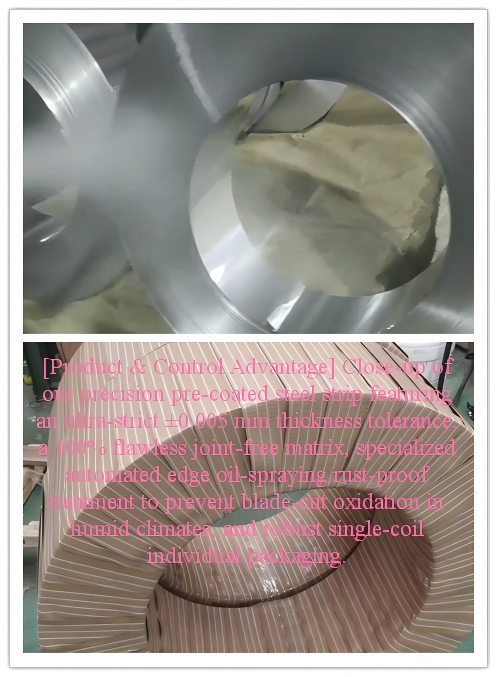
YOUNGSON METAL applies what it calls a “5-ZERO” slitting discipline: zero joints, zero notches, zero edge waves, zero overlapping bands, and zero rust spots. The company’s precision slitting line holds thickness tolerance at ±0.005 mm, width precision at ±0.05 mm, and edge burrs at ≤0.05 mm. For automated high-speed stamping, these tolerances determine whether tool life is predictable. According to the company’s process data, eliminating micro-defects can reduce total tool-maintenance costs by as much as 35% and prevents catastrophic press crashes caused by strip joints or edge notches.
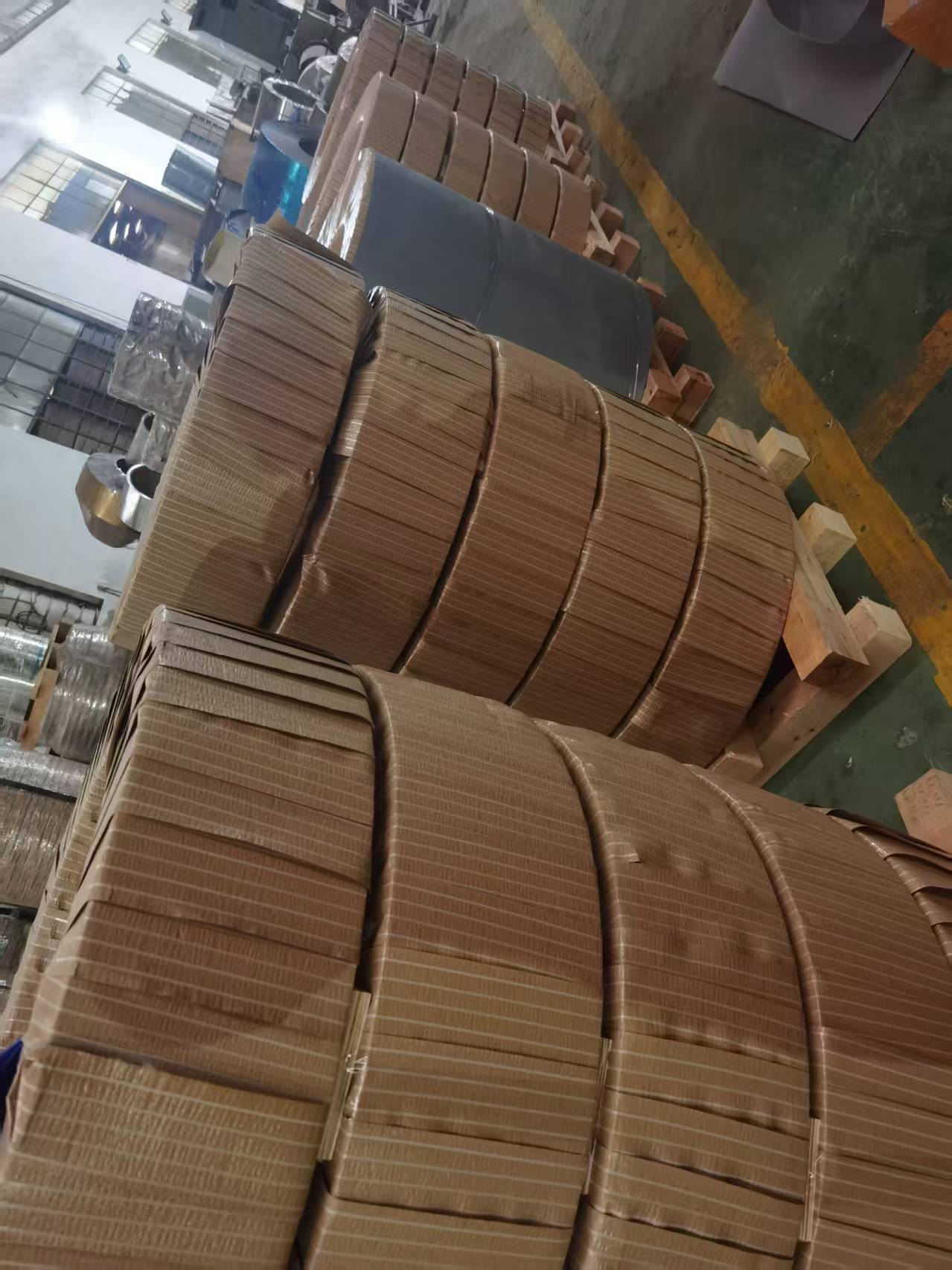
Another critical factor for long-term supply is edge corrosion. Slit edges are more exposed than coil surfaces because the tin coating is interrupted. YOUNGSON METAL applies an automated post-slitting oil-spraying treatment directly onto the cut edges, creating a protective barrier that helps strips survive high-humidity conditions, tropical climates, and extended marine transit. Each coil can be individually sealed in moisture-proof packaging, which reduces the risk of warehouse rust rejection after delivery.
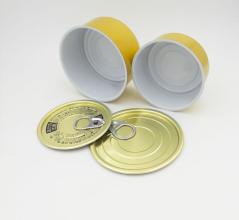
For food-contact applications, the coating system itself must also remain stable through retorting and sterilisation. The company offers lithography, coil coating, and laminated PET film on both commercial-grade and deep-drawn-grade tinplate and tin free steel. This is relevant for packagers of fish cans, meat cans, and beverage ends, where a coating failure after filling is not simply a material defect but a food-safety risk.
Connecting Material Specifications to Real Production Scenarios
Long-term tinplate buyers rarely purchase one single grade. More often, they manage a portfolio of specifications that are selected for different forming methods and end-use conditions. Below are examples of how custom tinplate grades are applied across industry segments.
Meat cans and seafood cans. Meat and fish canning requires materials that resist sulphur staining and maintain internal coating integrity after high-temperature retorting. Applications include milky white coated tinplate sheets for meat cans and high-sulphur-resistant printed tinplate sheeting for fish cans. For two-piece drawn seafood cans, specialised BPA-free internal sulphur-resistant aluminium paste coated tin free steel is available with thickness from 0.14 mm to 0.16 mm and DR8-DR10 temper levels, capable of withstanding 121°C sterilisation for 60 to 90 minutes. The same DRD-grade TFS is used for tuna, sardine, and salmon can production.
Beverage cans and closures. Three-piece beverage cans and easy-open ends need high-temper, lightweight material that can be formed precisely without micro-cracking. Double-reduced tinplate and TFS in thicknesses around 0.14 mm to 0.17 mm, including DR8 grades, are increasingly requested because they reduce material weight while maintaining container stiffness. Buyers with multi-year can programs benefit from having a processor that can guarantee both gauge accuracy and flatness across repeated shipments.
High-speed hardware stamping. Components such as automotive filter shells, gaskets, aerosol caps, lug caps, and small electronic shielding parts are produced on high-speed progressive dies. For these applications, coil joints, burrs, and wavy edges can stop an entire line. Precision slit tinplate strip in T1 to T5, DR7 to DR10, with anti-rust edge treatment is designed to support continuous automated feeding over many production runs.
Decorative and premium packaging. Mirror-finish and colour-coated tinplate in gold, bronze, copper, matte black, and 3D laser-effect finishes serve premium tins, cosmetics packaging, candle containers, and decorative hardware. These decorative materials are also used by manufacturers seeking a lower-cost, formable alternative to stainless steel or copper-plated strip in non-corrosive indoor environments.
Market Trends That Favour Integrated Tinplate Processors
Several industry trends support the case for treating tinplate as a long-term engineered-materials category rather than a spot commodity.
First, light-weighting has moved from a technical aspiration to a purchasing standard. Double cold reduced (DR) tinplate in thicknesses as low as 0.14 mm to 0.16 mm is increasingly used in metal packaging to reduce cost and material consumption. These low-gauge materials require precise slitting because any edge defect is proportionally more severe in thin material. Second, food-contact regulation is becoming a baseline requirement rather than a differentiator. While ASTM A623 and EN 10202 define the general specification framework for tinplate, food-contact coatings marketed into certain regions face additional scrutiny under FDA 21 CFR 175.300 and RoHS heavy-metal restrictions. Suppliers that have already invested in SGS heavy-metal testing and REACH-compliant coating systems are easier to qualify and retain. Third, tropical and humid markets are driving demand for processed tinplate with salt-spray-safe packaging and corrosion-resistant slit edges.
The combination of these trends creates an advantage for processors that can handle coating and slitting in one facility. A buyer who orders coil-coated and lithographed tinplate from one source and then sends it to an external slitter assumes extra logistics, extra specification-communication risk, and more chances for edge damage. Integrated processing shortens that chain.
Market data reinforces the long-term opportunity. The global tinplate market is expected to grow from USD 14.59 billion in 2023 to USD 19.38 billion by 2032, with canned food packaging expanding at a CAGR of 3.9% through 2030. Chinese customs data already shows tinplate exports of 1.4 million tons in the first three quarters of 2023. In this environment, buyers are likely to consolidate volumes with processors that can respond, certify, and deliver consistently.
Comparing Precision Tinplate Processors with Conventional Supply Channels
The most common comparison in tinplate procurement is between standard packaging-grade tinplate sheets and general commercial slit coils versus precision slit material from a processor like YOUNGSON METAL. The differences are not in base-metal chemistry but in engineering tolerance and supply-chain reliability.
| Comparison Point | Precision Slit Tinplate from YOUNGSON METAL | Standard Sheets / Low-Precision Slit Coils |
|---|---|---|
| Thickness tolerance | ±0.005 mm | Typically around ±0.02 mm |
| Width precision | ±0.05 mm | Wider variation common |
| Edge burr | ≤0.05 mm | Varies; not always controlled |
| Defect control | Zero joints, notches, edge waves, overlaps, or rust spots | Micro-defects often tolerated |
| Compliance | SGS-tested, RoHS and food-grade compliant material options | Depends on source and coating system |
| Edge protection | Automated anti-rust oil treatment on cut edges | Often limited to mill oil only |
The cost advantage of precision tinplate becomes evident in continuous automated processes. YOUNGSON METAL reports that its joint-free, burr-controlled strip supports uninterrupted pressing and roll-forming at speeds above 120 strokes per minute without strip breakage. That reduces press downtime, protects tooling, and makes the factory output more predictable.
However, a realistic comparison must also acknowledge the limits of precision processing. Not every application requires micron-level tolerance. Buyers making simple brackets, low-volume blanks, or non-food packaging components may find standard sheets or conventional slit coils more economical. High-precision slitting and individual rust-protective packaging add process cost, and that cost is only justified where line speed, food safety, or tooling protection demands it.
It is also important to distinguish between the roles of steel mills and specialised processors. Large integrated producers such as Baosteel, Nippon Steel, and JFE Steel are recognised leaders in the production of high-end SPTE and ECCS substrate material. YOUNGSON METAL does not attempt to replace those upstream mills. Its role is downstream: custom coating, lithography, lamination, slitting, edge protection, and logistics. A long-term buyer often needs both types of partners, and the most efficient supply structure treats them as complementary rather than interchangeable.
Future Outlook: Moving from Transactional Supply to Processing Partnership
As packaging customers demand more sustainable, lighter, and visually distinctive metal packaging, the processor’s role will expand. The next phase of tinplate sourcing will be less about buying a generic coil and more about buying a repeatable specification framework. A buyer will want to know that the supplier can switch from a tinplate sheet program to a TFS strip program without changing the quality baseline; that it can trial a new decorative finish without requiring container-load volumes; and that it has capacity to scale a successful product launch.
YOUNGSON METAL’s current structure already reflects some of these expectations. With a monthly capacity of 500 to 1,000 tons, the company offers medium-volume flexibility; with a 1-ton MOQ, it supports first-article trials; with a14-to-25-day lead time, it aligns with planning cycles that cannot wait for mill-level minimums. Its coating and slitting capabilities cover commercial-grade and deep-drawn-grade tinplate, TFS, pre-painted steel, and stainless steel, giving buyers one qualified channel for multiple material requirements.
For buyers in the Decision and Execution stages, the practical conclusion is this: long-term tinplate supply is not a promise made in a sales pitch. It is the result of measurable capacity, verifiable process discipline, documented tolerances, and consistent commercial terms. The supplier that can make those elements auditable is the supplier worth keeping beyond the first order.
FAQ
What minimum order quantity does YOUNGSON METAL require for tinplate strip?
The minimum order quantity is 1 ton. This allows first-time buyers to validate material quality before scaling to full production volumes.
What is the typical production lead time for tinplate strip orders?
Typical production lead time is 14 to 25 days, depending on specification complexity, coating requirements, and slitting configuration.
What is the monthly production capacity of the YOUNGSON METAL processing facility?
Monthly production capacity ranges from 500 to 1,000 tons, which supports medium-volume packaging and hardware programs.
How can a tinplate buyer verify quality before shipment?
YOUNGSON METAL supports pre-shipment testing covering rust, joints, wavy edges, and surface defects. Buyers can request verification of slitting quality and coating condition prior to dispatch.
What international trade terms are available?
FOB, CFR, CIF, DDP, and DDU terms are available for ocean and air freight shipments. Payment terms include T/T and L/C at sight.
What certifications and standards support food-grade tinplate supply?
The production system is certified under ISO 9001:2015 through Bureau Veritas. Food-contact and environmentally sensitive product options pass SGS heavy metal testing and meet RoHS restrictions, while coatings can be positioned against FDA 21 CFR 175.300 requirements for food-contact lacquers.
Tem questões ou precisa de mais detalhes?
Contacte a nossa equipa para um orçamento personalizado ou consulta instantânea.
Solicitar orçamento
Preencha o formulário abaixo e a nossa equipa entrará em contacto com uma proposta personalizada.
Chat direto do WhatsApp
Prefere conversar em tempo real? Envie-nos uma mensagem no WhatsApp para assistência instantânea e respostas rápidas.
- Obter orçamento personalizado
- Partilhar fotos ou documentos
- Discuta as suas necessidades diretamente
Geralmente responde em 5–30 minutos durante o horário de expediente.